Hanthala Outlasts Naji Al Ali as He Predicted

By the time he died on August 29, 1987, he had a collection of 40,000 cartoons. Naji Al Ali, the famous Palestinian cartoonist, had been in a coma for five weeks after being shot in the head by a gunman outside the London offices of Al Qabas newspaper on July 22.

Although till now nobody is certain of who killed him, Al Ali’s death was a result of decades of rebelliousness against the Arab status quo, his longing for change in Arab society, and the introduction of democracy.

He felt this would be translated into political strength to fight for the return of Palestine. Al Ali had the knack of weaving politics and culture together. His drawings had distinct messages: they were contextual, fighting against injustice and oppression in the Arab world.

Naji Al Ali was one of a kind. In few simple lines, he could depict the drama of a whole population and convey messages sometimes so sharp and rich in symbols that the viewer’s attention was effortlessly drawn to understanding the hidden meanings.

Though his messages were politically-driven, he always maintained he was apolitical and that politics did nothing for him.

This is despite the fact that his life had come to be dictated by a series of political actions. His expulsion, along with his family, to Lebanon in 1948, and ending up in Ain Al Hilweh camp, was but the first of these actions. Al Ali was only 10 or 11 when he was forced out of Shajara, a village of 400 that were destroyed by Israel.

Given a chance

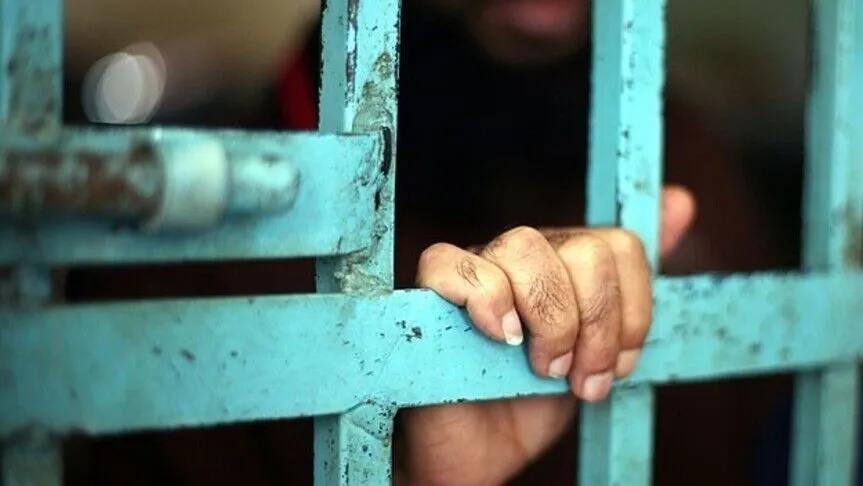
In the 1950s, before being given the chance to go to Kuwait, his life was immersed in politics. He took part in demonstrations and served time in Lebanese jails. During this time, he started drawing on the walls of the camp and in prison.

“I felt within me a need for a different medium to express what I was going through,” he used to say. He often said he felt it was harder to censor a cartoon than an article. Al Ali’s talent was first discovered by Ghassan Kanafani, the Palestinian writer and activist killed by the Israelis in the early 1970s. He was visiting the camp at the time, came upon Al Ali’s work, took a sample and latter published them in Al Hurriya, the magazine he was working for.

This may have given Al Ali the opportunity to work in Kuwait in 1964 at the Al Talieh magazine, a now well-established weekly, representing the voice of the nationalists. There, he made his professional career as a cartoonist, though he did other things as well. In 1971 he returned to Lebanon where he worked in the well-respected Al Saffir.

It was in Lebanon he found the best and most productive years of his life, he would later write. “There, surrounded by the violence of many an army, and finally by the Israeli invasion (1982), I stood facing it all with my pen every day, I never felt fear, failure or despair, and I didn’t surrender. I faced armies with cartoons and drawings of hope and flowers, hope and bullets.”

But, contrary to this cheerful attitude, one also felt there was a degree of anger, mixed with cynicism and despair within Naji Al Ali that always prompted him in his cartoons; it was the failure of action, of ineptitude and the lack of Arab resolve.

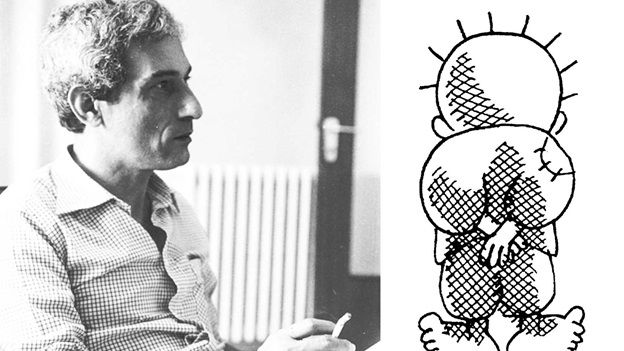
That’s why he may have created the Hanthala cartoon that always came to appear in his sketches from the 1960s onwards. In fact, in an almost perceptive vision of his death, Ali would say Hanthala would outlast him and would live long after he was was dead.

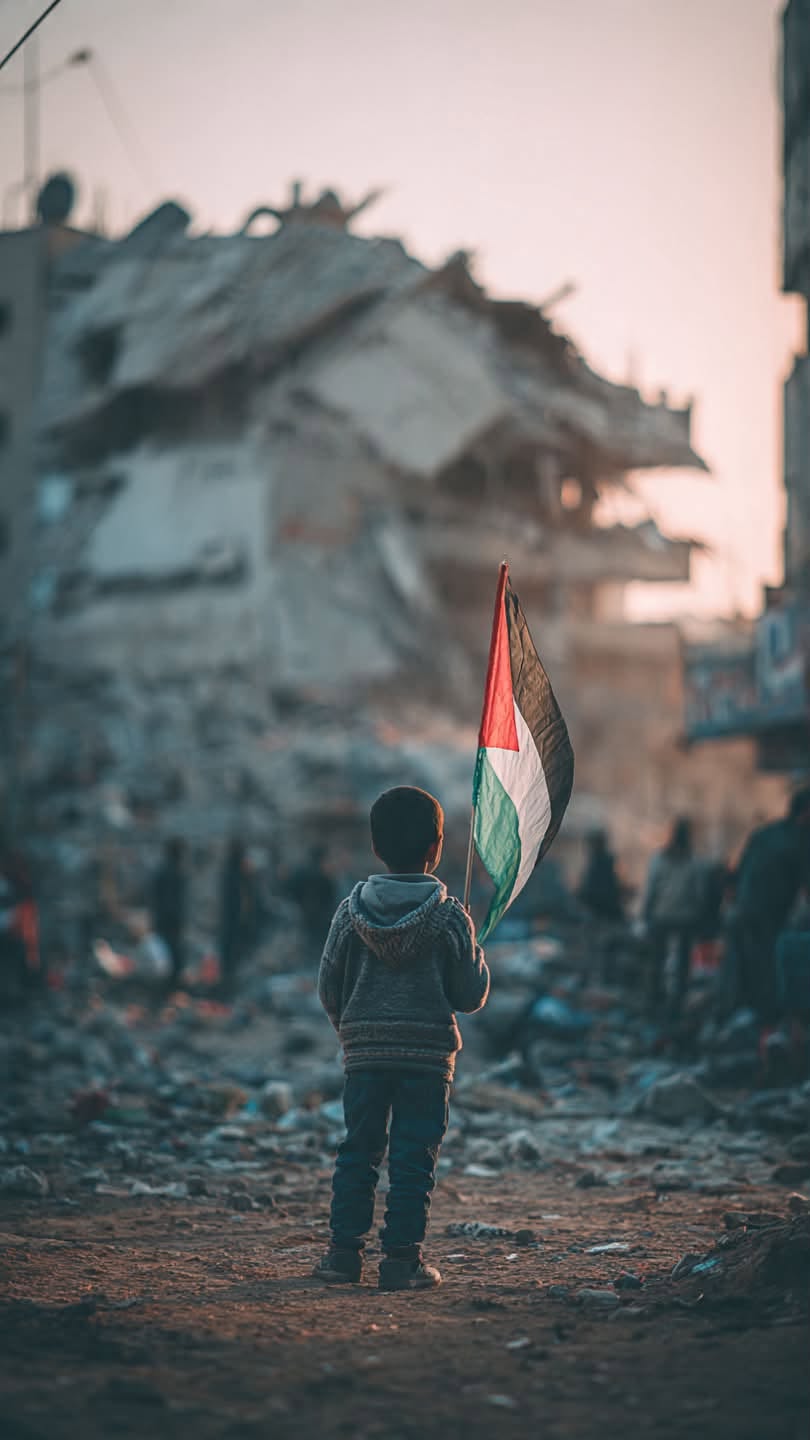
Hanthala, whose name means bitterness in Arabic , represents the aspirations of the camp refugees and the right of return. We never see his face as he is never shown facing the reader.

Naji Al Ali described him as a bare-footed child with spiky hair, with his hands firmly clasped behind his back as a symbol of rejection to what happened to the Palestinians. He will only turn his head, when Palestine is regained. Hanthala will remain 10 years old until he returns to the homeland, when he will start growing up again.

After 1982, Naji Al Ali went back to Kuwait to work in Al Qabas, but there was no let down in his political message. In 1985, he was expelled, but continued to work in the newspaper’s London office.

His cartoons continued to appear in many daily newspapers across the region in Kuwait, United Arab Emirates, Egypt, Tunisia and Lebanon.

Did Al Ali’s untimely death at the age of 51, mean Hanthala will never turn his head, or will he wait for someone to redraw him.

Whichever the case, and in the spirit of his creator, he will continue with his back to the audience until Palestine is liberated.

This article, written by me, is reprinted here from the archives of Gulf News.

CrossFireArabia

CrossFireArabia
Dr. Marwan Asmar holds a PhD from Leeds University and is a freelance writer specializing on the Middle East. He has worked as a journalist since the early 1990s in Jordan and the Gulf countries, and been widely published, including at Albawaba, Gulf News, Al Ghad, World Press Review and others.

Related Posts

Beirut Weeps For a Poet

Lebanon mourns Khatoun Salma, a Lebanese national poet who was killed along with her husband in an Israeli airstrike that targeted their home in the Tallet al-Khayat neighborhood of Beirut Wednesday, 8 April.

Rasha al-Amir, publisher of Dar al-Jadeed, announced that the bodies of Khatoun and her husband were recovered from the rubble, Thursday morning.

Lebanese journalist Maha Salma also mourned her sister Khatoun on her Instagram account, writing: “My dear sister is in God’s care. May God grant me patience in the pain of her loss and the burning of my heart and soul.”

Poet and playwright Yahya Jaber wrote a tribute to Khatoun on Facebook, saying: “Yesterday, the Israeli airstrike cut down a poet with its sharp scissors, a poet of delicate Arabic.” Under the rubble, the conjunction “waw,” the plural “waw,” the feminine plural “nun,” the feminine suffix “ta,” the definite article “al-“: a massacre of language at the hands of language. Jaber attached a picture of the building where Khatoun lived to his post, saying:

“Here is the Khayat Hill building, and here on one of these balconies, we used to stay up late with Khatoun and her husband, Muhammad Karsht, in the late 198s, spinning yarns of laughter and sewing memories. We would recite poetry and remember our city, Tyre, and love Beirut, the capital.”

Lebanese poet Majida Dagher wrote on her Facebook page in mourning for Khatoun: “Under the rubble of her house in Khayat Hill, they found a poet lying among her shattered rhymes. The death of a poet in an airstrike on Beirut makes you feel that war is very, very close. The sound of bones breaking has become louder, and the smell of blood deeper.

Salma fell from the heights of poetry before she could bid farewell to ‘the last inhabitant of the moon.'” She thought Beirut was her tent, Beirut the roof of her poem, where she would hide, “embracing a woman waiting” for the dust to settle. But the dust became the tent of a new Beirut, a Beirut weeping, broken, martyred.

Salma, who studied Arabic literature at the American University of Beirut, published two collections of poetry, “I Embraced a Woman Waiting” in 2009 and “The Last Inhabitants of the Moon” in 2012, both with the Lebanese publishing house Dar Al-Jadeed. She first gained recognition in the 1970s, during her secondary school years, when she won a poetry prize. Later, at the beginning of this century, she became known in cultural circles for her relatively small but distinguished poetic output and her academic pursuits, which included studies in Sufism and Sufi mystics.

She combined profound knowledge with poetic sensitivity. She left her mark on the Lebanese cultural scene with a unique poetic voice, manifested in her literary works that carried the pain of humanity, exile, and memory. With her tragic passing, Lebanon loses a literary and human figure who wrote of the wound in a language that resembled nothing but truth.

Continue reading
Al Bahri: The Man Who Set Palestinian Theater

He is a playwright and author of 12 plays, nearly 20 novels, and numerous translations. Jamil Habib Afara (al-Bahri) was known as the “Father of Theater.” He was born in 1895 in Haifa and his family name dates back to the mid-18th century, as his ancestor owned a merchant fleet that sailed the Mediterranean between Haifa, Acre, and Tripoli. This is where his family name originated.

He showed early interest in literature and writing. He and his brother, Hanna, were keen to revitalize the literary and intellectual scene in Haifa, establishing the National Library there in 1922. He first published the “Zahrat al-Jamil” (The Beautiful Flower) and later “al-Zahra” (The Flower) which was initially a weekly publication that later became a bi-weekly and continued publication for about nine months after his death in 1931. His last piece was

a journalistic investigation into the execution of the three martyrs: Muhammad Jamjoum, Fuad Hijazi, and Ata al-Zeer, in the city of Acre in 1930. He dedicated his time and his newspaper that day to the souls of these martyrs, leading with: “The terrible hour in Haifa and all of Palestine: Let us commemorate those who gave their lives for the homeland.” A large funeral was held for him, and poems and eulogies were recited and published in the Palestinian press, such as the “Al-Karmel” and “Falastin,” newspapers.

The Department of Culture of the Palestine Liberation Organization posthumously awarded him the Jerusalem Medal for Culture and Arts in 1990, and the Palestinian Ministry of Culture reprinted his first book, “The History of Haifa,” in 2022.

Continue reading

You Missed

US-Iran: Who Will Blink First!

US-Iran: Who Will Blink First!

Trump: Tunes, Ceasefire and Hormuz

Trump: Tunes, Ceasefire and Hormuz

Israeli Looters in Lebanon

  • By marwan
  • April 23, 2026
  • 23 views

Ayat, Qamar Bid Farwell to Their Martyr Dad

Ayat, Qamar Bid Farwell to Their Martyr Dad

‘We Killed Our Own Then Blamed Hamas’

‘We Killed Our Own Then Blamed Hamas’

An Unholy War!

An Unholy War!