Malak: Story of a Champion Boxer Killed in Gaza

By Ismael Al Sharif

America did not come to liberate us, but rather replaced one darkness with another, and destroyed what remained of our dignity – Malalai Joya, an Afghani writer

When the USA launched its war on Afghanistan in 2001, the slogan it used was “saving Afghan women” as one of the main justifications for the invasion to gain popular support.

Stereotypes remain ingrained in memory: Veiled women deprived of the most basic rights, living under the oppressive Taliban regime, and in desperate need of a “savior” from overseas.

However, the reality was far different, as testimonies from international women’s organizations then confirmed.

Afghan women did not ask for military intervention as their basic needs were clear: Safety, livelihood to feed their children, basic health services, and safe shelter. Simple human needs were taken from them in the name of the alleged “liberation.”

The rogue state has since followed the same American approach when it launched its aggression on Iran, it claimed to defend oppressed women, and repeated the same regarding Syria.

Biased Western media, aided by opportunistic feminist organizations, rushed to publish misleading reports about the “suffering of women” in Gaza before the Al-Aqsa Intifada, allowing the Zionist entity leaders to issue shocking statements, claiming the ongoing genocide in Gaza aims to… “liberate women.”

Falsity of claims

Malak’s story exposes the falsity of these claims and lay bare their painful truth.

At the age of 20, Malak Musleh harbored a dream that weighed as much as nations: To stand in the international boxing ring, holding the name of Palestine high. She trained with a slim body and an iron will, and fought dozens of local battles. Little did she know her true battle would be against a million-dollar, western-manufactured missile fired at her while she sat in a Gaza beach café, devastating a girl who had not had enough training to avoid the fatal blow.

In YouTube footage, Malak is seen training with her friends on the same beach in worn-out gloves, improvised punching bags, and bodies defying hunger, bombardment, and displacement. Behind them is a scene epitomizing Gaza: Rubble towering above a sky open to the world’s wounds.

Their training wasn’t an ordinary sport but a dance on the brink of death, a fistful of life in the face of the extermination machine. The sight of them training with the most basic means, carrying punching bags for each other, surpasses sincerity and impact in all of the dramatic works and artificial heroics produced by the Hollywood film industry.

The solid will and human dignity of these girls far surpasses all the fictional heroic stories produced in film studios.

Before Gaza was transformed into a war zone, Malak and her 40 friends trained at the Al-Mashtal Club, the first Palestinian women’s boxing gym. Simple walls adorned with pictures of world champions, and a small arena that nurtured dreams larger than its space.

This was until the occupation came and destroyed them, just as it destroys everything that symbolizes life there. However, the bags hanging on the remains of the walls did not fall; instead, they were transported to the beach, where the girls continued their training under the bombardment, as if to say to the world:

“Even if you turn us to ashes, we will remain roots that will grow again.” The Zionist war machine failed to break the resolve of these young women even after the destruction of their sports club. They continued their training on the open beach, on the soft sand, under the scorching sun that scorched their faces, stealing moments of hope and joy amidst an ocean of endless horrors and tragedies.

Even after the martyrdom of their heroine, Malak, her companions still train in the same spot on the beach, continuing their courageous defiance in the face of the destructive Zionist-American war machine. The short but luminous journey of the late heroine, Malak, teaches us profound human lessons.

First, women in the Muslim world live dignified and free lives, contrary to the misleading Western media propaganda machine. She also quietly exposed the silence of “feminist” organizations that scream when a Western girl is killed in a trivial incident.

We also learned that despite the abject poverty, harsh deprivation, and persistent hunger, there remains in Gaza a people who love life and carry in their hearts legitimate hopes, aspirations, and dreams… just like all the free peoples of the earth.

With Malak’s untimely passing, not only were the dreams of a promising girl buried, but a devastating blow was also dealt to all the noble human values that this hypocritical world so brags about. Malak departed to her Creator, but what remains is the shameful silence of international organizations, the blatant complicity of the international community, and the shame of the onlookers who have been content to play the role of passive observers.

Today, as Palestine is reduced to the numbers of victims, Malak reminds us that beneath every number lies a love story of life, a dream that was not killed because it became fuel for other dreams. Every morning, her companions return to the shore, punching the air as they punch the world’s pain, renewing their oath: That the land of Gaza will be watered either with the tears of survivors or the blood of martyrs.

As to that million-ton rocket? The Israeli who fired it may not have realized that by killing Malak, he had turned her fist into a legend that confounded his calculations: How could a highly sophisticated weapon be defeated by the determination of a girl whose dream had not yet been fulfilled?

This is a translated piece written by Ismail Al Sharif and published in the Arabic Addustour newspaper in Amman.

CrossFireArabia

CrossFireArabia
Dr. Marwan Asmar holds a PhD from Leeds University and is a freelance writer specializing on the Middle East. He has worked as a journalist since the early 1990s in Jordan and the Gulf countries, and been widely published, including at Albawaba, Gulf News, Al Ghad, World Press Review and others.

Related Posts

A Relationship Turned Sour…

Former Israeli Justice Minister Daniel Friedmann said Saturday that Israeli Prime Minister Benjamin Netanyahu’s political weakness had enabled US President Donald Trump to lead both Netanyahu and Israel through an “unprecedented journey of humiliation.”

Writing in the Israeli newspaper Maariv, Friedmann assessed the consequences of the war in the Gaza Strip and its impact on Israel’s international standing and global image.

Fallout from Gaza war, global perception shift

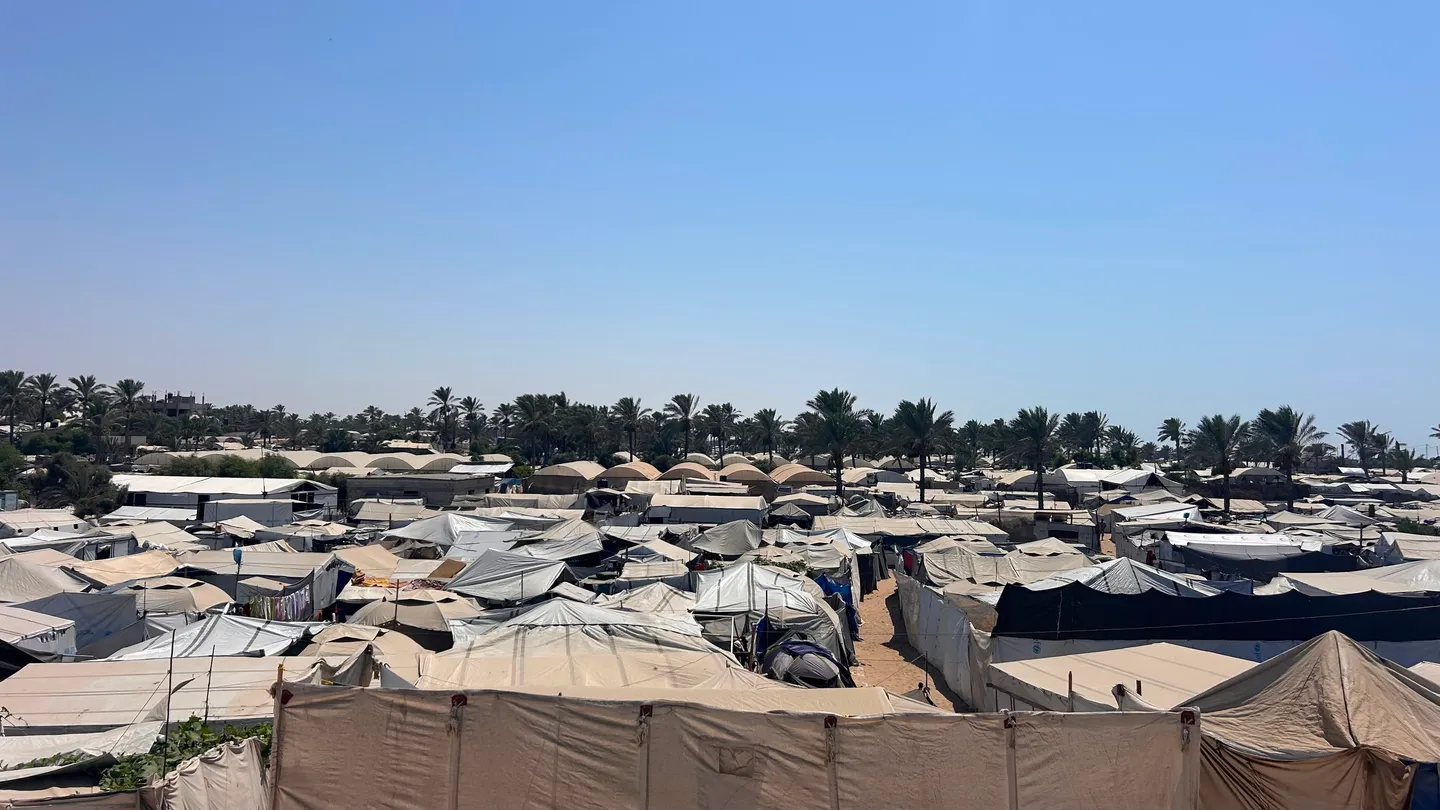
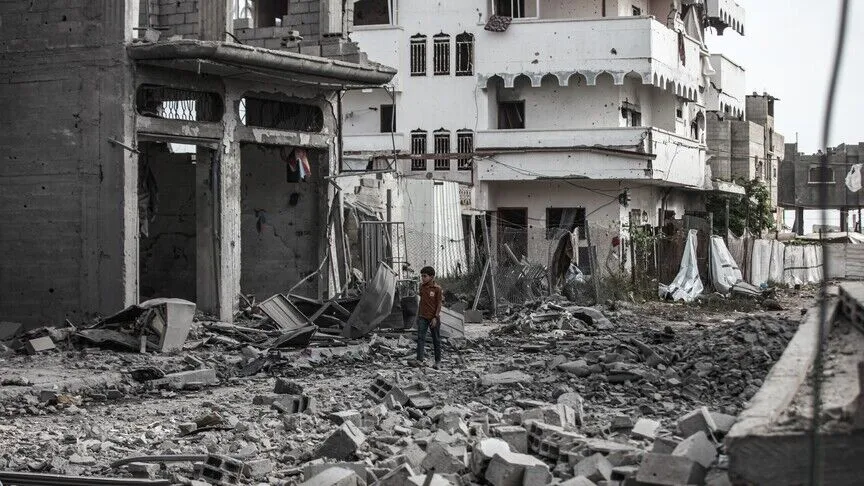
Friedmann said the images seen by millions worldwide are “a devastated Gaza Strip, dead and wounded children, and people wandering among the rubble, living in tents under the scorching sun or heavy rain.”

“There are those in Israel who believe all this serves Israel’s interests and has strengthened its deterrence,” he wrote. “But that is only a partial truth. The limited deterrence achieved must be weighed against the price reflected in the transformation of global consciousness, including shifts in the Arab world, most of which are contrary to Israel’s interests.”

He said that in the immediate aftermath of the Oct. 7, 2023 events, global public opinion largely turned against the Palestinian group Hamas.

“But as the war continued and time passed, the destruction in Gaza pushed discussion of Hamas’ attack aside, and people around the world, including our friends and allies, increasingly turned against Israel,” he added.

Criticism of violence in occupied West Bank

Friedmann argued that the shift in global opinion had led to what he described as a decline in Israel’s international standing and growing public support for the Palestinian position.

He also warned about what he called “Jewish terrorism” in the occupied West Bank and criticized what he described as unequal treatment of Jewish and Arab attackers, alongside statements from government ministers and coalition lawmakers.

“All this rhetoric constitutes an attack on Israel’s security, undermines its standing, strengthens its enemies and increases the risk of sanctions against it,” he wrote.

Claims of US influence over Israeli decision-making

Turning to relations with Washington, Friedmann said Netanyahu’s political weakness had allowed Trump to guide both him and Israel through “an unprecedented journey of humiliation.”

He recalled that in September 2025, Israel carried out “a failed attempt” to assassinate senior Hamas officials who had traveled to Qatar for negotiations on a US-backed ceasefire and prisoner exchange proposal for Gaza.

According to Friedmann, Trump subsequently “demanded that Netanyahu apologize to the Qatari leader and pledge that Israel would not carry out attacks on Qatari territory.”

He said Netanyahu’s apology was delivered in a phone call from the White House and later reported globally.

Iran framework agreement and regional constraints

Friedmann also criticized a US framework agreement with Iran, saying it imposed limits on Israel’s actions, “or more precisely, its inaction,” against Hezbollah while disregarding Israel’s position.

He argued that Trump was eager to end the conflict and reopen the Strait of Hormuz to restore global energy flows. “To achieve that, he was prepared to pay not only with American dollars, but also with Israel’s interests,” he wrote.

“In this way, we became a tradable commodity in an international struggle over which we have no influence.” He added: “Since World War II, there has not been such an attempt to trade Jews and make deals at their expense.”

Netanyahu accused of prioritizing political survival

Despite his criticism, Friedmann said, “We owe Trump a great deal,” while also accusing Netanyahu of prioritizing personal political survival over state interests.

He argued that Netanyahu had prolonged the war in Gaza, allowing him to remain in office despite what Friedmann described as a major political failure.

Friedmann said there was an “advantage” to Trump influencing Israeli policy under current circumstances, adding: “We owe him for stopping the endless war in Gaza and bringing the hostages back.”

“There are also doubts about the logic of conducting the war in Lebanon. Perhaps it is better that he stops us there as well.”

Israel at crossroads between competing political visions

However, he warned that external influence over Israeli decision-making came at a heavy cost. “The price is the loss of the independence for which generations of young Israelis sacrificed their lives,” he said.

Friedmann concluded that Israel stood at a crossroads between competing political visions, contrasting Netanyahu’s coalition with that of former Prime Minister Yitzhak Rabin.

“This is not merely a question of image, but above all a question of essence: what kind of state do we want to be, and why was it established?”

Netanyahu’s governing coalition includes National Security Minister Itamar Ben-Gvir and Finance Minister Bezalel Smotrich, both of whom have advocated stricter security measures in the occupied West Bank and expanded settlement construction.

Both ministers have also called for greater Israeli control over the occupied West Bank, while Smotrich has repeatedly called for reoccupying the Gaza Strip and rebuilding settlements there. Anadolu

Continue reading
Protecting The Wheat Harvest From Israeli Settlers

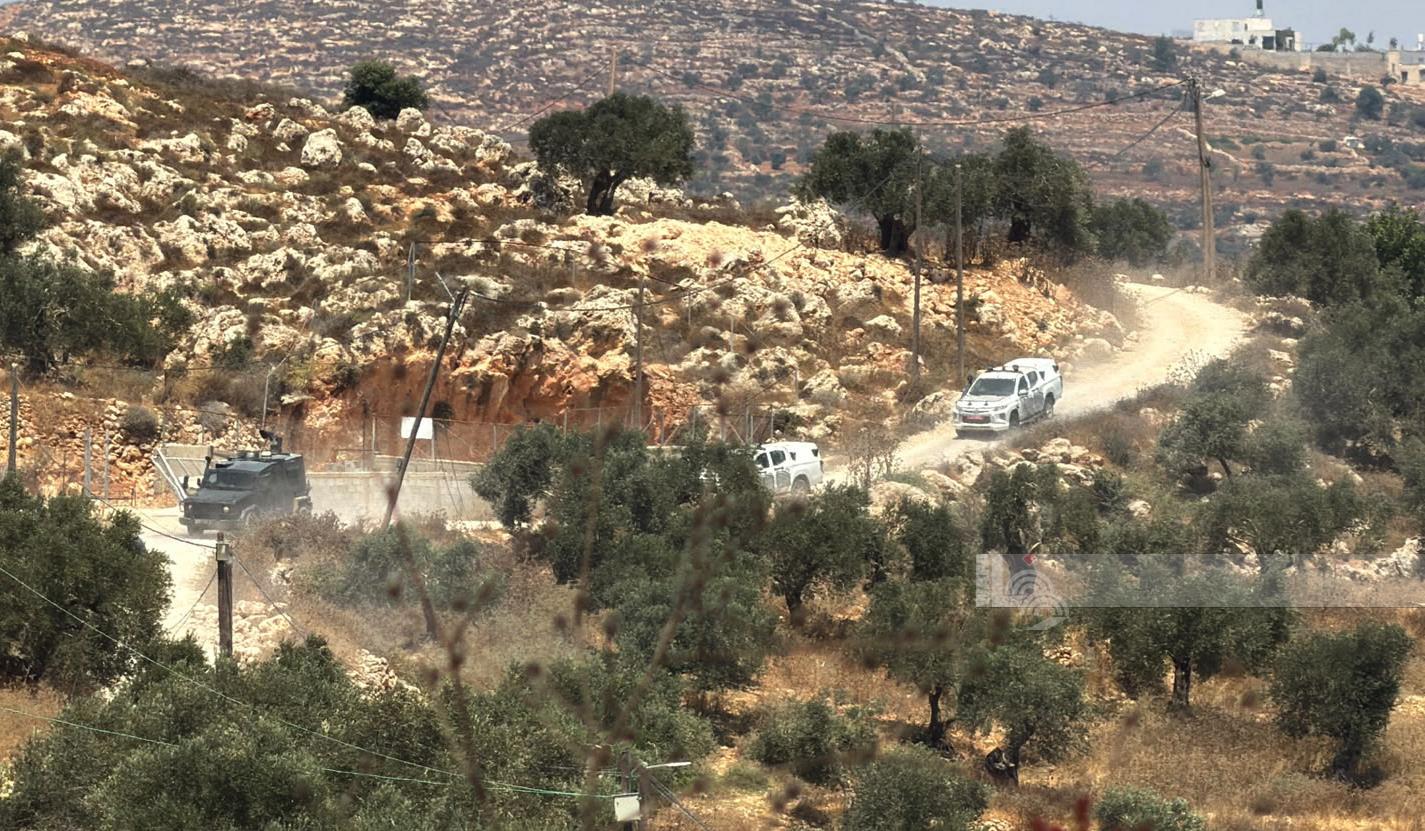
SINJIL, OCCUPIED WEST BANK – In the eastern plain of Sinjil, north Ramallah in the occupied West Bank, dozens of Palestinians are working quickly among the yellow wheat stalks, harvesting their crop this year.

This year’s harvest season is anything but ordinary; it’s a race against time, as farmers fear Israeli settlers will seize their crops by burning or destroying them. This comes amidst a surge in settler attacks on Palestinian farmers and their land.

Residents say they were forced to harvest their wheat and transport it quickly from the fields to the town after repeated attacks by settlers who attempted to burn the crops

and prevent landowners from accessing their land.

The town of Sinjil and its surrounding lands are subjected to frequent attacks by settlers seeking to seize as much land as possible. According to the Sinjil Municipality data, the town has lost approximately 8,000 dunams (a dunam is equal to 1,000 square meters) of its 16,000 dunams.

The town is surrounded by settlement outposts and a barbed wire wall that isolates it from its surroundings. All but one of its entrances are closed, allowing residents to move freely.

Our presence protects our land

Ayed Ghafri, an activist against settlement expansion, said that farmers are working under exceptional circumstances in the eastern plain of Sinjil, a vital area upon which residents depend for cultivating wheat and seasonal crops.

Ghafri told Anadolu Agency: “We are here today in the eastern plain of Sinjil, a vital and strategic area for farmers. We rely on this land for cultivating wheat and seasonal crops.”

He added: “But Palestinian farmers are constantly under threat. Some crops have been vandalized and destroyed, and there have been attempts to burn the wheat more than once.”

He continued: “Recently, farmers tried to work their land, but settlers attacked them and prevented them from doing so.”

He added: “Therefore, we are here today to support the farmers and save the wheat crop, because we believe that leaving it in the ground means it will be subjected to further attacks and the destruction of a large portion of it.”

“Being on the land is the only way to preserve it, and that’s why we are committed to maintaining a continuous presence to affirm its Palestinian identity and protect it,” Ghafri emphasized.

Farmers: “Resilience at an Extra Cost”


Farmers in the area cultivate hundreds of dunams of wheat, but this year’s harvest is taking place amidst growing fears of settler attacks.

Farmer Ashraf Alwan said that about 300 dunams are planted with wheat in the area.

He added: “We came last week to harvest the wheat, but settlers, under the protection of the occupation forces, attacked us and forced us to leave. If it weren’t for the support of the townspeople, we wouldn’t have been able to complete the work.”

He continued: “Today we returned to finish the harvest, but we had to completely change our methods. Under normal circumstances, we would have gathered and threshed the wheat in the field.”

He further explained: “But now we are forced to bring tractors and trucks to transport it to the town center for fear that the settlers will burn or steal it.”

Alwan pointed out that these measures have significantly increased costs for farmers, adding: “The harvest barely covers a small portion of the costs of plowing, planting, harvesting, and threshing, but we are here because it’s no longer a matter of profit and loss, but rather a matter of resilience and holding onto our land.”

He emphasized that “the farmers will not abandon their land despite the attacks, and they will continue to work it and remain on it.”

Farmer Mustafa Shabaneh said that he came with a number of residents to move the wheat from the fields for fear it would be stolen or burned.

He added: “I own seven dunams planted with wheat, and the settlers have tried to burn the crop more than once. On one occasion, they set fire to the area, but the young men of the town intervened and managed to drive them away.”

He continued: “We kept watch over the area, fearing the settlers would reach the crop, but they returned at night with a bulldozer and cleared a path to the farmland. Therefore, we decided to move the wheat from here as quickly as possible to prevent it from being stolen or destroyed.”

In a neighboring field, farmer Ali Bashir anxiously oversaw the harvest.

“Farmers can no longer work normally in this area,” he said. “Even shepherds are afraid to reach their grazing lands because of settler attacks.”

“If settlers come, they might attack you, steal your sheep, or prevent you from accessing your land. People here fear for their crops because there are precedents of crops being burned and farmers being targeted.”

Bashir continued: “We’re supposed to thresh the wheat here in the field, but we transport it hastily because of the fear. This process costs us extra for transportation, harvesting, and threshing, but we have to do it to preserve the harvest.”

He concluded: “What’s happening isn’t just targeting the wheat crop; it’s an attempt to force Palestinians to leave their land so it can be seized. That’s why farmers are clinging to their land and working it despite all the difficulties.”

Accusations of “Ethnic Cleansing”

On June 10, Amnesty International accused Israel of leading and sponsoring a campaign of ethnic cleansing against Palestinians in the West Bank, asserting that arming thousands of settlers has contributed to the escalation of these attacks.

The organization stated that “the Israeli government is implementing the religious-nationalist agenda of the settlement movement and has accelerated the pace of settlement expansion and land confiscation.”

Israel has increased its financial and logistical support for the settlements and supplied the settlers with weapons.

Scattered areas of the West Bank have witnessed a marked escalation in settler attacks, coinciding with the ongoing Israeli military operations that began on October 7, 2023.

Since that date, the Israeli escalation in the West Bank, including East Jerusalem, has resulted in the deaths of more than 1,170 Palestinians and injuries to approximately 12,666 others, in addition to the arrest of around 23,000 people and the displacement of approximately 33,000.

This article was written in Arabic by Qais and Darwesh Omar for Anadolu

Continue reading

You Missed

The Lebanese-Israeli Accord is War on The Resistance

The Lebanese-Israeli Accord is War on The Resistance

Women Mourn Their Dead

Women Mourn Their Dead

Palestine in Color

Palestine in Color

Health Ministry: 4246 Lebanese Killed, 12190 Wounded by The Israeli Aggression Since 2 March

Health Ministry: 4246 Lebanese Killed, 12190 Wounded by The Israeli Aggression Since 2 March

Post-Ceasefire: 1,038 Palestinians Killed, 3,329 Wounded

Post-Ceasefire: 1,038 Palestinians Killed, 3,329 Wounded

Israel Prevents The Athan in Al Ibrahimi Mosque

Israel Prevents The Athan in Al Ibrahimi Mosque