Netanyahu Has Lost Against Iran and He Knows it!

By Abdel Bari Atwan

Benjamin Netanyahu must have been the most ardent observer, from a position of frustration, defeat, and helplessness—indeed, a sense of utter defeat—of the largest, longest, and most organized funeral procession for the martyred Imam Ali Khamenei. The assassination he had boasted about completely backfired.

Most notably, the Iranian regime emerged from the Israeli-American war of aggression stronger and more resilient, retaining its missiles, its nuclear program, and its stockpile. Even more importantly, more than one 100 international delegations participated in the funeral procession, in addition to tens of millions of Iranian citizens. Israel, along with the deceived and misled United States, had gambled on these millions joining a massive popular uprising in most Iranian cities to overthrow the ruling regime and install one subservient and loyal to the American-Israeli camp.

The fact that leading Iranian figures were at the forefront of the mourners on the first day, in an open space, with no aircraft in the sky and no tanks, armored vehicles, or missile launchers on the ground, confirms the falsehood claim of US President Donald Trump that he pledged to protect this funeral procession and prevent the Israeli occupation state from carrying out any assassination attempts against these figures, especially the two key negotiators, Parliament Speaker Mohammad Bagher Ghalibaf, and Foreign Minister Dr. Abbas Araqchi.

The appearance of General Ahmad Vahidi, commander of the Revolutionary Guard, at the forefront of the mourning procession for the first time, perhaps confirms that the decision was purely Iranian. The Iranian leadership has repeatedly affirmed, through numerous high-ranking officials, its complete distrust of its American adversary, and it is justified in this assessment. It possesses a long list of practical and on-the-ground evidence to support this, because the consequences of any attack on the funeral procession by Israel and the United States would be extremely costly—politically, militarily, and economically—and would drag the world and its security into a third world war, the course and end of which no one can predict.

Based on this logic, I am inclined to believe the denial issued by the office of Israeli Prime Minister Benjamin Netanyahu regarding a report published by The New York Times. The report stated that President Trump feared Israel might assassinate the Iranian negotiators Qalibaf and Araqchi, and therefore warned against such an action due to its repercussions on relations between the two countries.

The Israeli terrorist government, which specializes in assassinating Arab and Islamic political and military leaders—from the martyred Imam Ali Khamenei, through the martyred Sayyed Hassan Nasrallah, leader of Hezbollah, to the third Sayyed, Iranian President Ebrahim Raisi, and dozens of Iranian, Lebanese, and Palestinian military leaders—cannot be transformed overnight into a docile lamb.

The undeniable truth is that Israel today is not the Israel of yesterday. Today’s Israel is terrified and defeated. All its plans have failed against the rock of Iranian steadfastness and resistance. Most, if not all, of its strategies have been exposed, its falsehoods revealed, the latest being its bet on dragging America, the superpower, into a war against Iran to completely destroy it and its missile and future nuclear capabilities.

Israel, for whom the incursion into Lebanese territory and the direct aggression against Iran with hundreds of aircraft and seen as a walk in the park, cannot these days bomb the southern suburbs of the capital Beirut with a single missile, because it knows full well that the direct response with hundreds of precision missiles and highly advanced drones to destroy Tel Aviv, Haifa, and Dimona would be immediate.

This process of change, currently taking shape in the region, reveals and confirms a radical shift in the balance of power in the “West Asia” region—not the Middle East, the odious colonial term—and it is thanks to two key leaders and a group of brilliant minds surrounding them:

First: The martyred Imam Sayyid Ali Khamenei, the late Supreme Leader of Iran, who assumed leadership of the Iranian Revolution after the death of its founder, Ayatollah Khomeini. He combined the two best qualities: Political, military, and executive leadership, serving as president for many years, and spiritual leadership as the Supreme Leader and Ayatollah of the Islamic “Imamate.” He developed Iran’s nuclear capabilities, transforming it into a nuclear threshold power with a stockpile of 460 kg of highly enriched uranium.

He also established a missile power with hundreds of highly advanced missiles and drones. He was one of the most ardent supporters of the Palestinian cause, providing it and its resistance fighters with all the necessary weapons and equipment, and fostering unity among the various fronts. He firmly believed that America and Israel are the primary source of danger to the Islamic nation and must be confronted and defeated.

Second: The martyr Yahya Sinwar and his comrades, those geniuses who planned, engineered, and executed the 7 October, 2023, attack, or the “Al-Aqsa Flood,” which shattered the sanctity of Israeli cities and settlements. They breached the heavily fortified borders, equipped with cameras and electrified fences, in the largest military intelligence penetration operation in the region’s history, rivaled only by the Egyptian army’s storming of the Bar-Lev Line in Ramadan of October 1973.

***

Of course, I am not comparing the two men, nor of equating them. Rather, they are the sons of a single, integrated path, deeply-rooted in the faith and history of Islamic resistance and honor. This path leads to dignity and victory, and the second, deeper, and greater phase of resistance against colonialism. With it has begun the process of radical change that will redraw the maps of West Asia and Africa according to the Islamic and Arab vision.

As for Netanyahu, who was merely a figurehead when he threatened to undertake this task and vowed to establish Greater Israel just a few months ago, will be the first victim of this change and so will his entity, and he is currently searching for an “honorable” withdrawal without appearing defeated, but his fate is inevitably prison, if he survives… And time will tell.

Abdel Bari Atwan is the Chief Editor of the Arabic Al Rai Al Youm Arabic website. He is a prolific writer and commentator on the Middle East political scene and has several books to his name including The Islamic State: The Digital Caliphate (2015).  

CrossFireArabia

CrossFireArabia
Dr. Marwan Asmar holds a PhD from Leeds University and is a freelance writer specializing on the Middle East. He has worked as a journalist since the early 1990s in Jordan and the Gulf countries, and been widely published, including at Albawaba, Gulf News, Al Ghad, World Press Review and others.

Related Posts

Who is Afraid of Palestinian Revolutionary Art?

By Ramzi Baroud

The death of Palestinian artist Sliman Anis Mansour stirred powerful memories.

He passed away at Al Makassed Hospital in occupied East Jerusalem on August 24, at the age of 79, bringing to a close a legacy that cannot truly be described, but only experienced.

His life almost exactly spanned the age of the Palestinian Nakba. He was born mere months before the mass expulsion of the Palestinian people from their homeland. Yet his death in an occupied city tells us that the story of Mansour, his art and the Palestinian struggle for freedom is far from over.

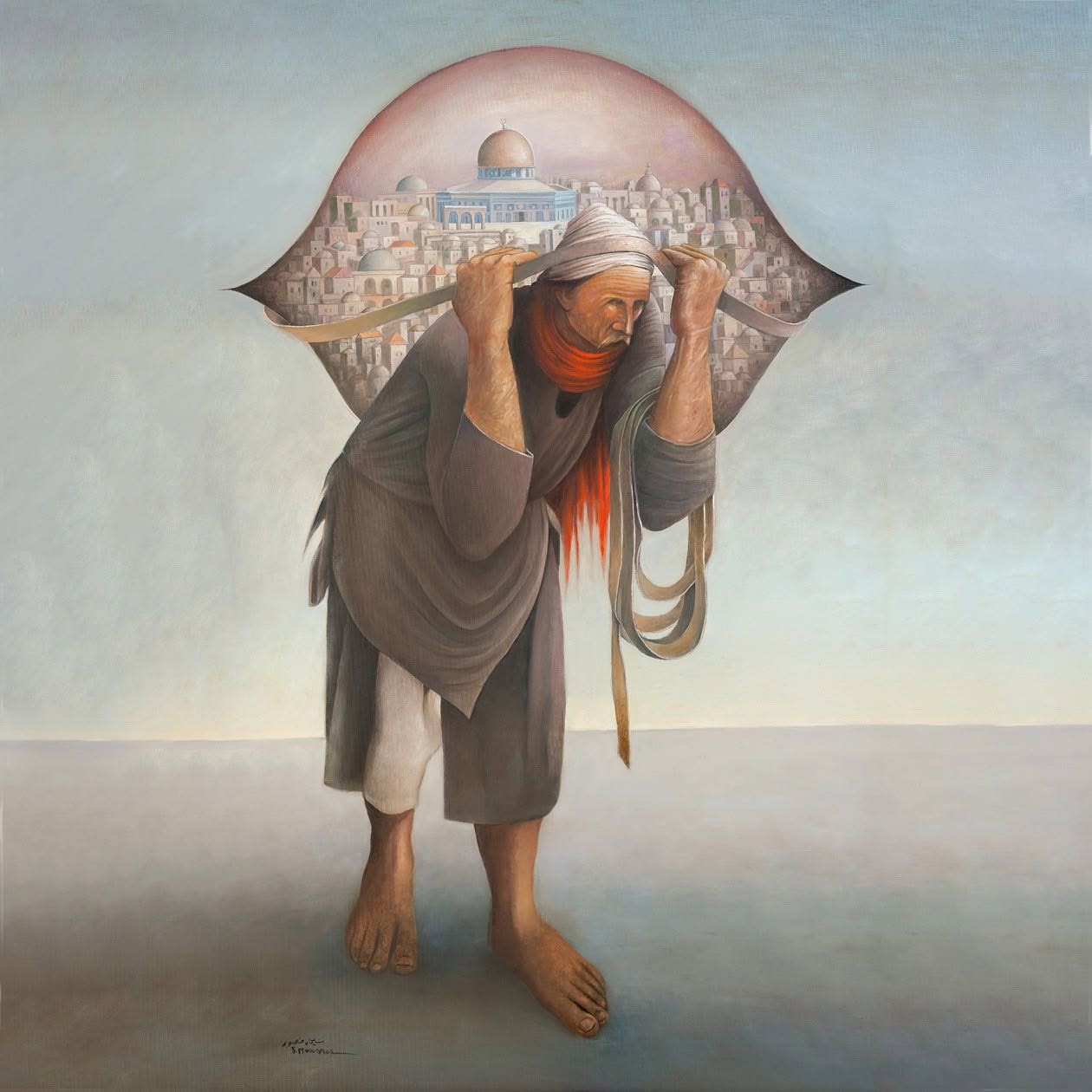
Oddly, for years, I knew Mansour through a single painting: Jamal al-Mahamel (The Camel Carrier of Hardships).

The title itself requires a pause. The phrase is rooted in Palestinian and Levantine popular culture. It describes one who shoulders the collective struggles, pain and responsibilities of others.

In Mansour’s post-Nakba world, that person is an elderly Palestinian porter, a barefoot worker carrying the burden of an entire homeland on his back. That homeland is represented by Jerusalem, with the Dome of the Rock, one of Islam’s holiest sites, rising above it.

Mansour, however, was not a Muslim. He belonged to the once-thriving, though sadly shrinking, Palestinian Christian community and came from the town of Birzeit, near Ramallah in the West Bank.

Let that sink in. One of the most iconic Palestinian paintings of the modern era, celebrating the centrality of Jerusalem and one of its most recognizable historic Islamic sites, was painted by a Christian man.

In the age of Israeli extremists like national security minister Itamar Ben-Gvir and his “religious wars,” this may appear unusual. For Palestinians, it is anything but. Though deeply spiritual, Palestinians have historically transcended religious divides in their long struggle for freedom.

A mosque is never just a mosque, and a church is never just a church. They are powerful symbols of history, culture, roots, spirituality and continuity. Mansour entrusted the Camel of Hardships with carrying all of that alone, as the world watched an old man bent beneath an unbearable weight, yet fierce and unbroken in his resolve.

Though the painting was created in 1973, it exploded in popularity during the First Intifada, the popular uprising that unified Palestinians everywhere. It took on a renewed meaning: we Palestinians may be standing alone, exhausted by time and the betrayal of others, but we remain as steadfast as ever.

The last time I saw that painting hanging in the living room of my old house in the Nuseirat refugee camp in Gaza was also the last time I saw my father, most of my brothers and many of my childhood friends.

My father died years later. The house was bombed. The painting no longer hangs where it once did, at the heart of our old refugee home.

Ironically, it was only after I left Palestine that I discovered that Sliman Mansour was far more than the creator of a single painting. He belonged to an artistic movement that taught visual sumud, steadfastness, to an entire generation.

My lack of knowledge was not a fault of my own. Artists such as Mansour, Ismail Shammout, Fathi Ghaben, Vera Tamari, Tayseer Barakat and Nabil Anani, among others, were simply forbidden by Israeli military ordinances.

Israel is afraid of Palestinian art, particularly art that preserves memory, asserts steadfastness and speaks of revolution. During the Intifada, the Israeli army would storm Palestinian refugee camps almost daily, particularly before dawn, to ensure that artistic expressions on the walls were painted over.

The soldiers did not paint over the walls themselves, of course. They dragged weary refugees from their sleep and forced them to erase every piece of graffiti, every image and every word. The soldiers may have thought they were carrying out a military duty, somehow protecting Israel’s national security. In reality, they were trying to erase evidence of a people whose roots in the land ran far deeper than the occupation itself.

But the evidence was never erased. It could not simply be painted over, even when the artist himself disappeared, because true art is more than an arrangement of colors on canvas. It is one of the deepest forms of documenting one’s own existence.

Fathi Ghaben, who became a close friend of my family, had, like most Gazans, more than his share of suffering. He was a refugee from a once-serene village called Hirbiya, north of Gaza. His family sought refuge in Gaza during the Nakba.

Ghaben had no memories of the village he lost as a child, yet its colors filled his paintings. For him, Palestine was a beautiful woman, powerful in her determination yet gentle in her gaze. Her eyes, always sharply defined, embodied the beauty of a homeland that never abandoned him. She was the worker, the farmer, the student, the protester, the fighter.

Ghaben was repeatedly imprisoned by Israel for emphasizing the colors of the Palestinian flag in his art, accused of “incitement through his paintings.” The occupation army killed his young nephew in 1982, and many of his relatives were killed in the genocide.

Ghaben himself died during the genocide, in February 2024, after being displaced from his home.

For me, and dare I say for many of my generation, it is difficult to process art that does not carry this kind of weight — art that goes beyond mere “expression” and becomes an experience of blood, sweat, tears and the burden of memories that can only be put to rest when justice in Palestine finally prevails.

I think back to the Camel of Hardships, and I am convinced that Mansour’s figure represented more than Palestine and the Palestinian. Perhaps unknowingly, he was also painting the Palestinian artist himself.

They, too, carried an immense responsibility on their shoulders. Without them, several generations might never have truly appreciated the colors of Palestine, smelled the powder of revolution, or understood the true meaning of losing a homeland.

Ramzy Baroud is a journalist, author and the editor of The Palestine Chronicle. He is the author of eight books. His latest book, “Before the Flood” was published by Seven Stories Press. His other books include “Our Vision for Liberation”, “My Father was a Freedom Fighter” and “The Last Earth”. Baroud is a non-resident senior research fellow at the Centre for Islam and Global Affairs (CIGA). His website is www.ramzybaroud.net. The article appeared in The Jordan Times

Continue reading
Netanyahu and The Settlers: Cart and Horse in Action

By Mohammad Abu Rumman

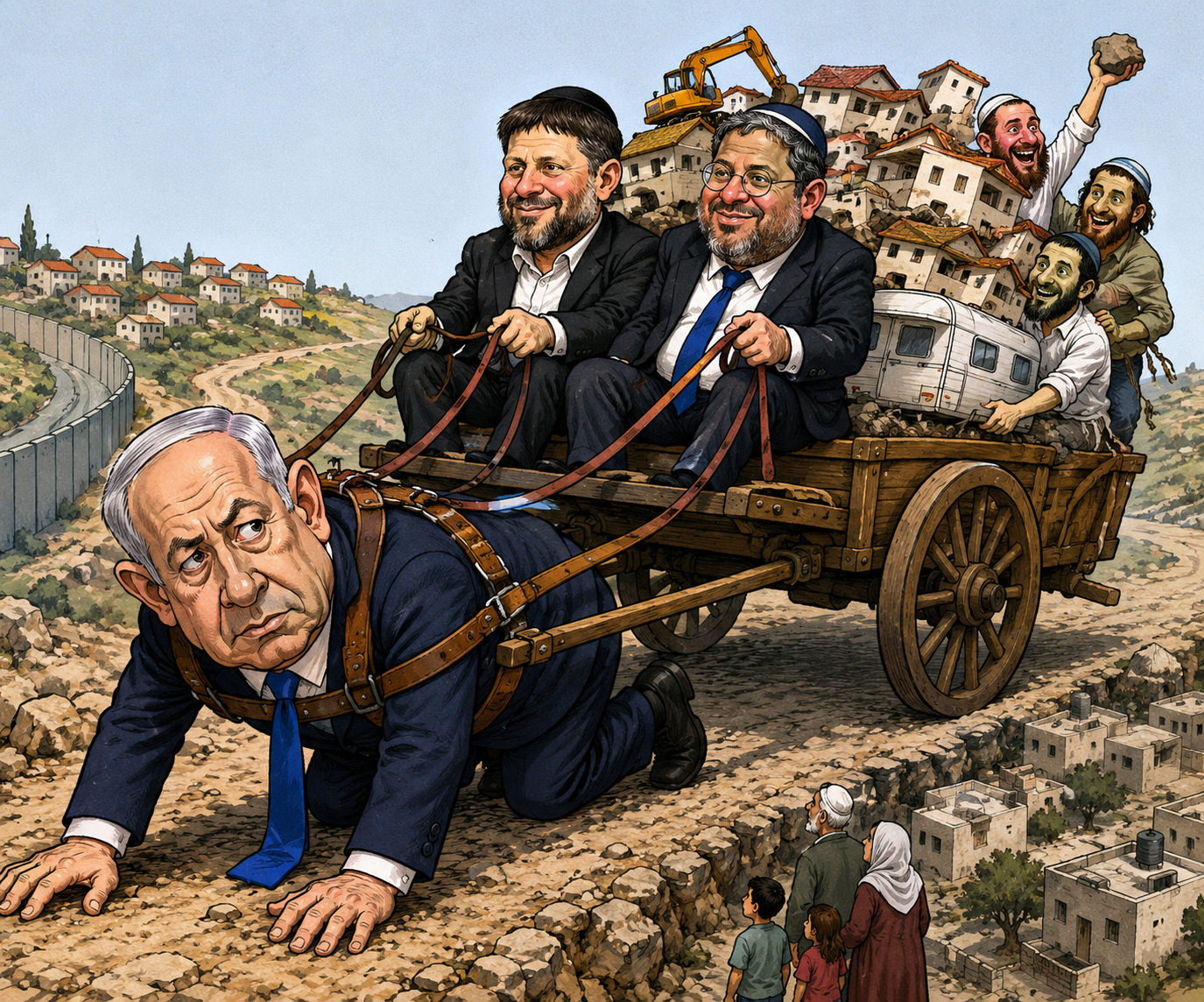
Perhaps the most surprising aspect of the latest events in the West Bank was not what the settlers did — that is hardly new or unexpected — but what Benjamin Netanyahu himself said. The Israeli prime minister denounced the “criminal acts of violence” committed by settlers in the villages of Qusra and Jalud, describing those responsible as a “handful of rioters” whose actions harm law-abiding settlers, interfere with the army’s work, and damage Israel’s standing in the world. This is precisely where the paradox lies: What exactly is Netanyahu condemning? Do the settlers’ actions really contradict his government’s policies, or do they ultimately serve the same project, albeit through different means and methods?

What is happening in the West Bank did not begin over the past few days, nor with the latest attacks. It has been developing for years along a clear trajectory, one that has accelerated dramatically under the current government and since the Gaza war. The United Nations has documented unprecedented levels of settler violence, with more than 1,430 attacks this year affecting some 260 Palestinian communities. Nearly 3,800 Palestinians have been displaced in 2026 as a result of settler violence, demolitions and evictions. These figures cannot simply be viewed as a collection of isolated security incidents; they point to a much deeper transformation taking place on the ground.

Settler violence, in fact, is only one part of a much larger picture. Nearly a thousand checkpoints, barriers, gates, and roadblocks now fragment the West Bank, turning everyday Palestinian life into a continuous struggle with geography, time, permits, and restrictions. In the northern West Bank, the situation has become even more severe, with tens of thousands displaced from the Jenin, Tulkarm and Nur Shams refugee camps, alongside extensive demolitions, bulldozing, and the physical reshaping of these areas.

The E1 settlement project takes the issue to another, more strategic level. Moving forward with E1 would effectively sever geographical continuity between the northern and southern West Bank and further isolate East Jerusalem, making the prospect of a contiguous and viable Palestinian state increasingly detached from realities on the ground. Add to this the transfer of significant powers within the Civil Administration to the authority of Bezalel Smotrich, who has made no secret of his objective of preventing the establishment of a Palestinian state; the empowerment of Itamar Ben-Gvir; repeated incursions into Al Aqsa Mosque and attempts to alter the long-standing status quo; settlement expansion; and a broader set of legislative and administrative measures moving in the same direction. What emerges is not a series of disconnected policies, but an integrated effort to determine the future of the West Bank on the ground before any political settlement can take place.

Against this backdrop, Netanyahu’s reference to a “handful of rioters” becomes difficult to take seriously. It suggests that the settlers operate in a political vacuum or somehow act against the direction set by the government and the state. Yet, however chaotic and violent their actions may appear, the outcome converges with a clearly defined political project: Pushing Palestinians away from their land, expanding settler control, fragmenting Palestinian geography and effectively closing the door on the possibility of a Palestinian state.

The real explanation for Netanyahu’s condemnation may therefore lie in his own words: these attacks, he said, “damage Israel’s standing in the world”. That sentence reveals the essence of the problem from his perspective. The concern appears to be less about the direction of these actions than about their method and image; less about their political consequences than about their transformation into openly violent scenes captured by international media — as happened when an NBC News crew itself came under attack by settlers — at a moment when Israel’s international image has become increasingly associated with the Gaza war, settlement expansion, and settler violence.

Netanyahu’s condemnation can therefore be understood as carrying a dual message. To the outside world, it says that the Israeli government neither endorses nor approves of such violence, even as its policies on the ground move in broadly the same direction. To the domestic audience, the message may be that what is required is not necessarily a change of course, but a more disciplined and calculated management of that course — one that does not further inflame the mounting crisis surrounding Israel’s international image and standing.

This is why Netanyahu’s condemnation is itself worthy of condemnation. The problem in the West Bank has long ceased to be simply a group of extremist settlers acting beyond the state’s control. It is part of a political project in which government policy, settlement expansion, security measures, legislation, and the Civil Administration increasingly converge to reshape the territory and demography of the West Bank and create realities that will be exceedingly difficult to reverse.

When Netanyahu finds himself condemning the natural consequences of a project that his own government has done so much to accelerate, the paradox becomes impossible to miss: He is not merely condemning the settlers. In effect, Netanyahu is condemning himself.

By Mohammad Abu Rumman is a columnist in The Jordan Times.

Continue reading

You Missed

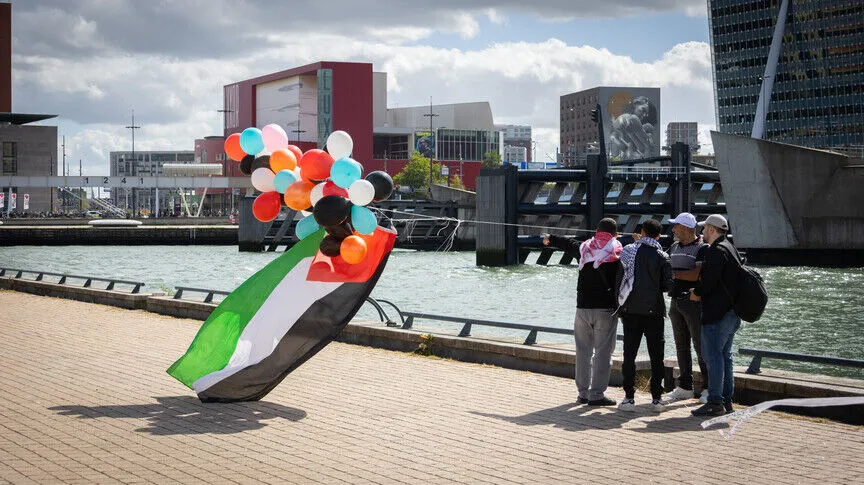
Kites Flown in 11 Dutch Cities For Kids in Gaza

Kites Flown in 11 Dutch Cities For Kids in Gaza

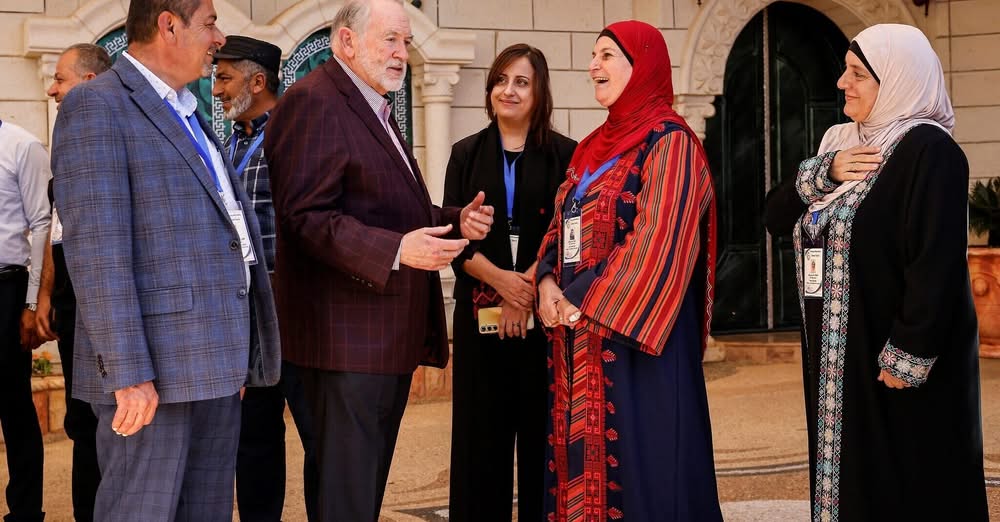
Huckabee in Turmus Ayya, Calls Settler Attacks ‘Terrorism’

Huckabee in Turmus Ayya, Calls Settler Attacks ‘Terrorism’

Israel Forcibly Displaced Three Camps – UN

Israel Forcibly Displaced Three Camps – UN

Israeli Officials Snub Trump’s Plan For Gaza

Israeli Officials Snub Trump’s Plan For Gaza

The Firewood Gatherer

The Firewood Gatherer

The Gaza Curse? Israel’s Water Crisis and the Pollution That Refuses to Respect Borders

  • By Heba
  • September 5, 2026
  • 32 views
The Gaza Curse? Israel’s Water Crisis and the Pollution That Refuses to Respect Borders