Netanyahu Has Lost Against Iran and He Knows it!

By Abdel Bari Atwan

Benjamin Netanyahu must have been the most ardent observer, from a position of frustration, defeat, and helplessness—indeed, a sense of utter defeat—of the largest, longest, and most organized funeral procession for the martyred Imam Ali Khamenei. The assassination he had boasted about completely backfired.

Most notably, the Iranian regime emerged from the Israeli-American war of aggression stronger and more resilient, retaining its missiles, its nuclear program, and its stockpile. Even more importantly, more than one 100 international delegations participated in the funeral procession, in addition to tens of millions of Iranian citizens. Israel, along with the deceived and misled United States, had gambled on these millions joining a massive popular uprising in most Iranian cities to overthrow the ruling regime and install one subservient and loyal to the American-Israeli camp.

The fact that leading Iranian figures were at the forefront of the mourners on the first day, in an open space, with no aircraft in the sky and no tanks, armored vehicles, or missile launchers on the ground, confirms the falsehood claim of US President Donald Trump that he pledged to protect this funeral procession and prevent the Israeli occupation state from carrying out any assassination attempts against these figures, especially the two key negotiators, Parliament Speaker Mohammad Bagher Ghalibaf, and Foreign Minister Dr. Abbas Araqchi.

The appearance of General Ahmad Vahidi, commander of the Revolutionary Guard, at the forefront of the mourning procession for the first time, perhaps confirms that the decision was purely Iranian. The Iranian leadership has repeatedly affirmed, through numerous high-ranking officials, its complete distrust of its American adversary, and it is justified in this assessment. It possesses a long list of practical and on-the-ground evidence to support this, because the consequences of any attack on the funeral procession by Israel and the United States would be extremely costly—politically, militarily, and economically—and would drag the world and its security into a third world war, the course and end of which no one can predict.

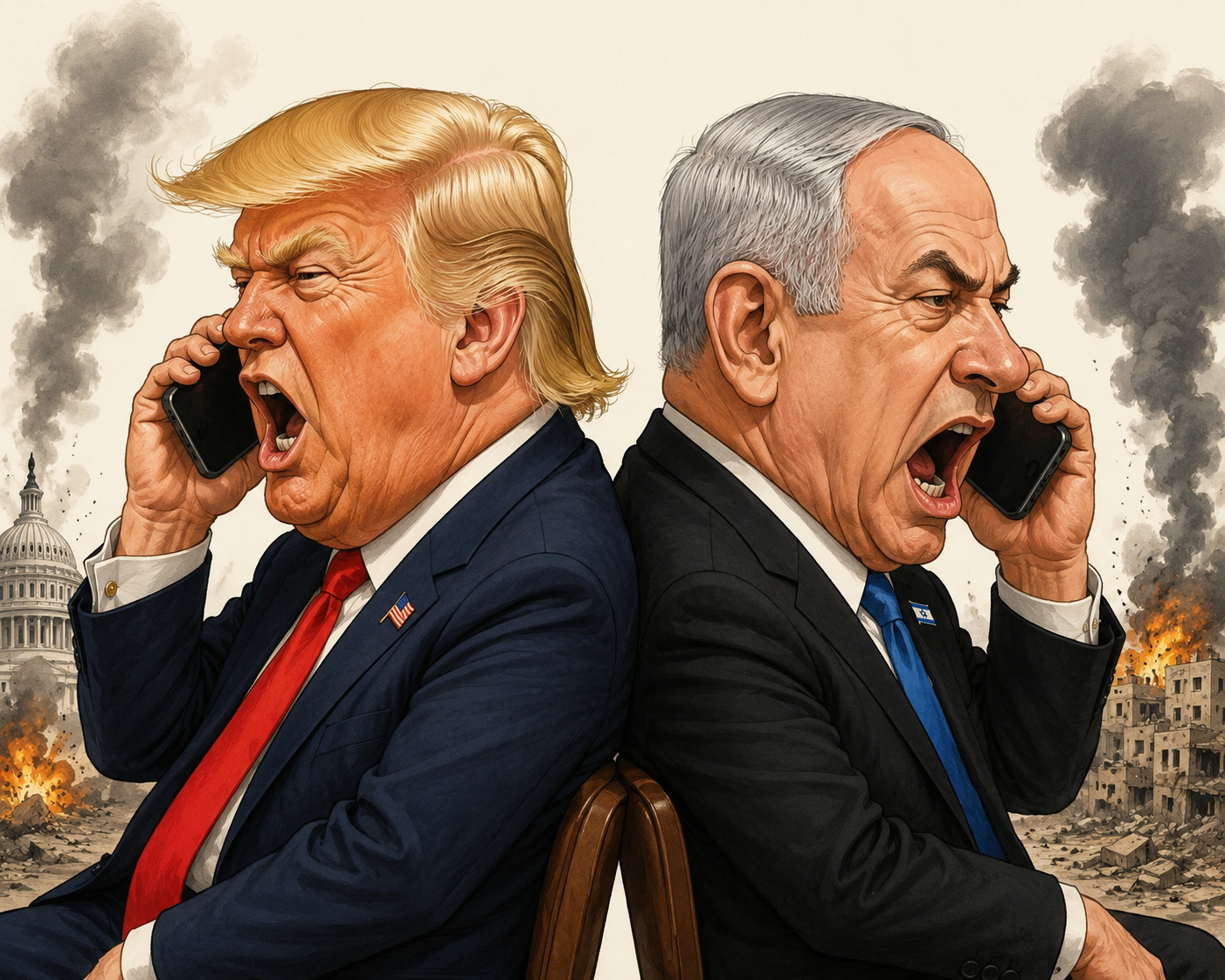
Based on this logic, I am inclined to believe the denial issued by the office of Israeli Prime Minister Benjamin Netanyahu regarding a report published by The New York Times. The report stated that President Trump feared Israel might assassinate the Iranian negotiators Qalibaf and Araqchi, and therefore warned against such an action due to its repercussions on relations between the two countries.

The Israeli terrorist government, which specializes in assassinating Arab and Islamic political and military leaders—from the martyred Imam Ali Khamenei, through the martyred Sayyed Hassan Nasrallah, leader of Hezbollah, to the third Sayyed, Iranian President Ebrahim Raisi, and dozens of Iranian, Lebanese, and Palestinian military leaders—cannot be transformed overnight into a docile lamb.

The undeniable truth is that Israel today is not the Israel of yesterday. Today’s Israel is terrified and defeated. All its plans have failed against the rock of Iranian steadfastness and resistance. Most, if not all, of its strategies have been exposed, its falsehoods revealed, the latest being its bet on dragging America, the superpower, into a war against Iran to completely destroy it and its missile and future nuclear capabilities.

Israel, for whom the incursion into Lebanese territory and the direct aggression against Iran with hundreds of aircraft and seen as a walk in the park, cannot these days bomb the southern suburbs of the capital Beirut with a single missile, because it knows full well that the direct response with hundreds of precision missiles and highly advanced drones to destroy Tel Aviv, Haifa, and Dimona would be immediate.

This process of change, currently taking shape in the region, reveals and confirms a radical shift in the balance of power in the “West Asia” region—not the Middle East, the odious colonial term—and it is thanks to two key leaders and a group of brilliant minds surrounding them:

First: The martyred Imam Sayyid Ali Khamenei, the late Supreme Leader of Iran, who assumed leadership of the Iranian Revolution after the death of its founder, Ayatollah Khomeini. He combined the two best qualities: Political, military, and executive leadership, serving as president for many years, and spiritual leadership as the Supreme Leader and Ayatollah of the Islamic “Imamate.” He developed Iran’s nuclear capabilities, transforming it into a nuclear threshold power with a stockpile of 460 kg of highly enriched uranium.

He also established a missile power with hundreds of highly advanced missiles and drones. He was one of the most ardent supporters of the Palestinian cause, providing it and its resistance fighters with all the necessary weapons and equipment, and fostering unity among the various fronts. He firmly believed that America and Israel are the primary source of danger to the Islamic nation and must be confronted and defeated.

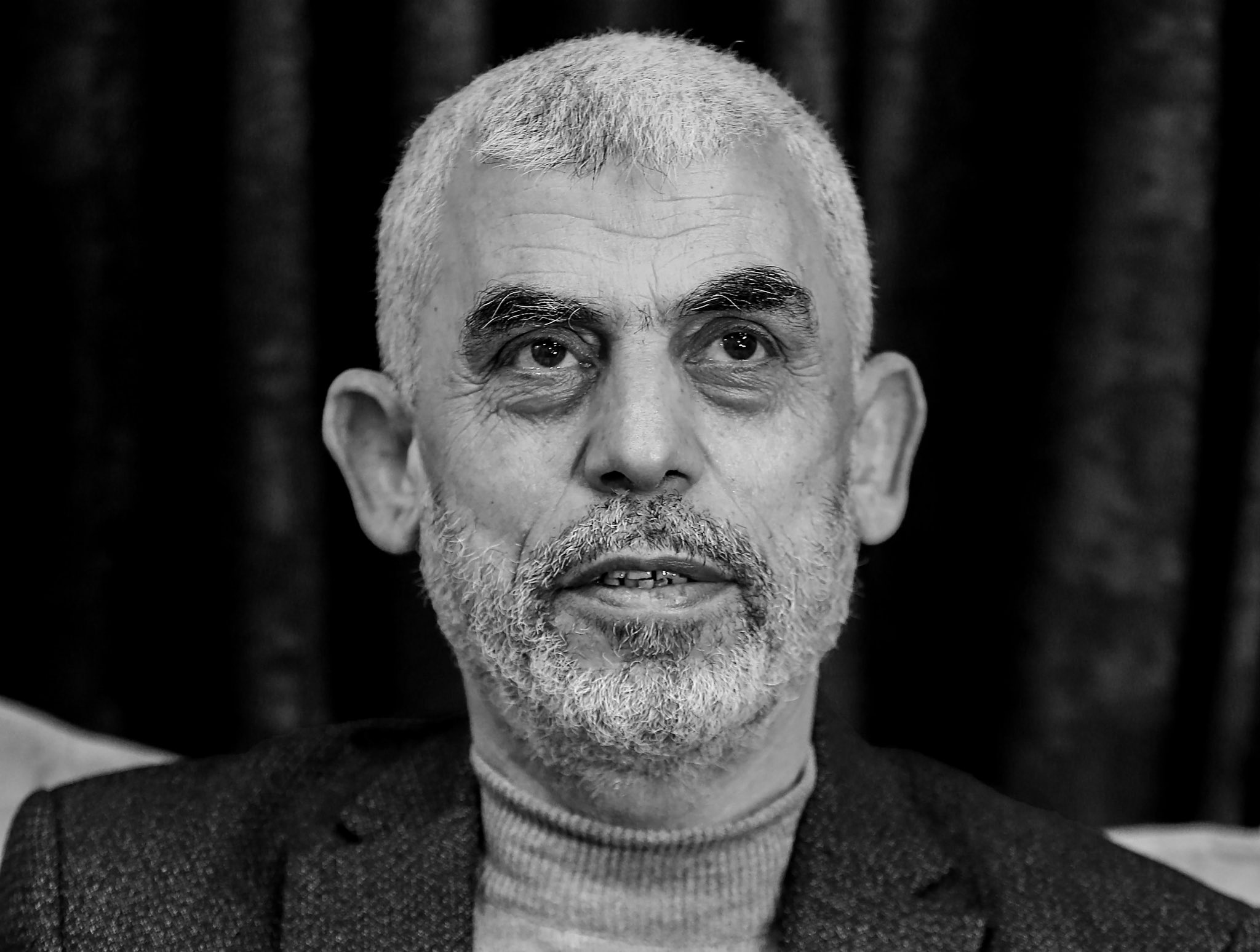
Second: The martyr Yahya Sinwar and his comrades, those geniuses who planned, engineered, and executed the 7 October, 2023, attack, or the “Al-Aqsa Flood,” which shattered the sanctity of Israeli cities and settlements. They breached the heavily fortified borders, equipped with cameras and electrified fences, in the largest military intelligence penetration operation in the region’s history, rivaled only by the Egyptian army’s storming of the Bar-Lev Line in Ramadan of October 1973.

***

Of course, I am not comparing the two men, nor of equating them. Rather, they are the sons of a single, integrated path, deeply-rooted in the faith and history of Islamic resistance and honor. This path leads to dignity and victory, and the second, deeper, and greater phase of resistance against colonialism. With it has begun the process of radical change that will redraw the maps of West Asia and Africa according to the Islamic and Arab vision.

As for Netanyahu, who was merely a figurehead when he threatened to undertake this task and vowed to establish Greater Israel just a few months ago, will be the first victim of this change and so will his entity, and he is currently searching for an “honorable” withdrawal without appearing defeated, but his fate is inevitably prison, if he survives… And time will tell.

Abdel Bari Atwan is the Chief Editor of the Arabic Al Rai Al Youm Arabic website. He is a prolific writer and commentator on the Middle East political scene and has several books to his name including The Islamic State: The Digital Caliphate (2015).  
Continue reading
Israeli Analyst: Hamas Rebuild Its Capabilities

Military analyst for the Israeli channel i24News, Yossi Yehoshua, confirmed that the Hamas movement has “succeeded in rebuilding its capabilities and recruiting new fighters, while Israel is still stuck in a complex situation, which is difficult to get out of, and is waiting for the deal to be concluded.”

The Israeli military analyst believed waiting for the deal is “the most correct and logical way out for Israel, otherwise it will continue to remain stuck in the mud,” explaining “no plan can be useful through the use of force and pressure on Hamas to sign an agreement.”

Yehoshua acknowledged Hamas is capable of recruiting the number of fighters it wants with young men amongst them, indicating this number is increasing, whilst also pointing out that the Islamic Resistance Organization “has doubled its fire as of lates, recently firing about 30 rockets towards the Gaza envelope.”

As for Israel, it is facing problems in their operations in the camps in central Gaza. Although it “carried out airstrikes, Israel faces a problem in carrying out ground activity, due to concerns that the bodies of Israeli prisoners and living prisoners are there.”

Former Israeli Minister, Haim Ramon, confirms that the achievements made by the Israeli army in the battlefields outside Gaza, “confirm the depth of the failure in the Strip,” after its “inability to achieve the main goal of the war, which is to overthrow the Hamas rule and eliminate its military capabilities.”

Ramon pointed out, in an article in the Israeli Maariv, the Hamas military force is still operating, and its civilian rule still extends throughout the Gaza Strip, despite being subjected to severe blows, and the martyrdom of both Yahya Sinwar and Ismail Haniyeh, along with thousands of other fighters according to Jo24.

Continue reading
Houthi Missiles and Israeli Mass Hysteria

By Abdul Bari Atwan

What are the options Israel and America’s has to confront the continuing Yemeni drones and hypersonic missiles? Is it bombing Tehran and/or implementing the latest Syrian case in Sanaa? Why not rule both out?

The Israeli occupation, government and settlers, are today in a state of hysterical panic due to the never-ending hypersonic ballistic missile attacks and the advanced drones bombing the heart of Tel Aviv and causing serious human casualties and huge fires.

This state of hysteria is reflected in four distinguishing signs:

First: Threats by more than one Israeli official to launch a massive attack on Yemen similar to that on Gaza whilst carring out assassination campaigns targeting the political and military leaders of Ansar Allah, especially Abdul-Malik al-Houthi.

Second: More than two million Israeli settlers took refuge in shelters, and sirens sounded in more than 80 locations in occupied Palestine over the past four days.

Third: Closing the airspace of Ben Gurion Airport to air traffic, which created confusion, chaos, isolation, and moral collapse.

https://twitter.com/AlainFrNews/status/1871822099943411713

Fourth: Failure of Israeli celebrations of two major successes achieved according to Hebrew newspapers, namely: In Imposing a ceasefire in Lebanon, stopping attacks from the southern Lebanese border, and the second by toppling the Syrian regime, the jewel of the resistance axis as boasted by Netanyahu that it was he who played the biggest role in achieving this.

Israeli Minister of War Yisrael Katz broke with all established Israeli norms by officially acknowledging, for the first time, responsibility for the assassination of the Ismail Haniyeh in Tehran, Hassan Nasrallah in Lebanon, and Yahya Sinwar in Rafah.

Katz threatened the Houthis leaders that they would face the same fate, and that the destruction that occurred in Gaza and Beirut would be repeated in Sanaa and Hodeidah.

But what terrifies the Israelis most, and worries their leadership is the arrival of the incessant Yemeni missiles and drones to the heart of major Zionist cities, like Tel Aviv, Haifa, Ashkelon, and Eilat with millions of settlers descending into shelters.

Indeed, this points to the failure of Israel’s highly advanced air defense systems to intercept these missiles, prevent them from reaching their targets, and inability to provide security and protection for the settlers in these major cities.

Perhaps the threats of Israeli officials to launch attacks on Yemeni cities reflect the extent of the pain they are suffering as a result of these incoming deadly projectiles.

These, and before them the Israeli, American and British air strikes on Sana’a and Hodeidah, have not achieved the goals of deterring Yemeni missile attacks and stopping their bombing of the Israeli depth.

On the contrary, they gave completely opposite results with their continual launching of hypersonic missiles and drones, and more dangerously, the downing of the advanced US F-18 jet, and the damaging of American aircraft carrier Harry Truman in the Red Sea and its escape to the north to prepare to leave the region, like its predecessors, the Eisenhower, the Lincoln, and many other naval destroyers.

The Yemeni military statements by Brigadier-General Yahya Saree in the past three days confirmed the bombing of Tel Aviv, Ashdod and Ashkelon deep inside Israel will continue as long as the extermination war on Gaza continues.

These statements were backed by the launch of more hypersonic missiles and drones in quick and direct responses to the Israeli threats, which means Yemen is not afraid and is responding in kind, has patience, and is ready to sacrifice.

Yemen has become the spearhead of the axis of resistance, and main front after the situation in Lebanon calmed down following the ceasefire agreement, and the commitment of the Islamic resistance there despite the violations. It is not unlikely that the Israeli occupation state, with American support, and perhaps Arab support as well, will present two main military options in the coming few days:

First: Going to the head of the octopus, i.e. Iran, as described by the Israelis, by launching an expanded tripartite Israeli-American-British attack to destroy it, according to the recommendation of Mossad Chief David Barnea as targeting Sana’a and Hodeidah again will not stop the Yemeni attacks with missiles and drones from reaching the occupied Palestinian depth.

Second: Repeating the Syrian scenario in Sana’a, i.e. an attempt to undermine and exhaust the Houthis by supporting the other Yemeni military groups and movements hostile to it by supplying them with modern weapons, providing air cover for their attacking forces, and mobilizing regional support for this step.

Launching a large tripartite aggression on Yemen may fail and give adverse results, and the same can be said about the expected attack on Iran, and it will be the occupying state and its military bases that may be exposed to bombing with thousands of ballistic and supersonic missiles, because the loss of the resistance axis of its last, most powerful and effective arena (Yemen) means its end and its Iranian leadership, and the creation of a new Middle East led by a “Greater Israel”.

However great Yemen will not surrender, and will not be defeated, as history tells of its victory over all previous invaders. Its steadfastness for more than eight years in the US-backed Gulf War against it confirms it will withstand any new Israeli-American-British targeting it, as its internal incubator is strong and solid and difficult to break due to the rallying of people around its leadership, which is embodied in the massive million-person demonstrations every Friday now for several months in solidarity with our people in the Gaza Strip.

Abdel Bari Atwan is the Chief Editor of Al Rai Al Youm

Continue reading
Nervous Mideast Awaits: Gaza, Lebanon and Possibly Iran

In recent days, the region has witnessed significant events, the most notable of which was the assassination of Yahya Sinwar, the de facto leader of Hamas. This event, heavily relied upon by Israel, came at a time when the military focus had already shifted to the Lebanese front. This shift has kept the war atmosphere ablaze, making it difficult for the international community to put more pressure on Netanyahu to end the war in Gaza.

Meanwhile, Israel will likely manoeuvre by appearing to offer concessions in humanitarian aid and relief efforts, while in reality escalating its pressure on Hamas and seeking to take advantage of the uncertainty within the movement following Sinwar’s death. This situation may force Hamas to urgently craft a new political strategy for the coming phase, especially as its upcoming political battle promises to be one of its most complex challenges.

On the Lebanese front, Hizbollah managed to deliver strikes inside Israel in recent days, the most prominent of which was the drone attack targeting Israeli Prime Minister Benjamin Netanyahu’s residence. Although the attack did not cause significant damage, its symbolism was considerable. Netanyahu quickly seized the opportunity to shift the narrative in his favour, moving from a position of blame in the eyes of some allies to portraying himself as a victim. This allowed him to launch a new campaign of mobilization. Through this effort, Netanyahu aims to gain a green light for a series of operations that could go beyond military and security targets to also include political objectives in Lebanon and Iran, with potential extensions into Syria and Iraq.

At the same time, Israel has intensified its attacks on Hizbollah across various regions of Lebanon, targeting individuals and locations, particularly in Beirut’s southern suburbs. It is clear that Israel aims to dismantle the urban infrastructure of this area while also contributing to ongoing demographic displacement efforts. The broader goal appears to be turning the southern suburbs into an uninhabitable zone, displacing its residents. Ultimately, Israel seeks to reshape Lebanon’s security landscape by creating a deep buffer zone in the south, ensuring a different form of international presence that would replace the current UNIFIL forces, and stripping Hezbollah of its social strongholds in the future.

As Israel works to contain the surrounding fronts, from Gaza to the West Bank, it continues to escalate its strikes against Lebanon and maintains Syria under constant attack to disrupt the presence of Iran and Hezbollah and cut off potential logistical supplies. These actions indicate that Israel is paving the way to target Iran’s Revolutionary Guard Corps (IRGC).

At the same time, Yemen and Iraq remain potential sources of threat. The United States’ robust engagement in targeting the Houthis with specialized operations, particularly using B-2 bombers, suggests that Iraq might be the front activated to distract Israel and create a security crisis within its borders. This aligns with recent operations from Lebanon that aim to create internal security turmoil in Israel, seeking to disrupt daily life. These efforts are expected to escalate through multiple operations using diverse methods, as has already been observed in recent weeks.

The intensification of attacks on Lebanon, the isolation of Syria, and the significant US military buildup, including the deployment of the “THAAD” missile defence systems to Israel, all fall under the broader preparations for what could come after an Israeli strike on Iran. This further suggests that the groundwork has been laid for a significant and targeted attack on the IRGC.

Sensing this looming threat, Iran’s foreign minister has embarked on a wide-reaching diplomatic campaign across the region, though it appears that none of its objectives have been met. The campaign’s primary goal was to prevent military action against Iran while highlighting the dangers of entering an open confrontation with Iran and the security risks it would pose across the region.

The region’s entry into a phase of direct targeting of Iran opens the door to new repercussions. Large swaths of geography could face waves of violence and attacks, particularly given the possibility that various groups and cells may act independently. This raises the level of security threats across much of the region, including areas that are not currently involved in the active conflict zones.

Dr Amer Al Sabaileh, a professor in Jordan University, is a columnist for the Jordan Times

Continue reading
Foreign Policy: Killing Sinwar Will Only Make Hamas More Fierce

A Foreign Policy magazine report confirmed that Israel’s killing of the head of the Hamas political bureau, Yahya Sinwar, will only make the movement more fierce. It added while it may seem like a great achievement today, with time, others will rise in his place – as is always the case – and the resistance will continue.

Middle East affairs specialist Stephen Cook, a columnist for the magazine, said that history shows that “it is impossible to eliminate a resistance movement” by killing its members, and the martyrdom of their leaders will not deter “those who support the cause”, but will lead them to redouble their efforts to achieve their goals.

The writer pointed out that resistance is not a “sterile” project, but rather “an essential part of the identity of those who belong to it,” and for this very reason Sinwar did not want to die a natural death but rather to be martyred by a tank shell on the battlefield, believing that this would strengthen the resistance.

The writer warned the Israelis not to be distracted by celebrating and distributing sweets from reality, and addressed them, asking: “Do you remember the most prominent founders of Hamas, Ahmed Yassin, or the Palestinian leader Khalil al-Wazir (Abu Jihad)? What about the former Secretary-General of Hezbollah, Abbas al-Moussawi, or the founder of the Islamic Jihad Movement, Fathi Shaqaqi? They were monsters to Israel in the past, and it was able to assassinate them all, but the resistance continued.”

He added: “As skilled as the Israelis are in avenging the blood of their dead, they have never succeeded in putting a real end to the resistance over the past decades, so what makes them think that killing Sinwar will lead to a different result this time?”

In the writer’s opinion, Israel’s killing of Sinwar will not break Hamas, but will ignite anger and a desire for revenge in the hearts of its members, just as the assassination of its founder, Hassan al-Banna, in 1949 did not weaken the Muslim Brotherhood.

Cook believes that Israel’s failed strategy of eliminating movements by targeting their leaders is similar to the mentality of the United States after the 11 September attacks. Although the US forces killed the founder of Al-Qaeda, Osama bin Laden, and his successor, Ayman al-Zawahiri, the organization survived, as did the Islamic State after the killing of its founder, Abu Bakr al-Baghdadi, and these organizations still pose a threat to the United States to this day according to JO24.

Continue reading