By Abdel Bari Atwan
Benjamin Netanyahu must have been the most ardent observer, from a position of frustration, defeat, and helplessness—indeed, a sense of utter defeat—of the largest, longest, and most organized funeral procession for the martyred Imam Ali Khamenei. The assassination he had boasted about completely backfired.
Most notably, the Iranian regime emerged from the Israeli-American war of aggression stronger and more resilient, retaining its missiles, its nuclear program, and its stockpile. Even more importantly, more than one 100 international delegations participated in the funeral procession, in addition to tens of millions of Iranian citizens. Israel, along with the deceived and misled United States, had gambled on these millions joining a massive popular uprising in most Iranian cities to overthrow the ruling regime and install one subservient and loyal to the American-Israeli camp.
The fact that leading Iranian figures were at the forefront of the mourners on the first day, in an open space, with no aircraft in the sky and no tanks, armored vehicles, or missile launchers on the ground, confirms the falsehood claim of US President Donald Trump that he pledged to protect this funeral procession and prevent the Israeli occupation state from carrying out any assassination attempts against these figures, especially the two key negotiators, Parliament Speaker Mohammad Bagher Ghalibaf, and Foreign Minister Dr. Abbas Araqchi.
The appearance of General Ahmad Vahidi, commander of the Revolutionary Guard, at the forefront of the mourning procession for the first time, perhaps confirms that the decision was purely Iranian. The Iranian leadership has repeatedly affirmed, through numerous high-ranking officials, its complete distrust of its American adversary, and it is justified in this assessment. It possesses a long list of practical and on-the-ground evidence to support this, because the consequences of any attack on the funeral procession by Israel and the United States would be extremely costly—politically, militarily, and economically—and would drag the world and its security into a third world war, the course and end of which no one can predict.
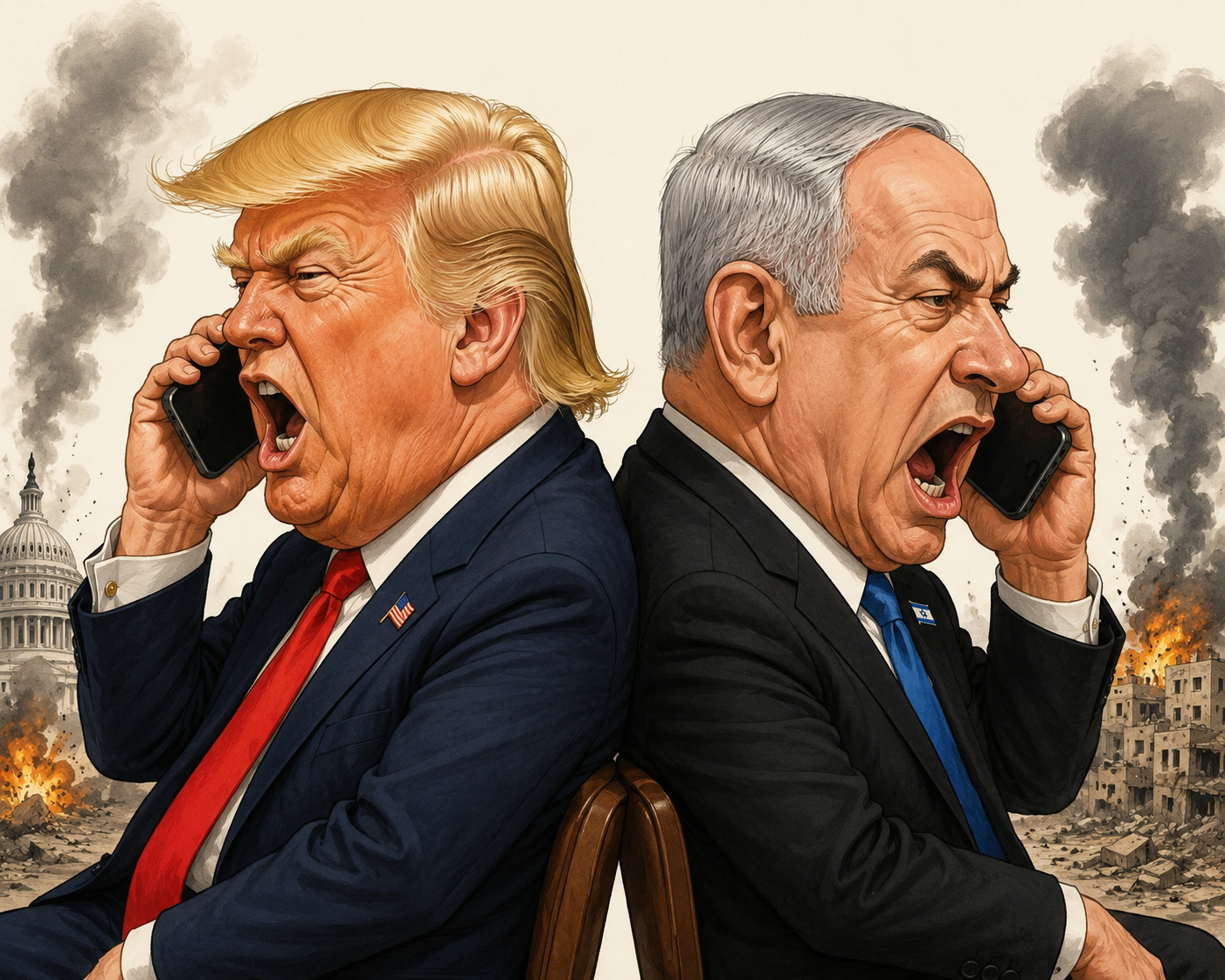
Based on this logic, I am inclined to believe the denial issued by the office of Israeli Prime Minister Benjamin Netanyahu regarding a report published by The New York Times. The report stated that President Trump feared Israel might assassinate the Iranian negotiators Qalibaf and Araqchi, and therefore warned against such an action due to its repercussions on relations between the two countries.
The Israeli terrorist government, which specializes in assassinating Arab and Islamic political and military leaders—from the martyred Imam Ali Khamenei, through the martyred Sayyed Hassan Nasrallah, leader of Hezbollah, to the third Sayyed, Iranian President Ebrahim Raisi, and dozens of Iranian, Lebanese, and Palestinian military leaders—cannot be transformed overnight into a docile lamb.
The undeniable truth is that Israel today is not the Israel of yesterday. Today’s Israel is terrified and defeated. All its plans have failed against the rock of Iranian steadfastness and resistance. Most, if not all, of its strategies have been exposed, its falsehoods revealed, the latest being its bet on dragging America, the superpower, into a war against Iran to completely destroy it and its missile and future nuclear capabilities.
Israel, for whom the incursion into Lebanese territory and the direct aggression against Iran with hundreds of aircraft and seen as a walk in the park, cannot these days bomb the southern suburbs of the capital Beirut with a single missile, because it knows full well that the direct response with hundreds of precision missiles and highly advanced drones to destroy Tel Aviv, Haifa, and Dimona would be immediate.
This process of change, currently taking shape in the region, reveals and confirms a radical shift in the balance of power in the “West Asia” region—not the Middle East, the odious colonial term—and it is thanks to two key leaders and a group of brilliant minds surrounding them:
First: The martyred Imam Sayyid Ali Khamenei, the late Supreme Leader of Iran, who assumed leadership of the Iranian Revolution after the death of its founder, Ayatollah Khomeini. He combined the two best qualities: Political, military, and executive leadership, serving as president for many years, and spiritual leadership as the Supreme Leader and Ayatollah of the Islamic “Imamate.” He developed Iran’s nuclear capabilities, transforming it into a nuclear threshold power with a stockpile of 460 kg of highly enriched uranium.
He also established a missile power with hundreds of highly advanced missiles and drones. He was one of the most ardent supporters of the Palestinian cause, providing it and its resistance fighters with all the necessary weapons and equipment, and fostering unity among the various fronts. He firmly believed that America and Israel are the primary source of danger to the Islamic nation and must be confronted and defeated.
Second: The martyr Yahya Sinwar and his comrades, those geniuses who planned, engineered, and executed the 7 October, 2023, attack, or the “Al-Aqsa Flood,” which shattered the sanctity of Israeli cities and settlements. They breached the heavily fortified borders, equipped with cameras and electrified fences, in the largest military intelligence penetration operation in the region’s history, rivaled only by the Egyptian army’s storming of the Bar-Lev Line in Ramadan of October 1973.
***
Of course, I am not comparing the two men, nor of equating them. Rather, they are the sons of a single, integrated path, deeply-rooted in the faith and history of Islamic resistance and honor. This path leads to dignity and victory, and the second, deeper, and greater phase of resistance against colonialism. With it has begun the process of radical change that will redraw the maps of West Asia and Africa according to the Islamic and Arab vision.
As for Netanyahu, who was merely a figurehead when he threatened to undertake this task and vowed to establish Greater Israel just a few months ago, will be the first victim of this change and so will his entity, and he is currently searching for an “honorable” withdrawal without appearing defeated, but his fate is inevitably prison, if he survives… And time will tell.
Abdel Bari Atwan is the Chief Editor of the Arabic Al Rai Al Youm Arabic website. He is a prolific writer and commentator on the Middle East political scene and has several books to his name including The Islamic State: The Digital Caliphate (2015).

 CrossFireArabia