How Will Trump Get Out of This War?

By Ismail Al Sharif

“We are in an advanced position, and we will decide when the war will end,” said Kazem Gharibabadi, Iranian Deputy Foreign Minister.

President Donald Trump, in coordination with the Zionist entity, is igniting a regional war with Iran which is an unprecedented event in the region. Analysis of the true motives behind this fateful decision vary. One school of thought believes the strategic objective lies in controlling Iranian oil wealth and containing growing Chinese influence. Another links this to the Epstein affair, based on claims of Zionist pressure threatening to expose him to sensitive information.

A third school believes that Trump is tied to political commitments made to Miriam Adelson, who generously funded his election campaign. Some go even further, alleging that Trump, known for his transactional negotiating style, received substantial financial compensation for engaging in this war. In a related context however, recent reports indicate that Trump himself has blamed his son-in-law, Jared Kushner, and several close advisors for instigating this latest military adventure.

Whatever the true motives behind igniting this war, one path seems almost certain to end it: Trump will hold a press conference declaring a unilateral and absolute victory. The precise timing of this declaration remains uncertain.

But the decision to cease hostilities does not rest with Trump alone; it is contingent upon the agreement of two other key parties: Tehran and Israel.

Israel shows no desire to end this war, as it is the primary beneficiary of its continuation. It systematically seeks to dismantle the structure of the Islamic Republic and sees no harm in the regime’s collapse leading to widespread chaos engulfing Iran and the entire region.

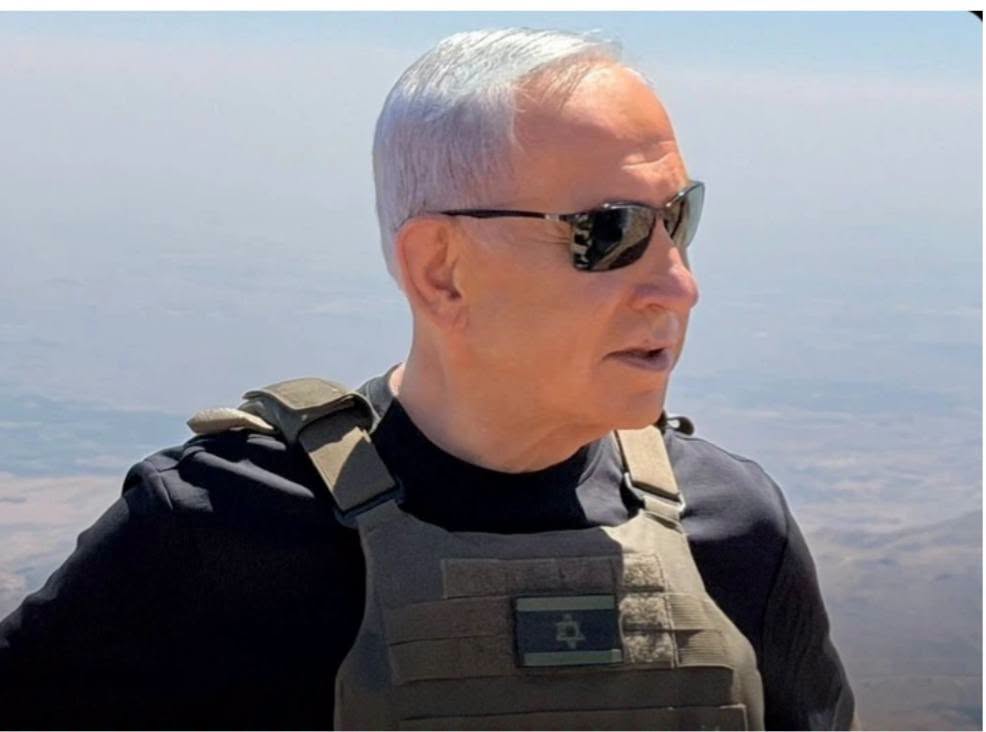
If Trump fails to restrain Netanyahu, the latter will not hesitate to continue his military operations even after any official American declaration of a ceasefire. This may explain why Trump declared that any settlement to end the conflict would only be possible with Netanyahu’s consent and explicit blessing.

However, the Zionist entity might feign acceptance of a ceasefire while its Mossad intelligence apparatus works behind the scenes to fuel separatist and rebellious sentiments among ethnic minorities within Iran, such as the Kurds and Balouchis, potentially threatening the cohesion of the Iranian state from within. In response, Tehran would have no choice but to continue targeting the entity, which would then retaliate swiftly, potentially drawing Trump back into a cycle of military confrontation.

Adding to Trump’s predicament is the possibility that he might ultimately declare a ceasefire unilaterally, without any fundamental change to the structure of the Iranian regime, and without extracting any genuine concessions from Tehran regarding halting uranium enrichment, dismantling its missile program, or severing its ties with regional allies—the very pretexts used to launch the war.

Even more dangerous is the fact that the Islamic Republic’s resilience and its emergence from this crisis with its system intact will make it a unique and exceptional model: The first country to challenge American hegemony and emerge unscathed. This could encourage other countries suffering under the weight of Trump’s policies or ambitions—such as Venezuela and Greenland—to adopt resistance as a path, even if they lack Iran’s military capabilities.

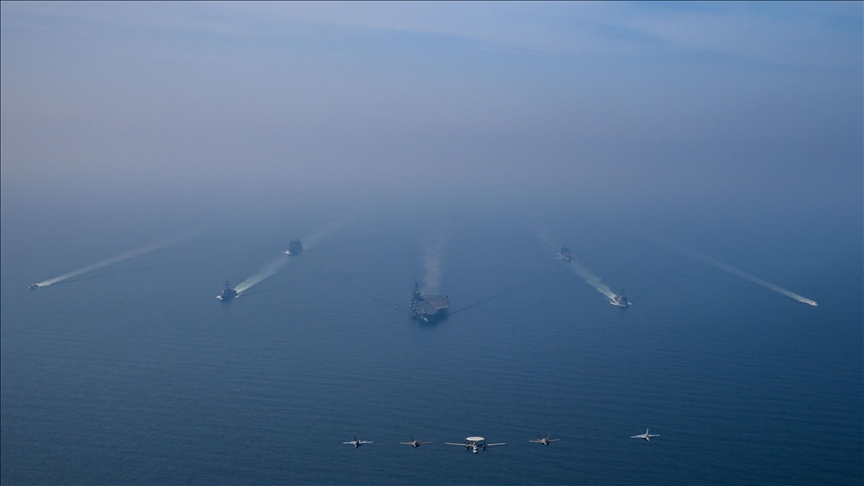
It seems to me that President Trump may be following in the footsteps of his predecessor, George W. Bush, when he famously declared victory in 2003 from the deck of the aircraft carrier USS Abraham Lincoln, which was then—as it is today—at the eye of the American military storm. It is worth recalling here that Bush’s speech was a highly symbolic and premature declaration, one that was quickly contradicted by events, as the war on Iraqi soil continued for nearly a decade afterward.

The war has exhausted Iran and burdened it with immense hardships, making it seriously seek a cessation of hostilities. However, it simultaneously finds itself in direct confrontation with American will. Iranian officials have made it clear that any agreement to a ceasefire and the resumption of negotiations is contingent upon receiving firm guarantees from Washington and Tel Aviv that the aggression will not be repeated. Should Tehran manage to withstand and overcome this phase, it is likely to add to its list of demands one of which is the lifting of some of the sanctions imposed upon it.

Therefore, it appears that the Iranian strategy is essentially based on a policy of systematic attrition; simultaneously exhausting the United States and Israel by driving oil prices to high levels and closing the Strait of Hormuz, the world’s vital energy artery. This would impose heavy economic burdens that might ultimately compel Washington to reconsider its calculations and agree to a ceasefire.

In short, Trump will not be in a position to deliver a victory speech in the next week or two, and any such declaration without genuine cooperation from Israel and Iran will amount to nothing more than empty rhetoric devoid of any real substance on the ground. There is no doubt that President Trump has put himself, his country, and the entire region in a very complex strategic predicament, from which the way out may not be as easy as those who made the decision to go to war imagine.

This analysis was originally written in Arabic and reprinted in crossfirearabia.com

Continue reading
Iran Moves to Major Escalation

Iran’s Revolutionary Guard plans to increase drone attacks by 20 percent and double strategic missile operations amid escalating regional conflict.

Key Developments

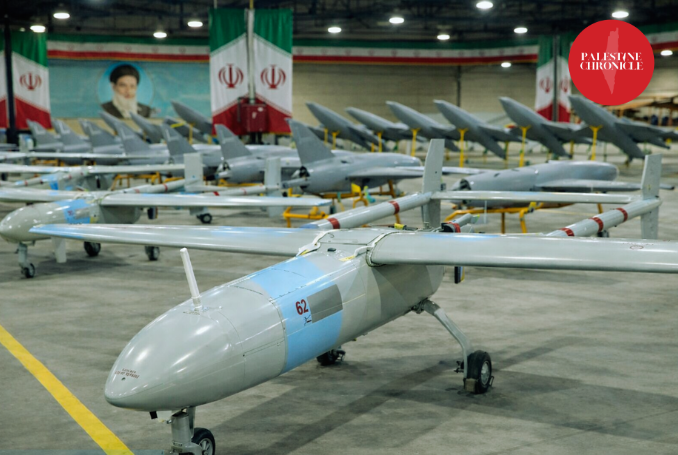
  • Iran’s Islamic Revolutionary Guard Corps (IRGC) plans to increase drone operations by 20 percent and missile operations by 100 percent.
  • The escalation comes as part of Iran’s ongoing military response to US-Israeli attacks on Iranian territory.
  • Iranian forces launched the 28th wave of “Operation True Promise 4,” deploying new-generation missiles against Israeli targets.
  • Israeli media reported a missile carrying cluster munitions that dispersed over multiple locations in Tel Aviv.
  • Iranian commanders say military operations will expand further in the coming hours and days.

Planned Escalation

Iran’s Islamic Revolutionary Guard Corps (IRGC) is preparing to significantly expand its offensive operations, including a major increase in ballistic missile launches and drone deployments, according to informed sources cited by Iran’s Fars News Agency.

The sources said the escalation will begin overnight and is intended to intensify Iran’s military response to the ongoing US-Israeli war on the country.

According to the report, Iran will increase the scale of its drone operations by up to 20 percent while doubling the use of strategic missiles.

Iranian officials frame the move as part of what they describe as a broader confrontation with the administration of US President Donald Trump and the White House.

Sources quoted by Fars said the decision was taken in order to strengthen deterrence and ensure what they described as a decisive response to any military aggression targeting Iran’s interests or population.

The announcement comes as the Israeli-US agression on Iran continues to escalate, with repeated missile exchanges and attacks reported across several fronts in the region.

Iranian authorities say that since the start of the joint US-Israeli campaign on February 28, more than 1,200 people have been killed in Iran, including around 200 children and approximately 200 women, while more than 10,000 civilians have been injured.

Missile Operations

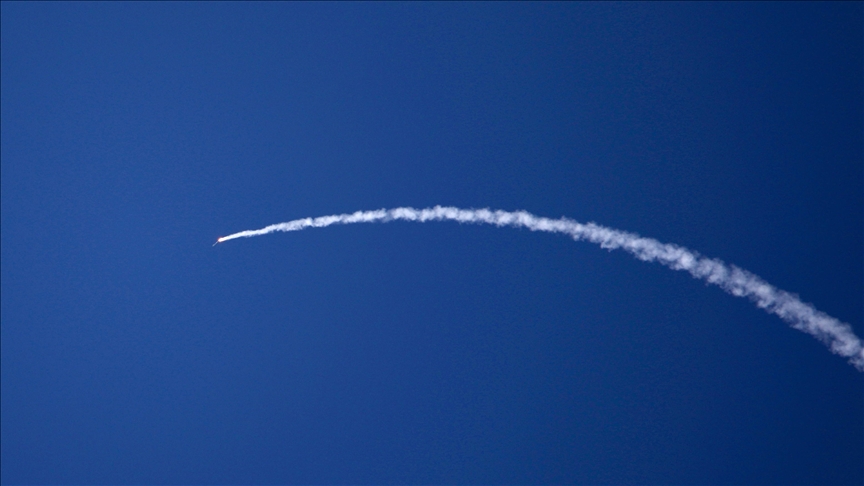
Iranian state television also confirmed that the country’s armed forces launched the 28th wave of missile strikes as part of the ongoing military campaign known as Operation True Promise 4.

According to the Islamic Revolutionary Guard Corps, the latest wave involved the deployment of new-generation missiles and targeted sites in the cities of Beersheba and Tel Aviv.

The IRGC said four heavy-warhead Kheibar missiles were used during the operation.

Iranian military officials stated that the strikes were part of continuing attacks against Israeli targets as well as sites connected to US forces in the region.

In addition to the missile strikes, Iranian forces reportedly targeted the infrastructure of Al-Azraq Air Base, which Iranian officials described as one of the largest offensive bases used by US-aligned forces.

The IRGC said the scale and depth of Iranian attacks would expand in the coming hours and days.

Iranian state media also reported that two waves of missiles were launched within minutes of each other during the latest round of attacks.

Tel Aviv Impact

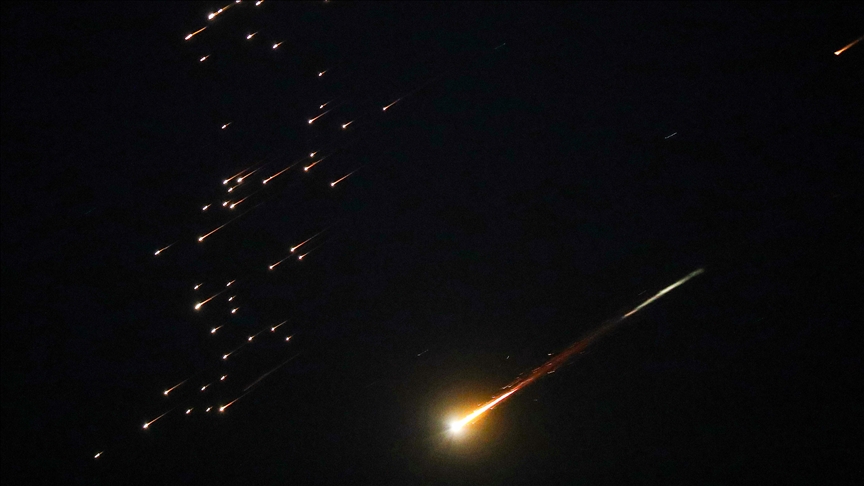
Israeli media reported that one of the Iranian missiles carried a warhead containing more than 16 cluster munitions.

According to those reports, the missile fragmented into multiple explosive sub-munitions over the skies of Tel Aviv.

Fragments reportedly fell across at least sixteen different locations in the city.

Israeli reports said six people were injured after debris from the missile fell across the affected areas.

The missile strike triggered powerful explosions in Tel Aviv and activated air-raid sirens in multiple areas, including Jerusalem and northern regions near the Lebanese border.

Sirens were also reported in the towns of Dovev and Baram amid concerns that drones might infiltrate Israeli airspace.

The incidents were reported within minutes of each other as part of what Israeli media described as concentrated Iranian missile barrages.

Military Statements

Iranian military commanders have continued to signal that the country intends to sustain and expand its military operations.

Major General Ali Abdollahi, commander of Iran’s Khatam al-Anbiya Central Headquarters, said Iran would continue the war until its enemies were forced to retreat.

“Our weapons today are more advanced than before and have high precision and flexibility,” Abdollahi said.

He dismissed claims that foreign governments know the size of Iran’s missile arsenal.

“The enemies said they know the number of our missiles,” Abdollahi stated. “We tell them that they should count the missiles on the battlefield.”

The commander also said Iran had repaired vulnerabilities identified after earlier attacks.

“The armed forces have restored the gaps after the recent aggression,” he said, adding that Iranian forces are deployed across the battlefield with what he described as high morale.

Abdollahi accused US and Israeli forces of targeting civilians inside Iran.

“The malicious enemy targets innocent Iranians in their homes and students in their schools,” he said.

He added that Iran would focus its attacks on military centers and equipment.

Iran’s armed forces also reported targeting specific locations in Haifa and Tel Aviv as well as US military sites, including facilities at Camp Arifjan in Kuwait.

Iranian officials said the strikes were carried out using suicide drones as part of what they described as the country’s response to the ongoing US-Israeli aggression.

The war, which erupted after the US-Israeli attacks on Iran at the end of February, continues to expand across multiple fronts as both sides intensify military operations.

Palestine Chronicle

Continue reading
Iran Strikes Israel 200 Times on Day 1 of War

Israeli emergancy services stated, Saturday night, 89 people were injured as a result of the Iranian attacks while the Hebrew media (Channel 13) reported that Tehran launched more than 200 strikes on the different parts of the Jewish entity on the first day of the US-Israeli war launched on Iran. The Israeli media (Channel 12) reported that central Israel suffered much material damage from the Israeli missiles that launched on Israel despite the fact tenss of these were deflected by Israeli batteries. Yedioth Ahronoth reported injuries in the city of Bnei Brak, near Tel Aviv though it didn’t say how critical these were. The Hebrew Channel 12 reported the number of fires were caused in northern Israel. Air raid sirens were reported in many parts of the country as ringing all day because of the incoming missiles with millions of Israelis taking to underground shelters.

Continue reading
Barghouti: ‘Huckabee Should Resign For US Credibility’

The Secretary-General of the Palestinian National Initiative, Dr. Mustafa Barghouti, stated the recent remarks by US Ambassador Huckabee in Tel Aviv reveal – as he described them – “dangerous convictions” and clear support for the so-called “Greater Israel” project, considering this proposal to be in conflict with the foundations of peace and international and humanitarian law.

Barghouti affirmed to Jordan 24 that the positions attributed to Huckabee reflect an ideological bias that is “racist and anti-peace,” and encourage the undermining of opportunities for a political solution, especially in light of the ongoing tensions in the Palestinian territories. He emphasized that any support for expansionist projects contradicts international law and deepens the instability in the region.

He added that the US administration must take a clear stance regarding these statements, considering that Huckabee’s continued presence in his position after these statements “sends a negative message” to peace efforts. He called for him to be “forced to resign” and held politically accountable, in order to preserve what remains of the credibility of the US role in the political process.

Barghouti concluded by emphasizing that the Palestinian people will continue their political and diplomatic struggle in international forums to confront any projects aimed at entrenching or legitimizing the occupation, calling on the international community to bear its legal and moral responsibilities.

Continue reading