The Secretary-General of the Palestinian National Initiative, Dr. Mustafa Barghouti, stated the recent remarks by US Ambassador Huckabee in Tel Aviv reveal – as he described them – “dangerous convictions” and clear support for the so-called “Greater Israel” project, considering this proposal to be in conflict with the foundations of peace and international and humanitarian law.
Barghouti affirmed to Jordan 24 that the positions attributed to Huckabee reflect an ideological bias that is “racist and anti-peace,” and encourage the undermining of opportunities for a political solution, especially in light of the ongoing tensions in the Palestinian territories. He emphasized that any support for expansionist projects contradicts international law and deepens the instability in the region.
He added that the US administration must take a clear stance regarding these statements, considering that Huckabee’s continued presence in his position after these statements “sends a negative message” to peace efforts. He called for him to be “forced to resign” and held politically accountable, in order to preserve what remains of the credibility of the US role in the political process.
Barghouti concluded by emphasizing that the Palestinian people will continue their political and diplomatic struggle in international forums to confront any projects aimed at entrenching or legitimizing the occupation, calling on the international community to bear its legal and moral responsibilities.
EDITOR’S NOTE: This editorial is written by Abdul Bari Atwan, chief editor of the Arabic Al Rai Al Youm website, on 2 February 2026, on the eve of increasing US military presence sorrounding Iran.
The fact that the Supreme Leader of the Islamic Revolution Ali Khamenei appeared three times in open and public meetings, chatting to ordinary Iranians recently, sends a shocking message to US President Donald Trump and Israeli Prime Minister Benjamin Netanyahu. It shows Khamenei still has the first and final word in Iran, and is not hiding in an underground bunker for fear of assassination; he has not relinquished his leadership and spiritual powers, as some Arab and Western media outlets have promoted in deliberate leaks part of the psychological warfare against Iran, coinciding with the US military buildup in the region.
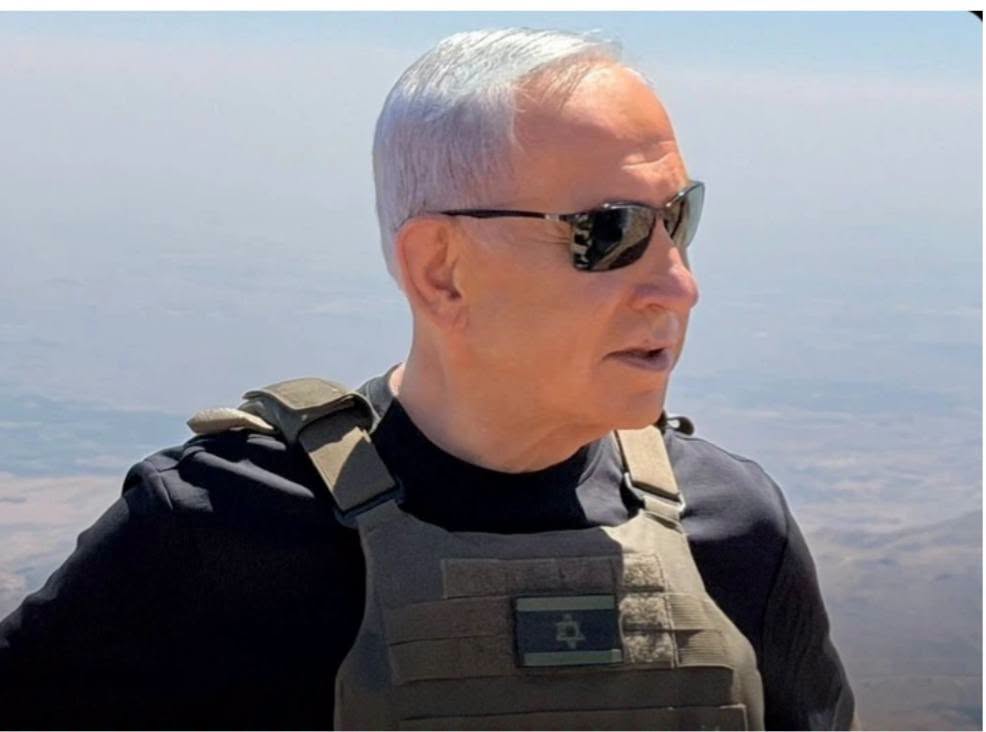
In contrast top Israeli politicians and military officials are rushing to Washington fearing that President Trump will back down from his aggression threats and replace the military option for a peaceful, negotiated one and reaching an accord that does not include Israeli demands and conditions. Israeli Chief of Staff General Eyal Zamir made a surprise visit to Washington recently and met with senior US military leaders, accompanied by his own top military commanders, including the Israeli Air Force Commander.
Frankly however Trump may have already lost this war, just as he lost face and credibility by failing to follow up on his threats and translate them into aggressive actions on Iranian soil as he has resorted to sending mediators, with the latest being his friend, Turkish President Recep Tayyip Erdogan, to reopen negotiations with Iran after realizing his naval buildup and aircraft carrier deployments is not yielding results, nor are they intimidating the Iranian leadership into surrendering. Thus, he may be defeated either way, whether he goes to war or resorts to a political and diplomatic solution to the cri
The key to understanding this confusion and perhaps American retreat, and the postponement of military strikes, lies in the threatening message sent by Ayatollah Ali Khamenei to Trump during his meetings with the numerous Iranians on the anniversary of the late Ayatollah Khomeini’s death. The most prominent point was his assertion that “Iran does not initiate wars, but if it is subjected to aggression, it will confront it with all its might and inflict devastating blows on the enemy.” More importantly, he stated “this war will be a broad regional conflict, it will not be swift, decisive, or short-lived,” nor “clean”— meaning, free of casualties.
A “regional war” means all countries, movements, and military factions aligned with the “axis of resistance” will participate, starting with Hezbollah in Lebanon, the Popular Mobilization Forces in Iraq, and Ansar Allah in Yemen. American bases in the region, particularly on the Arabian side of the Gulf, will be legitimate targets, as will all the American soldiers stationed there and whose numbers exceed 70,000.
What terrifies Israel most is not only Trump’s failure to proceed with his aggression against Iran, but also the possibility of reaching an agreement that contradicts all three of Israel’s objectives:
First: Preventing Iran from acquiring nuclear weapons, halting all Iranian uranium enrichment at high levels, and surrendering all its existing stockpile (480 kilograms) to a neutral country. Second: Halting the development and launch of Iranian missiles, and dismantling all long-range missiles, whether hypersonic or multiple-warhead, capable of reaching deep into Israeli territory, particularly Haifa and Tel Aviv, as demonstrated in the 12-day war last June.
Third: Completely ceasing all financial and missile support for resistance movements, especially Hezbollah in Lebanon and its Iraqi counterpart, factions within the Popular Mobilization Forces such as Harakat al-Nujaba, and Ansar Allah in Yemen.
A Reminder
Everyone should be reminded the return of 5,000 American soldiers in coffins to Washington, killed by the Iraqi resistance after the 2003 invasion, forced the then-President Barack Obama to acknowledge defeat and withdraw 160,000 American troops from Iraq in November 2011. This was made to minimize losses. Thus, it is no exaggeration to say that any aggression against Iran today would result in four times that number of American casualties, if not more, in the initial days of the attack. This is due to Iran’s resolve, advanced missiles and drones, and other secret weapons that might be the biggest surprises of this war, should it start.
Perhaps the decline in oil prices, the collapse of gold and silver prices, and the dollar’s shocking depreciation in global financial markets are among the most prominent indicators confirming what was stated above: The diminishing likelihood of war, Trump’s reluctant inclination towards diplomatic solutions and negotiations, and his initial admission of his failure to achieve a military victory to avoid losses and the protracted regional war threatened by the Iranian Supreme Leader, Ayatollah Ali Khamenei. Time will tell.
With the Abraham Lincoln destroyer entering Middle East waters, everyone is gearing up for another US–Israeli war on Iran—the second in less than eight months.
Anxiety is gripping the region from the Gulf to Iran and all the way to Israel. Foreign states are warning their citizens in these countries to leave, while some airlines have suspended flights to the region. Once again, the Middle East is on a war footing, with fears that a wide conflict could erupt at any moment.
With an additional 7,000 US troops moving to the region, along with jets and fighter planes, the buildup is being described as the biggest “get-ready” military move since 2003, when the US launched its major war on Iraq and reshaped the region. Today, Middle Eastern countries are jittery about the current situation and the possibility of looming instability.
US President Donald Trump is not helping matters. He says he is weighing all options but keeps everyone guessing about his next move. He has warned that if the Iranian government continues its iron-fisted crackdown on protesters, the US could intervene militarily and wage another war on Tehran—much to the delight of the Israeli government, which is reportedly playing a behind-the-scenes role in encouraging unrest in Iran.
Although Trump is raising the war tempo and increasingly saber-rattling through military entrenchment, he is also sending mixed signals. He is not as boisterous as he was when he launched US strikes on Iran’s nuclear facilities in June 2025. What he really wants is to push Iran back to the negotiating table and secure a lasting deal on its nuclear programme. He claims Iran’s facilities have been dealt a significant blow and may never recover, but this seems unrealistic, given how far Iran has advanced in nuclear enrichment.
While Trump describes Israel as a “role model” ally and urges Arab countries to follow suit—a claim many find laughable—Washington appears to be diverging from Tel Aviv over objectives on Iran and may even be at odds with it. Analysts say Israel wants strikes, even multiple ones, to change Iran’s regime and is less concerned about the chaos that could follow.
The United States, by contrast, appears more cautious. US officials do not necessarily want a new regime in Iran, uncertain of what might replace it. They prefer the logic of “the devil you know rather than the devil you don’t.” Washington wants a regime it can work with, despite ideological differences, notwithstanding Trump’s bombastic rhetoric, which Tehran may exploit if it chooses to play the “Mr Nice Guy.”
One analyst suggests Trump wants tangible gains from Iran, preferably access to its oil resources through US petroleum companies, but this may be a pipe dream.
If that fails, Trump is likely to push for a revamped nuclear deal to replace the 2015 agreement, which reached its term in September 2025 and is up for renewal. He wants a deal stamped with a distinctly “Trumpian” identity, even though many issues are already settled. Needless to say, Trump wants to claim credit for clinching the deal.
Today, the region stands on the edge of a precipice. It is touch-and-go. Many experts argue that a Middle East war is not imminent because it is neither politically nor economically feasible. Yet logic often takes a back seat in Trump’s world, especially with Israel pushing for a new wave of attacks on Iran, this time targeting its ballistic missile programme.
Iran, however, says it is ready. It has warned it will strike US bases in the region and beyond if it detects even a hint of an imminent attack. Iranian political and military leaders insist they will not remain sitting ducks for Washington or Tel Aviv. As a result, the region is caught in an escalating poker game.
While many believe Iran and its regional allies, such as Hezbollah and Hamas, have been significantly weakened over the past two years, neither the US nor Israel can be certain of Iran’s real capabilities. This uncertainty leaves them unsure about their next move—or Iran’s.
All this makes both Israel and the United States nervous about unpredictable scenarios across the region. Everyone is waiting, tapping their fingers, bracing for what may come next.
The Americans, both the Biden and Trump administrations, gave the Israelis two years to destroy Hamas in Gaza. This is what the leader of the Palestinian National Initiative Dr Mustapha Al Barghouti started by saying. So for them the time was up came 7 October, 2025.
He maintained that it was because they couldn’t finish the job, the White House acted swiftly, stating enough is enough, the war on Gaza must end. What he said its true because today, the quest to end the war on the enclave and let the aid trucks in is an American initiative, who are almost dragging Israeli Prime Minister Benjamin Netanyahu forward who doesn’t want to end the war.
In a sharp analysis, the Palestinian politician said the Americans, especially President Donald Trump came to realize that the Israelis were not going to destroy Hamas despite the mass destruction of the Gaza Strip through mass weapons supplied by the United States. And that this is when the Trump administration decided to act and enforce the present, albeit fragile ceasefire between Tel Aviv and Hamas and according to him, ending the bloody, destructive, heinous war on Gaza.
But it was not for the lack of trying. When Trump entered the White House in January 2025, he then tried to sell the Rivieria Gaza idea to the region but he finally realized the Palestinian people of Gaza couldn’t be driven out of their homeland, even if it was just temporarily as he claimed and that there was going to be no way of parcelling them out to other countries.
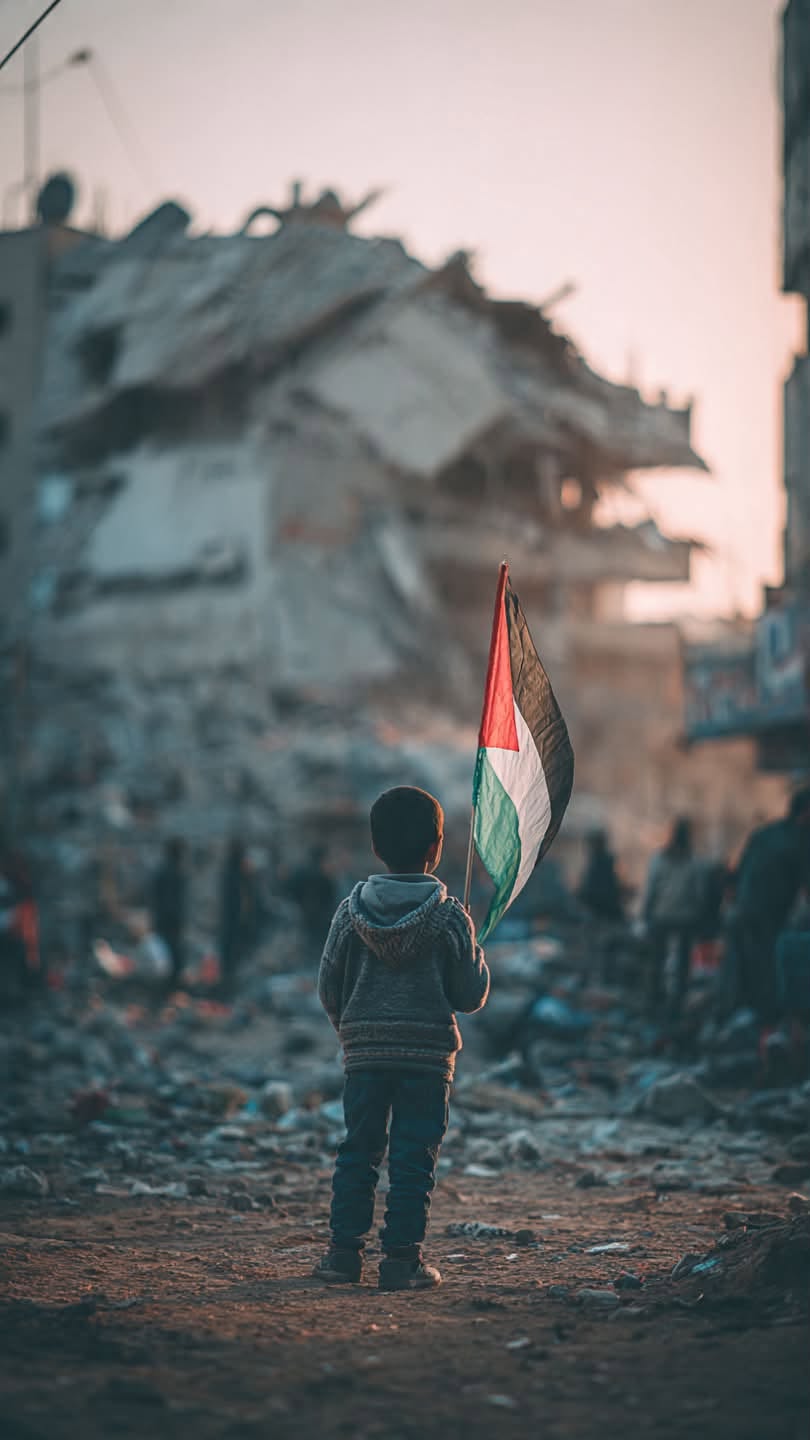
Dr Barghouti pointed out Trump tried very hard talking to states like Indonesia, in the Arab world and those in Africa, seeking all sorts of pressure to persuade them to take the Gazans. But after much diplomatic chitchat, he realized the Palestinians weren’t for moving despite the fact that 250,000 of them were killed and/or injured at the hands of the Israeli army and the horrific mass destruction of their homeland.
This proves that the idea the Palestinian population can be ethnically cleansed – much talk about that in the past two years of the genocide – was a non-starter and that 1948 when hundreds of thousands of Palestinians were driven off their land by Israeli militias and terror gangs was not going to be repeated. Dr Barghouti added the last onslaught on Gaza has proved that ethnic cleansing has become a “closed chapter”.
And he added Trump and his team led by Steve Witkoff and Gerard Kushner became aware of that, and that is when it was decided to push for a ceasefire to save Israel from itself. Barghouti putted this way: Trump realized many countries of the world were turning against Israel because of its murderous actions on Gaza and its mass displacement and starvation of the people of the enclave and to let Netanyahu have his own way by refusing to stop the war would be detrimental to US interests in the region.
Thus when Israel tried to re-start the war on Gaza last Monday – and a week into the ceasefire – when two of its soldiers were killed in Rafah through lone fighters and which Hamas immediately disavowed, the Trump administration played down the incident in the interest of maintaining the ceasefire accord reached at the beginning of October, 2025.
Trump first dispatched Witkoff and Kushner to Israel with Vice-president JD Vance who followed on a two-day visit in an effort to keep tempers low. Their visit to Israel today is sending a message that the US administration wants the ceasefire to be followed through in the interest of Trump’s 20-point peace plan for the Middle East.
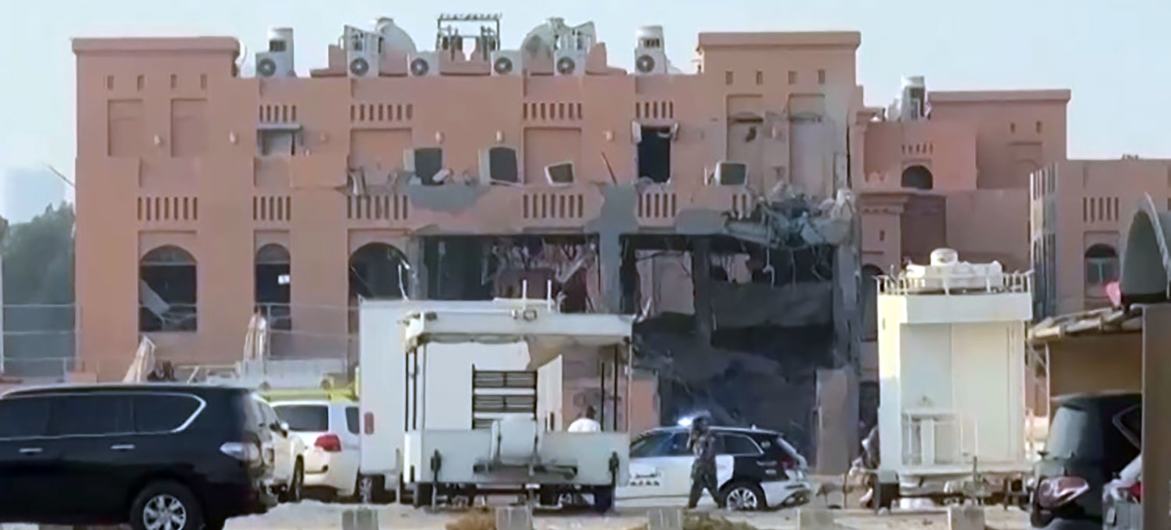
“This is a message to the entire Middle East,” Israeli Knesset Speaker Amir Ohana said in response to the Israeli airstrike that targeted Hamas leaders in the heart of the Qatari capital, Doha.
However, this statement is not merely a comment on the military operation strike into a declared strategic message, telling the entire region, and primarily the Gulf, that Israel, in partnership with Washington, has become the master of the decision-making process in the region.
Ohana’s statement is an explicit and direct threat that leaves no room for interpretation, reflecting the new deterrence doctrine adopted by Tel Aviv: No red lines, no geographical immunities, and no Western allies outside the confines of Israeli dictates. Simply put, anyone who disagrees with us becomes a legitimate target, even if they are in the heart of a friendly capital that hosts the largest American military base.
This makes for a dangerous conclusion: Israel no longer views the Gulf states as partners in stability, but rather as “open arenas for fiery messages.” Washington is blessing the silence, participating in complicity, and mocking the Arabs.
Naked dominance
And don’t forget the Israeli crime in the heart of the Gulf marks the beginning of a new era of naked dominance. It’s not a traditional security operation, but a pivotal turning point in the rules of regional engagement, in which Qatar has been embarrassed both on the Arab level and internationally.
Israel has now publicly placed itself in a circle (no longer concealing its intentions) – through bombing and military strikes – that it no longer sees a distinction between political geography and the theater of operations. More dangerously, the heart of the Gulf today has become openly subject to Tel Aviv’s fire. And who can challenge it?
The strike wasn’t an intelligence leak or a silent targeting, but a direct airstrike in an area teeming with embassies, schools, and residential buildings, in a country that is a major ally of Washington and a pillar of American security in the Middle East.
Thus the message has become clear to everyone: No one is above attack… no state, no sovereignty, no partnership.
The US administration, led by Donald Trump, evaded with a series of conflicting statements about its prior knowledge of the operation. But whether it knew and blessed it, knew and remained silent, knew too late, or did not know at all, the outcome is the same: The American cover was removed, Gulf confidence eroded, and billions perished. The statements of the US embassy in Doha did not go beyond expressions of caution to American citizens, while White House statements swayed between “regret over the location” to “understanding the goal of eliminating terrorism.”
I believe the opposite message was conveyed to the Gulf capitals: Your security is not a priority, and your sovereignty does not equate to a clear position from Washington. The question that now arises however is: Why Qatar? Why now? Why was the strike carried out in Qatar and not in Turkey, or Iran for example? This is despite the fact that the Hamas leaders that were targeted had just returned from Istanbul, suggesting Tel Aviv chose the location not arbitrarily but with deep political awareness. Tel Aviv did not pull the trigger in Istanbul, even though the targeted leaders passed through it only hours earlier.
Turkey, with all its military, political, and international complexity, is not a testing ground for Israeli madness. There are red lines that even Tel Aviv dares not cross… and Turkey is one of them. The potential Turkish military response, the internal Turkish explosion during a highly sensitive election season, and the delicate balance of power within NATO rendered Turkish territory “operationally closed” even to the most violent wings of Israeli decision-making. But when the targeted figures left Istanbul for Doha, everything changed.
Qatar, like other threatened Arab states, in the Israeli security and intelligence mindset, is merely an intermediate gray area, neither neutral nor classified as an “enemy,” potentially a shocking target at a low cost. This is something all Arab decision-makers should be aware of.
From Tel Aviv’s perspective, Qatar is balancing contradictory roles, managing mediation, funding aid, and hosting parties that anger Israel without possessing a genuine deterrent umbrella. There are no international calculations that could prevent a surgical strike carried out within hours. Merely hosting an American base does not make Doha “immune,” but may even further tempt Tel Aviv, proving that decision-making in the region is no longer solely in Washington’s hands but in Tel Aviv as well.
In short, Israel needed a platform to send the biggest message since the Gaza war… so it chose the weakest link, amid the silence of its strongest ally.
Here, we can pause a moment at the Knesset member’s statement that the operation was “a message to the Middle East.” This is not a slip of the tongue, but a strategic doctrine upon which future decisions are based. Israel is telling all countries in the region that whoever harbors Hamas, or even engages in dialogue with it, will be next.
If the Arab states fail to take a firm political stand, the Doha precedent will be repeated elsewhere. It may not be Hamas’s mediation that stands accuse but rather the concepts of neutrality, balance, and even dialogue with parties Tel Aviv disapproves of and which then could become sufficient justification for a strike. It’s a policy of punishment.
This scene is posing existential questions for Arab capitals. If Qatar, Washington’s most important ally, is being bombed over the heads of its own people, after Syria, Lebanon, and Gaza… should we wait for Iraq’s turn? Riyadh? Abu Dhabi? Kuwait? And others? Does the American umbrella truly protect us, or is it used only when our interests intersect with Israel’s?
And what is the point of hosting American bases if they do not prevent airspace violations? Or provide protection?
What happened in Doha is pushing the region to crossroads: Either continuing its position of dependency and timid mediation, or repositioning strategically and developing independent air defenses, which is logistically difficult, or seeking alternative alliances (Ankara, Beijing, Moscow, Tehran?), and establishing red lines that Tel Aviv will not cross.
Qatar now faces difficult choices: Will it withdraw from the Hamas mediation? Will it demand real security guarantees? Will it go further, toward symbolic deterrence or unconventional partnerships? Or will it pay the price of protection once again?
Beware: A war of wills is beginning now. The Israeli airstrike in Doha was not just a blow to Hamas, but also a slap in the face to the sovereignty of the Gulf and the region, an undermining of the prestige of international law and its signed, ratified, and binding agreements, and an insult to the concept of the alleged strategic partnership with America.
This is the beginning of a new era, one in which Israel and Washington declare that the security of the region is no longer an Arab decision. The question now is: Will the Arabs as a whole wake up before “Ohana’s message” reaches other capitals? Perhaps.
The author is a political writer based in Amman Jordan and contributed this article to the Al Rai Alyoum Arabic website


 CrossFireArabia