Genocidal Maniacs: A Story of a Massacre

As part of Israel’s ongoing genocide against Palestinians in the Gaza Strip since October 2023, the Israeli army targeted the Juha family’s home without warning or military necessity. The attack resulted in a massacre that killed approximately 90 civilians – including 71 women and children – and injured dozens more.

According to a Euro-Med Monitor investigation, the Israeli military launched a massive assault against Palestinian civilians in the eastern parts of Gaza City shortly after the first truce ended in early December 2023. This assault included an attack on the Juha family building located in the densely populated Sha’af area, which, along with the Shuja’iyya neighbourhood, was a focus of the offensive.

https://twitter.com/EuroMedHR/status/1894041270512656660

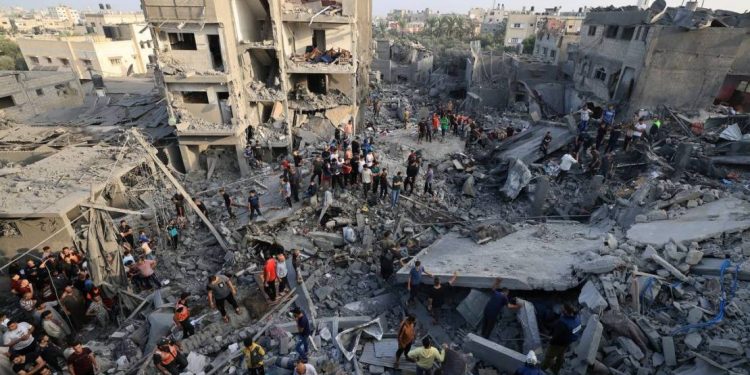
In one of the most horrifying massacres carried out by Israel during its genocidal campaign against the Palestinians in the Strip, Israeli warplanes targeted the Juha family’s home in the Tuffah neighbourhood east of Gaza City on the morning of 6 December 2023. At least one bomb was dropped on the house – a compound consisting of two adjacent buildings. The unexpected attack completely destroyed the building, killing all of its occupants.

Investigations revealed that 117 people were living in the building at the time of the attack, with women, children, and the elderly comprising the majority. This count included both the primary occupants and several relatives who had been forcibly relocated from the Zeitoun neighbourhood.

I couldn’t feel anything and found myself buried under the rubble, surrounded by a raging fire. The ceiling was collapsing on us, and they were only able to dig a small hole to reach us   

Liali Juha, a survivor of the massacre who was pulled from under the rubble

Most occupants died as a result of the bombing, while others were injured—some were dragged out from under the debris, and others were thrown outside by the force of the explosion. At least 17 people suffered burns, wounds, and fractures, with some experiencing limb amputations.

The explosion ripped apart the bodies of many victims, leaving their remains lying across the street and even on the roofs of buildings nearby. Over 34 bodies remain buried beneath the debris, while the bodies of approximately 56 people were recovered from beneath it.

During rescue efforts, residents faced significant challenges, particularly because communication with ambulances or civil defence teams was nearly impossible due to disruptions in internet and communications services. With no official response, the Juha family and local residents took it upon themselves to rescue victims using only manpower and basic tools.

The Euro-Med Monitor team conducted multiple field surveys of the main site. The investigations involved gathering testimonies from witnesses and survivors, documenting the extent of the destruction and the types of weapons used, and analyzing the attack in relation to other incidents in the area.

For accurate information, the team interviewed local residents who were eyewitnesses and nine survivors of the massacre. The Euro-Med Monitor team reviewed satellite images and aerial photos that documented the state of the building and the surrounding area before and after the attack, as well as photographs and video clips provided by eyewitnesses. The team found no evidence of military presence, such as military installations or armed elements, inside or near the Juha family home before or during the attack.

Since the publication of the investigation, Israel has not issued any public statements about the targeting or provided proof that there were any military targets within the building when it was bombed.

https://twitter.com/EuroMedHR/status/1893977539531485628

The report concludes that the principles of distinction, proportionality, and the duty to take necessary precautions – standards that Israel is legally required to uphold – were seriously violated. The timing of the attack, the types of munitions used, and the widespread indiscriminate destruction are deemed unjustifiable.

Euro-Med Monitor asserts that the targeting of the Juha family represents a grave violation of international humanitarian law, constituting multiple war crimes against civilians and civilian property. These actions are described not only as fully-fledged crimes against humanity but also as part of a large-scale, organised military assault on the civilian population of the Gaza Strip that began in October 2023.

The report further highlights that, in addition to the systematic and large-scale destruction of homes and shelters, the targeting of the Juha family home is emblematic of a broader pattern. This pattern includes the partial or complete destruction of 436,000 homes (roughly 92% of the homes in the Gaza Strip) and the killing of over 54,000 Palestinians, most of whom were inside their homes – indicating a deliberate strategy to target Palestinian civilians and infrastructure.

These events show a pattern of systematic and recurrent military attacks that are based on a plan that cannot be justified by any military necessity. This pattern indicates that there is a deliberate strategy to attack Palestinian civilians directly and collectively, while simultaneously destroying large numbers of homes and shelters, as two complementary strategies to accomplish a single goal: the elimination of the Palestinian population in the Strip.

Liali Raid Zaki Juha, 14, a survivor of the massacre who was pulled from under the rubble, recounted to the Euro-Med Monitor team: “I was talking with my uncle’s family when, suddenly, I couldn’t feel anything and found myself buried under the rubble, surrounded by a raging fire.”

“The fire was so intense that my uncle’s family melted before me, and there was no one to rescue us. My uncle’s family kept screaming for help—‘Get us out, Dad, get us out!’—with my uncle replying that he couldn’t,” she said. “The ceiling was collapsing on us, and they were only able to dig a small hole to reach us. They began smashing through with a heavy hammer to pull us from under the rubble, and after a lot of struggle, they managed to do it.”

“My mother, Manal Talat Muhammad Juha, 40, lost her leg,” Juha added, “I lost my brother, the family members of my uncle Iyad Zaki Atta Juha and the family members of my grandfather Zaki Atta Saleh Juha, 67, as well as my grandmother, Hadaya Nuzhat Saleh Juha, 51.”

Based on its findings, the Euro-Med Human Rights Monitor urged the relevant international parties to pressure Israel to allow international and UN investigation and inquiry committees into the Gaza Strip, in compliance with international law and the rulings of the International Court of Justice.  The report calls for prompt, independent, and unbiased investigations into the targeting of civilians in the Juha family massacre and all other crimes committed by Israel against Palestinian civilians in the Gaza Strip.

The investigation also urged the International Criminal Court to examine all of Israel’s crimes in the Gaza Strip, including the murder of the Juha family. It also called for the extension of criminal responsibility to all perpetrators, the issuance of arrest warrants, and trials in compliance with international law and the Rome Statute.

In accordance with Article 6 of the Rome Statute, the report called on the International Court to recognise the events in the Gaza Strip as a crime of genocide and to treat Israel’s actions with the seriousness they warrant.

https://twitter.com/NourNaim88/status/1831538877162520783

The report further demands that all nations cooperate with the International Criminal Court’s investigations by providing specialised factual and legal memoranda on the crimes committed by Israel, refraining from interfering with its work, and assisting in executing arrest warrants against Israeli officials, including Prime Minister Benjamin Netanyahu and former Defence Minister Yoav Galant.

Finally, the report calls for political and economic sanctions against Israel, an immediate halt to all arms sales, exports,  and military and intelligence assistance, and the termination of all licences and agreements related to the import and export of weapons – including dual-use materials and technology – that could be used against the Palestinian people.

EuroMed Human Rights Monitor

Continue reading
Political Schizophrenia and Prisoners’ Exchange

Military and strategic expert Nidal Abu Zeid said that the Netanyahu government increases the intensity of its media discourse between threats and intimidation after each prisoner exchange to cover up its failure in its war on Gaza. He said however, that the intensity of the statements swing low with the approach of the delivery of a new batch of prisoners. He added this is met with calm and stability in the media discourse of the Palestinian resistance, which relies on actions, not words.

Abu Zeid added to Jordan 24 that postponing the release of the seventh batch of Palestinian prisoners at a time when the resistance committed itself to releasing the bodies and its prisoners clearly shows the state of political schizophrenia and confusion the Netanyahu government is suffering from in front of the Israeli street and the world after the scenes and messages of the resistance during the prisoner handover operations.

The military expert indicated the Israeli intransigence in not committing to releasing the Palestinians from prisons will not last long. He expected the seventh batch of Palestinian prisoners will be released before the end of this week.

Continue reading
Saudi Arabia Plays Host to Superpower Politics

By Maksym Skrypchenko 

Diplomatic efforts to end the Russia-Ukraine War are once again in the spotlight, as US and Russian officials meet in Saudi Arabia on Tuesday. In a sharp contrast to the previous administration’s strictly defined red-line policy, representatives from the newly formed US President Donald Trump-aligned diplomatic team—Secretary of State Marco Rubio, National Security Advisor Mike Waltz, and Middle East envoy Steve Witkoff—are set to engage with their Russian counterparts in discussions that many fear may sideline Ukraine’s own interests.

The stakes in this conflict extend far beyond territorial disputes. For Ukraine, the war is an existential struggle against an enemy with centuries of imperial ambition. Every defensive maneuver is a stand for sovereignty and self-determination. Yet recent diplomatic moves suggest that Ukraine’s central role in negotiations may be diminished. Ukrainian President Volodymyr Zelenskyy’s absence from the Saudi meeting underscores the deep-seated concern in Kyiv that their security concerns might be marginalized in a process dominated by transactional interests.

https://twitter.com/canon75gaz81/status/1891836717696450562

Under the previous administration, Washington’s policy was driven by a clear set of red lines designed to deter any actions that could provoke a nuclear-armed adversary. That approach was predicated on a belief that excessive support for Ukraine might lead to a dangerous escalation. However, the new strategy, as signaled by Trump’s team, appears less encumbered by these constraints. Instead, the focus seems to have shifted toward a pragmatic resolution—a process that prioritizes ending the war at the expense of Ukraine’s moral imperatives underpinning their fight for survival. This shift represents not only a departure in tone but also in substance. While the previous policy imposed strict limitations to avoid provoking Moscow, the current approach appears more willing to concede Ukraine’s positions if it serves the broader goal of ending the fighting.

Trump’s affiliation with Saudis


The decision to hold talks in Saudi Arabia is far from arbitrary. The Saudi Kingdom provides a neutral venue and a longstanding trusted mediator especially for figures like Steve Witkoff and Donald Trump, whose longstanding business and diplomatic ties in the region are well known. This credibility is further reinforced by Saudi Arabia’s recent announcement of a $600 billion package with the US, comprising investments and procurement agreements from both public and private sectors.

Moreover, Saudi Arabia’s position outside NATO shields it from the obligations that compel Western allies to enforce international legal mandates, including the ICC arrest warrants issued against top Russian officials, notably Putin. In such an environment, Saudi Arabia offers a secure venue for direct negotiations with Moscow, free from the pressures of external legal mandates.

Meanwhile, high-ranking European officials express growing concern over their exclusion from the process. UK Prime Minister Keir Starmer has even suggested the possibility of deploying British troops to enforce any resulting peace deal, a move that underscores the importance European leaders give to Ukraine’s future. The concerns are not merely about the cessation of hostilities, but about the long-term security guarantees that Ukraine desperately needs. European officials argue that a peace process that excludes Kyiv from the initial stages could lead to an agreement lacking the robust assurances necessary to prevent future Russian aggression.

Russian approach

Russia, for its part, is approaching the negotiations with its signature long-game strategy. Recent reports suggest that Kremlin officials are assembling a team of seasoned negotiators well-versed in securing maximum advantage. Their method is well known—ask for a shopping mall when all they need is a cup of coffee. Just one day before the talks, Russian diplomats are already staging a narrative of victory, asserting that the EU and the UK are entirely non-negotiable parties to any future agreements on Ukraine. According to the Russian representative at the UN, Ukraine has irretrievably lost key territories, and any new arrangement should force Kyiv into accepting a demilitarized, neutral state determined by future elections. This approach is designed to create the illusion of strength while ultimately settling for concessions that heavily favor Russian interests.

Meanwhile, for Ukraine, the principle that “nothing about Ukraine without Ukraine” is more than just a slogan—it is a critical security principle. Ukrainian leaders are rightfully wary of any agreement negotiated without their active participation. With the current US strategy favoring swift and transactional outcomes rather than comprehensive negotiations, there is a real danger that Kyiv’s position could be compromised. The absence of Ukraine from these early discussions may result in a peace agreement that fails to address the existential risks the nation faces. Without strong security guarantees built into any deal, Ukraine remains vulnerable to renewed incursions and a potential destabilization of the entire region.

In this evolving diplomatic landscape, the contrast between the old and new approaches is stark. The previous risk-averse strategy sought to maintain clear boundaries to prevent escalation, whereas the current approach appears more willing to blur those lines in the hope of bringing an end to the bloodshed. Yet by doing so, there is an inherent risk: the very nation fighting for its survival might be reduced to a bargaining chip in a broader geopolitical deal.

It is imperative that Ukraine’s interests remain at the forefront of any negotiations. The war in Ukraine is not just a regional conflict—it is a struggle that speaks to the fundamental principles of sovereignty and self-determination. Any peace settlement that fails to incorporate Ukraine’s security concerns is likely to be unstable at best, and catastrophic at worst.

Maksym Skrypchenko is the president of the Transatlantic Dialogue Center

Continue reading
Hebrew Media: Israel Fails to Achieve Goals of Gaza Onslaught

Israeli media outlets discussed Tel Aviv’s failure to achieve the goals of the war now ongoing for more than a year on the Gaza Strip. Hebrew newspapers stressed that the army is unable to eliminate Hamas, while disagreements are increasing regarding the future of military operations and the ceasefire agreement.

Yitzhak Brik, former commander of the Southern Corps said Israel has not been able to eliminate Hamas despite the war, now in its 15th month. He asked, “If we have failed throughout this period, how can we achieve it now?”

Brik pointed out that Hamas possesses a huge arsenal of weapons, and has developed its combat methods with its fighters exiting the underground tunnels and returning to them easily, making it difficult for the Israeli army to eliminate them.

He added Hamas has regained its strength, and that the Israeli army has destroyed no more than 10% of the tunnels of the Islamist organization, according to Israeli military sources. He also acknowledged that the military operations have not achieved their goals, and that the war has drained the army more so than at the beginning.

The army is a tool of an extremist government


For her part, Yifat Gadot, from the “Families of Soldiers Cry Enough” organization said the Israeli army has become a tool in the hands of an extremist government that is working to prolong the war to achieve its political and ideological interests.

Gadot added that there is a growing conviction among the families of soldiers that the war has become a means of maintaining the government coalition, not achieving security.

As for attorney Yair Nahorai, an expert in religious Zionist movements, he confirmed that the ongoing conflict is not just a war against Hamas, but part of an extremist religious vision that seeks to occupy Gaza, noting that some parties in the Israeli government consider the “sanctity of the land” more important than human life, which complicates the Israeli position even more.

In the same context, political analyst Ben Caspit considered that the real reason behind the slowdown in implementing the second phase of military operations is the political considerations of Prime Minister Benjamin Netanyahu.

He explained that the pressure exerted by right-wing ministers, such as Bezalel Smotrich and Itamar Ben Gvir, is obstructing the making of decisive decisions regarding the war, as Netanyahu seeks to maintain the stability of his government coalition instead of focusing on recovering the prisoners.

A Joke in the Middle East


For his part, Ben Gvir attacked the government, describing it as lacking courage, and missing a historic opportunity to impose its conditions on Hamas, adding that Israel has become a “joke in the Middle East” due to what he described as weak and hesitant decisions in managing the war and negotiations.

In contrast, Gil Dickman (a relative of one of the Israeli female prisoners killed in Gaza) responded to Ben Gvir’s statements, accusing him of politicizing the issue of prisoners, and called on him to support Netanyahu in his efforts to return the kidnapped, criticizing his withdrawal from the government due to recent agreements.

In another context, political analyst Dana Weiss stated that the Israeli political crisis escalated after statements by US President Donald Trump, who pressured the government to expedite the release of prisoners, threatening decisive responses if Israel did not respond to his demands.

Weiss confirmed that the Israeli government found itself between internal pressures from the extreme right and American and international pressures pushing towards diplomatic solutions, which further complicates the internal Israeli scene in light of the ongoing military operations in Gaza.

Continue reading
Israel’s War on West Bank Cities, Displaces 1000s of Palestinians

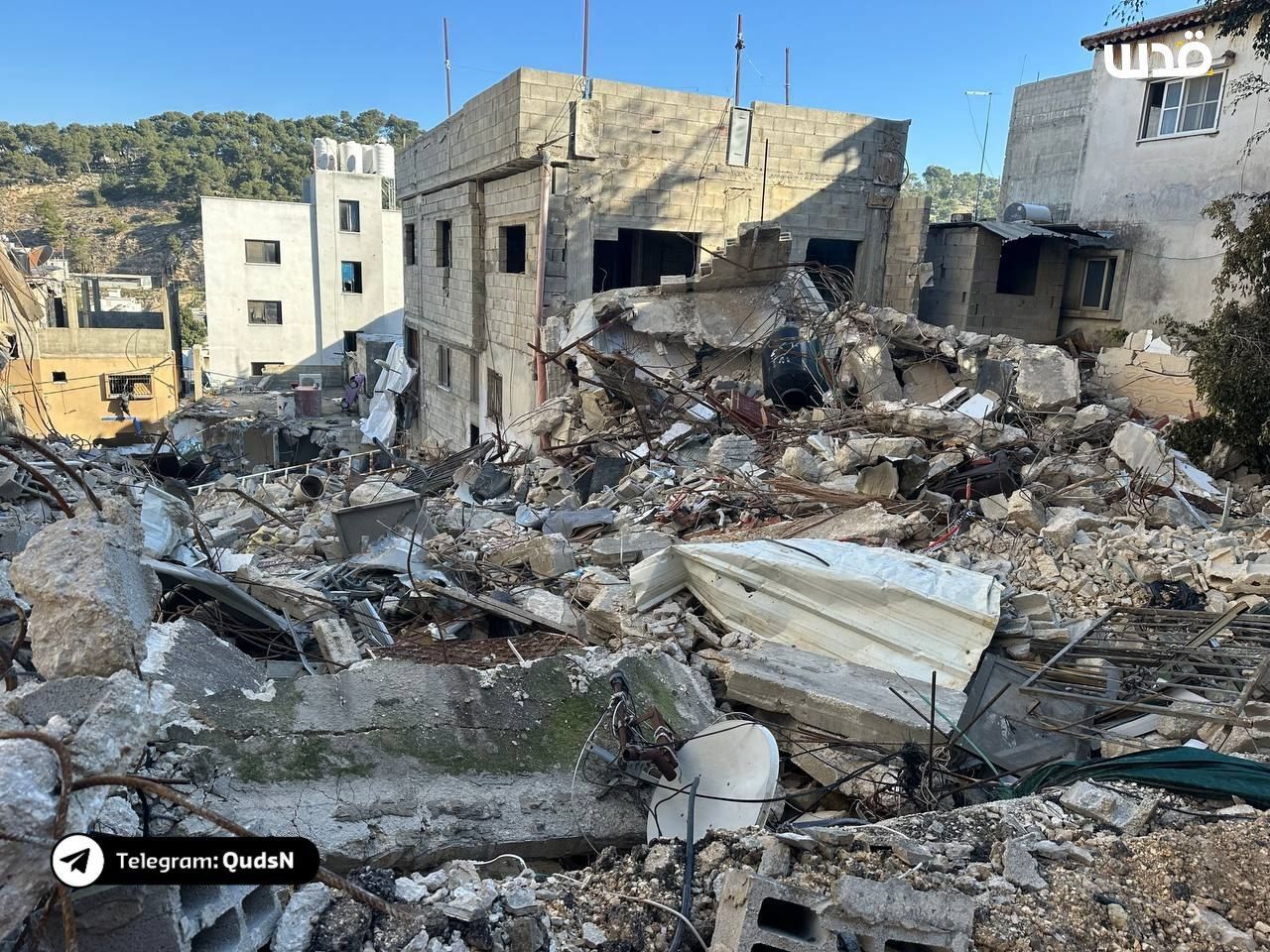
Tens of thousands of Palestinians have been forcibly displaced by Israeli occupation forces during the latest military campaign against Palestinians in the northern West Bank. The goal of the offensive, which is occurring in Palestinian cities, villages, and refugee camps, is to drive the Palestinians from their homes and establish new realities that defy international law.

A Euro-Med Monitor field team observed these forced relocation efforts on Saturday 8 February, when the Israeli occupation army targeted hundreds of Palestinians from the Far’a camp in Tubas, in the northern West Bank. This displacement is part of a larger offensive that started on 2 February and has involved Israeli forces conducting frequent raids on the town of Tamoun and the Far’a camp, destroying infrastructure and homes while enforcing a rigorous curfew on the populace.

Dozens of families have been displaced in recent days, but Saturday’s displacement operations took a more dangerous turn, as hundreds of families were compelled to evacuate due to the threat of home bombings, starvation, and siege. In the face of humiliating and degrading measures, taking place in cold weather and without the provision of adequate shelter, residents were compelled to evacuate their homes via routes imposed by the Israeli military.

The Israeli occupation announced the start of a massive military operation known as “Iron Wall” on 21 January, which started in Jenin, its refugee camp, and its towns. On 27 January, the Israeli military operation expanded to Tulkarm and the governorate’s Tulkarm and Nour Shams refugee camps. This is just one example of the systematic practices, most notably mass forced displacement, by which Israeli forces are intensifying their operations in the West Bank.

The Israeli occupation army has conducted one of the biggest forced displacement operations in the West Bank in decades, displacing over 11,000 residents of the Tulkarm camps and the majority of the Jenin camp’s 13,000 residents. These actions are akin to the strategy used by the Israeli military in the Gaza Strip, where dozens of illegitimate eviction orders resulted in the forced relocation of nearly two million Palestinians.

Israel’s practice of forcibly displacing and expelling Palestinian residents in the West Bank has been in place for years, and has worsened in the last two years. Previously, however, the perpetrators were mostly individuals or members of small groups, as evidenced by their destruction of homes, unlawful confiscation of land and properties, dismantling of a population’s infrastructure, and ejection of  indigenous families or communities in favour of establishing settlement outposts, as was the case in multiple locations in Hebron and the Jordan Valley.

In addition to forced displacement, the Israeli military’s current genocidal strategy in the West Bank has involved widespread destruction. This destruction has included the bombing and burning of residential buildings and infrastructure, the cutting off of water, electricity, and communications supplies, and a killing policy that has resulted in the deaths of 30 Palestinians—including four children—and the injury of almost 300 others over the course of 19 days.

The Israeli occupation has employed a variety of additional tactics to create harsh living conditions in the West Bank. Israeli politicians have made public remarks encouraging the spread of violence there, for example. In particular, an Israeli security official speaking on Channel 14 about the cabinet’s decision to start the Jenin campaign stated, “We are starting a massive campaign in the northern West Bank, which could go on for months. We will act there just as we did in Gaza. We will leave them in ruins.”

Israel is encouraged by its decades-long impunity and the international community’s general attitude of helplessness that accompanied the Israeli crime of in the Gaza Strip for over 15 months. With its recent escalation in aggression, Israel threatens to repeat its Gaza genocide in the West Bank.

In order to protect Palestinian civilians and put an end to Israel’s operation in the West Bank, the international community must act immediately. Israel has repeatedly declared its intention to annex the West Bank and establish sovereignty over it, which has led to the ongoing military operation.

The international community must uphold the Palestinian people’s rights to freedom and dignity; support their right to self-determination, in line with international law; stop Israeli settler colonialism and illegal occupation of Palestinian territory; dismantle its apartheid against, and systematic isolation of, the Palestinians; lift the illegal blockade of the Gaza Strip; hold Israeli perpetrators and their Western allies accountable and prosecute them; and ensure surviving Palestinian victims receive compensation and redress.

EuroMed Human Rights Monitor

Continue reading