Israeli media outlets discussed Tel Aviv’s failure to achieve the goals of the war now ongoing for more than a year on the Gaza Strip. Hebrew newspapers stressed that the army is unable to eliminate Hamas, while disagreements are increasing regarding the future of military operations and the ceasefire agreement.
Yitzhak Brik, former commander of the Southern Corps said Israel has not been able to eliminate Hamas despite the war, now in its 15th month. He asked, “If we have failed throughout this period, how can we achieve it now?”
Brik pointed out that Hamas possesses a huge arsenal of weapons, and has developed its combat methods with its fighters exiting the underground tunnels and returning to them easily, making it difficult for the Israeli army to eliminate them.
He added Hamas has regained its strength, and that the Israeli army has destroyed no more than 10% of the tunnels of the Islamist organization, according to Israeli military sources. He also acknowledged that the military operations have not achieved their goals, and that the war has drained the army more so than at the beginning.
The army is a tool of an extremist government
For her part, Yifat Gadot, from the “Families of Soldiers Cry Enough” organization said the Israeli army has become a tool in the hands of an extremist government that is working to prolong the war to achieve its political and ideological interests.
Gadot added that there is a growing conviction among the families of soldiers that the war has become a means of maintaining the government coalition, not achieving security.
As for attorney Yair Nahorai, an expert in religious Zionist movements, he confirmed that the ongoing conflict is not just a war against Hamas, but part of an extremist religious vision that seeks to occupy Gaza, noting that some parties in the Israeli government consider the “sanctity of the land” more important than human life, which complicates the Israeli position even more.
In the same context, political analyst Ben Caspit considered that the real reason behind the slowdown in implementing the second phase of military operations is the political considerations of Prime Minister Benjamin Netanyahu.
He explained that the pressure exerted by right-wing ministers, such as Bezalel Smotrich and Itamar Ben Gvir, is obstructing the making of decisive decisions regarding the war, as Netanyahu seeks to maintain the stability of his government coalition instead of focusing on recovering the prisoners.
A Joke in the Middle East
For his part, Ben Gvir attacked the government, describing it as lacking courage, and missing a historic opportunity to impose its conditions on Hamas, adding that Israel has become a “joke in the Middle East” due to what he described as weak and hesitant decisions in managing the war and negotiations.
In contrast, Gil Dickman (a relative of one of the Israeli female prisoners killed in Gaza) responded to Ben Gvir’s statements, accusing him of politicizing the issue of prisoners, and called on him to support Netanyahu in his efforts to return the kidnapped, criticizing his withdrawal from the government due to recent agreements.
In another context, political analyst Dana Weiss stated that the Israeli political crisis escalated after statements by US President Donald Trump, who pressured the government to expedite the release of prisoners, threatening decisive responses if Israel did not respond to his demands.
Weiss confirmed that the Israeli government found itself between internal pressures from the extreme right and American and international pressures pushing towards diplomatic solutions, which further complicates the internal Israeli scene in light of the ongoing military operations in Gaza.
Tens of thousands of Palestinians have been forcibly displaced by Israeli occupation forces during the latest military campaign against Palestinians in the northern West Bank. The goal of the offensive, which is occurring in Palestinian cities, villages, and refugee camps, is to drive the Palestinians from their homes and establish new realities that defy international law.
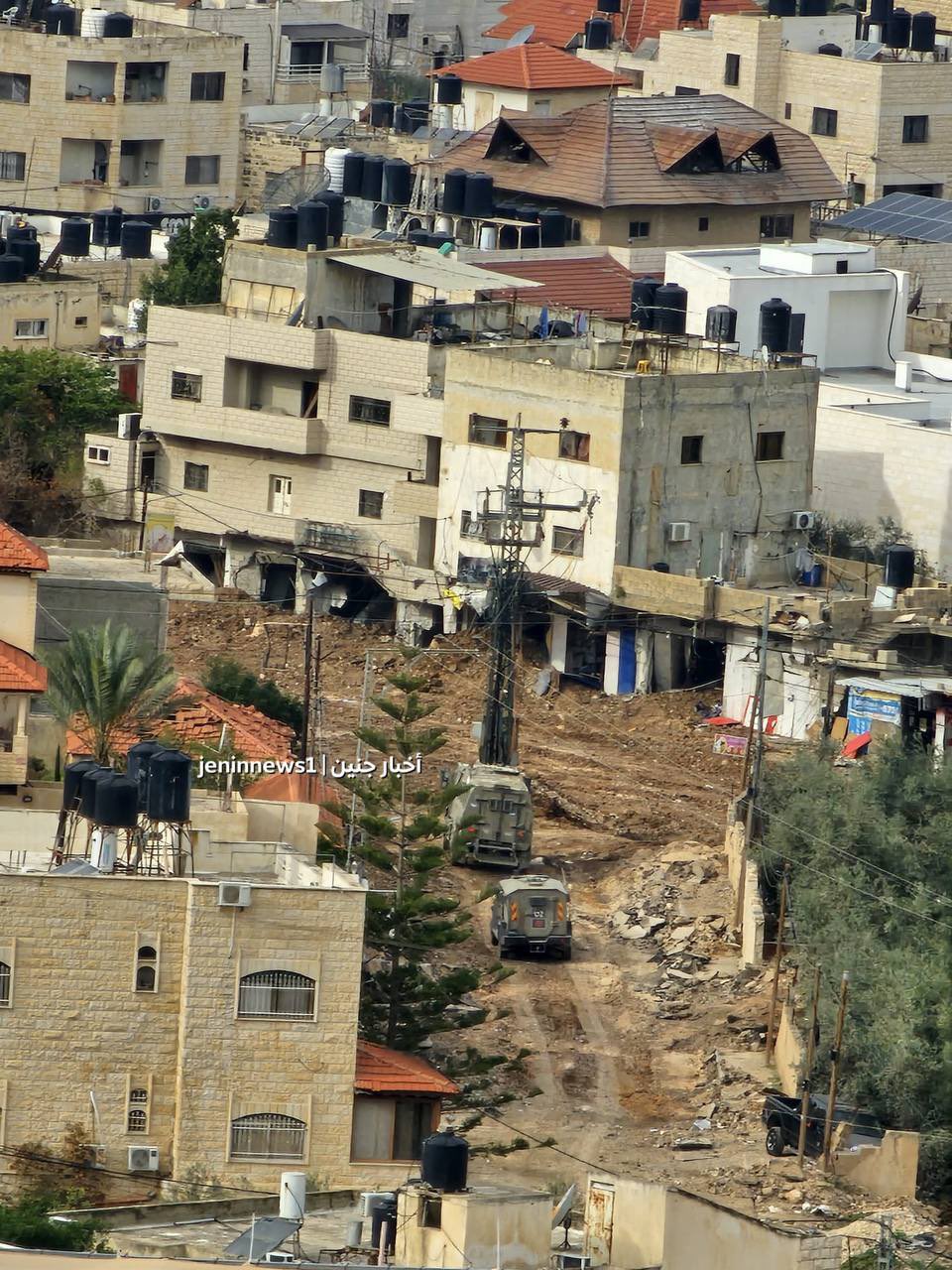
A Euro-Med Monitor field team observed these forced relocation efforts on Saturday 8 February, when the Israeli occupation army targeted hundreds of Palestinians from the Far’a camp in Tubas, in the northern West Bank. This displacement is part of a larger offensive that started on 2 February and has involved Israeli forces conducting frequent raids on the town of Tamoun and the Far’a camp, destroying infrastructure and homes while enforcing a rigorous curfew on the populace.
Dozens of families have been displaced in recent days, but Saturday’s displacement operations took a more dangerous turn, as hundreds of families were compelled to evacuate due to the threat of home bombings, starvation, and siege. In the face of humiliating and degrading measures, taking place in cold weather and without the provision of adequate shelter, residents were compelled to evacuate their homes via routes imposed by the Israeli military.
In its latest ethnic cleansing efforts, Israel forcibly uproots thousands of Palestinians in the West Bank by Euro-Med Human Rights Monitorhttps://t.co/rdtDCDKbQp
Tens of thousands of Palestinians have been forcibly displaced by Israeli occupation forces during the latest…
The Israeli occupation announced the start of a massive military operation known as “Iron Wall” on 21 January, which started in Jenin, its refugee camp, and its towns. On 27 January, the Israeli military operation expanded to Tulkarm and the governorate’s Tulkarm and Nour Shams refugee camps. This is just one example of the systematic practices, most notably mass forced displacement, by which Israeli forces are intensifying their operations in the West Bank.
The Israeli occupation army has conducted one of the biggest forced displacement operations in the West Bank in decades, displacing over 11,000 residents of the Tulkarm camps and the majority of the Jenin camp’s 13,000 residents. These actions are akin to the strategy used by the Israeli military in the Gaza Strip, where dozens of illegitimate eviction orders resulted in the forced relocation of nearly two million Palestinians.
Israel’s practice of forcibly displacing and expelling Palestinian residents in the West Bank has been in place for years, and has worsened in the last two years. Previously, however, the perpetrators were mostly individuals or members of small groups, as evidenced by their destruction of homes, unlawful confiscation of land and properties, dismantling of a population’s infrastructure, and ejection of indigenous families or communities in favour of establishing settlement outposts, as was the case in multiple locations in Hebron and the Jordan Valley.
In addition to forced displacement, the Israeli military’s current genocidal strategy in the West Bank has involved widespread destruction. This destruction has included the bombing and burning of residential buildings and infrastructure, the cutting off of water, electricity, and communications supplies, and a killing policy that has resulted in the deaths of 30 Palestinians—including four children—and the injury of almost 300 others over the course of 19 days.
The Israeli occupation has employed a variety of additional tactics to create harsh living conditions in the West Bank. Israeli politicians have made public remarks encouraging the spread of violence there, for example. In particular, an Israeli security official speaking on Channel 14 about the cabinet’s decision to start the Jenin campaign stated, “We are starting a massive campaign in the northern West Bank, which could go on for months. We will act there just as we did in Gaza. We will leave them in ruins.”
Israel is encouraged by its decades-long impunity and the international community’s general attitude of helplessness that accompanied the Israeli crime of in the Gaza Strip for over 15 months. With its recent escalation in aggression, Israel threatens to repeat its Gaza genocide in the West Bank.
In order to protect Palestinian civilians and put an end to Israel’s operation in the West Bank, the international community must act immediately. Israel has repeatedly declared its intention to annex the West Bank and establish sovereignty over it, which has led to the ongoing military operation.
The international community must uphold the Palestinian people’s rights to freedom and dignity; support their right to self-determination, in line with international law; stop Israeli settler colonialism and illegal occupation of Palestinian territory; dismantle its apartheid against, and systematic isolation of, the Palestinians; lift the illegal blockade of the Gaza Strip; hold Israeli perpetrators and their Western allies accountable and prosecute them; and ensure surviving Palestinian victims receive compensation and redress.
The recent remarks by US President Donald Trump suggesting the displacement of Gaza’s residents to Egypt and Jordan as a “practical solution” for Gaza’s reconstruction carries significant risks. This proposal not only overlooks the fundamental complexities of the issue, from the acceptance of displacement by Gaza’s residents to the logistical feasibility of relocating populations and securing the consent of all involved parties, but also reveals that forced displacement appears to be Trump’s primary solution, one that the region may have to contend with for years to come.
It is essential to remember that we are observing Trump in the early phases of his political return. He is eager to present himself as a strong and decisive leader capable of imposing solutions, even if they appear coercive. However, as with many theoretical ideas that seem simple at first glance, the real challenge lies in their practical implementation.
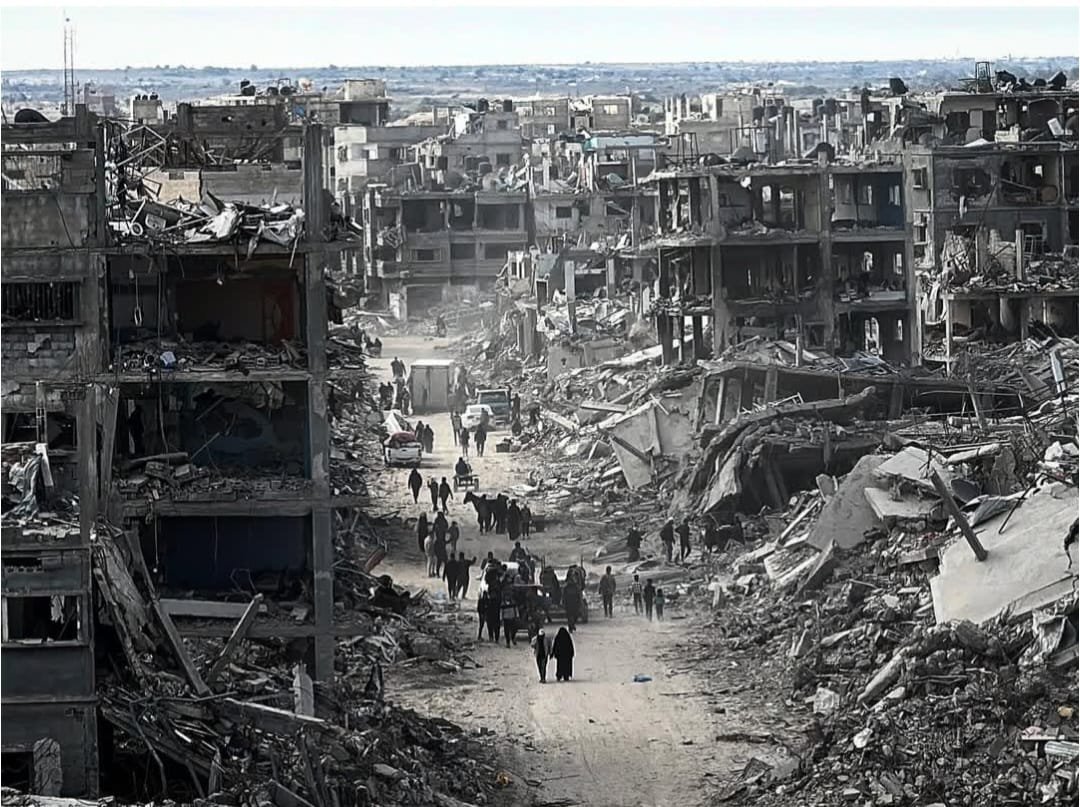
We are living through an unprecedented era. The events following October 7 have fundamentally altered the region. Gaza is witnessing destruction on a scale it has never seen before. Amid this devastation, Israel appears to be betting on worsening the humanitarian crisis, hoping to make life in Gaza unbearable for its residents. This coincides with difficulties in finding realistic reconstruction solutions or even implementing humanitarian relief efforts that adequately respond to the scale of the disaster.
Israel’s strategic vision is focused on achieving demographic displacement in Gaza and redrawing its geographic landscape. These goals might seem attainable if the crisis continues, and the humanitarian catastrophe deepens. What is alarming, however, is that proposing Jordan as an option in this context may implicitly lay the groundwork for considering it a destination for displaced Palestinians from the West Bank as well, should this theory of forced displacement extend beyond Gaza.
Indeed, Israel is actively pursuing this scenario by seeking to reshape the geography of the West Bank through dismantling densely populated areas, such as the refugee camps in Jenin, Nablus and Tulkarm. This objective aligns with the vision of the Trump administration, which supports Israel’s ambitions under the framework of “Judea and Samaria.” Neither Egypt nor Jordan has had sufficient opportunity to directly engage with the US administration to present alternatives or explain the security, economic, and political risks associated with these proposals.
Jordan’s strategic response should focus on warning against these scenarios while presenting viable alternatives. Highlighting the potential shocks these steps could inflict on a key ally like the United States is crucial. Additionally, Jordan has several cards to play, particularly in the economic domain. These include regional energy projects, development initiatives, and the reconstruction of Syria. Such endeavours could offer the US tangible benefits across multiple fronts, forming the foundation for alternative approaches.
In short, navigating Trump’s looming flood of proposals requires a nuanced understanding of American perspectives and avoiding direct confrontation whenever possible. At the same time, Jordan must strengthen its position with robust Arab support. Elevating strategic relations with Saudi Arabia is particularly crucial, given its dominant role in the current and upcoming phases and its centrality to Trump’s economic and political ambitions, including regional peace efforts.
Nevertheless, Israeli Prime Minister Netanyahu’s visit to Washington may signal a new escalation in the region. The Gaza conflict remains unresolved, and tensions in the West Bank and Lebanon persist. If the conflict extends further to Iran, a broader escalation could stretch from Iraq to Iran, potentially resulting in the imposition of forced displacement as a grim humanitarian reality, especially if violence escalates once again in Gaza and intensifies in the West Bank.
Dr Amer Al Sabaileh is a professor and a columnist at the Jordan Times
Military and strategic expert Nidal Abu Zeid said the scenes of the handing over of the three Israeli prisoners, Saturday, were more disciplined and organized and carried many messages that the Palestinian resistance wanted to send to the Israeli occupation as part of the superiority it achieved in the battle of image and media.
Abu Zeid added to Jordan 24 the handover took place in two locations in the north and center of the Gaza Strip, which indicates the continuing strength of leadership and control of the resistance even after Hamas announced the martyrdom of seven of the first-rank leaders of the Qassam Brigades.
He pointed out this indicated that the Palestinian resistance also succeeded in overcoming the crisis of its organizational structure as well as in replacing its leaders who were killed in Israel.
Abu Zeid pointed out the black jeep that appeared during the handover of the two prisoners in Khan Yunis is one of the occupation army vehicles the resistance seized during its military operations there. This is in addition to the scenes of weapons carried by the resistance fighters during the handover, such as the Uzi and Scorpion, which are weapons of the elite units of the Israeli occupation forces.
He explained the place of handover in Khan Younis and the background pictures of leaders Mohammed Deif, the Hamas military chief and Rafeh Salama on the platform, shows the symbolism of the city, as the birthplace of Deif and leader Salama who led the Khan Younis Brigade, and both were martyred in an operation by the Israeli occupation in Al-Mawasi, west of Khan Younis.
This is in addition to the symbolism of handing over one of the prisoners who holds American citizenship in the Gaza port near the area where the American side tried to establish the sea pier but miserably failed and ended in losing millions of dollars.
Abu Zeid pointed out the resistance is still superior in the battle of the image and the media it broadcasts through scenes of handing over prisoners within messages related to the capabilities of the resistance and decoding some of the symbols of the signals through which it wants to prove its capabilities and the fact it is able to continue, whether through the diplomatic dimension and negotiations or a return to the military operational dimension.
As Israel shuts down UNRWA in Gaza and the occupied West Bank, the move serves a strategic purpose: Undermining Palestinian national liberation and the right of return.
By Sara Troian
This week, Israel’s ban on the United Nations Relief and Works Agency (UNRWA) takes effect, cutting off its services in its two main areas of operation in Palestine; namely, Gaza and, the occupied West Bank, including east Jerusalem.
Established in 1949 in response to the Nakba, UNRWA was meant to provide humanitarian aid and protect Palestinian rights until a just resolution to the refugee crisis was achieved. Central to this is the Palestinians’ inalienable right of return, which Israel has consistently denied.
Beyond the 5.4 million UNRWA-registered refugees, at least five million more Palestinians have been forcibly displaced by Zionist colonisation. The right of return belongs to them all.
Calculated attack on Palestine
In October, the Israeli parliament passed two bills targeting UNRWA. The first prohibits the agency from operating within the 1948 borders. The second bars Israeli officials from engaging with UNRWA in any capacity.
These laws are designed to remove Palestinian rights to a homeland and further weaken the agency that serves them. They also mark the culmination of decades of attacks by Israel and its allies seeking to dismantle UNRWA as part of the broader Zionist settler-colonial project.
For the 2.1 million Palestinians in Gaza, this will cripple efforts to rebuild the warmth of their homes and the safety of life-sustaining infrastructure vaporised by Israel’s annihilatory violence. This will further obstruct the restoration of life and the healing from nights spent beneath skies ablaze with fire and days suspended between slow and quick death in dwindling food rations.
In the West Bank and east Jerusalem, 49,000 students will be forced out of UNRWA schools, and will be left either without education or, in Jerusalem, to the whims of Israeli curricula that distort, dehumanise and erase their history and culture.
Nearly a million Palestinians will be denied medical care. The loss of thousands of jobs will further drive Palestinians into economic precarity, deepening the cycle of engineered de-development.
Political goals and neoimperial strategies
The dismantling of UNRWA is not just a humanitarian crisis; it is a political manoeuvre. Zionism has slated Palestine for erasure as part of a broader regional strategy. In this imperialist framework, the US and EU finance oppression, Israel enforces it, the local bourgeoisie complies, and the UN provides a thin veil of legitimacy.
The timing of the ban aligns with Israel’s shifting tactics. While the intensity of genocide in Gaza has momentarily slowed, violence in the West Bank—particularly in Jenin and Tulkarem refugee camps—has escalated. Zionist forces use airstrikes to destroy life-sustaining infrastructure, obstruct healthcare, and drive mass evacuations, all while continuing the daily expansion of settlements and mass arrests.
Palestinians today face the same oppressive forces as during the 1936-39 revolt: self-serving leadership, Arab regime complicity, and Zionist-imperialist domination.
At the core of these dynamics is Palestinian refugeehood—a fundamental consequence of Zionist colonisation. Since 1948, Israel has displaced over 10 million Palestinians, most, descendants from the Nakba, severing them from their homeland.
The right of return threatens Zionism’s foundation because it challenges Israel’s colonial reality, built on destruction and displacement.
Israel's dismantling of UNRWA isn’t just about aid—it’s a calculated war on Palestinian return
The Zionist-Western axis‘ attacks on UNRWA aim to depoliticise its mandate, while crystallising Palestinian refugeehood into a permanent humanitarian crisis to be managed.
While the status of Palestinian refugees and their right of return cannot be solely determined by UNRWA or any international agency–as it is a condition that stems from the implementation of Zionist settler-colonialism– these attacks weaken the agency’s ability to advance Palestinian political claims within the UN.
Moreover, heavy reliance on donor-driven funding has transformed the agency into a semi-corporate entity, dependent on fluctuating foreign funding, further undermining its capacity to support Palestinian political aspirations. This, however, is a symptom of the neoliberal exploitation that, disguised as humanitarianism, treats Palestinians as disposable and expendable subjects to Western imperial expansion.
Palestinians are therefore held hostage by a global structure designed to rob them of their autonomy. This is reflected, for example, in the fact that all senior UNRWA officials are non-Palestinian, making decisions for 5.4 million refugees, yet often against their quest for national liberation.
Integration?
Meanwhile, US imperialism has dealt another blow by freezing all USAID projects–except for those in Israel and Egypt– and halting military aid to all countries except Israel, Egypt and Jordan.
The suspension of USAID serves as a coercive tool to absorb the thousands of Palestinians whom Israel’s brutal campaign aims to expel in the coming months. For example, in Jordan, where USAID plays a critical role in supporting public services like healthcare, justice, and water supply, the freeze pressures the Kingdom to participate in this plan, which has been in the works for years, but only recently the US has openly encouraged Egypt and Jordan to endorse a new wave of forced Palestinian exile.
In recent years, experts and international bodies have proposed integration into host countries or resettlement in third countries as pathways to securing a modicum of rights and emancipation for Palestinians who have been forcefully encamped for over seven decades.
While access to civil and political rights in places of exile is crucial, these proposals must not be weaponised to suppress the central struggle for return. At this moment, such narratives risk legitimising forced expulsions, under the guise of legal solutions, erasing Palestinian claims from the global agenda.
Access to rights must never serve as a strategy to downplay or marginalise the central struggle for return and efforts to secure it. At this moment, it is crucial to recognise how such narratives and solutions can be exploited—either to hinder Palestinian survival amid genocide or to suppress resistance against forced displacement.
Many Palestinians in the West Bank already hold Jordanian citizenship—remnants of the Nakba and Oslo. If Palestinians will be forced to relocate to Jordan or third states under the pretense of naturalisation and resettlement, this strategy, framed as a legal solution, will ultimately legitimise further forced expulsions and erase their right of return from the international agenda.
This will facilitate the elimination of 10 million Palestinians as a political force challenging Western imperial expansion.
The time for return
A just solution cannot emerge from the very institutions and structures that have perpetuated Palestinians’ plight and the plundering of their land for decades. Such alternatives merely rebrand subjugation of the people.
The answer lies in the steadfastness of Palestinians themselves. Over the past 16 months, in defiance of over a century of disenfranchisement and exile, including 480 days of settler-colonial erasure, Palestinians alone have transformed return from a distant dream, into a tangible reality.
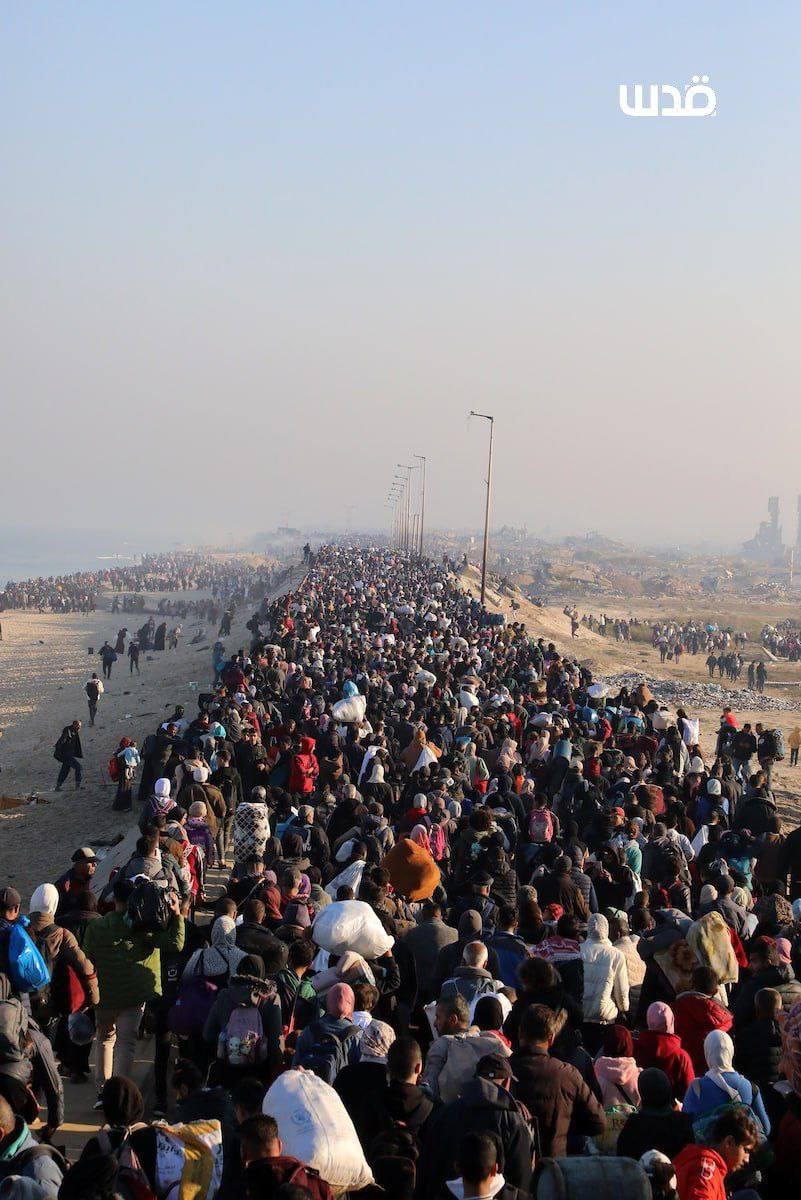
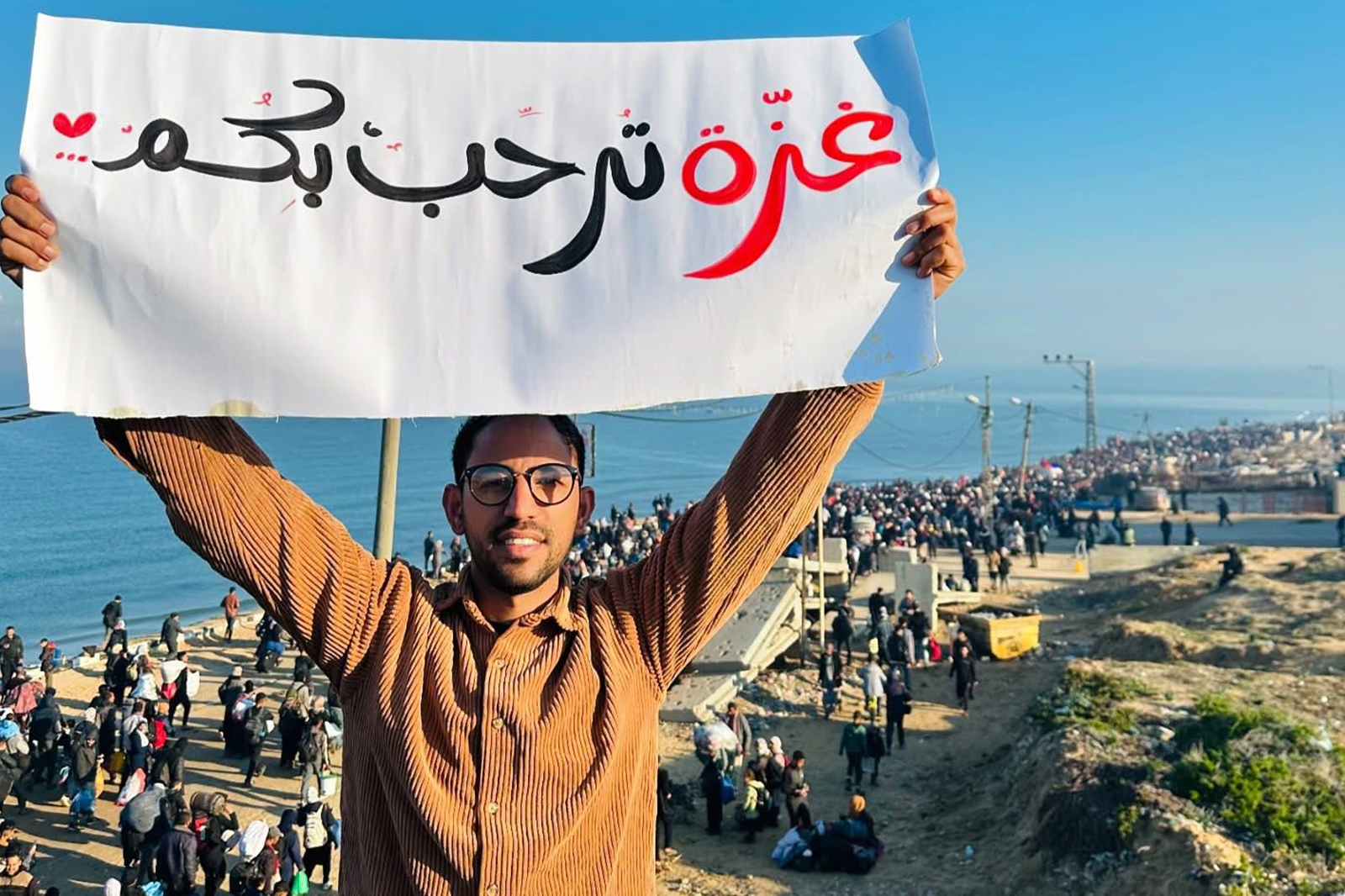
As displaced Palestinian in Gaza flood back towards their destroyed homes in Gaza City, Beit Lahiya, Jabaliya, and Beit Hanoun, this marks only the beginning of their Great March of Return. Eighty percent of Gaza’s population descends from those expelled from 247 villages in central-southern Palestine through waves of Zionist massacres.
This must be the guiding principle for any just and lasting solution—one that restores Palestinians to their homes, land, and dignity from which they have been forcibly expelled for far too long.
Sara Troian is a Hume PhD Scholar in the Department of Law and Criminology at Maynooth University. Her PhD research examines the tension between international law and settler-colonialism in Palestine.