Israel Destroys 10 UNRWA Buildings in 4 Days

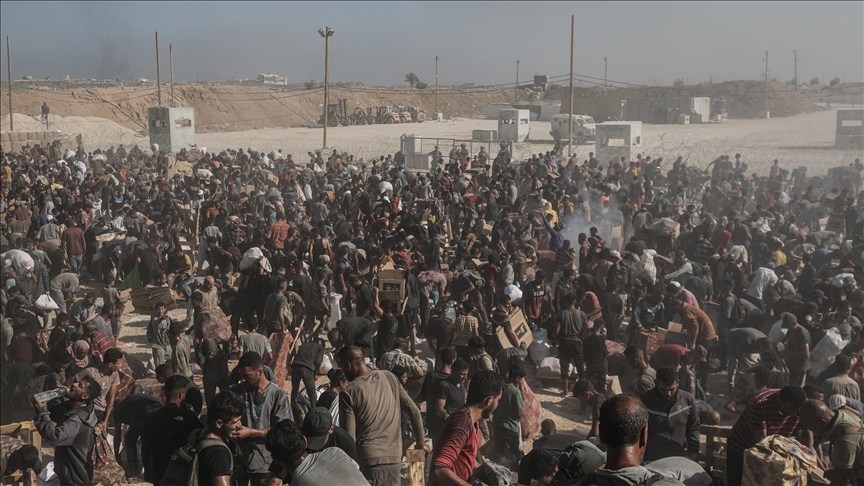
Israeli strikes destroyed 10 of the UN agency for Palestinian refugees’ (UNRWA) buildings in Gaza City over the past four days, including seven schools and two clinics serving as shelters for thousands of displaced Palestinians, the agency’s commissioner-general said Sunday.

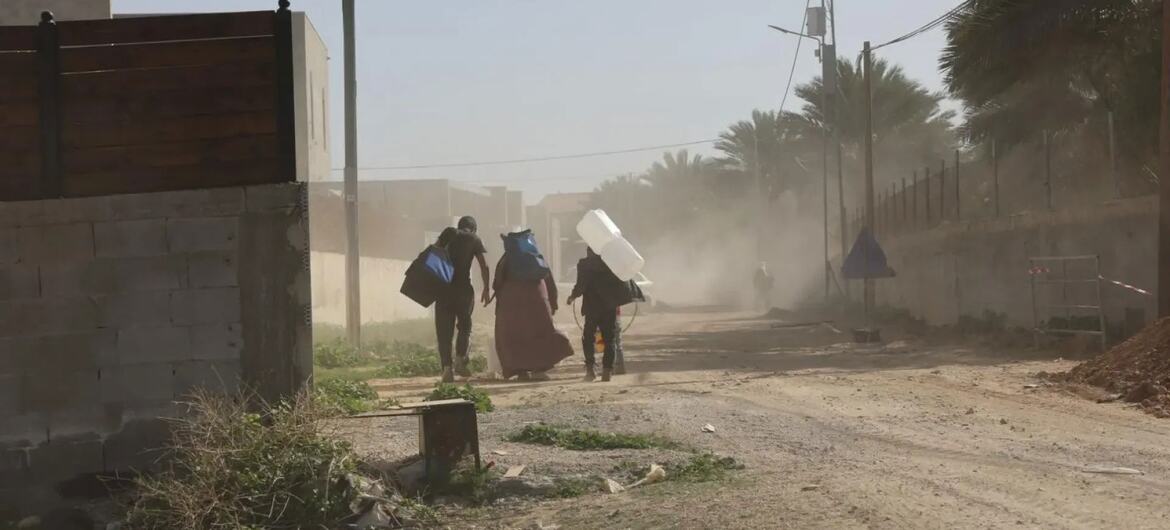
“No place is safe in Gaza. No one is safe. Airstrikes in Gaza City and the north are intensifying. More and more people are forced to leave, disoriented and uncertain, heading into the unknown,” Philippe Lazzarini wrote on the US social media company X’s platform according to Anadolu.

Lazzarini noted that UNRWA was forced to suspend health care at the Al-Shati refugee camp.

“We were forced to stop health care in Beach (Al-Shati) Camp, the only health care available north of Wadi Gaza. Our vital water and sanitation services are now only at half capacity,” he said.

“Our teams – 11,000 in total – continue to provide critical services in other parts of northern Gaza and the rest of the Gaza Strip,” he added, praising their determination to serve communities under “inhumane circumstances.”

Lazzarini concluded by saying: “How much longer until action is taken to reach a ceasefire?”

The Israeli army has been targeting high-rise buildings across Gaza City as part of its ongoing offensive to occupy Gaza City, ordering residents to move southward to a “safe humanitarian zone” in Al-Mawasi, Khan Younis, which has come under Israeli fire more than 100 times, killing hundreds of civilians.

According to Gaza’s Government Media Office, the Israeli army has destroyed 1,600 towers and residential buildings in Gaza City since Aug. 11, in addition to 13,000 tents, displacing more than 100,000 Palestinians.

The vast majority of Gaza City’s residents are now crowded into its western neighborhoods, which have witnessed concentrated and intense Israeli bombing since Friday.

Israel’s ongoing war on Gaza has killed nearly 65,000 Palestinians since October 2023 and devastated the enclave, which faces famine.

Israel is facing a genocide case at the International Court of Justice over its war on the territory.

Continue reading
How Should Arabs Influence The US?

By Hamed Kasasbeh

The United States faces a sensitive equation in the Middle East. On one side, a strong strategic alliance with Israel, built on military and intelligence superiority. On the other, a deep economic and security partnership with Arab states, which control oil, gas, key waterways, and sovereign wealth funds. Yet Washington still treats Arabs as financial and energy suppliers, while granting Israel unconditional superiority. The question is: How long can this continue before America pays a strategic price?

Since the 1970s, oil has been tied to the U.S. dollar through the petrodollar system. This made the dollar the backbone of the global financial order and allowed Washington to finance deficits while keeping global dominance. But the landscape is shifting. BRICS seeks to reduce reliance on the dollar. With Saudi Arabia and the UAE joining, Arabs now have direct influence on the future of global finance. Any move to price oil in other currencies could shake the foundations of U.S. power.

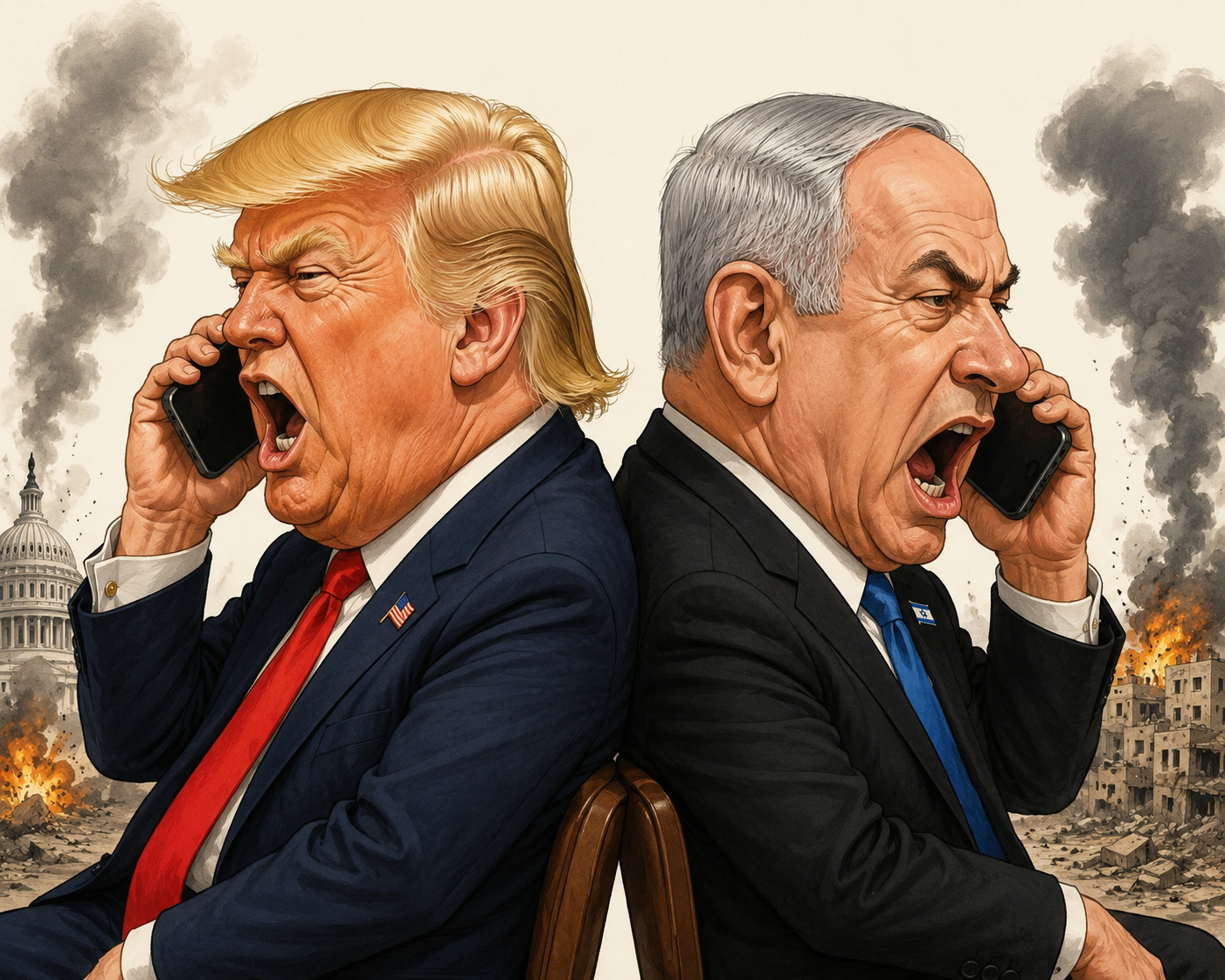
Meanwhile, Israel—backed by open U.S. support—pushes Netanyahu’s vision of a “New Middle East.” The plan is clear: destroy Gaza, swallow the West Bank, fund the displacement of Palestinians, and strike Lebanon, Syria, Qatar, and Yemen. Even Gulf states are no longer outside the danger zone, as Israeli threats expand across the region.

Israel has little economic weight compared to the Arabs, but it enjoys political and military privileges that make it a forward base for Washington. Arabs, by contrast, hold powerful cards: oil and gas, the Suez Canal, Bab al-Mandab, the Strait of Hormuz, and sovereign funds with hundreds of billions in U.S. markets. Used together within a united stance, these cards can rebalance U.S. policy toward Israel.

The pressure is not only economic. The U.S. operates dozens of military bases in the Gulf, Jordan, and Turkey. If Arabs link these facilities to Washington’s position on the conflict, the cost of bias will rise. At the same time, Arabs are no longer just oil producers. They are key players in renewable energy and green hydrogen, shaping the future of global energy markets.

Inside the U.S., the Israeli narrative no longer dominates unchallenged. A growing movement among youth, universities, and independent media rejects blind support for Israel, especially after the humanitarian disaster in Gaza. This has fueled mass protests, political pressure, and divisions inside the Democratic Party between the old guard and a younger generation more critical of Israel. Arabs can build on this by engaging think tanks, universities, and Arab-American communities.

In Europe, the EU cannot ignore its vital interests with the Arab world in energy, trade, and investment. Public anger over Gaza is rising. Arabs have an opportunity to unify their message and push Europe toward greater independence from Washington. Linking access to Arab markets with balanced political positions could turn sympathy into official pressure on Israel from within its Western allies.

At the international level, Israeli actions no longer pass without scrutiny. The UN Security Council has issued repeated condemnations, despite Washington’s vetoes. The latest vote reaffirmed the two-state solution as the only path to peace, highlighting Israel’s growing isolation. A united Arab stance could transform this consensus into real leverage, combining international legitimacy with Arab economic power.

In the end, the ball is in the Arabs’ court. They hold the tools to impose a new balance and secure a fair solution for Palestine. If they act with unity and resolve, they can curb Israeli arrogance and reshape the region. If not, the cost will fall on Arab citizens—through weaker economies, shrinking wages, and eroded sovereignty—while the future of the Middle East is written without them.

The writer is a columnist in the Jordan Times

Continue reading
Boycott V. Starvation

By Dr Usman Masood 

As we debate the sanity and economics of boycotting products during our tea breaks, many in Gaza are going through one of the slowest and most painful transitions imaginable – agonizing starvation. The aroma of my favorite coffee may be one-of-a-kind, but if the same brand operates in Israeli-occupied apartheid territories it’s time to rethink my choices.

Sometimes we call our favorite brands irreplaceable, being so attached to them so as to identify ourselves with their trademarks. Sometimes the economists within us argue that if we don’t buy from a certain company, our people are going to lose jobs. And sometimes, the cleverest among us spell out a simple calculus: boycotts are a sentimental overreaction that is not actually actionable or sustainable.

Arguably, a person should not be defined by a brand. In a world ever more sensitive to businesses’ social responsibility, it is the brand which should be defined by the kind of people it serves – its responsibility to society in the neatest sense.

Humanitarian-washing

If a company thinks it is legitimate to set up its businesses in illegitimately occupied lands, serve an army carrying out massacres, and then offer them “deals” on goods ranging from demolition machinery to feel-good grocery packs, then allowing such brands to represent us is profoundly troubling.

Sprinkling a few giveaways to the poor here and there in the name of social responsibility, after making fortunes from genocide, is the kind of “humanitarian-washing” some companies are heavily relying on these days. As responsible consumers, we need to be wary of giving them a free pass. Draped in philanthropic robes, beneath you’ll find the same Faustian bargain on offer – pleasure, products, and plenty in exchange for “looking the other way,” assuming convenient apoliticism.

Even if you set aside these moral considerations, the arguments in favor of “business-as-usual,” on the pragmatic basis of “it’s the economy, stupid,” are fundamentally flawed.

Economics beyond slogans

Yes, standing up to Israel – and the complicit companies – may cost jobs and investment to the boycotting country, but this considers only the static, one-time costs, ignoring the potential for dynamic, long-run gains. If a boycott causes momentary unemployment, an economist should tell you that capital flows, divestment in one company means investors warming up to another, and hence substitute job creation.

Moreover, a local company picking up steam at the expense of its foreign competitor ensures that the profits and jobs stay at home, rather than being repatriated to the countries of origin. Many economies that saw unprecedented growth in history used the recipe of replacing goods previously imported with local production, which vitalized the domestic industry. While import-substituting policies have had their demerits, the formula proved transformational in the case of economies like Japan, China, and South Korea, where the local production which had initially kicked off in an effort to replace imports flourished with time, making these countries the leaders in global exports.

In his book, Bad Samaritans: The Myth of Free Trade and the Secret History of Capitalism, Ha-Joon Chang notes that the drive for consuming domestically produced goods came down to the grassroots level, to something as frivolous as cigarettes. Such was the emphasis on consuming local products in South Korea that a stigma was attached to smoking foreign brands.

The state encouraged people to report such “treasonous” acts that wasted foreign exchange – foreign currency being a scarce resource, which represented the “blood and sweat” of “industrial soldiers” (p. xiv). Through this lens, boycott metamorphoses into an opportunity. The reluctance to buy Israeli – or occupation-aligning companies’ – products has already been instrumental in carving out a market for local products in countries like Türkiye, Pakistan, and Saudi Arabia.

Transformative power of consumer choice

There are still some who contend that a comprehensive boycott is simply not practical, and therefore, futile. But what’s the point of such an all-or-none approach? To be clear, boycotting does not have to be extreme – not everything, everywhere, forever. One may start with a few products that are easily substitutable, as soon as they may be substituted, for as long as necessary. Small, incremental changes to our consumption patterns may feel insignificant but they can affect retailers’ buying decisions, wholesalers’ stocking decisions, and ultimately, a company’s production decisions. The effect of consumer decisions is such that the impact is heavier each step up the supply chain, a phenomenon referred to as the bullwhip effect.

A small jolt to one consumer’s whip may feel unimportant, but collectively, it may unsettle the machinery of complicit capitalism. It’s time to opt out of the genocide, one product at a time.

The author is an assistant professor in SZABIST University in Islamabad, Pakistan and contributed this article to Anadolu.

Continue reading