Israeli Capitan Killed, 7 Soldiers Injured in Lebanon

The Israeli army acknowledged, Monday, the death of a captain and medical doctor in the Givati ​​Brigade and the wounding of seven other soldiers, including four officers and a battalion commander, in an attack carried out by Hezbollah using explosive-laden drones.

In a statement, the army said the deceased was a medic from the Shaked Battalion (424) of the Givati ​​Brigade and was killed during fighting in southern Lebanon.

Israeli Army Radio reported that Hezbollah launched six explosive-laden drones around noon, Monday, toward a group of soldiers and a Nimer armored vehicle belonging to the Givati ​​Brigade, which was stationed on the outskirts of the town of Zawtar al-Sharqiya, near the Shaqif site.

The radio added that among those seriously wounded were the operations officer of the Shaked Battalion and a platoon commander in the same battalion, while the battalion commander, a lieutenant colonel, was also wounded.

This attack comes a day after the Israeli army radio also announced the death of a soldier from the Givati ​​Brigade’s reconnaissance unit and the wounding of four other soldiers in an explosion caused by an explosive-laden drone that targeted them, Saturday, evening in the Zawtar al-Sharqiya area of ​​southern Lebanon.

The southern Lebanese front is witnessing a continuous escalation, amid ongoing clashes between Hezbollah and Israeli occupation forces according to Qudspress.

Continue reading
Thousands Flee as Israel Threatens to Bomb Beirut

As hostilities escalate in Lebanon despite a recent ceasefire extension, the United Nations continues to push for peace and support displaced civilians by providing food, protection and other assistance.

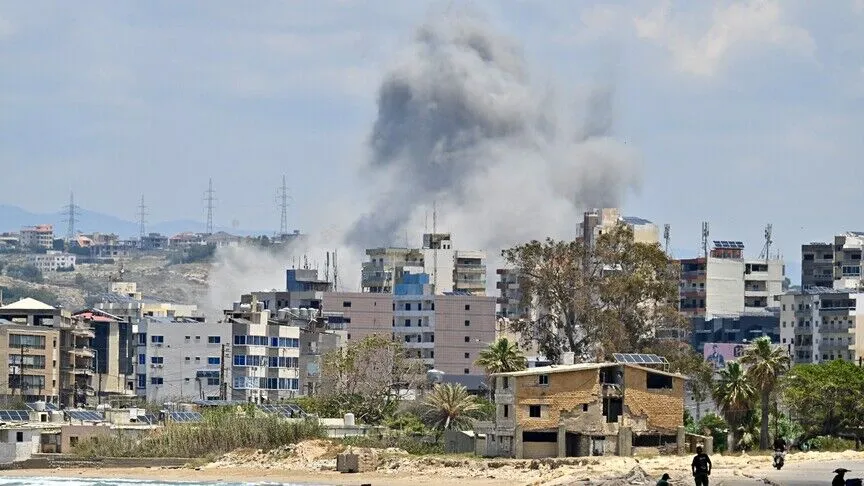
Thousands of people fled the southern suburbs of the capital, Beirut, on Monday after Israeli announced that it will carry out renewed strikes targeting Hezbollah militants sheltered there. 

“Families are leaving by car, motorcycle, and on foot, carrying essentials,” the UN refugee agency, UNHCRtweeted. Many others are returning to shelters and “fear and uncertainty are mounting.” 

The UN reiterated that civilians and civilian infrastructures must not be targeted.  

“We urge all actors to respect the cessation of hostilities and avoid further escalation. We condemn all the loss of civilian lives,” UN Spokesperson Stéphane Dujarric told journalists in New York.

He underscored the need for a diplomatic solution to end the cycle of violence.

High stakes, heavy cost 

The development unfolded as the UN Security Council in New York prepared to hold an emergency session on Monday afternoon to discuss the escalating conflict. 

Humanitarians reported that many people escaped from Beirut and the southern cities of Tyre and Saida following the threat of strikes and renewed displacement orders.

UN Special Coordinator for Lebanon Jeanine-Hennis Plasschaert continues her engagement to de-escalate tensions, reinforce commitments agreed to under the ceasefire, and advance confidence‑building measures.

In a tweet, she noted that southern Lebanon was “in flames” while roads in Beirut were “choked with people fleeing their homes.”

The senior official said that suffering was compounding “as both sides hold out for victory.”   

She added, however, that “escalation has its own logic” and “attempting to contain or manage it is a high-stakes gamble, with costs borne by people who have already lost too much.” 

Thousands killed since March

The crisis in Lebanon is part of unrest across the wider region.  It erupted on 2 March, just days after the United States and Israel began bombing Iran, prompting Hezbollah militants in Lebanon to fire on Israel. 

Since then, 3,412 people have been killed and more than 10,000 injured, the UN aid coordination office OCHA said on Monday, citing the Lebanese health authorities.  At least 88 people reportedly were killed over the past weekend.

Healthcare has also been affected by attacks. The World Health Organization (WHO) said five attacks were recorded in the past three days, resulting in one health worker reportedly killed and 19 others injured.

A US-brokered ceasefire between Lebanon and Israel took effect on 17 April but was never fully observed by either side. It was nominally extended twice, most recently on 16 May for a 45-day period. 

UN agencies are on the ground such as UNHCR, which has been supporting the government-led emergency response.  Alongside partners, it has reached hundreds of thousands with protection services, emergency cash assistance, shelter support, and other relief. 

‘Deepening humanitarian emergency’ 

However, “nearly three months into the conflict, Lebanon faces a deepening humanitarian emergency with a critical combination of displacement and increased food insecurity,” the UN World Food Programme (WFPwarned on Monday. 

More than a million civilians have been uprooted, and food security experts report that 1.24 million people nationwide – nearly a quarter of the population – are not getting enough to eat. 

WFP stressed the critical need for sustained humanitarian access, stable supply flows and predictable funding.

“The ongoing conflict characterised by daily bombardments and displacement orders is challenging humanitarian access and resulting in continued displacement,” the agency said, noting that “these conditions are hampering the delivery of critical assistance, particularly in hard-to-reach areas.” 

Rising food costs 

While food remains available in many areas in Lebanon, costs have risen alongside the escalating fighting.  For example, vegetable prices are now 20 per cent higher, while bread costs roughly 15 per cent more

Furthermore, although markets in Beirut and other areas “remain operational but under growing strain”, most markets in southern Lebanon and Nabatieh – more than 80 per cent – are no longer functioning. 

Recently, a shipment of 250 metric tonnes of wheat flour entered Lebanon through Jordan, which is now supporting roughly 10,000 vulnerable households. 

Hot meals, food parcels and emergency cash 

WFP has ramped up its response efforts, reaching more than 700,000 people to date with hot meals, ready-to-eat rations, and food parcels for families sheltering in displacement sites. 

Teams have distributed nearly five million hot meals, in addition to supporting more than 215,000 displaced people across over 500 shelters nationwide, alongside approximately 85,500 people in host communities and hard-to-reach areas. 

The UN agency has also provided emergency cash support for close to half a million Lebanese through national systems, and cash support for more than 100,000 Syrian refugees. 

Since the conflict began, 24 humanitarian convoys have been deployed to communities in Lebanon facing access restraints, but more than half of those requested have been delayed or cancelled due to movement and access risks. 

Humanitarians will launch a renewed flash appeal this Friday to scale up assistance in Lebanon over the next three months. – UN News

Continue reading
Hush, Hush! Israeli Expert Says Iran Destroyed Spy Center in First Days of The War

By Dr Marwan Asmar 

Iran destroyed one of Israel’s most sensitive military intelligence units in the first days of the 39-day war. Israeli intelligence analyst Yossi Melman revealed that an Iranian missile struck a base belonging to Unit 9900 and put it out of action for good, creating a major psychological boost for Iran.

Melman revealed the information on the US SpyTalk website. In one of his articles he stated Unit 9900 is one of Israel’s most prominent military intelligence units, undertaking advanced tasks in intelligence gathering, analysis, and the production of field data relevant to military operations. Striking it on the first days of the war would be a major blow to the US-Israeli military alliance on Iran.

The analyst noted the Iranian missile targeting Beit Shemesh where nine Israelis were killed and the injury of dozens more, also struck sensitive facilities, including a military base located on Tel Azka, as well as a satellite station in the Wadi al-Sant (Emek Ha’ila) area, about five kilometers from Beit Shemesh according to Qudspress.

Because of the strict military censors Israel imposes, such information has only been recently received and/or talked about.

In a related matter, Melman said it is Israel that builds military bases

near residential areas, despite the fact that Jewish leaders have consistently accused Palestinian and Lebanese factions like Hamas and Hezbollah of operating from among centers with civilian populations, endangering the residents there, and using them as human shields.

“The reality is that a significant number of Israeli military and intelligence bases operate near, and sometimes even within, populated areas,” he added, which is like the pot calling the kettle black.

These military bases carry significant risks and danger to the civilian populations who are living within the vicinity of such installations, he concluded.  

 Marwan Asmar is a writer from Amman and blogs for crossfirearabia.com

Continue reading
Tough Battles: 26 Israelis Killed, 1,180 Injured in Lebanon

CROSSFIREARABIA – The latest Israeli soldier to be killed in southern Lebanon means that the Israeli army is fighting a tough battle with Hezbollah forces. The Israeli army says the soldier serves in the Maglan Unit. He was killed while three of his colleagues were injured.

Meanwhile Israeli media reports says the soldier was killed as a result of Hezbollah drones launched on Israeli forces in the Yahmar village in Al Shaqeef area in southern Lebanon, near the Litani River which Israel is trying to reach and control.

The army admitted that 137 officers and soldiers were wounded in fighting with Hezbollah over the last two weeks.

Meanwhile, it says 26 soldiers were killed and 1,180 injured since the fighting resumed in the southern part of the country as of early March.

Meanwhile Israeli forces are seeking to bomb the southern neighborhood of Beirut and wants to get a green light from Washington.

News sources point to the fact that Israeli Prime Minister Benjamin Netanyahu has ordered his army to strike the Hezbollah stronghold in the southern part of the Lebanese capital. Israel’s Channel 14 says Netanyahu has already got the green light to start bombing.

Continue reading
Stories of Sufferings in Gaza

“Failure to meet children’s basic needs in Gaza is trapping them in an endless cycle of suffering.

“The experiences of the desperate parents I met this past week can illustrate this better than I could:

“Hind hasn’t slept since her four-year-old daughter, Masa, was bitten by a rat during the night.

“Like many families, they sheltered wherever they could – in their case, the second floor of a building block where sewage water leaks through the ceilings, and rodents crawl through the cracks in the building and climb the exposed pipes.

“Amani’s daughter, Lemar, she’s 7, has developed deep lesions and sores on her head, back and legs due to a bacterial infection. Amani tries to clean her wounds each day with the little, hard-to-get, clean water she has, as her daughter screams in agony.

“Abdallah’s mother told me that he has developed a skin infection as they live in a tent next to sand contaminated with faeces. His mother has spoken to doctors and desperately needs the medication and enough clean water and hygiene products to help him heal and protect him from exposure to more infections.

“Abdel Aleem said that his 8 months old son, Ahmad, and his pregnant sister-in-law were both bitten a couple of weeks ago. They have layered sandbags around the outside of the tent to try to protect themselves, but the rats simply chew through it – stopping them is futile.

“The common thread running through every one of these conversations is the sheer heartbreak of parents who no longer feel able to do the thing most innate to them – protect their children’s health and safety.

“One look at the conditions that people are being forced to live in is enough to understand why.

“We know that Gaza was already one of the most densely populated places in the world. Now, people have been crammed into around 40 per cent of the space left to them – sheltering among broken buildings, rubble and mounting solid waste.

“Families across Gaza do not have enough clean water, they are forced to choose between drinking, washing and cooking with what little they have.

“UNICEF is trying to reach as many people as possible with clean water– up to one and a half million people a month – but there are significant obstacles:

“Firstly – deadly attacks on water operations, including recently at Al Mansoura filling point, where two UNICEF-contracted truck drivers were killed whilst trying to collect water. Now, this main water filling station – which more than a quarter of a million people rely on – is inaccessible.

“Secondly, items needed to sustain water systems and repair damaged water infrastructure – including: lubricant oil, water treatment chemicals and spare parts – are not being allowed in at the scale needed, meaning we cannot repair systems as quickly as needed to reach more children with clean water, and existing systems risk failure due to lack of maintenance and overuse. If we cannot repair systems, then we have to rely solely on water trucking which is much more expensive and doesn’t reach populations as effectively.

“Thirdly, solid waste is piling up by the day. This, alongside rubble, needs clearing at a scale that is currently impossible because there is no accessible space left to clear it to.

“The effects of this are now widely apparent: children with respiratory infections, acute watery diarrhea, and more than half of all households reporting skin diseases. Fleas, lice, and scabies are commonplace. Increasing numbers of children are requiring hospitalization. All without a single fully functioning hospital across Gaza.

“The picture is similarly stark when it comes to children’s nutrition. While we have managed to reverse the famine, the number of malnourished and vulnerable children remain extremely serious. More than two years of food insecurity, poor housing, limited water, terrible sanitary conditions and regular disease outbreaks has left the population extremely vulnerable. Without enough clean water and fuel to cook proper meals, even children who recover with treatment will quickly fall back in a cycle of malnutrition – the effects of which can last a lifetime.

“No parent should be in a position where they cannot provide their child with the basic needs to keep them healthy. No parent should have to watch as their child writhes in pain from lesions or buckle from weakness because of entirely preventable diarrhoea. That this is happening should be – to everyone – entirely unconscionable.

“Access to water, adequate nutritious food, and health care should not be conditional for any child, anywhere.

“UNICEF is calling for safe unfettered access to deliver humanitarian operations, the lifting of restrictions on items needed to quickly repair and sustain water and sanitation systems, and for international humanitarian law to be upheld.

“Only then will children in Gaza start to break free from the cycle of suffering they are trapped in.” Reliefweb

Continue reading