Trekking Ireland For Gaza

An Irish man is driving the length of Ireland along the 2,800km Wild Atlantic Way in a slow-moving open-top vintage tractor to raise funds for the people of Gaza.

Pat Murphy, a teacher and father of four from Corofin, Galway, will brave the elements in his 1962 David Brown 850, which can only reach a maximum speed of 24kph.

The drive from Malin Head in Donegal to Mizen Head in Cork should only take eight hours in a modern vehicle on a more direct route, but Pat expects his tractor will do it in about two weeks taking the coastal Wild Atlantic Way.

“The tractor can probably do a maximum speed of 24kph so it will be a long journey, but for a very worthy cause,” said Pat, who teaches woodwork at Wesley College Dublin and lives in Sallins, Kildare with his family.

“It is a 62 year old David Brown that has been fully restored. It has no power steering or cabin, just fresh air. If it rains, I’ll be just going through it.

“There is no suspension either and not a lot of comfort so I will have an extra cushion on the seat, which will make a huge difference.

“I will also be wearing a lot of factor 50 and a sombrero hat to protect me from the sun and it can actually get very cool in an open top tractor so I have a heavy coat with me too.”

He began his trek, Thursday 1 August, at 2pm at Malin Head and was accompanied by his friend Tony Harrison from Ballina in Mayo who will be driving a camper van where he will sleep each night.

All proceeds will go to the humanitarian aid organisation Concern Worldwide and its Gaza appeal. Pat chose Concern because of his past involvement with the charity as a volunteer in Rwanda in 1995 and 1996 after the brutal genocide that occurred there.

“I really value the work that Concern does, especially after working for them in refugee camps after the Rwanda genocide,” he said.

“The people of Gaza really need our help today. Anybody who has been the pictures on television knows that the people there need our support.”

Another friend, Brendan Joyce, transported Pat’s tractor from Corofin, where he grew up, to Malin Head and will collect it when they reach Ireland’s most south-westerly point at Mizen Head.

Pat hopes to raise at least €5,000 on his GoFundMe page called ‘Malin to Mizen – Charity Tractor Run for Concern’ and has already raised over €3,000.

Pat said they plan to drive for eight hours each day and to take 15 minute breaks every two hours. He said they are looking forward to driving through the many towns and villages that dot the Wild Atlantic Way.

https://www.gofundme.com/f/malin-to-mizen-charity-tractor-run-for-concern

“We will have signs up on the vehicles to show people how they can support us on our GoFundMe page and I will be posting my progress of the journey each day on my Facebook and Instagram pages,” he said.

To support Pat Murphy’s tractor fundraising trek for Gaza, go to his GoFundMe page: https://gofund.me/f7046b8d and his Instagram page is called Murphsmeander_malintomizen.
Reliefweb

Continue reading
Cemeteries: Even The Dead Are Attacked in Gaza

Mohammed Abu Tayr is trying to put together what can be restored of his father’s grave in the family plot in the Bani Suhaila Cemetery east of Khan Yunis, who died years ago. He is one of the lucky ones because others tried to find the graves of their loved ones but failed according to the Palestine Information Center (PIC).

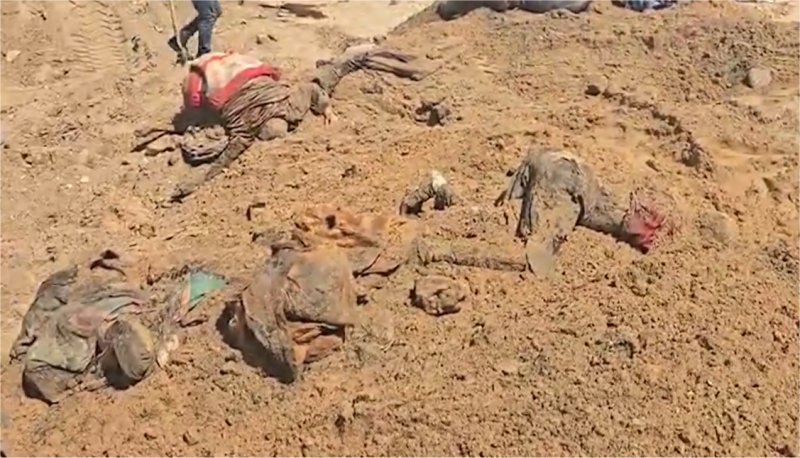
The Israeli occupation’s military vehicles wreaked havoc and destruction of the Bani Suhaila Cemetery during its last incursion of east of Khan Yunis that began on 22 July and lasted for eight days.

Abu Tayr said he was shocked at the bulldozing of the cemetery and the sight of graves being tampered with, trampled on and bodies exhumed by Israeli machinery. Its sheer desecration.

There is no sanctity for the dead. “What is the fault of the dead in their graves? What did they do to have their dignity and sanctity violated,” he asked.

After the Israeli army left, residents of the area flocked to the cemetery to try to restore and repair what has been completely bulldozed by the Israeli occupation forces.

Where is my mother’s grave?

On the opposite side of the cemetery, Ghaida Abu Tayem sits in tears. She tells the PIC reporter she cannot find her mother’s grave after the Israeli army bulldozed the cemetery. Here, there is no regard for human feelings and values.

The Bani Suhaila cemetery is not the only graveyard the Israeli occupation forces dug up and tombstones willfully destroyed. The Israeli army ravaged all cemeteries in the areas invaded by Israeli ground forces across the Gaza Strip.

And this is the case with the main cemetery in Khan Yunis, west of the city. There, the exhumation and devastation of the graves show the deep-seated hatred Zionists have to the Palestinians, whether dead or alive. Even in death, soldiers wish these graves to disappear and be wiped out.

The PIC reporter stresses that the features of the cemetery are completely changed with the bones of the dead scattered by the Zionist barbarians, with the cemetery being turned into a blasted battlefield.

In addition to destroying and bombing the main cemeteries in the Gaza Strip, Israeli soldiers dug up and bulldozed the mass and temporary graves hastily made in the courtyards of hospitals, neighborhoods and streets. This makes it difficult to transfer the bodies to the cemeteries.

In a previous statement, the Euro-Mediterranean Human Rights Monitor documented the Israeli occupation army’s attacks on many cemeteries in the Gaza Strip by deliberately bulldozing them, digging up and vandalizing graves and stealing dozens of bodies in the midst of the ongoing genocide against Palestinian civilians since 7 October 2023.

Mrs. Nour Nasser, a resident of Gaza City who was displaced to areas in the southern part of the Strip, said her martyred brother, “Mohammed, who was in his 20s was buried in the Al-Batsh cemetery in Gaza in dismembered remains, but they were shocked to find out later, the cemetery was bulldozed and there was no longer any trace of her brother.

 The Israeli army did not stop at killing my brother, but also deprived the family of even visiting his grave,” she added.

In another incident, the Israeli army raided a cemetery in Al-Tuffah neighborhood, east of Gaza City with its military vehicles, and exhumed more than a 1000 graves; that was a month ago. The residents of the neighborhood said that the Israeli soldiers stole more than 150 bodies of newly buried people there.

On 25 December 2023, Euro-Med reported it received several testimonies about the Israeli army bulldozing the Beit Hanoun cemetery north of the Gaza Strip and vandalizing its graves.

“Muhammad Abu Awad” from downtown Beit Hanoun said they were taken by surprise when the Israeli army stormed the town’s cemetery and destroying the graves with their military vehicles.

Abu Awad added they observed the Israeli army’s digging operations of specific graves inside the cemetery and stealing the bodies of recently buried people while the remains of the others were mixed together to make it difficult to identify any of them.

By destroying the cemeteries, Israel did not leave any sanctity that was not violated or sins not committed. Today it is trying to annihilate everything in the Gaza Strip, even the dead.

Continue reading
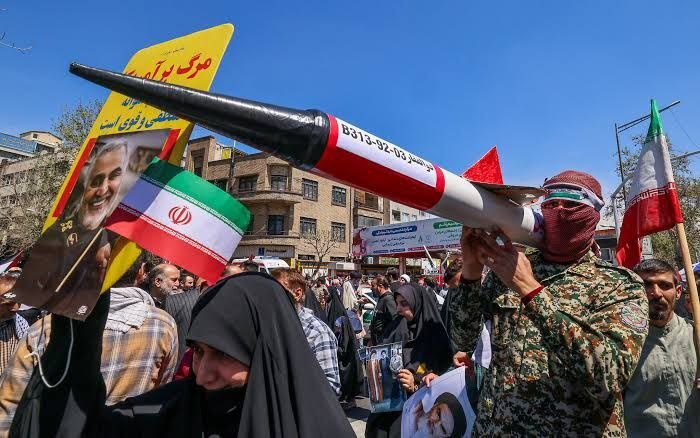
Expert: Iran to Launch Strike on Israel Soon

Military expert Dr Nidal Abu Zeid said the resistance is provening it still has the ability to continue confronting the Israel occupation forces after 301 days. As evidence of that it launched a rockets barrage towards the Jewish settlements sorrounding Gaza from the southern region.

He added this is an area witnessing one of the largest military operations these days.

Abu Zeid added to Jo24 Israeli forces introduced a new brigade to fight in Gaza – so-called the Jerusalem Brigade affiliated to the Central Military Region – and not from the brigades of the Southern Military Region responsible for operations in Gaza.

Its confirms the extent of the attrition affecting the Israeli combat units from the Palestinian resistance groups in Gaza, the military expert said.

Abu Zeid pointed out the Israeli occupation army withdrew its Seventh Brigade in east of Khan Yunis recently due to the heavy losses they incurred amongst their ranks and has instead deployed the Jerusalem Brigade.

The continuing media statements about Hezbollah and Iran’s response to the assassination of martyrs Ismail Haniyeh and Fouad Shukr confirms that its coming military action on Israel will not be delayed, he said.

Waiting for the hit

This is especially in light of the repositioning of the Hezbollah units in southern Lebanon, withdrawal of Iranian militias from Deir Ezzor, Syria and the fact that most airlines stopped their flights to Ben Gurion Airport in Tel Aviv.

Abu Zeid explained the clip circulating about the explosion in the building where Ismail Haniyeh was in Tehran is not true. He noted this clip is an old one, published on the occupation army’s website targeting a house in Attara, north Ramallah.

He added the coincidence of its publication now with the New York Times item comes within Israel’s attempt to show the explosion was caused by a device placed inside the building where Haniyeh was staying.

Abu Zeid this is being stressed to shatter the image of Iranian intelligence and show its been compromised. He added however, all indications show the area targeted was by an advanced missile launched from outside Iran, specifically from a base in Azerbaijan.

Continue reading
After 300 Days: Gaza’s Killing Fields Continue

Dedication

This report is dedicated to the memory of Mohammad Bhar and over 117 other young people and children once cared for by the Islamic Relief Orphan Sponsorship Programme, who have been killed in 300 deadly days in Gaza.

An unprecedented crisis in Gaza

In early October 2023, the population of Gaza was around 2.3 million, some 50 per cent of whom were children. Despite the difficulties they endured living in what has been called the ‘world’s largest open-air prison’, the people of Gaza went about their daily lives, dreaming of a better future where their human rights would be recognised and upheld.

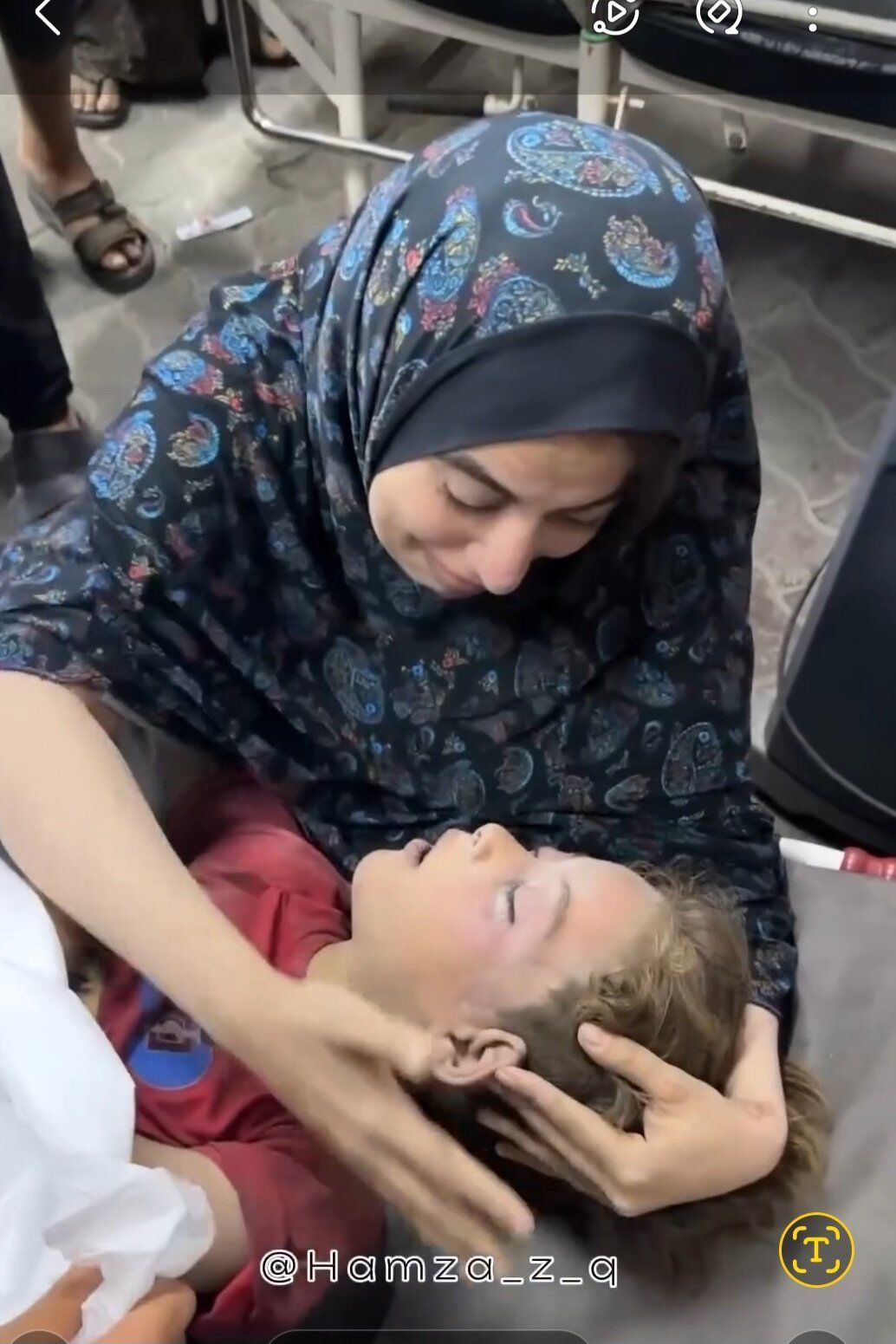
Since October 7, these dreams have been shattered. Palestinian families have been forced to endure Israeli bombardment and siege on a previously unimaginable scale during 300 days of unprecedented destruction and displacement. We have seen complete disregard for international humanitarian law, with relentless attacks on civilians, health facilities, homes, shelters and markets, and severe restrictions on humanitarian aid.

More than 39,400 people have been killed. At least one third of those killed are children – including over 118 children and young people cared for by Islamic Relief’s Orphan Sponsorship Programme – and even more have become orphaned. Prior to October, Islamic Relief supported 8,750 children in Gaza through our Orphan Sponsorship Programme. We now support 15,300.

Others have sustained life-changing injuries or simply disappeared, likely lost under the rubble of destroyed homes and shelters. Children have missed almost an entire year of schooling and face a future full of uncertainty and fear. Entire families have been scattered as they flee repeatedly in search of safety, which cannot be found as bombs continue to rain down on Gaza.

People have been ordered to leave one area, only to be bombed in the place they were told to shelter.

The international community has been unable to provide sufficient aid due to Israeli restrictions on supplies into Gaza. Few hospitals remain functional due to shortages of electricity, fuel and medicine. Trapped in one of the most densely populated areas on Earth, families have minimal access to food, water and healthcare. People are starving to death, and famine looms.

Islamic Relief’s long-term development programmes in Gaza have largely been suspended as it quickly became one of the most difficult and dangerous places to deliver aid. Instead, we have scaled up our emergency response, distributing essentials such as ready-to-eat meals, clean water, and soap to displaced people.

Our work has had to continually adapt to meet changing needs and varying availability of items. Our staff and partners in Gaza are enduring many of the same challenges as the communities they support, including displacement, with one colleague saying she feels Palestinians have been ‘forgotten by the world’. Despite these enormous challenges, they remain committed to providing aid to vulnerable communities.

In 2012, a United Nations report questioned if Gaza would be a liveable place by 2020, pointing to population growth and the Israeli blockade. Now, in 2024, there remains little doubt that conditions inside Gaza have become truly unliveable.

Reliefweb

Continue reading
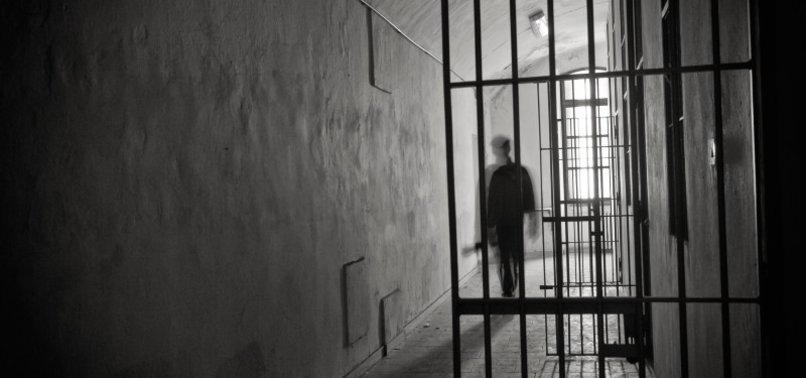
Palestinian Prisoners: Torture, Sodomy And Dog Attacks

Palestinian prisoners released by the Israeli army after being detained in Gaza described the severe physical and psychological torture they experienced in prisons.

A group of prisoners who were detained and tortured by Israeli forces in the Gaza Strip and later released were brought to Al-Aqsa Martyrs Hospital in the city of Deir al-Balah in central Gaza by Palestinian Red Crescent Society teams.

The Palestinians, who showed signs of torture on various parts of their bodies and were exhausted, told Anadolu about the torture they endured according to Anadolu.

Mahmoud Basim Mahmoud Ahmed, one of the released prisoners, said the Israeli army forced prisoners to lie face down, set dogs on them and administered electric shocks.

Hunger strikers forced to eat feces

“You had to keep your hands tied above your head from 4 a.m. to midnight. If you turned right or left, they would set the dogs on you,” Ahmed said.

“They brought two pieces of bread a day. After eating the bread, you had to lie on your stomach for 24 hours. If you went on a hunger strike, they forced you to eat feces,” he said.

Ahmed said that some prisoners whom Israeli soldiers suspected of having connections with resistance fighters were taken to the 12th floor of the building for torture and then brought back down to the ground floor while being tortured.

“What we experienced there in 40-60 days felt like 12 years,” he added.

Forced to bark like dogs to use toilet

Said Abu Watfa, who was detained at the Kerem Abu Salem border crossing, said Israeli soldiers detained a group of young Palestinians at the border crossing for four hours, tied to a wall.

Watfa said the soldiers stripped the detained young Palestinians, administered electric shocks to their sensitive areas, broke their teeth and did not provide them with any medicine.

Watfa, who was subjected to various forms of psychological and physical torture during his detention, said: “At night, when we needed to go to the toilet, they would say ‘bark.’ We had to bark to go to the toilet. They forced me to bark, and similarly, they forced me to curse my government, my relatives, my sister and my wife.”

Detained with hands, feet shackled for 35 Days

Muin Muhammad Abdussatir Muhammad, who was detained in the Jabalia refugee camp and held in an Israeli prison for about four months, said: “We went through very tough days. They set dogs on us at night and tortured us a lot. We have never seen such torture.”

Marwan Mesad Shaar, a 20-year-old who was detained by Israeli soldiers while distributing aid and spent 31 days as a prisoner, said they experienced various types of torture such as electric shocks, beatings and humiliation.

Asked about the conditions in the Israeli prison, Shaar responded: “We weren’t living.”

Khalid Abulkerim, who was detained during a raid in the Shuja’iyya neighborhood in Gaza City and released after 35 days, said their hands and feet were always shackled during their imprisonment and that they experienced both physical and psychological torture as reported by the Turkish news agency.

Continue reading