‘Insulting Phone Call’, Beirut, Iran and Changing Dynamics

By Abdul Bari Atwan

Israeli Prime Minister Benjamin Netanyahu demonstrated his ability to effectively redraw the maps and borders of the Middle East when he backed down from striking Beirut’s southern suburb to completely destroying it. He succumbed to the threats and pressure from US President Donald Trump. In this respect here, Iran can be considered to have become a regional superpower not only in the Middle East, the West and Central Asia, but globally.

Trump, who previously threatened to wipe Iran off the map and unleash hell upon it, destroying all its energy and electricity infrastructure, scurried like a frightened rabbit to the phone to call Netanyahu in a “call of insults,” ordering him to immediately halt all plans to bomb Beirut’s southern suburb and withdraw his troops and warplanes en route to the area, just hours before the bombings and destructions where to begin.

***

In a Washington Post interview, Trump completely changed his threatening tone and began pleading for peace with Iran, after extending the unilateral ceasefire by 60 days. More importantly, he expressed his desire for a summit with Ayatollah Mojtaba Khamenei as soon as an agreement is reached, and confirmed that Mojtaba, whom he had previously claimed was no longer alive, is now involved in the decision-making process regarding war and peace in the current conflict.

The new and effective ‘password’ in the Middle East, reflecting Iran’s “power shift,” is embodied in its thunderous response to the Israeli threat to destroy the southern suburb of Beirut, western Bekaa Valley, and Nabatieh. Iran launched hundreds of missiles and drones to strike deep into occupied Israel, sending a clear message: “Greater Tel Aviv in exchange for the southern suburb.”

The Iranian leadership, backed by a solid popular base, a highly advanced missile and drone industry, a naval fleet, and over 460 kilograms of uranium enriched above 60%—enriched to produce 10 nuclear bombs in a few days—says what it means and acts accordingly. It will not tolerate injustice and is prepared for all eventualities.

There is ample evidence to support this assertion, as demonstrated early Wednesday morning when Iranian missiles and drones struck US military bases in Kuwait and Bahrain in retaliation for attacks on an Iranian oil tanker in the Strait of Hormuz and a communications tower on Qeshm Island, both launched from these bases.

The American-Israeli alliance has, since the October War of 1973, grown accustomed to a deeply ingrained official Arab subservience, a failure to respond to any Israeli aggression, and a refusal to reject any American dictates. Most Arab leaders turn the other cheek to Israeli and American slaps, becoming indifferent to the situation. But now, someone has emerged to uproot this system of surrender and usher in a new, truly Islamic era—an era of resistance, where the response is not merely in kind, but in a stronger and more significant way.

Mohsen Rezaei, advisor to Iran’s Supreme Leader Mojtaba Khamenei, summarized this new military, political, and moral upheaval in a statement saying, “America and its president, Trump, should expect a barrage of missiles (hypersonic and cluster warheads) and drones should they renew their aggression against Iran.”

Netanyahu, who craved the limelight and the humiliation of Arabs, and who rubbed his hands with glee at the long line of Arab leaders queuing before his office seeking normalization and the signing of the Abraham Accords, has fallen silent and disappeared from the public eye. He no longer dares to threaten to destroy Iran alone, without America’s participation in the aggression.

The dictates Trump issued just days ago, the shifting balance of power on the ground, and Iran’s threat of retaliation for any aggression against Lebanon have evaporated. The American president, as a New York Times editorial acknowledged, has failed miserably in all his wars since arriving at the White House a year and a half ago—in Iran, Ukraine, and the Gaza Strip—and has not achieved his objectives and has become a laughingstock.

As for the Gulf states – those that normalized relations and/or those that were eager to join the “Abraham Accords” to avoid angering Trump and rejecting his demands – they reached a firm conviction that America is incapable of protecting itself, its bases, and its ships.

The most prominent evidence of this is the destruction of American military bases in their countries, including the US Navy base in Bahrain, and the closure of these bases and Saudi airspace to planes and drones, whilst preventing them from launching attacks on Iran from their territory. They saved the Hajj season, just as they saved themselves and their people from the consequences of the mirage of American power.

***

In conclusion, we sympathize with our Kuwaiti brothers who were injured as a result of an Iranian missile attack on the passenger terminal at Kuwait Airport, whether by mistake or deliberately. However, the blame lies entirely with those who allowed America to use Kuwaiti territory as a launching pad for aggression against Islamic Iran. America possesses three aircraft carriers and more than 300 warships in the Arabian Sea, so why didn’t it use them in this aggression? And why does it insist on using its bases in the Gulf states, thereby endangering millions of their citizens?

Abdul Bari Atwan is the Chief Editor of the Arabic Al Rai Al Youm and his piece has appeared in the English crossfirearabia.com English website. 

Continue reading
Highest in 2026: Israel Kills 199 Palestinians in May

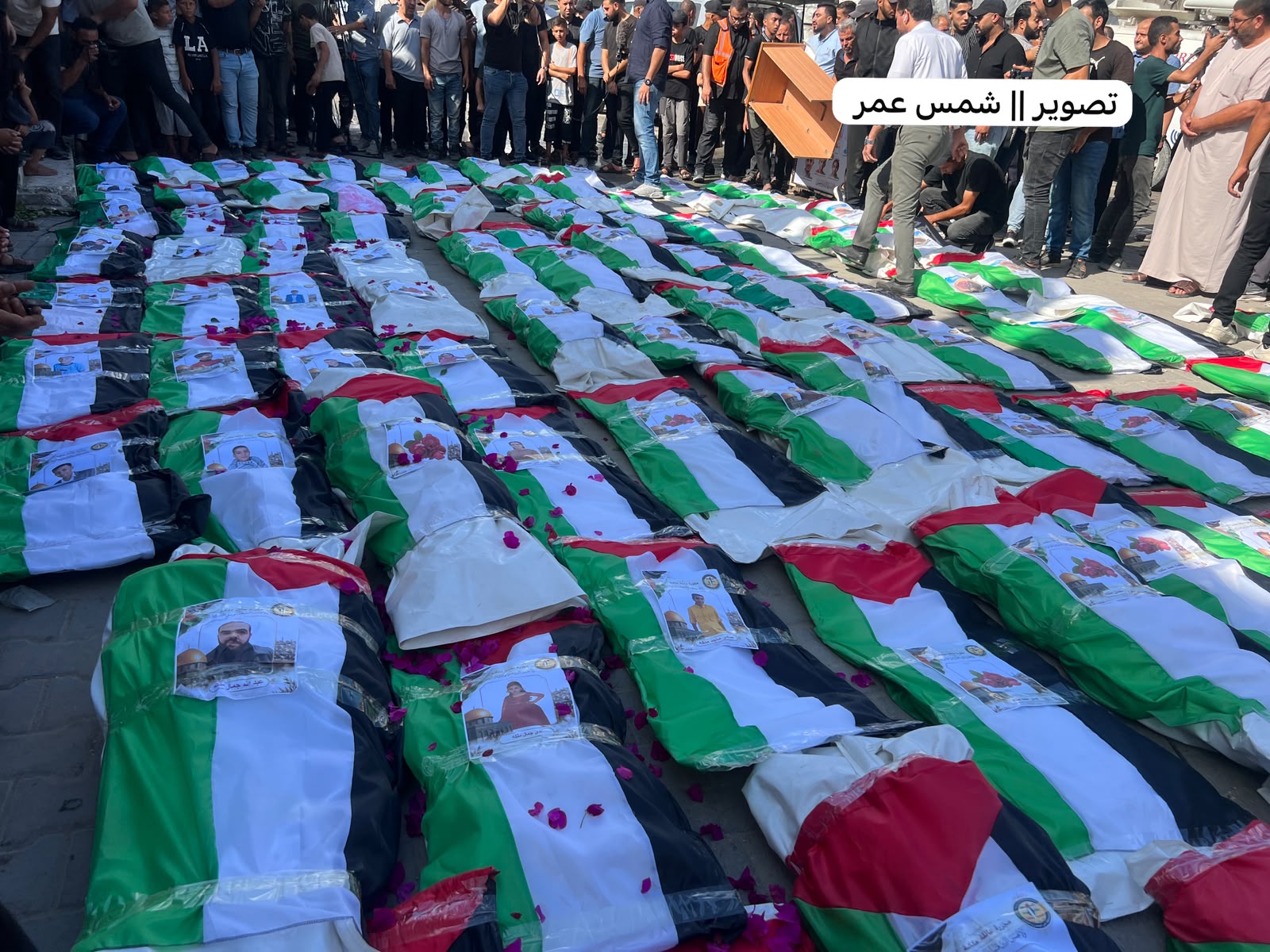
The Gaza Ministry of Health recorded 199 Palestinian deaths last May alone. It stated this is “highest number of martyrs recorded since the beginning of this year,” and made through Israeli gunfire.

Data from the Ministry shows that women, children, and the elderly constitute 30% of the total number of deaths that continue to be indiscriminately made.

The number of children killed reached 19 (16%), while 10 women lost their lives (8.5%) in that aforementioned month.

Read also: “Gaza Live”… 3 Martyrs and Wounded in 8 New Israeli Violations of the Truce

According to official health statistics, the total number of those killed since the ceasefire on October 11, 2025, has risen to 933 with 2,868 injuries. This is while the number of bodies recovered from under the rubble reached 781.

Since the beginning of the Israeli aggression on October 7, 2023, the total number of those martyred reached 72,942, while the number of injuries spiked to 172,967.

Since October 2025, following the signing of the ceasefire agreement under US auscpices, the Israeli occupying forces continued to commit serious violations of the truce, including gunfire, shelling, and the destruction of civilian infrastructure. This has resulted in further deaths and injuries of ordinary civilians.

Continue reading
Israeli Violates The ‘Gaza Ceasefire’ 10 Times

For the 237th consecutive day, Israeli occupation forces continue to violate the fragile ceasefire agreement in the Gaza Strip.

They are committing further attacks and violations across the besieged territory since the ceasefire that was signed on 10 October, 2025.

Since dawn, Wednesday, the Israeli occupation forces committed 10 new violations of the so-called “Gaza truce,” including artillery shelling, gunfire, and the demolition of homes and civilian infrastructure, particularly in the eastern areas of Khan Younis.

Eight demolition operations targeting civilian homes were carried out in that area as Khan Younis lies in the southern Gaza Strip. The occupation forces also shelled these areas multiple times.

Read also: Highest number of martyrs since the beginning of the year… 199 martyrs in Gaza last month

Israeli military vehicles fired heavily towards the eastern part of Khan Younis, coinciding with gunfire from Israeli warships in the sea off the city, in the southern Gaza Strip.

The occupation forces also targeted the eastern part of Gaza City with artillery fire. Meanwhile, a correspondent for Sanad News Agency said that gunfire and artillery shelling from occupation vehicles, coinciding with the dropping of bombs from “quadcopter” warplanes, targeted the homes of residents east of the Al-Zaytoun neighborhood, east of Gaza City.

Continue reading
Price of Israel’s War in Lebanon

Women and girls in Lebanon are paying an increasingly devastating price as violence and displacement continue despite a ceasefire, the UN reproductive health agency (UNFPA) warned on Tuesday.

Heightened tensions in Beirut and intensified attacks in southern Lebanon have pushed families into fear and uncertainty, forcing many to make impossible choices in search of safety.  

Healthcare centres struck

Over the weekend, airstrikes damaged a UNFPA-supported primary healthcare centre and women and girls’ safe space in southern Lebanon, one of the few facilities still providing critical services in the area, the agency’s Representative in Lebanon Anandita Philipose told reporters in New York via video link from Beirut.

Another strike damaged a public hospital offering maternal healthcare. Among those displaced are an estimated 13,500 pregnant women, including 1,500 expected to give birth in the next 30 days.

UNFPA warned that around 1,500 women remain trapped in southern Lebanon without reliable access to skilled care or safe delivery spaces.

When maternity wards and hospitals are damaged and destroyed, it is pregnant women who cannot get life-saving services,” Ms. Philipose said.

Unsafe shelters

She also raised alarm over deteriorating conditions in shelters.

Safety assessments found overcrowding, poor lighting, lack of privacy and unsafe sanitation facilities, conditions that increase risks of gender-based violence, particularly for adolescent girls, female-headed households, pregnant women and people with disabilities.

UNFPA continues to provide mobile maternal health services, psychosocial support and protection assistance alongside local partners and Lebanese authorities.

Call for funding

But without immediate and sustained funding, the humanitarian consequences could deepen rapidly, Ms. Philipose warned.

The agency’s initial emergency appeal is only 30 per cent funded, and it is now seeking $25 million to continue operations through August.

If funding continues to fall short, thousands of pregnant women could lose access to skilled birth attendance and emergency maternal healthcare, and mobile teams serving hard-to-reach communities may be forced to scale back or stop operations entirely, Ms. Philopose said.

Scaling down our operations means cutting off more than 75,000 women from critical gender-based violence protection, case management, and safe spaces at the exact moment that they need it the most.UN News

Continue reading