Trump’s Statement on Deporting Gazans is Explicit Support to Israel’s Genocide

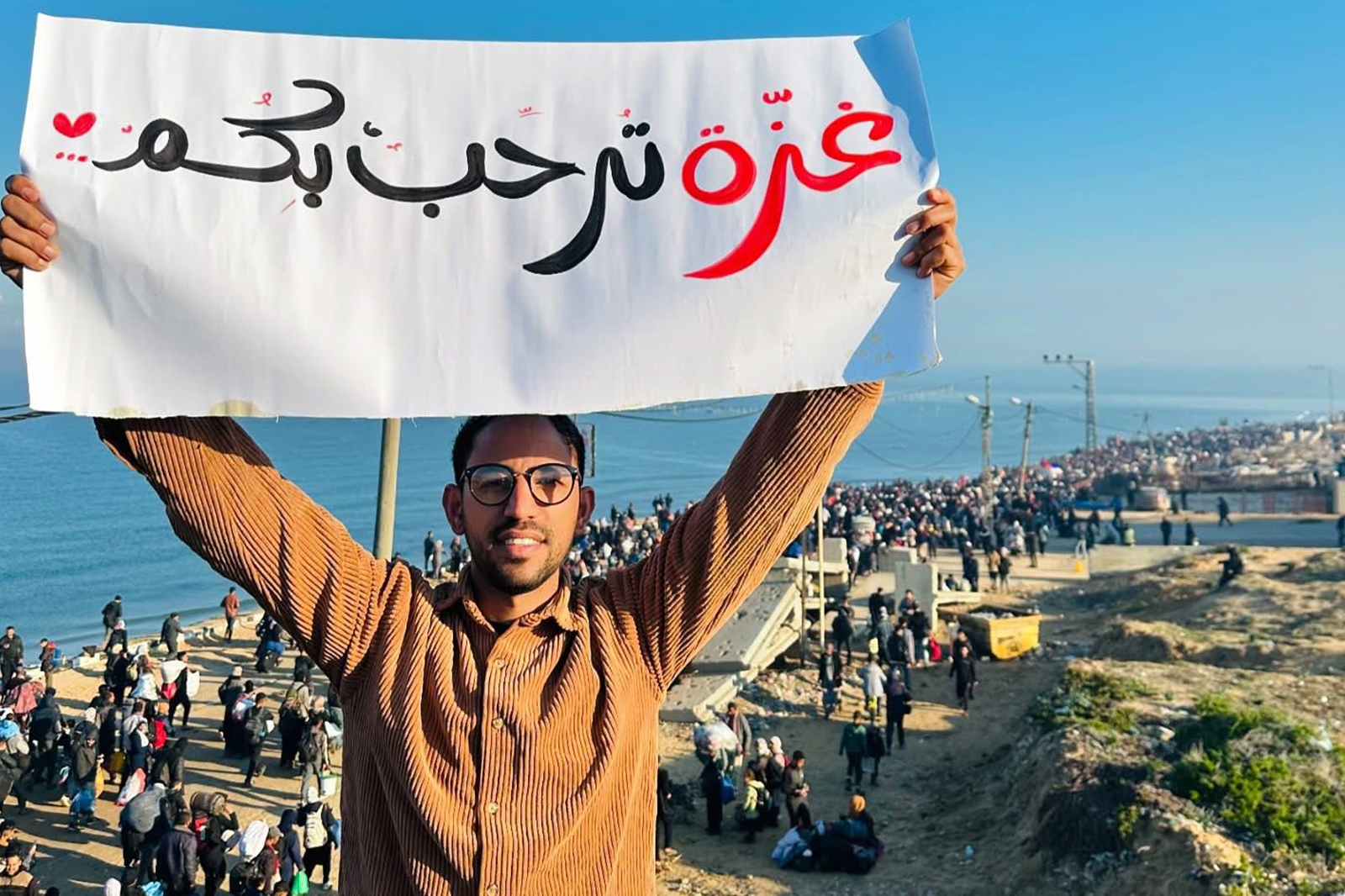
United States President Donald Trump announced his plan to expel the Palestinians in the Gaza Strip from their homes there, and has called on neighbouring nations to accept the Palestinians into their countries. These remarks, which were made after Israel egregiously violated international law by committing genocide against the Palestinian people in the Strip for over 15 months—including by destroying all essential necessities for life in the enclave—are deeply concerning.

The Palestinians, who are already suffering from the devastating effects of Israel’s attempts to annihilate them, should not have to pay a further price for this genocide by being forcibly displaced outside of their homeland. Israel, as the occupying power, is the only entity that must take moral and legal responsibility for the crimes it has committed in the Gaza Strip, pay reparations to the Palestinians, and rebuild the Strip as quickly as possible.

Since the Fourth Geneva Convention expressly forbids the forced displacement of populations under occupation, any plans to do so would be a blatant violation of this agreement. The facilitation of these plans would also violate the Palestinian people’s inalienable right to stay on their land and in their homeland, a right which is protected by international law, and would be crimes against humanity and war crimes. In addition to being an international crime, the forced displacement of Palestinians is a component of a larger plan to strengthen the systematic expulsion and forced relocation crimes Israel has been committing against Palestinians for many years.

In addition to directly supporting Israel’s expansionist and colonial policies, which systematically aim to remove Palestinians from their lands in favour of its illegal colonial settlement projects, Trump’s statements call for the evacuation of Gaza’s population by forcing neighbouring countries to absorb refugees from the Strip. This runs counter to the strong historical and cultural ties that bind Palestinians to their land.

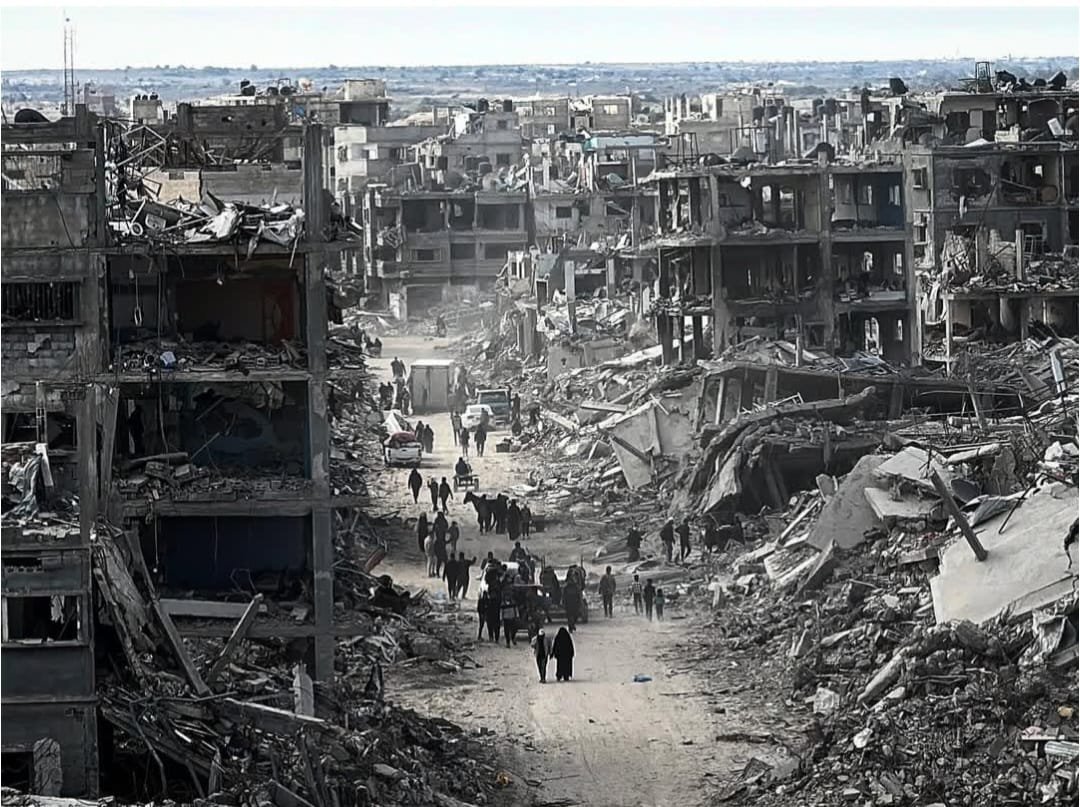
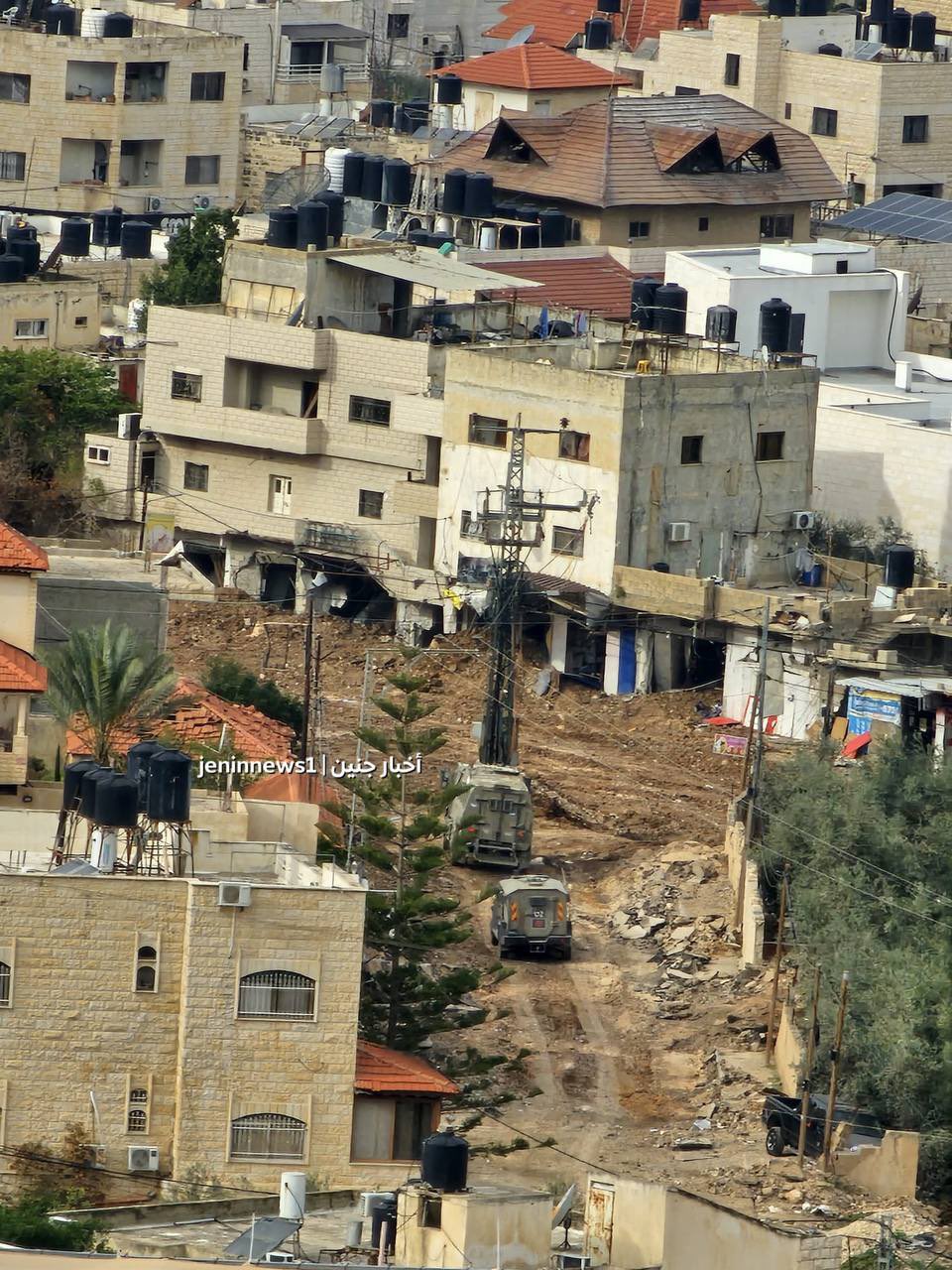
For months, Israel has been committing genocide by carrying out mass killings against civilians and methodically demolishing Gaza Strip cities, neighbourhoods, and infrastructure in an effort to drive Palestinians from their land and force them to flee. In order to weaken the Palestinians’ ability to survive on their land, and to establish a coercive environment that forces them to flee, these policies have gone beyond simply killing, destroying, and starving them. They have also included destroying the essentials of life, such as access to water, electricity, education, and health care.

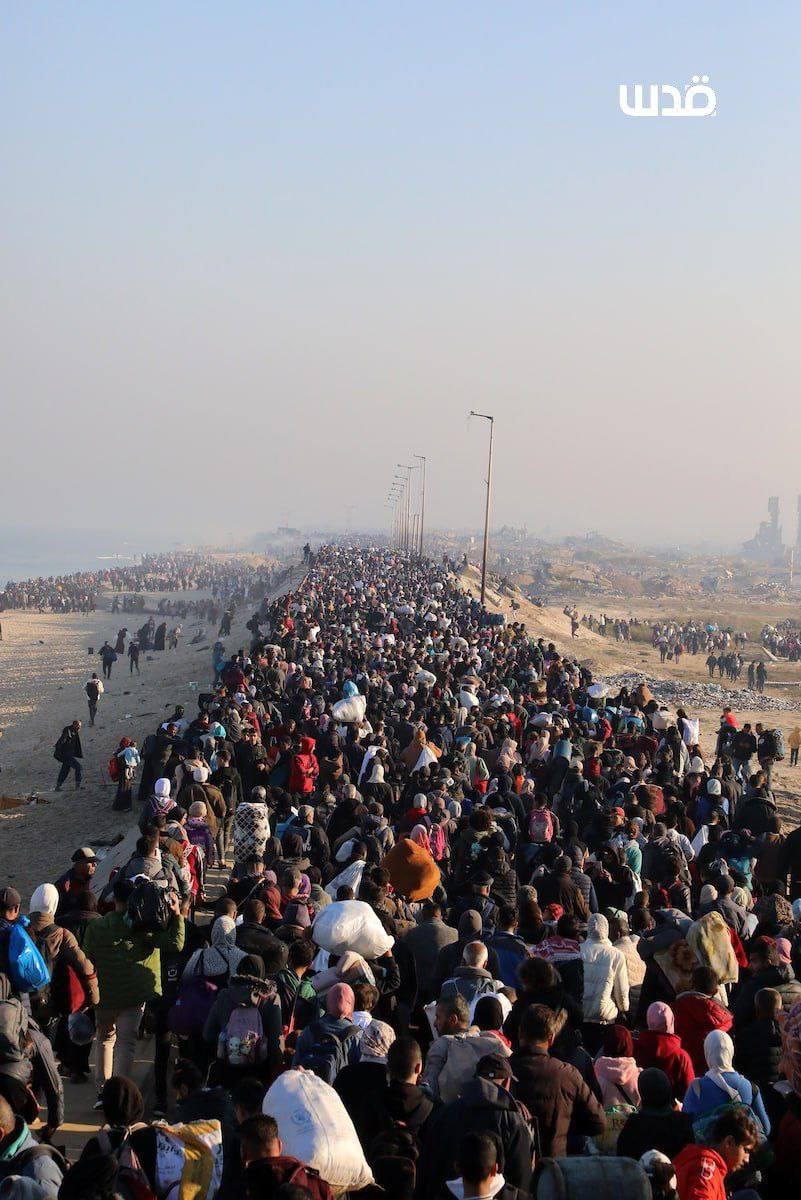
Trump stated today (26 Sunday) that more Palestinians from the Gaza Strip should be sent to Jordan and Egypt, and that he is pleading with the leaders of the two nations to allow them to do so because the Strip is “in a state of chaos”.

Since the reopening of the Rafah land crossing with Egypt, which was closed last May, Israel has purposefully bombed cities, residential neighbourhoods, and infrastructure in the Gaza Strip, including streets, schools, and essential facilities there. Israel’s deliberate attempt to either kill or drive Palestinians from their land is especially obvious given the dearth of basic necessities in the besieged enclave, such as homes and infrastructure like water, electricity, communications, Internet, and school networks. In addition, statements made by Israeli ministers and officials publicly promote voluntary migration.

Israel has been committing genocide in the Gaza Strip since 7 October 2023, and the destruction of entire Palestinian cities and neighbourhoods by the Israeli army is a glaring example of this crime and a key instrument of its execution.

This crime has gone beyond simply killing 10s of thousands—or potentially hundreds of thousands—of Palestinians and progressively destroying the lives of over two million people by removing their basic necessities for survival. It has also included the total destruction of Palestinian cities and their architectural and cultural heritage; the erasure of the Palestinian people’s national and cultural identity; the forced relocation of Palestinian people from their lands, and the imposition of this permanent displacement; the dismantling of their communities; and the obliteration of their collective memory in an attempt to eradicate their physical and human existence as well as their past, present, and future.

A regional and global stance opposing Trump’s claims of deporting Gaza Strip residents is absolutely necessary. Mass displacement as a solution to the current conflict not only ignores the underlying causes of the issue but also exacerbates the injustices already experienced by the Palestinian people, and denies them their rightful self-determination and safe residence in their homeland. Trump’s claims, along with any actions that follow, are likely to exacerbate tensions and undermine regional stability.

The international community must fully uphold the principles of international law and adopt solutions that respect Palestinian rights. These solutions should include ending Israel’s illegal occupation of Palestinian territories, holding Israel accountable for its ongoing crimes, and establishing a clear path to achieving justice for the Palestinian people. Additionally, the international community should ensure that all Palestinian refugees and displaced persons are able to return to their original areas in accordance with relevant international resolutions, rather than supporting any policies that would uproot Palestine’s indigenous population in favour of Israel’s colonial policies.

Euro-Med Human Rights Monitor

Continue reading
ESCWA: War on Gaza Sets Backs Development by 69 Years

The impact of the year-long war in Gaza and escalations in the West Bank has set development in the State of Palestine back by about 69 years, according to a new UN report released on Tuesday.

“Without lifting economic restrictions, enabling recovery, and investing in development, the Palestinian economy may not be able to restore pre-war levels and advance forward by relying on humanitarian aid alone,” Gaza war: Expected socioeconomic impacts on the State of Palestine, concludes, produced by the UN Development Programme (UNDP) and the UN Economic and Social Commission for Western Asia (ESCWA).

The analysis suggests three recovery scenarios for Palestine. Given that the recovery will be a long-term process, the report assessed both the immediate impact projected for 2025 and the long-term impact anticipated by 2034, a decade after the start of the conflict.

“Our assessments serve to sound the alarm over the millions of lives that are being shattered and the decades of development efforts that are being wiped out,” said ESCWA Executive Secretary Rola Dashti.

“It is high time to end the suffering and bloodshed that have engulfed our region. We must unite to find a lasting solution where all peoples can live in peace, dignity and reap the benefit of sustainable development and where international law and justice are finally upheld.”

Projections estimate that the gross domestic product (GDP) will contract by 35.1 per cent in 2024 compared with a no-war scenario, with unemployment potentially rising to 49.9 per cent.

Three recovery scenarios

Building on findings published in November and May, the report estimates that poverty in Palestine will rise to 74.3 per cent in 2024, affecting 4.1 million people, including 2.61 million people who are newly impoverished.

The assessment also examines the extent and depth of deprivation, employing multidimensional poverty indicators and includes recovery prospects for Palestine after a ceasefire is reached as well as three early recovery scenarios.

The non-restricted early recovery scenario sees restrictions on Palestinian workers lifted and withheld clearance revenues restored to the Palestinian Authority.

In addition to $280 million in humanitarian aid, $290 million is allocated annually for recovery efforts, resulting in an increase in productivity by one per cent annually, enabling the economy to recover and putting Palestinian development back on track.

Unrestricted aid can help

The assessment suggests that a comprehensive recovery and reconstruction plan, combining humanitarian aid with strategic investments in recovery and reconstruction along with lifting economic restrictions, could help put the Palestinian economy back on track to realign with Palestinian development plans by 2034.

But, this scenario can only play out if recovery efforts are unrestricted, said UNDP Administrator Achim Steiner.

Projections in this new assessment confirm that amidst the immediate suffering and horrific loss of life, a serious development crisis is also unfolding – one that jeopardises the future of Palestinians for generations to come,” he said.

“The assessment indicates that, even if humanitarian aid is provided each year, the economy may not regain its pre-crisis level for a decade or more.”

As conditions on the ground allow, he said, the Palestinian people need a robust early recovery strategy embedded in the humanitarian assistance phase, laying foundations for a sustainable recovery.

Humanitarian situation deteriorating

The humanitarian situation is catastrophic and deteriorating daily, said UNDP’s Chitose Noguchi, briefing reporters in Geneva from Deir Al-Balah, Gaza, where many displaced people are currently living.

“The State of Palestine is experiencing an unprecedented setback in development to the year 1955,” she said.

“Restrictions that are currently stifling the economy must be lifted,” she stressed, underlining the new assessment conclusion’s importance for the region. Currently, assessments are being conducted in Lebanon and Syria.

Read the full report here.

UN News

Continue reading
Israeli Media: Hamas is The Only Power That Can Rule Gaza

Israeli Channel 12 acknowledged that the Islamic Resistance Movement, Hamas, is still the only force in the Gaza Strip capable of ruling, 15 months after the war.

Speaking about “the next day,” the channel acknowledged Israel’s failure to achieve its goals in the war, as the objective was “not to allow Hamas to rule or return,” but “we saw yesterday it still has this ability.”

This views was expressed in referrence to scenes of the Qassam Brigades coming out among the people and handing over the Israeli female prisoners.

The TV channel concluded that there is no other force in Gaza with the same ability, which allows Hamas to return, and restricts the ability of the Israeli army to operate, according to its expression, so “Israel cannot even evade this goal now.”

In a related context, Channel 12 estimated that Israel will not resume fighting in Gaza, stressing that the Palestinian resistance can continue fighting forever, and is capable of “recruiting” individuals.

Likewise, the military affairs analyst for the Israeli newspaper Haaretz, Amos Harel, commented on the appearance of hundreds of Qassam Brigades members a few kilometers away from the place where the Israeli army forces were located, saying, “Hamas demonstrated its military strength and signs of civil rule by displaying it.”

The Israeli military correspondent for Channel 12, Lila Shoval, said that the agreement on the ceasefire in Gaza does not guarantee the achievement of the two goals that Israel has set for itself, that of eliminating Hamas and recovering the prisoners according to JO24.

Continue reading
A Gaza War Reader

By Dr. Tariq Sami Khoury

Despite the Gaza truce announcement, the question everyone is asking: Did this war end in victory or defeat?

Did the Zionist entity achieve its strategic goals, or did the Palestinian resistance factions impose a new equation on the ground? The mass destruction and great human losses open the way for a deeper analysis of the situation from multiple angles.

Zionist entity…Goals successes or victory illusions?

Israel launched its aggression on Gaza with unprecedented brutality, resulting in the near-total destruction of the Strip’s infrastructure, and the deaths of more than 250,000 people between those killed and wounded with the displacement of hundreds of thousands of residents.

Also the Israeli aggression extended to southern Lebanon and Syria, whilst targeting Yemen and Iran in clear attempts to expand the scope of the confrontation.

But did the Zionist entity achieve its goals?

1) Eliminating the resistance: Despite all attempts at genocide and continuous bombing, the Israeli army was unable to end the resistance or dismantle its infrastructure. The resistance proved its ability to continue to confront, and to carry out qualitative military operations till the last minute.

2) Recovering Its prisoners: Israel did not succeed to recover all its prisoners. In the end it was forced to enter into negotiations with the resistance under their own terms, which showed Israel was unable to impose its will by military force alone.

3) No deterrence: Instead of imposing a new equation to deter the resistance, Israel faced continuous missile strikes that reached deep into its territories and imposed a new and unprecedented reality on the Israeli internal front and unbearable political and security pressure on the Zionist leadership.

Legendary  Palestinian resistance…

Despite the Israel ferocity and the intense destruction, the Palestinian resistance emerged strong and cohesive. The battle it fought was not only for defense, but to establish a new equation in the conflict, as it was able to:

1) Survive despite the bombardment: Israel was unable to break the resistance will or push its fighters to surrender and remained able to respond and maneuver till the last moment, which shows the failure of the Zionist plan to crush it.

2) Imposing negotiating equations: The resistance was able to impose itself as a key party in any future solution, and succeeded in confirming that the prisoners are not just a pressure card, but a negotiating element that changes the equation.

3) Maintaining morale: Despite Gaza’s humanitarian catastrophe, the Palestinian people came out to celebrate the truce, in scenes that reflect their steadfastness and ability to overcome hardships. That is a psychological defeat for the Zionist entity.

Regional and international dimension… Exhaustion or victory?

Israel expanded the scope of its aggression to Lebanon, Syria, Yemen and even Iran to attempt to weaken any future threats. But this did not lead to decisive results. Rather it opened up several fronts without achieving any strategic gains.

1) Northern front (Lebanon and Syria): Despite its continuous bombing, Israel was not able to stop the force of the axis of resistance, but faced more threats leading to the exhaustion of its forces.

2) Yemeni front: The air strikes on the country failed to stop Yemen from participating in the conflict equation by targeting the ships in the Red Sea going to the Israeli Port of Eilat, and which added a new strategic dimension.

3) Iranian Front: The Zionist strikes did not deter Iran or stop its support for the axis of resistance, but strengthened its position whilst prompting it to escalate its support for the Palestinian resistance.

Truce.. Rest bite and an opportunity?

With the ceasefire announcement, it can be said the resistance emerged victorious through its ability to withstand and maintain its position to influence the future. In contrast, while the Zionist entity may have achieved some of its field goals, it failed to draw a decisive victory and end of the resistance.

Conclusion.. Victory and defeat

The battle was not equal in terms of military strength, but victory is not only measured by the ability to destroy; it is by steadfastness and ability to continue. Israel did not achieve a decisive victory, but fought a long war of attrition, while the Palestinian resistance emerged more solid and able to impose a new reality in the regional equation.

In the final analysis, the fact remains that liberating the land and restoring rights can only be achieved through continuous resistance, and that every Zionist attempt to eliminate the Palestinian people will be met with a will that does not know surrender. Thus, Palestine remains the compass of the free.

The author is a Jordanian writer and contributed this piece in Arabic for the JO24 website.

Continue reading
Al-Falahi: Continual Rockets Confirms Israel’s Military Failure

In his military analysis of developments in Gaza Strip, strategic expert Colonel Hatem Al-Falahi, confirms the continual rocket fire from the Gaza Strip reflects the total failure of the Israeli military strategy, despite its unlimited international support.

He was commenting on the sirens in the Kerem Abu Salem area and Sderot and its surroundings, following the launch of Palestinian resistance rockets from the southern Gaza Strip.

Al-Falahi explained these rockets continue within the context of the ongoing Doha negotiations.

The military expert pointed out the continued firing of rockets after more than 15 months of war confirms that Hamas still possesses great military capabilities. He explained this sends a clear message that the resistance forces are preparing themselves for a long-time battle.

With regard to the military operations in the northern Gaza Strip, Al-Falahi stressed on Al Jazeera the continuation of the resistance there, despite the Israeli operation for the last 100 days, proves Israel’s failure to achieve its military goals.

He added the war, despite the great capabilities available to the Israeli occupation army and American and Western support, is unable to break the will of the Palestinian resistance.

A hotbed of depletion

Al-Falahi explained that the northern areas, especially Jabalia and Beit Hanoun, have turned into a “great hotbed of depletion” for the Israeli army.

He pointed to the great developments in the resistance factions’ strategies, as they began to benefit from the unexploded missiles and bombs of the Israeli army whilst employing them in their confrontation operations.

In his assessment of the general military situation, the military expert warned the goals that the Israeli army was unable to achieve in the past period will not be realized as the war extends further.

He especially pointed to the resistance success in retaining the Israeli prisoners, despite the huge capabilities and intelligence gathering available to the occupation army.

Al-Falahi stressed that the confrontations in Gaza have become “highly qualitative and bloody” due to the development of the resistance’s methods, pointing to the ability of the Palestinian factions to adapt to the various circumstances of battle, especially in the areas of the northern Gaza Strip according to Jo.24

Continue reading