CrossFireArabia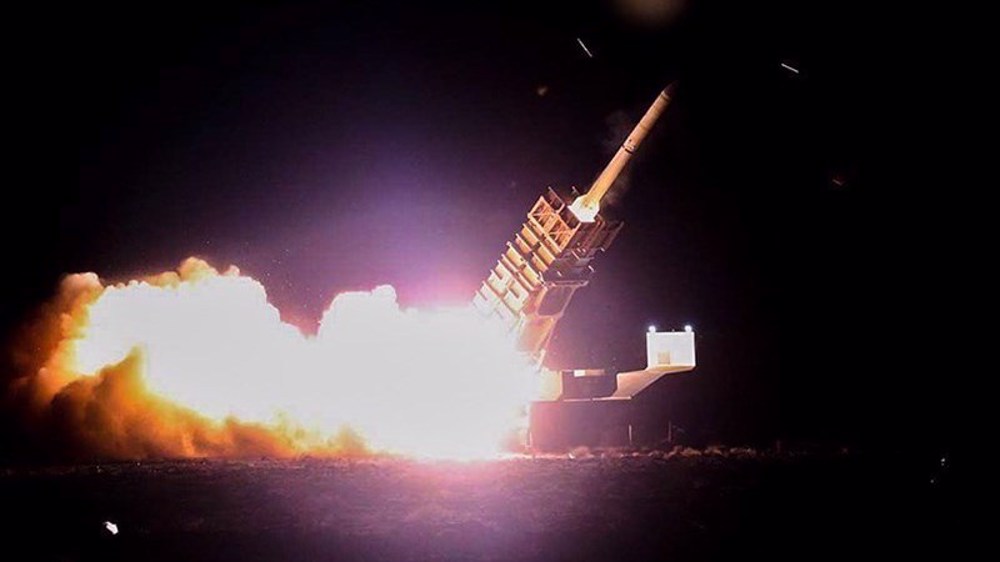
Military expert Major-General Fayez Al-Duwairi said Hezbollah regained its political balance after it revamped its tactical and operational balance a few weeks ago at the level of managing the battle with Israel. He pointed to the party’s dual employment of its qualitative missiles on the horizontal and vertical levels.
Al-Duwairi explained on Al Jazeera Hezbollah’s Nasr and Aziz units are responsible for managing the defensive battle efficiently in the area south of the Litani River.
The Litani River extends 170 kilometers from its source in the east to its mouth in the west, and is about 30 kilometers from the Lebanese-Israeli border.
The strategic expert explained this party wanted to reveal the Imad 5 facility “to present a specific vision regarding the employment of qualitative missiles”, which he considered as “a translation of restoring the balance”.
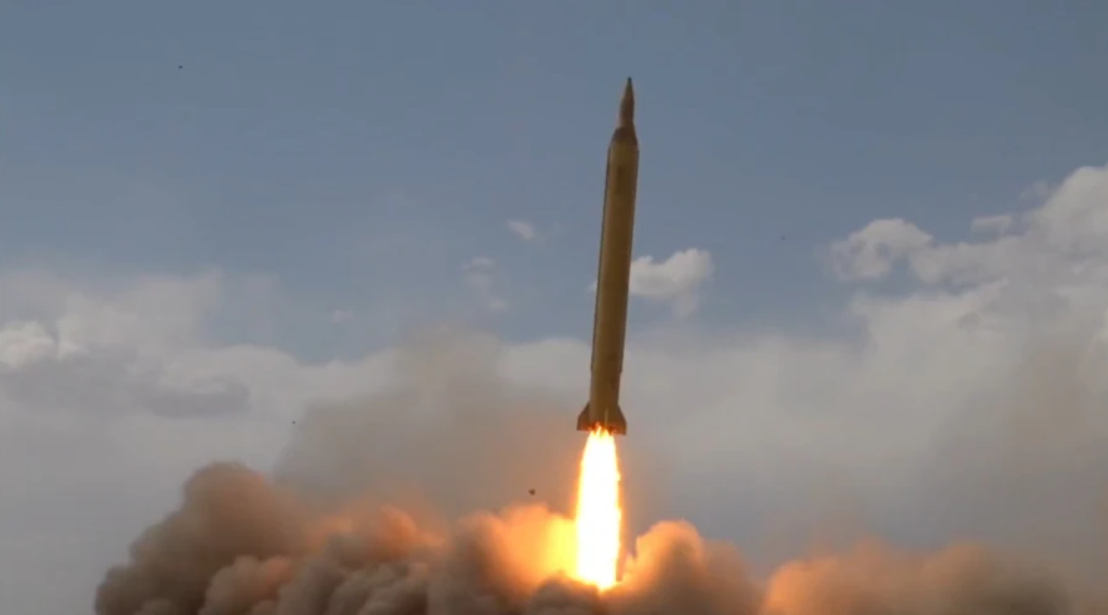
Hezbollah’s war media section published a video clip, Sunday evening, showing a missile launch facility called Imad 5, which included missile launchers and equipment inside an underground military facility.
The military expert warned of what he called “Hezbollah’s dual use of missile power”, as it sometimes resorts to direct missile targeting, and sometimes launches missiles to serve another military approach.
Missile barrages
According to Al-Duwairi, Hezbollah resorts to launching missile barrages that coincide with or slightly precede its drones, as the Iron Dome radars pick up the missile signal and focuses on it, while the drones penetrate deep into Israel, sometimes reaching up to 150 kilometers.
Hezbollah’s drones have become an obsession for the Israeli army with Al-Duwairi saying the party focuses on “the evening barrage launch to paralyze the widest possible geographical area of Israel and force about two million people to enter the underground shelters.”
Hezbollah recently begun a horizontal escalation consisting of launching 100 rockets per day, in addition to a vertical escalation through the use of rockets it never used before, the military expert said.
Duwairi added Hezbollah’s qualitative rockets are evident through their range, accuracy, and ability to reach the target, noting the party has “a bank of targets arranged according to priorities in terms of the impact of these targets on the course of the battle and Israel.”
For these reasons, the party is focusing on Israeli military bases and the facilities that serve them, such as technical and military industries and weapons depots, in addition to economic facilities.
Hezbollah has been focusing in recent days on targeting the Glilot base of the 8200 Military Intelligence Unit in the suburbs of Tel Aviv, and the Palmachim Air Base (south of Tel Aviv).
It is also focusing on the Shraga and Sanat Gen logistics bases north of Acre, in addition to the Misgav base (northeast of Haifa), the Ramat David base and airport (southeast of Haifa), and the Zevulun military industries base (north of Haifa).
However, the military expert adds “Hezbollah is very cautious and does not want to go too far in its policy of targeting Haifa versus the southern suburbs of Beirut” for fear of a corresponding Israeli overreach.
Al-Duwairi explained Hezbollah is bombing military targets in return for an Israeli targeting of the party’s social infrastructure and incubator.
He explains the party cannot defeat the Israeli army in a conventional war, but “just by its survival and ability to withstand, and prevent Israel from achieving its goals and deterring it, it is considered victorious.”
Since 23 September, Israel has expanded its war on Hezbollah to include most areas of Lebanon, including the capital Beirut, through unprecedentedly violent and intense air strikes, and it has also begun a ground incursion in the south, relying on five military divisions operating along the border with Lebanon.