Battle for Hormuz: How Iran Found America’s Achilles Heel
The United States has overwhelming naval power. Iran has geography, missiles, mines and the ability to frighten commercial shipping. Six months of confrontation have exposed the uncomfortable truth that neither side can fully control the world’s most important energy chokepoint.
At first glance, the contest for the Strait of Hormuz ought to be hopelessly unequal. On one side stands the United States, with aircraft carriers, submarines, long-range bombers, satellites and arguably the most powerful navy ever assembled. On the other is Iran, economically battered and militarily far weaker, defending a narrow strip of water beside its own coastline with missiles, drones, mines and relatively inexpensive attack craft.
Yet six months into the 2026 confrontation, commercial shipping is still nowhere near normal.
On September 10, preliminary vessel-tracking data recorded only seven commodity ships transiting Hormuz, compared with roughly 125 commercial vessels a day before the present crisis. No liquefied-natural-gas tanker was recorded crossing that day. The picture is imperfect because some vessels travel with tracking transponders switched off, but the collapse in ordinary traffic is unmistakable.
That leaves an uncomfortable question for both Tehran and Washington.
Who actually controls Hormuz?
The answer depends entirely upon what one means by control.
Legally, neither does. Militarily, the United States is considerably more powerful. Geographically, Iran enjoys a formidable advantage. And economically, Tehran has demonstrated that it can make navigation so dangerous that a navy does not actually have to sink every tanker to obstruct the waterway.
Hormuz has therefore become an unusual battlefield: America possesses sea power; Iran possesses sea-denial power.
And those are not the same thing.
A waterway Iran cannot legally own
The geography explains much of the struggle.
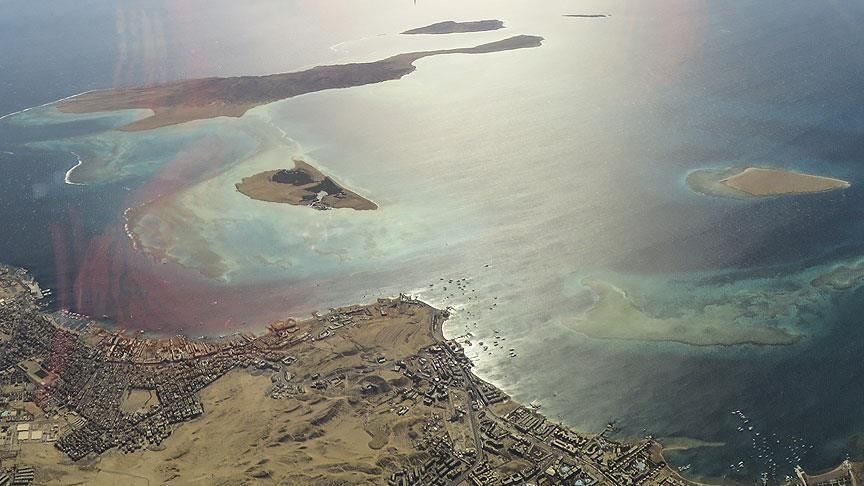
At its narrowest, Hormuz is only a few dozen kilometres across. Iran occupies the long northern coastline; Oman controls the Musandam Peninsula to the south. The recognised traffic-separation scheme threads ships between their territorial waters.
Iran therefore has a genuine sovereign interest in the Strait—but not an internationally recognised right simply to close it.
Under the UN Convention on the Law of the Sea, ships and aircraft enjoy a right of transit passage through straits used for international navigation. Article 38 says that passage “shall not be impeded”, while Article 44 states that states bordering such straits shall not hamper it and that there “shall be no suspension of transit passage.”
The International Maritime Organization reiterated precisely that position in July, saying transit through international straits must not be threatened, denied, hampered or suspended. It simultaneously condemned attacks on civilian commercial vessels around Hormuz.
Iran sees matters differently, particularly when its security is involved.
The Islamic Revolutionary Guard Corps has insisted that ships coordinate with Iranian authorities. In March, IRGC Navy commander Alireza Tangsiri said a container vessel had been ordered away after attempting to cross without what Iran described as the required authorization, adding that maritime traffic had to respect Iranian “maritime sovereignty.”
That dispute goes to the heart of the crisis.
Washington’s proposition is that Iran borders an international strait.
Tehran increasingly behaves as though Iran is one of its gatekeepers.
Those formulations sound similar. Strategically, they are radically different.
Iran discovered that it does not need to defeat the U.S. Navy
Iranian strategists have discussed closing or threatening Hormuz for decades. The assumption in Washington was generally that such a move would be enormously costly to Iran: American forces would suppress Iranian coastal batteries, clear mines, destroy vessels and restore navigation.
Much of that assumption remains true.
What the present conflict has exposed, however, is the difference between reopening water and persuading private companies that sailing through it is safe.
Iran does not need to sink an aircraft carrier.
It does not even have to stop every tanker.
It merely has to create enough uncertainty that shipowners, crews, charterers and insurers begin asking whether a voyage is worth the risk.
A mine whose precise location is unknown can influence hundreds of kilometres of water. A missile battery that survives somewhere along the Iranian coastline influences calculations even when it never fires. A drone costing a tiny fraction of a commercial tanker can change an insurer’s assessment of an entire route.
The result has been dramatic.
According to the U.S. Energy Information Administration, crude oil and petroleum liquids moving through Hormuz averaged about 21.6 million barrels per day in the fourth quarter of 2025. During the second quarter of 2026, after fighting began, that figure collapsed to roughly 4.9 million barrels per day.
That is the central achievement of Iran’s strategy.
It has not established classical naval superiority.
It has established something closer to a risk veto.
The US answer: Overwhelming punishment
Washington has by no means surrendered the Strait.
The American military response demonstrates the extraordinary asymmetry between the two sides in conventional striking power. CENTCOM says that during three nights of operations in July it hit more than 300 Iranian targets, including missile and drone sites, naval installations, ammunition depots, communications systems and coastal surveillance facilities. In the same statement, CENTCOM said U.S. forces had facilitated the transit of more than 800 commercial vessels carrying some 400 million barrels of crude since early May.
The United States also imposed something extraordinary of its own: A naval blockade against traffic entering or leaving Iranian ports. When CENTCOM announced its resumption in July, it said its earlier blockade had redirected more than 140 vessels and disabled nine non-compliant ships.
This creates what CSIS analyst Daniel Byman has described as a paradoxical equilibrium: Iran disrupts energy traffic through Hormuz while the United States effectively “blockades the blockaders”, denying Iran ordinary use of its own maritime trade.
That formulation captures the conflict better than claims of victory by either government.
Iran says, in effect:
You cannot expect ordinary access to Hormuz while attacking and sanctioning us.
Washington answers:
Then you cannot expect ordinary access to Iranian ports while obstructing an international waterway.
Neither proposition eliminates the other.
The view from Tehran: Geography as strategic equality
Iranian commentary understandably portrays this outcome as evidence that America’s conventional supremacy has limits.
Its argument contains an important truth beneath the propaganda.
Iran fights beside its own coast.
Its forces can disperse missile launchers, drones and surveillance systems over a large land area. Small craft can operate from numerous bases. Mines can be deployed clandestinely. Tehran can wait.
An American carrier strike group, by contrast, is immensely powerful but extremely expensive. Ships require maintenance and rotation. Aircraft require fuel and bases. Sailors eventually return home. The political leadership has to explain casualties and costs to an electorate.
Iran does not have to cross an ocean to defend Bandar Abbas.
This is the classic logic of the weaker power exploiting geography against the stronger.
Iran’s objective, therefore, need not be to destroy the Fifth Fleet. It needs only to convince Washington that fully neutralising Iranian capacity around Hormuz would require a military commitment far larger than the United States is prepared to sustain.
Even some Western analysts have reached versions of that conclusion.
Bruce Jones at Brookings argues that the Hormuz confrontation exposes broader strains on American naval power: Relatively weak states and non-state organisations can now use inexpensive missiles, drones and mines to threaten commercial shipping, forcing vastly more expensive naval systems into the role of defending it.
CFR analysis similarly describes Hormuz as a maritime flashpoint in which overwhelming U.S. capability has not automatically produced restored normality.
That is precisely the lesson Tehran wants the region to absorb.
But Iran has discovered its own Achilles heel
It would nevertheless be a mistake to conclude that Iran has won.
Iran’s Hormuz weapon contains a fundamental contradiction:
Iran itself lives beside Hormuz.
It imports goods through the region. It depends on energy sales and maritime commerce. Its economy cannot painlessly operate behind a permanent naval confrontation.
The longer Hormuz remains dangerous, moreover, the more everyone else attempts to escape its geography.
Saudi Arabia has redirected larger volumes through its East-West pipeline to Yanbu on the Red Sea. EIA data show flows through Bab el-Mandeb rising during the early disruption as oil was diverted away from Hormuz.
By early September, Saudi crude and condensate loadings at Yanbu had risen sharply again, according to ship-tracking estimates reported by Reuters.
Every barrel that can bypass Hormuz reduces Iran’s future bargaining power.
So does every new storage terminal, pipeline, insurance arrangement and alternative supplier that Asian governments develop because they no longer trust the Gulf route.
Iran’s greatest strategic weapon therefore suffers from an unusual problem:
the more often Tehran uses it, the more incentive the world has to make it obsolete.
The market may decide the war before the admirals do
This is why the most revealing discussions about Hormuz may not be taking place in Washington or Tehran but in Singapore, Beijing, Seoul, Tokyo and the Gulf’s insurance and shipping offices.
At the APPEC energy gathering in Singapore this week, Reuters found an industry increasingly preparing for prolonged disruption. Oil flows were estimated at roughly three-quarters of pre-war levels, while refined-product shipments into Asia remained heavily affected. Executives were no longer talking confidently about an imminent return to normal.
Meanwhile, the IMO said in late August that thousands of seafarers remained exposed to danger and uncertainty six months after the conflict began. It had verified at least 70 attacks on international shipping and 19 seafarer deaths.
That highlights a weakness in conventional definitions of maritime control.
The United States may be capable of destroying the launcher that fired a missile.
But the shipowner’s question is different:
Will another missile be fired tomorrow?
The insurer asks:
What premium compensates us for that possibility?
The captain asks:
Should my crew enter at all?
If their collective answer is no, Iran can achieve considerable strategic effect without winning a traditional naval battle.
So is this a stalemate?
Yes—but not because the militaries are equal.
They plainly are not.
It is a strategic stalemate produced by unequal strengths.
America dominates the vertical dimension: Aircraft, surveillance, long-range precision weapons, submarines, major surface combatants and enormous logistical capacity.
Iran exploits the horizontal dimension: Coastline, proximity, concealment, mines, drones, dispersed missiles and the permanent presence created simply by geography.
Washington can destroy things Iran values.
Tehran can disrupt something the world values.
That distinction explains why both sides can hurt each other without compelling surrender.
CSIS calls the present contest one of political endurance and bargaining leverage rather than straightforward military capability.
Brookings has gone even further, arguing after the June arrangement that Iran had survived the American barrage while retaining substantial leverage over Hormuz, even as the legal legitimacy of Iranian tolls or permission requirements remained strongly disputed.
Neither observation means Iran is stronger than the United States.
It means military strength and political coercion are different currencies.
What Iran wants
Tehran’s end game appears to involve considerably more than reopening shipping.
Iran wants any eventual settlement to demonstrate that attacking Iran carries an international economic price.
It also wants sanctions relief, restoration of oil-export capacity and guarantees against renewed attacks. Most ambitiously, it wants acknowledgement—formal or practical—that Iran cannot simply be excluded from the security architecture governing a strait immediately beside its territory.
A system under which Iranian authorities exercise some recognised navigational or security role would therefore allow Tehran to claim that its sacrifices produced a permanent geopolitical gain.
That is why Iranian demands concerning permits, coordination and management matter.
The argument is not merely about ships.
It is about who writes the rules of the Gulf after the war.
What Washington wants
America faces the opposite problem.
Recognising an Iranian political veto over Hormuz would establish a precedent Washington is extremely reluctant to accept.
The United States’ postwar maritime position has rested heavily on the principle that strategically important waterways cannot simply become instruments of coercion whenever the coastal state possesses enough weapons.
Hormuz therefore intersects with a much larger American concern about freedom of navigation from the Gulf to the South China Sea.
If Iran can convert missiles and mines into a recognised right to license international transit, other states will study the precedent carefully.
For Washington, consequently, the question is no longer merely:
Can we protect an oil tanker?
It is:
Can coercion rewrite the rules governing international straits?
That helps explain why the legal language used by the United States, IMO and other governments has been so emphatic. The UN legal framework states that transit passage cannot simply be suspended by the bordering state.
The most plausible end game
A decisive military victory by either side is possible, but it is not the most plausible outcome.
For America to eliminate Iran’s ability to threaten Hormuz with high confidence could require a continuing campaign against mobile missiles, drones, mines, command systems and coastal infrastructure—a problem made harder by Iran’s proximity and ability to rebuild.
For Iran to maintain a near-total closure indefinitely would impose enormous costs on its own economy while accelerating bypass routes and inviting continuing American attack.
The incentives therefore point eventually toward an intentionally ambiguous bargain.
Iran and Oman could retain sovereign responsibility within their territorial waters. International navigation would resume without Washington formally accepting an Iranian right to grant or withhold permission. Iran might obtain sanctions relief, restored oil exports, access to frozen resources or other economic concessions. The United States could claim that freedom of navigation had been restored. Tehran could tell its population that American pressure had failed and that Iran’s regional role had been recognised.
Both governments could call the same agreement victory.
That may be precisely what makes it achievable.
The alternative is the present equilibrium—and it is dangerous.
On September 9 and 10, renewed Iranian and American actions sent shipping traffic sharply lower again, while oil prices returned above $100 a barrel. Claims from the two militaries remain contested, including Iranian assertions about particular vessels it says it struck.
Every such episode creates the possibility that tactical retaliation becomes strategic escalation.
Who controls Hormuz?
Perhaps the simplest answer is also the most accurate.
Iran does not control Hormuz in the sense of possessing uncontested sovereignty or naval supremacy.
America does not control Hormuz in the sense of being able to guarantee normal commercial navigation irrespective of Iranian resistance.
Iran currently possesses an extraordinary capacity to deny.
America possesses an extraordinary capacity to punish.
Neither has yet demonstrated the capacity to impose its preferred political settlement upon the other.
That is why the battle for Hormuz has become much larger than a struggle over a narrow strip of water.
For decades, American naval supremacy encouraged the assumption that command of the sea and freedom of commercial navigation were essentially the same thing.
Iran has exposed the gap between them.
A superpower can dominate the battlespace and still struggle to convince a merchant captain that the next twenty miles are safe.
And therein lies America’s Hormuz problem.
The United States can make Iranian control prohibitively costly. Iran can make American control prohibitively difficult.
Unless one side is willing to escalate far beyond what it has attempted so far, the eventual winner is therefore unlikely to be decided by an admiral.
It will be decided at the negotiating table.
And the central bargaining question will be the one neither Tehran nor Washington can yet answer without losing face:
Who gets to say why the Strait reopened?

 CrossFireArabia

 Heba
Heba