A Middle East Whirlpool! View From Amman

By Saleem Ayoub Quna

Unlike the grey terrain of the Middle East, known for its harsh aridity and barren landscapes, the region’s still-unsettled, multi-front conflicts that erupted after the 7 October, 2023 surprise Palestinian assault on Israeli settlements around Gaza Strip, almost literally, become associated in the public imagination with the colour blue: The sea, its waves, its vessels and its strategic waterways.

The Palestinians called that watershed event Al-Aqsa Flood. Israel described 7 October as a second Holocaust. If the Palestinians deliberately chose the word flood for its religious and symbolic connotations, the Israeli way of describing it, indicated how serious and tough their losses and injuries were.

What followed was a succession of milestones and unprecedented developments across the Middle East. They continue to unfold dramatically, resembling the abrupt and unpredictable movements of hurricanes and tempests on the high seas.

Yet the side-conflicts and mini-wars that followed 7 October have neither followed a single pattern nor obeyed the same rules. Instead, events have moved in different, sometimes opposing directions — unlike the orderly circular motion of an actual whirlpool. It is almost as though every confrontation has chosen a course of its own: The predictable alongside the unpredictable, the rational alongside the seemingly illogical.

It therefore takes more than intelligent guesswork or clever political analysis to determine which direction these events will ultimately take, and which may prove more dangerous — not only to the region and its inhabitants, but also to the many international powers with interests at stake.

If we were to capture the current Middle Eastern scene in a single frame, we might portray it as an extraordinary, almost unbelievable collision of man-made tides, currents and sub-currents, all moving simultaneously through one increasingly turbulent sea.

Because the first shots fired on 7th October around Gaza strip, from a Palestinian point of view, came as a last desperate call and reminder of the injustice they are suffering, they soon found their echoes in the four corners surrounding it: In south Lebanon, Yemen to the south and Iraq and Iran to the east. Even to the west, there were international sailors who belonged to the Peace Flotilla, trying to bring medicine and food to the starving children of Gaza!

One of the most significant currents emerged on Israel’s northern front.

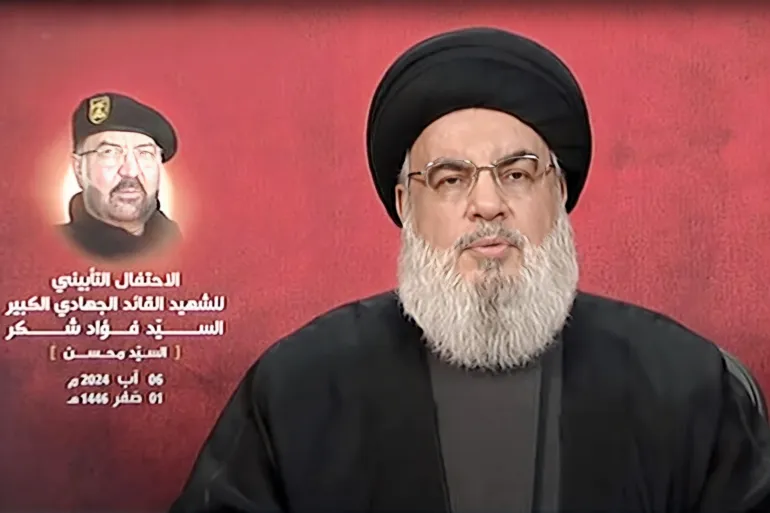
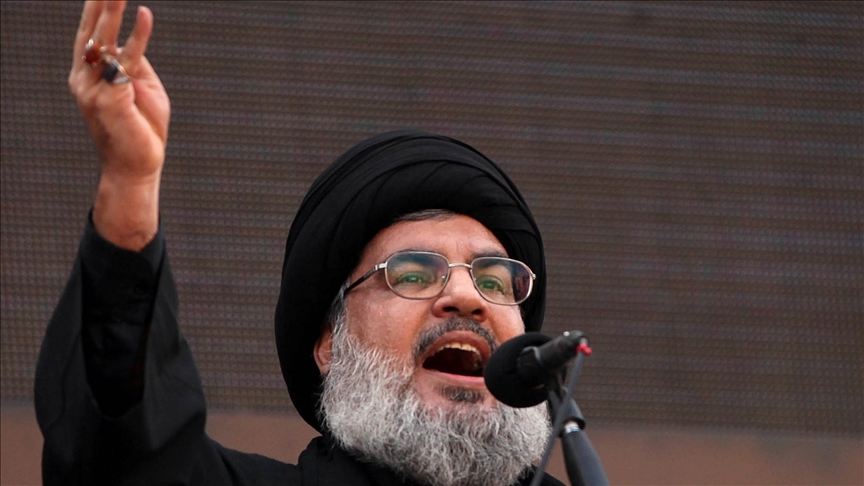
What initially appeared to be a relatively “controlled” confrontation between Israel and Hezbollah steadily intensified until September 2024, when Israel killed the party’s leader Hassan Nasrallah. Only a few months later came another geopolitical earthquake: The collapse of Bashar al-Assad’s government in Damascus in December 2024.

Each development sent another powerful current through the already boiling waters of the wider Middle Eastern whirlpool.

Then came an even larger artificial wave.

In June 2025, the United States launched Operation Midnight Hammer, striking Iran’s three principal nuclear sites at Fordow, Natanz and Isfahan while diplomatic efforts surrounding Iran’s nuclear programme were still underway.

Washington described the operation as an attempt to inflict decisive damage on Iran’s nuclear capabilities. Tehran responded with retaliatory action against American military interests in the Gulf.

But that was not the end of the storm.

On 28 February, 2026, the world witnessed another major escalation when the United States and Israel launched coordinated, large-scale attacks against Iran. The two allies acted jointly but gave their military campaigns different names: Washington called its operation Epic Fury, while Israel called its campaign Roaring Lion.

The strikes hit Iranian military infrastructure and senior leadership and inflicted substantial damage. Yet they failed to produce one of the most far-reaching political outcomes sought by US-Israeli advocates of the military campaign: The toppling of the Iranian regime.

And so the whirlpool continued.

Iran responded not simply through missiles and military retaliation, but by shifting the struggle towards one of the most strategically sensitive waterways on earth: The Strait of Hormuz.

Through restrictions on shipping, attacks on vessels and increasingly assertive claims over the waterway, Tehran transformed Hormuz into another major front in the confrontation. The strait — through which a substantial share of the world’s energy supplies traditionally passes — became yet another current dragging regional powers and the wider international community deeper into the turbulence.

Here, the metaphor of the whirlpool becomes more than literary.

Gaza, Lebanon, Syria, Iran, Yemen, Iraq, the Red Sea, the Arabian Gulf and the Strait of Hormuz are no longer easily separable theatres. Each produces currents that flow into the others. A military strike in one location generates political pressure somewhere else; an assassination changes the balance of power hundreds of kilometres away; a blocked shipping lane reverberates through global markets thousands of kilometres beyond the Middle East.

And all the while, new currents are being created faster than old ones can disappear.

What begins on the shores of Gaza does not remain in Gaza. What happens in Beirut, Damascus, Tehran or the Strait of Hormuz does not remain there either.

The Middle Eastern whirlpool has become too wide, too violent and too interconnected to contain its turbulence within the region itself.

And as it keeps spinning, its waves will continue to splash far beyond the shores of the Middle East — reaching, sooner or later, virtually every corner of the globe.

Conclusion: As long as the waters surrounding the Middle East remain crowded with warships, missiles, blockades, retaliatory strikes and the debris of foreign intervention, the region’s old whirlpool will continue to spin.
Continue reading
Hassan Nasrallah’s Funeral to be on 23 February

Hezbollah on Sunday annoucned that the funeral for it longtime leader Hassan Nasrallah, killed in an Israeli attack last year, will take place on Feb. 23 in Beirut.

In a televised statement, Secretary General Naeem Qassem said Nasrallah “was martyred at a time when the conditions were difficult, and there was no possibility for a funeral.”

Nasrallah “was temporarily buried (due to security conditions), and we have now decided to hold a public funeral on Feb. 23,” he added.

Qassem said a funeral will also be held for Sayyid Hashem Safieddine, another senior Hezbollah official who was killed in an Israeli airstrike nearly a week after Nasrallah’s assassination.

He said Safieddine will be buried with the title of secretary-general, confirming for the first time that he had been elected as Nasrallah’s successor before being killed.

“Sayyid Hashem Safieddine will also be mourned as the secretary-general of the party, as four days after Nasrallah’s assassination, we elected Hashem as secretary-general, and we consider him martyred in that capacity,” Qassem said.

The Hezbollah chief said Nasrallah will be buried on the outskirts of Beirut “in a plot of land on the airport road,” while Safieddine will be laid to rest in his hometown of Deir Qanoun in southern Lebanon.

Nasrallah was assassinated by Israel on Sept. 27, 2024 in a series of airstrikes in Beirut’s southern suburbs. Safieddine was targeted on Oct. 3.

Israel was to complete its army’s withdrawal from Lebanon by Jan. 26 under a ceasefire deal, but it refused and the deadline was extended to Feb. 18.

The truce ended shelling between Israel and the Lebanese group that began in October 2023 after the onslaught in the Gaza Strip commenced, and escalated into a full-scale conflict in September 2024.

The more than a year of fighting killed more than 4,000 people in Lebanon and injured many others.​​​​​​​

Continue reading
Houthi Missiles and Israeli Mass Hysteria

By Abdul Bari Atwan

What are the options Israel and America’s has to confront the continuing Yemeni drones and hypersonic missiles? Is it bombing Tehran and/or implementing the latest Syrian case in Sanaa? Why not rule both out?

The Israeli occupation, government and settlers, are today in a state of hysterical panic due to the never-ending hypersonic ballistic missile attacks and the advanced drones bombing the heart of Tel Aviv and causing serious human casualties and huge fires.

This state of hysteria is reflected in four distinguishing signs:

First: Threats by more than one Israeli official to launch a massive attack on Yemen similar to that on Gaza whilst carring out assassination campaigns targeting the political and military leaders of Ansar Allah, especially Abdul-Malik al-Houthi.

Second: More than two million Israeli settlers took refuge in shelters, and sirens sounded in more than 80 locations in occupied Palestine over the past four days.

Third: Closing the airspace of Ben Gurion Airport to air traffic, which created confusion, chaos, isolation, and moral collapse.

https://twitter.com/AlainFrNews/status/1871822099943411713

Fourth: Failure of Israeli celebrations of two major successes achieved according to Hebrew newspapers, namely: In Imposing a ceasefire in Lebanon, stopping attacks from the southern Lebanese border, and the second by toppling the Syrian regime, the jewel of the resistance axis as boasted by Netanyahu that it was he who played the biggest role in achieving this.

Israeli Minister of War Yisrael Katz broke with all established Israeli norms by officially acknowledging, for the first time, responsibility for the assassination of the Ismail Haniyeh in Tehran, Hassan Nasrallah in Lebanon, and Yahya Sinwar in Rafah.

Katz threatened the Houthis leaders that they would face the same fate, and that the destruction that occurred in Gaza and Beirut would be repeated in Sanaa and Hodeidah.

But what terrifies the Israelis most, and worries their leadership is the arrival of the incessant Yemeni missiles and drones to the heart of major Zionist cities, like Tel Aviv, Haifa, Ashkelon, and Eilat with millions of settlers descending into shelters.

Indeed, this points to the failure of Israel’s highly advanced air defense systems to intercept these missiles, prevent them from reaching their targets, and inability to provide security and protection for the settlers in these major cities.

Perhaps the threats of Israeli officials to launch attacks on Yemeni cities reflect the extent of the pain they are suffering as a result of these incoming deadly projectiles.

These, and before them the Israeli, American and British air strikes on Sana’a and Hodeidah, have not achieved the goals of deterring Yemeni missile attacks and stopping their bombing of the Israeli depth.

On the contrary, they gave completely opposite results with their continual launching of hypersonic missiles and drones, and more dangerously, the downing of the advanced US F-18 jet, and the damaging of American aircraft carrier Harry Truman in the Red Sea and its escape to the north to prepare to leave the region, like its predecessors, the Eisenhower, the Lincoln, and many other naval destroyers.

The Yemeni military statements by Brigadier-General Yahya Saree in the past three days confirmed the bombing of Tel Aviv, Ashdod and Ashkelon deep inside Israel will continue as long as the extermination war on Gaza continues.

These statements were backed by the launch of more hypersonic missiles and drones in quick and direct responses to the Israeli threats, which means Yemen is not afraid and is responding in kind, has patience, and is ready to sacrifice.

Yemen has become the spearhead of the axis of resistance, and main front after the situation in Lebanon calmed down following the ceasefire agreement, and the commitment of the Islamic resistance there despite the violations. It is not unlikely that the Israeli occupation state, with American support, and perhaps Arab support as well, will present two main military options in the coming few days:

First: Going to the head of the octopus, i.e. Iran, as described by the Israelis, by launching an expanded tripartite Israeli-American-British attack to destroy it, according to the recommendation of Mossad Chief David Barnea as targeting Sana’a and Hodeidah again will not stop the Yemeni attacks with missiles and drones from reaching the occupied Palestinian depth.

Second: Repeating the Syrian scenario in Sana’a, i.e. an attempt to undermine and exhaust the Houthis by supporting the other Yemeni military groups and movements hostile to it by supplying them with modern weapons, providing air cover for their attacking forces, and mobilizing regional support for this step.

Launching a large tripartite aggression on Yemen may fail and give adverse results, and the same can be said about the expected attack on Iran, and it will be the occupying state and its military bases that may be exposed to bombing with thousands of ballistic and supersonic missiles, because the loss of the resistance axis of its last, most powerful and effective arena (Yemen) means its end and its Iranian leadership, and the creation of a new Middle East led by a “Greater Israel”.

However great Yemen will not surrender, and will not be defeated, as history tells of its victory over all previous invaders. Its steadfastness for more than eight years in the US-backed Gulf War against it confirms it will withstand any new Israeli-American-British targeting it, as its internal incubator is strong and solid and difficult to break due to the rallying of people around its leadership, which is embodied in the massive million-person demonstrations every Friday now for several months in solidarity with our people in the Gaza Strip.

Abdel Bari Atwan is the Chief Editor of Al Rai Al Youm

Continue reading
Has Hezbollah Abandoned Gaza?

Bloggers are today asking that with the current ceasefire between Israel and Lebanon if Hezbollah has abandoned Gaza?

The ceasefire agreement between Israel and Hezbollah was the most prominent event on Arab social media platforms. After nearly a year of support announced by the party to the Palestinian resistance, an agreement was reached, Wednesday, with Israel to stop the fighting and war.

This announcement sparked controversy and division. Some bloggers considered Hezbollah abandoned the will of its late General Secretary Hassan Nasrallah who was killed by Israel, to support Gaza according to Al Jazeera.

Others on the other hand, saw that the party did what it could to support the people of Gaza in many ways which other  countries were unable to do.

The first thing bloggers circulated was part of Nasrallah’s last speech, in which he said, “the resistance in Lebanon will not stop supporting Gaza, despite all the sacrifices it has made.”

They added the current ceasefire agreement has gone beyond the last will of Nasrallah that “the Lebanese front will not stop before the aggression on Gaza stops.”

They pointed out: “We will not deceive ourselves. Israel succeeded tonight in separating the fronts, leaving Gaza alone, and this has now become a reality. This scenario was proposed since the beginning of the war: Stopping support for Gaza and Hezbollah withdrawing from south of the Litani, which was ultimately agreed upon according to their interpretation.

One of the bloggers commented: “Today, and today only, we felt the loss of Mr. Hassan Nasrallah, who promised not to abandon supporting Gaza in its honorable struggle for human dignity and freedom, but the party’s acceptance of the truce with Israel is a great loss.”

On the other hand, there are those who saw that the party did what it had to do in supporting the resistance in Gaza and that it lost its Secretary-General and a number of its first leaders to support and back the Palestinian resistance. They added that Hezbollah did what it had to do and made great sacrifices, starting with its political and military leaders, and that in the end it is not a superpower but a resistance movement in a small country and the whole world is against it.

Others saw that Israel acquiesced to the ceasefire with Hezbollah for several reasons, the most important of which is separating the Hezbollah front from Gaza and the isolation of Hamas and that Israel’s failed in its land war in Lebanon as in Gaza despite its air superiority.

Continue reading
Hezbollah: 250 Missiles Land on Israel in One Day

CROSSFIREARABIA – It’s being described as a black day as 250 Hezbollah missiles land on Israel from southern Lebanon in under 24 hours.

For Israel, it’s a first nation-wide alert with 24th November, 2024 likely to be remembered as one of the most difficult days between the Israeli army and Hezbollah fighters.

Over 250 missiles have landed on different parts of Israel including Naharya, Acca, Haifa, Beith Takfah, West Galilee, Krayot, HaSharon, Herzilya, Tel Aviv and the port of Ashdod, bordering Gaza, which is 150 kilometers away from Tel Aviv.

It speaks much about the encroachment of the so-called “Israeli depth” that today lies bare with Hamas in the south and Hezbollah in the north.

This is being described as “unprecedented” in a wide set of attacks covering at least half of Israel and is trending on the social media with its continual updates.

It began on early Sunday morning, after Israeli warplanes bombed the southern district of Beirut leading to many deaths and injuries.

The rockets on northern Israel that included military bases near Tel Aviv had been climbing from 150 missiles, some of who are ballistic to 170 with the latest figure standing at 200 and 250 and set to increase.

Damages and fires is being reported in the Israeli media with at least 10 people being injured but this is being described as the “war of missiles.”

https://twitter.com/search?q=Hezbollah%20missiles%20on%20Israel&src=typed_query&f=top

With these projectiles landing on Israel daily – they increased in intensity when Israeli decided to stage its air and land war on Lebanon last September with the killing of Hezbollah’s Chief Hassan Nasrallah, the escalation on the Jewish state have continued daily.

The only people that seems to be affected by this are civilians. Whilst Israel’s war on Lebanon have displaced 1.4 million people in the south of the country, hundreds of thousands of Israelis have also been displaced from their homes and living in sheltered accommodation.

But apart from that up to two million Israelis in central Israel and the Tel Aviv conurbation have been “running up-and-down” between underground shelters.

Today sirens dominate the Israeli scene, going on and off on all hours of the day, at night, early mornings, when people are asleep and during the day.

The rockets, missiles, sirens have made life so unbearable that life has changed dramatically with hundreds thousands already left the country and many more thousands are thinking of actively getting out.

Today, the atmosphere in Israel – never been experienced before and judged from the siren blasts at 401 sound alerts in 11 regions – is tense and downright frightful, a bit like Gaza or the southern district of Beirut. Its no longer the place its original founders intended it to be.

The new message is “you can’t enjoy yoursleves while living on the lands of another people; all must suffer the consequences.  Israelis are realizing that. Their way out is through the congested Ben Gurion Airport which is topsy-turvy shutdown due to the daily missiles and drones.  

Continue reading