Gulf War: Slipping Into The Quagmire

By Ismail Al-Sharif

Despite the strength of the attack, Iran remains a large country; therefore, it will take four weeks, or less – Trump.

The attack on Iran was not surprising; the massive American military buildup was sufficient to signal an imminent military operation. However, what was unexpected was the breadth of the strikes and the targeting of the head of the Iranian government himself.

US President Trump explicitly called for the overthrow of the regime and urged the Iranian people to govern themselves, while the Zionist leadership declared that the military strikes and the assassination of leaders had created a climate conducive to political change within Iran. However, the lessons of history confirm that wars waged under the banner of regime change are rarely short-lived and often descend into protracted conflicts that do not end anytime soon.

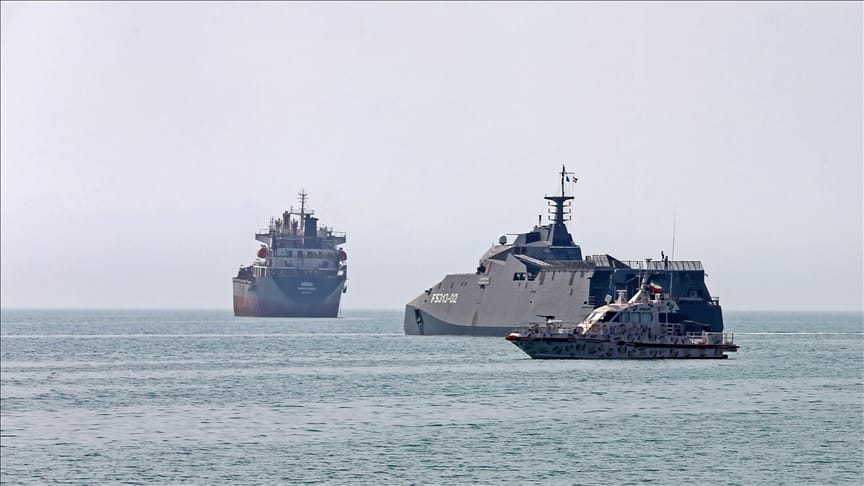
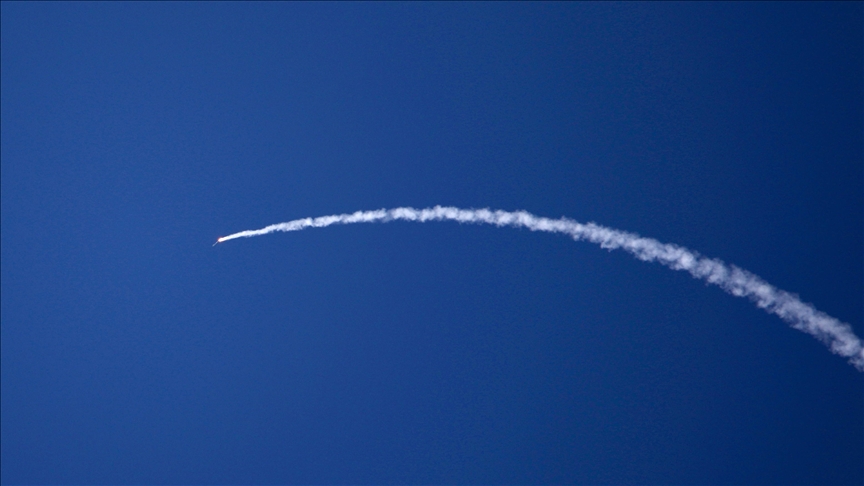
Iran responded by targeting US military bases in the Gulf states and closing the Strait of Hormuz, through which approximately 20% of the world’s oil passes, as well as targeting oil tankers. This led to a sharp rise in oil prices, a development that poses a direct threat to the global economy and supply chains.

The Iranian military doctrine is based on the principle of asymmetric warfare. Instead of engaging in a conventional confrontation with US power, it employs strategies that confound its adversary, obscure its vision, make the course of the confrontation unpredictable, disrupt supply lines, and increase the cost of war for it.

One of the most dangerous escalation scenarios would be if Iran succeeded in targeting a US aircraft carrier. These carriers represent a stark embodiment of American hegemony and military might. Iran has developed anti-ship ballistic missiles specifically designed to target naval vessels, in addition to possessing swarms of drones and submarines that could be employed in such an attack. Any damage to an aircraft carrier, let alone its sinking, would constitute an unprecedented historical event, potentially opening the door to a dangerous escalation of the war.

Russia and China view the United States’ involvement in a protracted war as a strategic gain, but their direct entry into the fighting remains unlikely unless their vital interests are directly threatened.

This raises a fundamental and troubling question: Are we on the brink of a third world war? By its very nature, a world war requires the involvement of several major powers, which has not yet occurred. However, the entry of Iranian-backed factions such as Hezbollah, the Houthis, and affiliated militias in Iraq and Syria could open multiple fronts simultaneously. If the conflict drags on and Gulf states become involved, and Russian and Chinese support for Iran increases, tensions between the major powers could escalate. Escalation often begins gradually. One step leads to another, one response to another, until retreat becomes increasingly difficult. This scenario persists as the conflict expands.

The United States may find itself mired in a protracted war. Iran is not Afghanistan or Iraq. It is a vast country with a population exceeding 90 million, and its society is characterized by a deep-rooted nationalism and a profound hostility toward the Zionist entity and the United States, coupled with accumulated experience in confronting external pressures and aggressions. In such a context, war often serves to solidify Iranian nationalism and unify the home front against the external enemy. It should also be noted that the collapse of a state does not necessarily lead to peace; rather, it may lead to a vacuum that breeds chaos. Targeting the nuclear program does not mean the end of nuclear ambitions; on the contrary, it may push Iran to pursue nuclear weapons at an even faster pace.

Wars often begin with pronouncements brimming with confidence and optimism, but their threads soon become entangled and increasingly complex. In its initial stages, leaders believe they can resolve it quickly, but its outbreak opens a path to the unknown; no one knows when it will end. History teaches us that wars may begin with limited objectives, but they quickly expand and escalate due to miscalculations or escalating tit-for-tat responses. Thus, the United States may find itself embroiled in a protracted war with Iran, similar to its experiences in Iraq and Afghanistan, but undoubtedly far more complex and dangerous. Many analysts warn that this conflict could turn into a grave geopolitical blunder, undermining regional stability, draining resources, disrupting the global economy, and weakening American influence on the international stage.

Ismail Al Sharif is a columnist in Addustour newspaper. This column first appeared in Arabic and translated and posted on the crossfirearabia.com website.

Continue reading
War Hysteria!

By Ahmad Theiban

The strange thing is that the same scenario is being repeated from the recent war launched by Israel and the United States against Iran on 28 February. That war began with the assassination of Supreme Leader Ali Khamenei, along with dozens of military and civilian leaders, in a single strike during a meeting he was chairing. This is the same scenario that unfolded in the 12-day war in June 2025, which began with the elimination of military leaders and nuclear scientists in that first strike!

Moreover, and this is another paradox, the June 2025 war began during negotiations between Washington and Tehran on the nuclear issue. The same scenario is repeating itself in the current war in 2026, while nuclear negotiations between the two sides were ongoing, with a new date set for them this week!

It is also noteworthy that the image of Khamenei after his assassination, under the rubble, reached the Israeli government and spread on social media, indicating a human breach that leaked the image to Israel!

It seems the Iranian regime has lost its composure and reached an unprecedented state of hysteria. It has targeted all the Gulf Cooperation Council (GCC) countries (Saudi Arabia, Kuwait, the UAE, Bahrain, and Qatar) with ballistic missiles. Even Oman, which was leading mediation efforts between Washington and the Iranian regime, was not spared. Iranian drones bombed one of its ports, and the missiles targeted civilian sites, residential areas, and airports, despite the regime’s claim that the missiles were aimed at American bases in the region.

Ironically, all the Arab Gulf states were pushing to avoid a new war with Iran, but it seems the Iranian regime has failed to learn its lesson!

The strange irony is that the same scenario played out when Israel assassinated Hassan Nasrallah, the former leader of Hezbollah. Israeli intelligence learned of his location in a multi-story underground building in Haret Hreik in Beirut’s southern suburbs. The same thing happened with his expected successor, Hashem Safieddine, and dozens of Hezbollah’s top military and political leaders. This also points to a significant human infiltration within Hezbollah, where crucial information about the whereabouts of its leaders was leaked.

Here, I’d like to borrow a term attributed to the late Hassan Nasrallah, used in the context of a threat to Israel. He declared that the occupying state was “on its knees,” fearing a Hezbollah invasion of the Galilee region in northern occupied Palestine. I believe this expression can aptly be applied today to describe the escalating conflict between the United States and Israel on one side, and Iran on the other. Or, more accurately, the world is on tenterhooks awaiting the outcome of this war.

It was clear to anyone with even a basic understanding of politics that the massive US naval buildup, including two giant aircraft carriers—the USS Gerald R. Ford, which arrived at the port of Haifa in northern Israel, and the USS Abraham Lincoln—could accommodate approximately 180 fighter jets of various types, including helicopters. This buildup, along with the deployment of F-22 fighter jets to Israel, was part of a broader effort to bolster the US military presence in the Middle East. Furthermore, at least 14 US Air Force refueling aircraft also arrived in Israel, all in preparation for an attack on Iran. This entire force was not there for tourism!

President Trump himself declared during his State of the Union address last Tuesday: “One thing is certain: I will never allow the world’s leading sponsor of terrorism to possess a nuclear weapon. It cannot be allowed to happen. No nation should ever doubt America’s resolve.” He warned: “We have the most powerful military on earth.” Yet, the Iranian regime failed to grasp the message.

For weeks, the US and Israel have been threatening military action against Iran to force it to abandon its nuclear and missile programs and its proxies in the region—the militias that Iran has created, trained, and armed.

Despite the overwhelming US military power, the campaign against Iran continues to present complex challenges. With the prospects for a diplomatic breakthrough significantly diminished, the new war against Iran is now in its third day.

Despite President Trump’s repeated pronouncements of preferring diplomacy and negotiations, Vice President Vance’s meeting with the Omani Foreign Minister to encourage him to continue negotiations, and Secretary of State Rubio’s assertion that diplomacy remains President Trump’s preferred option, it seems no one in Tehran is listening. The only discourse there is a reiteration of rigid principles and ideologies.

This article is a translation of its Arabic version that appeared in Al Rai daily in Jordan.

Continue reading
Hammering The UN?

By Dr Khairi Janbek

Even from the moment of its inception, the UN was subjected to constant criticism and derision. Though it started as a coalition of the willing in order to deal with differences and sources of conflict in a peaceable and/or diplomatic manner, the term willing remained nebulous.

The strong and mighty wanted to bend this will to suit their interests, and the weak and the needy wanted to bend this will for their own protection. Still in this dialectical formula the need for the UN remains as the only viable formula which offers the possibility of negotiations in the Churchillian wisdom of jaw jaw, better than war war, and it remains in this sense, the standard which provides the vaneer for international legality and the semblance of consensus.

Then suddenly and apparently, the concept of the Donald Trump Board of Peace emerged on the scene, thought of, initially, as an effort to deal with the mayhem of Gaza, and to which one may add ironically and cynically, that the most two concerned parties – Palestinians and Israelis – are out of its functioning. On top of this, the notion was propelled in the media that this Board is really an attempt to replace the UN.

So in this context we can assume what is meant is that if the UN started, all these years ago, as a coalition of the willing, today’s Board of Peace is a coalition of the frightened, of states who want to stay on the good side of Trump. This is aside from the reluctant opportunists whom seek some benefits out of becoming a member of this entity.

On the face of it, one can say that the real purpose of its establishment is not to replace the United Nations per se, but a serious attempt to bypass the UN and redefine international relations in accordance with the Trump notion of who is the enemy of peace and who is its friends, with the essential outlook of not needing the international organization at all. Under the new legality, it is Trump who lays down the law, and the one whom distributes the spoils. As for the UN it remains in his eyes as a gathering for losers.

But if we go back to the beginning, in fact the Board of Peace, not only got the blessing of the UN for its creation, but also the support of the Security Council with resolution 2038, but then again, it was linked to the reconstruction and ‘stabilization’ of Gaza, while the current format of the Board emerged on the sidelines of the recent World Economic Forum meetings.

Now irrespective of some in the international community wanting to spite Trump or of waning his influence, there is a serious and big concern that President Trump and the fact that he is presiding over this Board, will mean that the talked about peace will be the peace of the strong imposed by the strong. In itself this rings many alarm bells on the strategic level for many regions in the world about the kind of peace Trump is talking about.

Among the myriad of world conflicts, currently the Palestinian problem, Ukraine war, and Iran, stand out as the most deadly and critical. So in what shape the proposed peace will come?

Dr Janbek is a Jordanian writer based in Paris.

Continue reading
Can USS Gerald R. Ford be Sunk?

By Sufian Al-Tal


Construction of the aircraft carrier USS Gerald R. Ford began in 2005. Its plans were fully prepared and built on defensive foundations that, based on the data and military science available up to 2005, made it unsinkable.

However, between 2005 and 2025, 20 years of scientific and military development passed, and new sciences emerged and clashed, which the aircraft carrier’s plans and designs at the time did not take into account. In addition, the aircraft carrier USS Enterprise, which entered service in 1961, was officially decommissioned on February 3, 2017, after more than 55 years.

Thinking strategically?

The aircraft carrier USS Gerald R. Ford is one of the most advanced warships in modern history and is often referred to as “unsinkable.” However, while this description is valid in its military context, it remains relative, not absolute. The real question is not whether sinking it is theoretically possible, but whether its defensive design philosophy can still keep pace with the rapid scientific and military advancements the world witnessed between 2005 and 2025.

Work on the design of the aircraft carrier began at the start of the new millennium. This means that the engineering plans and defensive doctrines upon which it was based were grounded in the military science, weapons technologies, and anticipated threat patterns available at the time.

At that time, traditional naval threats, such as anti-ship and anti-submarine missiles, were known and incorporated into existing defense systems. This allowed the USS Gerald R. Ford aircraft carrier to be designed as a highly fortified, multi-system vessel capable of absorbing damage without losing combat capability. From an engineering perspective, no naval vessel is designed with the absolute impossibility of sinking in mind, but rather with the principle of survivability after being hit.

The aircraft carrier USS Gerald R. Ford relies on a complex internal layout that minimizes the risk of cascading sinking, advanced fire suppression and damage control systems, and the ability to continue operating even after sustaining direct hits. However, all of this assumes a specific type of threat and relatively conventional combat scenarios within the parameters of that era.

Hypersonic missiles

Between 2005 and 2025, the military world witnessed significant developments that were not part of the initial design calculations. Among the most prominent of these are the emergence of hypersonic missiles with speeds and trajectories that are difficult to intercept, the growing capabilities of cyber warfare targeting command and control systems, and the rise of drone swarms as a means of overwhelming defenses through saturation. Additionally, advancements in sensor technologies and artificial intelligence have enabled the tracking of small, large, complex, and moving targets. These transformations do not necessarily imply that the aircraft carrier has become weak, but they do raise legitimate questions about the adequacy of the defensive philosophy established two decades ago.

At that time, conventional maritime threats were well-known and integrated into the carrier’s design, which relied on layered defenses and advanced damage control systems. However, between 2005 and 2025, the world experienced tremendous and rapid scientific and military advancements. China, for example, has surged in military spending and innovation, with its development rate increasing by approximately 250–300% between 2005 and 2025, making it one of the world’s closest competitors.

In contrast, the United States maintained its dominance, albeit at a slower pace, with an estimated development rate of 160–180%. Russia, on the other hand, achieved selective modernization while preserving its nuclear capabilities, with an estimated development rate of 140–160%.

Iran, starting from a modest base, made a relatively significant leap in its missile and drone capabilities, with an estimated development rate of 300–350%. In this context, another question arises concerning the thinking of some countries that do not seek to emulate the United States in terms of fleet size or number of aircraft carriers, such as China, Russia, or Iran. Instead of engaging in a costly, conventional arms race, these countries’ military thinking (thinking outside the box) focuses on circumventing this model and seeking unconventional means to neutralize, disable, or directly destroy the platform.

Within this framework, discussions arise regarding technologies based on radiation, microwaves, or other directed energy sources. In principle, there is nothing to prevent the development of devices based on high-powered microwaves, electromagnetic pulses, or high-energy lasers. However, the potential role of these technologies, as currently understood, is not to melt or physically destroy the carrier’s hull, but rather to disable or confuse sensitive electronics, disable radar, navigation, and communication systems, or disrupt flight control systems on the carrier’s deck.

The idea of ​​melting thick marine steel, armored hulls, or parts thereof with beams from combat range is unrealistic given current data, due to the enormous energy requirements, radiation dispersion, and the difficulty of precise targeting of a moving target protected by multiple layers of defense. However, we cannot confirm or deny that there are those who think and work in this field, shrouding their activities in absolute secrecy. Surprising the enemy with unexpected weapons has always been, and remains, a core element of military planning.

The real danger lies not in a super-radiation weapon, but in the integration of multiple fields, such as a cyberattack that disrupts combat command and control systems, electromagnetic jamming that confuses sensor systems, followed by a conventional physical attack. In such a scenario, the carrier transforms from a highly organized platform into a complex system suffering from information bottlenecks, one of the most serious challenges facing modern armies. Military history shows that what is described as secret science is not the discovery of new physical laws (which would be astonishing and groundbreaking if it occurred), but rather innovative applications of known sciences. The novelty lies in the application of these sciences.

This is often in the method of integration and deployment, not in the essence of the science itself. Therefore, despite the possibility of technologies whose details have not been disclosed, it is necessary to mention a Chinese and an Iranian development:

The media is currently reporting on a Chinese achievement dubbed the “aircraft carrier killer,” an air-launched ballistic missile likely designed to target American aircraft carriers and warships. Since this missile is hypersonic and employs a special guidance system, it is capable of maneuvering and evading anti-ship weapons.

Regarding Iran’s threats that a weapon capable of sinking a ship is more dangerous than the ship itself, Israeli sources are discussing the “Whale torpedo,” which is launched underwater, operates in a supercavitational cavity, and moves within a gas bubble that reduces its water resistance. At speeds of up to 360 km/h, it reduces the reaction time of targeted ships and makes interception difficult.

In conclusion, bypassing conventional weaponry has become a reality, and disabling an aircraft carrier is now, theoretically, possible. However, completely sinking one remains a secret weapon, not disclosed by those who possess it, in order to surprise the enemy.

This article is a translated piece of an Arabic version that appeared in Al Rai Al Youm.

Continue reading
When The Knights Start Falling: A View From Amman

By Saleem Ayoub Quna

Five years after his controversial disappearance from his cell in a Miami prison, Jeffry Epstein’s infamous legacy, remerges in unexpected ways and places.

His ex-clients, associates and “victims” are, one after the other, involuntarily, coming back to center stage, in no less embarrassing circumstances, than the ones they were, voluntarily, involved in in the first, hush-hush, part of this unfolding drama.

The released three million pages, certainly, harbor much more details about Epstein’s clandestine part of his empire, which he started in the late 1980s, and lasted for nearly three decades, than anyone could have anticipated, when Epstein was announced dead in 2019.   

Potentially, it would take life-time assignment for brigades of investigators and researchers to turn every stone out of this huge pyramid of documents, i.e. more stunning information should be expected, more names of celebrities and heads of states could be queuing to be unmasked.

One of the most intriguing pieces of information revealed so far, yet not conclusively, is the one related to former Israeli Prime Minister, Ehud Barak’s connection with Epstein.

While it is widely believed that Epstein was originally recruited by Israeli intelligence services the ‘Mossad’, to build this international web of contacts for reasons that are familiar to all, it is not clear why among other present or ex-Israeli officials, Ehud Barak’s name would pop out in the way it did!  

When asked about it, Ehud Barak, admitted that he had good relations with Epstein that lasted for the period of 15 years, during which Epstein had hosted him in his Manhattan private residence on many occasions!  

The question here is who, among these two men, was using the other? Or who was working for the other and being paid by him? Or was it that kind of swapping stuff, whose value could not be translated into cash, considering that Barak was not a playboy!

Then, other big names came out such as Bill Gates, Bill Clinton, Donald Trump and many other VIPs, who all expressed their regret to have known or been associated with Epstein! Why any one of them did not do that, the “expression of regret”, five years ago when Epstein died? Or did they think or hope that their, behind the doors, relationships with Epstein would be buried, simultaneously, with the burial of Epstein’s body?  

But there are other big names that were associated with Epstein who, seemingly, did not have neither the time nor the will to express their regret to have known Epstein. A group of VIPs, whom I would like to nickname the “Knights” of a very special order; knights of hot nights who willingly fell into the well-orchestrated silk traps weaved by Epstein’s establishment. Instead they found themselves, practically, paying dear for their friendship with him. 

One of the most prominent knights is no other than ex-Prince of the British throne, Andrew Mountbatten who certainly was a big fish caught in Epstein’s net. He, the ex-prince, also knew how to keep his mouth shut for 5 years. But now and after his royal title and embarrassing pictures popped out, the local British police dared to book him, in broad day light, for preliminary interrogation. His elder brother, the actual King Charles III, had but to consent to the idea that his younger playboy brother should be put on trial for what he did! 

Other high status figures and “knights” who already fell off their, once immune little thrones; include: Jack Lang, the ex-French politician and Head of Arab World Institute in Paris, Peter Mandelson, from the British political establishment, the Labor Party, Mona Juul, a Norwegian ex- Ambassador, Alexander Acosta, the ex-US labor Secretary and lastly Sultan Ahmad bin Suleim, the UAE tycoon businessman.

From this angel the whole thing looks absurd and surreal: When you think how all those big names of movers and shakers of world affaires were united, by their free-will, to fall in the smallest trap hole ever known to mankind?

Saleem Ayoub Quna is a Jordanian author writing on local, regional and international affairs and has two books published. He has a BA in English Literature from Jordan University, a diploma from Paris and an MA from Johns Hopkins University in Washington.       

Continue reading