‘They Don’t Know Iran’s Military Lexicon’: First Six Days of The Aggression

By Abdul Bari Atwan


They truly don’t know Iran. By this, I mean the Israelis and the US, and even some Arab leaders, none of whom dared to condemn the aggression. But the aggression entered its sixth day without the regime falling, and/or the new interim leadership rushing to the nearest negotiating table to surrender. The following factors need to be considered.

The battlefields:

First: The downing of an advanced American fighter jet, the F-15, by Iranian missiles in the west of Iran, a firstever development. This suggests the Iranian military leadership may have developed new missiles capable of achieving this feat, or they acquired them from their Chinese and Russian allies, or both, particularly the Russian S-400 and S-500 missile systems.

Second: The entry of Hezbollah’s ballistic missiles into the arena, striking deep inside Israel, specifically Tel Aviv and Haifa, for the first time after 15 months of restraint and the rebuilding of its military arsenal, and/or what was destroyed during the Israeli aggression. This means that no area in the Zionist entity will be safe.

Third: The fiery speech delivered by Sheikh Naim Qassem, Secretary-General of Hezbollah, containing strong unprecedented tone statements most notably: “We will not surrender and we will defend our land, no matter the sacrifices and despite the disparity in capabilities. We will not surrender.”

Fourth: The introduction of the fastest “infiltrating” drone into the Iranian Air Force for the first time. Named “Hadid 110,” it has a speed of 517 km/h and, according to Western military experts, is considered more efficient than its sister drone, “Shahed,” which performed well deep inside Israel. Its production costs only $35,000, while shooting it down costs $4 million.

Fifth: Every day of resistance by the Iranian army and people costs the occupying state approximately $1 billion. As for America, the costs of the war has already nearly spiralled to $160 billion in the first six days. These preliminary estimates are likely to rise, especially after the bombing of aircraft carriers and the destruction of warships, the increasing number of dead and wounded, the largest military buildup since the Iraq War, and the rise in energy prices.

Sixth: The fulfillment of the promise to close the Strait of Hormuz, which means delivering two fatal blows. The first is to the Western economy because oil and gas prices would likely reach record-breaking figures, and the second, for the Arab states who host the US military bases. Closing the Strait means preventing their oil and gas exports from reaching global markets, and the losses will increase while oil and gas revenues decrease depending on the war’s duration and developments.

The Iranians wanted from the outset a regional war of attrition with no end in sight in direct opposite to the new American warefare military doctrine, which aims for short, swift, and clean wars (without American casualties). The Iranians resolved to bomb all those cooperating with the aggression in the region. This new Iranian theory was best and most clearly expressed by Sheikh Naim Qassem when he called on the Israeli army to prepare for many days of fighting with all available means.

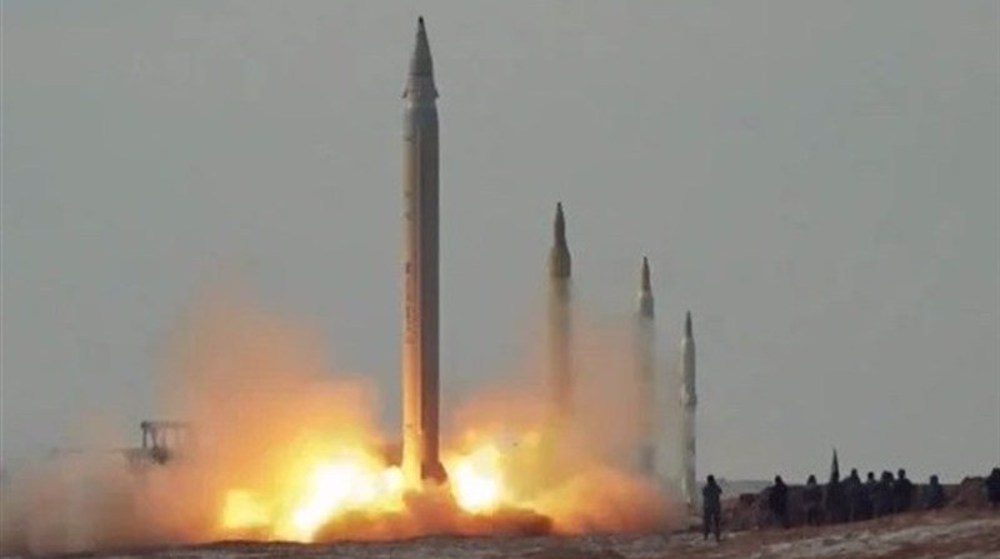
Defeat, surrender, and raising the white flag, individually or collectively, have no place in the Iranian military and political lexicon. In the first six days, the Iranian army launched 500 hypersonic missiles with multiple cluster warheads and more than 2,000 drones, resulting in the displacement of more than 7 million settlers to shelters and tunnels, and the destruction of large parts of Tel Aviv and Haifa.

Neither the 47-year-long starvation siege, nor three Israeli-American aggressions within a few years, nor the incitement of popular protests and the planting of spies among the protesters, nor the deployment of aircraft carriers and warships, nor inflation and the collapse of the national currency, succeeded in defeating the mighty and unwavering Iranian will, and consequently, in toppling or changing the regime.

Our proof is they baffled the Americans in negotiations that lasted more than two years in Vienna and in several other Arab and European capitals, and they never conceded. They rejected all American conditions, starting with halting enrichment and handing over 460 kilograms of highly enriched uranium, and even refusing to allow the inclusion of the Iranian missile industry or severing ties with resistance factions on the negotiating table.

Yes, arrogance, conceit, and the unfortunate complicity of some Arabs blinded them to the true nature of Iran, and they will pay a very heavy price, the most prominent feature of which will be the destruction of all Israeli gas infrastructure. In the Mediterranean, water and electricity stations, and the lack of distinction between settler and soldier, many assumptions have changed after the massacre of the children’s school in southern Iran… and time will tell.

This opinion was written in Arabic by the chief editor of Alrai Al Youm Abdul Bari Atwan and translated for crossfirearabia.com

Continue reading
War and The Blame Game

By Khairi Janbek

Undoubtedly, the blame game is not a concept limited to the Middle East, neither the notion of who started the conflict nor who will end it.

However in this context, one wishes to talk about the current conflict which is becoming a chaos beyond the Middle East and specifically about Iran and its contribution to this chaos. Going back, and from the onset of the Iranian Revolution of 1979, chaos has always been part and parcel of its revolutionary ideology, reviving the old Shia-Sunni conflict, attempting to be the representative of the Shia of the world; most importantly, the concept of export of the revolution whenever the opportunity comes around.

But this phase ended with the end of the war with Iraq, but saying ended may well be too deterministic, because chaos under Iranian sponsorship emerged again after the fall of the Saddam Hussein regime in the form of what became known as the Iran-dominated Shiite Crescent. However with the set backs of last year, the chaos sponsorship of Iran to a back step, to relaunch again with projectiles all around creating a chaos in the region and beyond.

Essentially at this juncture, all the affected countries seem to have left the conflict to Israel and the US to deal with, maybe to the possibility that those parties do not believe that this conflict will be conclusive, or a feeling that whether they participate in the conflict or not, they will neither be seen in good favour by the United States and/or Israel.

But also having said that, there is also plenty of scepticism in the region, because each time there is a conflict involving the USA, there is always a big possibility that the US stops in the middle and allows its adversaries to recover and pick up, which means putting themselves in an adversarial position vis a vis recovered forces which they may have to face.

In fact whether by fluke or by good thinking, not to declare the war aims in this conflict may turn out to be a wise move, as this war may indeed end as one is writing these words, with the declaration by everyone that the war aims have been achieved. But as a final word, one feels Iranian induced chaos must be met with a world response.

Dr Janbek is a Jordanian columnist based in Paris, France.

Continue reading
BoP and The Lurking Devil!


Eight months ago and precisely in June 2025, the US and Israel launched their first combined “Midnight Hammer” military operation against Iran, in an attempt to obliterate its controversial nuclear facilities, set since 2018, to be settled through negotiations between the US and Iran. Prior to that strike, not Ukraine nor Venezuela or Greenland, but Gaza was the hottest issue on Trump’ international agenda, as he was applying the final touches on his anticipated peace plan for the devastated tiny strip! On 26 January this year, i.e. nearly a month ago, Trump from Davos, in Switzerland, proudly announced the birth of BoP, “The Board of Peace”, which he would preside over forever.


To enhance his initiative’s chances to succeed, Trump had invited world leaders to join his new born club for peace. Those who responded favorably had little choice to do otherwise, and some of them promised to contribute billions of dollars to make the plan work. Other big shots such as Russia, France or China were either not interested or invited!


The last one to join the club, but reluctantly, was no other than the Israeli Prime Minister, Benjamin Netanyahu, despite his direct involvement in the thick of the matter. Netanyahu thought the plan was naïve and amateurish in more than one aspect! So he would send his Foreign Minister to attend the signing ceremony in Davos, for his own thoughts were focused on other more important issues that would take place later! Regardless of Netanyahu’s caveats, the Trump BoP seemed to be one of few feasible options to stop the violence and killing committed by Israel.

in Gaza, and a shy start towards a peaceful transition in Gaza and beyond despite the many loopholes.
On this occasion Trump said: “This is a big, big day, a beautiful day, potentially one of the great days ever in civilization”. The he added: “I am not talking about Gaza. Gaza is one thing, but we are talking about
much beyond Gaza. The whole deal, everything getting solved. It is called peace in the Middle East”. While this BoP was hailed as an achievement for Trump’s diplomacy, envisaged by his top capable advisor to the Middle East, Steve Witkoff, and his assistant Jared Kushner, Trump’s trusted son-in-law, it whistled disaster in Netanyahu’s ears.


From this man’s point of view, if the BoP was put on track of the peace train, let alone its arrival at its desired destination, it would mean one thing and nothing else: the end of Gaza tragedy which also meant the end of Netanyahu’s political career. For him, it looked like a trap that he had, knowingly but unwillingly, a role in setting up. At this crucial moment the manipulative devil and the survival instinct in
Netanyahu, were awakened and pushed him to embark on planning a reversal of this momentum. He had to end this nonsense talk about peace for Gaza, let alone beyond! For certain, he regretted his consent to the suspension of the Midnight-Hammer strike back in June against Iran. Now time is running short for him again.

He needs to take a big and last gamble to divert Trump’s current menacing approach to solve the thorny issues in this region. He, prematurely, and ahead of his originally scheduled visit to the US, books
a meeting with Trump at Mar-a-Lago in Florida, thus effecting his sixth meeting with Trump in less than a year!

There, he presents his case: Today, he tells Trump, Iran is the biggest real danger facing Israel and the free world led by the US; Iran is stockpiling an arsenal of all kinds of deadly missiles; the majority of
Iranians want the US to help them topple the regime which is massacring the protesters in the streets; Iranian negotiating team are just buying more time; it is now or a never again chance to finish this
nightmare called Iran, after its proxies in Syria, Yemen, Iraq, Gaza and Lebanon were defeated earlier.
Trump submissively listened, as Netanyahu managed to put a hold on every other item on Trump’s agenda, including his cherished BoP project for which he hoped to be nominated for the Nobel Prize for
peace!

Today as the war against Iran goes into its sixth day, two things and plus are crystal clear; there will be no peace prizes, and there will lot of havoc and chaos on the ground, plus the devil in Netanyahu, will be the happiest breathing creature around, for the time being!

Continue reading
Gulf War: Slipping Into The Quagmire

By Ismail Al-Sharif

Despite the strength of the attack, Iran remains a large country; therefore, it will take four weeks, or less – Trump.

The attack on Iran was not surprising; the massive American military buildup was sufficient to signal an imminent military operation. However, what was unexpected was the breadth of the strikes and the targeting of the head of the Iranian government himself.

US President Trump explicitly called for the overthrow of the regime and urged the Iranian people to govern themselves, while the Zionist leadership declared that the military strikes and the assassination of leaders had created a climate conducive to political change within Iran. However, the lessons of history confirm that wars waged under the banner of regime change are rarely short-lived and often descend into protracted conflicts that do not end anytime soon.

Iran responded by targeting US military bases in the Gulf states and closing the Strait of Hormuz, through which approximately 20% of the world’s oil passes, as well as targeting oil tankers. This led to a sharp rise in oil prices, a development that poses a direct threat to the global economy and supply chains.

The Iranian military doctrine is based on the principle of asymmetric warfare. Instead of engaging in a conventional confrontation with US power, it employs strategies that confound its adversary, obscure its vision, make the course of the confrontation unpredictable, disrupt supply lines, and increase the cost of war for it.

One of the most dangerous escalation scenarios would be if Iran succeeded in targeting a US aircraft carrier. These carriers represent a stark embodiment of American hegemony and military might. Iran has developed anti-ship ballistic missiles specifically designed to target naval vessels, in addition to possessing swarms of drones and submarines that could be employed in such an attack. Any damage to an aircraft carrier, let alone its sinking, would constitute an unprecedented historical event, potentially opening the door to a dangerous escalation of the war.

Russia and China view the United States’ involvement in a protracted war as a strategic gain, but their direct entry into the fighting remains unlikely unless their vital interests are directly threatened.

This raises a fundamental and troubling question: Are we on the brink of a third world war? By its very nature, a world war requires the involvement of several major powers, which has not yet occurred. However, the entry of Iranian-backed factions such as Hezbollah, the Houthis, and affiliated militias in Iraq and Syria could open multiple fronts simultaneously. If the conflict drags on and Gulf states become involved, and Russian and Chinese support for Iran increases, tensions between the major powers could escalate. Escalation often begins gradually. One step leads to another, one response to another, until retreat becomes increasingly difficult. This scenario persists as the conflict expands.

The United States may find itself mired in a protracted war. Iran is not Afghanistan or Iraq. It is a vast country with a population exceeding 90 million, and its society is characterized by a deep-rooted nationalism and a profound hostility toward the Zionist entity and the United States, coupled with accumulated experience in confronting external pressures and aggressions. In such a context, war often serves to solidify Iranian nationalism and unify the home front against the external enemy. It should also be noted that the collapse of a state does not necessarily lead to peace; rather, it may lead to a vacuum that breeds chaos. Targeting the nuclear program does not mean the end of nuclear ambitions; on the contrary, it may push Iran to pursue nuclear weapons at an even faster pace.

Wars often begin with pronouncements brimming with confidence and optimism, but their threads soon become entangled and increasingly complex. In its initial stages, leaders believe they can resolve it quickly, but its outbreak opens a path to the unknown; no one knows when it will end. History teaches us that wars may begin with limited objectives, but they quickly expand and escalate due to miscalculations or escalating tit-for-tat responses. Thus, the United States may find itself embroiled in a protracted war with Iran, similar to its experiences in Iraq and Afghanistan, but undoubtedly far more complex and dangerous. Many analysts warn that this conflict could turn into a grave geopolitical blunder, undermining regional stability, draining resources, disrupting the global economy, and weakening American influence on the international stage.

Ismail Al Sharif is a columnist in Addustour newspaper. This column first appeared in Arabic and translated and posted on the crossfirearabia.com website.

Continue reading
War Hysteria!

By Ahmad Theiban

The strange thing is that the same scenario is being repeated from the recent war launched by Israel and the United States against Iran on 28 February. That war began with the assassination of Supreme Leader Ali Khamenei, along with dozens of military and civilian leaders, in a single strike during a meeting he was chairing. This is the same scenario that unfolded in the 12-day war in June 2025, which began with the elimination of military leaders and nuclear scientists in that first strike!

Moreover, and this is another paradox, the June 2025 war began during negotiations between Washington and Tehran on the nuclear issue. The same scenario is repeating itself in the current war in 2026, while nuclear negotiations between the two sides were ongoing, with a new date set for them this week!

It is also noteworthy that the image of Khamenei after his assassination, under the rubble, reached the Israeli government and spread on social media, indicating a human breach that leaked the image to Israel!

It seems the Iranian regime has lost its composure and reached an unprecedented state of hysteria. It has targeted all the Gulf Cooperation Council (GCC) countries (Saudi Arabia, Kuwait, the UAE, Bahrain, and Qatar) with ballistic missiles. Even Oman, which was leading mediation efforts between Washington and the Iranian regime, was not spared. Iranian drones bombed one of its ports, and the missiles targeted civilian sites, residential areas, and airports, despite the regime’s claim that the missiles were aimed at American bases in the region.

Ironically, all the Arab Gulf states were pushing to avoid a new war with Iran, but it seems the Iranian regime has failed to learn its lesson!

The strange irony is that the same scenario played out when Israel assassinated Hassan Nasrallah, the former leader of Hezbollah. Israeli intelligence learned of his location in a multi-story underground building in Haret Hreik in Beirut’s southern suburbs. The same thing happened with his expected successor, Hashem Safieddine, and dozens of Hezbollah’s top military and political leaders. This also points to a significant human infiltration within Hezbollah, where crucial information about the whereabouts of its leaders was leaked.

Here, I’d like to borrow a term attributed to the late Hassan Nasrallah, used in the context of a threat to Israel. He declared that the occupying state was “on its knees,” fearing a Hezbollah invasion of the Galilee region in northern occupied Palestine. I believe this expression can aptly be applied today to describe the escalating conflict between the United States and Israel on one side, and Iran on the other. Or, more accurately, the world is on tenterhooks awaiting the outcome of this war.

It was clear to anyone with even a basic understanding of politics that the massive US naval buildup, including two giant aircraft carriers—the USS Gerald R. Ford, which arrived at the port of Haifa in northern Israel, and the USS Abraham Lincoln—could accommodate approximately 180 fighter jets of various types, including helicopters. This buildup, along with the deployment of F-22 fighter jets to Israel, was part of a broader effort to bolster the US military presence in the Middle East. Furthermore, at least 14 US Air Force refueling aircraft also arrived in Israel, all in preparation for an attack on Iran. This entire force was not there for tourism!

President Trump himself declared during his State of the Union address last Tuesday: “One thing is certain: I will never allow the world’s leading sponsor of terrorism to possess a nuclear weapon. It cannot be allowed to happen. No nation should ever doubt America’s resolve.” He warned: “We have the most powerful military on earth.” Yet, the Iranian regime failed to grasp the message.

For weeks, the US and Israel have been threatening military action against Iran to force it to abandon its nuclear and missile programs and its proxies in the region—the militias that Iran has created, trained, and armed.

Despite the overwhelming US military power, the campaign against Iran continues to present complex challenges. With the prospects for a diplomatic breakthrough significantly diminished, the new war against Iran is now in its third day.

Despite President Trump’s repeated pronouncements of preferring diplomacy and negotiations, Vice President Vance’s meeting with the Omani Foreign Minister to encourage him to continue negotiations, and Secretary of State Rubio’s assertion that diplomacy remains President Trump’s preferred option, it seems no one in Tehran is listening. The only discourse there is a reiteration of rigid principles and ideologies.

This article is a translation of its Arabic version that appeared in Al Rai daily in Jordan.

Continue reading