Analysis: Israel Assassinates to Change The Power Balance
Heba
- September 1, 2026
GAZA – The Gaza Strip is witnessing an escalation in Israeli assassinations and targeted killings. This is coinciding with US diplomatic efforts to advance the second phase of the 15-point Roadmap. This situation places the negotiation process in a highly sensitive position and to a political test.
This situation assessment made by Ibrahim Al-Hawajri for the Palestinian Center for Political Studies, analyzes the timing of the wave of attacks in the Strip for August 2026 and the American efforts led by US envoy Jared Kushner. It emphasizes however, that this correlation does not prove there is a direct causal relationship, but warrants monitoring and analysis.
Negotiations Under Fire
In late July 2026, Hamas agreed to a 15-point American roadmap for implementing the Sharm el-Sheikh Protocol commitments. These included confining and storing the movement’s weapons, the withdrawal of Israeli forces, and the establishment of an independent Palestinian technocratic administration to manage the Gaza Strip.
The Israeli government conditioned any withdrawal on the “genuine” and prior disarmament of Hamas, while the American-Egyptian proposal linked disarmament to a parallel withdrawal and a simultaneous reconstruction process.
On 16 August, a meeting was held in El Alamein between Jared Kushner, Nikolay Mladenov, and Tony Blair on one side, and Khalil al-Hayya, Egyptian intelligence chief Major General Hassan Rashad, and Qatari Minister Ali al-Thawadi on the other. The meeting lasted approximately 90 minutes.
This political activity coincided with the continuation of Israeli airstrikes on areas in Gaza, before the wave of attacks intensified following Kushner’s return and his meeting with Israeli Prime Minister Benjamin Netanyahu.
Escalating Targeting
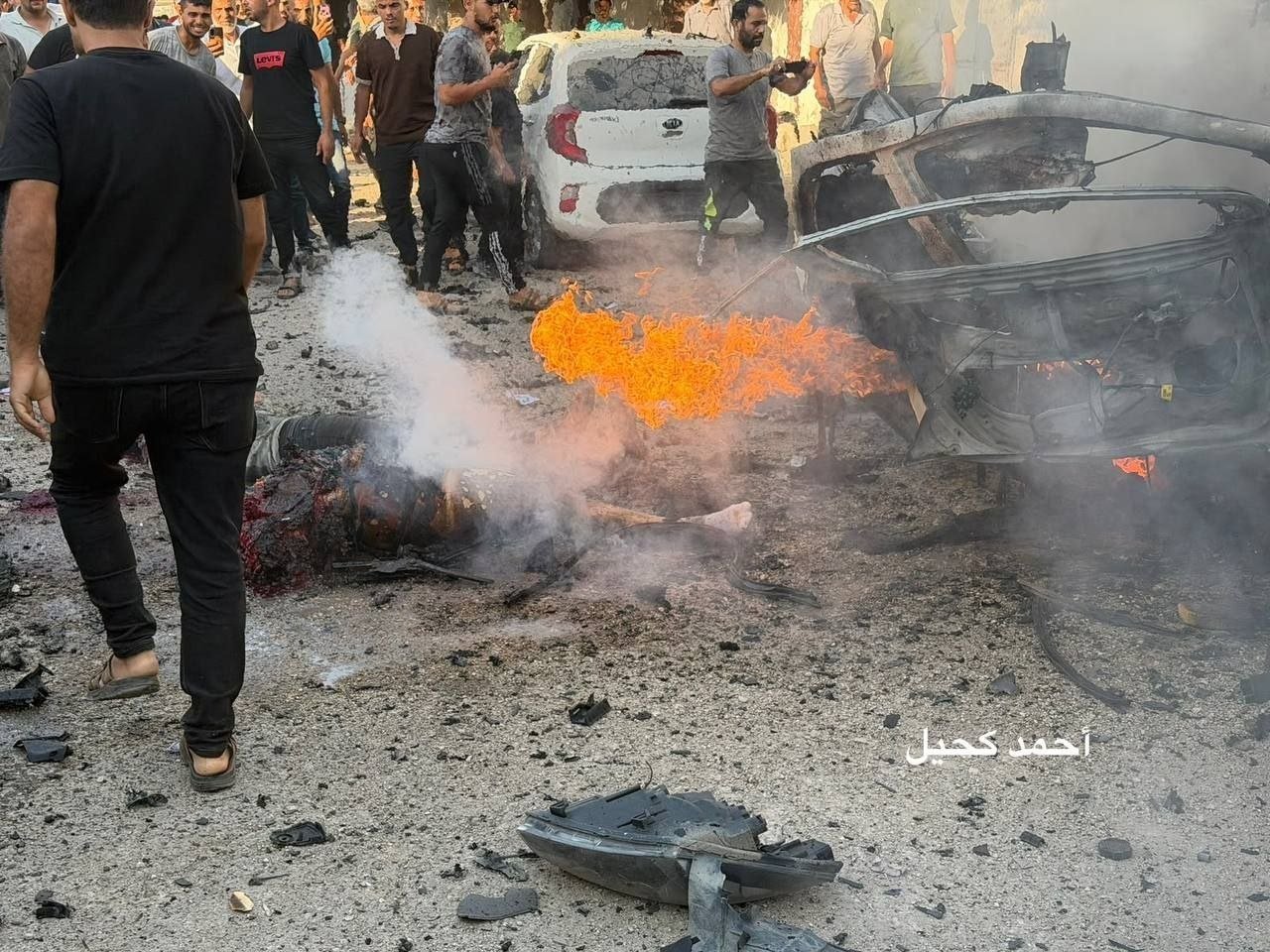
The assessment noted a series of targeted attacks against figures associated with the Palestinian security and military establishment, including the killing of Colonel Wael al-Ladawi and his assistant, Major Ramez Abu Zureiq, on 26 July when their vehicle was bombed in Deir al-Balah.
Late July saw the assassination of the director of the Jabalia refugee camp police station, along with six officers and personnel. Less than three weeks later, Brigadier General Abdel Nasser al-Maqadma, the police chief of North Gaza Governorate, was also killed.
Two Israeli airstrikes on 19 August in Gaza City killed 10 Palestinians, including nine in the bombing of the municipal police headquarters, among them a woman and a child. Around 20 others were wounded. An Israeli military source also reported that a “Qassam Brigades commander” was targeted in the Nuseirat refugee camp.
A joint statement issued by Qatar, Egypt, and Turkey on 20 August condemned the Israeli attacks and called on the Trump administration’s Middle East Peace Council to ensure the Israeli government’s full compliance with the ceasefire agreement.
On 23 August, the Israeli army and Shin Bet announced the assassination of Ismail Abu Foul in the Maghazi area, claiming he was responsible for manufacturing explosive devices and anti-tank missiles.
Negotiating Pressure and Imposing Facts on the Ground
The assessment presents three dimensions to the escalation coinciding with diplomatic activity. The first is providing political and media cover for the strikes while international attention is focused on de-escalation efforts.
The second dimension is the depletion of the Palestinian leadership and security apparatus, necessitating a reorganization of ranks in parallel with managing sensitive negotiations.
The third dimension is the reframing of the cessation of assassinations as a bargaining chip that can be used to extract concessions, rather than as a fundamental requirement in a ceasefire agreement.
The assessment indicates that the Israeli narrative presents the targeted killings as military operations aimed at rebuilding combat capabilities, while Hamas denies the military status of several of those targeted and describes the targeting of police stations as an attack on civilian infrastructure.
Three Possible Paths
The assessment suggests that assassinations will continue in parallel with negotiations in the short term, given the ongoing disagreement over the sequence of disarmament and withdrawal. This could lead to protracted negotiations, partial agreements, and intermittent escalations.
The assessment also suggests a moderate likelihood of actual US pressure to halt the assassinations if the Trump administration deems Israeli operations a threat to its political project in Gaza. This would improve the chances of implementing the next phase of the agreement.
The assessment places the collapse of the negotiating track as the least likely but most dangerous scenario. An escalation of strikes and a retaliatory response could lead to a return to open confrontation and the collapse of the ceasefire.
Conclusion
The assessment concludes that the escalation of assassinations following Kushner’s visit does not prove there is a joint US-Israeli decision to escalate, but rather reveals a conflict over the rules of engagement for the next phase.
It indicates that the occupying government seeks to maintain its instruments of force, assassination, and field pressure alongside the negotiating table, while Washington attempts to push the parties toward a new political formula.
The assessment confirms that the future of the Gaza negotiations will not be determined solely within the confines of Cairo and Washington, but also by the realities on the ground. The party capable of imposing facts on the ground will be best positioned to influence the shape of any agreement reached at the negotiating table according to the Palestinian Information Center.