US-Israeli Conspiracy on Iran?

By Jamal Kanj

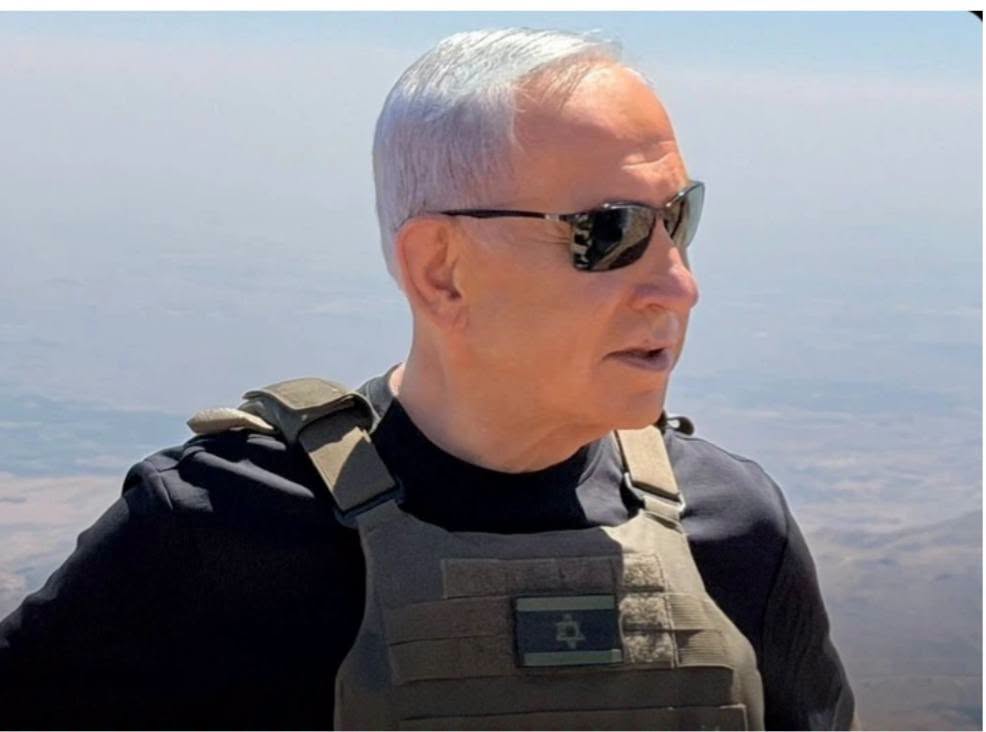
Israel’s latest strike on Iran had nothing to do with dismantling the Iranian (civilian) nuclear program. Despite Prime Minister Benjamin Netanyahu’s assertion that “the timing was fixed back in November 2024,” the real zero hour was designated only to undercut possible diplomatic framework that could have legitimized Iran’s nuclear development under international, verifiable, supervision.

This war is not a preemptive blow against Iran —it is a preemptive strike against diplomacy itself. The Trump administration made a grave error by keeping Israeli officials closely informed of the sensitive progress in the secret negotiations. This privileged access allowed Israel to strategically time its military strike to sabotage diplomatic efforts at a critical juncture—undermining further progress just as it was beginning to take shape, and before any agreement could fully mature.

Multiple independent leaks had pointed to progress in the Oman brokered negotiation between the U.S. and Iran, inclusive of intrusive International Atomic Energy Agency (IAEA) inspections, capped enrichment, and restart of oil exports under strict monitoring. An agreement of that sort would have undercut Israel’s decades-long doctrine that only isolation and coercion can keep Iran “in its box.”

Rather than accepting a rules-based diplomatic framework that Netanyahu could not control or veto, he chose to hinder the potential agreement—with F-35s and cruise missiles.

This war is also part of Israel’s long-standing obsession with maintaining its monopoly on nuclear technology in the Middle East. Far from a purely defensive measure, Israel’s broader strategy has consistently aimed at preventing any regional power from acquiring—not only the infrastructure required to develop nuclear capabilities—but even the scientific expertise and human capital necessary to pursue such knowledge.

Hours after the first explosions, U.S. officials solemnly declared, “America did not take part.” But the denial was tactical, not principled. By remaining officially aloof, the Trump White House hoped to keep a seat at any revived negotiating table while still wielding the Israeli strike as leverage. Donald Trump’s own split-screen rhetoric—calling the raid “excellent,” threatening Iran with “more to come,” yet urging Tehran to “make a deal”—spelled out the gambit: let Israel be the cudgel while the United States courts concessions.

On the other hand, and in response to American Secretary of State, Marco Rubio, claim that the U.S. is “not involved in strikes against Iran,” Israel declared that every phase of the attack had been “closely coordinated” with the Pentagon and that that US provided “exquisite intelligence” to attack Iran.

The yawning gap between the two narratives served both capitals. In Washington, it allowed officials to reassure anxious allies that the U.S. was not actively escalating another Middle East war. In Tel Aviv, Netanyahu exploited the ambiguity to provoke Iran into retaliating against U.S. forces—potentially drawing Washington deeper into Israel’s war. At the same time, he sent a calculated message to domestic hawks and regional adversaries: that Israel still enjoys unwavering American backing.

Netanyahu’s sinister calculus was familiar and transparent from Israel’s book to drag the US into its endless wars: derail the diplomatic channel, then dare Washington to pick up the pieces while Israel enjoys another round of strategic impunity.

Even in a region where Israel uses starvation as a weapon of war and genocide in Gaza, Israel’s choice to strike residential neighborhoods—ostensibly targeting senior officers, civilian leaders, and nuclear scientists—crosses a perilous line. The laws of armed conflict draw a bright red distinction between combatants and civilians; by erasing it, Israel has handed Iran moral and legal grounds to retaliate in kind. If Tehran targets the private homes of Israeli leaders and commanders, Tel Aviv cannot plausibly cry victim after setting that precedent.

The first wave of Iranian retaliation—targeting the Israeli Ministry of Defense headquarters in Tel Aviv, among other sites—marks the beginning of a new kind of war, one unlike anything Israelis have faced in previous conflicts. For the first time, a state with advanced missile capabilities has shown both the resilience to absorb the initial strike and the capacity to hit back ] deep inside Israel—an experience unprecedented in Israel’s 77 years of existence.

Unlike the sporadic and largely asymmetrical conflicts with non-state actors like the Resistance in Lebanon and occupied Gaza, this confrontation introduces a level of state-to-state warfare that challenges Israel’s long-held military superiority and assumptions of deterrence. What has unfolded so far with the Iranian retaliation is a harbinger of a more symmetrical and likely prolonged confrontation—one in which Israel’s own centers of power may be within range, and where the frontlines are no longer confined to Gaza, the West Bank, or southern Lebanon, but centered into the very core of Tel Aviv.

In the coming days, Washington’s true measure will be taken after the smoke clears. If U.S. Aegis destroyers in the Gulf or antimissile batteries in the region are activated to shoot down Iranian missiles and drones, America will cease to be an observer and become a co-belligerent.

Such presumably “defensive” steps quickly metastasize: one intercept invites another, and each exchange digs the United States deeper into a conflict created by a foreign country. History offers bleak guidance. Once American troops engage, momentum overrides strategy and the dynamics of war supplant planning. Political leaders feel compelled to “finish the job,” costs spiral, U.S. interests go unsecured, and the chief beneficiary is almost always the Israeli security establishment that triggered the crisis.

At the end of the day, Netanyahu’s success will not be measured by how many centrifuges he cripples or how many Iranian scientists he murders. It will be measured by whether he can lock the United States into yet another made-for-Israel Middle East war, paid for—strategically, financially, life, and morally—by Americans.

If Washington truly opposes escalation, it must say no—publicly and unequivocally—to any role in shielding Israel from the blowback it just invited. Anything less is complicity disguised as caution, and it will once again confirm that Israeli impunity is underwritten in Washington, even when it torpedoes America’s own diplomacy and ignites yet another Israeli-engineered war.

– Jamal Kanj is the author of “Children of Catastrophe,” Journey from a Palestinian Refugee Camp to America, and other books. He writes frequently on Arab world issues for various national and international commentaries. He contributed this article to The Palestine Chronicle

CrossFireArabia

CrossFireArabia

Dr. Marwan Asmar holds a PhD from Leeds University and is a freelance writer specializing on the Middle East. He has worked as a journalist since the early 1990s in Jordan and the Gulf countries, and been widely published, including at Albawaba, Gulf News, Al Ghad, World Press Review and others.

Related Posts

Trump: Tunes, Ceasefire and Hormuz

Saleem Ayoub Quna

The latest ceasefire by Trump reminded me of an aspiring young violinist, who every time she started playing her own written piece, the tunes of her instrument would go havoc!

Last move, the declaration of a ceasefire with no deadline, by President Donald Trump on the Hormuz virtual chessboard with Iran, did not lack the usual element of surprise. Still, it was a relief for some, annoying for others and revealing for a third group!

While at it in the White House, the Pakistani host intermediaries in the other side of the hemisphere, were stood up for the arrival of the negotiation teams, who seemingly were hindered by other conflicting schedules, while pilots of the jet fighters, in the air bases and on board destroyers, and the launchers of missiles, drones and anti–missile batteries, were all getting itchy over the delay of orders from their commanders, which left TV anchors and other commentators, boringly speculating and redundant!

After the two rounds of exchanging intensive missile and rocket attacks, between Iran and the US-Israeli axis, in less than a year, using the open skies over the Middle East from the Mediterranean to the Gulf area, as a last resort to make each party’s views clearer to the other, President Trump, the man who happens to hold most of the important cards in his hands, seems today, to have come to the conclusion, that neither his message, nor his tools, or even his sheer luck have helped making his message loud and clear enough to his opponents and to the rest of world!

Luck in this context can be associated with the totality of internal, regional and world unanticipated reactions to this complicated conflict, in terms of rising oil and gas prices for the average consumer, whether in Europe, North America or in Eastern Asia. It is highly suspected that these instruments in the hands of Trump, started producing tunes that were not written or desired by Trump himself, and if they did, it was just a kind of dissonance!

It is also very probable that Trump’s tactics as a deal maker, continuously changing his tone and vocabulary, made his listeners lose track of his true original storyline, if there was one! But more seriously, weighing and counting the odds that have befell Trump in the aftermath of the breakout of the war, some of which were

of his own making, and other developments that came out as natural by-products of the original move!

Following is a rundown of those unexpected unpleasant by-products, or side-effects, some of which might turn into chronicle headaches*, of the whole initiative which Trump had closely coordinated with his persistent ally, Netanyahu, the first in June 2025, when the two of them orchestrated the “Midnight Hammer” surprise operation against sensitive Iranian targets, and the second round “Epic Fury” on Feb28 this year, while negotiators were in session:

1. Rise of oil and gas price in world markets

2. Drop of share prices in stock markets

3. Fracture with NATO*

4. Decline in Republican Party ratings ahead of the midterms congressional elections in November

5. Resurgence of Trump’s friendship with Epstein’s scandals.

6. Firing key US generals in the midst of crisis, culminated by ousting Navy Secretary, John Phelan.

7. Emulating Jesus Christ in a replica image!

8. Personal row with Pope Leo who stands as the most respectful living figure in the Western civilization.*

9. Lebanon and Hezbollah’s connection.*

10. The Strait of Hormuz new strategic entanglement*

None of the above problems or symptoms of problems, except for point 5 and 9, existed before Trump made up his mind to go into war against Iran last year. Even back in 2018 during his first term, Trump shocked the world by tearing up the Iran-nuclear deal approved by Obama’s Administration after being endorsed by the rest of the Western powers. No one expected that Trump would go this far in his second term, except the Prime Minister of Israel!

All things considered, the whole world, minus Israel, was shocked by the magnitude of the bombings to finish Iran’s potentials to own its own nuclear knowhow and capabilities. All of which leaves me wondering if this latest ambiguous ceasefire, and the way it was presented and its timing, will prove to be a real turning point in the ongoing strife in the Middle East, or just another boring maneuvering tactic by Trump!

As for the fate of young aspiring violinist, it was said that after she had discovered that her violin was not authentic but a replica, she decided to become a soprano!

Continue reading
An Unholy War!

By Robert Stephen Ford

Presidents and popes have disputed wars in the past. Pope Paul VI criticized the American war in Vietnam, saying that America was losing its moral standing. Pope John Paul II called the American invasion of Iraq in 2003 unjust and illegal. However, the clash between US President Donald Trump and Pope Leo XIV, who are the two most influential Americans in the world, about the war against Iran is without precedent.

The rift that preceded the war

The relations between the Vatican and the Trump administration were difficult even before the Iran war. Before the appointment of Pope Leo, Pope Francis in 2025 criticized Donald Trump’s restrictions against immigration and the treatment of refugees and immigrants in American detention centers. In January 2026, three top Catholic Church leaders in the United States issued a report stating that American foreign policy was immoral. They pointed to reduced assistance to world health programs that have harmed tens of millions of people worldwide.

The American surprise attack on Iran on February 28 sharpened the dispute between the Vatican and the White House. The Trump administration portrays the war as a kind of holy crusade blessed by God. In his April 7 social media message threatening to destroy Iranian civilization, Trump exclaimed, “Glory to God!” while also saying that God ensured the success of the mission to rescue an American pilot whose plane was shot down over Iran. On March 26, US Defense Secretary Pete Hegseth told a press conference that military strikes against Iran enjoyed protection from God, and at a religious service in the Pentagon on April 1, he quoted from the Old Testament, asking God to “break the enemy’s teeth.”

The Pope responded on April 6 that Jesus called for peace and reconciliation, and he rejected politicians using God to justify war. His rebuke generated sharp counterattacks from Trump and some Republican Party leaders. Vice President JD Vance and Speaker of the House of Representatives Mike Johnson said the pope appeared not to understand the Catholic Church theory of just war. Several American bishops close to Pope Leo responded that it was ridiculous to suggest that the pope did not understand the theology and the theory of just war since Leo himself is from the branch of the Catholic Church founded by Augustine, the Christian thinker who, 1,600 years ago, first set down the principles of a just war. The surprise American attack in the middle of negotiations, the American failure to avoid striking civilian targets and the ambiguous American government goals of the Iran war did not meet the standards of a just war, they noted.

Politics dressed as theology

Trump and the Republicans are politicians, not theologians. They portray the war against Iran as holy because they understand that the war is unpopular in the United States and they need the support of Christian conservatives in their political base. Notably, most Catholics, who are about 20% of the American population, voted for Trump in 2024. Opinion polls since late March have shown that most Americans doubt the war is in America’s national interests. After Trump’s threat to destroy Iranian civilian infrastructure and civilization on April 6-7, the pope called the threats “unacceptable” and would violate international law. He even urged American citizens to contact their representatives in Congress to demand that the war stop. It was unprecedented for a pope to urge Americans to mobilize this way, and it directly touched a big part of the Republican Party base. Trump responded five days later with his social media message alleging that the pope appears to accept that Iran can have nuclear weapons and does not understand foreign policy. No American president had attacked a pope so personally. With economic damage from the Iran war and opinion polls indicating Democratic Party victories in the November congressional elections, the White House and Republicans are especially sensitive to criticisms towards their war policy.

The pope enjoys a big advantage over Trump in opinion polls in the United States, and Trump over the past four days has retreated a little. He said on April 16 that while he respected the pope’s right to say what he thinks, Trump insisted that he would continue to say and do what he thinks is right. The pope, meanwhile, said on April 18 that he did not want to debate the president. The pope’s role in the end is not to descend to politics but rather to stay on a high level focused on how people should live according to the principles of Christianity. This round of arguments has been winding down, but the Trump administration’s use of Biblical scripture and symbols to justify controversial policies will trigger new fights with the Catholic Church in the months ahead, especially if the war escalates.

The writer is a former US Ambassador to Algeria and Syria and contributed this article to Anadolu

Continue reading

You Missed

Trump: Tunes, Ceasefire and Hormuz

Trump: Tunes, Ceasefire and Hormuz

Israeli Looters in Lebanon

  • By marwan
  • April 23, 2026
  • 15 views

Ayat, Qamar Bid Farwell to Their Martyr Dad

Ayat, Qamar Bid Farwell to Their Martyr Dad

‘We Killed Our Own Then Blamed Hamas’

‘We Killed Our Own Then Blamed Hamas’

An Unholy War!

An Unholy War!

‘Journalist Khalil Trapped Under Rubble Left to Die’

‘Journalist Khalil Trapped Under Rubble Left to Die’