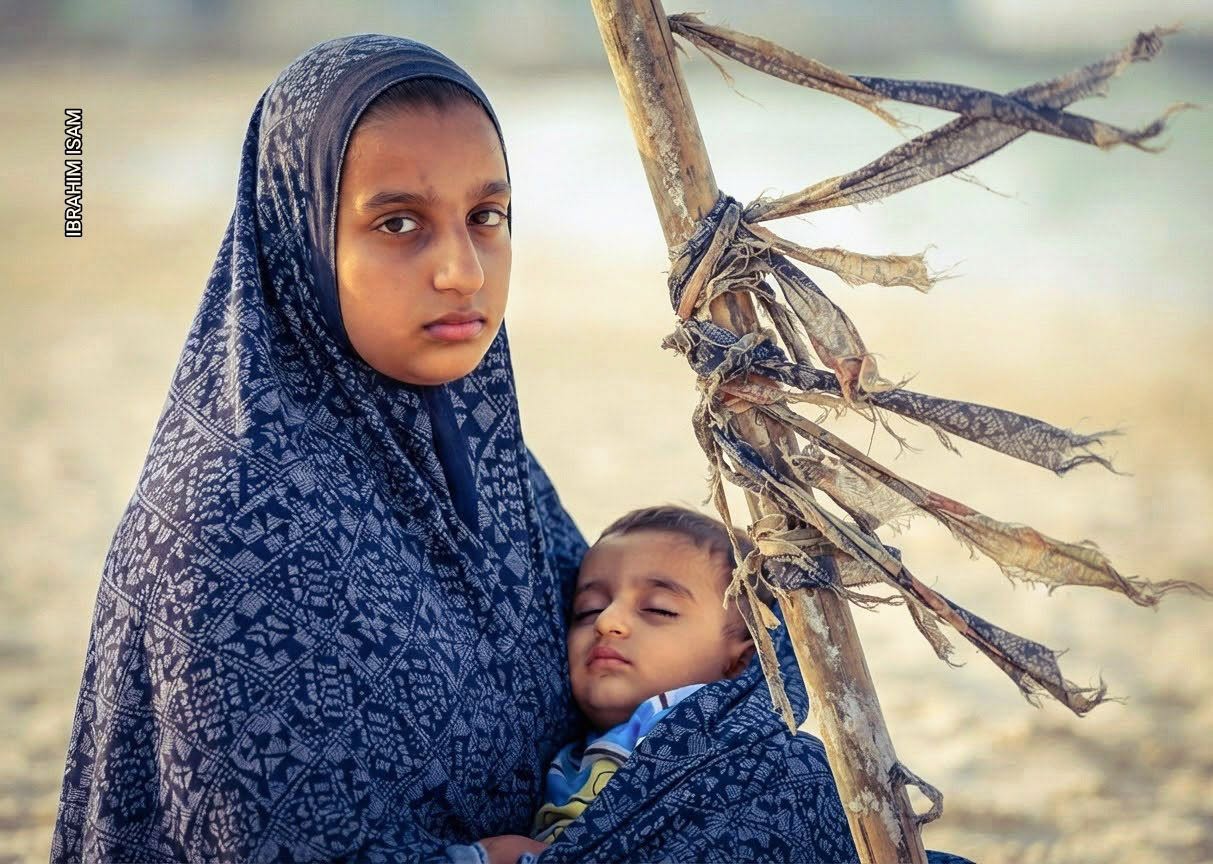
US-Iran: Who Will Blink First!

One would say that our main inheritance from the Covid period is the term, new normal, which has been since used, conveniently, in any circumstance we found baffling to our senses.

So one wonders if the stand in Hormuz will not be our current new normal, which will mean putting up with the economic consequences of the blockage and trying at the same time to find different routes for trade. Here, one is talking economics and trade simply because the loss of life and destruction doesn’t more matter in comparison to budgets and the flow of goods.

In fact each time anyone finds an intelligent reason for this ongoing conflict, the rediculous actions of the protagonists proves the impossibility of saying an informed or otherwise opinion. For all intents and purposes, all what can be reasonably said, is that for now, the war is supposed to be inconclusive despite the threats flying around, because essentially no one wants a regime change in Iran because no one can predict the consequences.

Therefore, back to economics again, the strategy seems, who will blink first and accept the conditions of the other to return to Islamabad. Iran with its enormous financial and economic problems which fears a new uprising in the streets once the stalemate with the US becomes the norm, or the USA with the mid term elections looming, rising inflation and higher energy prices, as well as volatility in stocks and shares prices in Wall Street.

When it comes to the situation in Lebanon, clearly the link with Iran is in fact Hizbullah; which is by its own admission the Party of Veliyati -Fatih in Lebanon, under the current circumstances, with the Israeli invasion of the south of Lebanon, for the first time in the history of Lebanon, not a sect, religious community, or power group, but in fact the official state representatives are talking about direct negotiations with Israel for peace, and in fact negotiating directly with each other in Washington.

For the Lebanese state, the situation now is legitimacy over the whole geography of the country, and limiting the possession of arms only in the hands of the Lebanese army and security. However, here also we face the scenario of whether the egg comes first, which is for Hizbullah Israeli withdrawal first, or the chicken, for the Lebanese government to negotiate the withdrawal of Israel.

Leaving the devil out of the details, would it mean ultimately, that a diplomatic agreement between Lebanon and Israel makes Hizbullah the enemy of both Israel and the Lebanese state together?, and what would the Lebanese state do as a next step, if Hizbullah decides to keep its weapons?

Then of course, there is the festering wound of Gaza and the West Bank which hardly warrant any news considering the scale of what is going on in the Gulf and in Lebanon. For Gaza, the vision fluctuates between lost peace, Israeli occupation withdrawn yellow lines, and Hamas with its show of force, amidst refugees, squalor, destruction and whether aid can go in or not, while on the other hand AI generated images of its rise beach resorts which no one is likely, from now on, be able to think about even if they can afford and realize them.

Future? What can one say save for bleak.

As for the West Bank, one has to apologise for saying that the Arabs, before anyone else, are reconciled with idea that the PNA is no longer there, apart from of course, moneymaking, here and there, and that what is termed as Palestinian territory will become a Bantustan in the sea of expanded Israel. Thus where do we go from here, well, there are people with paid salaries to think about!

Janbek is a Jordanian columnist based in Paris


Continue reading
Hormuz: Mines, Strategy or Business?

By Ismail Al Sharif

The US thought that assassinating senior Iranian leaders would bring down the regime, but this did not happen.

Iran’s inability to match American military and technological superiority led it to adopt a number of strategies, most notably what is known in the military literature as the Mosaic Defense Doctrine. This doctrine is based on dismantling its military central command into small, independent units, each operating autonomously and making its own decisions without consulting the higher command.

From Day 1 of the war, Iran adopted this approach. However, the lack of coordination and the disintegration of the military hierarchy led to chaos and confusion which affected the management of its operations. The situation became contradictory; the politicians were declaring one thing and military commanders acting in a completely different manner and direction.

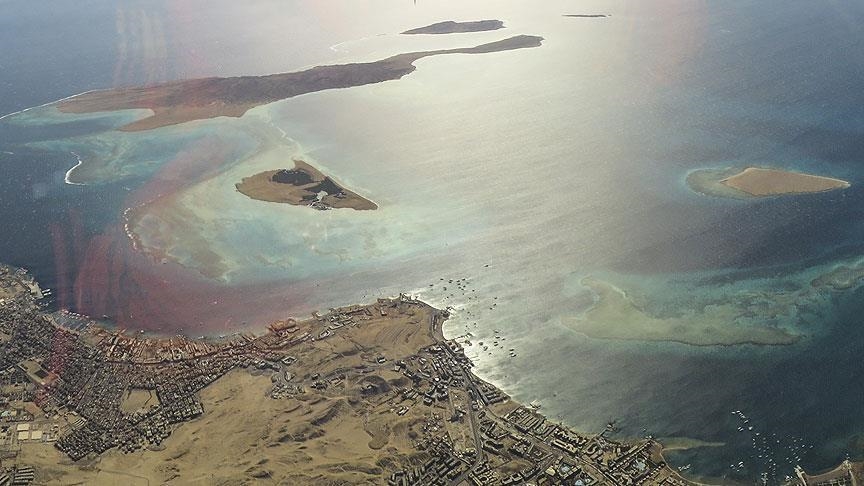
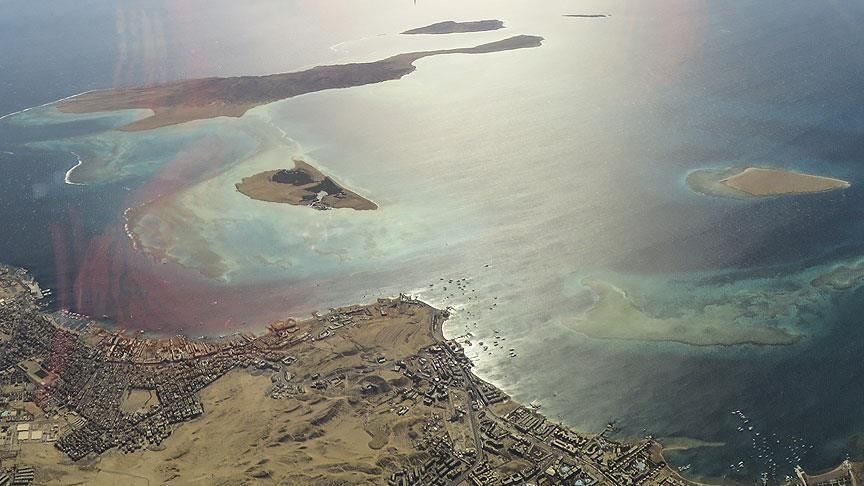
This was reflected on the ground through extremely dangerous behavior. Military units, using small boats, indiscriminately laid naval mines to deter enemy ships. However, the lack of coordination here backfired resulting in the Iranian navy officers losing their ability to pinpoint the coordinates of the mines they planted in the Hormuz Strait with no accurate maps or reliable records. Some of these mines may have been completely displaced by the currents of the sea. This was further complicated by the fact that these mines were not primitive but far from it; they were sophisticated and able to detect sound and pressure, and thus able to track the passage of large ships and submarines, and detonate automatically upon approach.

However, mine removal is not easy task, as history shows. Even today, news reports continue to surface of mines in various parts of the Kingdom, half a century after the last war. Indeed, mines from World War II are still being discovered on land and at sea.

Even with Britain’s pledge to remove mines after the war, and despite possessing the latest specialized technologies in this field, the task remains arduous, protracted, and uncertain. The specter of a sudden explosion looms, reminding us that the danger of mines is not easily eliminated.

But the decisive factor in weakening navigation in the Hormuz Strait is not primarily military, but rather material. Commercial ships are massive investments, with some vessels valued at around $150 million and their cargoes potentially worth hundreds of millions of dollars. Therefore, a single mine explosion can cause catastrophic losses to both the ship and its cargo. Consequently, no ship sails without insurance; ports, banks, and shipping companies refuse to deal with uninsured vessels, and without insurance, global shipping grinds to a halt.

Herein lies the real surprise: the fate of the Strait is no longer dependent on Iran’s pronouncements regarding its opening or closure, but has effectively fallen into the hands of insurance companies. With the escalating risks, insurance costs have skyrocketed; “war risk” premiums have jumped from approximately 0.25% of the ship’s value to nearly 1% or more, exceeding a massive $1 million per voyage. And it doesnt stop there; seven major insurance companies announced their complete withdrawal, issuing notices of coverage cancellation just within just 72 hours.

And here comes the decisive turning point: Once the insurance coverage is lost, maritime traffic ground to a halt. During this 39-war, ships have effectively ceased sailing with the number of vessels transiting the Strait plummeting by more than 80%. Around 150 oil tankers remain anchored offshore, and major shipping companies suspended their operations, as if this vital artery of global trade had been frozen by a financial, rather than a military decision.

The US government attempted to provide alternative insurance coverage, but this effort failed and US President Trump’s pronouncements regarding mine removal were inconsistent with the reality.

The issue of reopening the Strait has once again become a prominent topic, but the deeper truth is that its fate is no longer determined by political statements or military actions, but rather by the decisions of insurance experts. Even if the war were to end immediately, ships would not resume sailing right away. Insurance companies need time to reassess the level of risk, and they base their decisions not on political logic, but on cold, hard numbers and rigorous data.

This article was originally published in Arabic in Addustour daily newspaper and republished in English in crossfirearabia.com.


Continue reading
‘They Don’t Know Iran’s Military Lexicon’: First Six Days of The Aggression

By Abdul Bari Atwan


They truly don’t know Iran. By this, I mean the Israelis and the US, and even some Arab leaders, none of whom dared to condemn the aggression. But the aggression entered its sixth day without the regime falling, and/or the new interim leadership rushing to the nearest negotiating table to surrender. The following factors need to be considered.

The battlefields:

First: The downing of an advanced American fighter jet, the F-15, by Iranian missiles in the west of Iran, a firstever development. This suggests the Iranian military leadership may have developed new missiles capable of achieving this feat, or they acquired them from their Chinese and Russian allies, or both, particularly the Russian S-400 and S-500 missile systems.

Second: The entry of Hezbollah’s ballistic missiles into the arena, striking deep inside Israel, specifically Tel Aviv and Haifa, for the first time after 15 months of restraint and the rebuilding of its military arsenal, and/or what was destroyed during the Israeli aggression. This means that no area in the Zionist entity will be safe.

Third: The fiery speech delivered by Sheikh Naim Qassem, Secretary-General of Hezbollah, containing strong unprecedented tone statements most notably: “We will not surrender and we will defend our land, no matter the sacrifices and despite the disparity in capabilities. We will not surrender.”

Fourth: The introduction of the fastest “infiltrating” drone into the Iranian Air Force for the first time. Named “Hadid 110,” it has a speed of 517 km/h and, according to Western military experts, is considered more efficient than its sister drone, “Shahed,” which performed well deep inside Israel. Its production costs only $35,000, while shooting it down costs $4 million.

Fifth: Every day of resistance by the Iranian army and people costs the occupying state approximately $1 billion. As for America, the costs of the war has already nearly spiralled to $160 billion in the first six days. These preliminary estimates are likely to rise, especially after the bombing of aircraft carriers and the destruction of warships, the increasing number of dead and wounded, the largest military buildup since the Iraq War, and the rise in energy prices.

Sixth: The fulfillment of the promise to close the Strait of Hormuz, which means delivering two fatal blows. The first is to the Western economy because oil and gas prices would likely reach record-breaking figures, and the second, for the Arab states who host the US military bases. Closing the Strait means preventing their oil and gas exports from reaching global markets, and the losses will increase while oil and gas revenues decrease depending on the war’s duration and developments.

The Iranians wanted from the outset a regional war of attrition with no end in sight in direct opposite to the new American warefare military doctrine, which aims for short, swift, and clean wars (without American casualties). The Iranians resolved to bomb all those cooperating with the aggression in the region. This new Iranian theory was best and most clearly expressed by Sheikh Naim Qassem when he called on the Israeli army to prepare for many days of fighting with all available means.

Defeat, surrender, and raising the white flag, individually or collectively, have no place in the Iranian military and political lexicon. In the first six days, the Iranian army launched 500 hypersonic missiles with multiple cluster warheads and more than 2,000 drones, resulting in the displacement of more than 7 million settlers to shelters and tunnels, and the destruction of large parts of Tel Aviv and Haifa.

Neither the 47-year-long starvation siege, nor three Israeli-American aggressions within a few years, nor the incitement of popular protests and the planting of spies among the protesters, nor the deployment of aircraft carriers and warships, nor inflation and the collapse of the national currency, succeeded in defeating the mighty and unwavering Iranian will, and consequently, in toppling or changing the regime.

Our proof is they baffled the Americans in negotiations that lasted more than two years in Vienna and in several other Arab and European capitals, and they never conceded. They rejected all American conditions, starting with halting enrichment and handing over 460 kilograms of highly enriched uranium, and even refusing to allow the inclusion of the Iranian missile industry or severing ties with resistance factions on the negotiating table.

Yes, arrogance, conceit, and the unfortunate complicity of some Arabs blinded them to the true nature of Iran, and they will pay a very heavy price, the most prominent feature of which will be the destruction of all Israeli gas infrastructure. In the Mediterranean, water and electricity stations, and the lack of distinction between settler and soldier, many assumptions have changed after the massacre of the children’s school in southern Iran… and time will tell.

This opinion was written in Arabic by the chief editor of Alrai Al Youm Abdul Bari Atwan and translated for crossfirearabia.com

Continue reading
War and The Blame Game

By Khairi Janbek

Undoubtedly, the blame game is not a concept limited to the Middle East, neither the notion of who started the conflict nor who will end it.

However in this context, one wishes to talk about the current conflict which is becoming a chaos beyond the Middle East and specifically about Iran and its contribution to this chaos. Going back, and from the onset of the Iranian Revolution of 1979, chaos has always been part and parcel of its revolutionary ideology, reviving the old Shia-Sunni conflict, attempting to be the representative of the Shia of the world; most importantly, the concept of export of the revolution whenever the opportunity comes around.

But this phase ended with the end of the war with Iraq, but saying ended may well be too deterministic, because chaos under Iranian sponsorship emerged again after the fall of the Saddam Hussein regime in the form of what became known as the Iran-dominated Shiite Crescent. However with the set backs of last year, the chaos sponsorship of Iran to a back step, to relaunch again with projectiles all around creating a chaos in the region and beyond.

Essentially at this juncture, all the affected countries seem to have left the conflict to Israel and the US to deal with, maybe to the possibility that those parties do not believe that this conflict will be conclusive, or a feeling that whether they participate in the conflict or not, they will neither be seen in good favour by the United States and/or Israel.

But also having said that, there is also plenty of scepticism in the region, because each time there is a conflict involving the USA, there is always a big possibility that the US stops in the middle and allows its adversaries to recover and pick up, which means putting themselves in an adversarial position vis a vis recovered forces which they may have to face.

In fact whether by fluke or by good thinking, not to declare the war aims in this conflict may turn out to be a wise move, as this war may indeed end as one is writing these words, with the declaration by everyone that the war aims have been achieved. But as a final word, one feels Iranian induced chaos must be met with a world response.

Dr Janbek is a Jordanian columnist based in Paris, France.

Continue reading
Iran Strikes Israel 200 Times on Day 1 of War

Israeli emergancy services stated, Saturday night, 89 people were injured as a result of the Iranian attacks while the Hebrew media (Channel 13) reported that Tehran launched more than 200 strikes on the different parts of the Jewish entity on the first day of the US-Israeli war launched on Iran. The Israeli media (Channel 12) reported that central Israel suffered much material damage from the Israeli missiles that launched on Israel despite the fact tenss of these were deflected by Israeli batteries. Yedioth Ahronoth reported injuries in the city of Bnei Brak, near Tel Aviv though it didn’t say how critical these were. The Hebrew Channel 12 reported the number of fires were caused in northern Israel. Air raid sirens were reported in many parts of the country as ringing all day because of the incoming missiles with millions of Israelis taking to underground shelters.

Continue reading