Trump, Netanyahu Rift Hits Rock Bottom: View From Amman

By Saleem Ayoub Quna

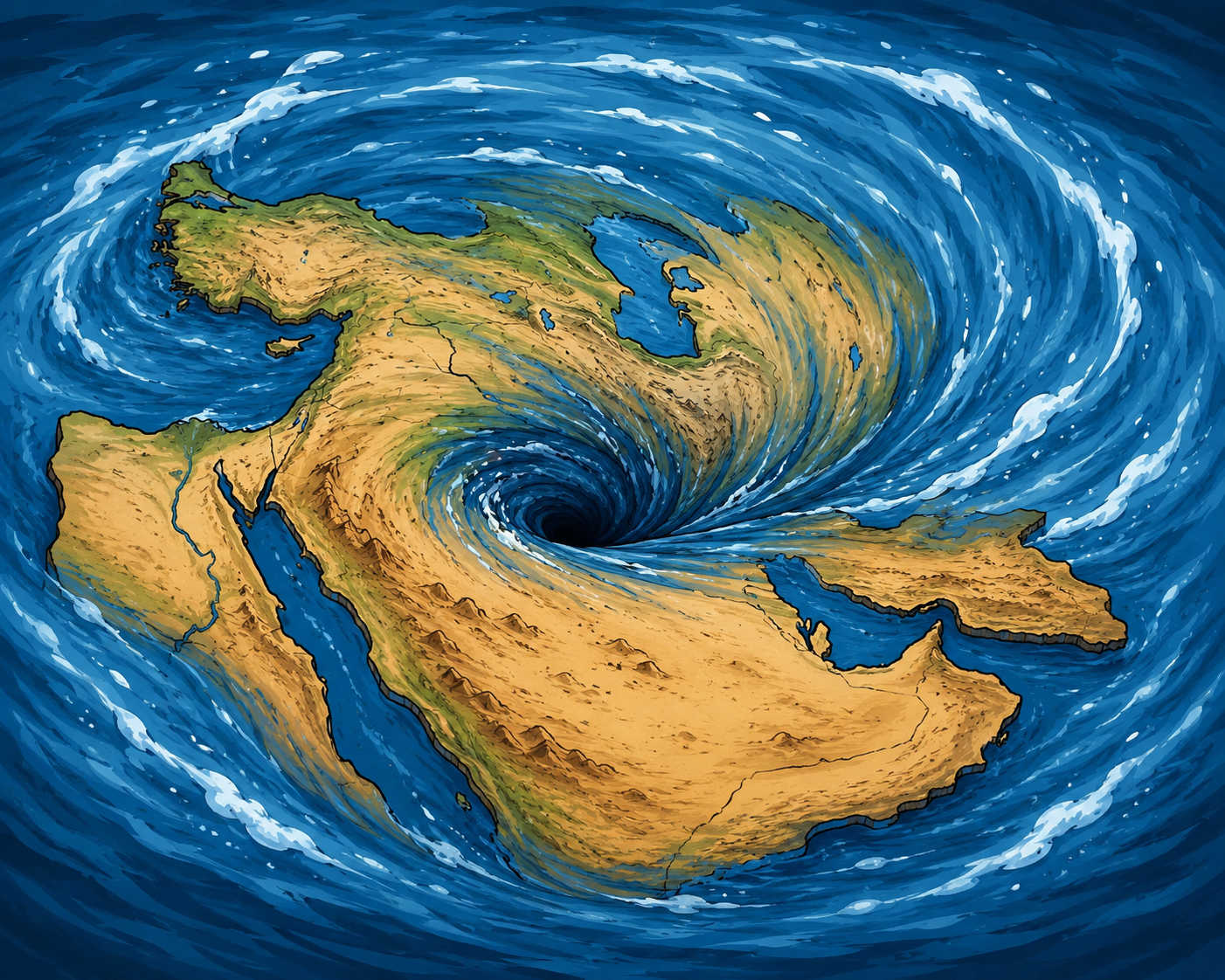
The Epic Fury Operation launched by the US against Iran in February 2026, will go down in modern history as the first open military conflict, where a superpower like the United States, has willingly and openly played the role of a war-proxy, on behalf of its smaller ally, Israel.

The difference of attitude between the two close allies, US and Israel, in relation to what they perceived as Iran’s threat, imminent or potential, was a key factor behind the gradual crumbling of the American-Israeli coordinated military and intelligence efforts, to bring down the regime in Tehran.


Israel under Benjamin Netanyahu’s extreme right-wing government, kept saying Iran posed an imminent existential threat to Israel, and therefore it must be brought down by force. While the US position was constrained by its previous international commitments on the issue of Iran’s nuclear ambitions, as stipulated in the 2015 Joint Comprehensive Plan of Action (JCPOA), signed between Iran and the P5+1 powers, during the administration of President Obama.


Since that moment Netanyahu kept vigorously urging, more likely lecturing the US and the West, on the dangers of the JCOPA agreement. When Donald Trump was elected President in 2017, things took an important and completely different turn. In the following year, he took the United States out of that internationally-backed deal as he had promised to do during his election campaign. He also kept his promises of moving the US Embassy to Occupied Jerusalem and recognize the occupied Syrian Golan Heights as part of Israel.


These symbolic and important gestures, whetted Netanyahu’s appetite for more American concessions to Israeli demands.


Netanyahu’s golden opportunity came when Trump was re-elected to his second term in 2023, the same year when Hamas launched its massive assault on the Israeli settlements in the so-called “Gaza enevlope”. Other militias connected and supported by Iran, including the Houthis in north Yemen, Hezbollah in south Lebanon, Syria under the previous regime and Shia factions in Iraq coordinated their efforts to stand by Hamas during that long and unprecedented confrontation with Israel.

For its part, Iran did not shy from making it clear that it helped create this “chain” of resistance factions to encircle Israel from three directions.

The second turning magical point in the US position on the issue of direct military intervention against Iran came about when Israel succeeded in serving Hezbollah, the severest military blow ever, in the pagers’ operation and the subsequent assassination of Hezbollah’s top leaders, including its charismatic Secretary-General Hassan Nasrallah on Sept 27, 2024.


Trump was very impressed with all of that Israeli action and Netanyahu gave himself the full credit for this unexpected success.


Accordingly, Netanyahu’s plan to Trump was simple. Based on the Israeli accumulated intelligence and expertise on the Iranian internal scene and emulating its operation against Hezbollah leaders in Lebanon, accompanied by massive American air strikes would provide both allies with the best chance to finish the Ayatollahs in Tehran once and for all!


But as events unfolded, all of Netanyahu’s plans, personally and strongly endorsed by Trump and his military aides, suddenly started crumbling, one after the other. His relations with Trump slipped into stages of deterioration by the day and week as the closure of the Hormuz Strait by Iran, started hurting the world economy led by the US.


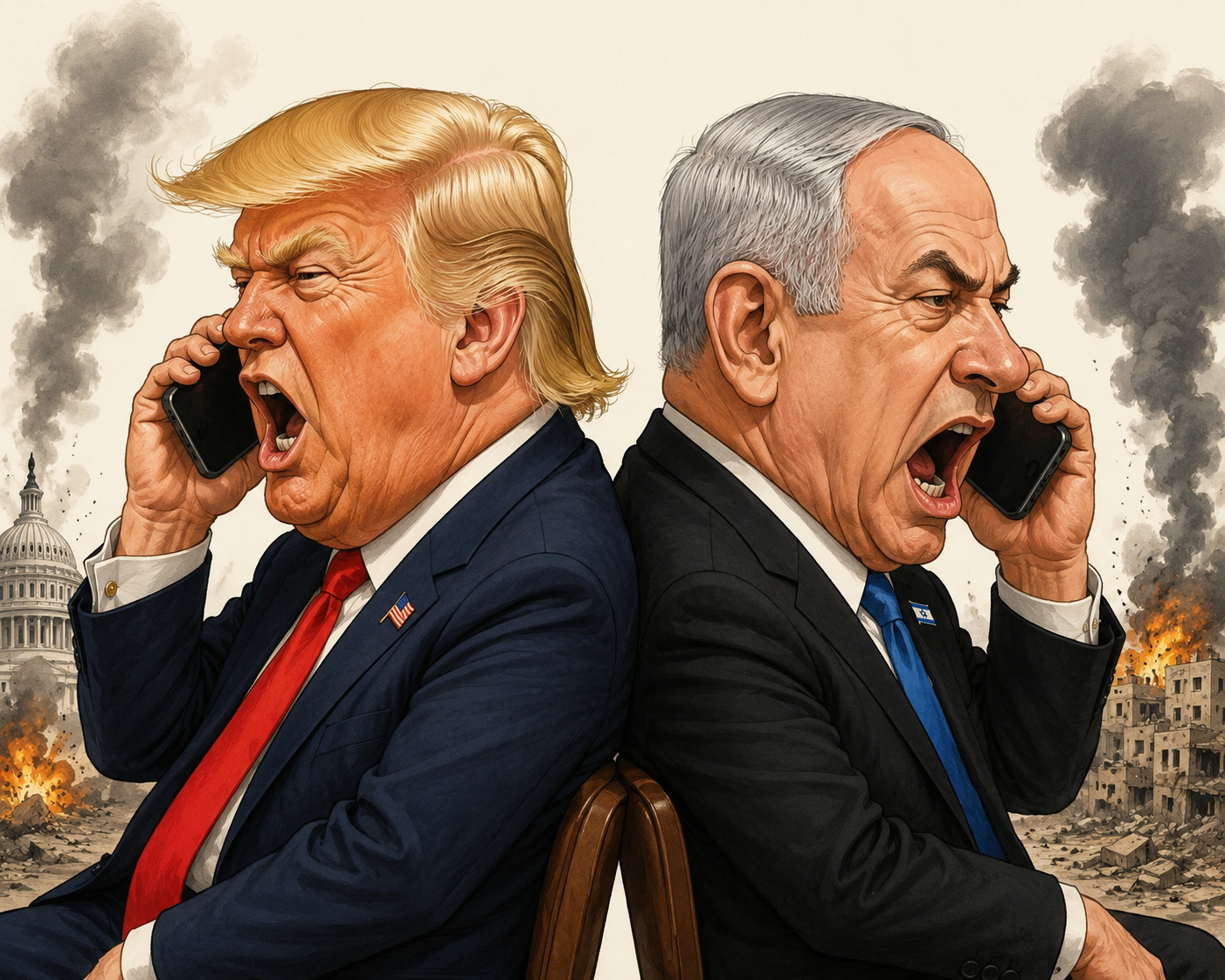
Here new red lights went on and the phone calls between the two men became more intense and vulgar. Then Trump decided to pass on the torch to his deputy, JD Vance, who seemed comfortable to tell Netanyahu what Trump avoided to do!


Conclusion: It is tricky to switch roles of allies in wars. A smaller entity can always stay safe as long as its leaders know the limits of their power and leverage. When people like Netanyahu think they have more power and clout than they actually have, versus their stronger ally, then irritation starts to brew, especially in the case of Trump who likes to show he is always in the driving seat. It also means that the leadership on the side of stronger partner has some problems of its own!


Whether it is a wrangle, rift, collision, divorce or worse between Trump and Netanyahu, we will not know for certain, until the negotiators in Switzerland close their files and head back home!

Continue reading
Trump Ticks Off Israel in Rebuke…

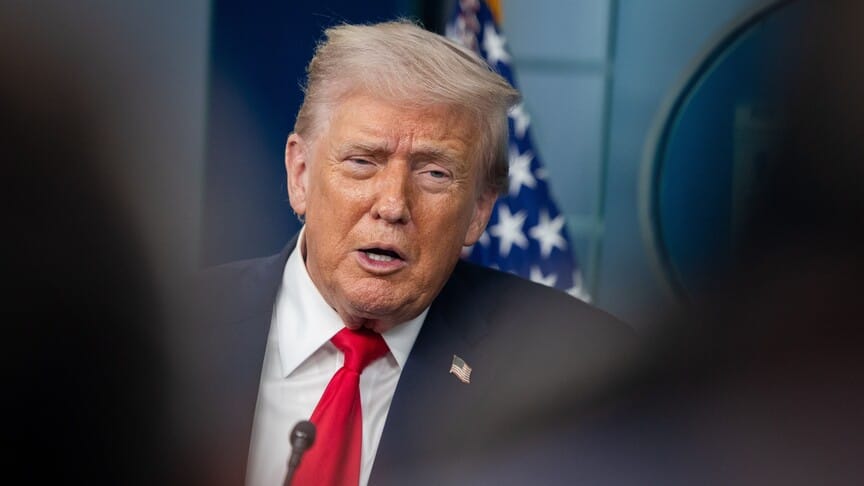
US President Donald Trump, Tuesday, issued a rare rebuke of Israel, rejecting the destruction of entire residential buildings in Lebanon in the search for a single Hezbollah member. He noted that many of the residents of those buildings are not affiliated with the group.

This came in remarks he made to reporters after meeting with Emir of Qatar Sheikh Tamim bin Hamad on the sidelines of the G7 summit in France. It comes two days after the announcement of a US-Iranian agreement.

In response to a reporter’s question, Trump said: “I’m not happy with the way Israel has dealt with Lebanon and with Hezbollah. They should have been able to get the job done much faster.”

He added: “You don’t have to destroy an entire apartment building every time looking for one Hezbollah member; there are many people living in those buildings, and not all of them are Hezbollah members.”

Trump said he had suggested to Israel that Syria be left to deal with the Lebanese Hezbollah group.

He pointed out: “The person running Syria (Ahmed al-Sharaa) is someone that I, Turkish President Recep Tayyip Erdoğan, and other figures supported, and we helped him come to power. He has done an exceptional job in restructuring the country.” He continued: “I suggested to Israel that Syria take care of Hezbollah, because frankly I think they would do a better job.”

https://www.facebook.com/reel/1565129145177584

He added: “If Israel can’t get the job done against Hezbollah without killing everyone, then (Syria) will take over. Syria will do the job.”

Trump also criticized the Israeli attack on Beirut just before the signing of the US-Iran agreement, saying: “I didn’t think it was right for Israel to attack Lebanon and Beirut hours before the agreement was signed. I didn’t like it at all, and I told him (Israeli Prime Minister Benjamin Netanyahu) that very clearly.”

Trump said that without the United States, “Israel wouldn’t exist and would have been destroyed,” calling on Netanyahu to act more responsibly toward Lebanon.

On Sunday, the Israeli army launched an airstrike targeting an apartment building in Beirut’s southern suburbs, claiming to be targeting “Hezbollah targets,” while the world awaited the imminent signing of a memorandum of understanding between Washington and Tehran to end the war.

The airstrike killed three people, including two women, and wounded 16 others, including four women. Iran vowed an “imminent response” to the Israeli attack in Beirut’s southern suburbs.

On Sunday evening, Washington and Tehran announced an agreement, brokered by Pakistan, to end military operations on all fronts, including Lebanon, reopen the Strait of Hormuz, and lift the naval blockade on Iran. The agreement is scheduled to be signed in Switzerland next Friday.

Since 2 March, 2026, Israel escalated its aggression against Lebanon as part of the ongoing conflict it has waged, alongside the United States, against Iran.

These attacks have resulted in the deaths of 3,826 people and injuries to 11,851 others in Lebanon, according to the latest figures released by the Lebanese Ministry of Health.

Israel continues to occupy areas in southern Lebanon, some for decades, and others since the previous war between 2023 and 2024, while during the current aggression it has expanded the scope of its incursion to a distance of more than 10 kilometers inside Lebanese territory according to Anadolu.

Continue reading
Diving in a War Zone

By Jing Zhang

When US and Israeli forces launched strikes on Iran on 28 February, triggering one of the most serious geopolitical crises in years, the Strait of Hormuz – a narrow channel just 34 kilometres wide at its narrowest point – became a global flashpoint overnight.

Iran closed the waterway to foreign shipping, attacking merchant vessels and cutting off around 20 per cent of the world’s seaborne oil trade. Some 20,000 seafarers were stranded in the Persian Gulf. The UN Secretary-General called for an immediate ceasefire.

Beneath all of it, the fish kept swimming.

Back in the water

Three Chinese divers based in the United Arab Emirates (UAE) – diving instructor Rui Li, freediver Shanshan Du and technical diver Jie Zhang – had been locked out of the water for weeks by the coastal closure. When a ceasefire allowed limited access in mid-April, they went straight back in.

World Oceans Day, marked each year on 8 June, carries the theme this year of Reimagining the Relationship Between Humans and the Ocean. For these three, that reimagining is anything but abstract.

“We were actually a little worried before setting off,” says Du, who dived the narrowest stretch between the UAE and Oman on 18 April, just days after the UN welcomed Iran’s announcement that the strait would be open to commercial vessels during the ceasefire. 

“But after more than two months, we all felt it was fantastic to be able to dive again. We encountered a large group of dolphins. There was none of the war-torn atmosphere I had imagined – only peace and beauty before my eyes.”

Zhang, who dived the area as recently as last week, describes coral diversity she has rarely encountered elsewhere – soft and hard corals varying with the topography, and sea turtles gathered in such numbers they evoked a nature reserve.

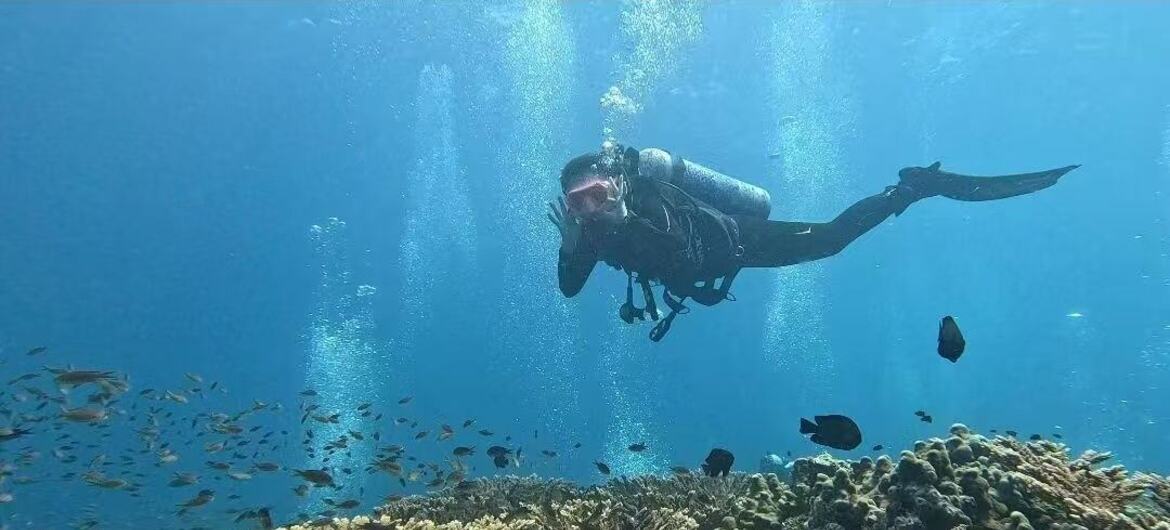
A person in a scuba diving suit and mask makes a peace sign against the ocean and blue sky.
Courtesy of Jie Zhang. Jie Zhang is back from the depths, feeling the warmth of the sun.

Troubling signs

She also noticed something more troubling. “I saw more white debris on the seabed than before,” she says, uncertain of its origin. And when she and her companions followed dolphins near the eastern side of the strait, the water around the animals was streaked with green algae, oil fumes and floating rubbish. 

“I recalled that when I used to chase dolphins, the water was blue. Seeing this scene with my own eyes is still very heartbreaking.”

Li is careful to hold both realities at once. The strait is not the world’s most biodiverse marine zone, he notes, but its complex topography sustains coral reefs of unusual variety – formations “as white as silver needles” alongside colonies “as purple as pine forests” – as well as seahorses, whale sharks and species rarely seen elsewhere.

He describes witnessing a boat captain who, unable to dive and with no other means of communication, could reliably find a pod of dolphins that seemed to recognise him. “We would greet each other and then go our separate ways,” Li says. “This place is truly magical.”

A wide bay with deep blue water, bordered by arid, rocky mountains and a small coastal settlement on the right.
©Jie Zhang Overlooking the Strait of Hormuz from the Musandam Peninsula, Oman.

Potential catastrophe

Yet he is also acutely aware of what armed conflict can do to such a place. An attack on oil storage facilities, he points out, could be catastrophic for marine life. “Many marine organisms are small and vulnerable. A single attack could be enough to wipe out some amazing species that have never been seen by humans.”

Zhang frames the underwater world’s vulnerability in blunt terms. “No one can speak for the underwater ecosystem  – fish can’t speak, and neither can large animals. 

“We dump all the disputes, wars and pollution on land onto the ocean, ignoring the fact that the ocean has no good self-protection capabilities and can only bear all the conflicts and damage caused by human activities.”

Diving has quietly dissolved certain certainties for all three. “Underwater, the ocean has no borders,” says Zhang. “Ocean currents and schools of fish move freely. When whale sharks cruise, they follow fixed routes through different countries – they are free. Humanity should share this blue world instead of tearing it apart with disputes.”

A person in a wetsuit and goggles floats in the ocean, adjusting their mask with both hands.
©Jie Zhang Rui Li makes a heart gesture to his dive buddy on the water’s surface, which also stands for “OK” in diving hand signal terms.

Mother ocean

Li reaches for a different metaphor – warmer, and perhaps more honest about the limits of human agency. The relationship between people and the sea, he suggests, is something like that between a child and a parent: the ocean sustains us, nurtures us, occasionally punishes us. 

“We have grown old enough to want to protect it, he says, yet what we can actually do remains small. “Our parents are still quietly waiting for us, helping us, and continuing to nurture us.”

Du, diving in a country where people of dozens of nationalities converge, has found that underwater, borders feel beside the point. Communication happens through gesture alone. “Because of this hobby, and because of the ocean, it has created a wonderful environment for us.”

The conflicts raging above the surface have not ended. Talks between Washington and Tehran remain fragile, conditions volatile. But 71 per cent of the Earth is ocean – and, as Li says to anyone who has yet to see it: come and touch the refreshing water whenever you can.

A school of sharks swimming in deep blue ocean water.
©Jie Zhang Madivaru Corner in the Maldives is a world-class dive site. Grey reef sharks and white-tip reef sharks are its permanent residents.

UN News

Continue reading
Netanyahu, Iran and The ‘Destructive’ Israeli Personality

By Dr Adnan Naeem

The recent escalation between Israel and Iran suggests that Prime Minister Benjamin Netanyahu is currently experiencing one of his most complex and perplexing political moments. The man who has long relied on military force as a tool to resolve conflicts and impose realities now finds himself besieged by outcomes that fall short of his stated objectives and the immense cost borne by the entire region.

In Gaza, after months of war, destruction, and continuous military operations by the Israeli army, fundamental questions remain unanswered: Where is the victory promised to the Israelis? Where are the strategic achievements that justified the continuation of the war? The Gaza battle was transformed from a project for a swift resolution into an open-ended war of attrition, with the political, security, and humanitarian costs increasing daily and rapidly.

As for the northern front (Lebanon), Netanyahu has failed to impose the equations he repeatedly wanted to create. Instead of restoring Israel’s image of deterrence, new realities have emerged confirming that the region does not respond to threats, and that the power balance has become far too complex to be determined by the rhetoric of force or displays of military capability.

At the heart of these shifts, Iran has emerged as a model distinct from the many adversaries Israel has traditionally dealt with. Tehran does not merely declare its right to retaliate; it exercises this right whenever it perceives its interests or sovereignty are threatened. The recent regional confrontations demonstrated that a policy of threats is no longer sufficient to subdue or deter adversaries while military calculations have become far more costly and complex than Netanyahu imagined.

It is to be noted while Netanyahu sometimes speaks of opportunities for negotiation or security and political arrangements, he at the same time continues to generate the conditions for escalation. How can peace be built while the circle of confrontation widens? And how can the world be convinced of the seriousness of the political process when the language of force remains the sole instrument for managing the conflict?

He appears like a cunning fox, claiming to be engaged in negotiations for  peace but focusing on security matters rather than the political file. The security file establishes a limited, relative stability, not a lasting one, waiting to reignite conflict in the region, particularly on the Lebanese front.

Netanyahu works on downplaying and delaying the importance of resolving the political issue first. He thus evades political obligations and commitments under international pressure regarding Lebanese rights for instance, most importantly ( is a complete withdrawal, even from the Shebaa Farms, demarcation of borders, including maritime borders, and Lebanese rights to the gas fields off the Lebanese coast – the Karish field).

This contradiction reveals a crisis deeper than a mere disagreement over military tactics; it reflects a personal political predicament facing Netanyahu. He understands – as he approaches the general elections – that a ceasefire could open the door to domestic accountability regarding security and political failures, and could revive questions about his political future, not to mention corruption cases and crises such as his dismantling of the judicial system and the conscription of Haredim. Therefore, it seems the continuation of the tension gives him more room to maneuver than political compromises would.

Within Israel itself, and as the general elections approaches, the gap between Netanyahu and growing segments of society widens. The opposition is gaining strength, protests continue unabated and the families of fallen and wounded soldiers are raising their voices in an unprecedented manner. Meanwhile, criticism is mounting from security and military figures who believe the government lacks a clear vision to resolve the crisis.

Today, Netanyahu’s image resembles that of his missiles: Soaring into the sky, creating a deafening roar, but quickly returning to reality, where difficult questions and stubborn facts await him. Wars may postpone crises, but they do not eliminate them, and escalation may temporarily alter the landscape, but it does not create a lasting victory.

Conversely, the United States appears more inclined toward de-escalation and preventing the region from erupting into a full-blown war. Washington understands its strategic interests require containing the conflict, not expanding it. It prefers pursuing political and security arrangements that reduce the likelihood of a major confrontation. However, this approach clashes with Netanyahu’s desire to keep the region on the brink of conflagration, hoping to alter the facts on the ground or escape the demands of domestic politics.

Between heaven and earth, Netanyahu oscillates between the rhetoric of power and the reality of impotence, between his political ambitions and the limits of what military force can achieve. As for the region, it continues to pay the price for this oscillation, which has so far produced nothing but more tension and instability.

This article, written by Dr Adnan Naeem, an Israeli affairs expert, was published in the Arabic  Maannews website and reprinted in crossfirearabia.com

Continue reading
Iran: ‘Strategic Patience’ to ‘Sustained Confrontation’

By Najih Mohammad Ali

In a clear and direct language, the Iranian Revolutionary Guard Corps (IRGC) affirmed that regional “peace and stability will not be achieved unless there is withdrawal from the occupied Lebanese territories.” This stance followed Hezbollah’s Secretary-General’s rejection of the Washington talks, emphasizing his refusal to separate the arenas and the “Dahieh for the North” equation.

This statement expresses a coherent strategic vision that considers regional stability inextricably linked to ending occupations and aggressions. It places the defense of Lebanon, Syria, and the region among Iran’s political and military priorities.

This shift to a strategy of “eternal war”—or continuous confrontation—and reflects a pragmatic and principled decision made by Tehran after decades of pressure and aggression. Iran did not abandon the idea of ​​a settlement in vain; rather, it realized that relying on partial agreements with Washington, which imposes unilateral conditions and disregards the rights of peoples, is no longer a viable option.

The cowardly assassination of Martyr Qassem Soleimani, followed by direct strikes targeting high-ranking Iranian leaders, including Supreme Leader Ayatollah Seyyed Ali Khamenei, proved that relying solely on “strategic patience” is mistaken for weakness. Therefore, Iran has shifted to a doctrine of active deterrence based on the entire axis of resistance, making any aggression costly for its adversaries.

This transformation was not the result of the absolute dominance of a hardline faction, as Zionist-American narratives and their Arab proxies (and, of course, the Iranian opposition abroad) claim. Rather, it is a natural evolution of the Iranian elite that stood united in the face of external aggression.

After significant losses, the priority of maintaining national and revolutionary cohesion emerged. Defending revolutionary principles—exporting the spirit of resistance and confronting arrogance—has become an essential part of the regime’s identity that has become a source of strength to prevent internal collapse whilst uniting the people behind the leadership in the face of sanctions. Pragmatists and hardliners alike now agree that continued confrontation better protects national interests than concessions that could lead to disintegration.

The leaders of the Iranian regime believe—and I think they are right—that continuing the confrontation will yield greater strategic gains than any fragile peace agreement. History proves that America understands only the language of force and attrition. From Vietnam to Afghanistan, wars of attrition forced Washington to withdraw.

Today, the “Axis of Resistance” is cleverly applying this equation: Linking the arenas to prevent separate deals that would weaken Lebanon, Iraq, or Yemen, and imposes a heavy price on its adversaries. Iranian diplomacy has been transformed into the diplomacy of the field, as General Soleimani envisioned, and is now a flexible tool that buys time and exposes the contradictions of the other side, while maintaining full military readiness.

The American-Israeli strikes have already altered Tehran’s calculations in favor of adopting an offensive-defensive posture. Instead of settling for limited responses, Iran is developing comprehensive deterrent capabilities through its natural allies, who represent the will of the region’s peoples in the face of occupation.

This is a calculated escalation, a precise strategic calculation based on resilience and strategic depth. Within the elite, a balance prevails between caution, fearing losses, and resolve, which sees resistance as the only path to dignity and independence.

Compared to the previous “strategic patience,” the strategy of sustained confrontation has proven effective in preserving battlefield gains and preventing the regional collapse of the resistance axis. It has succeeded in exhausting the enemy and strengthening internal unity, despite economic challenges primarily attributed to unjust sanctions, not Iranian policy.

The most serious risk facing this strategy lies in the possibility of miscalculation by adversaries and their attempts to impose a full-scale war, but Iran has repeatedly demonstrated an exceptional capacity for resilience and adaptation.

We are indeed facing a “simmering cold war,” where there is no false peace imposed by force, nor a total war that destroys everyone. This situation serves Iran and its axis because it maintains the strategic balance, prevents surrender, and opens the door to a comprehensive and just settlement based on withdrawal from occupied territories and respect for the sovereignty of states.

In conclusion, this “perpetual war” relies on the long-term vision of the Iranian character. It is not a whim, but an existential choice imposed by the ongoing aggression against Iran and the peoples of the region.

Iran is defending itself and the dignity of the nation, and affirms that true stability begins with ending aggression, occupation, and foreign interference. This path, despite its difficulties, reinforces Tehran’s position as an indispensable regional power and paves the way for a new balance of power that respects the rights of peoples. The region needs such firm stances to achieve an honorable peace, not surrender.

The author is a researcher in Iranian and regional affairs and this article is reproduced from the Arabic Al Rai Al Youm website and reprinted in crossfirearabia.com.

Continue reading