Ceasefire And Defeat: Iran Won The War  

By Abdel Bari Atwan

Finally, after 100 days of aggression into which Benjamin Netanyahu dragged the US president into, Donald Trump realized he couldn’t not win the war against Iran, and the chances of defeat were far greater than the chances of victory. Therefore, he decided to surrender and raise the white flag, seeking a way out to minimize losses and save face.

He found what he was looking for in the hands of his Pakistani allies, who offered him a lifeline in the form of a “Memorandum of Understanding” leading to a ceasefire, preventing a regional war of attrition, and forcing him to reluctantly acknowledge Iranian-Omani sovereignty over the Strait of Hormuz.

Trump then turned his arrows toward those who had deceived him—the Israeli occupation state—after beginning to awaken from his stupor and the great deception he had suffered.

Trump might sign this “memorandum” with the leaders of the country whose current Islamic regime he waged war to overthrow, replacing it with a puppet regime, stripping Iran of its nuclear ambitions and more than 460 kilograms of highly enriched uranium—enough to produce 10 nuclear bombs—and, most importantly, acknowledging the unity of the battlefields, thus yielding to Iranian demands the ceasefire encompass all fronts, especially the Lebanese front.

Now the decisions on contentious issues are being postponed, particularly the Iranian nuclear file, and referring them to negotiations that will begin immediately after the ceasefire, along with the gradual lifting of sanctions on Iran for a period of two months, and the unfreezing of tens of billions of dollars of its assets.

These are all concessions reflecting the first fruits of the success of the astute Iranian administration, coupled with a swift military deterrent against any American or Israeli strikes in or around the Strait of Hormuz, and ignoring all of Trump’s empty threats to destroy Iran, wipe it off the face of the earth, and unleash hell upon it.

***

For over two years, Iran negotiated with the United States and European countries regarding its nuclear program and the sensitive issue of uranium enrichment in several capitals, from Vienna to Muscat, Oman, and finally Geneva. It made no concessions whatsoever. Ironically, the head of its negotiating team was Abbas Araqchi, who adhered to the leadership’s ‘yes, but’ approach, which is based on another principle: “We welcome and study” any proposals presented at the negotiating table. As a reward, he was promoted to lead Iranian diplomacy as Foreign Minister in both the previous and current governments.

The Iranian regime possessed many cards, which it used intelligently to counter this Israeli-American aggression. These included the nuclear card and military preparedness based on self-sufficiency in the production of missiles and highly advanced drones. However, one of the most important cards was the unity of the battlefields, support for resistance factions, and the expansion of the conflict into a regional war of attrition.

All these cards yielded results, forcing Trump to resort to the current agreement in a humiliating manner to end the war as quickly as possible. Regardless of whether this memorandum of understanding holds or not, the biggest loser is the Israeli occupation state. This isn’t because it wasn’t consulted or involved, even though it is the true architect and instigator of this war.

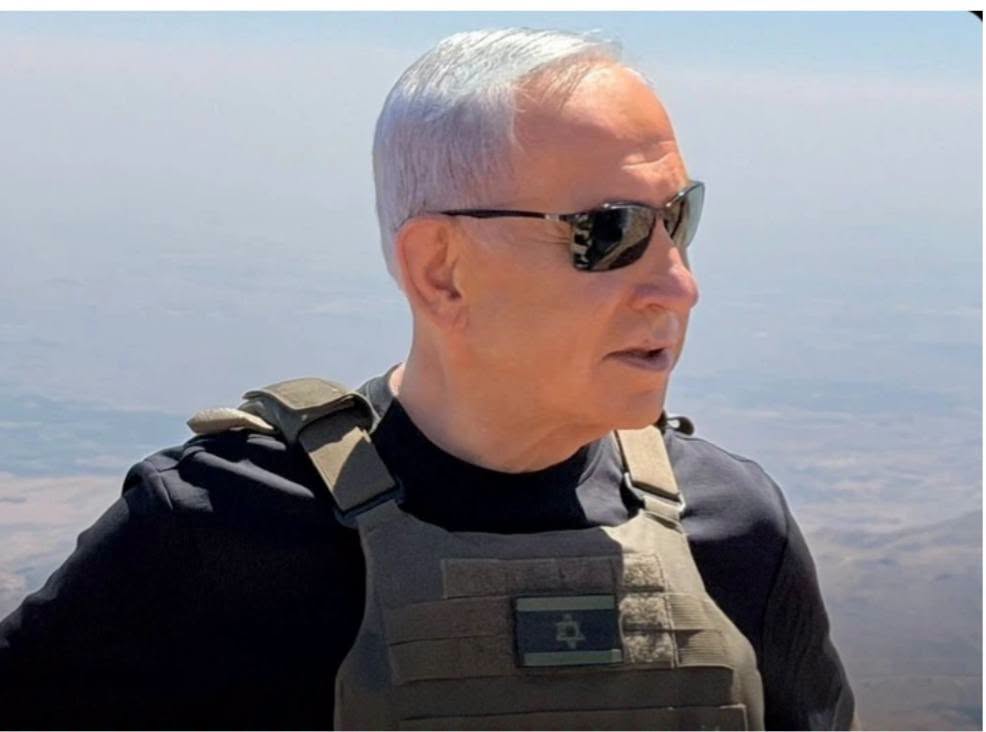
Netanyahu, who was reprimanded and labeled insane by his former protégé and “rebellious” servant, Trump, was completely oblivious, searching for information in newspaper reports, television broadcasts, and social media. How things change!

The unity of the battlefields, which embodies one of Iran’s most prominent strategic achievements, and the leadership’s insistence on a complete ceasefire in Lebanon, were the most significant blow to the occupation state.

The American recognition of this unity in the proposed memorandum legitimizes Hezbollah’s existence as a resistance movement, just as it criminalizes the Israeli occupation and its destructive raids. Netanyahu’s acceptance, or rather his acquiescence, to this agreement is a major defeat, while his rejection of it means a direct confrontation with America and its president, and the possibility of being left to act alone in aggression, which would signify an even greater existential defeat.

Netanyahu deceived Trump, leading him into this war like a sheep, convincing him that Iran would collapse as soon as it was bombarded with the first salvo of joint American and Israeli missiles. He led him to believe that tens of millions of Iranians would take to the streets, dancing in celebration of this aggression and demanding the overthrow of the regime.

Yet, the war has dragged on for 100 days, and the results are the opposite. The Iranian Islamic regime is growing stronger and more resilient, reinforcing both territorial and popular unity, and embodying both nuclear and regional sovereignty.

***

We say it without hesitation, with complete frankness and clarity: Trump has been defeated, and the Israeli occupation state is rapidly heading towards collapse, becoming increasingly isolated and hated, especially by its strategic American ally—both the American people and government—who have fallen into the trap of its lies, fabricated information, and blackmail.

This serves Israel’s interests and its racist, terrorist schemes at the expense of America’s own interests, its people, its standing as a superpower claiming leadership of the free world, and the values ​​of justice, democracy, human rights, and global security and stability.

Trump has led America to defeat, whether this agreement holds or not, and this defeat will be clearly confirmed in the American midterm elections next November. We do not rule out that he and his deceiver, Benjamin Netanyahu, will end up behind bars, as prominent symbols of stupidity, criminality, and failure… Time will tell.

Abdul Bari Atwan is the Chief Editor of the Arabic Al Rai Al Youm and his latest article has appeared in the English crossfirearabia.com English website. 
Continue reading
Trump: No Plans to Seize Iran’s Uranium

US President Donald Trump has paused a plan by the military to forcibly seize Iran’s enriched uranium, CNN reported Friday, citing sources.

The US military’s top officer made a secret, hurried trip to US Central Command headquarters in Florida late last month to receive an in-person briefing on plans for a potential ground operation in Iran aimed at seizing the country’s stockpile of highly enriched uranium, according to the report.

The briefings were considered so urgent and sensitive that Gen. Dan Caine, chairman of the Joint Chiefs of Staff, cut short a meeting of senior NATO officials in Brussels and flew back to Tampa on May 19, the report said.

The high-level discussions highlight how close the administration came to approving the risky operation. Caine later presented the military options to Trump, the report said.

Trump ultimately paused the plan after being warned it could trigger severe Iranian retaliation, prolong the conflict, and further destabilize the global economy. He was also concerned about the possibility of significant US casualties, according to the report.

Planning for the operation occurred even as Trump repeatedly said the US and Iran were nearing an agreement to reopen the Strait of Hormuz and conclude negotiations over Iran’s nuclear program, according to the report. Anadolu

Continue reading
What to Do About Hamas?

By Dr Khairi Janbek

The avowed declared intention of Benjamin Netanyahu, remains the destruction of Hamas, as he repeatedly says that the war against Hamas will not stop until it is totally disarmed and there will no more ‘Hamastan’.

This is while on the other side of the world is President Trump who is very much interested in a ceasefire and the release of the remaining hostages while blowing hot and cold in his habitual manner of ambiguity regarding the future of of the Islamic organization.

This may cause a divergence of views between Netanyahu and Trump in their up coming discussions, despite the fact that Trump went the extra mile as he threatened to withhold aid to Israel if Netanyahu is taken to court whilst Netanyahu responded by returning the compliment, saying that a couple-of-months ceasefire and the release of the living hostages as well as the dead bodies, are not mutually exclusive with the ultimate aim of destroying Hamas.

Admittedly, one always had one’s own doubts about the destruction of Hamas, probably because one always believed that the objectives of Israel’s foreign policy is to have a weakened PNA by Hamas and Hamas weakened by the PNA, which meant that neither should be destroyed, rather, to be weakened as circumstances required.

However, having said that, the most recent menacing Israeli government voices are talking about more dangerous developments, the first being taking control of the West Bank, which basically means either the end of the PNA or merely becoming an Israeli Bantustan administration, rendering the concept, let alone the fact, of a Palestinian state superfluous.

While the other development, is the call for Gaza , with or without Hamas, to be under a future Arab administration. Now which Arabs are going to be part of this administration is still unclear, but certainly the implications are clear, basically the financing of reconstruction which requires wealthy Arab participation, by default a participation of normalizing Arabs with Israel, with enough muscle to keep Hamas at bay, armed or otherwise.

In any case something may well be hammered in Washington when Trump meets Netanyahu, and the Arabs are bound to know its consequences.

Dr Janbek is a Jordanian writer based in Paris

Continue reading
US-Israeli Conspiracy on Iran?

By Jamal Kanj

Israel’s latest strike on Iran had nothing to do with dismantling the Iranian (civilian) nuclear program. Despite Prime Minister Benjamin Netanyahu’s assertion that “the timing was fixed back in November 2024,” the real zero hour was designated only to undercut possible diplomatic framework that could have legitimized Iran’s nuclear development under international, verifiable, supervision.

This war is not a preemptive blow against Iran —it is a preemptive strike against diplomacy itself. The Trump administration made a grave error by keeping Israeli officials closely informed of the sensitive progress in the secret negotiations. This privileged access allowed Israel to strategically time its military strike to sabotage diplomatic efforts at a critical juncture—undermining further progress just as it was beginning to take shape, and before any agreement could fully mature.

Multiple independent leaks had pointed to progress in the Oman brokered negotiation between the U.S. and Iran, inclusive of intrusive International Atomic Energy Agency (IAEA) inspections, capped enrichment, and restart of oil exports under strict monitoring. An agreement of that sort would have undercut Israel’s decades-long doctrine that only isolation and coercion can keep Iran “in its box.”

Rather than accepting a rules-based diplomatic framework that Netanyahu could not control or veto, he chose to hinder the potential agreement—with F-35s and cruise missiles.

This war is also part of Israel’s long-standing obsession with maintaining its monopoly on nuclear technology in the Middle East. Far from a purely defensive measure, Israel’s broader strategy has consistently aimed at preventing any regional power from acquiring—not only the infrastructure required to develop nuclear capabilities—but even the scientific expertise and human capital necessary to pursue such knowledge.

Hours after the first explosions, U.S. officials solemnly declared, “America did not take part.” But the denial was tactical, not principled. By remaining officially aloof, the Trump White House hoped to keep a seat at any revived negotiating table while still wielding the Israeli strike as leverage. Donald Trump’s own split-screen rhetoric—calling the raid “excellent,” threatening Iran with “more to come,” yet urging Tehran to “make a deal”—spelled out the gambit: let Israel be the cudgel while the United States courts concessions.

On the other hand, and in response to American Secretary of State, Marco Rubio, claim that the U.S. is “not involved in strikes against Iran,” Israel declared that every phase of the attack had been “closely coordinated” with the Pentagon and that that US provided “exquisite intelligence” to attack Iran.

The yawning gap between the two narratives served both capitals. In Washington, it allowed officials to reassure anxious allies that the U.S. was not actively escalating another Middle East war. In Tel Aviv, Netanyahu exploited the ambiguity to provoke Iran into retaliating against U.S. forces—potentially drawing Washington deeper into Israel’s war. At the same time, he sent a calculated message to domestic hawks and regional adversaries: that Israel still enjoys unwavering American backing.

Netanyahu’s sinister calculus was familiar and transparent from Israel’s book to drag the US into its endless wars: derail the diplomatic channel, then dare Washington to pick up the pieces while Israel enjoys another round of strategic impunity.

Even in a region where Israel uses starvation as a weapon of war and genocide in Gaza, Israel’s choice to strike residential neighborhoods—ostensibly targeting senior officers, civilian leaders, and nuclear scientists—crosses a perilous line. The laws of armed conflict draw a bright red distinction between combatants and civilians; by erasing it, Israel has handed Iran moral and legal grounds to retaliate in kind. If Tehran targets the private homes of Israeli leaders and commanders, Tel Aviv cannot plausibly cry victim after setting that precedent.

The first wave of Iranian retaliation—targeting the Israeli Ministry of Defense headquarters in Tel Aviv, among other sites—marks the beginning of a new kind of war, one unlike anything Israelis have faced in previous conflicts. For the first time, a state with advanced missile capabilities has shown both the resilience to absorb the initial strike and the capacity to hit back ] deep inside Israel—an experience unprecedented in Israel’s 77 years of existence.

Unlike the sporadic and largely asymmetrical conflicts with non-state actors like the Resistance in Lebanon and occupied Gaza, this confrontation introduces a level of state-to-state warfare that challenges Israel’s long-held military superiority and assumptions of deterrence. What has unfolded so far with the Iranian retaliation is a harbinger of a more symmetrical and likely prolonged confrontation—one in which Israel’s own centers of power may be within range, and where the frontlines are no longer confined to Gaza, the West Bank, or southern Lebanon, but centered into the very core of Tel Aviv.

In the coming days, Washington’s true measure will be taken after the smoke clears. If U.S. Aegis destroyers in the Gulf or antimissile batteries in the region are activated to shoot down Iranian missiles and drones, America will cease to be an observer and become a co-belligerent.

Such presumably “defensive” steps quickly metastasize: one intercept invites another, and each exchange digs the United States deeper into a conflict created by a foreign country. History offers bleak guidance. Once American troops engage, momentum overrides strategy and the dynamics of war supplant planning. Political leaders feel compelled to “finish the job,” costs spiral, U.S. interests go unsecured, and the chief beneficiary is almost always the Israeli security establishment that triggered the crisis.

At the end of the day, Netanyahu’s success will not be measured by how many centrifuges he cripples or how many Iranian scientists he murders. It will be measured by whether he can lock the United States into yet another made-for-Israel Middle East war, paid for—strategically, financially, life, and morally—by Americans.

If Washington truly opposes escalation, it must say no—publicly and unequivocally—to any role in shielding Israel from the blowback it just invited. Anything less is complicity disguised as caution, and it will once again confirm that Israeli impunity is underwritten in Washington, even when it torpedoes America’s own diplomacy and ignites yet another Israeli-engineered war.

– Jamal Kanj is the author of “Children of Catastrophe,” Journey from a Palestinian Refugee Camp to America, and other books. He writes frequently on Arab world issues for various national and international commentaries. He contributed this article to The Palestine Chronicle

Continue reading
US Embassy Says it Cannot Evacuate Americans in Israel

The US Embassy in Israel says it cannot evacuate or directly assist American citizens in leaving the occupation state. The announcement comes amid a regional war sparked by US-backed Israeli attacks on Iran.

“The U.S. Embassy is not in a position at this time to evacuate or directly assist Americans in departing Israel,” it said in a statement.

Despite US-Israeli coordination in launching the surprising attack on Iran, the Trump administration failed to issue advance warnings to American settlers in Israel reports the Quds News Network.

Citing security concerns, the US Embassy in the occupation state will remain closed on Monday. All US government employees and their families have been told to shelter in place until further notice.

The Israeli government has ordered airlines not to allow Israeli citizens inside the country to board rescue flights. These flights are only for Israelis currently abroad, reported The Marker.

Officials claim the move aims to prevent overcrowding and reduce the risk of mass casualties. But in practice, the policy means settlers and civilians still in Israel cannot leave, even as tensions with Iran escalate.

Last month, US Ambassador to Israel Mike Huckabee said that 700,000 American citizens live in Israeli settlements across occupied Palestine. He was referring to settlers, who hold Israeli citizenship and serve in the Israeli military.

Critics argue that these settlers are being used as human shields. Entire communities, including women and children, are placed deep inside conflict zones. Their presence serves both as a military buffer and a justification for expansion.

In contrast to its silence in Israel, the US State Department issued a clear warning to citizens in Iran, urging them to leave immediately.

“U.S. citizens should not travel to Iran for any reason and should depart Iran immediately if you are there,” said the statement.

Continue reading