Food Airdrops: Humiliating, Degrading, Dangerous

The airdrop of aid into the Gaza Strip is yet another act of humiliation and degradation against Palestinians. It endangers civilians crowded into less than 15 per cent of the enclave and serves a graver purpose: enabling Israel’s policy of mass starvation, deliberately used as a tool of genocide in its systematic effort to eliminate Palestinians in Gaza.

The resumption of aid airdrops, following months of widespread starvation, neither meets the minimum humanitarian needs nor alleviates the catastrophe caused by Israel’s deliberate policy of starvation. Instead, it perpetuates the illusion of relief while starvation continues to be used as a weapon against civilians.

This step, approved by Israel and implemented on Saturday evening, does not reflect a genuine shift in the humanitarian response. Rather, it aims to mislead international public opinion and downplay the severity of the crime, diverting attention from Israel’s systematic starvation policy in the Gaza Strip, which has caused an unprecedented humanitarian catastrophe. This catastrophe is marked by widespread famine, denial of food, water and medicine, destruction of supply chains, obstruction of land-based aid delivery, and continued attacks on those seeking food. These actions reveal Israel’s persistent use of starvation as a primary tool to decimate the population and undermine their means of survival.

The catastrophic conditions on the ground underscore the severity of Israel’s starvation policy, especially after 55 people were officially declared dead from starvation and malnutrition in just one week. It is also estimated that around 1,200 elderly people have died in the past two months due to a lack of food and medical care, amid the total collapse of the healthcare system and the continuing blockade.

The airdrops do not constitute a genuine humanitarian response but rather mark a new chapter in the ongoing humiliation of civilians in the Gaza Strip, following the public degradation and repeated killings at distribution centres operated by the Gaza Humanitarian Foundation under Israel’s direction.

Instead of opening safe and organised land corridors, residents are forced to crowd into dangerous areas under bombardment to retrieve parcels dropped randomly from the air, in conditions that compromise their dignity and endanger their lives, as has occurred repeatedly. Such practices strip relief of its humanitarian purpose and reproduce a colonial dynamic based on subjugation and control, reducing the right to survival to a humiliating favour instead of a fundamental human right.

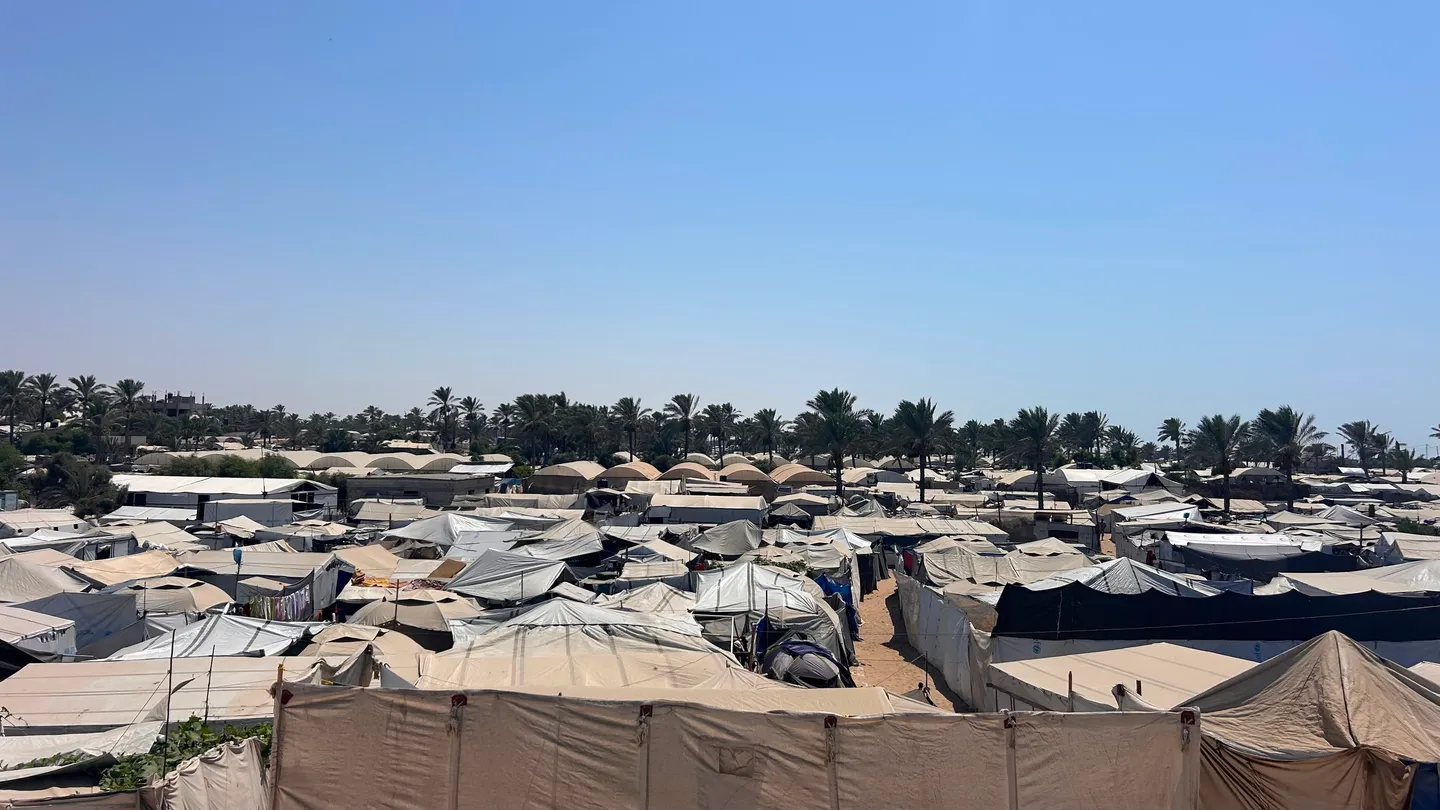
With 2.3 million Palestinians displaced into less than 15 per cent of the Gaza Strip due to Israeli control and forced evacuation orders, airdropped aid poses a serious risk to civilian lives amid severe overcrowding and the absence of safe areas.

Euro-Med Monitor recalls that when airdrops were first introduced several months ago, even while the accessible area was relatively larger, they led to the deaths of 18 Palestinians and injuries to dozens more.

Last night’s airdrops injured at least 11 civilians, further highlighting the failure of this mechanism to ensure safe and orderly access to aid. It also reinforces serious concerns that civilians are being placed in harm’s way rather than protected, especially amid severe overcrowding and the shrinking of safe areas due to Israeli-imposed policies of forced annexation and displacement.

The reality on the ground demonstrates that airdropped aid is scarce, randomly distributed, and poses serious risks. It frequently lands in densely populated areas, on displaced people’s tents, in evacuated zones, in areas under Israeli control, or in the sea, making it an unsafe and ineffective method from a humanitarian perspective.

The extreme starvation civilians are enduring has, for weeks, driven them to seek aid along delivery routes and at distribution centres, despite knowing these places are humiliating and have become death traps. Their desperate search for aid has turned into a daily scene of collective humiliation, exposing them to immediate danger and fuelling tension and conflict among the population over access to scarce food supplies.

Addressing the famine in Gaza cannot be achieved through superficial or gaudy measures but requires an immediate end to the blockade and the opening of safe, stable land corridors to enable the regular and sufficient delivery of food, medicine, and fuel. This must be done through official UN mechanisms that previously managed aid distribution through approximately 400 centres, before Israel deliberately dismantled them. Only the restoration of this system can ensure that aid reaches all those in need fairly, safely, and transparently, without discrimination or subjugation.

Operations of the Gaza Humanitarian Foundation must be halted. Established by Israeli authorities, the foundation functions as a mechanism of collective humiliation and military control over aid, operating outside any recognised legal or humanitarian framework. Rather than ensuring fair and safe access to aid, it enables Israel to manipulate distribution in line with its own objectives. Under this system, distribution centres have become sites of mass killing, managed directly under Israeli supervision.

The continued operation of this foundation obstructs any genuine humanitarian response and reinforces Israel’s full control over relief channels. This is evident in the airdrops conducted under Israeli supervision, driven by a colonial logic rooted in genocide, deliberately stripping the besieged population of both humanitarian aid and human dignity.

States must urgently push for the restoration of humanitarian access and the lifting of the illegal blockade, as this is the only way to stop the accelerating humanitarian deterioration and ensure the entry of aid, given the imminent threat of famine.

The establishment of safe humanitarian corridors under UN supervision is vital to ensure the delivery of food, medicine, and fuel to all areas of the Strip, with independent international monitors deployed to verify compliance.

All states, individually and collectively, must urgently fulfil their legal obligations to halt the genocide in the Gaza Strip in all its forms. This includes taking concrete measures to protect Palestinian civilians in the enclave, ensure Israel’s compliance with international law and the International Court of Justice rulings, and guarantee full accountability for crimes committed against Palestinians. Euro-Med Monitor also calls for the enforcement of the International Criminal Court arrest warrants issued for the Israeli Prime Minister and former Defence Minister, and for their swift surrender to international justice without regard to immunity.

The international community is urged to impose economic, diplomatic, and military sanctions on Israel and its more powerful allies, particularly the United States, for their grave and systematic breaches of international law; these sanctions should include comprehensive arms embargoes and the suspension of all forms of political, financial, military, and intelligence cooperation. In addition, Euro-Med Monitor calls for freezing the assets of responsible Israeli, US, and any complicit EU officials, banning their travel, halting their military and security companies’ access to international markets, and suspending trade privileges and bilateral agreements that facilitate Israel’s ongoing Western-backed crimes against the Palestinian people.

  • CrossFireArabia

    CrossFireArabia

    Dr. Marwan Asmar holds a PhD from Leeds University and is a freelance writer specializing on the Middle East. He has worked as a journalist since the early 1990s in Jordan and the Gulf countries, and been widely published, including at Albawaba, Gulf News, Al Ghad, World Press Review and others.

    Related Posts

    A Relationship Turned Sour…

    Former Israeli Justice Minister Daniel Friedmann said Saturday that Israeli Prime Minister Benjamin Netanyahu’s political weakness had enabled US President Donald Trump to lead both Netanyahu and Israel through an “unprecedented journey of humiliation.”

    Writing in the Israeli newspaper Maariv, Friedmann assessed the consequences of the war in the Gaza Strip and its impact on Israel’s international standing and global image.

    Fallout from Gaza war, global perception shift

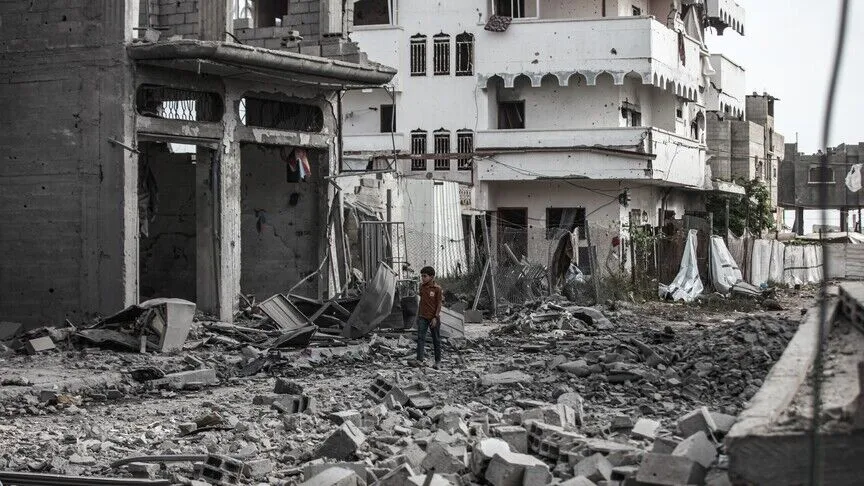
    Friedmann said the images seen by millions worldwide are “a devastated Gaza Strip, dead and wounded children, and people wandering among the rubble, living in tents under the scorching sun or heavy rain.”

    “There are those in Israel who believe all this serves Israel’s interests and has strengthened its deterrence,” he wrote. “But that is only a partial truth. The limited deterrence achieved must be weighed against the price reflected in the transformation of global consciousness, including shifts in the Arab world, most of which are contrary to Israel’s interests.”

    He said that in the immediate aftermath of the Oct. 7, 2023 events, global public opinion largely turned against the Palestinian group Hamas.

    “But as the war continued and time passed, the destruction in Gaza pushed discussion of Hamas’ attack aside, and people around the world, including our friends and allies, increasingly turned against Israel,” he added.

    Criticism of violence in occupied West Bank

    Friedmann argued that the shift in global opinion had led to what he described as a decline in Israel’s international standing and growing public support for the Palestinian position.

    He also warned about what he called “Jewish terrorism” in the occupied West Bank and criticized what he described as unequal treatment of Jewish and Arab attackers, alongside statements from government ministers and coalition lawmakers.

    “All this rhetoric constitutes an attack on Israel’s security, undermines its standing, strengthens its enemies and increases the risk of sanctions against it,” he wrote.

    Claims of US influence over Israeli decision-making

    Turning to relations with Washington, Friedmann said Netanyahu’s political weakness had allowed Trump to guide both him and Israel through “an unprecedented journey of humiliation.”

    He recalled that in September 2025, Israel carried out “a failed attempt” to assassinate senior Hamas officials who had traveled to Qatar for negotiations on a US-backed ceasefire and prisoner exchange proposal for Gaza.

    According to Friedmann, Trump subsequently “demanded that Netanyahu apologize to the Qatari leader and pledge that Israel would not carry out attacks on Qatari territory.”

    He said Netanyahu’s apology was delivered in a phone call from the White House and later reported globally.

    Iran framework agreement and regional constraints

    Friedmann also criticized a US framework agreement with Iran, saying it imposed limits on Israel’s actions, “or more precisely, its inaction,” against Hezbollah while disregarding Israel’s position.

    He argued that Trump was eager to end the conflict and reopen the Strait of Hormuz to restore global energy flows. “To achieve that, he was prepared to pay not only with American dollars, but also with Israel’s interests,” he wrote.

    “In this way, we became a tradable commodity in an international struggle over which we have no influence.” He added: “Since World War II, there has not been such an attempt to trade Jews and make deals at their expense.”

    Netanyahu accused of prioritizing political survival

    Despite his criticism, Friedmann said, “We owe Trump a great deal,” while also accusing Netanyahu of prioritizing personal political survival over state interests.

    He argued that Netanyahu had prolonged the war in Gaza, allowing him to remain in office despite what Friedmann described as a major political failure.

    Friedmann said there was an “advantage” to Trump influencing Israeli policy under current circumstances, adding: “We owe him for stopping the endless war in Gaza and bringing the hostages back.”

    “There are also doubts about the logic of conducting the war in Lebanon. Perhaps it is better that he stops us there as well.”

    Israel at crossroads between competing political visions

    However, he warned that external influence over Israeli decision-making came at a heavy cost. “The price is the loss of the independence for which generations of young Israelis sacrificed their lives,” he said.

    Friedmann concluded that Israel stood at a crossroads between competing political visions, contrasting Netanyahu’s coalition with that of former Prime Minister Yitzhak Rabin.

    “This is not merely a question of image, but above all a question of essence: what kind of state do we want to be, and why was it established?”

    Netanyahu’s governing coalition includes National Security Minister Itamar Ben-Gvir and Finance Minister Bezalel Smotrich, both of whom have advocated stricter security measures in the occupied West Bank and expanded settlement construction.

    Both ministers have also called for greater Israeli control over the occupied West Bank, while Smotrich has repeatedly called for reoccupying the Gaza Strip and rebuilding settlements there. Anadolu

    Continue reading
    Protecting The Wheat Harvest From Israeli Settlers

    SINJIL, OCCUPIED WEST BANK – In the eastern plain of Sinjil, north Ramallah in the occupied West Bank, dozens of Palestinians are working quickly among the yellow wheat stalks, harvesting their crop this year.

    This year’s harvest season is anything but ordinary; it’s a race against time, as farmers fear Israeli settlers will seize their crops by burning or destroying them. This comes amidst a surge in settler attacks on Palestinian farmers and their land.

    Residents say they were forced to harvest their wheat and transport it quickly from the fields to the town after repeated attacks by settlers who attempted to burn the crops

    and prevent landowners from accessing their land.

    The town of Sinjil and its surrounding lands are subjected to frequent attacks by settlers seeking to seize as much land as possible. According to the Sinjil Municipality data, the town has lost approximately 8,000 dunams (a dunam is equal to 1,000 square meters) of its 16,000 dunams.

    The town is surrounded by settlement outposts and a barbed wire wall that isolates it from its surroundings. All but one of its entrances are closed, allowing residents to move freely.

    Our presence protects our land

    Ayed Ghafri, an activist against settlement expansion, said that farmers are working under exceptional circumstances in the eastern plain of Sinjil, a vital area upon which residents depend for cultivating wheat and seasonal crops.

    Ghafri told Anadolu Agency: “We are here today in the eastern plain of Sinjil, a vital and strategic area for farmers. We rely on this land for cultivating wheat and seasonal crops.”

    He added: “But Palestinian farmers are constantly under threat. Some crops have been vandalized and destroyed, and there have been attempts to burn the wheat more than once.”

    He continued: “Recently, farmers tried to work their land, but settlers attacked them and prevented them from doing so.”

    He added: “Therefore, we are here today to support the farmers and save the wheat crop, because we believe that leaving it in the ground means it will be subjected to further attacks and the destruction of a large portion of it.”

    “Being on the land is the only way to preserve it, and that’s why we are committed to maintaining a continuous presence to affirm its Palestinian identity and protect it,” Ghafri emphasized.

    Farmers: “Resilience at an Extra Cost”


    Farmers in the area cultivate hundreds of dunams of wheat, but this year’s harvest is taking place amidst growing fears of settler attacks.

    Farmer Ashraf Alwan said that about 300 dunams are planted with wheat in the area.

    He added: “We came last week to harvest the wheat, but settlers, under the protection of the occupation forces, attacked us and forced us to leave. If it weren’t for the support of the townspeople, we wouldn’t have been able to complete the work.”

    He continued: “Today we returned to finish the harvest, but we had to completely change our methods. Under normal circumstances, we would have gathered and threshed the wheat in the field.”

    He further explained: “But now we are forced to bring tractors and trucks to transport it to the town center for fear that the settlers will burn or steal it.”

    Alwan pointed out that these measures have significantly increased costs for farmers, adding: “The harvest barely covers a small portion of the costs of plowing, planting, harvesting, and threshing, but we are here because it’s no longer a matter of profit and loss, but rather a matter of resilience and holding onto our land.”

    He emphasized that “the farmers will not abandon their land despite the attacks, and they will continue to work it and remain on it.”

    Farmer Mustafa Shabaneh said that he came with a number of residents to move the wheat from the fields for fear it would be stolen or burned.

    He added: “I own seven dunams planted with wheat, and the settlers have tried to burn the crop more than once. On one occasion, they set fire to the area, but the young men of the town intervened and managed to drive them away.”

    He continued: “We kept watch over the area, fearing the settlers would reach the crop, but they returned at night with a bulldozer and cleared a path to the farmland. Therefore, we decided to move the wheat from here as quickly as possible to prevent it from being stolen or destroyed.”

    In a neighboring field, farmer Ali Bashir anxiously oversaw the harvest.

    “Farmers can no longer work normally in this area,” he said. “Even shepherds are afraid to reach their grazing lands because of settler attacks.”

    “If settlers come, they might attack you, steal your sheep, or prevent you from accessing your land. People here fear for their crops because there are precedents of crops being burned and farmers being targeted.”

    Bashir continued: “We’re supposed to thresh the wheat here in the field, but we transport it hastily because of the fear. This process costs us extra for transportation, harvesting, and threshing, but we have to do it to preserve the harvest.”

    He concluded: “What’s happening isn’t just targeting the wheat crop; it’s an attempt to force Palestinians to leave their land so it can be seized. That’s why farmers are clinging to their land and working it despite all the difficulties.”

    Accusations of “Ethnic Cleansing”

    On June 10, Amnesty International accused Israel of leading and sponsoring a campaign of ethnic cleansing against Palestinians in the West Bank, asserting that arming thousands of settlers has contributed to the escalation of these attacks.

    The organization stated that “the Israeli government is implementing the religious-nationalist agenda of the settlement movement and has accelerated the pace of settlement expansion and land confiscation.”

    Israel has increased its financial and logistical support for the settlements and supplied the settlers with weapons.

    Scattered areas of the West Bank have witnessed a marked escalation in settler attacks, coinciding with the ongoing Israeli military operations that began on October 7, 2023.

    Since that date, the Israeli escalation in the West Bank, including East Jerusalem, has resulted in the deaths of more than 1,170 Palestinians and injuries to approximately 12,666 others, in addition to the arrest of around 23,000 people and the displacement of approximately 33,000.

    This article was written in Arabic by Qais and Darwesh Omar for Anadolu

    Continue reading

    You Missed

    ESCWA: The War on Lebanon Displaces 140,000 Old People

    ESCWA: The War on Lebanon Displaces 140,000 Old People

    War Places Israeli Society in a Psychological Crisis – Haaretz

    War Places Israeli Society in a Psychological Crisis – Haaretz

    Despite The ‘PR’ Spin Israel Still Wants to Force Palestinians to Leave

    Quranic Centers Serve as Protection

    Quranic Centers Serve as Protection

    Gaza’s Dead Wait For Burial

    Gaza’s Dead Wait For Burial

    The Lebanese-Israeli Accord is War on The Resistance

    The Lebanese-Israeli Accord is War on The Resistance