Will Netanyahu Get to Address Congress?

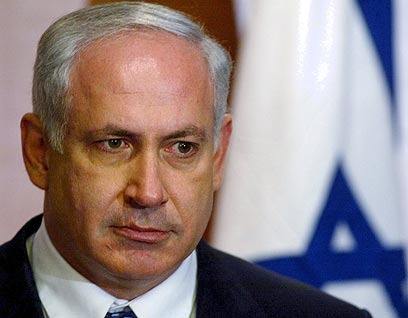
Israeli Prime Minister Benjamin Netanyahu is considering avoiding a stopover in Europe on his way to the US over fears that the International Criminal Court (ICC) is readying to issue an arrest warrant against him over the Israeli army’s crimes in Gaza according to Anadolu.

Netanyahu is to travel to the US and deliver a speech before the US Congress on July 24. He is also expected to possibly meet US President Joe Biden.

But there is much speculation about his coming trip with many on the social media woundering how he will get to Washington amidst the logistics involved in flying non-stop.

On 20 May, ICC Prosecutor Karim Khan requested arrest warrants for Netanyahu and Defense Minister Yoav Gallant for war crimes and crimes against humanity in the Gaza Strip. Khan also requested warrants for three of the Hamas group’s top leaders including its chief Ismail Haniyeh.

Everyone is waiting for the arrest warrants to become effective and many think they could be any time soon.

Israeli KAN public broadcaster said Netanyahu’s office reviewed the matter of stopping in Europe on his way to Washington as his plane is unable to make a transatlantic flight while carrying a full load of passengers.

His office reviewed the option of a stopover in the Czech Republic or Hungary; these two countries are seen as Israeli friends and called ICC arrest requests “unacceptable.”

KAN, however, noted Netanyahu in the end decided to go for a direct flight to Washington with a limited number of passengers on board.

While the US is not an ICC member, receiving Netanyahu despite an international arrest warrant could expose it to much criticism.

Israel also is not an ICC member, whereas Palestine was accepted as an affiliate in 2015.

Set up in 2002, the ICC is an independent international body not affiliated with the UN or any other international organization, and its decisions are binding.

Israel, flouting a UN Security Council resolution demanding an immediate cease-fire, has faced international condemnation amid its continued brutal offensive on Gaza since an Oct. 7, 2023 attack by Hamas.

Nearly 38,200 Palestinians have since been killed, mostly women and children, and over 87,900 others injured, according to local health authorities the Turkish News agency reported.

Nine months into the Israeli war, vast tracts of Gaza lie in ruins amid a crippling blockade of food, clean water and medicine.

Israel stands accused of genocide at the ICC, whose latest ruling ordered it to immediately halt its military operation in the southern city of Rafah, where over a million Palestinians had sought refuge from the war before it was invaded on May 6 according to the Turkish news agency.

CrossFireArabia

CrossFireArabia

Dr. Marwan Asmar holds a PhD from Leeds University and is a freelance writer specializing on the Middle East. He has worked as a journalist since the early 1990s in Jordan and the Gulf countries, and been widely published, including at Albawaba, Gulf News, Al Ghad, World Press Review and others.

Related Posts

Trump’s Advisor: Warns White House Against Escalation

Trump adviser David Sacks warns that continued escalation with Iran could destabilize the region and strain Israel’s defenses.

Key Takeaways

  • David Sacks urged Washington to “declare victory and get out” of the war with Iran before escalation spirals further.
  • He warned Iran could target Gulf oil infrastructure and desalination plants, threatening water supplies for millions.
  • His remarks come amid growing divisions within the Trump administration over whether to escalate the conflict or seek an exit.

A Rare Warning

A senior adviser to Donald Trump has warned that Washington may already be approaching the limits of what it can safely achieve in its escalating war with Iran.

Speaking on the All-In Podcast, White House AI and cryptocurrency adviser David Sacks urged the United States to step back from the conflict before it spirals further across the Middle East.

“This is a good time to declare victory and get out,” Sacks said, arguing that Washington should seek a negotiated off-ramp rather than push toward deeper escalation.

“I agree that we should try to find the off-ramp,” he added.

His remarks are notable because they challenge the dominant narrative coming from the White House and many Republican figures who continue to frame the war as a decisive strategic success.

Instead, Sacks sounded a far more cautious note, suggesting that the longer the war continues, the more unpredictable its consequences may become.

‘Catastrophic’ Consequences

Sacks warned that Iran retains the capacity to retaliate in ways that could destabilize the entire region.

One of the scenarios he outlined involved strikes on Gulf oil infrastructure and desalination plants that supply drinking water across the Arabian Peninsula.

“I think it’s something like 100 million people on the Arabian Peninsula that get their water from desal,” Sacks said.

Damage to those facilities could have immediate humanitarian consequences across several Gulf states that depend heavily on desalinated water.

Sacks described such a scenario as “truly catastrophic.”

His comments reflect growing concern that Iran may respond asymmetrically, targeting infrastructure and economic systems rather than focusing solely on military confrontation.

Israel’s Position Under Strain

Sacks also warned that the war could create serious pressure on Israel if it continues to escalate.

During the podcast discussion, he noted that prolonged regional confrontation could test Israel’s air defense systems and expose the country to sustained missile pressure.

In the same conversation, Sacks described Iran as holding what he called a “dead man’s switch over the economic fate of the Gulf States.”

The phrase referred to Iran’s ability to disrupt key economic and energy infrastructure throughout the region if the war intensifies.

Reshaping the Region

The remarks came shortly before the United States launched a major bombing raid on Iran’s Kharg Island, a strategic terminal through which the vast majority of Iranian oil exports pass.

The strike highlighted how deeply the war has already penetrated the economic and strategic infrastructure of the region.

Energy markets have reacted nervously to the widening conflict, while Gulf states remain exposed to the risk of retaliatory strikes on oil facilities and shipping routes.

Meanwhile, Iran and allied groups have continued missile and drone attacks against Israel and other targets across the region, expanding the battlefield beyond the initial US-Israeli strikes.

The result is a conflict that now spans multiple fronts across West Asia.

Growing Debate

Sacks’ remarks highlight a widening divide within Washington over how far the United States should go in its confrontation with Iran.

Publicly, the Trump administration has continued to project confidence that the military campaign is weakening Tehran and reshaping the regional balance of power.

But behind that messaging, officials and political allies appear increasingly split over what the next step should be.

Some figures within the administration and the broader Republican Party are pushing for deeper escalation. Defense Secretary Pete Hegseth has repeatedly framed the strikes as part of a broader effort to weaken Iran’s regional influence and restore deterrence.

Trump himself has combined victory rhetoric with threats of further escalation. After announcing the bombing raid on Iran’s Kharg Island, he claimed US forces had “obliterated” key military targets while warning that Iranian oil infrastructure could also be struck if Tehran moves to disrupt shipping through the Strait of Hormuz.

At the same time, a smaller but increasingly visible group within Trump’s orbit appears wary of a prolonged war.

Those voices argue that continued escalation could draw the United States into a wider regional conflict involving Iran’s network of allied forces across Lebanon, Iraq, Yemen, and elsewhere.

Sacks’ call to “declare victory and get out” reflects that concern.

Rather than advocating additional military pressure, he suggested Washington should use the current moment to claim success and pursue a negotiated exit before the conflict expands further.

The contrast between those positions — escalation versus exit — is becoming one of the central political questions shaping Washington’s response to the war. – The Palestine Chronicle

Continue reading
How Will Trump Get Out of This War?

By Ismail Al Sharif

“We are in an advanced position, and we will decide when the war will end,” said Kazem Gharibabadi, Iranian Deputy Foreign Minister.

President Donald Trump, in coordination with the Zionist entity, is igniting a regional war with Iran which is an unprecedented event in the region. Analysis of the true motives behind this fateful decision vary. One school of thought believes the strategic objective lies in controlling Iranian oil wealth and containing growing Chinese influence. Another links this to the Epstein affair, based on claims of Zionist pressure threatening to expose him to sensitive information.

A third school believes that Trump is tied to political commitments made to Miriam Adelson, who generously funded his election campaign. Some go even further, alleging that Trump, known for his transactional negotiating style, received substantial financial compensation for engaging in this war. In a related context however, recent reports indicate that Trump himself has blamed his son-in-law, Jared Kushner, and several close advisors for instigating this latest military adventure.

Whatever the true motives behind igniting this war, one path seems almost certain to end it: Trump will hold a press conference declaring a unilateral and absolute victory. The precise timing of this declaration remains uncertain.

But the decision to cease hostilities does not rest with Trump alone; it is contingent upon the agreement of two other key parties: Tehran and Israel.

Israel shows no desire to end this war, as it is the primary beneficiary of its continuation. It systematically seeks to dismantle the structure of the Islamic Republic and sees no harm in the regime’s collapse leading to widespread chaos engulfing Iran and the entire region.

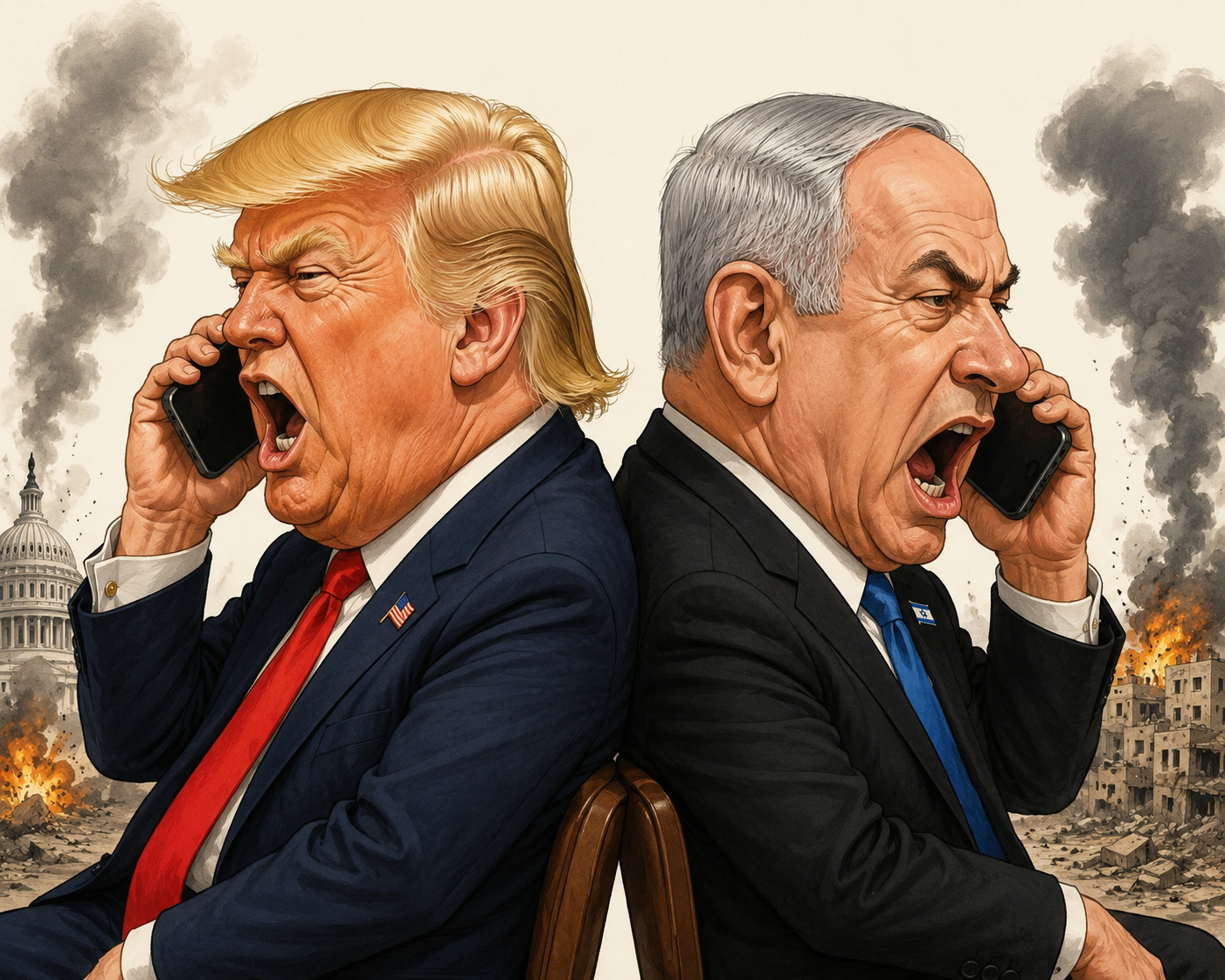
If Trump fails to restrain Netanyahu, the latter will not hesitate to continue his military operations even after any official American declaration of a ceasefire. This may explain why Trump declared that any settlement to end the conflict would only be possible with Netanyahu’s consent and explicit blessing.

However, the Zionist entity might feign acceptance of a ceasefire while its Mossad intelligence apparatus works behind the scenes to fuel separatist and rebellious sentiments among ethnic minorities within Iran, such as the Kurds and Balouchis, potentially threatening the cohesion of the Iranian state from within. In response, Tehran would have no choice but to continue targeting the entity, which would then retaliate swiftly, potentially drawing Trump back into a cycle of military confrontation.

Adding to Trump’s predicament is the possibility that he might ultimately declare a ceasefire unilaterally, without any fundamental change to the structure of the Iranian regime, and without extracting any genuine concessions from Tehran regarding halting uranium enrichment, dismantling its missile program, or severing its ties with regional allies—the very pretexts used to launch the war.

Even more dangerous is the fact that the Islamic Republic’s resilience and its emergence from this crisis with its system intact will make it a unique and exceptional model: The first country to challenge American hegemony and emerge unscathed. This could encourage other countries suffering under the weight of Trump’s policies or ambitions—such as Venezuela and Greenland—to adopt resistance as a path, even if they lack Iran’s military capabilities.

It seems to me that President Trump may be following in the footsteps of his predecessor, George W. Bush, when he famously declared victory in 2003 from the deck of the aircraft carrier USS Abraham Lincoln, which was then—as it is today—at the eye of the American military storm. It is worth recalling here that Bush’s speech was a highly symbolic and premature declaration, one that was quickly contradicted by events, as the war on Iraqi soil continued for nearly a decade afterward.

The war has exhausted Iran and burdened it with immense hardships, making it seriously seek a cessation of hostilities. However, it simultaneously finds itself in direct confrontation with American will. Iranian officials have made it clear that any agreement to a ceasefire and the resumption of negotiations is contingent upon receiving firm guarantees from Washington and Tel Aviv that the aggression will not be repeated. Should Tehran manage to withstand and overcome this phase, it is likely to add to its list of demands one of which is the lifting of some of the sanctions imposed upon it.

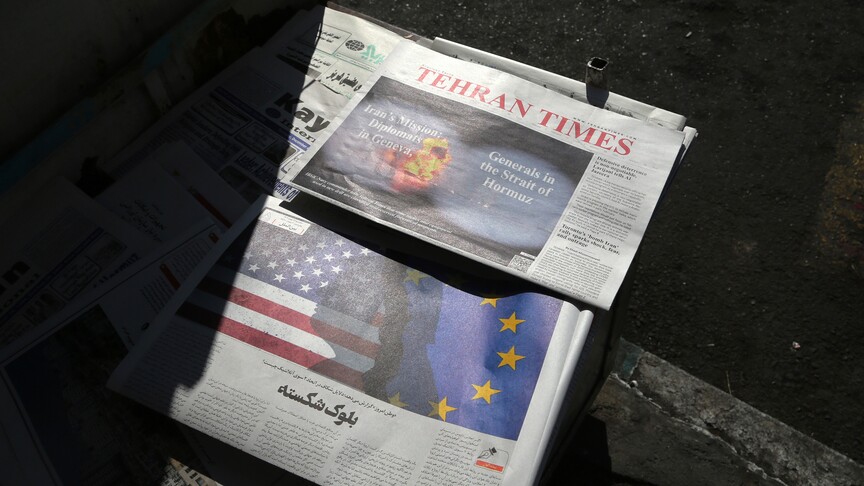
Therefore, it appears that the Iranian strategy is essentially based on a policy of systematic attrition; simultaneously exhausting the United States and Israel by driving oil prices to high levels and closing the Strait of Hormuz, the world’s vital energy artery. This would impose heavy economic burdens that might ultimately compel Washington to reconsider its calculations and agree to a ceasefire.

In short, Trump will not be in a position to deliver a victory speech in the next week or two, and any such declaration without genuine cooperation from Israel and Iran will amount to nothing more than empty rhetoric devoid of any real substance on the ground. There is no doubt that President Trump has put himself, his country, and the entire region in a very complex strategic predicament, from which the way out may not be as easy as those who made the decision to go to war imagine.

This analysis was originally written in Arabic and reprinted in crossfirearabia.com

Continue reading

You Missed

Al Bahri: The Man Who Set Palestinian Theater

Al Bahri: The Man Who Set Palestinian Theater

Trump’s Advisor: Warns White House Against Escalation

Trump’s Advisor: Warns White House Against Escalation

Iranian Missile Debris Falls Near Tel Aviv

Iranian Missile Debris Falls Near Tel Aviv

How Will Trump Get Out of This War?

How Will Trump Get Out of This War?

Sirens Blast Six Times in Israel in One Day

Sirens Blast Six Times in Israel in One Day

Iran’s Air Defences Destroy 110 Drones

Iran’s Air Defences Destroy 110 Drones