Duwairi: Israel Moves Back to Stage 1 of Gaza War

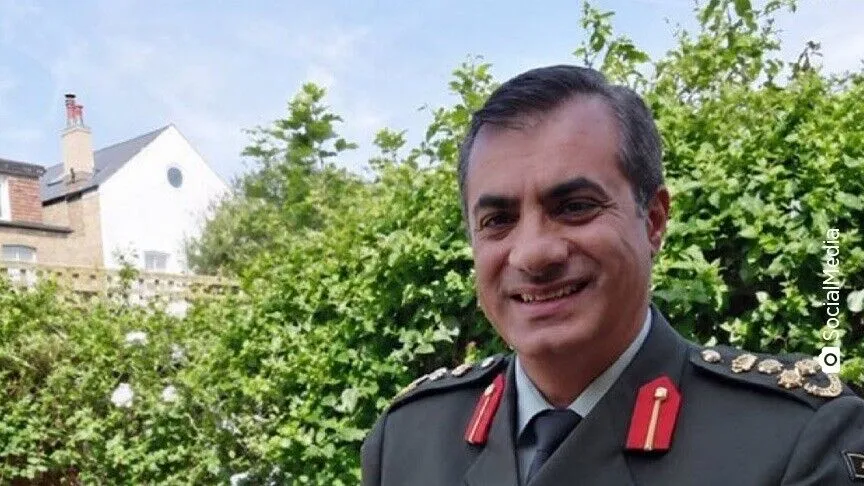
Military expert Major-General Fayez Al-Duwairi said that developments in Gaza are returning to the first stage of the war. He confirmed what is happening on the ground in terms of targeting hospitals and safe areas points to the fact.

Back to Stage I

He said phase “C” of the Israeli military operations in the Gaza Strip has ended and the return to the first stage is now taking place. He highlighted the occupation army has deployed four divisions including 16 brigades in Gaza.

In the first battle of Khan Yunis in the south, Al-Duwairi added, the 98th Division, 99th Division, 162nd Division, and 252nd Division were deployed there. Now, he added, the occupation has deployed the Sinai Division to the new axis in the south of Deir al-Balah in central Gaza.

Israeli Airstrikes Schools, Hospitals

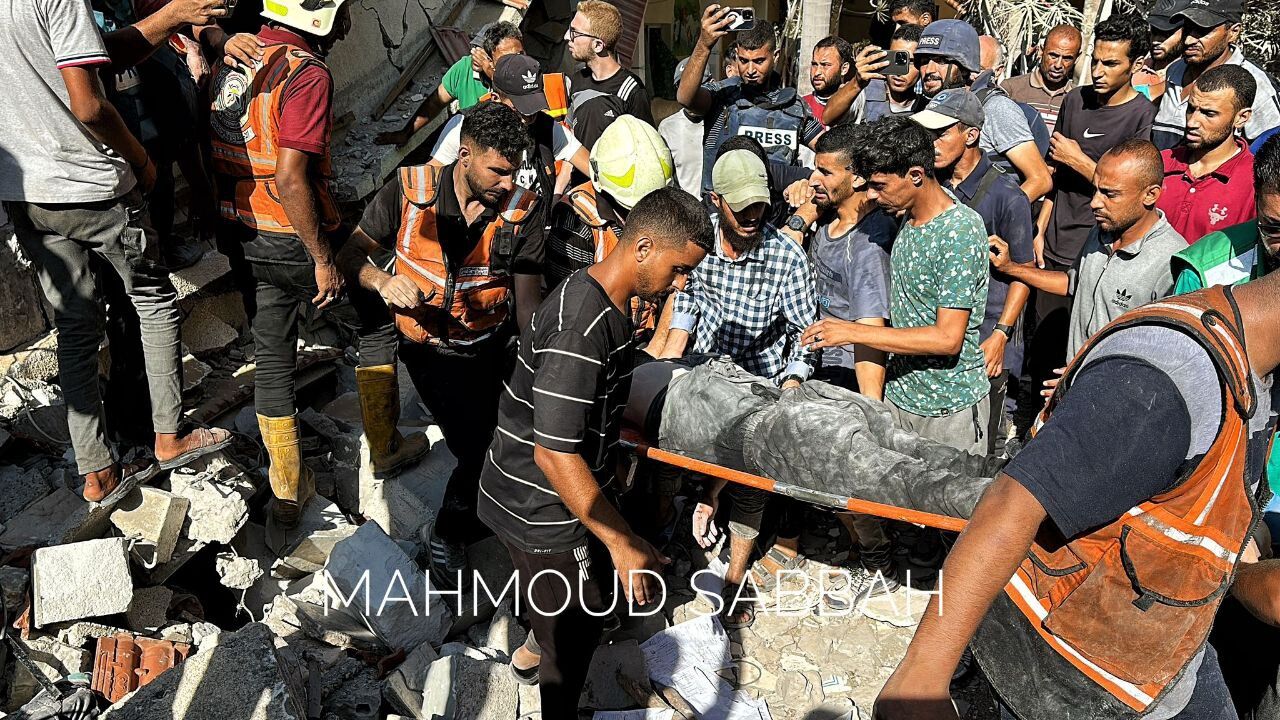
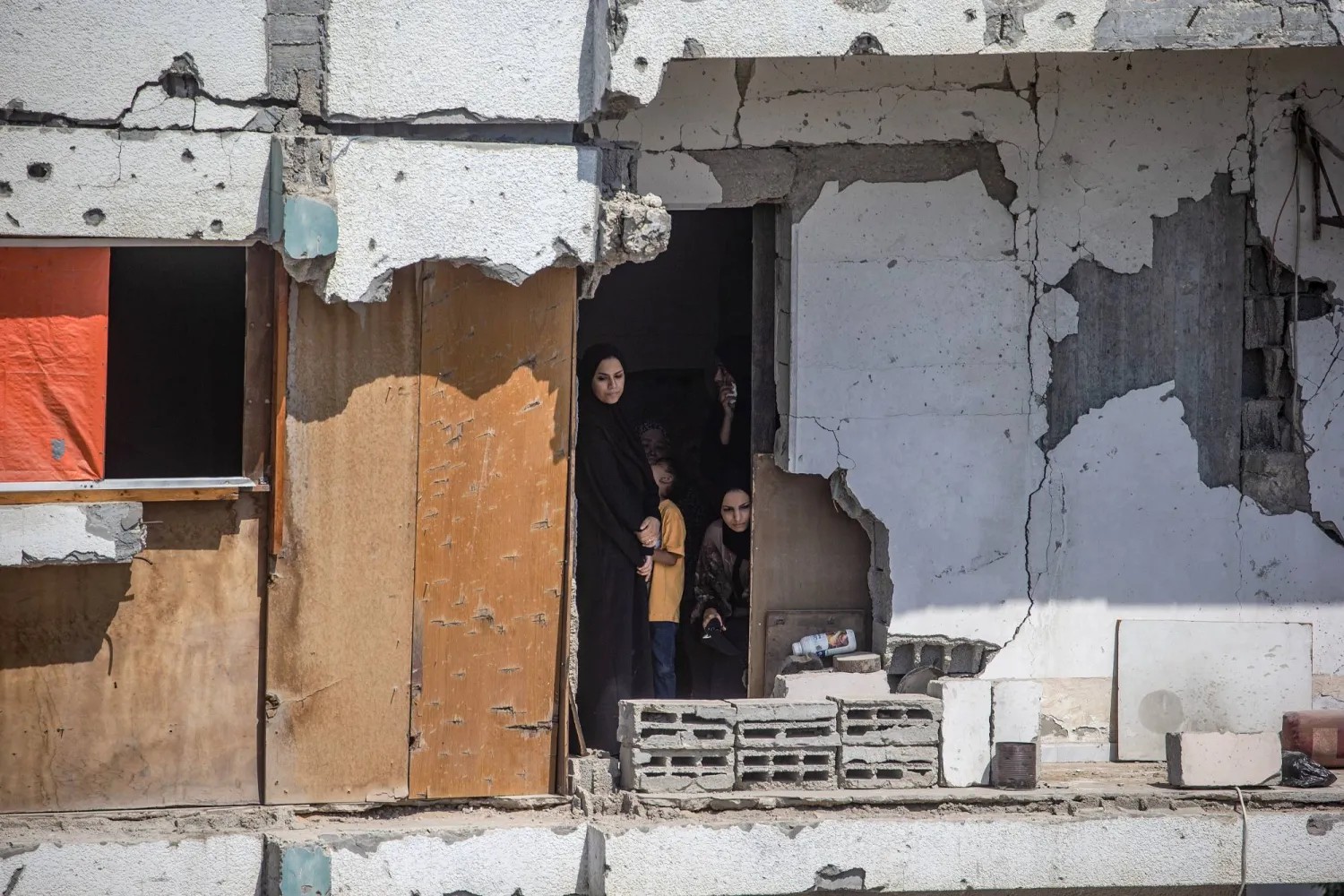
He pointed out that the current Israeli airstrikes are focusing on hospitals, UNRWA centers, and safe areas, in addition to pressuring displace residents, especially in the eastern Khan Yunis area to move to Mawasi area.

Israel claims moving to the third phase of its war in Gaza requires keeping its forces only in the Netzarim axes – which separates the north of the Gaza Strip from its center and south – and the Philadelphi axes on the border with Egypt, and the buffer zone along the border with the Strip, and this phase is a form of rapid and focused operations in specific areas.

The strategic expert noted returning to the first phase of the war reflects the political and military thinking  in Israel, as the first continues to talk about dismantling and eliminating the Hamas, and freeing the Israeli detainees in Gaza, while the second also talks about the need to keep up the military pressure on the Palestinian resistance.

He referred to Israel Chief of Staff Herzi Halevi as  saying he is in favor of military pressure to force Hamas to make concessions leading to an agreement in accordance with Israeli requirements and not according to what is happening on the ground in Gaza.

Rome Initiative

The Israelis are seeking to pressure Hamas to accept the new Rome Initiative, which Al-Duwairi said may nclude many additions, the most important of which is keeping the Netzarim and Philadelphi axes and controlling the return of displaced Gazans to the northern regions.

Rome, is hosting a four-way meeting to discuss the latest Israeli proposal regarding a possible agreement that includes a ceasefire in Gaza and a prisoner exchange between Israel and the Palestinian resistance.

However, Al-Duwairi  explained – in his military analysis on Al-Jazeera – the Palestinian resistance, although weakened by the ongoing Israeli aggression on the Strip, has the flexibility to rebuild its human and material strength.

In contrast, the occupation army has not been able to recover from the state of exhaustion it is suffering from. Al-Duwairi pointed out this army numbers 635,000 soldiers, 40% of which is in the Gaza Strip, 30% in the West Bank, and about 30 to 35% on the northern front and 10% a strategic reserve as printed in the Jo24.net website.

Continue reading
Expert: Israel Hike Attacks For Rome Talks But Won’t Succeed

CROSSFIREARABIA – Military and strategic expert Nidal Abu Zeid said that the Israeli occupation army is trying to put military pressure on the resistance to force it to make concessions and accept a prisoner exchange deal, according to Jo24 website.

He added that the increase in the intensity of military operations in all combat axes, including air sorties, indicate that the Israelis want to put pressure on the resistance before sending their negotiating team to Rome to complete their previous rounds and which are expected to have stronger chance of success this time.

Abu Zeid added the Palestinian resistance factions are aware of the occupation’s motives and plans and are moving in field areas and tactics to increase the level of the occupation’s losses, which reached 13 injured soldiers in the past 24 hours.

He pointed out the resistance is showing that it is still capable of setting up ambushes as happened in the Bina camp and in Shaboura whilst launching rocket barrages outside the Gaza periphery into Israeli settlements.

What is also striking also Abu Zaid pointed out is the targeting of an aircraft with a SAM/7 missile, in addition to the remarkable success on the media level exposing the occupation’s narrative and misleading and untruthful broadcasts.

The military expert pointed out that there lies deep differences between the Israeli political and military, and contradiction, disagreement and the exchange of accusations between them and which has clearly emerged recently.

Abu Zeid confirmed that the politicians on top of which is Benjamin Netanyahu who seek to continue the military onslaught on Gaza until its declared goals are achieved, while the military are asking for battles to be ended through diplomatic means.

Abu Zeid revealed of indications that the current Israeli government will seek to dismiss Defense Minister Yoav Galant and replace him with Gideon Sa’ar in the Knesset recess that will begin, Sunday. And this appears to be a preemptive step to confront Ministers Itamar Ben Gvir and Bezalel Smotrich after accepting the negotiations.

Continue reading
Duwairi: ‘High Levels of Combat Efficiency’  

The Qassam Brigades, the military wing of the Islamic Resistance Movement (Hamas), is offering an unusual performance, military and strategic expert Major-General Fayez Al-Duwairi,  told Al Sawsana website in a recent interview.

He pointed out the recent Shaboura ambush in Rafah, which appeared in a recent video clip, was carried out using a fake tunnel after luring Israeli occupation soldiers into it.

Perfect ambushes

The Qassam Brigades showed scenes preparing and executing two ambushes against Israeli soldiers inside the Yebna and Shaboura camps in Rafah, titled “Death Ambushes Part Two”.

The scenes included luring and monitoring the  soldiers: The first ambush took place in a house inside the Yebna camp, and the second in the mouth of tunnel in the Shaboura camp.

Qassam Tunnels: Types and Strategies

Al-Duwairi explained the first ambush was prepared in advance in a house entered by a number of soldiers, while the second ambush was a fake tunnel under the house, not connected to the main tunnel network.

He pointed out most of the tunnels used in operations are not part of the main network, but created specifically for individual military operations.

Advanced Combat Techniques

Al-Duwairi pointed out the video shows the first force entering the tightly booby-trapped building, with Al-Qassam controlling the explosion from a safe place, which indicates the high efficiency in planning and execution.

He also pointed out the use of barrel fillings in the second operation, which relies on old mines stored underground, reflecting the resistance’s experience in effectively utilizing available resources.

Importance of Battles in Built-Up Areas

The major-general stressed the importance of battles in built-up areas as part of asymmetric wars, where resistance forces rely on accurate knowledge of the location and effective armament to confront the occupation forces with smaller numbers but with greater efficiency.

Appreciation…

Al-Duwairi praised the management of the battles by the Palestinian resistance, describing them as advanced and should be taught in international military colleges. He stressed the resistance on the ground adopt an unconventional approach and is interested in raising the morale of its fighters.

Military pressure and field developments

Al-Duwairi pointed out that the simultaneous battles in the north and south is in line with what Israeli Chief of Staff Herzi Halevi said about the military aiming to force Hamas to make concessions, especially with regard to the release of prisoners. He pointed out that the occupation army found the bodies of five prisoners, including four soldiers, in one of the tunnels.

Future battles

The fierce battles in Tal al-Hawa and Rafah reveal a high level of combat efficiency among the resistance factions. He expects the continuation of this field rhythm will lead to tangible results within a short period, which may force the occupation army to withdraw again from these areas.

Continue reading
Military Analysis – Long Gaza Battles Spread into West Bank

Military expert Major-General Fayez Al-Duwairi said the military operations in Rafah, south of the Gaza Strip, are still in the first phase of the war. He noted also the West Bank now also needs a ‘joint operations room’ for the resistance according to Jo24.net.

Al-Duwairi confirmed – in a military analysis on Al-Jazeera – the videos shown by the resistance from Rafah reflect the ferocity of the confrontations. They confirm that all of of the Palestinian factions are quickly adapting to the reality on the ground.

He said this adaptation is reflected in the nature of the military operations, using  “economy of force and effort” because the time span of the battles are unknown.

But Al-Duwairi added the greatest possible losses inflicted are the ranks of the Israeli occupation soldiers.

The Major-General stressed the militarily, the field performance “confirm the resistance is still active while the occupation army continues to commit crimes against civilians.”

Regarding the current displacement in Khan Yunis, Al-Duwairi said that the Israel occupation army attached its 7th Armored Brigade to the 98th Division operating in the city, pointing out what is happening in the city is not a limited operation.

Commenting on the ambush carried out by the Palestinian resistance in the village of Al-Matula near Jenin in the West Bank, he said the operation “was a complex one, reflecting an accurate reading of what the occupation will do.”

He stressed these specific operations require the setting up of a joint operations room to develop plans centrally and implement them in a proper manner, taking into account they are incremental but under control, consistent with the possibility of a prolonged confrontation.

Continue reading
Senseless Massacre in Al Mawasi – UN Reports

The UN health agency and partners are helping treat many of those injured during Saturday’s deadly airstrikes by Israeli forces on Gaza’s Al Mawasi area which have reportedly left at least 90 dead and around 300 injured, according to figures from the war-torn enclave’s health ministry.

The UN Secretary-General António Guterres said via his Spokesperson late on Saturday that he was “shocked and saddened by the loss of lives”.

Israeli officials said the attack had been a “precision” strike targeting top Hamas military commander Mohammed Deif and his deputy Rafa Salama.

The strike took place close to the city of Khan Younis in an area reportedly designated by the Israeli military as a safe zone for civilians.

‘Nowhere is safe in Gaza’

UN Spokesperson Stéphane Dujarric said that reports indicated the attack had taken place in a densely populated area “designated as a humanitarian zone sheltering displaced people.”

This underscores that nowhere is safe in Gaza”, he stressed. “The Secretary-General condemns the killing of civilians, including women and children.”

The Secretary-General underlined once again that there must be an immediate humanitarian ceasefire, with all hostages released “immediately and unconditionally.”

In a post on X, the head of the World Health Organization (WHO) Tedros Adhanom Ghebreyesus said that 134 “severely injured people” had been admitted to the nearby Nasser Medical Complex “which is extremely overwhelmed by the influx”.

Multiple hospitals treating the injured

WHO staffers are at the hospital along with two emergency medical teams helping to treat the injured, he continued.

“We have dispatched 50 foldable beds and 50 stretchers to increase the hospital’s capacity while our prepositioned medicines and trauma supplies are being used to save lives.”

Some of the injured have also been taken to a field hospital run by the International Medical Corps in Deir Al Balah where WHO supplies have been provided to meet the urgent needs of around 120 others. Other NGO field hospitals have also received patients in need of urgent treatment, he said.

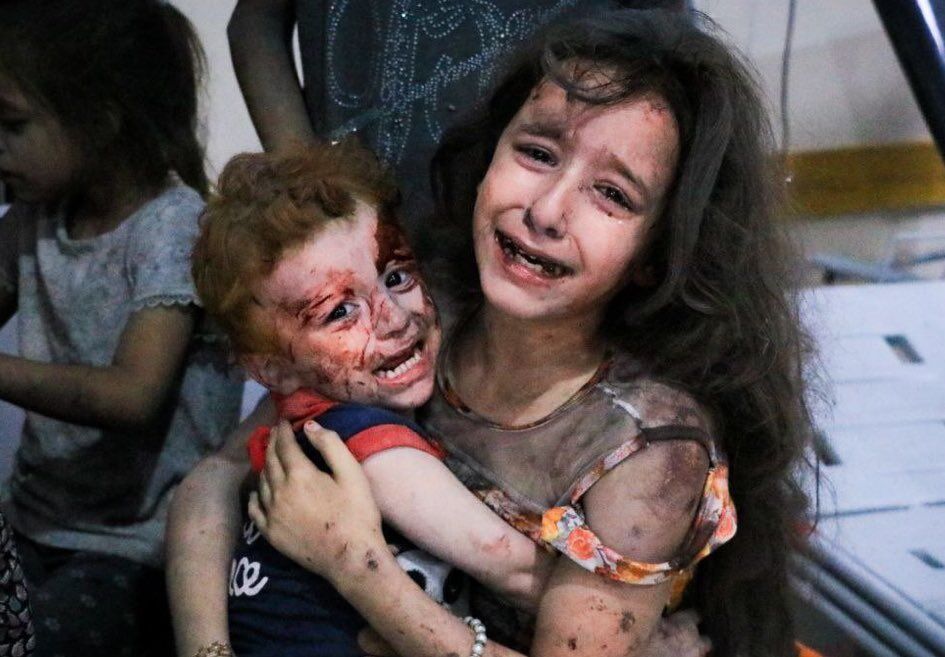
Senior Communications Officer for the UN refugee agency for Palestine refugees (UNRWA) Louise Wateridge, tweeted harrowing video from Al Nasser hospital on Saturday afternoon local time where workers were “mopping up pools of blood with water alone.”

She described children lying on blood stained matresses “traumatised from losing siblings. Some had lost limbs. Many had life changing injuries.”

‘Senseless massacre’

The independent UN expert who monitors human rights in the Occupied Palestinian Territories Francesca Albanese, said in a post on X that she was “horrified” at the deaths and injuries sustained during the strikes on what an Israeli military official said was an operational Hamas compound, in an “open area”.

Hamas said it was “false” that Israel had targeted it’s two top military commanders.

Of the Israeli attack which she said was “yet another senseless massacre” of civilians, Special Rapporteur Albanese tweeted “The justification is always the same: ‘targeting Palestinian militants’.”

Officials from Gaza’s civil defence authority also reported that at least 20 Palestinians were killed in an Israeli attack on a prayer centre inside the Shati camp for the displaced, to the west of Gaza City on Saturday.

UN News

Continue reading