Haniyeh’s Murder Will Not Flake The Resistance

The assassination of the Hamas political bureau Ismail Haniyeh, Wednesday, in Tehran shows there was a clear security breach, and Israel was looking for an opportunity to carry out the assassination and found it in the Iranian capital, said military and strategic expert Nidal Abu Zeid.

Although he didn’t elaborate on the security breach, he said the assassination will not have an impact on the war in Gaza, saying the Palestinian resistance will not be shaken by the martyrdom of one of its leaders, Abu Zaid told Jo24.

Hamas is an ideology that will continue and grow among the Palestinian masses despite the great sacrifices it makes. Already over 38,000 people have been killed in Gaza by Israeli warplanes, tanks and drones not to mention that over 90,000 injured.

These sacrifices by its  leaders and elements in the field of Palestinian fighters from different factions will only increase their will, determination and resolve, he added.

Abu Zeid expects the assassination of the Hamas leader who was elected to run the Hamas organization in 2017, will raise the level of military operations by the Palestinian resistance. He said revenge for the murder of Haniyeh who was killed along with one of the bodyguards on the streets of Tehran will not be delayed and Hamas along with its Izz Al Din Al Qassam military wing will respond quickly.

Abu Zeid explained that the resistance operations will continue to pressure the Israel military occupation, especially in northern Gaza, to withdraw the remaining units of the 98th Paratroopers Division, as happened lately in eastern Khan Yunis, and inspite of the new wave of continual civilian displacements from the city.

He predicted that the losses of the Israeli occupation forces will rise in the coming period, and that the Palestinian resistance will carry out operations that will surprise Israel with new tactics in light of the state of crisis and caution it is experiencing, especially after the unconvincing response in the southern suburb of Beirut and after the assassination of Ismail Haniyeh.

In a statement, Wednesday morning, Hamas said the assassination of chief of the political bureau was a “treacherous Zionist raid on his residence in Tahran.”  

One of his body guards was also killed on the attack on his residence.

Haniyeh was in Tehran to attend the inauguration of new Iranian President Masoud Pezeshkian, Tuesday. It was his first time to be seen in public.

Continue reading
Military Expert: Israel to Retreat From Tal Al Hawa in 72 Hrs

Military and strategic expert Major-General Fayez Al-Duwairi expects the Israeli army to be forced to retreat from Tel Al-Hawa in Gaza City, in the next 72 hours. The intensity and effectiveness of the resistance operations in the area will make sure of that, he added.

The Al-Qassam Brigades, the military wing of Hamas, announced it carried out several operations targeting Israeli soldiers and vehicles in Tel Al-Hawa. Al-Jazeera correspondent monitored the intense fighting in the neighborhood and the direct targeting of the occupation forces.

In an analysis of the military scene, Al-Duwairi pointed out there are four Israeli divisions fighting from Tel Al-Hawa to Rafah in the south. These are the 98, 99, 252 and 162 divisions, noting the fighting is fierce in most of theses areas, except in the northern region and parts of Gaza City.

Al-Duwairi explained the framework of operations in the areas surrounding Gaza city is difficult for the Israeli army, indicating it failed to achieve its goals in Jabalia, Shuja’iyya and Zeitoun, entering these areas repeatedly without achieving its goals.

The military expert pointed out that this is the sixth time the Israeli army enters this neighborhood, and this time as it will be forced to leave soon. He also pointed out the occupation army entered the camps area in the south twice with its  98th Division and failed, then sent the 36th Division and failed there as well.

Complete destruction

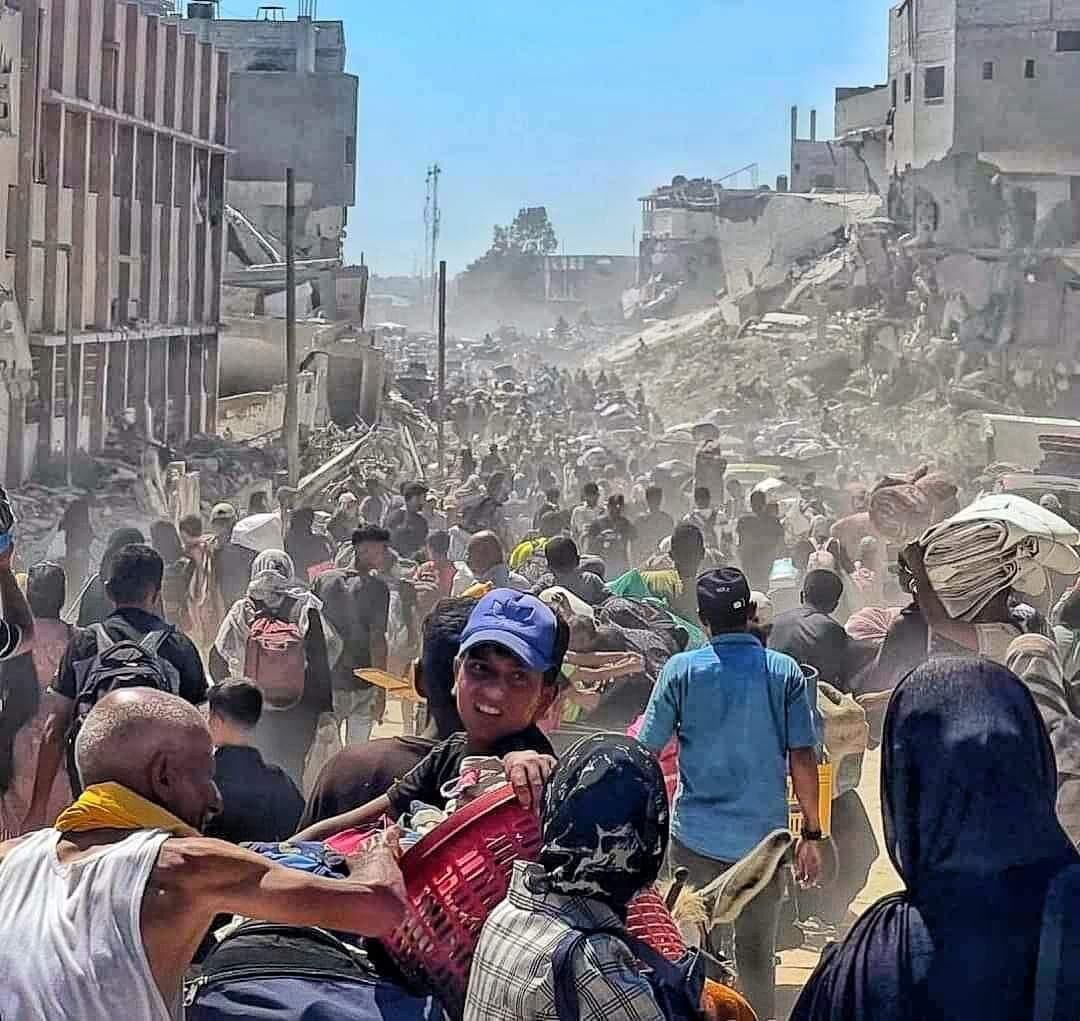
The real reasons for these Israeli incursions lie in the goal of completing the destruction of Gaza, displace more people and end the basic necessities of life, as each incursion is preceded by an Israel military order to the residents to evacuate the area.

In this context, he pointed out, the occupation destroyed the main water tank in Tel al-Sultan neighborhood in Rafah. He emphasized this reflects the army’s approach that is based on “gang ideology.”

Al-Duwairi, a military analyst in Al Jazeera Satellite Channel, pointed out the occupation doesn’t want the people who have been displaced to return, under the pretext of the infiltration of militants, which indicates a forced displacement process that may turn into permanent one.

As evidence of this, the military expert pointed out the Israeli army has completely destroyed homes and residential complexes in the south and east of Gaza City, and destroyed agricultural areas in the eastern region, saying such action is aimed at preventing people from returning.

Sniper bullet

Commenting on the sniper operation of an Israeli soldier in Khan Yunis broadcast by the Qassam Brigades, Al-Duwairi believes these Hamas fighters are using “leftover” war ammunition which reflect their ability to efficiently exploit available resources.

He explained the bullet that was used was 14.5 mm in caliber. He noted the use of these bullets reflects the resistance’s ingenuity in benefiting from weapons neglected and abandoned by the occupation soldiers.

Al-Duwairi pointed out the operation included accurate monitoring of occupation soldiers, which reflects a high level of planning and implementation, and best locations identified to carry out the sniper operation, which demonstrates professionalism on the part of the Palestinian fighters.

The military expert pointed out the morale of the Qassam fighters plays a decisive role in the success of the operations, stressing the sniper who carried out the operation enjoyed high confidence stemming from his belief in his cause.

He explained that the resistance does not only rely on recycling war remnants, but also uses strategies for direct reuse, as happened with the sniper bullets that appeared in this clip.

He pointed out the Al-Qassam Brigades use three main strategies: Reusing ready-made waste, recycling explosives, and reusing missiles dropped by occupation aircraft according to the Jo24.net website.

Continue reading
Duwairi: Israel Moves Back to Stage 1 of Gaza War

Military expert Major-General Fayez Al-Duwairi said that developments in Gaza are returning to the first stage of the war. He confirmed what is happening on the ground in terms of targeting hospitals and safe areas points to the fact.

Back to Stage I

He said phase “C” of the Israeli military operations in the Gaza Strip has ended and the return to the first stage is now taking place. He highlighted the occupation army has deployed four divisions including 16 brigades in Gaza.

In the first battle of Khan Yunis in the south, Al-Duwairi added, the 98th Division, 99th Division, 162nd Division, and 252nd Division were deployed there. Now, he added, the occupation has deployed the Sinai Division to the new axis in the south of Deir al-Balah in central Gaza.

Israeli Airstrikes Schools, Hospitals

He pointed out that the current Israeli airstrikes are focusing on hospitals, UNRWA centers, and safe areas, in addition to pressuring displace residents, especially in the eastern Khan Yunis area to move to Mawasi area.

Israel claims moving to the third phase of its war in Gaza requires keeping its forces only in the Netzarim axes – which separates the north of the Gaza Strip from its center and south – and the Philadelphi axes on the border with Egypt, and the buffer zone along the border with the Strip, and this phase is a form of rapid and focused operations in specific areas.

The strategic expert noted returning to the first phase of the war reflects the political and military thinking  in Israel, as the first continues to talk about dismantling and eliminating the Hamas, and freeing the Israeli detainees in Gaza, while the second also talks about the need to keep up the military pressure on the Palestinian resistance.

He referred to Israel Chief of Staff Herzi Halevi as  saying he is in favor of military pressure to force Hamas to make concessions leading to an agreement in accordance with Israeli requirements and not according to what is happening on the ground in Gaza.

Rome Initiative

The Israelis are seeking to pressure Hamas to accept the new Rome Initiative, which Al-Duwairi said may nclude many additions, the most important of which is keeping the Netzarim and Philadelphi axes and controlling the return of displaced Gazans to the northern regions.

Rome, is hosting a four-way meeting to discuss the latest Israeli proposal regarding a possible agreement that includes a ceasefire in Gaza and a prisoner exchange between Israel and the Palestinian resistance.

However, Al-Duwairi  explained – in his military analysis on Al-Jazeera – the Palestinian resistance, although weakened by the ongoing Israeli aggression on the Strip, has the flexibility to rebuild its human and material strength.

In contrast, the occupation army has not been able to recover from the state of exhaustion it is suffering from. Al-Duwairi pointed out this army numbers 635,000 soldiers, 40% of which is in the Gaza Strip, 30% in the West Bank, and about 30 to 35% on the northern front and 10% a strategic reserve as printed in the Jo24.net website.

Continue reading
Expert: Israel Hike Attacks For Rome Talks But Won’t Succeed

CROSSFIREARABIA – Military and strategic expert Nidal Abu Zeid said that the Israeli occupation army is trying to put military pressure on the resistance to force it to make concessions and accept a prisoner exchange deal, according to Jo24 website.

He added that the increase in the intensity of military operations in all combat axes, including air sorties, indicate that the Israelis want to put pressure on the resistance before sending their negotiating team to Rome to complete their previous rounds and which are expected to have stronger chance of success this time.

Abu Zeid added the Palestinian resistance factions are aware of the occupation’s motives and plans and are moving in field areas and tactics to increase the level of the occupation’s losses, which reached 13 injured soldiers in the past 24 hours.

He pointed out the resistance is showing that it is still capable of setting up ambushes as happened in the Bina camp and in Shaboura whilst launching rocket barrages outside the Gaza periphery into Israeli settlements.

What is also striking also Abu Zaid pointed out is the targeting of an aircraft with a SAM/7 missile, in addition to the remarkable success on the media level exposing the occupation’s narrative and misleading and untruthful broadcasts.

The military expert pointed out that there lies deep differences between the Israeli political and military, and contradiction, disagreement and the exchange of accusations between them and which has clearly emerged recently.

Abu Zeid confirmed that the politicians on top of which is Benjamin Netanyahu who seek to continue the military onslaught on Gaza until its declared goals are achieved, while the military are asking for battles to be ended through diplomatic means.

Abu Zeid revealed of indications that the current Israeli government will seek to dismiss Defense Minister Yoav Galant and replace him with Gideon Sa’ar in the Knesset recess that will begin, Sunday. And this appears to be a preemptive step to confront Ministers Itamar Ben Gvir and Bezalel Smotrich after accepting the negotiations.

Continue reading
Duwairi: ‘High Levels of Combat Efficiency’  

The Qassam Brigades, the military wing of the Islamic Resistance Movement (Hamas), is offering an unusual performance, military and strategic expert Major-General Fayez Al-Duwairi,  told Al Sawsana website in a recent interview.

He pointed out the recent Shaboura ambush in Rafah, which appeared in a recent video clip, was carried out using a fake tunnel after luring Israeli occupation soldiers into it.

Perfect ambushes

The Qassam Brigades showed scenes preparing and executing two ambushes against Israeli soldiers inside the Yebna and Shaboura camps in Rafah, titled “Death Ambushes Part Two”.

The scenes included luring and monitoring the  soldiers: The first ambush took place in a house inside the Yebna camp, and the second in the mouth of tunnel in the Shaboura camp.

Qassam Tunnels: Types and Strategies

Al-Duwairi explained the first ambush was prepared in advance in a house entered by a number of soldiers, while the second ambush was a fake tunnel under the house, not connected to the main tunnel network.

He pointed out most of the tunnels used in operations are not part of the main network, but created specifically for individual military operations.

Advanced Combat Techniques

Al-Duwairi pointed out the video shows the first force entering the tightly booby-trapped building, with Al-Qassam controlling the explosion from a safe place, which indicates the high efficiency in planning and execution.

He also pointed out the use of barrel fillings in the second operation, which relies on old mines stored underground, reflecting the resistance’s experience in effectively utilizing available resources.

Importance of Battles in Built-Up Areas

The major-general stressed the importance of battles in built-up areas as part of asymmetric wars, where resistance forces rely on accurate knowledge of the location and effective armament to confront the occupation forces with smaller numbers but with greater efficiency.

Appreciation…

Al-Duwairi praised the management of the battles by the Palestinian resistance, describing them as advanced and should be taught in international military colleges. He stressed the resistance on the ground adopt an unconventional approach and is interested in raising the morale of its fighters.

Military pressure and field developments

Al-Duwairi pointed out that the simultaneous battles in the north and south is in line with what Israeli Chief of Staff Herzi Halevi said about the military aiming to force Hamas to make concessions, especially with regard to the release of prisoners. He pointed out that the occupation army found the bodies of five prisoners, including four soldiers, in one of the tunnels.

Future battles

The fierce battles in Tal al-Hawa and Rafah reveal a high level of combat efficiency among the resistance factions. He expects the continuation of this field rhythm will lead to tangible results within a short period, which may force the occupation army to withdraw again from these areas.

Continue reading