Israel’s World Image in The Gutter

By Ismael Al Sharif

“This situation must end. It is blackmail, and it must end. Freeing the hostages by force would be safer than negotiating a deal that allows Hamas to survive.” – Trump

These days, leaks, press reports, and international positions are proliferating that are damaging Israel’s image severely. The most recent is a joint investigation by the British Guardian, +972 magazine, and the Hebrew website Local Call, which revealed an Israeli intelligence database showing that five out of every six Palestinians killed in Gaza until last May were civilians. Only one-sixth of the martyrs were Hamas fighters.  This figure is only half what Israel previously announced.

What’s more alarming is that Israel’s own reports are based on numbers from the Palestinian Ministry of Health in Gaza, figures Israel and the United States have long denied.

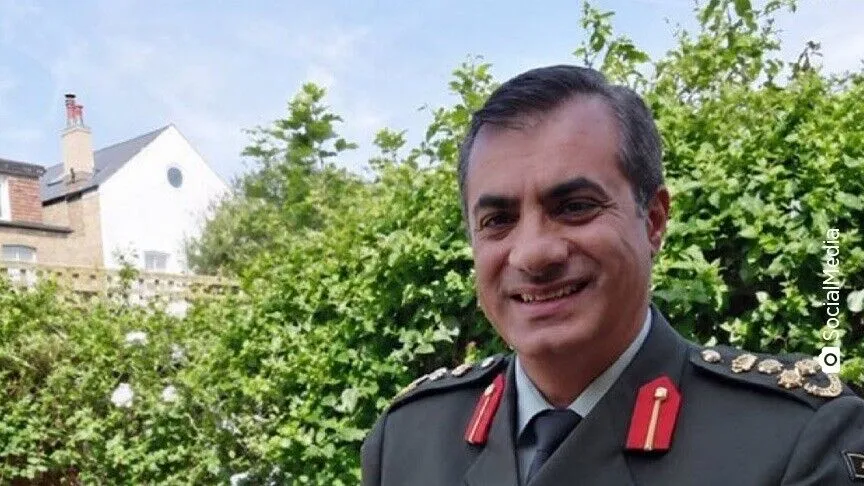
Leaks attributed to Aharon Haliva, former head of Israel’s Military Intelligence Directorate (Aman), dating back to March 2024, justified the killing of tens of thousands of Palestinians. “For every Israeli killed, 50 Palestinians must be killed in return, regardless of whether they are children,” he said. This statement is not merely a slip of the tongue but reflects a hardline religious and ideological current and embodies a systematic political and military strategy.

Two American mercenaries working for the so-called “Gaza Humanitarian Foundation” appear to admit that the Israeli army working with the US mercenaries bear direct responsibility for targeting hundreds of starving Palestinians with indiscriminate fire.

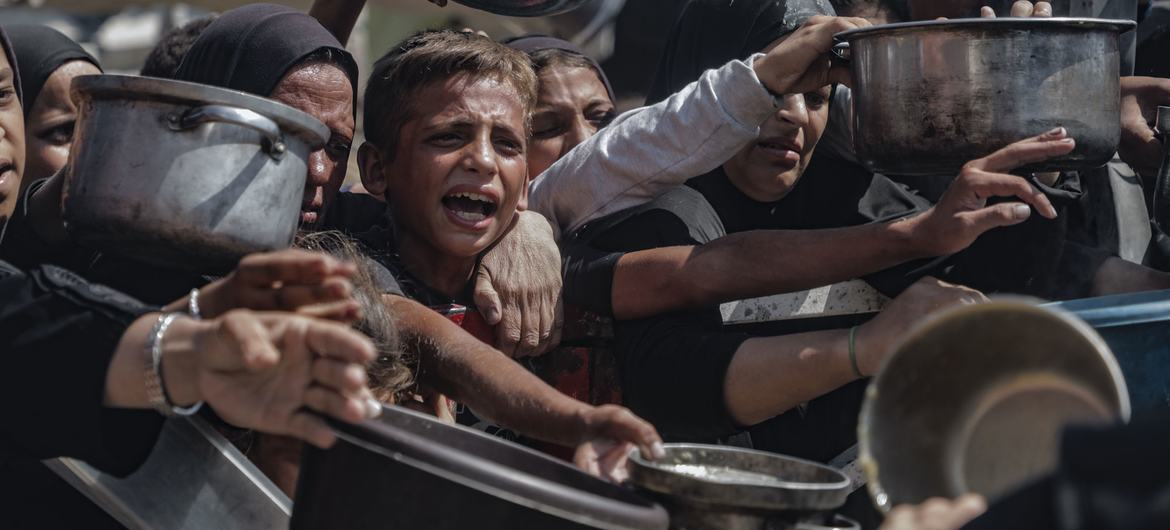
In this context, the United Nations confirms the Gaza Strip is facing the most severe phase of a man-made famine, not attributed to a natural disaster.

As a result of the popular demonstrations sweeping the streets of Europe and Australia, which have put significant pressure on their governments, criticism has begun to emerge from even Israel’s closest allies.

The Danish Sovereign Wealth Fund announced it was withdrawing its investments from the Israeli entity, and Germany has suspended arms exports there. In a British parliamentary session on 22 July, Foreign Secretary David Lammy stated: “I firmly believe the actions of the Israeli government are causing enormous damage to Israel’s standing globally.” These escalating positions reflect a growing shift in the positions of its allies.

The Israeli media, along with the pro-Israeli global media—one of Israel’s most important soft power tools—are failing to counter these reports, leaks, and shifting positions among its allies.

War criminal Netanyahu himself acknowledged the failure of the Israeli media and its pro-Israel media to repair the deteriorating image of the Jewish state. Logic would have required Israel to improve its media image by halting the massacres and allow humanitarian aid to enter.

Instead, he denied all these accusations and launched an attack on its closest allies, reminding Germany of its Nazi era and its actions would only serve “terrorism” and be a “reward to Hamas.” The Zionist Foreign Ministry also summoned the ambassadors of the above countries and reprimanded them.

War criminal Netanyahu pressured the social media to alter their  algorithms. Leaked documents reveal that Twitter and Facebook already restricted posts deemed to be anti-Israel and/or sympathetic to the tragic plight of our people in Gaza. He did not stop there, but went on to criminally assassinate the journalists, the latest of which at the Nasser Hospital, killing four journalists at once, to silence voices and intimidate the media workers from carrying out their mission.

War criminal Netanyahu would not have dared to display such arrogance, defiance, and indifference without American support, as he always relies on “Big Brother” to compensate for his material and moral losses. Take the example of Charles Kushner—Jared Kushner’s father and the US ambassador to France— who wrote an open letter to President Macron, published in The Wall Street Journal.

He expressed his “deep concern about the sharp rise in anti-Semitism in France,” accusing the French government of failing to take sufficient steps to counter it. He also noted that Paris’s critical statements about Israel and its efforts to recognize a Palestinian state “encourages extremists, fuels violence and endanger Jewish lives.”

The letter coincided with the 81st anniversary of the liberation of Paris and the halt to the deportation of Jews to Nazi concentration camps, a symbolic reminder of a tragic past.

However, France rejected and condemned the letter, and the US State Department quickly came out in support of the US ambassador there.

Netanyahu’s motto is: Those who have an ally like the United States have nothing to fear, nor will they grieve.

This is a translated piece written by Ismael Al Sharif and published in the Arabic Addustour newspaper in Amman.

Continue reading
Israel: A Bad Brand in World Markets

By Ramzy Baroud

In an important step toward the economic isolation of Israel due to its genocide in Gaza, Norway’s Government Pension Fund Global has decided to divest from yet more Israeli companies.

Norway’s sovereign wealth fund is the world’s largest, with total investments in Israel once estimated at $1.9 billion. The decision to divest was taken gradually but is consistent with the Norwegian government’s growing solidarity with Palestine and rising criticism of Israel.

Taking a leading role along with Spain, Ireland, and Slovenia, Norway has been a vocal European critic of the Israeli genocide and man-made famine in Gaza, actively contributing to the International Court of Justice’s investigation into the genocide, and formally recognizing the state of Palestine in May 2024. This diplomatic and legal stance, coupled with its financial divestment, represents a coherent and escalating effort to hold Israel accountable for the ongoing extermination of Palestinians.

The Israeli economy was already in a state of free-fall even before the genocide. The initial collapse was related to the deep political instability in the country, a result of Israeli Prime Minister Benjamin Netanyahu and his extremist government’s attempt to co-opt the judicial system, thus compromising any semblance of “democracy” remaining in that country. This resulted in a significant lowering of investor confidence.

The war and genocide, beginning on October 7, 2023, only accelerated the crisis, pushing an already fragile economy to the brink. According to reports from the Israel Ministry of Finance, foreign direct investments in Israel fell by an estimated 28 per cent in the first half of 2024 compared to the same period in 2023.

Any supposed recovery in foreign investments, however, was deceptive. It was not the outcome of a global rallying to save Israel, but rather a consequence of a torrent of US funds pouring in to help Israel sustain both its economy and the genocide in Gaza, along with its other war fronts.

Israel’s Gross Domestic Product was estimated by the World Bank to be around $540 billion by the end of 2024. The war on Gaza has already taken a considerable bite out of Israel’s entire GDP. Estimates from Israel itself are complex, but all data points to the fact that the Israeli economy is suffering and will continue to suffer in the foreseeable future. Citing reports from the Bank of Israel and the Ministry of Finance, the Israeli business newspaper Calcalist reported in January 2025 that the cost of the Israeli war on Gaza had already reached more than $67.5 billion. That figure represented the costs of the war up to the end of 2024.

Keeping in mind that the ongoing war costs continue to rise exponentially, and with other consequences of the war, including divestments from the Israeli market by Norway and other countries, future projections for the Israeli economy look very grim. The Israeli Central Bureau of Statistics reported that the Israeli economy, already in a constant state of contraction, shrunk by another 3.5 per cent in the period between April and June 2025.

This collapse is projected to continue, even with the unprecedented US financial backing of Tel Aviv. Indeed, without US help, the precarious Israeli economy would be in a much worse state. Though the US has always propped up Israel, with nearly $4 billion in aid annually, the US help for Israel in the last two years was the most generous and critical yet.

Israel is the recipient of $3.8 billion of US taxpayer money per year, according to the latest 10-year Memorandum of Understanding signed in 2016. Equally, if not more valuable than this large sum are the loan guarantees, which allow Israel to borrow money at a much lower interest rate on the global market. The backing of the US has, therefore, enabled investors to view the Israeli market as a safe haven for their funds, often guaranteeing high returns. This applies to the Norwegian sovereign wealth fund as it did to numerous other entities and companies.

Now that Israel has become a bad brand, affiliated with unethical investments due to the genocide in Gaza and growing illegal settlement expansion in the West Bank, the US, as Israel’s main benefactor, has stepped in to fill the gaps.

The US emergency supplemental appropriations act of April 2024 allocated a total of $26.4 billion for Israel. While much of the money was earmarked for defense expenditures, in reality, most of it will percolate into the Israeli economy. This amount, in addition to the annual military aid, allows the Israeli government to minimize spending on defense and allocate more money to keep the economy from shrinking at an even faster rate.

Additionally, it will free the Israeli military industry to continue producing new, sophisticated military technology that will ensure Israel’s continued competitiveness in the arms market. The military-industrial complex, a significant part of the Israeli economy, is thus not only sustained but given a fresh impetus by American aid, ensuring the war machine continues to function with minimal financial disruption.

All of this should not diminish the importance of divestment from the Israeli financial system. On the contrary, it means that divestment efforts must increase significantly to balance out the US push to keep the Israeli economy from imploding.

Moreover, this should also make US citizens, who object to their government’s role in the genocide in Gaza, more aware of the extent of Washington’s collaboration to save Israel, even at the price of exterminating the Palestinians. Indeed, the flow of funds from the US is not a passive action; it is an active collaboration that directly enables the Israeli genocide in Gaza.

Ramzy Baroud is a journalist, author and the Editor of The Palestine Chronicle. He is the author of six books. His forthcoming book, ‘Before the Flood,’ will be published by Seven Stories Press. His other books include ‘Our Vision for Liberation’, ‘My Father was a Freedom Fighter’ and ‘The Last Earth’. Baroud is a Non-resident Senior Research Fellow at the Center for Islam and Global Affairs (CIGA). His website is www.ramzybaroud.net

Jordan Times

Continue reading
Killing Gaza Slowly

By Tarek Bae  

OPINION - Slaughter dressed up as humanitarian aid: So-called Gaza Humanitarian FoundationFile Photo

“Gaza is on the verge of economic and humanitarian collapse. People live day to day, always at risk from hunger and disease,” notes a UN report. Yet these words were written not in 2025, but by the Independent UN Commission of Inquiry on Gaza in 2019.

Israel has enforced a blockade on the Gaza Strip since 2007. No one and nothing enters or leaves without Israeli permission, including at the crossing to Egypt. Every import and every exit requires an application to Israeli authorities. Human Rights Watch has repeatedly called Gaza the world’s largest open-air prison. Between 2017 and 2021, Israel blocked materials needed to maintain the water system. In 2017, the UN stated that 97% of Gaza’s water was undrinkable. Oxfam concluded the same year that Gaza was the most water-scarce place on earth.

From 2023 onward, Gaza became the target of genocide. From the first days, the blockade on essentials was radically expanded. On Oct. 8, 2023, then-Israeli Defense Minister Yoav Gallant announced there would be “no electricity, no food, no fuel,” because Israel was fighting “human animals.” The total blockade, combined with unprecedented bombardment, turned Gaza into the greatest humanitarian crisis of the 21st century.

During this genocide, international agencies, especially the UN, struggled to keep civilians alive. More than 400 distribution points tried to provide the bare minimum. Political pressure was needed again and again. There were 11 UN resolutions in all, 4 by the Security Council, 5 by the General Assembly and 2 by the Human Rights Council, calling on Israel to enable sufficient humanitarian aid. Israel dismantled every channel through which aid could be delivered. More than 900 humanitarian workers have been killed in Gaza since the genocide began. Never before in any war has the toll on aid workers been so high.

Netanyahu’s starvation strategy

By March 2025, the total blockade hardened into an open starvation strategy. “We have decided to stop all deliveries into Gaza, including food, water and aid,” Prime Minister Benjamin Netanyahu declared on March 2, 2025.

Barely two months later, in May, Israel and the US rolled out the so-called Gaza Humanitarian Foundation (GHF). This, Israeli officials said, would be the new and only route for humanitarian aid. Rumors of a new distribution mechanism had circulated since February, a design Israel was planning with US partners. Coverage of those plans was overshadowed by Donald Trump’s “Gaza Plan.” In a joint press conference with Prime Minister Netanyahu in Washington on Feb. 4, 2025, Trump publicly declared the intention of the US to “take over” the Gaza Strip. That the GHF sits inside this vision follows from statements by GHF officials. In June 2025, Executive Chairman Johnnie Moore Jr. said: “The United States will take full responsibility for the future of Gaza.”

It is not a purely American venture. Logistical coordination at the GHF is led by Israeli Brigadier General Yaakov Baruch. Despite its name, the GHF is not a foundation; it is a political-military organization. Alongside the Israeli military, mercenaries from the US are involved. According to The Times of Israel, Jared Kushner, son-in-law of Trump, is the chief architect of the idea. The US initially put €30 million ($35 million) into the project, with further pledges. In July 2025, Trump complained that no one had expressed gratitude. But what exactly should anyone thank the GHF, Israel, or the US for? GHF spokesperson Shahar Segal offers an answer. “It is frustrating to see people constantly blaming Israel, when in reality it is Israeli logistics that ensure humanitarian food reaches those who desperately need it. The GHF model is saving lives.”

Is that true? No. Among the familiar set of claims used to relativize the genocide is the allegation that allowing international aid only helps Hamas. Again and again, the line is that aid never reaches civilians. Another claim is that Hamas steals humanitarian supplies. The conclusion is clear: this is propaganda. Videos of armed guards on trucks or of lootings by armed gangs have been presented by Israel, in a misleading fashion, as Hamas seizures.

A review by the United States Agency for International Development examined 156 incidents of loss or theft of US-funded aid between October 2023 and May 2025. It found not a single piece of evidence that any of those incidents could be attributed to Hamas. In 44 cases, there were links to Israeli military activity. Reuters reported that Israeli military offices had produced no evidence of systematic theft by Hamas. The New York Times cited sources inside Israel’s government who acknowledged they had none either.

From 400 aid points to 4 militarized sites

Is the GHF more effective at distributing aid? Not at all. Instead of the 400 international distribution points that once existed, Israel’s blockade and the imposition of the GHF have left only 4 highly militarized sites, with just 1 in the densely populated north. The UN calculates that Gaza’s basic humanitarian need amounts to around 600 truckloads a day. By its own account, the GHF moves at most 26 truckloads daily, roughly 4% of what is required. In a territory facing acute hunger, such an amount is not small—it is nothing.

According to the IPC Famine Review Committee, the whole of Gaza has been in IPC Phase 5 since July, the highest alert, a catastrophic food emergency. People in this phase are at immediate risk of starvation. More than 700,000 people have gone days without any food. The UN special rapporteur on the right to food, Michael Fakhri, was blunt: “Israel has made clear its intention to starve everyone in Gaza.”

What Israel and the US call a distribution mechanism and a foundation is, in the words of Doctors Without Borders, “slaughter dressed up as humanitarian aid.” Starving civilians are forced to walk up to 40 kilometers (25 miles) under the burning sun to reach GHF sites. Arrival does not guarantee help. More than 1,881 starving civilians have been killed at or near GHF distribution sites. The Israeli army regularly fires indiscriminately into the waiting crowd.

Philippe Lazzarini, Commissioner-General of UNRWA, calls the GHF “an alibi for the systematic starvation of Gaza.” For him, the logic is clear. Israel destroyed the humanitarian infrastructure in order to replace it with a facade organization under military control. OCHA spokesperson Jens Laerke sees in the GHF a “distraction.”

What does it distract from? Netanyahu has said the plan out loud. On May 11, according to the Israeli outlet Maariv, he tied aid to permanent expulsion. Those who receive aid at a given place should never see that place again and must evacuate. “The residents of Gaza whom we are expelling will not return. They will no longer be there. We will control the place. There is no other war aim. All other goals are mere eyewash.”

By the Israeli government’s own account, the GHF is a means to drive Palestinians out of Gaza or to let them die, by deliberately starving them, denying supplies, and cutting off humanitarian aid.

*The author is the editor-in-chief of the German journal itidal.de. The opinions expressed in this article are the author’s own and do not necessarily reflect Anadolu.

Continue reading
Israel Cannot Silence Palestinian Words

By Benay Blend

Palestinian journalists seek to document the truth about the Zionists’ brutal siege, while their detractors are working to erase all evidence of the crime scene.

Shortly after the news broke about the Israeli assassination of Palestinian journalist Anas al-Sharif and his five colleagues in Gaza City, a video appeared on my Facebook feed of chef Yotam Ottolenghi making baked haloumi cheese with fennel syrup.

In real time, the two events have nothing to do with each other. However, delving deeper into the realm of the imagination, both represent long-held Israeli efforts to erase the Palestinian presence on the land.

In a statement on the social media platform X, journalist Ramzy Baroud explained Israel’s motives for the murder of  at least 200 journalists in Gaza since October 7, 2023: “silence the truth by murdering those who report it.”

Afterward, they justify these deaths by claiming that the journalists were members of the resistance movement, a claim that is problematic for several reasons.

In a timely excerpt from Perfect Victims: And the Politics of Appeal (2025), Mohammed El-Kurd contends that allies often unwittingly refute the claim that victims, such as these journalists, were affiliated with Hamas. In this way, the characterization of the civilian as a “neutral figure” has depoliticized the Palestinian cause, rendering it a “humanitarian crisis” where “revolutionaries are not part and parcel of your nation.”

In the U.S., too, police shootings of Black, Brown and poor people are often justified by slandering the victim’s reputation post-mortem. This should come as no surprise, since the institution of policing harks back to its origin as slave catchers, along with its more present-day exchange of training with the Zionist state.

“It is not enough for a Palestinian to be a journalist to be deemed human,” concludes El-Kurd,  “they must be ‘unaffiliated.’”

For “Israelis,” this effort must prove difficult as they are taught to see Hamas everywhere, much like Americans were told to look for communists during the Second Red Scare in the 1950s. The latter were in our bathrooms, under our beds, and if we were not watchful, we might mistakenly marry one.

In “The Hamas are Coming: A View of the Violence from Inside Israel” (2021), Miko Peled writes of this phenomenon that has informed Israeli hasbara (propaganda) for years.

“There are never Palestinians, never people, only ‘The Hamas’ — and ‘The Hamas’ is, by the way, male and singular (in Hebrew),” Peled writes.  “’The Hamas thinks;’ ‘The Hamas believes;’ ‘The Hamas should know;’ ‘When the Hamas understands, he will stop;’ and finally, ‘When The Hamas is hit hard he will never dare to attack Israel again.’”

Not much has changed in Israeli hasbara since Peled wrote that piece nearly four years ago. Indeed, the New York Times, taking its cue, as usual, from Israeli sources, repeated that “Mr. al-Sharif,” whom the Israeli military accused of being a Hamas fighter posing as a reporter, but was really “the head of a terrorist cell,” thus the IDF “had taken steps to mitigate civilian harm,” though which civilians, Palestinians or “Israelis,” it does not say.

Barbs were then thrown back and forth. Al-Jazeera called the killing  “a desperate attempt to silence the voices exposing the impending seizure and occupation of Gaza” while the “Israeli Government” accused “Al Jazeera reporters of serving the interests of Hamas by presenting an exaggerated and distorted picture of conditions in Gaza.”

“The instinct of many defenders of Palestinians is to dispel the connection between the slain Palestinian media workers and their supposed political leanings, as if anywhere in the world these exist in isolation,” El-Kurd explains.

Just as El-Kurd implicates himself in this process, so do I. There have been times when I’ve distanced martyrs from supporting the armed resistance as if this gives us a more legitimate cause to mourn.

When we sanitize the dead in this way, however, “we are inadvertently reifying the colonial rationale that killed them and rendered them killable in the first place,” El-Kurd concludes, so perhaps it is better to just reply “So what?” Indeed, if Zionist soldiers and PR workers can find a place for themselves in global media, why do supporters of Palestine find the need to detach their heroes from armed resistance that occupies a legitimate role in the struggle?

There are many documented reasons as to why Israel targets journalists in the Gaza Strip. Significantly, Palestinian journalists seek to document the truth about the Zionists’ brutal siege, while their detractors are working to erase all evidence of the crime scene.

Moreover, for Western journalists, even those sympathetic to the cause, the only picture they can paint is that of victims who are barely surviving in the rubble.

In an interview with Beacon Press, historian Roxanne Dunbar-Ortiz describes a similar settler colonial narrative that pertains to Indigenous people in the Americas. Asked to explain the most enduring myth pertaining to Native Americans, Dunbar-Ortiz mentions the idea of “eliminationism,” a notion that does away with Native people.

Indeed, at the turn of the 20th century, the myth of the Vanishing Indian was at its zenith, thus allowing the mainstream population to view Native people as noble relics who exist only in the glory days of their past. These same people who at one time they had license to kill Native people are seen now as no longer a threat, subdued as they were in the last Indian massacre at Wounded Knee.

In reality, Native people have survived over 500 years of continual genocide, survival being an “active word,” Dunbar-Ortiz makes clear, involving  “an enormous amount of resistance and cultural continuity.”

On the other hand, “victimry” is a more common version, she concludes, because people can feel sorry about the state of Indian Country but without the requirement that they must do anything about it. “So they’re not really then dealing with the reality that Native people are here,” and like the Palestinians, “they’ve resisted, they’ve survived, they haven’t changed their mind about who they want to be and how they want the future to be.”

In “Sumoud: The Unyielding Heart of the Palestinian Cause in Palestine,” Ramzy Baroud describes a similar trajectory for Palestinians. “The profound and unrelenting struggles endured by Palestinians should, by any rational expectation, have irrevocably concluded the Palestinian cause. Yet, the struggle for freedom in Palestine is at its zenith.”

Like the experience of Native Americans, Zionist attempts to erase the presence of Palestinians goes back many decades. Nevertheless, the Palestinian resistance has endured, Baroud continues, due to the “concept of sumoud,” resilience that is akin to Dunbar-Ortiz’s explanation of “survival,” an active process that involves resistance and cultural endurance.

“Palestinian journalists in Gaza are themselves the story and the storytellers,” writes Ramzy Baroud. “Their success or failure to convey the story with all its factual and emotional details could make the difference between the continuation or the end of the Israeli genocide.”

From Refaat Alareer, the poet/teacher/ journalist who asked before his death that his life become a story to ensure that life goes on, to Anas Al-Sharif’s final testament written shortly before his death, Palestinian journalists have been responsible for conveying the truths of Gaza to the world, but they also leave a legacy that inspires future generations to carry on their work.

“Do not let chains silence you or borders restrain you. Be bridges toward the liberation of the land and its people, until the sun of dignity and freedom rises over our stolen homeland,” Al-Sharif wrote, shortly before his death.

With that last statement, Al-Sharif foretells his own assassination. His message is not one of victimhood, though, but rather a plea that others carry on his work.

On August 11, Dareen Tatour, the Palestinian poet who knew from experience the danger of rebellious words, posted a new poem written to honor the Al-Jazeera team murdered the day before.

Imprisoned for her verse “Resist, My People, Resist Them,” the poet is not so optimistic now that words can stop a bullet. Under the banner Martyrs of the Word and Image—They Left But the Word Remained, Tatour charged that their deaths were the consequence of a world gone silent to their pain.

“They are gone / but the truth remains,” she says, dependent on her to carry it, or “leave it to be bombed again” in the wake of her silence.

Unlike the person that she was ten years ago, Tatour knows now that “the road is longer and harsher,” yet still she is undeterred, for she continues “to write for them [the slain journalists], to be the echo of their voices,” because in this way, the Palestinian narrative will be triumphant.

– Benay Blend earned her doctorate in American Studies from the University of New Mexico. Her scholarly works include Douglas Vakoch and Sam Mickey, Eds. (2017), “’Neither Homeland Nor Exile are Words’: ‘Situated Knowledge’ in the Works of Palestinian and Native American Writers”. She contributed this article to The Palestine Chronicle.

Continue reading
Palestinian State Out of Gaza Horrors?

It is hoped that the appeals for more recognitions of the Palestine state in the UN General Assembly in New York will increase pressure on Israeli Prime Minister Benjamin Netanyahu and his coalition partners to drastically change course and make the Palestinian state a reality.

Notwithstanding the US neutrality recognition, at least as things stand now, coupled with the increased efforts from the European Union, Israel stands to be ostracized in the international community.

One point remains rather curious however, is UK’s Premier Keir Starmer’s condition being that Britain will recognize a Palestinian state if Israel refuses to accept a ceasefire on Gaza.

For all intents and purposes, it seems what Starmer is interested in, is basically a ceasefire and then Palestinian state, but then again this is for the British government to ponder on in the face of the rolling train of recognitions.

But what does this recognition entails in practical terms? It basically means the stalled Oslo negotiations since 1993 are to be revived again, and if need be on different terms than what was envisioned before. Here one says different terms because the Oslo agreements were guaranteed by the world powers and nothing came out of them.

Indeed much more must be done by the world community, especially that now, we have a more difficult and intransigent Israeli government which needs above all else to accept, at least in principle, the two-state solution.

But also and at the same time time, the recognition of a Palestinian state entails the recognition of a Palestinian leadership with the ability and responsibility to represent the Palestinian people.

One supposes there is a general consensus on that now since the current PNA has become defunct and its current leadership obsolete in front of the immense responsibilities and tasks ahead.

In brief, it would be a mere rhetorical smokescreen to call on recognizing a Palestinian state without actually paving the way for the creation of such a state by totally changing the current PNA leadership via honest elections supervised by the international community and which represent the will of the Palestinian people.

Of course one cannot but insist, that the Arab role in the newly envisaged peace process is crucial. One also cannot help but think that the role of Saudi Arabia will be crucial for the next phase. For  start, the precondition of Saudi for any form of dealings with Israel, is for the latter to accept the principle of two-state solution, and in fairness it must be clarified that the French-Saudi initiative which led Emmanuel Macron to recognize a Palestinian state was supposed to be declared in in Paris.

But now due to this effort, it has become an international case at the UN. Israel has failed with all of its endeavors to normalize relations with Saudi Arabia without giving any concessions, mainly the acceptance of the precondition of the recognition of the two-state solution, and now it is facing both the pressure of the international community and the condition of the Saudis, especially they shift their strategy from the UAE to India, and without the Saudis they will have nothing in the Gulf.

But still there is the bleeding wound of Gaza, the wound which can never start to heal without a collective Arab effort led by the Saudis which takes back to the conundrum of Israel’s acceptance of the principle of Palestinian state. Only then can Saudi Arabia lead the Arab effort, to first of all disarm Hamas, give an amnesty to Hamas members, and exile its leadership out of Gaza, in the hope of rehabilitating the strip and start in earnest the reconstruction efforts.

Continue reading