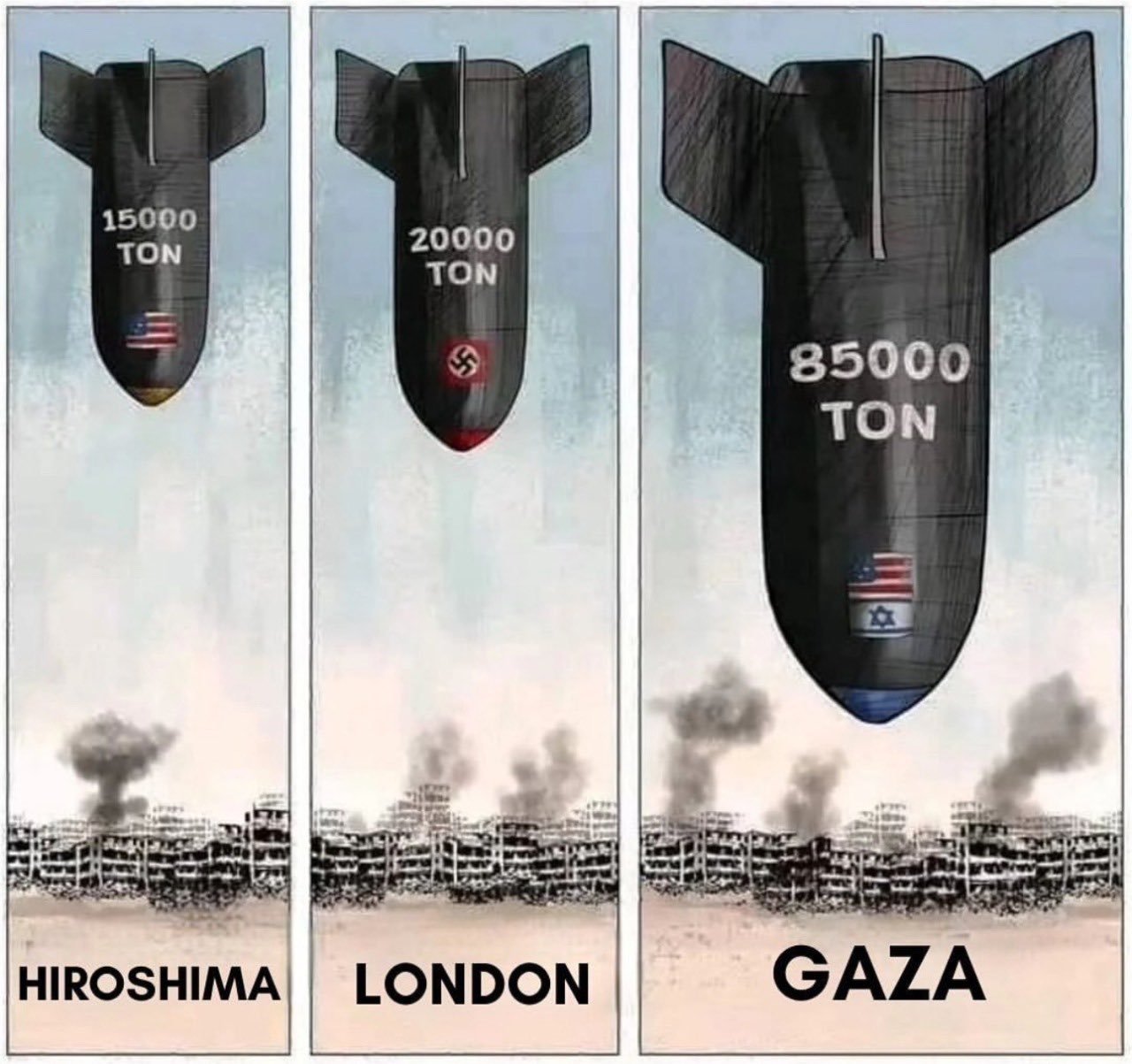
‘We Must Not Let Northern Gaza Fall’
 CrossFireArabia
- October 21, 2024
The Israeli army intensified airstrikes, artillery shelling, and gunfire in northern Gaza, Monday, amid a strict blockade that has halted the entry of food, water, fuel, and medicine, witnesses reported.
Witnesses said Israeli air raids and shelling continued for the 17th consecutive day, focusing on northern Gaza, particularly the Jabalia refugee camp, under an ongoing siege.
Israeli warplanes launched multiple airstrikes on the Saftawi area, Jabalia camp, and Beit Lahia in the northern Gaza Strip, according to the witnesses.
Israeli military vehicles were reported to be stationed near the Indonesian Hospital, the telecommunications area, and the Tawam roundabout, where intermittent gunfire was heard, the witnesses added.
In a statement, Gaza Civil Defense spokesperson Mahmoud Basal said: “The occupation (forces) continue to kill everything living in northern Gaza, destroying and demolishing residential homes.” He added that the Israeli forces were using siege and starvation tactics in Jabalia camp, preventing emergency teams from reaching the camp and other northern areas to evacuate the wounded.
A medical source told Anadolu that two Palestinians were killed and others injured in artillery shelling that targeted homes in the Saftawi area.
The Israeli army also continued demolishing and burning residential buildings in western Jabalia camp and Beit Lahia, witnesses said.
They added that the army destroyed an entire residential block near the electricity company close to Sheikh Zayed roundabout in northern Beit Lahia.
The situation has led to a severe food and water crisis in northern Gaza, as the Israeli military blocks the entry of trucks carrying food or aid, according to multiple sources and trapped residents.
On Oct, 6, the Israeli army attacked northern Gaza, claiming it was to “prevent Hamas from regaining strength in the area.” However, Palestinians say Israel seeks to occupy the area and forcibly displace its residents.
In Gaza City, two more Palestinians were killed by Israeli artillery shelling of Ahmed Yassin Street in the western part of the city, according to Palestinian paramedics.
Israeli warplanes and artillery launched intense strikes on the Sudaniya area, the Shati refugee camp in northwest Gaza City, and the Zaytoun neighborhood in the southeast, according to witnesses.
In central Gaza province, Israeli forces carried out artillery shelling and heavy gunfire north of Bureij camp and west of Nuseirat camp, though no injuries were reported.
Explosions were heard as residential buildings were demolished in northern Bureij and Nuseirat camps, according to a Palestinian Civil Defense source.
The eastern parts of Khan Younis in southern Gaza also witnessed heavy artillery shelling, with the strikes concentrated on the outskirts of Abasan al-Jadida town, accompanied by intense gunfire.
Israel has continued a brutal offensive on Gaza following a cross-border attack by the Palestinian group Hamas last year, despite a UN Security Council resolution calling for an immediate cease-fire.
More than 42,600 people have since been killed, mostly women and children, and nearly 99,800 injured, according to local health authorities.
The Israeli onslaught has displaced almost the entire population of Gaza amid an ongoing blockade that has led to severe shortages of food, clean water, and medicine.
Gaza Journalist: World ‘Blind’, ‘Deaf’ to Jabalia’s Genocide
- CrossFireArabia
- October 21, 2024
A Gazan journalist calls the world ‘blind, deaf’ due to the international community’s failure to bring about an end to the ongoing bloodbath in Gaza.
Al Duwairi: Jabalia Battalion Surpassed Itself
- CrossFireArabia
- October 21, 2024
Military expert Maj-Gen Fayez Al-Duwairi said that the killing of the commander of the Israeli army’s 401st Brigade in north Gaza indicates the nature of the resistance, praising the capabilities of the Jabalia camp battalion of Qassam Brigades, the Hamas military wing.
Al-Duwairi explained in his analysis of the military scene in Gaza, the commander’s killing was expected as soon as he reached the outskirts of Jabalia, considering the value of the event lies in his military rank targeted by the resistance.
The Israeli occupation army announced the killing of the commander of the 401st Brigade, Colonel Ihsan Daqsa, and the serious injury of another officer in battles in Jabalia. The 401st Brigade is part of the 162nd Division, which is an armored brigade.
Yedioth Ahronoth newspaper reported that Colonel Daqsa was killed and another officer was seriously injured in a battle inside the Jabalia camp, after boarding a tank that had an explosive device inside it.
Journalist Mohammed Khairi quoted Israeli sources confirming that Daqsa was killed after he got off his tank with other officers and walked 20 meters, where an explosive device that had been planted in the area exploded.
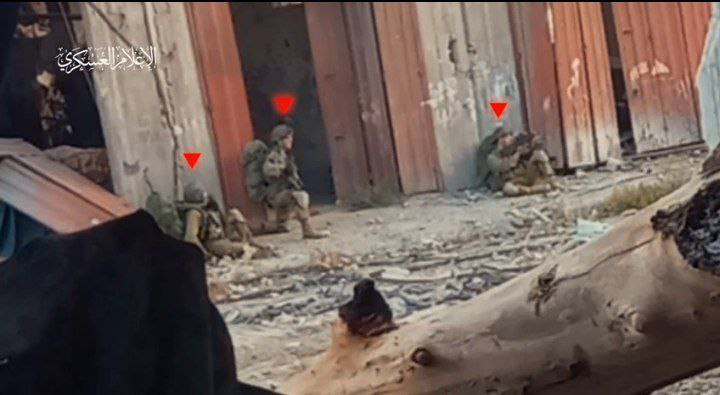
On Sunday, the Qassam Brigades broadcast scenes of its fighters targeting Israeli military vehicles with explosive devices and anti-tank shells, in addition to fierce clashes with Israeli special forces from short distances.
Al-Duwairi believes that no ordinary person can wage such a defensive battle as that being done by resistance fighters in Jabalia because of its “complications, extermination and displacement.” He stressed the resistance has “exceeded” itself.
Under these circumstances, the military expert says that even “the American special forces cannot fight at the level of the Jabalia camp battalion of the Qassam Brigades.”
Al-Duwairi explained the resistance is “decentralized” to increase its maneuverability, adding this is unlike previous ground battles whilst analyzing the Jabalia Battalion divided itself into cluster cells, each of 3 to 5 fighters, where its commander chooses the targets based on field data.
He explained the brigade commander came to the area with a group of officers after the military operations in Jabalia faltered despite 17 days after their launch.
He expected the deputy commander of the slain brigade to be chosen to lead the 401st Brigade “if he is not injured”, as a search is underway for another commander, indicating that the deputy commander of the brigade is usually aware of 85% of the field reality according to Al Jazeera.
Can Israeli Troops Invade Lebanon?
- CrossFireArabia
- October 20, 2024
𝗜𝘀𝗿𝗮𝗲𝗹 𝗵𝗮𝘀 𝘁𝗼𝗹𝗱 the 𝗨.𝗦. 𝗶𝘁 𝘄𝗶𝗹𝗹 𝗹𝗮𝘂𝗻𝗰𝗵 𝗮𝗻 𝗶𝗻𝘃𝗮𝘀𝗶𝗼𝗻 𝗶𝗻𝘁𝗼 𝗟𝗲𝗯𝗮𝗻𝗼𝗻.
Israel has informed Washington it will launch an imminent limited ground operation in Lebanon. But this is hard to believe on the ground level.
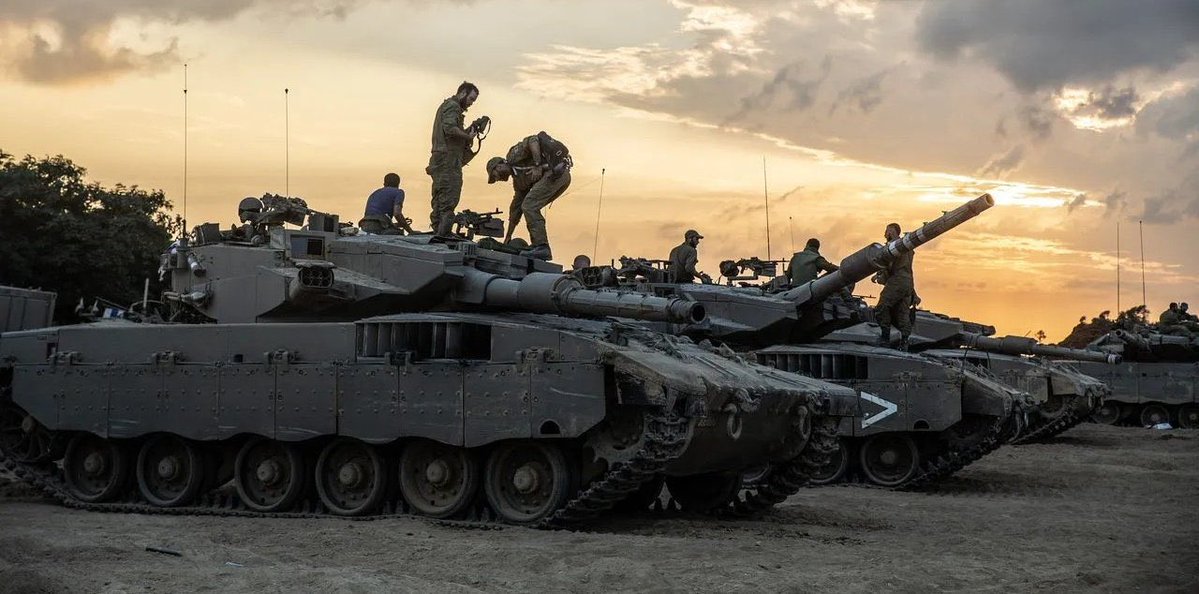
Israeli troops have been waiting to enter southern Lebanon soon after 23 September, 2024 when their warplanes started to bomb the southern part of the country and the southern district of Beirut that is deemed to be a Hezbollah stronghold.
Although, its troop divisions and military brigades switched to the north of Israel from Gaza, there are still standing on the border with Lebanon, meeting stiff resistance from Hezbollah fighters with skirmishes quite often described as heavy.
According to reports that whilst Israeli troops may have moved one or two kilometers inside the Lebanese borders from the south and the east, they couldn’t hold their positions and were soon pushed back.
These limited Israeli incursions have been continuing on a daily basis but with not much success.