Israeli Soldiers Continue to Fall in Lebanon

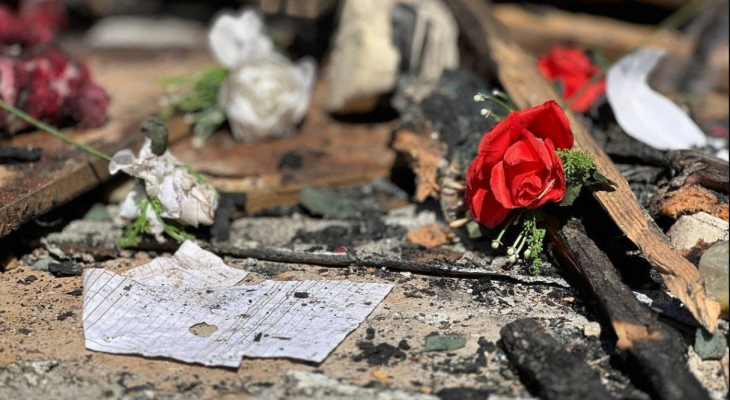
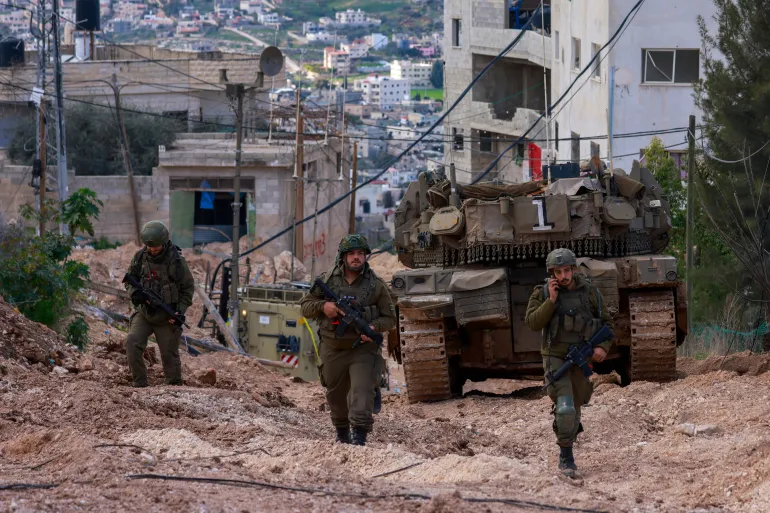
CROSSFIREARABIA – Lebanon is no walk-in-the-park for Israeli soldiers. They are being killed and maimed by Hezbollah soldiers at unimaginable rates, which shows there is facing stiff clashes and resistance there.

Saturday as confirmed by Hebrew sources, an Israeli officer and a soldier were killed following clashes with Hezbollah forces in south Lebanon. Other sources say at least four Israeli soldiers were also wounded.  

Israel’s Channel 12 reported that the officer, a captain from the Egoz unit, died from wounds he received as a result of an explosive-laden drone that detonated in the south of the country which the Israel army is attempting to occupy.

Away from this, the Israeli army also announced, Saturday that one of its soldiers from the prestigious Givati Brigade also died during clashes in south Lebanon.

After military censorship the army released details of the soldier who was killed saying he  was a sergeant, named Ohad Yaari and was 21 years old. And he may have died through an “accidental discharge of his weapon”. It said the incident was being investigated.

Hezbollah forces are continuing to attack Israeli military sites and vehicles in southern Lebanon and northern Israel. This is response to Israel’s violation of the ceasefire agreement that has been in effect since April 17 and extended until the beginning of July.

Since last 2 March around 29 Israeli officers and soldiers have been killed in southern Lebanon, including 16 since 17 April. What is noticeable as well, is that during this war more than 1245 Israeli soldiers and rank officers were wounded with 72 being in critical condition, 139 with moderate injuries as a result of direct fighting with Hezbollah forces.

Continue reading
Israeli Settlers Carry Out 1,659 Attacks in May

The head of the Commission Against the Wall and Settlements, Minister Mu’ayyad Sha’ban, stated that Israeli forces and colonists  carried out a total of 1,659 attacks during May, continuing the systematic terrorism practiced by the occupying power against the Palestinian people, their land, and their property.

In the Commission’s monthly report issued on Saturday, Sha’ban said that the occupation army carried out 1,108 attacks, while colonists carried out 551.

He affirmed that the attacks were concentrated primarily in the Hebron and Ramallah governorates, with 319 attacks each, followed by Nablus with 301 attacks and Bethlehem with 212.

Sha’ban highlighted that the attacks included direct physical violence, uprooting trees, burning fields, preventing farmers from accessing their lands, confiscating property, and demolishing homes and agricultural structures.

He pointed out that these practices coincide with the closure of large areas of Palestinian land under the pretext of security, while providing protection and support to colonists to enable them to expand within those areas. WAFA

Continue reading
Open War: 1967 Naksa Remembered

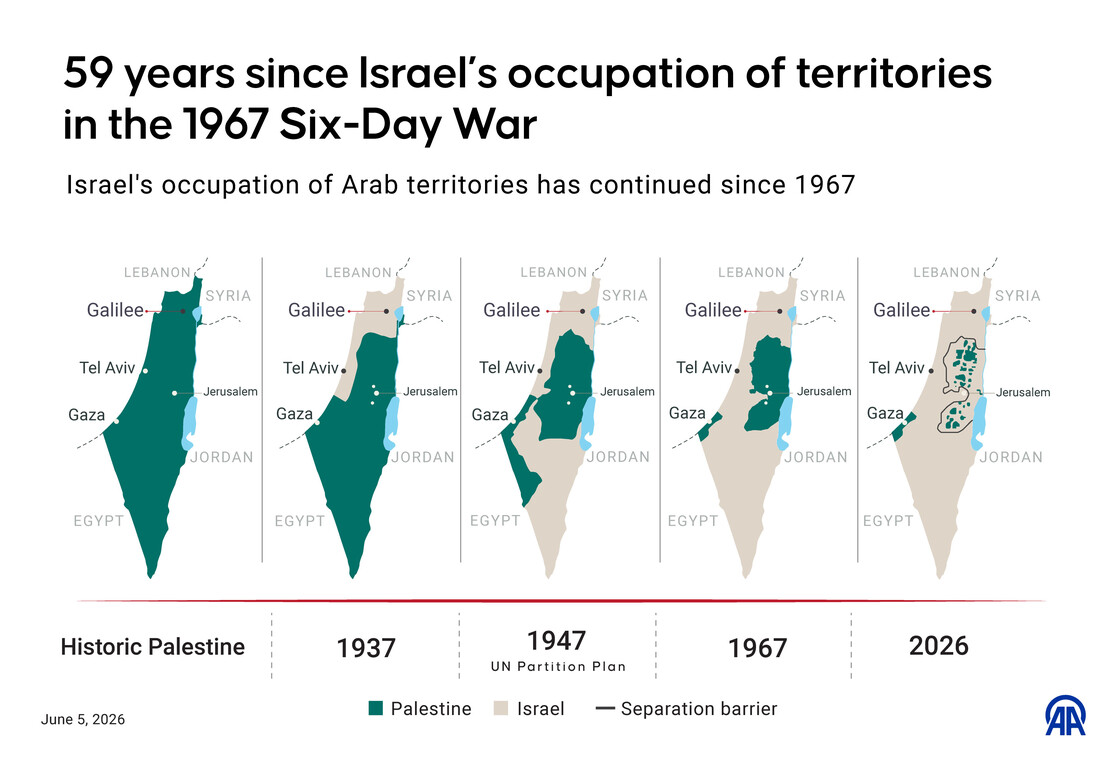
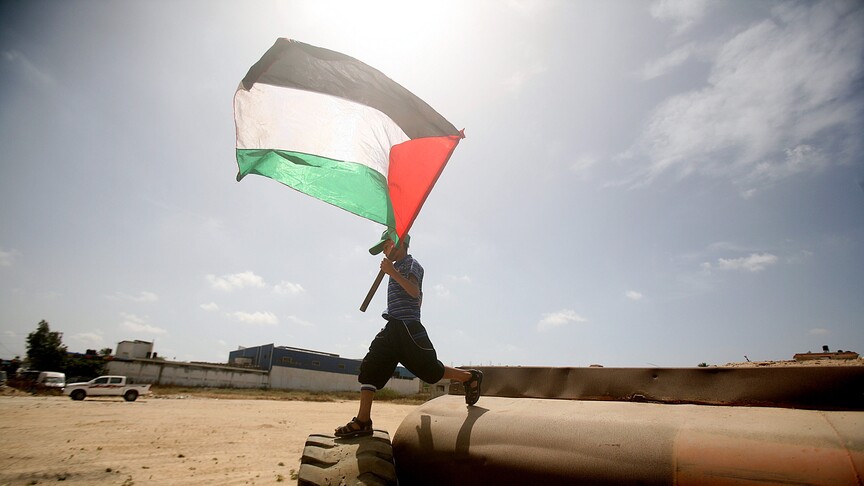
Every year on 5 June, Palestinians and Arabs remember the 1967 war, known as the Naksa (Setback).

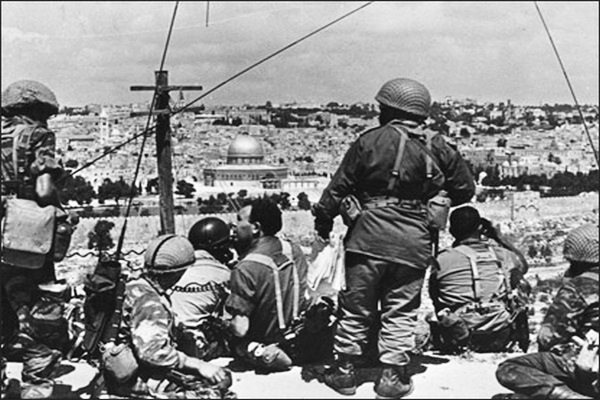
This is a pivotal turning point in the history of the Palestinian cause. The war ended with the Israeli occupation of the West Bank, including East Jerusalem, and the Gaza Strip, the Syrian Golan Heights and the Egyptian Sinai Peninsula.

This year it is the 59th anniversary of that terrible war. But the Israeli appatitite for aggression continues. Apart from its genocide on Gaza Israel has moved ahead with its settlement construction, arrests, with its military operations in the West Bank are escalating. It reflects the ongoing repercussions of the Naksa and the occupation policies that have entrenched military control and prevented a just settlement to the Palestinian question.

Six-Day War – Decades of Occupation

The war began at dawn on 5 June, 1967, with a massive Israeli air attack targeting Arab airfields and military bases. Six days later, it ended with the occupation of the remaining Palestinian territories, in addition carving up parts of Syria and Egypt.

The war’s consequences didn’t stop at altering geographical borders but also paved the way for an expansionist settlement project based on land confiscation, displacement of residents, and the imposition of new realities on the ground. These acts were in continuous violation of international law and UN resolutions that demanded an end to the occupation and withdrawal from the occupied territories.

International Resolutions: Ink on Paper

The war was followed by a series of international resolutions, most notably UN Security Council Resolution 242, which called for Israel’s withdrawal from the territories it occupied in 1967. However, the occupation continued its settlement expansion and the imposition of a fait accompli, ignoring repeated international demands to end the occupation and the respect for international law.

Over the following decades, settlements transformed from limited projects into a vast network that spread throughout the West Bank and occupied Jerusalem, undermining the prospects for establishing an independent and geographically contiguous Palestinian state.

Displacement and Settlements: Policy Since the 1967 War

The 1967 war led to the displacement of about 300,000 Palestinians from the West Bank and Gaza Strip. Displacement policies, land confiscation, and settlement expansion continued at an escalating pace in the years since.

Palestinian Central Bureau of Statistics data shows of the existence of 645 Israeli settlement sites and military bases in the West Bank as of the end of 2025, including 151 settlements and 350 outposts.

The number of settlers also rose to 778,567 by the end of 2024, while the Israeli occupation authorities continuing to seize Palestinian land and expand their settlement projects, despite their illegality under international law.

Oslo: Political Process Stalled…

The Oslo Accords in 1993 marked a significant political milestone, stipulating a transitional phase to pave the way for the establishment of an independent Palestinian state. However, the continued expansion of Israeli settlements and the imposition of facts on the ground have weakened the prospects for the success of the political process.

With successive Israeli governments, the chances for a settlement gradually diminished, and political negotiations stalled since 2014, amidst Palestinian accusations that Israel is using negotiations as a cover to continue settlement construction and seize more land.

Palestinians believe that successive Israeli policies have emptied the settlement process of its substance by reneging on signed commitments and refusing to implement the political obligations related to ending the occupation and establishing a Palestinian state.

A Military System Governing Every Detail of Palestinian Life

Following the occupation of the Palestinian territories in 1967, Israel imposed a system of military orders that granted it broad control over all aspects of life, from managing land and natural resources to arrests, trials, and civil laws.

The occupation authorities issued dozens of military orders that reshaped the legal system in the occupied territories, while military courts continued to try Palestinians according to procedures that international human rights organizations refuse to consider compliant with international standards of justice.

Prisoner support organizations also confirm that more than one million Palestinians have been arrested since 1967, while approximately 9,500 prisoners and detainees are currently held in Israeli prisons.

War on Gaza: An Extension of a Long Conflict

Palestinians believe that the ongoing war on the Gaza Strip, which began in October 2013, represents an extension of the occupation’s policies based on the use of military force and the imposition of facts on the ground by force, far removed from any political solutions that would end the conflict.

The war resulted in tens of thousands of martyrs and wounded, most of them women and children, in addition to thousands missing and widespread destruction of infrastructure and civilian facilities.

In the West Bank, raids, arrests, and settlement expansion continued, leading to the martyrdom of 1,168 Palestinians, injury of 12,666 others, the arrest of approximately 23,000, and the displacement of 33,000.

The Naksa Anniversary: ​​A Reality Persisting for 59 Years

Fifty-nine years after the June 1967 war, the effects of the Naksa remain present in the Palestinian landscape, through the continuation of the occupation, settlement activity, land confiscation, displacement of residents, and the stalled political settlement process.

As the anniversary is commemorated this year amidst the war in Gaza and the escalation of violence in the West Bank, Palestinians emphasize that the core of the conflict remains linked to the ongoing occupation and Israel’s refusal to implement international resolutions and fulfill its obligations. This has kept the Palestinian cause open to further crises and tensions over the past decades. Palestinian Information Center

Continue reading
Israeli Soldiers: ‘…We Had to Kill Arabs’

Newly disclosed testimonies by Israeli soldiers and archival documents published by Israeli newspaper Haaretz have shed new light on the displacement of Palestinians and Syrians during and after the 1967 Arab-Israeli war, with accounts describing killings, expulsions, destruction of villages and widespread looting.

The investigation, published ahead of the 59th anniversary of the war and authored by Adam Raz, a researcher at the Akevot Institute for Israeli-Palestinian Conflict Research, is based on previously unpublished soldiers’ testimonies, military records, government correspondence and archival material.

According to the report, approximately 300,000 Arabs were expelled or displaced from the West Bank, Gaza Strip and the occupied Syrian Golan Heights during and after the June 1967 war.

Haaretz said many of the testimonies originated from discussions held among Israeli soldiers in kibbutzim, Israel’s collective farming communities, shortly after the war. While some excerpts later appeared in the influential 1967 book, The Seventh Day: Soldiers Talk about the Six-Day War, numerous accounts describing alleged war crimes remained unpublished for decades.

Several testimonies cited by the newspaper describe killings of prisoners, civilians and refugees. One soldier was quoted as saying: “At first I wasn’t willing to execute Arabs who weren’t resisting. Then we came to the conclusion that we had to kill.”

Another soldier described operations in Gaza after the war, saying: “Human lives didn’t matter. You could kill, there was no law. No one would say a word to you.”

A third testimony referred to what the soldier described as “punitive expeditions” in Gaza’s refugee camps. “We caught guys, lined them up and eliminated them. In retrospect, it looks like murder,” he said.

Shoot-at-sight orders for West Bank returnees

The report also cites testimonies and archival documents alleging that Israeli forces were ordered to prevent Palestinians who had fled across the Jordan River from returning to the West Bank after the fighting ended.

According to Haaretz, soldiers received instructions to shoot people attempting to cross back into the territory.

The newspaper cited testimony later published by former Israeli lawmaker Uri Avnery, who quoted a soldier as saying troops had received orders to “shoot, to kill, without prior warning.”

Another soldier recalled questioning whether such orders applied even if families with children were crossing the river. According to the testimony, he asked: “If I hear babies crying, should I shoot then too?” and was told: “Don’t be a girl.”

Haaretz said military records indicated that by early September 1967, nearly 150 Palestinians had been killed while attempting to return from Jordan. The newspaper also cited statements by senior Israeli military officials acknowledging the existence of orders aimed at preventing refugee returns.

According to the investigation, displacement during the war was not solely the result of battlefield conditions. The report cites government discussions and military documents suggesting that senior Israeli political and military leaders viewed the departure of Arab residents as desirable and, in some cases, encouraged or facilitated it.

Among the most prominent examples highlighted by the report was the expulsion of residents from the Latrun villages of Imwas, Yalo and Beit Nuba west of Jerusalem. The villages were captured during the war and their approximately 8,000 residents were ordered to leave, according to the investigation.

Haaretz reported that the villages were subsequently demolished and their inhabitants prevented from returning. The area later became the site of Canada Park.

‘Population transfer’

The newspaper also cited testimony from Ishai Amrami, a deputy battalion commander during the war, who later described what he witnessed as “an attempt at massive population transfer.”

The investigation further details events in Qalqilya and other communities near the Green Line, where residents were allegedly encouraged or forced to leave through military pressure, loudspeaker announcements, transportation arrangements and destruction of homes.

According to the report, tens of thousands of Palestinians also fled or were displaced from refugee camps in the Jericho area and elsewhere in the West Bank. Many carried memories of the 1948 Nakba and feared another permanent displacement.

The report revisits events in Gaza as well, where soldiers described raids, arrests and killings in refugee camps after the war. One soldier was quoted as saying: “We would roam through refugee camps in Gaza and carry out purges.”

Another testimony stated: “Every man we saw was a combatant,” while acknowledging that civilians may also have been among those killed.

Beyond the Palestinian territories, Haaretz reported that approximately 120,000 Syrians left or were expelled from the Golan Heights after Israeli forces captured the territory from Syria.

The newspaper cited military documents and testimonies indicating that villages in the Golan Heights were later demolished to prevent residents from returning. According to the report, Israeli commander Elad Peled later described a decision to bring in bulldozers and destroy villages “so there would be nowhere to return.”

Haaretz also cited reports submitted by Syria to the United Nations and records from the International Committee of the Red Cross alleging intimidation, forced displacement, looting and destruction of civilian property in the occupied territory.

Israel warned of legal repercussions

The investigation further describes what it says was widespread looting in areas captured during the war. According to the report, soldiers, civilians and local authorities participated in the removal of property from Palestinian and Syrian homes, schools, businesses and public institutions.

Among the documents cited is a previously unpublished 1967 letter by Theodor Meron, then legal adviser to Israel’s Foreign Ministry. According to Haaretz, Meron warned that expulsions of civilians constituted “a serious violation of the Geneva Convention” and could create diplomatic complications for Israel.

The report says Israeli officials were aware of legal concerns surrounding the expulsions but nevertheless approved measures aimed at preventing displaced populations from returning and consolidating control over newly occupied territories.

The Six-Day War began on June 5, 1967, and ended with Israel capturing the West Bank, East Jerusalem, the Gaza Strip, the Sinai Peninsula and the Golan Heights. While Israel later returned Sinai to Egypt under the 1979 peace treaty, it continues to occupy the West Bank and the Golan Heights.

For Palestinians, the conflict is remembered as the Naksa, or setback, which triggered a new wave of displacement nearly two decades after the 1948 Nakba and remains a defining event in collective Palestinian memory. Anadolu

Continue reading