Israel Bombs Gaza Into The Dark Ages

Israel’s deliberate cut-off of electricity to the Gaza Strip for almost a full year now has had catastrophic effects and long-lasting humanitarian repercussions, affecting every aspect of residents’ lives. The subjection of over two million individuals to deplorable living conditions by Israel, including cutting off their electricity, is a tool of its ongoing genocide against the Palestinian people.

Total black-out

Cutting off electricity to a 2.3 million-person population spread over 365 square kilometres for almost a full year is a highly unprecedented measure in the history of conflicts and wars, as it is not only the product of military operations but also a political decision. Israeli officials have clearly stated that their goal is to annihilate the Palestinians in the Gaza Strip.

Israeli Defense Minister Yoav Gallant announced, on 7 October 2023, “a complete siege … no electricity, no water, no food, no fuel. We are fighting human animals, and we act accordingly.” Subsequently, on the same day, Israeli Minister of Energy and Infrastructure Yisrael Katz decided to cut off the Gaza Strip’s electricity supply, and the Minister of Defense decided to prevent the entry of any trucks carrying fuel.

Following these decisions, the 120 megawatt feeder lines from Israel to the Gaza Strip were disrupted on 8 October 2023, and this disruption has continued to the present day. As part of its genocidal war against Palestinians, Israel has also prohibited the entry of fuel into the Strip, shutting down the sole power plant in the enclave. The power plant produced a maximum of 80 megawatts until its fuel stock ran out on 10 October 2023, leaving the Strip completely dark.

Targeting solar panels

Israel did not stop at these two measures to cut off electricity to the Gaza Strip; instead, it launched a concerted campaign over the course of several months to seize alternative energy sources that some residents and service facilities relied on. These attacks targeted solar energy systems and panels installed on building roofs as well as public and private facilities, such as bakeries, hospitals, restaurants, and shopping centres. This suggests that Israel has a deliberate strategy to destroy any source of electricity, even a small amount of it, in order to guarantee total blackout conditions for residents of the Gaza Strip.

Recently, the Israeli occupation army bombed a number of residences, as well as Internet and electricity charging stations, that depend on small solar panels. Dozens of homes were also bombed, apparently for this specific purpose, without any security or military necessity.

Onset crises

Prior to the ongoing genocide, the Gaza Strip had been subjected to an arbitrary and illegal 17-year-long blockade that caused an acute electricity crisis. The shortfall in electricity supply amounted to roughly 60%, and conditions worsened every summer and winter. A daily total of 450 to 500 megawatts is required by the Strip, and this amount increases to 600 megawatts during the winter. Still, the supply was limited to 200 megawatts at most, compelling the local electricity authorities to implement an electricity programme which, under ideal conditions, consisted of eight hours of power followed by eight hours of blackout.

Because of the unpredictable and intentional power outages, the Gaza Strip has experienced multiple debilitating crises, with hospitals and health facilities being forced to close multiple times due to damage to solar energy systems and electricity generators. The situation has been made worse by the lack of fuel and ongoing failure of the surviving generators, attributable to their constant use. Consequently, a number of hospital patients—including infants in incubators, injured individuals, and ventilator-dependent patients—have died, and continue to die, as a result of the power outage disrupting vital medical services. The outage has also caused the disturbance of medical laboratories, impeding the performance of essential tests, and causing supplies and medications to be stored improperly.

Power outage, a weapon of war

The power outage assists in Israel’s use of starvation as a weapon of war, as well. Following the decision to shut off the water supplies to the Gaza Strip during the first days of the Israeli military assault, the power outage also resulted in the cessation or obstruction of desalination plant operations, particularly in northern Gaza, and triggered the now-entrenched practice of using starvation as a means of systematically displacing residents from the northern parts of the Strip.

The lack of fuel and the power outage also made it more difficult for municipal crews to deliver water that they are able to extract from wells. Hundreds of thousands of residents and displaced people have been forced to drink contaminated water during the ongoing genocide, and the per capita share of water in the enclave has dropped by 97% amid the extensive destruction of the Strip’s water infrastructure.

No fuel, no water

In contrast to a daily consumption rate of approximately 84.6 litres per person in 2022, the per capita share of water in the Gaza Strip has dropped to between three and 15 litres per day, according to a joint report released by the Palestinian Central Bureau of Statistics and the Palestinian Water Authority. The report states that approximately 65 sewage pumps and six wastewater treatment plants have shut down as a result of the power outage, resulting in numerous environmental issues and aiding in the spread of epidemics and contamination of the groundwater reservoir. Skin, respiratory, hepatitis, and other infectious diseases have spread as a result. Additionally, the shutdowns have disrupted sanitary landfills and solid waste collection; the rate of waste collection was estimated to be 98% prior to the genocide, and is currently less than 20%.

Due to Israel’s arbitrary blockade and decision to prevent the entry of humanitarian aid and essential materials like fuel into the Gaza Strip, even partial solutions—e.g. the entry of limited quantities of fuel provided by the United Nations to operate generators in some hospitals, water stations, and water wells—remain insufficient and subject to frequent interruptions. This has increased the psychological burden on Palestinians in the Strip and put hundreds of thousands of residents and patients in constant danger.

The Office for the Coordination of Humanitarian Affairs (OCHA) reported on 24 November 2023 that 75,000 litres of fuel entered Gaza from Egypt, following an Israeli decision on 18 November to allow the daily entry of small amounts of fuel for essential humanitarian operations. Notably, the Strip requires about 200,000 litres of fuel on a daily basis.

Eliminating jobs

The power outage has also impacted all other aspects of life, including affecting the few remaining manufacturing jobs; irrigation operations for agricultural lands; damaging dozens of tons of aid that need to be refrigerated; disrupting ongoing attempts at distance learning; and eliminating thousands of remote job opportunities. The outage has resulted in catastrophic damage and the deaths of many residents, with long-term consequences that will last for years to come. Euro-Med Human Rights Monitor emphasises that this situation has resulted in serious psychological scarring to the population, with 10s of thousands of young children growing up without ever seeing electricity.

Studying in the dark

Muhammad Ishaq Al-Ghazi, a researcher pursuing a master’s degree at Gaza’s Al-Azhar University, spoke with the Euro-Med Monitor team. “The power outage has had a significant impact on our lives,” stated Al-Ghazi. “My academic career was affected as a result. I struggled with studying in the dark and had to walk three kilometres to see a friend who had a broken solar panel so I could pass exams.”

“We have returned to primitive life because of the power outage,” Kholoud Najib Al-Habashi, from the northern Gaza Strip, told the Euro-Med Monitor team. Al-Habashi spoke of her time spent baking over a wood fire: “There is no oven, so we are forced to knead by hand and bake on a tray directly over the fire rather than in an electric or gas pot. There is no refrigerator, no washing machine, and no nighttime lighting. Everything is primitive and exhausting.”

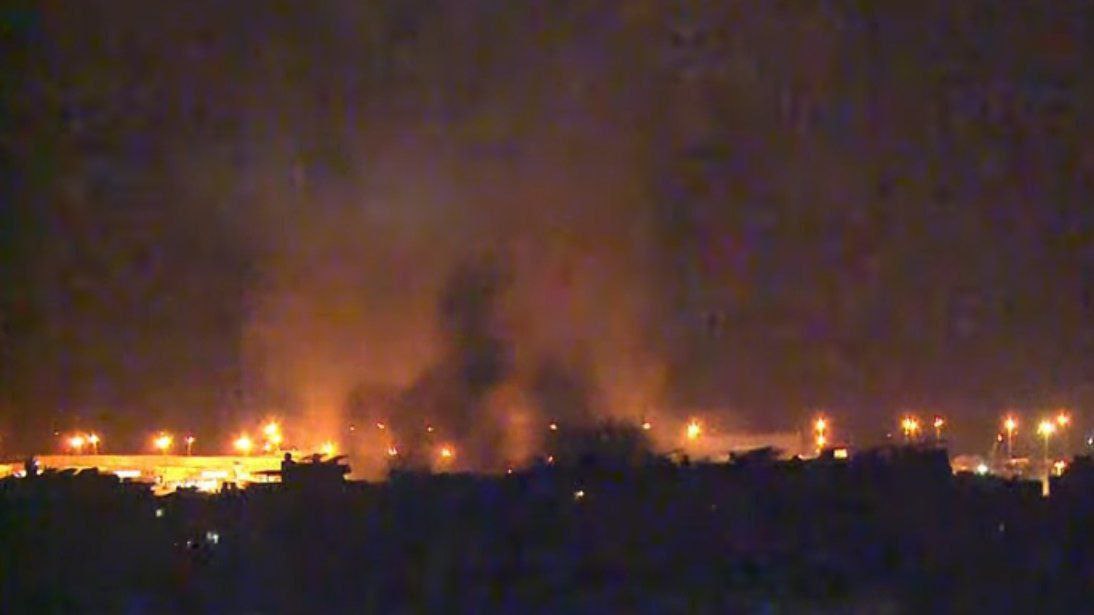
Thirteen-year-old Salem Hamid stated, “Since the start of the war, there has been no electricity. Except for Israeli lighting bombs and missile glow, the night descends into total darkness and terror. For hours, I have to gather cardboard and wood, so my mother can bake and cook for us over the fire.”

Returning to primitive life

Many of the hundreds of thousands of Gaza Strip residents who are compelled to light wood fires in place of using cooking gas and electricity to cook and carry out daily tasks have already started to experience respiratory and vision issues that will likely have long-term or permanent effects on their health.

The International Criminal Court issued arrest warrants on 5 March 2024 against two Russian officers suspected of being responsible for airstrikes carried out by Russian forces under their command. These attacks targeted Ukraine’s electrical infrastructure, including several power plants and substations. The Court found that while some of these attacks were directed against civilian targets, others targeted military-grade facilities and inflicted collateral damage on civilians and their property that was obviously disproportionate to the anticipated military advantage.

Accordingly, the Court classified these acts as war crimes under the Rome Statute. The Court further concluded that the airstrikes constituted a “recurring pattern of acts” against civilians in accordance with state policy and that they caused the Ukrainian people great suffering, in accordance with the definition of “inhumane acts”. As a result, the Court also determined that these actions qualified as crimes against humanity under the Rome Statute.

The international community must move to protect Palestinians, just as it has Ukrainians. It must act quickly to end Israel’s illegal blockade of the Gaza Strip; supply it with electricity and maintain these networks of electricity; rebuild other critical infrastructure that the Israeli bombing has destroyed; and guarantee that electricity is delivered to all facilities, starting with water and sanitation services and hospitals. This urgently requires the provision of generators and fuel.

The international community must uphold its obligations under international law to stop Israel from committing genocide against the Palestinian people in the Gaza Strip, a crime that has been ongoing since 7 October 2023. It must use genuine pressure tactics to compel Israel to immediately cease all of its crimes, including genocide, and to abide by international law and the ruling of the International Court of Justice in order to safeguard Palestinian civilians in the Strip from further atrocities.

The International Criminal Court must act quickly to issue arrest warrants for Israeli Prime Minister Benjamin Netanyahu and Defense Minister Yoav Galant; broaden the scope of its investigation into individual criminal responsibility for crimes committed in the Gaza Strip, to include everyone involved; issue warrants for their arrest; hold them accountable; and categorically declare Israel’s ongoing crimes to be genocide.

As part of their international moral and legal obligations, all nations must put an end to all forms of military and financial support of, and political cooperation with, Israel. This includes an immediate stop to all arms sales, exports, and transfers to Israel, including export licenses and military aid.

All nations that cooperate with Israel in committing crimes by providing it with any kind of direct support or assistance (most notably, the United States), must be held accountable. Giving aid and engaging in contractual agreements with Israel relating to the military, intelligence, politics, law, finance, and the media, among other domains that might help its crimes continue, is enabling Israel to commit its atrocities against Palestinians. The relevant employees and decision-makers in these countries must be held accountable, as they are complicit and partners in the Israeli crimes committed in the Gaza Strip, including the crime of genocide.

The international community must move quickly to address the root cause of the 76-year-long suffering and persecution of the Palestinian people, which is the Israeli occupation and settler colonisation of Palestine. It must put an end to Israel’s illegal occupation of the Occupied Palestinian Territory, including the Gaza Strip; abolish the apartheid system that has been imposed on all Palestinians for decades; lift the illegal, 17-year blockade on the Gaza Strip and its inhabitants; and take decisive action to support the path of Palestinian liberation and Palestinians’ right to self-determination.

This article is reprinted from the EuroMed Human Rights Monitor website

Continue reading
The Mass Graves of Gaza

 Thousands of families continue to bury their children in random mass graves, a phenomenon brought on by over 11 months of systematic killings of Palestinians by Israel in every Gaza Strip governorate. The situation is worsening as a result of the Israeli occupation army’s constant targeting of people who attempt to enter these makeshift cemeteries to bury their loved ones.

Euro-Med Monitor has released an infographic design that shows the locations and dates of approximately 30 randomly established mass graves in the northern, central, and southern governorates of Gaza, containing roughly 3,000 dead victims of Israel’s genocide in the enclave. The infographic also depicts 120 random mass graves in which three or more people are buried, and which were established in the Gaza Strip between now and last October.

Random graves

Since many random graves are found inside houses and other private spaces and some are periodically moved to new locations, the majority of them are still unrecorded. Thus, the number and location of these graves remain constantly changing. Furthermore, the Israeli occupation army is continuously bulldozing both makeshift cemeteries and official graves, disfiguring the victims’ bodies, and even stealing some of them, in grave violation of international law.  

Al-Batsh Cemetery, located in Gaza City’s eastern Al-Tuffah neighbourhood, is the largest documented mass grave in the Gaza Strip. Between 500 and 1,000 people have been buried there since the cemetery’s founding on 22 October 2023, just two weeks after Israel’s genocidal war on Gaza began.

Euro-Med Monitor field teams have been documenting the mass and random graves across the enclave since the establishment of the first mass grave in Al-Shifa Medical Complex on 15 October 2023, when it became impossible to transfer the dead victims to the official cemetery in Gaza City due to the large number of corpses and the danger presented by Israeli forces. Over time, more of these mass graves have been created, one after another, eventually totaling at least 120.

backyards, courtyards

These graves have been established throughout residential areas, in the backyards and courtyards of homes and hospitals, public road intersections, wedding halls, sports fields, schools, and mosques.

“Random mass graves have become something of a phenomenon in Gaza,” according to a Euro-Med Monitor field researcher in Gaza City whose name is being withheld due to safety concerns. “They are seen on the roads, in traffic islands, [and] near markets and residential buildings at random.”

Added the researcher: “Residents resort to using various tools as tombstones to write the names of the victims on—instead of cement and stone—including plastic food trays, plastic barrels or gallon jugs, wood or cardboard, and other household items.”

Families are forced to create these random graves due to the difficulty of accessing the main graves as a result of the continuous Israeli bombing and targeting of individuals, in addition to Israel’s division of the Gaza Strip’s governorates and destruction of infrastructure; imposition of the blockade; scarcity of fuel and means of transportation; and the fact that the main graves are already filled with corpses due to the large and ever-increasing number of victims.

Some of the officially documented mass graves contain the remains of yet-to-be identified people, buried months ago during the ongoing genocide.

Euro-Med Monitor teams have documented 29 random mass graves in the various governorates of the Gaza Strip. These include:

North Gaza Governorate:

1. A mass grave in Al-Awda Market next to the Jabalia refugee camp police station, established on 5 December 2023, containing about 120 bodies.

2. A mass grave next to the Indonesian Hospital in the Tel al-Zaatar neighbourhood, north of Jabalia Camp, established on 18 November 2023, containing about 200 bodies.

3. A mass grave in the Jabalia Camp market, established on 7 December 2023, containing about 100 bodies.

4. A mass grave in the backyard of Jabalia Preparatory School (A), in Jabalia Camp, established on 28 December 2023, containing more than 55 bodies.

5. A mass grave in Al-Rifai School, opposite Al-Omari Registry in Jabalia Al-Balad, containing more than 70 bodies.

6. A mass grave in Halima Al-Sadia School, south of Jabalia Al-Nazla, containing more than 250 bodies, some of whom are still unidentified.

7. A mass grave in Al-Yaman Hospital in Jabalia Camp, established on 11 December 2023, containing about 44 bodies.

8. A mass grave built on a traffic island along Sultan Street in Block (2) in Jabalia, established in November 2023.

Gaza City Governorate:

9. A mass grave in the courtyard of Al-Shifa Medical Complex, established on 12-14 November 2023, containing approximately 179 bodies.

10. Al-Sabra Cemetery (1), established on 25 November 2023, containing more than 100 bodies.

11. Al-Istiqlal Street Cemetery (Al-Qaws) near the Al-Sha’biya intersection in Al-Daraj neighbourhood, containing more than 200 bodies.

12. Al-Sabra Cemetery (2), near Al-Dahshan Street, established on 31 December 2023.

13. Al-Batsh Cemetery in Gaza City’s eastern Al-Tuffah neighbourhood, established on 22 October 2023, containing between 500–1,000 bodies.

14. A mass grave in Al-Sahaba Street, near Ezzedine Al-Qassam Mosque in the central Gaza City neighbourhood of Al-Daraj, established in December 2023 and containing 150 bodies.

15. A mass grave in Al-Sidra Street in the central Gaza City neighbourhood of Al-Daraj, established in December 2023 and containing about 20 bodies.

16. Shahibar Cemetery in Al-Sabra neighbourhood, established on 18 November 2023 and containing about 100–120 bodies.

17. Ishtiwi Cemetery in Al-Zeitoun neighbourhood, established on 21 November 2023 and containing about 15 bodies.

18. A mass grave near Al-Shawa Square, east of Gaza City.

Deir al-Balah Governorate (central Gaza Strip):

19. A mass grave in UNRWA school in al-Bureij refugee camp in the central Gaza Strip, established on 14-15 January 2024.

20. A mass grave in a girls’ preparatory school in al-Maghazi refugee camp in the central Gaza Strip, established on 9 January 2024, containing approximately 14 bodies.

Khan Yunis Governorate (southern Gaza Strip):

21. A mass grave in western Khan Yunis, established on 22 November 2023, containing approximately 111 bodies.

22. A mass grave in Abdul Karim Al-Karmi School in the town of Abasan Al-Kabira, in the east of Khan Yunis, established on 14 January 2024, containing approximately 9 bodies.

23. Three mass graves in Nasser Hospital, established in January 2023, containing approximately 392 bodies.

24. A mass grave in Al-Amal Hospital, established on 29 January 2024, containing approximately 4 bodies.

25. A mass grave at Al-Aqsa University, established on 22 January 2024.

26. A mass grave at the UNRWA Industrial College, in the west of Khan Yunis, established on 23 January 2024, containing approximately 14 bodies.

27. Al-Agha Cemetery, established by the Al-Agha family on their land after the Israeli army destroyed the family’s main cemetery in the Austrian neighbourhood, west of Khan Yunis city, established on 22 January 2024.

Rafah Governorate (southern Gaza Strip):

28. A mass grave in the Tel al-Sultan neighbourhood, in the west of Rafah, established in December 2023, containing approximately 80 bodies.

Israel’s ongoing military attacks and direct targeting of Palestinian civilians by shelling, sniping, or shooting from quadcopter drones continue to prevent families from reaching regular cemeteries in which to bury their relatives in a dignified manner that respects human dignity, and make the process of counting, registering, and identifying all of the victims impossible.

Since most of the victims have not died from epidemics or infectious diseases, the accumulation of dead bodies or their improper burial does not present a serious health risk to the public. However, if the remains of these bodies—including feces—leak into residents’ drinking and use water sources, this may result in a variety of intestinal diseases among the living.

Israeli attacks on cemeteries

Since the start of Israel’s genocide in the Gaza Strip, Euro-Med Monitor teams have documented numerous Israeli attacks on dozens of cemeteries through deliberate shelling and targeting, exhuming and vandalising graves, and stealing dozens of corpses. These attacks have pushed residents to create new random cemeteries and transfer the bodies of their relatives there.

Israel’s imposition of inhumane conditions on Gaza Strip residents constitutes a serious violation of the provisions of international humanitarian law (IHL). IHL guarantees respect for the dignity of the dead and the proper treatment of corpses, especially the Fourth Geneva Convention of 1949, which stipulates in Article 17 that conflicting parties must “take the necessary measures to ensure that the dead are buried in a dignified manner and that their honour is protected”.

The World Health Organisation and the International Committee of the Red Cross must play their role in ensuring the dignity of the bodies buried in dozens of mass graves in Gaza, and ensure their burial in accordance with international standards.

In addition to applying pressure from abroad on Israel to immediately end its genocide against the Palestinian people in the Gaza Strip, the international community must compel Israel to follow international law, which stipulates that bodies must be respected and protected during armed conflicts. It also requires Israel to take all reasonable steps to prevent the dead and deceased from having their bodies mutilated, and to ensure that they are buried properly.

EuroMed Human Rights Monitor

Continue reading
Israel no Longer Controls The Cards – Military Expert

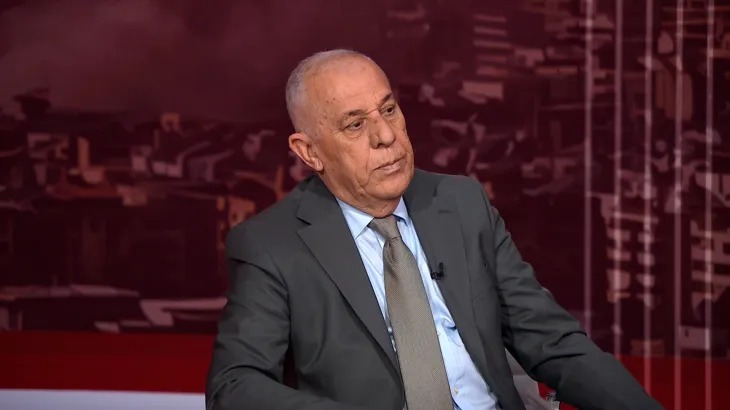
Military expert Dr. Nidal Abu Zeid said Washington trusts what Israeli Defense Minister Yoav Galant says rather than the utterings of Prime Minister Benjamin Netanyahu. Because of this, it will not allow his dismissal at this critical time after 347 days of the extermination war on Gaza.

Disagreements

Abu Zeid added to Jordan24 the ongoing disagreements between Netanyahu and Galant confirms the structure of the occupation army is eroding. It shows Netanyahu’s move to dismiss Galant is linked to the latter’s view there is a need to withdraw from the Gaza Strip.

Netanyahu and the ruling right however, see stopping the military onslaught on Gaza now would be an unacceptable defeat.

The military and strategic expert pointed out “all indicators support the option of the dismissal of Galant infavor of the proposed alternative, which is the appointment of Gideon Sa’ar,” to take his place. But “if Galant, who has a military background, has failed to achieve any noteworthy achievement in Gaza, how will Sa’ar succeed,” he asks.

Changing circumstances

Regarding the possibile launching of a military operation against Hezbollah in southern Lebanon, Abu Zeid believes all circumstances indicate Israel is unable to launch a large-scale ground military operation against Hezbollah.

He added if it did so, it would be an ill-considered military adventure, noting the occupation army, after its major losses in Gaza, is now unable to launch a successful military operation “at least for the time being”.

Abu Zeid added that the statements of the head of Hamas Yahya Sinwar, confirms that the resistance, after 347 days, remains cohesive. This is in contrast to a state of disintegration shown by the media discourse of the Israeli military.

Can of worms

It shows the army in a complicated situation between a northern front it is unable to control, an intractable Gaza front and a new front in the West Bank that may lead to a security deterioration among Israel’s Arab population inside the Green Line, in addition to the Houthi penetration that has taken out Israeli deterrence from a distance of 2000 kilometers away.

Continue reading
Jordan Polls: Will Islamists Dominate Politics Now?

Islamist made a huge win in Jordan’s  20th parliamentary elections, registering a never-before number of seats the Kingdom’s bicameral legislature.

The Kingdom’s Independent Election Commission (IEC), chairman Musa Maaytah, announced that the Islamic Action Front, which is the political arm of the Muslim Brotherhood in Jordan, won a massive 31 seats to the Lower House in the latest parliamentary elections held, Tuesday, including four women.

The party is elated to have so many members in a reformed Lower whose total seats today stands at 138 including 18 quota seats allocated to women and who won nine extra seats outside the quota hiking up their total 27.

“We thank our great Jordanian people who gave us this precious trust with nearly half a million electoral votes for the national list, in addition to the local lists. In this context, we affirm that the first winner today is the homeland and the advanced results we have achieved will enhance the strength, resilience and stability of our state. The supreme national interests have always been in our sights and are the focus of our attention,” an IAF party statement emphasized.

“We affirm our firm approach in seeking to serve our people, defend their causes, bear the concerns of its citizens, strive to achieve their hopes, and remain steadfast in our choice to support the Palestinian resistance, which constitutes the first line of defense for Jordan in the face of Zionist ambitions and displacement and alternative homeland plans,” it tolds Quds Press.

The current parliamentary elections were held under a new electoral law, which increased the number of members of the House from 130 to 138, 41 of whom were allocated to political parties.

The elected Lower House is part of Jordan’s bicameral parliament that includes a Senate of 69 members appointed by King Abdullah. Parliament can withdraw confidence from the government, pass laws, and issue legislation.

105 party members

This is the first elections in Jordan to be fought along party lines. Maaytah said the 105 party members won seats in this elections according to the Jordan Times. He added their win represents 75 percents of the total seats.

He added that Al Mithaq Party won 21 seats, Irada Party 19 seats and the Taqadum Party clenched eight seats.  

According to the IEC the overall voter turn out was 32.25 percent with 1,638,348 million out of an eligible electorates of 5,115,219, who cast their votes in the elections.

Continue reading
Mawasi: Latest Israeli Massacre With US Bombs

 The Israeli army’s horrific massacre of displaced families living in ramshackle tents in a so-called “humanitarian zone” in the southern Gaza Strip is further proof that the international community’s silence during the 11-month genocide is encouraging Israel to carry out its crimes.

The latest mass killing fuelled by the international community’s refusal to act occurred in the Strip’s al-Mawasi Khan Yunis area, which the Israeli army had designated a “safe zone”. Initial investigations conducted by Euro-Med Monitor reveal that on Tuesday 10 September, after midnight, Israeli warplanes dropped three American-made MK-84 bombs on a group of displaced people sleeping in their tents in the Mawasi area. The explosions created three holes several metres deep and in diameter, burying about 20 tents with the families still inside. 

Israel’s use of multiple highly destructive bombs on a densely populated area full of displaced people—and its consequent killing of sleeping civilians—is unjustifiable, whether or not its claims of the presence of armed factions in the area are accurate.

Since the displaced people’s tents were situated in a region with sandy dunes, many of them—including tents with entire families inside—were buried beneath the sand. The initial casualty toll, counting both the dead and the wounded, is over 60.

The Israeli army’s intention to kill the greatest number of Palestinian civilians possible is evident in its use of American bombs with a wide destructive capacity in an area full of tents housing displaced people. It should be noted that no evacuation warnings were issued prior to the bombing.

This massacre comes only one month after Israeli forces bombed Gaza City’s Al-Tabi’in School, killing over a hundred Palestinians.

Israel remains bound by the regulations of international humanitarian law, particularly the requirements to protect civilians and adhere to the principles of distinction, proportionality, and military necessity, i.e. to take necessary precautions. This involves deciding how military operations are to be conducted and what kind of weaponry is to be employed in order to reduce the number of civilian casualties.

The shameful silence and indifference surrounding these unprecedented massacres, which blatantly and repeatedly target civilians with the clear intention of exterminating Palestinians in large numbers, serves as a green light for Israel to continue committing such atrocities.

The United States is complicit in this individual crime, as well as in Israel’s genocide of Palestinians, because it continues to supply Israel with weapons, despite knowing that the Israeli army uses these massively destructive weapons to regularly kill hundreds of civilians.

Israel’s bombing strategy reveals a deliberate policy to target Palestinian civilians across the entire Gaza Strip; spread fear among them; deny them stability or shelter, even for brief periods of time; force them to repeatedly relocate to new shelters; subject them to life-threatening conditions; and ultimately destroy them. The bombing continues throughout the entire Strip, with Israel targeting places designated as humanitarian areas, mainly shelter centres, including those set up in UNRWA-run schools.

Civilians in the Gaza Strip are paying the price every day for Israeli military attacks that seriously violate the rules of international humanitarian law, especially the principles of distinction, proportionality and military necessity.

As part of their international obligations, all nations must put an end to Israel’s war crimes and crimes against humanity in the Gaza Strip; safeguard civilians there; ensure that Israel abides by international law and the rulings of the International Court of Justice; and impose effective sanctions on Israel by halting all forms of military, financial, and political cooperation and support. This includes an immediate stop to all arms sales, exports, and transfers to Israel, including export licences and military aid.

All nations that cooperate with Israel in committing crimes by providing it with any kind of direct support or assistance must be held accountable, most notably the United States. Giving aid and engaging in contractual agreements with Israel relating to the military, intelligence, politics, law, finance, and the media, among other domains that might help its crimes continue, is enabling Israel to commit its atrocities against Palestinians.

Continue reading