US President Donald Trump said Thursday that he “would like to see” Israel allow international journalists report from the besieged Gaza Strip.
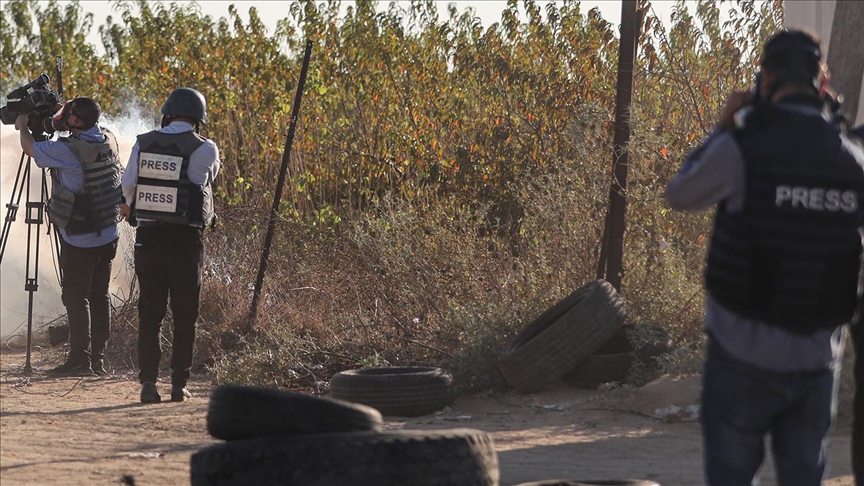
Since October 2023, Israel has barred international journalists from entering Gaza, with rare exceptions granted for highly curated embeds with the Israeli military. Most reporting from Gaza has come from local Palestinian reporters, at least 184 journalists of whom have been killed by Israel since the war began, according to the Committee to Protect Journalists according to Anadolu.
“I would like to see it happen. I would be very fine with journalists going in,” Trump told reporters in the Oval Office. “It’s a very dangerous position to be in, as you know, if you’re a journalist, but I would like to see it.”
Late Sunday, Al Jazeera Arabic’s Gaza correspondents Anas al-Sharif, Mohamed Qraiqea, and three others were killed in an Israeli strike targeting a journalists’ tent near the Al-Shifa Hospital in Gaza City.
Rejecting international calls for a ceasefire, Israel has pursued a brutal military offensive on Gaza since October 2023, killing more than 61,000 Palestinians, almost half of them women and children. The military campaign has devastated the enclave, which is facing famine.
Despite mounting international concerns about escalating ethnic cleansing and genocide against Palestinians, Israel’s Security Cabinet on Friday approved Prime Minister Benjamin Netanyahu’s plan to expand military operations and occupy Gaza City.
Last November, the International Criminal Court issued arrest warrants for Netanyahu and his former Defense Minister Yoav Gallant for war crimes and crimes against humanity in Gaza.
The International Court of Justice, in its interim ruling on Gaza last year, said that it is “plausible” that Israel’s actions could amount to genocide.
The court issued provisional measures, requiring Israel to abide by international law and ensure aid and services reach Palestinians under siege in Gaza.
A legendary political prisoner, recently freed after 41 years in French prison, Georges Abdallah offers a revolutionary manifesto where he speaks about his unwavering views on Palestine, resistance, liberation, and the future of the Arab world.
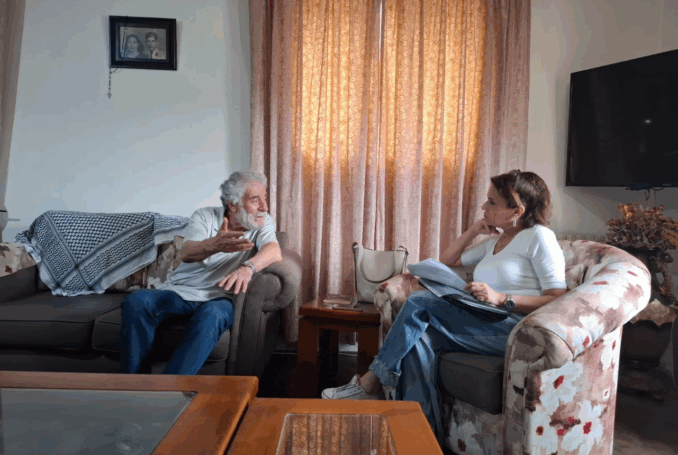
Our meeting with the legendary Georges Abdallah was scheduled for four o’clock on a Wednesday afternoon. We left Beirut around 11:30 a.m. to arrive on time at his home in Koubeiyat, in the north of the country. In Tripoli, Dalal Shahrour and Nazira El Hajj, two women activists from the Beddawi and Naher El Bared Palestinian refugee camps, joined us, as eager as we were to meet one of our remaining heroes.
We arrived at 3:30, and were welcomed by Abdallah’s niece, his brother Robert, and his sister. We joined them on the balcony of their warm family home and were greeted with a cold drink and sweets, a custom in Arab culture for joyous occasions. We congratulated the family on Abdallah’s release and inquired about the time allocated for the interview. Robert told us we would have half an hour, and we tried to bargain for more.
A bit later, we were allowed inside the house where Georges was sitting. He stood up and greeted us warmly, as if we had known each other for years. His presence was so powerful even before he uttered a word. We briefly introduced ourselves and The Palestine Chronicle and presented him with a copy of a book by another revolutionary before diving into our countless questions.
In our one-hour conversation, we touched on Georges’ life in prison and after his liberation, before moving on to issues like Palestine, Lebanon, the future of Zionism as embodied in the Israeli entity, the crisis of the Palestinian national project, the relationship between socialism and Islamic resistance, and more. Georges’s iron will and solid principles are intact and present in every breath he takes and every word he utters. He is convinced that the resistance in Palestine and Lebanon is the answer to the ongoing Israeli occupation and that Israel, which embodies the Western imperialist project, has reached the final chapter of its existence.
Read more in the full interview.
‘Prison Does Not Change Fighters’
Samaa Abu Sharar (The Palestine Chronicle): We all know George Abdallah as an international activist who dedicated his life to just causes, most notably the Palestinian cause and the fight against colonialism in all its forms. How would you present yourself?
Georges Abdallah: (I am) a fighter amongst our Arab fighters, a fighter of the Palestinian revolution, and a fighter of the Lebanese resistance against imperialist and Zionist oppression. Our activism stems from our assessment that the Zionist entity is an organic extension of Western imperialism. We consider that this entity has currently reached the final chapter of its existence, and, therefore, it will unleash all its barbaric and murderous reserves on our people. The masses of our people must prepare for this stage, keeping in mind that they will prevail over this entity.
What you say is completely in line with how many people view you: as an icon of resistance who represents the correct compass of our great struggle. So there is no difference between how Georges Abdallah sees himself and how people see him.
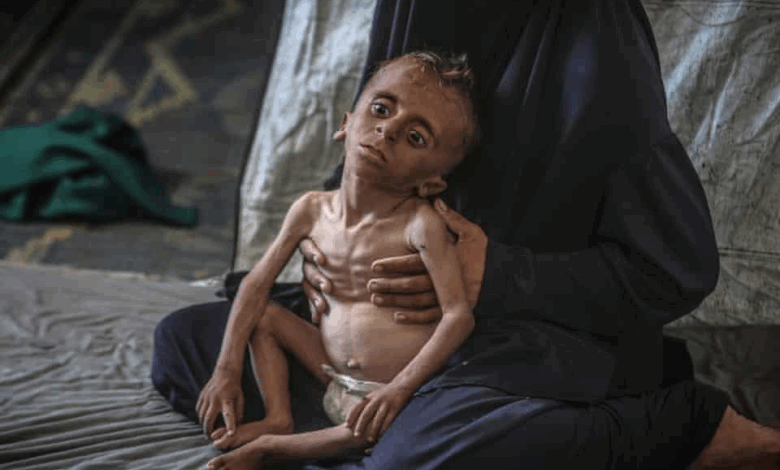
Our people have great confidence in the Palestinian resistance, so any expression of resistance is highly esteemed. Our people are prepared to provide a lot of support and facilitate the struggle. What is happening in Gaza and the West Bank today confirms this. As an ordinary fighter in the ranks of the resistance, historically, I see that our people are steadfast. There are loopholes, as always happens in revolutions, but this does not stop us. The masses in Gaza embrace their emaciated children, continue to resist, and refuse to raise the white flag. Thus, we can say that the resistance is in great shape despite all the subjective and objective problems.
Georges Abdallah: Prison does not change fighters. In reality, prison helps shape sound positions if the required solidarity from resistance forces is available, and this is what happened with me.
Palestine Chronicle: This means that Georges Abdallah, who was imprisoned 41 years ago, came out of prison the same man?
Georges Abdallah: An older fighter, with more experience and more willingness to give.
Palestine Chronicle: How did you relate to time while in prison?
Georges Abdallah: In fact, time in prison for fighters and activists is a framework within which life’s priorities are organized. If the activist has found solidarity—in other words, if he has a group of people who make solidarity a practical expression within the daily struggle of our nation’s masses—then the imprisoned activist is simply a fighter doing what he must under exceptional circumstances.
Time becomes tight, as he doesn’t have enough time to do whatever he deems appropriate to support the struggle, whether in terms of reading, interventions, or other things. This applied to me.
Palestine Chronicle: So, time was tight for you in prison?
Georges Abdallah: Time was not sufficient to do what is required of fighters and activists. I did all I could within my modest capabilities.
Palestine Chronicle: You said in your interview with Al Mayadeen that your day in prison was very organized and that you had a daily schedule that involved much reading of the mail you received. With whom did you correspond while in prison?
Georges Abdallah: With fighters and activists who were in prison or remained in prison, with my family, and with friends. This is normal, considering there were facilities that were secured through the struggle of the masses in this country or that. In French prisons, a telephone was made available to call whomever you wish, provided you gave the number to the relevant authorities. Accordingly, you could contact anyone you wished.
Books were provided by comrades, so you had ample opportunities for reading and doing other things. However, it takes a lot of time to read everything that needs to be read and to participate in the ongoing debate on these matters.
Palestine Chronicle: Were you one of the people who made many phone calls?
Georges Abdallah: One of the people who did what he had to do.
Palestine Chronicle: Were the phone calls more with friends or family members?
Georges Abdallah: The family was certainly within the circle of communication. There is a continuum, so to speak, that extends from home to the arena of struggle. The concerns of the homeland are an essential part of my life, so communication is constant through family, friends, loved ones, and all other expressions of struggle present in our country and abroad. I did not feel alienated in this regard.
Palestine Chronicle: Were you subjected to any psychological or physical violations while in prison?
Georges Abdallah: I was subjected to everything fighters and activists are subjected to. I can say that all the procedures didn’t constitute a problem for me. In other words, from a personal perspective, I wasn’t subjected to any particular pressure, and from an objective perspective, I had plenty of resources that were made available by my numerous comrades.
There were a large number of comrades, and they alternated so they could all come to see me in prison. Therefore, I never experienced the feeling of alienation or isolation. The solidarity movement is part of the daily struggle; therefore, there was no personal anguish in that sense. There is a struggle with time. I wanted to use all of this time to enhance my readings and interventions for as long as possible. However, there are limits to this time because of life’s priorities.
Palestine Chronicle: What did you miss most while in prison, besides freedom, of course?
Georges Abdallah: In reality, I missed all aspects of life and all its expressions.
Palestine Chronicle: Such as?
Georges Abdallah: Everything. It’s not easy to say what I missed most: family, loved ones, the stars, the trees, and the animals. You miss the comrades, you miss your discussions with them; there is no set priority.
Palestine Chronicle: If you could go back in time, is there anything you would have done differently in your struggle?
Georges Abdallah: I am not currently engaging in self-criticism of my struggle. Throughout my struggle, I have done everything I consider appropriate for the path of struggle. Certainly, as with everyone else, there are successes and failures, and there is the possibility to improve this or that.
However, overall, I am satisfied with my path of struggle. Despite its modesty, it is acceptable as any other fighter or activist of our people within the framework of the available popular base.
‘The Resistance is in Great Shape’
Palestine Chronicle: Let’s talk about Palestine and Lebanon. You said in more than one interview that solidarity with Georges Abdallah was equal to, or part of, solidarity with Palestine.
Georges Abdallah: Solidarity with Georges Abdallah only takes on meaning when it falls within the framework of the struggle against the war of genocide in Gaza. This is within the path of struggle that falls under the issues of solidarity, not outside this framework or parallel to it. It falls within this framework, and I think it was very effective.
Palestine Chronicle: In your opinion, if it weren’t for the “Al Aqsa Flood” operation, would you be among us today?
Georges Abdallah: The “Al Aqsa Flood” is a very important operation. However, my case does not fall within this framework without going into details of the “Al Aqsa Flood” operation. The “Al Aqsa Flood” operation is very good in terms of its timing and effectiveness. Although we may find a loophole here or there, we are not in a position to beat ourselves up; we are in a position to evaluate the operation itself.
This operation came at the right time, is very appropriate, and has moved the struggle forward, placing new responsibilities on the shoulders of those who carried it out and lived it. I hope that the comrades within the framework of the Palestinian revolution will succeed in examining the national program of the Palestinian revolution. We know that there is a historical impasse facing the Palestinian national program.
Certainly, the “Al Aqsa Flood” operation has a role to play in clarifying some aspects and correcting some deviations. However, without resolving the crisis of the Palestinian national project, we will remain stuck and pay a heavy price. It is the responsibility of all forces in the Palestinian arena to work on overcoming this crisis because it is a crisis, not a matter of national or non-national unity. The crisis is deeper than that, and it is the responsibility of all active forces to do what they must to deserve to be part of the Palestinian national liberation movement.
Palestine Chronicle: What is this crisis?
Georges Abdallah: The crisis affects all aspects of the entire Palestinian national project. Israel is an organic extension of Western imperialism. Israel is not a colony or merely a settlement. It is an organic extension of this imperialist West. Therefore, confronting this imperialist West requires confronting the crisis of the imperialist system in its capitalist form. Those who confront this organic extension must stand on a ground hostile to capitalism.
Therefore, the leadership of the Palestinian bourgeoisie, in its various expressions—Islamic, nationalist, semi-nationalist, state-oriented, etc.—faces a problem in this regard. And the Palestinian left is in a very embarrassing situation, having so far been unable to build a national unity to confront this organic extension and failed to affirm national unity. Of course, these are great responsibilities that fall on everyone’s shoulders.
Nevertheless, the resistance is in great shape. The masses of our people continue to confront the Zionist enemy with great and advanced effectiveness, although the children of Gaza are emaciated and in dire need of a glass of milk. However, Gaza will not raise the white flag, and this is a very important issue. As for how we move forward, that is a matter for the Palestinian leadership to determine.
Palestine Chronicle: But we are keen to hear what you have to say in this regard!
Georges Abdallah: Everyone is concerned, but the actual leaders of the Palestinian revolution know best and are required to answer a number of questions. They are required to provide an answer on the crisis of this national project, the Oslo crisis, the crisis of the Palestinian Authority, the crisis of the division between Fatah and Hamas, the crisis of the dispersion of Palestinian forces, the crisis of the retirement of entire organizations that have been transformed into names without titles, the crisis of the mother of the Palestinian revolution, Fatah.
Where is Fatah and what is Fatah now? Where is Fatah and where is Hamas? What are they both doing? The crisis is complex and has numerous aspects. The Palestinian people have the intellectual, organizational, and resistance abilities to address this crisis, but a lot is required on all levels. It is not acceptable that there are around 60,000 full-time fighters with the Palestinian Authority whose task is limited to security coordination with Israel. And when we speak of national unity, which national unity are we talking about? A unity in which 60,000 fighters chase the Fedayeen (freedom fighters-PC) and hand them over to Israel, versus those who see their children dying of hunger and are still holding the flag! We all certainly know the dangers of a civil war, but the dilemma of the national project remains.
The leaders of all Palestinian organizations agreed on something at the Beijing conference, but what was its result? The result was the assassination of Ismail Haniyeh. Why assassinate Haniyeh? Because he was part of the wing in Hamas who called for unity. This does not mean that the Palestinian Authority welcomed the call. This is the crisis of the national project. Those who bear the responsibility are those in Palestine and outside of Palestine; they are the resistance fighters in Gaza and the West Bank, and even those who are part of the Palestinian Authority and inside the Israeli prisons. It is certainly a major crisis, but I am sure that the active members of Palestinian society will be able to overcome it.
‘No Heaven without Gaza’
Palestine Chronicle: You spoke briefly about the “Al Aqsa Flood” operation. Were you surprised when you first heard about it?
Georges Abdallah: The “Al Aqsa Flood” operation surprised everyone, and that in itself is an issue and falls within the scope of the crisis of the national project. This certainly does not undermine its value. “Al Aqsa Flood” marked a turning point in the history of the conflict with Israel, but it also imposes enormous responsibilities on everyone. The enemy is well aware that it is now in the final chapter of its existence; it is not a matter of a military setback. The “Al Aqsa Flood” operation is the first step in determining the priorities of this final chapter.
Everyone must rise to this responsibility, especially those in charge of the priorities of the struggle in Palestine and outside Palestine. The Arab street also bears a responsibility, and those in charge of the national project must ask the question: why this abandonment on the part of the Arab street?
The Palestinian leadership is no stranger to this abandonment. When Egypt and the UAE are playing the roles of mediators, how can we expect the Egyptian masses to apologize for not being at the forefront of the struggle? This is a tremendous crisis. The value of the Palestinian revolution lies in its role as a lever of the Arab revolution. It is the historical lever of the Arab revolution, but it is no longer playing its role for several reasons. The Palestinian leadership must answer why it abandoned this role.
I see Qatar, which hosts the main base of American imperialism, as a mediator. The question is: a mediator between whom and whom? I also see Egypt, with a population of 120 million Arabs, as a mediator. The same question applies. Egypt is Al Azhar (considered the largest Islamic institution in the Arab World-PC), and Al Azhar is not a tourist agency; it is a civilized institution that encompasses all the values of this nation with people of different colors. Eighty million people consider Al Azhar their (moral) authority. Where are the eighty million? Who is responsible for their inaction? Al Azhar is the one responsible for them. What has it done, and what is the role of the Palestinian revolution in this context?
It suffices that one of the eighty million, meaning one million, move toward Rafah and perform prayers there. They are not required to carry a gun and offer it to Hamas or the Popular Front (for the Liberation of Palestine – a socialist organization-PC) or any other faction; all they have to do is offer a cup of water or a cup of milk to the children of Gaza. Al Azhar is responsible for this inaction. It must know that its prayers are not accepted if they are not held at the crossing to Gaza. It must also be known that there is no path to heaven for all believers in Egypt because the children of Palestine have occupied all the roads while they are ascending to heaven. Those who wish to enter heaven must come to Gaza; otherwise, there is no heaven for them.
Al Azhar, along with the Sheikhs of Palestine and the leaders of the Islamic movements, know this all too well. They are the ones to determine whether Egypt is a mediator or a partner in this genocide. They also know whether Saudi Arabia and Mohammad Bin Abdallah are playing their role or not. The Kaaba of Mohammad Bin Abdallah is not an antique vessel; it embodies everything this nation has. Where is it in all this?
Palestine Chronicle: Do you agree with those who say that the Arab people are powerless, ruled by dictators and agents of the Israeli entity?
Georges Abdallah: This is utterly unacceptable. The Arab regimes are not agents; they are actually participating in the ongoing genocide, and this is certainly not up for discussion. What I see, however, is that not a single person in Egypt was killed in the street while demonstrating, simply because they did not demonstrate. Where are they from young Greta, who came all the way from Sweden to raise a glass of water in solidarity with Gaza? Where are they from Rima Al Hassan, who came from Belgium and raised a glass of milk in solidarity with Gaza?
Where are the sailors of Egypt? These activists came in a boat not even fit to carry fish, and the sailors of Egypt watch like “monkeys.” Where is the Palestinian revolution in all this? Betrayal is in the entire Arab world; a demonstration in Yemen or in other Arab cities is not enough. Where is Jordan? Where are the masses of Jordan? Where are the 60% of the people of Amman who are originally Palestinians? Certainly, all this falls within the crisis of the national project, because these forces are responsible for national action. The Palestinian national action either works to elevate Palestine as a revolutionary lever for the entire Arab nation or works to shield these regimes.
Palestine Chronicle: Following the atrocities in Gaza, many who were believers in the resistance project have stopped being so. What do you say to that?
Georges Abdallah: I don’t see such people. I see parents in Gaza watching their children trembling as skeletons and still raising the red flag, not the white flag. Gaza has not yet raised the white flag, and the masses of Gaza will not leave Gaza. There is no time to self-flagellate or claim that morale has collapsed.
In Gaza, there are heroes. There are no people on this planet like those in Gaza. Gaza has been hit three times more than what hit Hiroshima was. 17,000 tons of explosives in Gaza, while Dresden in Germany was hit with 5,000 tons. Gaza did not surrender while Dresden fell. Today, there isn’t a single city in Europe that does not raise the Palestinian keffiyeh, the symbol of freedom.
The Palestinian revolution has historically never been as prominent on the global stage as it is now. The problem remains in our national project, in our national leadership. The masses of the world, all over the planet, stand with Gaza. Do our leaders really stand with Gaza? When 30 to 35 percent of the Jewish youth in America raise the Palestinian keffiyeh and the Palestinian flag and declare that this Zionist entity is the enemy of the Jewish people and of Palestine, what does this mean? It means that the countdown to Israel’s existence has started. Where are our leaders in all this? It’s not enough for leaders to be martyred or chased after. They need to pinpoint the energy of the masses and be able to invest in it. Again, this is not happening because this is part of the crisis we spoke about.
Let us not forget that over 50 percent of the prisoners of the Palestinian revolution in Israeli jails are from Fatah, but it is also Fatah that brokered the Oslo Accords, and it is the one that caused the crisis of the national project. Nonetheless, Fatah remains the mother of martyrs, the mother of the revolution, and the mother of prisoners. This is the dilemma of the national project. How do we explain that over 50 percent of Fatah members are in Israeli captivity, while there are 60,000 Fatah fighters who are mercenaries under the command of (PA President Mahmoud) Abbas and others? This embodies the national project crisis.
These issues need to be addressed by the leadership of the Fatah movement. It is a reality we must confront. How will they confront it? The forces that lead the Palestinian struggle everywhere must answer these questions. They should also provide an answer regarding the status of our camps outside of Palestine and their fate. The Palestinian revolution is a revolution of camps. The Palestinian people are a people of camps. There are no Palestinian people without camps. Camps are the Palestinian identity. Where are our camps today? What is Sabra and Shatila today? What is the percentage of Palestinians inside the camp? What is their future? The relevant leaders must answer.
These places are semi-liberated in principle and are not places of security chaos as we are told. They are semi-liberated because they bear all the characteristics of the liberation of Palestine; they are not hubs that bear the characteristics of prostitution, drug smuggling, etc. Who bears the responsibility for the camps? Again, this is the crisis of the national project.
Palestine Chronicle: What will the scene in Palestine be like after the genocide in Gaza?
Georges Abdallah: The genocide in Gaza will not continue. The genocide will not succeed, and Gaza and the West Bank will triumph as Israel witnesses the last chapter of its existence, and this is not a poetic speech.
Palestine Chronicle: You have repeated this in more than one interview.
Georges Abdallah: I am not the only one to repeat it. We have to understand that Israel has never been through what it is currently going through; this is why it will use its entire barbaric stockpile on us. This will translate into intensifying its killing machine to the maximum. Israel will throw all its unexploited barbarism at our masses in the coming days, weeks, and months. What are the leaders of the national project going to do in light of this? How will those who planned the “Al Aqsa Flood” operation face this? These are questions that require answers from all factions.
When a leader like Yehya Sinwar falls as a martyr and not a fugitive in a shelter in Qatar or somewhere else, his resistance is bound to triumph. Our people’s resistance will triumph. It will triumph because of people like Sinwar and Haniyeh who neither fled nor sought ‘peace’. These leaders and their resistance cannot be defeated. Our people are aware of this and will not raise the white flag, neither in Gaza nor anywhere else. Accordingly, the responsibility of the current leaders is immense to find solutions for the national crisis. These solutions will inevitably come, although we surely regret that they are delayed because the human cost is immense.
Resolving the Left-Islamic Dilemma
Palestine Chronicle: Could the Gaza genocide kick-start a world revolution?
Georges Abdallah: It is bound to happen, if not today, then tomorrow. The greatest responsibility falls on the shoulders of the leaders of the revolution; they are the ones to anticipate the next stage, not me.
Palestine Chronicle: How do you view the Islamic revolutions in the Arab world? Your approach seems to be different from many leftists. We have the impression that you view the issue from an operational perspective rather than an ideological one. Is this accurate?
Georges Abdallah: We are not engaged in an ideological competition; we have Arab masses, the majority of whom are Muslim. This is the organic makeup of our nation. This is not an ideological choice. These people resist with whatever is at their disposal, be it the Quran, a scientific analysis, or a missile. It is the responsibility of those in charge of the struggle to determine what is at the disposal of the Arab masses.
When the Egyptian plays the mediator and the Qatari hosts the biggest American base, what message am I giving to the Arab masses? Do I expect that meeting with Egyptian intelligence, so they can coordinate with Qatari and American intelligence, will find me a way out of the revolution crisis or the national project crisis? I doubt it. All these actions contribute to the impasse we find ourselves in, including the inaction of the Arab masses.
Palestine Chronicle: Do you think there can be a meeting point between the left and the current Islamic revolutions?
Georges Abdallah: All liberation movements have established a national project within which all societal actors work. Wherever a revolution triumphs, it does so through national unity. But that unity is not that of one person meeting with another; it actually entails the meeting of the entire popular bloc together to champion a project.
Let’s take Al Azhar again. As any Arab or activist connected to Palestine, I don’t view it in light of the relationship between Marxist ideology and Islamic ideology, but rather in view of its objective position within the framework of our people’s movement. The same applies to Mecca. I don’t look at it from an ideological perspective but rather from its significance to Muslims around the world. What have those in charge of the national project done with their ‘Qiblah’ to incite the masses of the world to move toward Palestine? I don’t say this because I’m a communist or because I’m a believer; I say this as any person with the slightest connection to the conflict who looks at this matter and says, this is simply inconceivable.
Lebanon: Resisting vs ‘Watching’
Palestine Chronicle: Moving to Lebanon, away from slogans, how do you see the situation there?
Georges Abdallah: The situation is delicate, but it is also good. The resistance has sacrificed the best of its leaders as martyrs.
Palestine Chronicle: But there is a deep division in the country.
Georges Abdallah: What we have in Lebanon is not different from any other country in the world. In all the resistance movements of the world, you will find people who will sacrifice themselves in defense of their country and cowards who simply watch. In the entire world, there isn’t a country where the resistance enjoys the support of all the people. Sectarian affiliation is another issue, but I ask: who is behind the project that defends Lebanon’s identity and dignity? The resistance. There is an occupation; thus, the resistance is the initial response. Outside of the resistance, there is no solution with a national character.
You can say all you want about this resistance—that it needs to represent all the Lebanese people, or it needs to be this or that. However, for you to have the right to speak, you must be on the side of the resistance, not the occupation. If you are on the side of the occupation, then you have no right to speak or even exist. When your country is under occupation, whoever stands with the enemy, regardless of their status or justifications, has no right to even exist.
Palestine Chronicle: So, what do we do with these people?
Georges Abdallah: This is the responsibility of the resistance and the resistance masses: to figure out how to isolate the forces that cooperate with the enemy and open up to the masses of these forces. I did not spend a lifetime in captivity, nor did the martyr who sacrificed his life for the country, just to be labeled in the end as not representing the sovereignty of this country. Those who defend the homeland are the sovereignty of this country, not those who are ready to welcome Israel.
To say that there is a contradiction between the army and the resistance is wrong. In my opinion, as with any resistance fighter, our duty is to build a very strong national army to eliminate the justification for the existence of any resistance. This is our ambition. Our ambition is for a soldier to receive a decent salary—not twenty dollars per month—to be able to support his or her family and defend the country.
The leadership of the resistance should have the courage and clarity to open up to everyone with all its capabilities to build a national state that isolates all those who fail to fulfill their responsibility of sovereignty and defending the homeland for us all. A homeland in which we are all safe; otherwise, we will all lose, and no party will triumph over the other.
Palestine Chronicle: So, until we build such an army, do you believe that the resistance should remain?
Georges Abdallah: Certainly, what do we do otherwise? All over the world, resistance is the first response to any aggression. I hope we succeed at building a strong army able to defend us and one that replaces all resistance. But until this happens, do I remain naked in the face of Israel? Do I face Israel with a statement here and a statement there? I want an army that considers Israel the enemy.
Our soldiers are honorable; they are not members of a mafia. They are from all over Lebanon but they need to be well-trained and equipped to be able to defend the country and us. They tell us the US, France, and Britain are our friends. Brilliant, let them provide our army with weapons. But to come and tell me the US is our friend while it comes and asks us to surrender our weapons and recognize Israel, or otherwise Israel will slap you—this is unacceptable. I will continue to resist with all the means I have. The resistance should not have allowed itself to welcome the American envoy or anyone else. We, the people of this country, should meet and determine how to resist the enemy, not how to submit to the enemy. We meet to determine how to confront, not how to normalize.
Everyone is well aware of what is required of Lebanon today. Lebanon is asked to abandon its Arab identity, and particularly to abandon the issue of Palestine, and live in peace with the Zionist enemy. There will be no coexistence with this enemy, not today, not tomorrow, and not the day after. If someone stands with this normalization, the resistance will fight him. If a party stands with this normalization, it will also fight it. If a sect stands with normalization, the resistance will also fight it. Whoever wants to gamble can do so, but normalization will not happen because our people will not accept it, and our people are a resistant people.
The existing resistance might have certain flaws, and we might have certain reservations towards it. Go ahead and get me a better resistance. But to come and tell me this resistance is not good and that you’ll bring me an Israeli soldier instead—then I will fight you and the Israeli soldier. It is as simple as that, despite the complexities of the situation in Lebanon.
We have a model meters away from us in Damascus, where the resistance project is being struck, and so is the state and society. They want Lebanon to turn into sects and tribes! They want to strike the state and the army and turn us into fighting militias, before America and Israel come to the rescue and tell each sect, “I will protect you from the other.”
What is being proposed in Lebanon is the same as what is happening in Syria. This will be fought by our masses of the resistance. You want better resistance? Work on building a better one. But to come and tell me that you have to submit to Israel for the sake of the sovereignty of Lebanon—this is absurd. Sovereignty is not a suit; sovereignty is operational measures to protect the country. Israel occupies part of the Lebanese soil; what should I do? Some say you have to submit to it and you will live in peace. I tell them no, our people have historically offered millions of martyrs and have not and will not accept an alliance with this entity.
Palestine Chronicle: Finally, do you fear for your life?
Georges Abdallah: No, I do not fear anything. Georges Abdallah is an ordinary citizen like all others and is not courageous, by the way.
Palestine Chronicle: How do you spend your time nowadays?
Georges Abdallah: As you can see, I spend it between interviews and welcoming friends. Later on, I want to visit the camps and see my friends and find out the whereabouts of my people.
More than 100 aid organizations have accused Israel of weaponizing starvation by blocking life-saving aid from entering Gaza, leaving vast quantities of relief supplies stranded in warehouses while more Palestinians starve.
In a joint statement on Thursday, the groups, including Doctors Without Borders and Oxfam, said that aid trucks have massed on Gaza’s borders amid Israel’s blockade of the famine-stricken territory, and new rules are being used by Israel to deny the entry of food, medicine, water and temporary shelters.
“Despite claims by Israeli authorities that there is no limit on humanitarian aid entering Gaza, most major international NGOs [nongovernmental organisations] have been unable to deliver a single truck of life-saving supplies since 2 March,” the groups said.
“Instead of clearing the growing backlog of goods, Israeli authorities have rejected requests from dozens of NGOs to bring in life-saving goods, citing that these organisations are ‘not authorised to deliver aid’,” the groups added.
Relief organisations that have worked in Gaza for decades are now told by Israel that they are not “authorised” to deliver aid due to new “registration rules”, which include so-called “security” vetting.
Hospitals in Gaza are now without basic supplies as a result, and children, the elderly and those with disabilities are “dying from hunger and preventable”, the statement noted.
The more than 100 relief organisations have called for pressure to be exerted on Israel to end its “weaponisation of aid”, for Israel to end its “bureaucratic obstruction” and for unconditional delivery of life-saving humanitarian aid to Gaza according to the Quds News Network.
Bushra Khalidi, Oxfam policy lead, said her organisation has more than $2.5m worth of humanitarian aid supplies that “have been rejected from entering Gaza by Israel”.
MSF’s emergency coordinator in Gaza, Aitor Zabalgogeazkoa, said the restrictions on aid are part of Israel’s militarised distribution of relief supplies, spearheaded by the controversial US- and Israeli-backed Gaza Humanitarian Foundation (GHF).
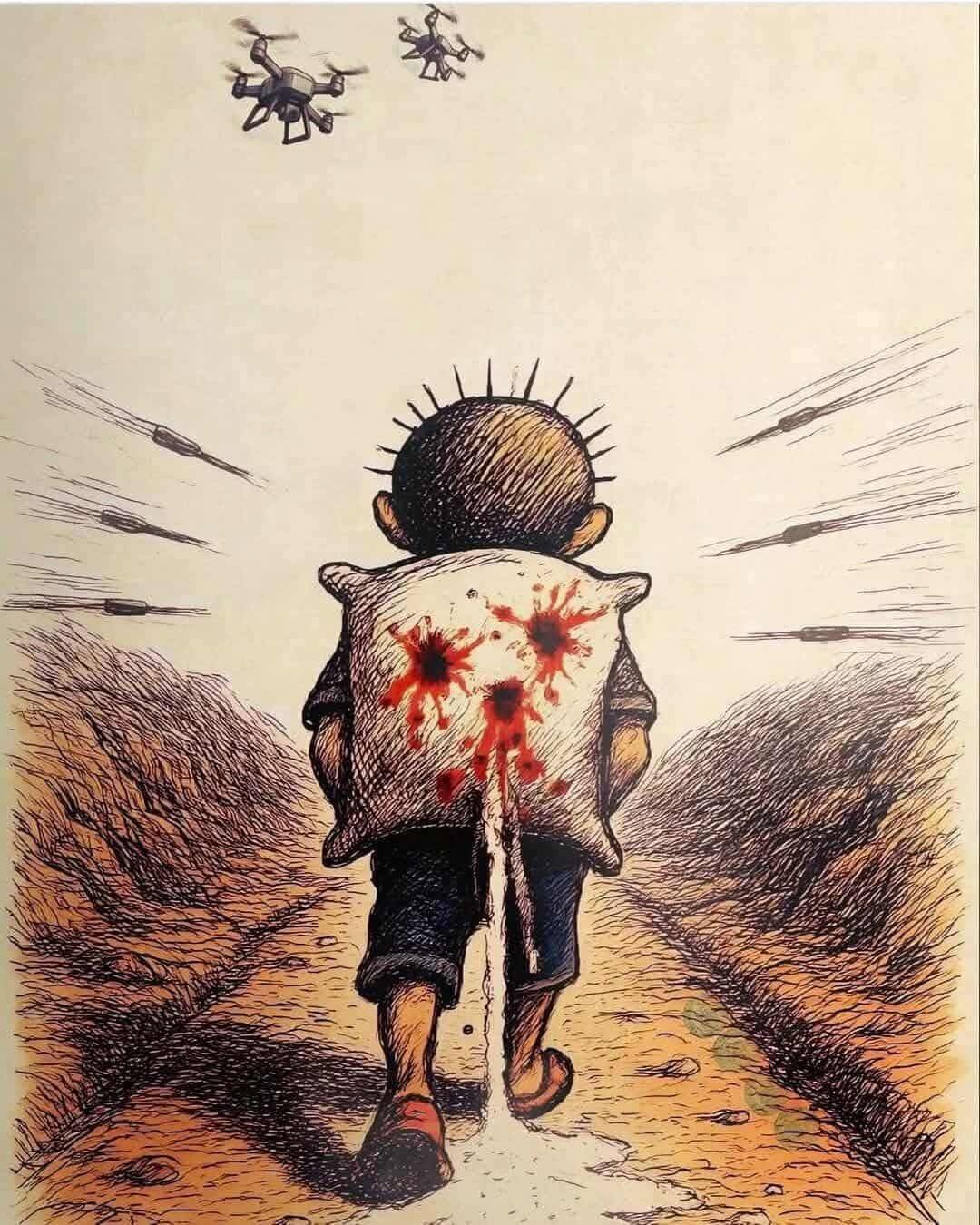
“The militarised food distribution scheme has weaponised starvation and curated suffering. Distributions at GHF sites have resulted in extreme levels of violence and killings, primarily of young Palestinian men, but also of women and children, who have gone to the sites in the hope of receiving food,” Zabalgogeazkoa said.
At least 859 starving Palestinians have been killed by Israeli forces and American mercenaries while seeking food near or at GHF distribution sites since May.
Israel’s Diaspora Minister Amichai Chikli, who had a role in the new rules imposed on aid groups, told the AFP news agency that registration of humanitarian groups could be rejected if Israel deems that its activities deny the democratic character of Israel or ” promote delegitimisation campaigns”, such as the movement to boycott Israel over its war on Gaza.
The joint outcry comes as two out of three famine thresholds for food consumption have been breached across most of Gaza, with acute malnutrition levels in Gaza City confirming aid agencies’ repeated warnings, according to the Integrated Food Security Phase Classification (IPC).
“Mounting evidence shows that widespread starvation, malnutrition, and disease are driving a rise in hunger-related deaths,” the IPC assessment maintained.
“The worst-case scenario of Famine is currently playing out in the Gaza Strip.”
UNICEF has warned that Gaza faces a grave risk of famine, with one in three people going days without food.
Over 100 humanitarian organizations, including Amnesty International, Doctors Without Borders (MSF), and Oxfam, warned that “mass starvation” is spreading across Gaza, with their colleagues in the enclave wasting away from hunger.
The World Health Organization (WHO) said Gaza City has been the area “worst-hit” by malnutrition in the Gaza Strip, with nearly one in five children under five there now acutely malnourished.
The World Food Programme (WFP) has warned that thousands of Palestinians in Gaza are “on the verge of catastrophic hunger,” with one in three people in the enclave going days without food.
Several Arab countries on Wednesday denounced remarks by Israeli Prime Minister Benjamin Netanyahu that he is attached to the vision of a “Greater Israel,” calling them a “threat to the sovereignty of states.”
Netanyahu told news channel i24 on Tuesday that he feels “very attached” to the vision of a Greater Israel. He said he considers himself “on a historic and spiritual mission” which “generations of Jews that dreamt of coming here and generations of Jews who will come after us.”
Greater Israel is a term used in Israeli politics to refer to the expansion of Israel’s territory to include the West Bank, Gaza and Syria’s Golan Heights, with some interpretations also including Egypt’s Sinai Peninsula and parts of Jordan.
In a statement, Egypt asked for clarifications about the comments, as “they fuel instability and show rejection of peace in the region.”
The comments “contradict the aspirations of regional and international parties that value peace and seek to achieve security and peace for all the peoples of the region,” a Foreign Ministry statement said.
“The only path to peace is through a return to negotiations and ending the war on Gaza, leading to the establishment of a Palestinian state.”
The Jordanian Foreign Ministry called Netanyahu’s comments “a dangerous and provocative escalation, a threat to the sovereignty of states, a violation of international law and the UN Charter.”
“These delusional claims, which are reflected in the statements of Israeli officials, will not affect Jordan and the Arab states and will not diminish the legitimate and inalienable rights of the Palestinian people,” it added in a statement.
“These claims and delusions adopted and promoted by the extremists of the Israeli government encourage the continuation of cycles of violence and conflict” in Gaza and the West Bank, the ministry said.
Jordan called on the international community to take immediate action to stop Israel’s “provocative measures and statements that threaten the stability of the region and international peace and security.”
The Palestinian Authority called Netanyahu’s comments “a disregard of the legitimate rights of the Palestinian people” and “a dangerous provocation and escalation that threatens the security and stability of the region.”
It reaffirmed its commitment to the international principles regarding the establishment of an independent Palestinian state based on the 1967 borders with East Jerusalem as its capital.
Yemen’s Foreign Ministry in a statement described the remarks as “a blatant violation of international legitimacy resolutions and international law, and a clear challenge to the will of the international community.”
The ministry warned that “the continuation of these Israeli policies would push the region toward further tension and instability.”
Serious threat
Qatar’s Foreign Ministry decried the remarks as “an extension of the (Israeli) occupation’s approach based on arrogance, fueling crises and conflicts and blatantly infringing on the sovereignty of states, international law.”
The ministry affirmed Qatar’s full support for “all efforts aimed at achieving a just, comprehensive and sustainable peace in the region.”
The Saudi Foreign Ministry rejected the “expansionist ideas and projects” pursued by Israeli officials and reaffirmed “the historical and legal right of the brotherly Palestinian people to establish their independent, sovereign state on their lands.”
In a statement, the Arab League denounced Israel’s “aggressive and expansionist tendencies,” calling it “a serious threat to collective Arab national security,” according to Anadolu.
The Organization of Islamic Cooperation (OIC) stressed in a statement that the statements “are an attempt to evade Israel’s international obligations as the occupying power and to continue violating the legitimate rights of the Palestinian people, foremost among them their right to self-determination and to establish an independent state on the 1967 borders with East Jerusalem as its capital.”
It warned “of the dangers of this colonial, expansionist rhetoric, which poses a threat to regional and international peace and security, fuels the cycle of violence, and prolongs and expands the conflict in the region.”
The Palestinian group Hamas said Netanyahu’s comments “clearly underscore the danger this fascist entity poses to all the countries and peoples of the region and its expansionist plans that spare no state.”
The Israeli army has pursued a brutal offensive against Gaza since October 2023, killing over 61,700 Palestinians, almost half of them women and children.
The International Criminal Court issued arrest warrants last November for Netanyahu and his former Defense Minister Yoav Gallant for war crimes and crimes against humanity in Gaza.
Israel also faces a genocide case at the International Court of Justice for its war on the enclave.
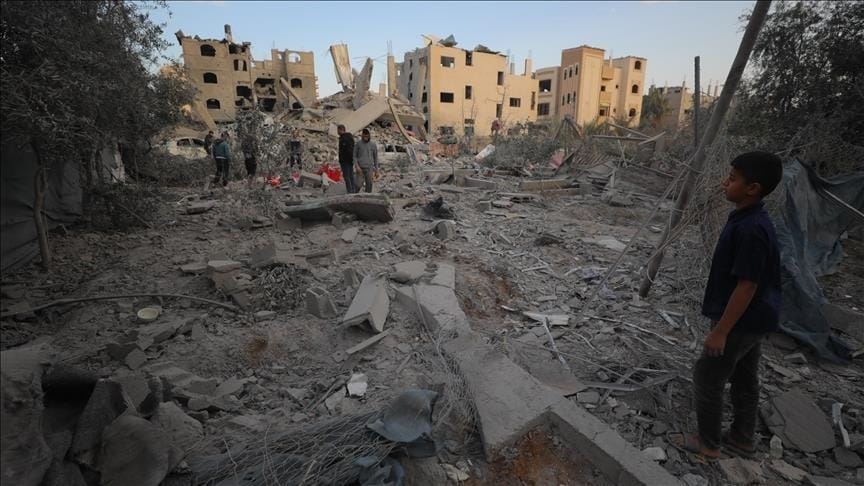
The Israeli military has demolished more than 300 homes over the past three days in the Zeitoun neighborhood in the central Gaza Strip as part of its ongoing occupation plan.
Mahmoud Basal, the spokesperson for the Civil Defense in Gaza, said Wednesday that the Israeli army has conducted heavy assaults in Zeitoun, deliberately targeting civilian residential areas, according to Anadolu.
He noted that the Israeli forces particularly targeted buildings with five floors or more, and due to the explosives used, surrounding structures have also been destroyed.
Some homes were destroyed while residents were still inside, causing casualties, with demolitions carried out without prior warning and intense bombardment preventing civil defense teams from reaching the wounded.
Israel is facing mounting condemnation for its genocidal war on Gaza, where it has killed more than 61,700 people since October 2023.
Last November, the International Criminal Court issued arrest warrants for Israeli Prime Minister Benjamin Netanyahu and his former Defense Minister Yoav Gallant for war crimes and crimes against humanity in Gaza.
Israel also faces a genocide case at the International Court of Justice for its war on the enclave.

 CrossFireArabia