Israeli Onslaught Intensifies Lebanese Crisis

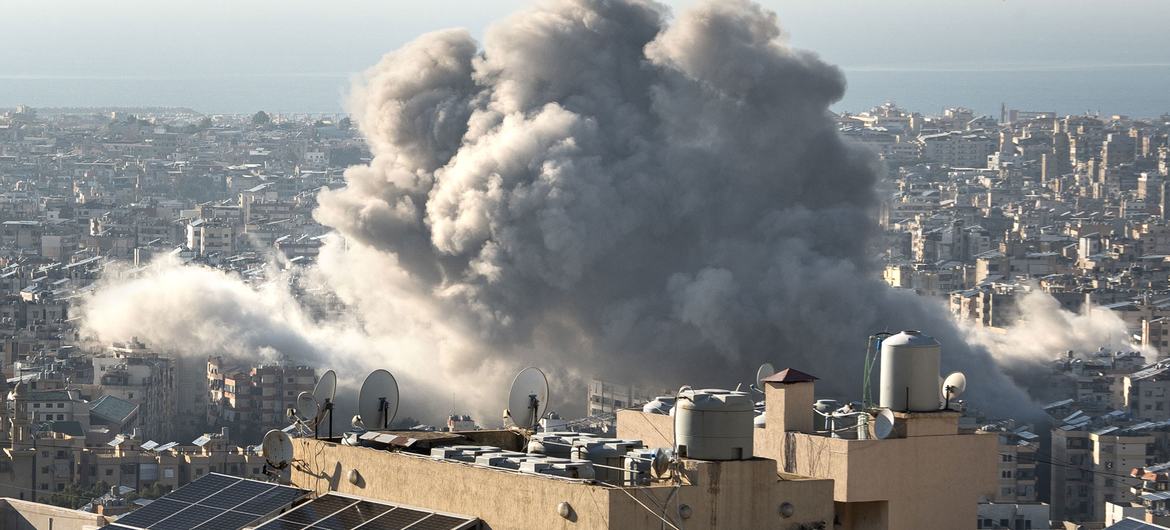
The past two months of intensifying Israeli bombardment in Lebanon have been the “deadliest and most devastating” in decades as communities uprooted from the front line continue to flee across the border to Syria, UN humanitarians said on Friday.

Highlighting the deepening humanitarian catastrophe for civilians on Lebanon’s Independence Day, the UN refugee agency, UNCHR, warned of a prevailing sense of uncertainty and fear as the war grinds on.

“In recent weeks, Israel dramatically intensified its airstrikes and ground incursions, and this has deepened the humanitarian catastrophe that has affected civilians,” said Ivo Freijsen, UNHCR Representative in Lebanon. “The past few weeks have been the deadliest and the most devastating for Lebanon and people in decades.”

Massive displacement crisis

To date, close to one million people have been displaced across Lebanon – one in five of the population – and nearly 600,000 people have crossed the border into Syria. 

People flee the hostilities in Lebanon as they cross the Jdeidet Yabous border into Syria on foot.

© UNHCR/Hameed Maarouf

People flee the hostilities in Lebanon as they cross the Jdeidet Yabous border into Syria on foot.

According to the authorities, as of 20 November, there have been nearly 3,600 confirmed deaths including more than 230 children and more than 15,000 injured.

Speaking from the war-torn country, Mr. Freijsen appealed for international assistance to “ramp up winter assistance; it’s started to rain and in some areas the first snow has fallen…we have a huge collective effort in front of us we need to pursue in terms of creating better conditions for all the displaced through specific winter assistance and improved shelter.”

The UNHCR official stressed the need to ensure equal access to shelter for all displaced people, particularly refugees who were already in an acutely precarious situation before this crisis. The agency’s response includes counselling, community support and creating safe spaces for those most at risk. To date, it has reached more than 100,000 people during the current emergency and supports a network of 44 health facilities across the country, including the provision of life-saving equipment, such as trauma kits.

According to the UN World Health Organization (WHO), one in 10 hospitals has ceased operations or been forced to reduce services as attacks continue on healthcare and personnel.

Ambulances targeted

“A hallmark of the conflict in Lebanon is how destructive it has been to the healthcare and this is unprecedented in any level,” said Dr. Abdinasir Abubakar, WHO Representative in the country.

Citing UN health agency data, he noted that nearly 330 healthcare workers have been killed in Lebanon since 8 October last year, and “47 per cent of these attacks on healthcare have proven fatal”.

Asked to explain this high fatality ratio, Dr Abubakar added that on the front line “more ambulances have been targeted – and whenever the ambulance is targeted actually then you will have a three, four or five paramedics that have been killed”.  

In an update from the Lebanon-Syria border crossing at Jdaidet Yabous, UNHCR’s Representative in Syria, Gonzalo Vargas Llosa, reported that an estimated 560,000 people have sought shelter inside Syria since 24 September – about 65 per cent are Syrians and the remainder are Lebanese. Crossing the border remains extremely dangerous for civilians and humanitarians alike, however.

“It is clear from our interaction with those Syrians and Lebanese that we speak to at the border that the bombings of the IDF of border crossings – including the one where I am here which has been bombed at least twice in the past few weeks – this has had a major effect in reducing the numbers. Syrians and Lebanese are very scared of using these escape routes,” said Mr. Vargas Llosa, speaking to journalists in Geneva via video link.

Desperation and danger at border

Around 50 Lebanese nationals are returning to Lebanon every day in response to the “disastrous” economic situation in Syria, along with a smaller number of Syrians, the UNHCR official continued.

“They’re going back because they cannot make ends meet here because they’re not getting enough support, and they think that they might also be better off in Lebanon. Again, these are very, very small numbers. But for us, even small numbers, are worrying signals.”
UN News

Continue reading
Muhannad Hadi: ‘…Not a Place For Humans to Survive’

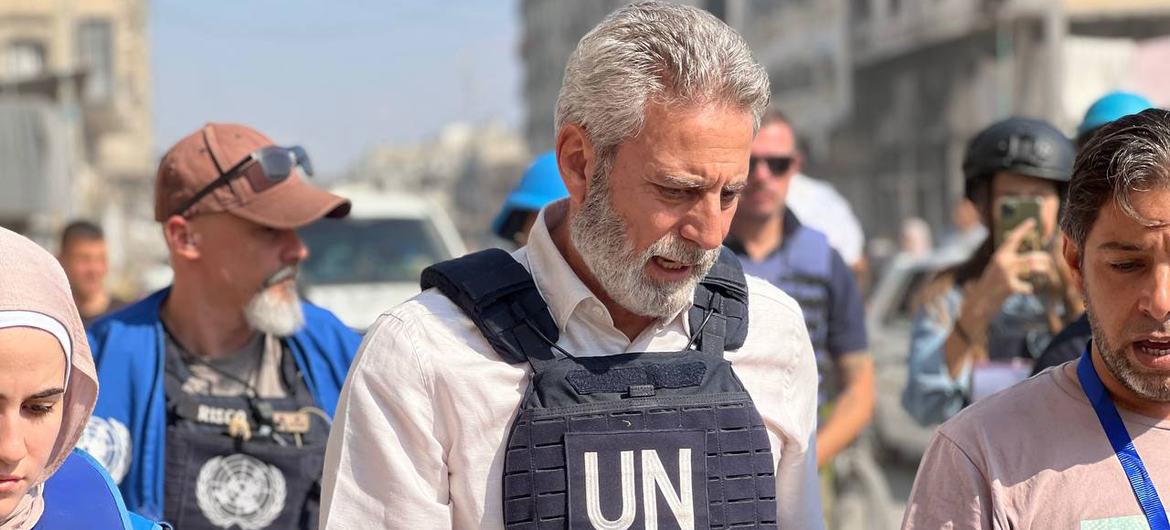
Muhannad Hadi spoke to UN News from the Al-Mamouniya School in Gaza City run by the UN agency that assists Palestine refugee, UNRWA.

Like the rest of UNRWA’s schools that are still standing as war continues, it now serves as a shelter for displaced people seeking safety in the besieged enclave where nowhere is safe.

An ‘unbearable’ situation

“This is not a place for humans to survive,” he said. “This must end. This misery must end. This war must end. This is beyond imagination.”

Mr. Hadi stated that what he saw was “very different” from what he saw in northern Gaza in September.

“At this school, I have seen families and people living on top of each other. It is unbearable here. I can’t imagine how those people are surviving,” he said.

“There were 500 people in this school in September, and now there are more than 1,500 people. There is no access to bathroom. There are shortages of food. The situation is unbearable. Sewage water is everywhere. Waste is everywhere. The place has garbage everywhere.”

Former schools continue to be used as shelters for displaced people in the northern Gaza Strip.

UN News

Former schools continue to be used as shelters for displaced people in the northern Gaza Strip.

‘Just water and lentils’

From a window on the second floor of the damaged school, mountains of garbage can be seen piling up in the yard – a symbol of the immense health hazards and harsh conditions that the people inside face. 

Critical supplies including food are scarce in northern Gaza. As Mr. Hadi walked around the school, whose structure had been damaged by the bombing, he met a man who was preparing lentil soup for his family.

Mr. Hadi was told that the lentils had been provided by UNRWA and that the small pot the man carried was supposed to feed 12 people. 

“It’s just water and lentils; no garlic or onions,” he remarked, noting that “one chili pepper pod costs 10 shekels today.”

‘We want to have fun’

The senior UN official also visited a temporary learning space called Al-Nayzak on Al-Jalaa Street. Tents have been set up on the destroyed thoroughfare to provide a minimum education and a safe place for local children to deal with the horrors they have endured since the war erupted last October.

At the temporary school, 11 teachers – men and women – provide courses in Arabic, English, maths,  science and psychosocial support to 510 students.

Mr. Hadi played with young children, aged between three and five years old.  Many were supposed to be in kindergarten, but the war has deprived them of the opportunity to learn in real classrooms. 

He met a girl who said she lost her parents and home in the war, and now lives with her cousins who have also become orphans. Her school used to be located near the Al-Nayzak learning space, but like most schools in Gaza it was destroyed by shelling.

The girl told him that they cook rice at home when given the opportunity, but often rely on humanitarian organizations to provide them with meals. When Mr. Hadi asked her what she wanted to do when the war ended, she replied, “We want to have fun and enjoy ourselves, and go where we want to go.”

The top UN humanitarian official also visited the headquarters of the Atfaluna Association for Deaf Children, where students taught him sign language.

The association provides lessons in English, Arabic, maths, science, physical education and the arts to 35 children, some of whom are learning how to deal with their new disability after losing their hearing due to heavy shelling.

Muhannad Hadi (right), United Nations Humanitarian Coordinator for the Occupied Palestinian Territory visits the northern Gaza Strip.

UN News

Muhannad Hadi (right), United Nations Humanitarian Coordinator for the Occupied Palestinian Territory visits the northern Gaza Strip.

Stop the war

Mr. Hadi told UN News that he had heard horrific stories from people he met in northern Gaza and stressed the need to stop the war. 

“What people are going through here, no one can tolerate. Those are the victims of this war. Those are the ones who are paying the price for this war – those children around me here, the women, elderly,” he said.

The heads of 15 UN and international humanitarian organizations recently affirmed that “the entire Palestinian population in North Gaza is at imminent risk of dying from disease, famine and violence.”

The officials said humanitarian workers were not safe to do their work, and that Israeli forces and insecurity prevented them from reaching those in need.

Since the war began in October 2023, more than 43,000 Palestinians have been killed and 100,000 injured, according to Gaza’s Ministry of Health. 

The UN estimates that more than 1.9 million people have been forcibly displaced from their homes within the enclave, many of whom have fled from one unsafe place to another multiple times. 

UN News

Continue reading
Israel ‘Proudly’ Destroys 100s of Gaza Mosques

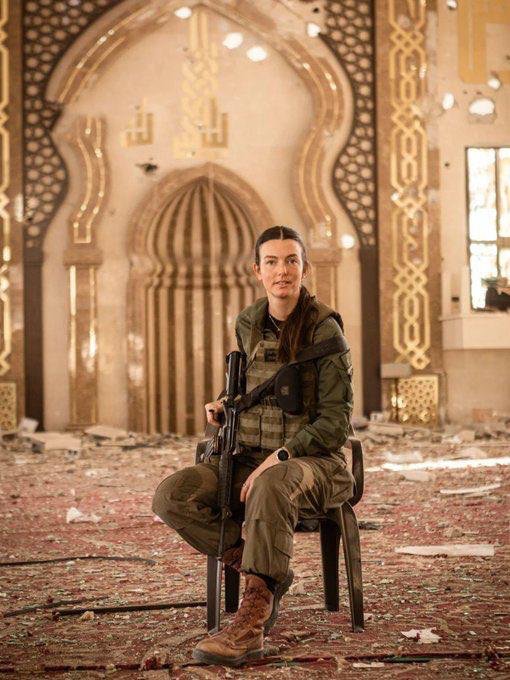
CROSSFIREARABIA – With confirmed reports of hundreds of mosques destroyed by the Israeli occupation army in Gaza, a female Israeli soldier poses for a picture inside a severally damaged mosque in the war-torn region.

The Israeli army is called the “most moral army” in the world, yet the social media images of soldiers desecrating mosque after mosque, shows that Jewish soldiers as the most uncouth and disrespectful.

But you can’t destroy faith. Gazans are considered as the most religious among the Palestinians. Online images abound websites of people praying and listening to the Imam in ramshackle and half-destroyed mosques.

Israel began to target and destroy mosques soon after 7 October 2023 when it waged war on the Gaza Strip.

The Israeli army has flattened 814 of Gaza’s 1,245 mosques and severely damaged another 148 during its intensified bombardment, the Ministry of Religious Affairs in Gaza revealed. It further stated that these represent 79% of mosques in the Gaza Strip.

Some of these mosques go back to centuries and are ancient, like the Great Omari Mosque that go back to the seventh century and named after Omar Ibn Al Khatab, Islam’s second caliph, and destroyed on 8 December, 2023. It represented a true symbol of Islamic architecture, culture and religion. But no more.

https://twitter.com/MiddleEastEye/status/1849840858167689608

The destruction of these mosques are heartbreaking stories; it’s as if Israeli warplanes and missiles aim at eradicating Islam from the heart of the people but this will never be so.

Continue reading
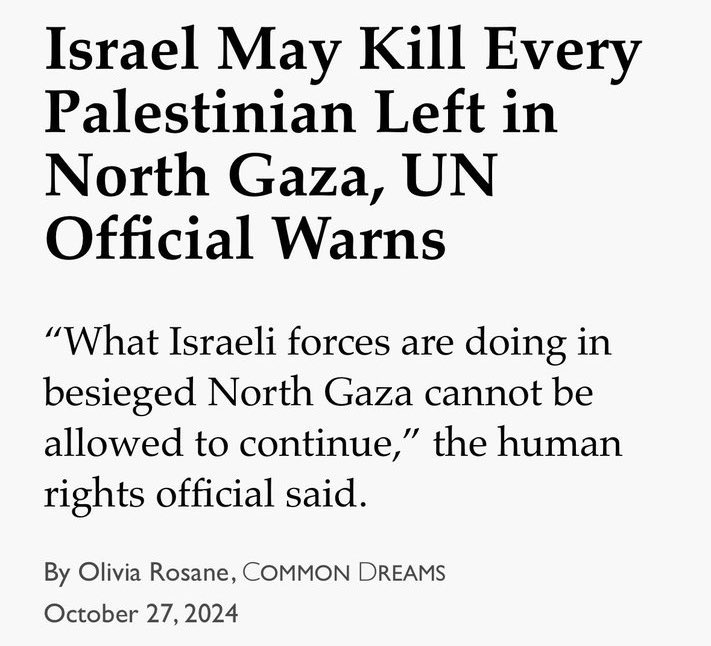
UN Official Warns:

“What Israeli forces are doing in besieged North Gaza cannot be allowed to continue,” the human
rights official said. Read on!

Israel could kill everyone left in Northern Gaza if its assault on the enclave continues, a United Nations relief official warned on Saturday.

U.N. Acting Under-Secretary-General for Humanitarian Affairs and Emergency Relief Coordinator Joyce Msuya also called for an end to the Israeli attack.

“What Israeli forces are doing in besieged North Gaza cannot be allowed to continue,” Msuya said.

Continue reading
US, Germany Complicit in Israel’s Gaza Genocide

 The Israeli army’s massacre in Beit Lahia, in the northern Gaza Strip, has already claimed a horrifying number of lives. Along with the occupying state, those nations who provide the Israeli army with weapons or keep quiet about its crime of genocide must also be held accountable.

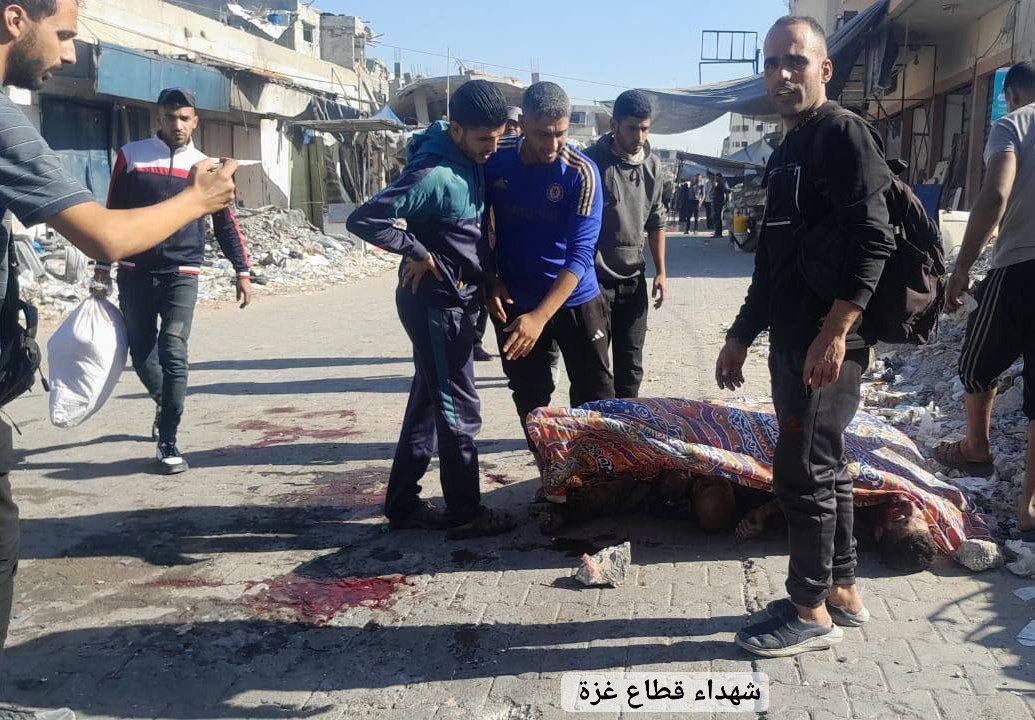
The Euro-Med Monitor field team documented the bombing by Israeli aircraft of a five-storey residential building in Beit Lahia this morning (Tuesday 29 October). Owned by the Nasr family, the building housed approximately 200 displaced civilians, and was totally destroyed over the heads of its residents.

According to one of the survivors of the massacre, the building was completely destroyed by Israeli aircraft at five in the morning. The 200 people living there had been displaced from the Jabalia refugee camp and other neighbourhoods in northern Gaza after their homes and shelters were targeted by Israeli forces, and all of them were civilians with no ties to any militant groups.  

While the man who spoke with Euro-Med Monitor survived after being pushed into a neighbour’s home dozens of metres away by the force of the explosion, his wife and four children were killed. He also suffered injuries all over his body. Dozens of victims remain trapped beneath the debris, he said, but some of the other residents managed to move him to Kamal Adwan Hospital, where he has been waiting for hours to be moved to Al-Awda Hospital for surgery, without success.

According to preliminary reports, the occupation army used a 908-kilogram American MK-84 bomb to target the residential building, crushing it on top of the occupants. The approximately 200 people in the building had sought shelter there following Israel’s illegal evacuation orders and destruction and burning of shelters in the Beit Lahia project, Jabalia, and Jabalia’s camp, and he noted that many victims of today’s attack were crudely recovered by the local population due to the suspension of ambulance and civil defence services in northern Gaza because of repeated Israeli attacks. The bodies of about 93 victims were recovered by the area’s residents, and dozens more are still missing and stuck under the rubble.

Israeli aircraft also conducted a raid on the area around Beit Lahia’s Kamal Adwan Hospital, where the occupation forces arrested the majority of the medical staff during last Friday’s hospital storming, leaving only the director working with the assistance of a single doctor.

In addition to using German mines in the northern Gaza Strip, the Israeli army has regularly used the German “Matador” weapon to bomb and burn homes and kill Palestinians.

According to international law, particularly the Convention on the Prevention and Punishment of the Crime of Genocide, Israel has been committing genocide in the Gaza Strip since 7 October 2023, and the United States and Germany have been complicit in this crime by repeatedly sending Israel their weapons to massacre Palestinian civilians in large numbers and demolish their homes.

One of the most repulsive examples of racism and moral and political corruption on a worldwide scale is the disregard displaced by the international community and international justice systems over the course of the past year. The death toll has climbed from dozens to hundreds and then thousands without a single serious position being issued, and with many governments—particularly powerful Western allies of Israel—normalising the daily killings and massacres.

Since civilians do not endanger the lives of occupying forces, they are protected by international humanitarian law if they choose to stay in their homes or neighbourhoods during armed conflicts. According to Euro-Med Monitor’s investigations, the purpose of Israel’s killings and destruction is to eradicate the Palestinian people through massacre and forced relocation, not for any military purpose.

Euro-Med Monitor reiterates that, according to international humanitarian law, civilians who are unable or unwilling to leave a particular area are still entitled to the special protection that the law provides for them as civilians; their presence in any area does not absolve Israel of its obligation to provide and uphold this protection.

The international community and the United Nations must act right away to save hundreds of thousands of people living in the northern Gaza Strip; put an end to Israel’s second consecutive year of genocide across the entire Strip; impose a comprehensive arms embargo on Israel; hold it responsible and punish it for all of its crimes; and take all necessary steps to protect Palestinian civilians in the region.

EuroMed Human Rights Monitor

Continue reading