Is Israel Re-occupying The West Bank?

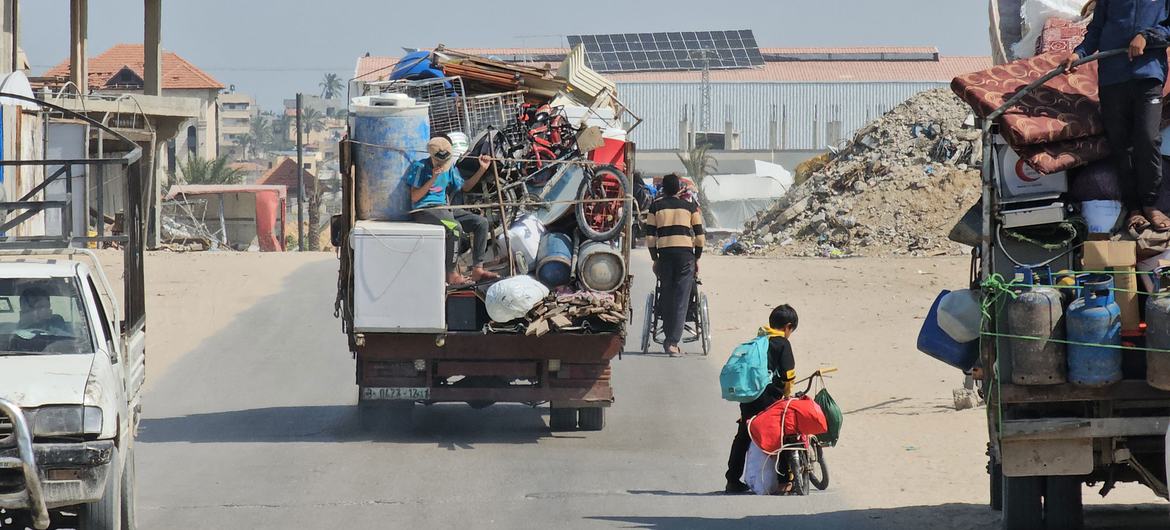
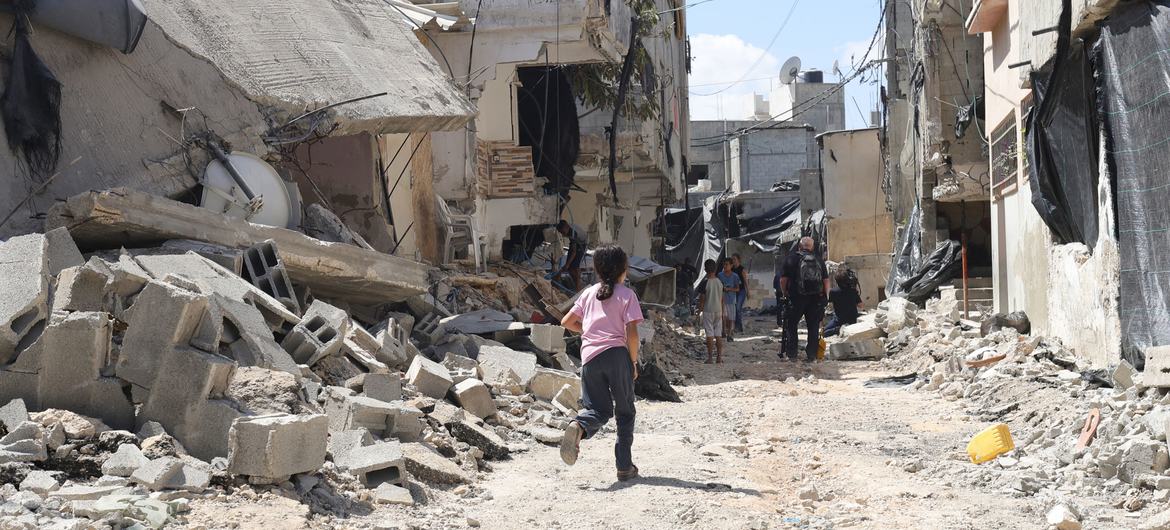
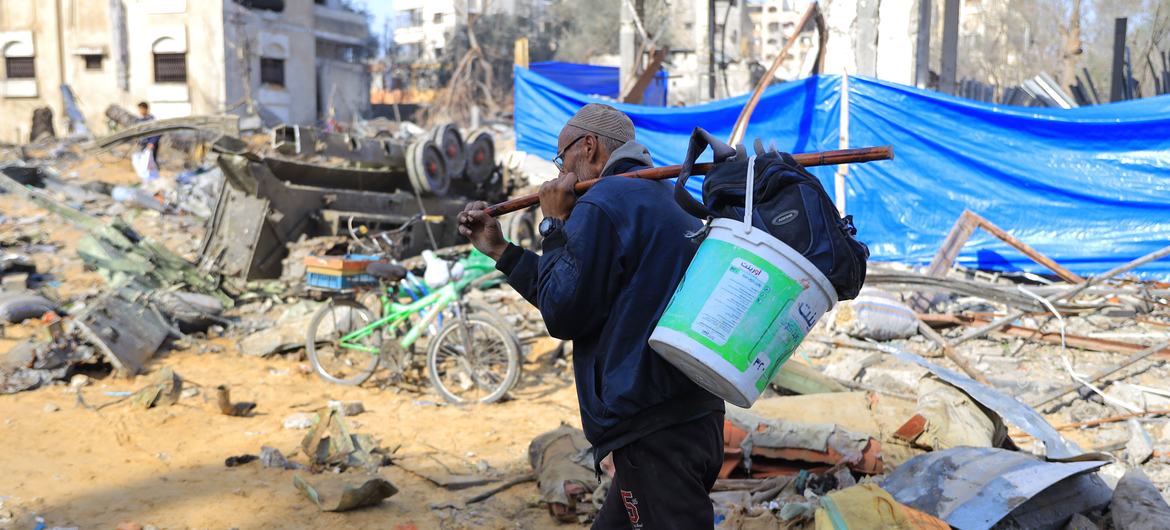
Weeks of deadly Israeli military raids in the occupied West Bank have turned Palestinian communities into “battlefields” and left 40,000 people homeless, UN humanitarians warned on Wednesday.

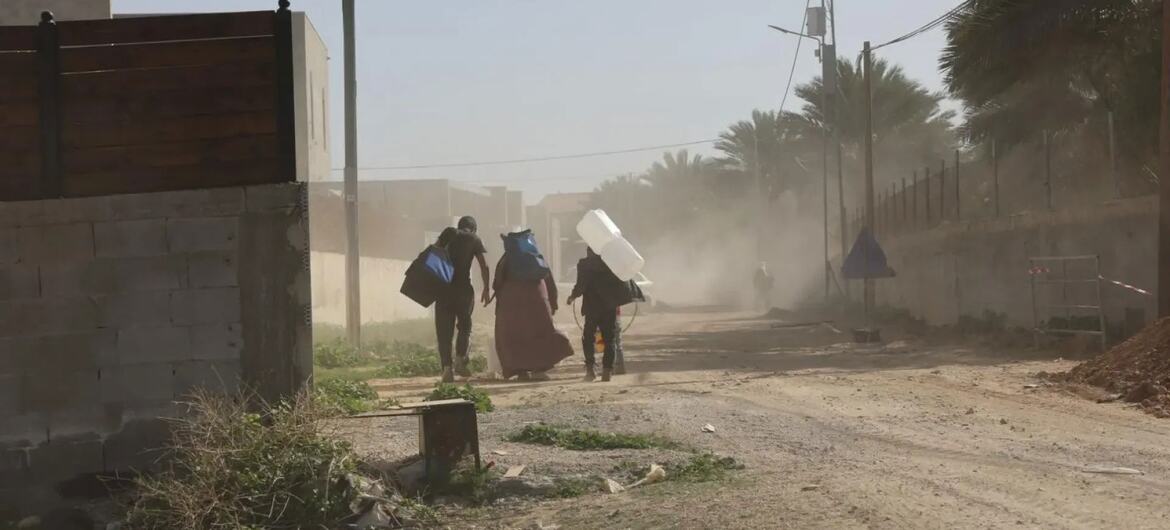
The violence has seen exchanges of fire between Israeli troops and Palestinian militants – and the use of bulldozers in refugee camps for the first time in 20 years which have destroyed public services, including vital electricity and water networks.

Israel’s defence minister said on Sunday forces could remain in the camps for the “coming year”. 

Philippe Lazzarini, head of the UN’s Palestine refugee agency, UNRWA, said that “fear, uncertainty, and grief once again prevail. Affected camps lie in ruins…Destruction of public infrastructure, bulldozing roads and access restrictions are common place.” 

More than 50 people including children have been killed since Israeli military raids started five weeks ago, the UN agency said, warning that the West Bank “is becoming a battlefield” where ordinary Palestinians are the first and worst to suffer.

Lethal force

Meanwhile, UN aid coordinating office, OCHA, also condemned the “lethal, war-like tactics” being employed by the Israeli military against Palestinian communities in the occupied West Bank.

OCHA confirmed further civilian casualties and mass displacement after a two-day Israeli military raid in the northern town of Qabatiya in Jenin governorate that ended on Monday.

Palestinians were detained in the operation, OCHA noted, before reiterating deep concerns about the use of excessive force against civilians and the additional humanitarian needs among people left homeless.

Responding to needs

UN partners on the ground are doing their utmost to help people uprooted by the violence despite growing “physical and administrative” challenges, OCHA said.

According to the UN World Food Programme (WFP), it reached 190,000 people in January with cash assistance and has provided one-off cash assistance to more than 5,000 displaced people from the Jenin refugee camp.

Gaza cold kills six children

In neighbouring Gaza, UN and its humanitarian partners have continued to scale up food security and livelihood support, while six children reportedly died from the cold.

Needs remain enormous amid desperate humanitarian conditions caused by 15 months of constant Israeli bombardment sparked by Hamas-led terror attacks on Israel that left 1,200 dead and some 250 people captured as hostages.

Citing the Gazan health authorities, OCHA said that six children from the Gaza Strip have died in recent days because to the severe cold, bringing to 15 the total number of youngsters killed by the winter conditions.

Meanwhile, more than 800 trucks entered the Gaza Strip on Tuesday alone, OCHA said. Since the start of the ceasefire on 19 January, WFP has brought more than 30,000 tonnes of food into Gaza. More than 60 kitchens supported by the UN agency across the Strip have handed out nearly 10 million meals, including in North Gaza and Rafah in the south.

The biggest aid provider in Gaza, UNRWA, has reached nearly 1.3 million people with flour and reached about two million people with food parcels since the start of the ceasefire.

The UN Food and Agriculture Organization (FAO) also reported that it has delivered animal feed to northern Gaza for the first time since the escalation of hostilities.

The aid delivery last week has helped 146 families with livestock in Gaza City alongside another 980 in Deir al Balah.

Between the start of the ceasefire and 21 February, FAO distributed more than 570 metric tonnes of animal feed across the Gaza Strip to some 2,300 families with livestock.

OCHA noted in addition that aid partners working in education have identified additional schools in Rafah, Khan Younis and Deir al Balah that were used as shelters for displaced people. “These schools will be assessed and repaired to prepare for their reopening,” it said. 

UN News

Continue reading
North Gaza Declared ‘Disaster Zone’

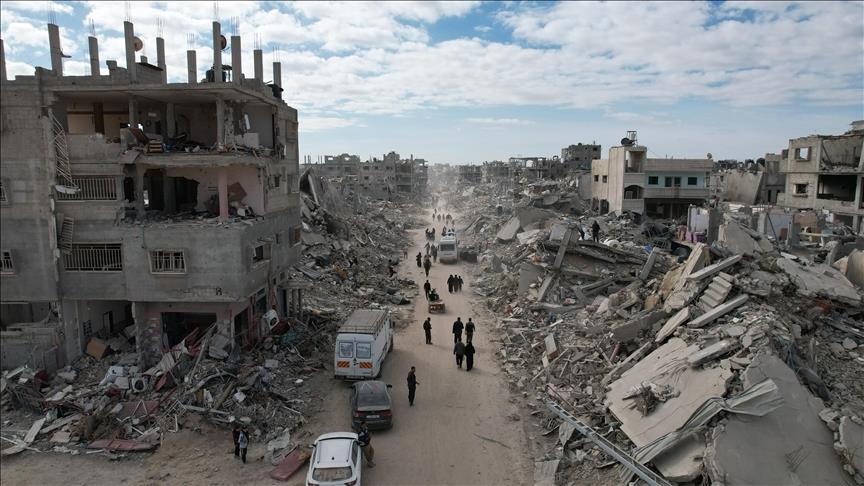
The Israeli military’s recent genocide and ethnic cleansing have left 80% of northern Gaza in ruins, a Palestinian official said Tuesday.

Areas like the Jabalia refugee camp, Beit Hanoun and Beit Lahia have suffered near-total destruction, Deputy Minister of Public Works and Housing in Gaza Naji Sarhan told Anadolu.

“The devastation is absolute, affecting homes, streets and infrastructure, making northern Gaza uninhabitable,” Sarhan said.

More than 300,000 Palestinians are currently homeless, and the impending return of internally displaced people from central and southern Gaza according to the ceasefire agreement is expected to exacerbate the humanitarian crisis, he added.

Sarhan emphasized the urgent need for international support, noting that the reconstruction of northern Gaza will require monumental efforts and global assistance.

During a press conference in Jabalia, Imad Badwan, the head of Beit Hanoun Municipality, declared northern Gaza a disaster zone. He detailed the destruction of roads, water and sewage networks and critical infrastructure, including hospitals, schools and UNRWA facilities that served as shelters.

“Israel’s offensive caused the death or disappearance of over 5,000 people and injured around 13,000, with more than 200,000 displaced,” Badwan said.

He called for immediate aid from UNRWA, the World Food Program and the UN Office for the Coordination of Humanitarian Affairs (OCHA) to address the dire needs of shelter, food, clothing and camp facilities for displaced individuals.

A Gaza ceasefire agreement took effect on Sunday, suspending Israel’s genocidal war that has killed at least 47,000 Palestinians, mostly women and children, and injured more than 110,700 since Oct. 7, 2023.

The three-phase ceasefire agreement includes a prisoner exchange and sustained calm, aiming for a permanent truce and the withdrawal of Israeli forces from Gaza.

The Israeli onslaught has left more than 11,000 people missing, with widespread destruction and a humanitarian crisis that has claimed the lives of many elderly people and children in one of the worst global humanitarian disasters ever.

The International Criminal Court (ICC) issued arrest warrants in November last year for Israeli Prime Minister Benjamin Netanyahu and his former Defense Minister Yoav Gallant for war crimes and crimes against humanity in Gaza.

Israel also faces a genocide case at the International Court of Justice for its war on the enclave.

Continue reading
Despite UN Appeals Israel Maintains Hardline Approach on Gaza

Civilian casualties and injuries continue to be reported across Gaza due to the ongoing hostilities, with most families unable to afford basic food as the humanitarian situation deteriorates, a UN spokesperson reported, Thursday. In Lebanon, the UN peacekeeping mission in the south of the country urged both Israel and Lebanon to prevent any actions that could threaten the fragile ceasefire.

The relentless fighting in the Gaza Strip, which began last October, continues to cause widespread destruction and drive displacement, according to a note issued by the UN Spokesperson’s Office.

“The Office for the Coordination of Humanitarian Affairs (OCHA) stresses once again that civilians and civilian infrastructure, including hospitals, must be protected and spared from attacks,” the note stated.

The note also cited reports that Israeli authorities continue to deny and impede aid missions across the war-ravaged enclave.

“Out of 12 UN requests for coordinated humanitarian movements yesterday, six requests were denied outright, three were cancelled by the organizers due to security or logistical challenges, one was approved but faced impediments, and two others were facilitated and accomplished,” the note stated.

“One attempt to reach besieged parts of North Gaza governorate was denied yesterday and another one today,” it added.

Despite access restrictions and insecurity, aid organizations are working tirelessly to assist the most vulnerable as the humanitarian crisis in Gaza worsens.

With most families unable to afford basic food, prices have skyrocketed. Reports indicate that a 25-kilogram bag of wheat flour is now priced between $160 and $190.

“Humanitarian partners working to address hunger in Gaza estimate that as of mid-December, 10,000 metric tonnes of wheat flour are needed to distribute one bag of flour to all families in Deir al Balah, Khan Younis and Rafah,” the note said.

“Without this, food insecurity in central and southern areas of the Strip will only worsen.”

UN Mission urges protection of ceasefire in Lebanon

Meanwhile, the UN Interim Force in Lebanon (UNIFIL) stressed that any actions threatening the fragile cessation of hostilities, agreed last month between Israel and Lebanon, must cease.

“Israel and Lebanon have recommitted to full implementation of Security Council resolution 1701,” UNIFIL in a statement, calling on both parties to use the newly established Mechanism as agreed to address outstanding issues.

UNIFIL also called for the timely withdrawal of the Israel Defense Forces (IDF) and the deployment of the Lebanese Armed Forces (LAF) in southern Lebanon as part of the full implementation of the resolution as a comprehensive path toward peace.

It also noted concern over destruction caused by the IDF in residential areas, agricultural land and road networks in southern Lebanon, adding that such actions violate resolution 1701.

“UNIFIL stands ready to play its role in supporting both countries meet their obligations and monitoring progress,” the Mission said.

“This includes ensuring the area south of the Litani River is free of any armed personnel, assets or weapons other than those of the Government of Lebanon and UNIFIL as well as respect for the Blue Line.”

It added that UN peacekeepers will continue their mandated tasks, including monitoring and reporting all violations of resolution 1701 to the Security Council.

UN News

Continue reading
‘Gaza is Today a Graveyard’

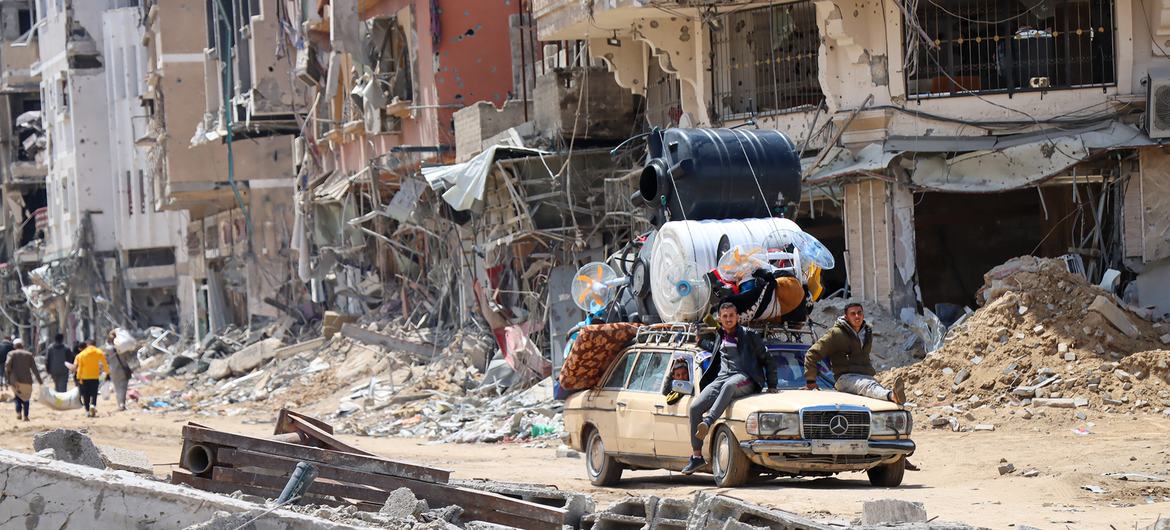
Hunger, dire living conditions made worse by heavy winter rains and ongoing hostilities continue to endanger people’s lives in Gaza, which has become “a graveyard”, UN humanitarians warned Friday. 

The world is not seeing what’s going on with these people, it’s impossible for families to shelter in these conditions,” said Louise Wateridge, from the UN agency for Palestinian refugees (UNRWA).

Speaking from Nuseirat in central Gaza after heavy winter rains overnight and into Friday morning, the  UNRWA Senior Emergency Officer insisted that “an entire society here is now a graveyard…Over two million people are trapped. They cannot escape. And people continue to have basic needs deprived and it just feels like every path here that you could possibly take is leading to death.”

Echoing that warning, the UN Children’s Fund (UNICEF) highlighted widespread and dangerous malnutrition levels in the enclave, where more than 96 per cent of women and children in Gaza “cannot meet their basic nutritional needs,” said Rosalia Bollen, Children’s Fund (UNICEF) communication specialist.

Speaking from Amman, Ms. Bollen noted that the most northerly part of Gaza has been under a near total siege for 75 days. This has largely prevented humanitarian assistance from reaching youngsters in need there “for more than 10 weeks”, she said.

“The suffering is not just physical, it is also psychological…Children are cold, they’re wet, they’re barefoot; I see many children who still wear summer clothes and with cooking gas gone, there’s also lots of children I see scavenging through piles of garbage looking for plastic they can burn.”

With more heavy rain expected on Friday evening, UNRWA’s Ms. Wateridge emphasized the critical need to get aid into the enclave to support Gazans who have been uprooted multiple times by Israeli bombardment and who have little to protect themselves from the elements.

“It’s impossible for families to shelter in these conditions,” Ms. Wateridge insisted. “Most people are living under fabric, they don’t even have waterproof structures and 69 per cent of the buildings here have been damaged or destroyed. There’s absolutely nowhere for people to shelter from these elements.”

Multiple and continuing aid obstacles imposed by the Israeli authorities have meant that humanitarians have had to prioritize food over shelter, leaving Gazans desperate and at risk from food stampedes.

“The certainty of winter has been the only thing that the United Nations has been able to plan for,” Ms. Wateridge maintained. “And yet we have still not yet been facilitated to bring in enough shelter supplies for people, because we have had to prioritize food. Women have been crushed to death waiting for a piece of bread.”

On Thursday, the UN aid coordination office, OCHA, reported that the Israeli authorities had “denied another UN request to reach besieged areas of North Gaza governorate with food and water. As a result, Palestinians in Beit Hanoun, Beit Lahiya and parts of Jabalya remain cut off from the essential assistance they need to survive.”

Continue reading
Disaster Looms in Syria as Terror Groups Battle

More than 280,000 people have been uprooted in northwest Syria in a matter of days following the sudden and massive offensive into Government-controlled areas led by Hayat Tahrir al-Sham (HTS), which is sanctioned by the Security Council as a terrorist group. 

Aid has continued to flow from Türkiye across three border crossings into the embattled northwest and the UN World Food Programme (WFP) said that it had opened community kitchens in Aleppo and Hama – cities now reportedly occupied by HTS fighters.

In neighbouring Lebanon, meanwhile, senior UN aid official Edem Wosornu expressed deep concerns for the safety of more than 600,000 people who have begun to return to their devastated homes, after a ceasefire between Israel and Hezbollah kicked in on 27 November. “I’m sure they are settling back, the problem is what they would find when they go back home,” she told journalists in Geneva, highlighting the potential dangers from unexploded ordnance.

Syrians’ hunger misery

Speaking in Geneva after a joint UN and NGO Emergency Directors assessment mission to the Middle East from 25 November to 1 December, the UN World Food Programme (WFP’s) Samer Abdel Jaber described Syria’s new unfolding emergency as “a crisis on top of another” – a reference to the war that began in 2011, sparked by a civil uprising against the Government. 

Since then, it has drawn in regional and international powers and defied the efforts of the Security Council and wider global community to bring it to an end. It’s estimated that hundreds of thousands have been killed and many more are believed to remain in the Government’s prisons.

Mr. Abdel Jaber, who heads WFP’s Emergency Coordination, Strategic Analysis and Humanitarian Diplomacy arm, warned that around 1.5 million people are likely to be displaced by this latest escalation “and will be requiring our support. Of course, the humanitarian partners are working on both sides of the front lines we’re trying to reach the communities wherever their needs are.”

The WFP official noted that the sudden escalation had not shut down three humanitarian border crossings with Türkiye and that aid continues to flow into Aleppo, Syria’s second city. 

The UN agency “has opened and supported two community kitchens that are providing hot meals in both Aleppo as well as in Hama,” he said, adding that “the aid partners are on the ground and doing everything they can to basically provide the assistance to the people”.

Millions of Syrians are already in crisis because of the war which has destroyed the economy and people’s livelihoods, threatening their survival. “It’s at a breaking point at the moment in Syria, after 13 or 14 years of a conflict, over three million Syrians are severely food insecure and cannot afford enough food,” Mr. Abdel Jaber said, adding that a total of 12.9 million people in Syria needed food assistance before the latest crisis.

Despite the clear need for more support, international funding for Syria’s $4.1 billion humanitarian response plan “faces its largest shortfall ever”, the WFP official warned, with less than one-third needed for 2024 received to date.

Lebanon returnees in danger

In neighbouring Lebanon, senior UN humanitarian official Edem Wosornu, Director, Operations and Advocacy Division at the UN aid coordination office, OCHA, said that people affected by the war between Israel and Hezbollah fighters “have returned faster than they even left the conflict; more than 600,000 people have begun to go back home, and as we speak, I’m sure they are settling back. The problem is what they would find when they go back home and the need for our response to pivot very quickly.”

Among those in need today are many Syrian refugees who fled the war in their country, only to be displaced several times since their arrival, explained Isabel Gomes, Global Lead of Disaster Management at NGO World Vision International: “There was this particular girl that we spoke with; she told us the story that at the time of the conflict, when she had to move, she was pregnant, close to nine months, and she had to walk kilometres and kilometres and kilometres. 

“Then she asked us if she could show us her baby, and we saw her baby was two months. But when we asked if the baby had received vaccines, she said the baby had never received vaccines.”

Returning farming communities also face deadly dangers from the fighting in southern Lebanon’s wartorn zones, OCHA’s Ms. Wosornu explained: “We also are concerned about the impact of mines and unexploded ordnance in the some of these locations.

“We are really asking our mine action colleagues and others to support the Government in demining activities because when people who want to go back home, who’ve gone back home, the farmers who are trying to salvage the rest of the olive harvest, there’s fears that this…could be impacted there.”

UN News

Continue reading