World Cup: Trump, Political Footballing and Iran – A View From Amman

This summer promises to be unlike any previous or future summers in the history of mankind. It will witness an unprecedented convergence of two big, unrelated in substance, events that will be the focus of attention of all nations around the globe. One of those events might and indeed, should tip the balance!

On the battle grounds of these two big events, tears will be shed, hearts will be broken and plans flopped! On both occasions, the crucial component of vanity in the human brain would develop into a dubious concept that in each game you play or a confrontation you get involved in, you must be the winner, no matter what!

What would the other side be saying?

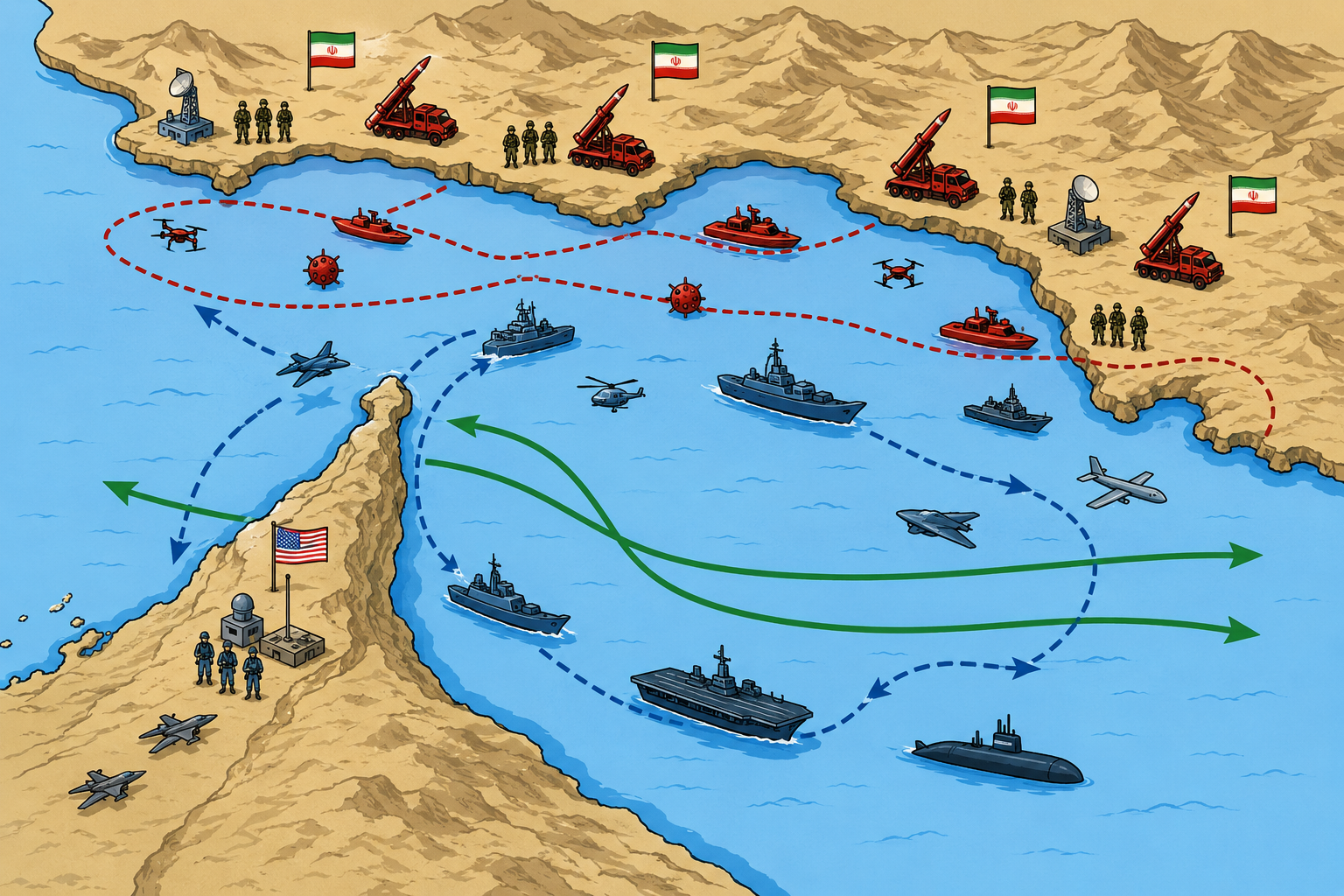
As the clock ticks forward, the hostilities in the Middle East or more precisely the off-and-on-rounds of ‘war of choice’ by the US and Israel against Iran’s plans for itself and the region, bounce up and down in a blurred fashion; making it difficult, to see whether those hostilities will continue, as the Israeli Prime Minister wants them to, or whether they will be ordered by Donald Trump to stop, even temporarily, but for completely different reasons.

President Trump’s interest and role in this affair is central and crucial, not only because his country, along with Mexico and Canada, will host the football tournaments matches and because his army is stuck in the quagmire he helped to create in the Middle East since June 2025.

Now and in these final hours before the big sports event kicks off next week, the political ball is also being played, openly bouncing back and forth by Benjamin Netanyahu, Trump and Iran, each according to a specific domestic political agenda and in a dramatic fashion. Indeed, it could threaten the destiny of FIFA’s well-planned agenda, at the expense of letting Israel  continue its quasi-impossible crusade against Iran!

Trump on the other hand, and besides the other signs he gave, might opt for a peaceful outcome to his quarrel with Iran. He has few other concerns at home such as the 250th anniversary of his country’s independence, his own birthday party to celebrate, rising prices of gas and inflation to curb, local partisan elections and opinion polls to worry about; lastly off course, he has to guarantee the smooth running of the world cup matches in his country for a whole month.

Now let’s dig deeper in this business of political footballing. 

The US and Iran according to the FIFA program belong to two different groups: Fourth and seventh. To qualify for the second level of the tournament, each has to play three matches and win. The US against Paraguay, Australia and Turkey. Iran against New Zealand, Belgium and Egypt. 

Both teams have reasonable chances to pass through this first stage.

Let’s imagine that after a month-long matches between the 48-competing nations, Iran and the US end up facing each other in the final match for the world trophy.

In such a case, heads of states whose teams were playing, are supposed to be present watching and cheering their teams from the premium seating area. Whoever the winner might be, the players, coaches and political leaders would be approaching each other and shaking hands. One saying: “Congratulation” and the other: “Hard luck”! 

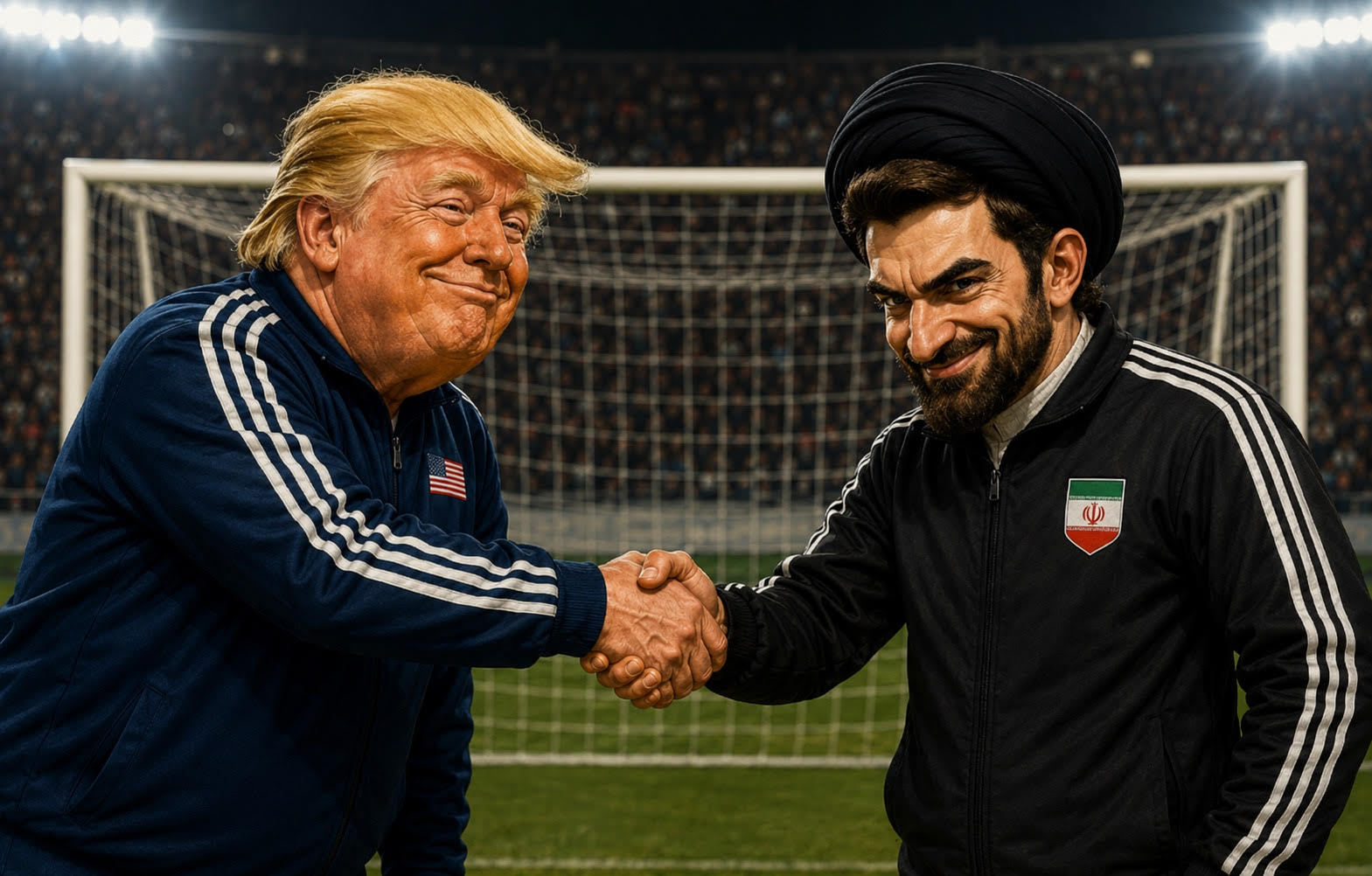
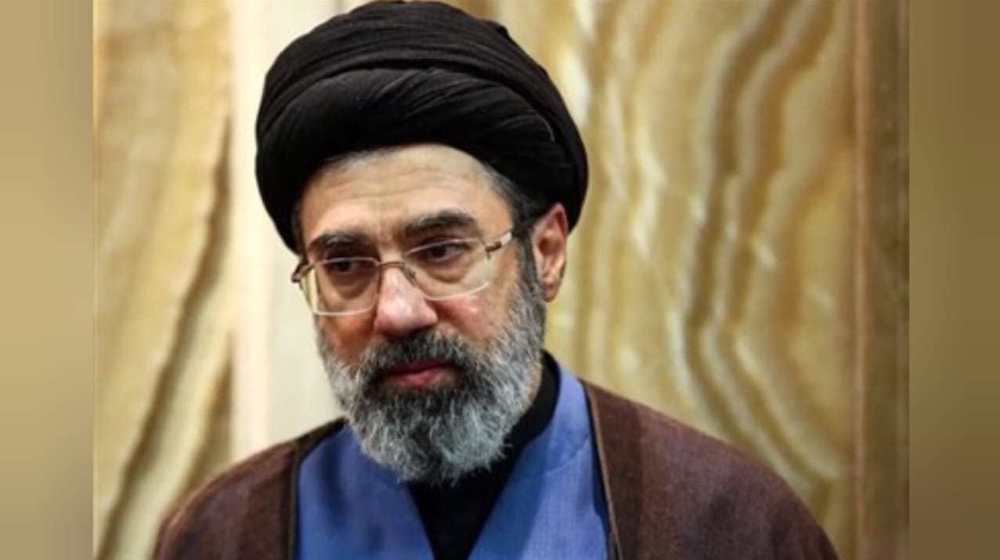
One more time, picture Donald Trump and Mojtaba Khamenei shaking hands and exchanging these words live, while the whole world is watching!

At such a moment, the real war back on the grounds of the Middle East, would not be more than a fading ripple on the surface of a remote lake!     

Related Posts

The Lebanese-Israeli Accord is War on The Resistance

Dr. Nassib Hateit

The announcement of the Lebanese-Israeli agreement, sponsored by the United States, constitutes a dangerous turning point in the war against the Lebanese resistance and its people. It is intended to compensate for the occupation army’s field failures in achieving its objectives of disarming and eliminating the resistance, after suffering significant moral and military losses and realizing its inability to achieve these illegitimate goals on its own.

The enemy’s impotence has driven it to resort to using the Lebanese government, whose legitimacy and constitutionality are still guaranteed by the resistance forces (in the dual alliance). This provides the government with a constitutional—albeit immoral—cover for cooperating with the enemy and legitimizing a comprehensive war against the resistance. It also involves assembling a US-led military coalition that includes Arab and international (multinational) parties, mirroring the “Desert Storm” coalition led by the United States against Iraq.

The aim is to support a beleaguered Israel and eliminate the resistance in all its cultural, economic, social, and health-related aspects, not just its military ones. This agreement confirms the beginning of a new phase of confrontation following the end of the “Hundred Days’ War,” in which Israel failed to achieve its objectives, despite the resistance suffering approximately 20,000 martyrs and wounded, the destruction of tens of thousands of homes, and the destruction and occupation of more than 50 villages and towns.

This shifts the war from a confrontation between Israel and the Lebanese resistance to a war between the resistance and an international coalition led by Washington, with the participation of Israel and the Lebanese government and opens the door for the involvement of Arab and foreign armies, most notably the new Syrian regime army, which US President Trump announced he would task with eliminating the resistance.

This will be facilitated by the Lebanese government’s initiative to formally request the support of Ahmed al-Sharaa’s government for the Lebanese army and will force the resistance to fight on three fronts:

Against the Israeli enemy in the south

Against the US military, multinational forces, and the Lebanese army within Lebanon

Against the Syrian army and takfiri groups in the Bekaa Valley. The US has effectively nullified the first clause of the Memorandum of Understanding with Iran through the Lebanese-Israeli negotiations in Washington, placing the memorandum in a precarious position that threatens its collapse. According to its terms, violating the first clause invalidates the remaining clauses. This precariousness is further evidenced by the timing of the agreement’s announcement, coinciding with the US airstrikes in the Strait of Hormuz. It reinforces concerns that the 60-day period the US needs to reassess its position might be shortened or canceled, or that it could be exploited to forcibly separate the Lebanese and Iranian tracks through the Lebanese government. The aim would be to break the military and political alliance between the resistance and Tehran, and to further fragment the axis, isolating its members and preventing them from uniting their forces to compensate for the imbalance of power.

This agreement grants the Israeli enemy a clean bill of health by the Lebanese government, implicitly acknowledging that the invasion was a response to threats from the resistance. It also includes a pledge not to file any complaints or seek compensation before international institutions and courts—a clever preemptive move by the enemy to shield its military and political officials from accountability and represents a complete surrender by the Lebanese government, which has become something akin to the “12th Division” of the occupation army.

The initial response to this surrender document should be as follows:

Restraining this government and ceasing the sin of granting it legitimacy and constitutionality. It must abandon its hesitation, ambiguity, and incompetence in ministerial representation, the latest glaring example of which is passing the agreement’s presentation to the cabinet without objection from the resistance ministers, who merely issued a statement that condemns them more than it exonerates them.

The Islamic Republic of Iran should take the initiative to freeze the implementation of the MoU with the United States, given that Washington is responsible for this agreement, which contradicts the memorandum’s first clause. The Resistance Axis (Lebanon, Iraq, Iran, and Yemen) has declared its complete readiness to engage in the new round of war, united and collectively, without delay, and to move from a state of “finger on trigger” to one of “fire.” Otherwise, the Axis’s fronts will fall one by one, as Israel and America plan.

The coming phase is the most dangerous since the outbreak of war in 2023 due to the expansion of the fronts and the multiplicity of parties participating against the Resistance. It comes after a war of attrition and exhaustion that has plagued the Resistance and its support base for three years, necessitating the formulation of a new defensive strategy. The Lebanese government must be considered an “unfriendly” entity, having made the Resistance a common enemy for itself and Israel. Participation in a government that collaborates with the enemy against the Resistance is unjustifiable, as experience has proven its futility.

We are not weak… the proof is the global mobilization against us, which cannot be countered with motorcycles and statements!

Manage the power you possess wisely! Take advantage of the enemy’s motto against you (kill first) and kill the government “politically” and bring it down to prevent it from carrying out its plans!

Dr Hateit  is a Lebanese writer. An architect by training from Nabatieh in south of Lebanon he teaches at the Institute of Fine Arts in the Lebanese University and is a political columnist contributing to different Lebanese newspapers. This article is published in the Arabic Al Rai Al Youm website and reprinted in crossfirearabia.com.

Continue reading
The Story Behind The War on Iran

By Ismail Al-Sharif

Whenever the United States moved closer to improving relations with Iran, the war criminal [Benjamin] Netanyahu would call for a war, relying on repeated claims that Tehran was seeking to acquire a nuclear bomb to use against him. However, these claims were never supported by conclusive evidence. Iran consistently denied seeking nuclear weapons, granted UN inspectors complete freedom to inspect its nuclear facilities, and its Supreme Leader issued a religious edict prohibiting the production of nuclear weapons.

Under President Obama, things seemed to be moving toward de-escalation. In 2015, the Joint Comprehensive Plan of Action (JCPOA) was signed, under which Iran committed to a framework for peaceful uranium enrichment, without any mention of Israel’s nuclear arsenal. Germany and France were tasked with monitoring the Iranian nuclear program through established monitoring and verification mechanisms. In return, the economic sanctions imposed on Iran were supposed to be partially eased. However, this commitment was not fulfilled.

The sanctions continued to tighten their grip on the Iranian people, and the war criminal Netanyahu continued his intense pressure on Washington to withdraw from the agreement, while also continuing assassinations targeting Iranian scientists.

For years, the nuclear weapons narrative was used as a pretext for targeting Iran, while the real objective to seek regime change there because of Tehran’s support for Hezbollah and Hamas. Despite the widespread destruction inflicted on these two movements, attempts to eliminate them have failed.

The major shift came with Trump’s rise to power in 2017, when he tore up the nuclear agreement and reignited tensions. This move was accompanied by a broad media campaign against Iran that focused on internal issues, particularly women’s rights, and accusations of Mossad infiltration into Iran to instigate unrest similar to what occurred in Ukraine, Armenia, and Georgia.

These movements became known as “color revolutions,” where the CIA encouraged affiliated organizations to adopt specific colors as symbols of protest; pink in Georgia and orange in Ukraine, in an attempt to replicate the same model in Iran. This strategy relies on exploiting genuine grievances to ignite unrest, then co-opting the protests, infiltrating their ranks, and pushing them toward escalation, so that they are met with government repression. The resulting public anger is then redirected toward a path aimed at overthrowing the government and installing one loyal to the United States.

With Biden assuming the presidency in 2021, succeeding Trump, the momentum toward a direct military confrontation with Iran diminished, but sanctions remained in place, and negotiations did not resume. Today, with Trump back on the scene, the Israeli entity sees the moment as opportune to reopen the issue.

The “maximum pressure” campaign led to a sharp decline in the Iranian economy, and thousands of impoverished people and students took to the streets to protest living conditions. With the intervention and support of Mossad and the CIA, some protests escalated into violent clashes, met with a harsh security response that resulted in the deaths of hundreds of protesters and police officers. These events were quickly used as a new pretext for escalating tensions with Iran.

Once the government regained control, the warmongers reverted to their initial argument: the claim of a military nuclear program, a scenario reminiscent of what happened in Iraq when allegations of weapons of mass destruction were used as justification for the invasion, before their non-existence was proven. Demands then intensified for halting the Iranian missile program, which, if implemented, would render Tehran unable to defend itself against Israel.

Israel does not tolerate the existence of a regional power challenging its hegemony. It seeks to expand its influence and topple any regime it perceives as a challenge. From this perspective, Iran is not the final target; attention is also turning to Türkiye. Former Prime Minister Naftali Bennett described Turkey as the “new Iran” during his address to the Conference of Presidents of Major American Jewish Organizations, calling for the weakening of other regional powers after Iran and asserting that defense alone is insufficient to guarantee protection, whether with or without European support.

His speech also included mentions of countries like Egypt, Qatar, and Pakistan as potential adversaries, within a strategy based on waging continuous wars. This approach aligns with what is described as the American expansionist approach, articulated by US Secretary of State Marco Rubio at the Munich Security Conference in clearly expansionist language and colonialist terms, aimed at consolidating the Israeli entity’s hegemony over the region within a broader distribution of roles in the global balance of power.

The war criminal Netanyahu has finally succeeded in dragging the United States into a confrontation with Iran. Just as the fall of Iraq constituted a turning point that disrupted the Arab-Israeli balance of power, opening the door to a wave of unrest and revolutions, and leading to the disintegration of the regional order and the escalation of sectarian conflicts; If Iran falls, it will not be a passing or isolated event, but a pivotal turning point leading to complete Zionist hegemony over the region, a hegemony that will not stop at the borders of Iran, but will later extend to other countries.

This opinion appeared in the Arabic Addustour newspaper.

Continue reading

You Missed

ESCWA: The War on Lebanon Displaces 140,000 Old People

ESCWA: The War on Lebanon Displaces 140,000 Old People

War Places Israeli Society in a Psychological Crisis – Haaretz

War Places Israeli Society in a Psychological Crisis – Haaretz

Despite The ‘PR’ Spin Israel Still Wants to Force Palestinians to Leave

Quranic Centers Serve as Protection

Quranic Centers Serve as Protection

Gaza’s Dead Wait For Burial

Gaza’s Dead Wait For Burial

The Lebanese-Israeli Accord is War on The Resistance

The Lebanese-Israeli Accord is War on The Resistance