World Cup: Trump, Political Footballing and Iran – A View From Amman

This summer promises to be unlike any previous or future summers in the history of mankind. It will witness an unprecedented convergence of two big, unrelated in substance, events that will be the focus of attention of all nations around the globe. One of those events might and indeed, should tip the balance!

On the battle grounds of these two big events, tears will be shed, hearts will be broken and plans flopped! On both occasions, the crucial component of vanity in the human brain would develop into a dubious concept that in each game you play or a confrontation you get involved in, you must be the winner, no matter what!

What would the other side be saying?

As the clock ticks forward, the hostilities in the Middle East or more precisely the off-and-on-rounds of ‘war of choice’ by the US and Israel against Iran’s plans for itself and the region, bounce up and down in a blurred fashion; making it difficult, to see whether those hostilities will continue, as the Israeli Prime Minister wants them to, or whether they will be ordered by Donald Trump to stop, even temporarily, but for completely different reasons.

President Trump’s interest and role in this affair is central and crucial, not only because his country, along with Mexico and Canada, will host the football tournaments matches and because his army is stuck in the quagmire he helped to create in the Middle East since June 2025.

Now and in these final hours before the big sports event kicks off next week, the political ball is also being played, openly bouncing back and forth by Benjamin Netanyahu, Trump and Iran, each according to a specific domestic political agenda and in a dramatic fashion. Indeed, it could threaten the destiny of FIFA’s well-planned agenda, at the expense of letting Israel  continue its quasi-impossible crusade against Iran!

Trump on the other hand, and besides the other signs he gave, might opt for a peaceful outcome to his quarrel with Iran. He has few other concerns at home such as the 250th anniversary of his country’s independence, his own birthday party to celebrate, rising prices of gas and inflation to curb, local partisan elections and opinion polls to worry about; lastly off course, he has to guarantee the smooth running of the world cup matches in his country for a whole month.

Now let’s dig deeper in this business of political footballing. 

The US and Iran according to the FIFA program belong to two different groups: Fourth and seventh. To qualify for the second level of the tournament, each has to play three matches and win. The US against Paraguay, Australia and Turkey. Iran against New Zealand, Belgium and Egypt. 

Both teams have reasonable chances to pass through this first stage.

Let’s imagine that after a month-long matches between the 48-competing nations, Iran and the US end up facing each other in the final match for the world trophy.

In such a case, heads of states whose teams were playing, are supposed to be present watching and cheering their teams from the premium seating area. Whoever the winner might be, the players, coaches and political leaders would be approaching each other and shaking hands. One saying: “Congratulation” and the other: “Hard luck”! 

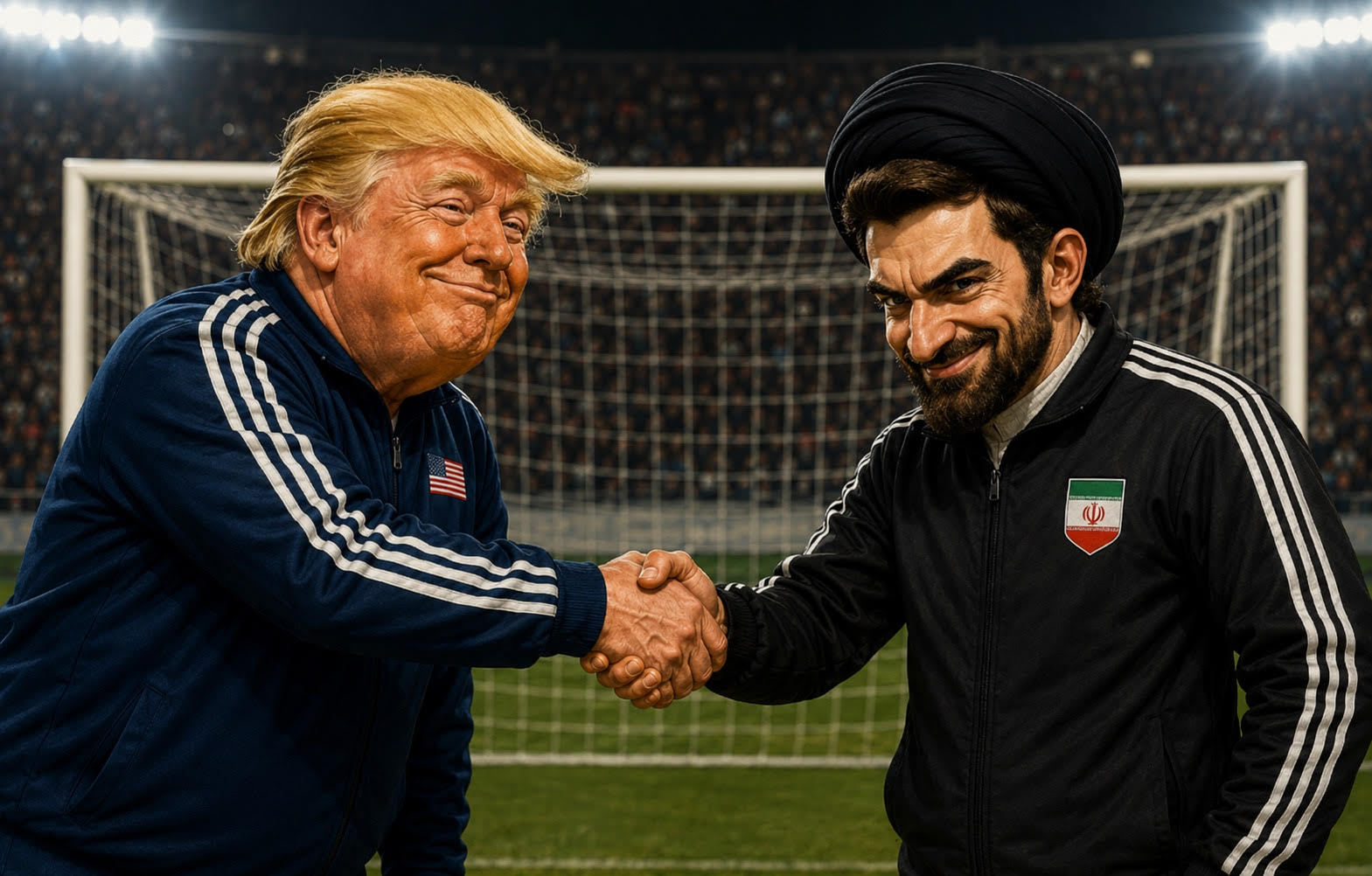
One more time, picture Donald Trump and Mojtaba Khamenei shaking hands and exchanging these words live, while the whole world is watching!

At such a moment, the real war back on the grounds of the Middle East, would not be more than a fading ripple on the surface of a remote lake!     

Continue reading
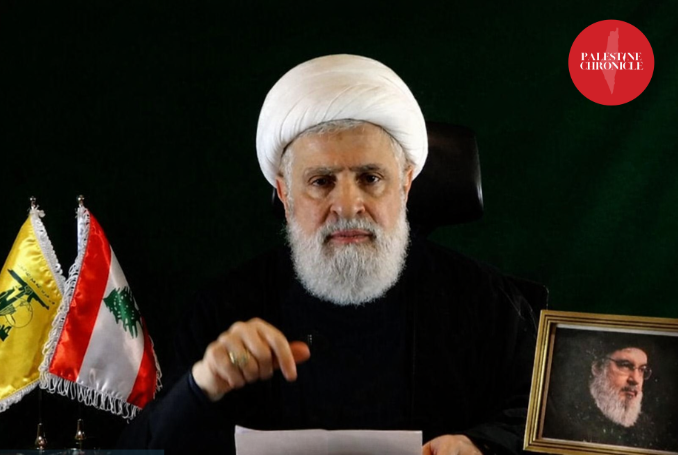
Analysis: Why Did Hezbollah Enter This War?

Hezbollah’s entry into the war reflects strategic calculations shaped by Israeli escalation, regional alliances, and Lebanon’s fractured politics.

Key Takeaways

  • Israel has repeatedly violated the ceasefire in Lebanon through airstrikes, raids, and surveillance operations.
  • Hezbollah’s response has so far remained limited compared to Israel’s sustained military actions.
  • Lebanon’s political leadership has failed to present a unified response to Israeli attacks on Lebanese territory.
  • Hezbollah’s intervention reflects strategic concerns about Israel’s long-term plans in Lebanon and the broader war against Iran.
  • The coordination between Iran, Hezbollah, Ansarallah, and Iraqi factions suggests the Axis of Resistance continues to operate collectively.

A Regional War Expands

Hezbollah’s decision to enter the ongoing regional confrontation did not occur in isolation. The latest escalation began when the United States and Israel launched major strikes against Iran, triggering waves of Iranian retaliation across the region.

The conflict quickly expanded beyond Iran itself. Iranian retaliatory strikes targeted US military assets and positions across the Gulf. The war rapidly assumed the character of a wider regional confrontation involving multiple actors aligned along competing geopolitical blocs.

Within this context, attention turned to Lebanon, where Hezbollah—one of the most powerful non-state actors in the Middle East—began limited military operations against Israeli positions along the border.

The central question quickly emerged: Why did Hezbollah enter the war?

The answer lies in a combination of military, political, and strategic considerations that go far beyond the immediate battlefield.

Did Hezbollah Violate the Ceasefire?

A central claim advanced by Israel and some Western governments – and even anti-Hezbollah factions in Lebanon itself – is that Hezbollah’s actions represent a violation of the ceasefire arrangements that followed previous rounds of conflict along the Lebanese border.

However, the reality on the ground presents a far more complex picture.

For months, Israel has carried out continuous violations of Lebanese sovereignty through airstrikes, drone surveillance, artillery fire, and cross-border incursions.

According to Lebanese government figures and reports by the United Nations Interim Force in Lebanon (UNIFIL), Israel has committed thousands of violations of Lebanese airspace and territory since the ceasefire arrangements took effect.

Lebanese officials have repeatedly documented Israeli overflights, drone operations, and missile strikes inside the country. UNIFIL has also confirmed frequent violations of Lebanese airspace by Israeli aircraft.

These actions have not been merely symbolic. Israeli strikes have caused civilian casualties and extensive destruction of homes and infrastructure in southern Lebanon.

Villages near the border have experienced repeated bombardments, forcing families to flee and damaging agricultural land and civilian property.

At the same time, Israeli officials have openly signaled that they have no intention of withdrawing fully from Lebanese territory or halting military operations.

Several Israeli leaders have stated publicly that Israel intends to maintain military pressure on Hezbollah and potentially establish a longer-term security presence along the border.

In this context, Hezbollah’s response—limited strikes against Israeli military positions—cannot easily be framed as the violation of a functioning ceasefire.

Rather, Hezbollah and its allies argue that no real ceasefire existed, given the scale and persistence of Israeli violations.

Did Hezbollah Violate Lebanese Consensus?

Another argument advanced by critics inside Lebanon is that Hezbollah’s intervention undermines national consensus and drags the country into a war it cannot afford.

Lebanon’s government, which maintains close ties with Western governments and the United States, has repeatedly blamed Hezbollah for escalating tensions.

However, the government has struggled to provide a convincing explanation of how it interprets Israel’s continued attacks on Lebanese territory.

While condemning Hezbollah’s actions, Lebanese authorities have largely failed to respond militarily—or even diplomatically in an effective way—to Israeli strikes.

The Lebanese state has not fired a single bullet at Israeli forces despite repeated attacks inside its territory. This has deepened the political divide within Lebanese society.

Lebanon has long been fractured along sectarian, ideological, and geopolitical lines. Some factions align closely with Western and Gulf states, while others view themselves as part of the Axis of Resistance, which includes Iran, Hezbollah, Ansarallah in Yemen, Palestinian resistance factons and several Iraqi factions.

Within this divided political landscape, there has never been a unified national consensus regarding confrontation with Israel.

For many Lebanese—particularly in communities that have historically borne the brunt of Israeli attacks—Hezbollah’s military posture is viewed as a form of deterrence rather than escalation.

So Why Did Hezbollah Enter the War?

Hezbollah’s decision to join the conflict appears to reflect a broader strategic calculation.

From Hezbollah’s perspective, the Israeli war was likely to expand regardless of its immediate actions.

Israeli leaders have repeatedly declared their intention to reshape the regional balance of power and weaken Iran and its allies.

For Hezbollah, the prospect of Iran being significantly weakened carries profound implications.

If Iran’s position in the region were severely damaged, Hezbollah could find itself facing Israel largely alone—while simultaneously confronting pressure from the United States, Western governments, and regional Arab powers aligned with Washington.

In such a scenario, Hezbollah could be isolated militarily and politically.

Entering the war now, while Iran remains actively engaged and regional allies are mobilized, allows Hezbollah to operate within a broader coalition rather than as an isolated actor.

It also ensures that Hezbollah retains influence over the eventual diplomatic outcome of the conflict.

Wars in the Middle East often conclude not with decisive military victories but through negotiated exits once the architects of war decide to pursue a political strategy.

By participating in the conflict, Hezbollah guarantees that it will have a seat at the negotiating table when such an exit strategy eventually emerges.

Does This Mean the Axis of Resistance Has Been Reborn?

Some analysts have framed the current coordination between Iran, Hezbollah, Ansarallah, and Iraqi factions as the “rebirth” of the Axis of Resistance.

But the reality may be more nuanced.

The Axis of Resistance was never destroyed. Instead, each actor within it has often had to adapt to its own domestic political realities.

Hezbollah operates within Lebanon’s complex sectarian political system. Iraqi factions must navigate Baghdad’s fragile state institutions. Ansarallah governs large parts of Yemen under conditions of war and blockade. Hamas remains focused on defeating the Israeli-US scheme aimed at disarming resistance and ethnically cleansing Palestinians from Gaza,

These differing political contexts often limit how openly each actor can coordinate with the others. Yet recent developments suggest that the axis is functioning in a coordinated manner.

Iranian strikes across the region, Ansarallah’s operations in the Red Sea, and Hezbollah’s engagement along the Lebanese border indicate a level of strategic alignment.

The current conflict has therefore revealed not the rebirth of the axis but its continued operational existence.

Our Strategic Analysis

Hezbollah’s intervention reflects a calculated strategic move rather than an impulsive escalation.

Israel’s continued military pressure on Lebanon, combined with the wider war against Iran, created conditions in which Hezbollah perceived long-term risks in remaining passive.

By entering the conflict in a limited but coordinated manner, Hezbollah seeks to shape the strategic environment before the war reaches a stage where diplomatic negotiations become inevitable.

In doing so, Hezbollah is signaling that the future of Lebanon—and the broader regional balance of power—cannot be determined without its participation.

Palestine Chronicle

Continue reading
Gulf Escalation: A Blaze Awaits The Region

By Dr Marwan Asmar

With the Abraham Lincoln destroyer entering Middle East waters, everyone is gearing up for another US–Israeli war on Iran—the second in less than eight months.

Anxiety is gripping the region from the Gulf to Iran and all the way to Israel. Foreign states are warning their citizens in these countries to leave, while some airlines have suspended flights to the region. Once again, the Middle East is on a war footing, with fears that a wide conflict could erupt at any moment.

With an additional 7,000 US troops moving to the region, along with jets and fighter planes, the buildup is being described as the biggest “get-ready” military move since 2003, when the US launched its major war on Iraq and reshaped the region. Today, Middle Eastern countries are jittery about the current situation and the possibility of looming instability.

US President Donald Trump is not helping matters. He says he is weighing all options but keeps everyone guessing about his next move. He has warned that if the Iranian government continues its iron-fisted crackdown on protesters, the US could intervene militarily and wage another war on Tehran—much to the delight of the Israeli government, which is reportedly playing a behind-the-scenes role in encouraging unrest in Iran.

Although Trump is raising the war tempo and increasingly saber-rattling through military entrenchment, he is also sending mixed signals. He is not as boisterous as he was when he launched US strikes on Iran’s nuclear facilities in June 2025. What he really wants is to push Iran back to the negotiating table and secure a lasting deal on its nuclear programme. He claims Iran’s facilities have been dealt a significant blow and may never recover, but this seems unrealistic, given how far Iran has advanced in nuclear enrichment.

While Trump describes Israel as a “role model” ally and urges Arab countries to follow suit—a claim many find laughable—Washington appears to be diverging from Tel Aviv over objectives on Iran and may even be at odds with it. Analysts say Israel wants strikes, even multiple ones, to change Iran’s regime and is less concerned about the chaos that could follow.

The United States, by contrast, appears more cautious. US officials do not necessarily want a new regime in Iran, uncertain of what might replace it. They prefer the logic of “the devil you know rather than the devil you don’t.” Washington wants a regime it can work with, despite ideological differences, notwithstanding Trump’s bombastic rhetoric, which Tehran may exploit if it chooses to play the “Mr Nice Guy.”

One analyst suggests Trump wants tangible gains from Iran, preferably access to its oil resources through US petroleum companies, but this may be a pipe dream.

If that fails, Trump is likely to push for a revamped nuclear deal to replace the 2015 agreement, which reached its term in September 2025 and is up for renewal. He wants a deal stamped with a distinctly “Trumpian” identity, even though many issues are already settled. Needless to say, Trump wants to claim credit for clinching the deal.

Today, the region stands on the edge of a precipice. It is touch-and-go. Many experts argue that a Middle East war is not imminent because it is neither politically nor economically feasible. Yet logic often takes a back seat in Trump’s world, especially with Israel pushing for a new wave of attacks on Iran, this time targeting its ballistic missile programme.

Iran, however, says it is ready. It has warned it will strike US bases in the region and beyond if it detects even a hint of an imminent attack. Iranian political and military leaders insist they will not remain sitting ducks for Washington or Tel Aviv. As a result, the region is caught in an escalating poker game.

While many believe Iran and its regional allies, such as Hezbollah and Hamas, have been significantly weakened over the past two years, neither the US nor Israel can be certain of Iran’s real capabilities. This uncertainty leaves them unsure about their next move—or Iran’s.

All this makes both Israel and the United States nervous about unpredictable scenarios across the region. Everyone is waiting, tapping their fingers, bracing for what may come next.

This article was originally published in Countercurrents.org

Continue reading
Netanyahu’s Middle East Vision

By the end of December, Israeli Prime Minister Benjamin Netanyahu is expected to visit Washington to meet US President Donald Trump, marking his fourth visit in less than a year since Trump assumed office. Unlike previous visits, this one comes after President Trump imposed his vision for ending the war in Gaza and outlined his broader concept of regional peace—giving the visit a distinctly political dimension.

At the core of the discussions will be the transition to the second phase of the Gaza ceasefire agreement, the appointment of an American general and a monitoring center, and the mechanism for administering Gaza ahead of the arrival of an international peace force. The visit is also expected to address Israel’s relations with its regional surroundings, particularly Egypt. Reports suggest the possibility of a simultaneous visit by the Egyptian president to Washington, reflecting a clear American desire to initiate direct engagement and promote the concept of “economic peace,” along with major regional projects that Trump views as the backbone of future relations, especially in the energy and gas sectors.

Yet even as President Trump speaks of a regional peace vision, the days preceding the visit remain open to further escalation. Indicators point toward a qualitative Israeli escalation across four fronts: Gaza, the West Bank, Lebanon, and Syria. These fronts have been deliberately kept open, transformed into continuous theaters of operation where Israel calibrates the level of military activity according to its security assessments.

Lebanon remains the most prominent arena of this escalation. Ongoing discussions about Hezbollah’s efforts to rebuild its capabilities coincide with Israel’s continued direct targeting of the group’s positions and operatives. This comes amid growing American pressure on the Lebanese government and army to take concrete steps toward disarming Hezbollah.

While the group is fully aware of its inability to engage in a comprehensive regional war, and the need to avoid providing direct justifications for escalation, it nevertheless finds itself compelled to use the weapons issue domestically to reshape internal power balances. At the same time, Hezbollah seeks to secure the future framework of its relationship with Syria, particularly if the Syrian-Lebanese border shifts from being merely a site of interdiction to a direct target zone.

This reality severely constrains Hizbollah’s response options while granting Israel continued latitude to strike the group’s infrastructure, capitalising on the absence of a decisive resolution to the weapons issue and on Lebanon’s institutional confusion over how to address it, whether through phased timelines or alternative formulas such as placing weapons under army control. From Israel’s perspective, this ambiguity justifies continued targeting until a decisive moment is reached.

Within this context, Israel’s strategy of imposing a new reality across its border fronts aligns closely with the transition to the second phase of President Trump’s plan. This approach corresponds with Israel’s efforts over the past two years to redraw geographical and security realities in Syria, Gaza, Lebanon, and even the West Bank. While the Trump administration opposed a formal declaration of annexation in the West Bank, it did not object in practice to Israel’s on-the-ground measures, allowing these changes to solidify as irreversible facts.

Security measures taken today may therefore establish realities that will be difficult to reverse in the future. From Washington’s perspective, redrawing borders may be seen as laying the groundwork for what it terms “regional peace,” treating the new border realities as spaces for potential economic or developmental investment.

Netanyahu’s visit to the White House thus represents a pivotal moment. He will seek to position himself as a central actor in the next phase, consolidate new realities along Israel’s immediate borders, and secure U.S. backing in addressing non-adjacent fronts, most notably Iraq, and above all Iran.

Iran is left to grapple with an increasingly severe internal reality marked by mounting economic, social, service-related, and security challenges, and is simultaneously categorized as part of the camp of “obstructors of regional peace” in Trump’s framework, opening the door to intensified pressure and varied forms of targeting in the period ahead.

Dr Amer Al Sabaileh, a professor in the University of Jordan contributed this analysis to the Jordan Times.

Continue reading
How Should Arabs Influence The US?

By Hamed Kasasbeh

The United States faces a sensitive equation in the Middle East. On one side, a strong strategic alliance with Israel, built on military and intelligence superiority. On the other, a deep economic and security partnership with Arab states, which control oil, gas, key waterways, and sovereign wealth funds. Yet Washington still treats Arabs as financial and energy suppliers, while granting Israel unconditional superiority. The question is: How long can this continue before America pays a strategic price?

Since the 1970s, oil has been tied to the U.S. dollar through the petrodollar system. This made the dollar the backbone of the global financial order and allowed Washington to finance deficits while keeping global dominance. But the landscape is shifting. BRICS seeks to reduce reliance on the dollar. With Saudi Arabia and the UAE joining, Arabs now have direct influence on the future of global finance. Any move to price oil in other currencies could shake the foundations of U.S. power.

Meanwhile, Israel—backed by open U.S. support—pushes Netanyahu’s vision of a “New Middle East.” The plan is clear: destroy Gaza, swallow the West Bank, fund the displacement of Palestinians, and strike Lebanon, Syria, Qatar, and Yemen. Even Gulf states are no longer outside the danger zone, as Israeli threats expand across the region.

Israel has little economic weight compared to the Arabs, but it enjoys political and military privileges that make it a forward base for Washington. Arabs, by contrast, hold powerful cards: oil and gas, the Suez Canal, Bab al-Mandab, the Strait of Hormuz, and sovereign funds with hundreds of billions in U.S. markets. Used together within a united stance, these cards can rebalance U.S. policy toward Israel.

The pressure is not only economic. The U.S. operates dozens of military bases in the Gulf, Jordan, and Turkey. If Arabs link these facilities to Washington’s position on the conflict, the cost of bias will rise. At the same time, Arabs are no longer just oil producers. They are key players in renewable energy and green hydrogen, shaping the future of global energy markets.

Inside the U.S., the Israeli narrative no longer dominates unchallenged. A growing movement among youth, universities, and independent media rejects blind support for Israel, especially after the humanitarian disaster in Gaza. This has fueled mass protests, political pressure, and divisions inside the Democratic Party between the old guard and a younger generation more critical of Israel. Arabs can build on this by engaging think tanks, universities, and Arab-American communities.

In Europe, the EU cannot ignore its vital interests with the Arab world in energy, trade, and investment. Public anger over Gaza is rising. Arabs have an opportunity to unify their message and push Europe toward greater independence from Washington. Linking access to Arab markets with balanced political positions could turn sympathy into official pressure on Israel from within its Western allies.

At the international level, Israeli actions no longer pass without scrutiny. The UN Security Council has issued repeated condemnations, despite Washington’s vetoes. The latest vote reaffirmed the two-state solution as the only path to peace, highlighting Israel’s growing isolation. A united Arab stance could transform this consensus into real leverage, combining international legitimacy with Arab economic power.

In the end, the ball is in the Arabs’ court. They hold the tools to impose a new balance and secure a fair solution for Palestine. If they act with unity and resolve, they can curb Israeli arrogance and reshape the region. If not, the cost will fall on Arab citizens—through weaker economies, shrinking wages, and eroded sovereignty—while the future of the Middle East is written without them.

The writer is a columnist in the Jordan Times

Continue reading