Ahmad Al Sharaa: From Khaki-wear to a Blue Suit
 CrossFireArabia
- January 6, 2025
With the fall of the Assad regime, Syria has turned a new page, with the opposition forces now holding the reins of the country .
An 11-day-long opposition blitzkrieg forced Bashar al Assad to flee to Moscow, dealing a death blow to the regime after 13 years of the brutal war.
Though various revolutionary groups fought for this decisive moment, Hayat Tahrir al-Sham (HTS), which means Levant Liberation Committee, emerged as a dominant force under the leadership of Ahmed al Sharaa, also known by his nom de guerre Abu Mohammed al Jolani.
The US and its Western allies has designated the HTS as a terrorist organisation, putting a bounty of $10 million on his head, which was lifted recently.
But the 42-year-old Syrian leader has emerged as an indispensable force, wielding strong influence over the war-ravaged country. In late December, Sharaa met Turkish and Ukrainian foreign ministers as well as top diplomats from the US and the UK, signalling that he is the de facto leader of the new Syria.
Sharaa had a joint press conference with Turkish Foreign Minister Hakan Fidan, during which the top Turkish diplomat “thanked” the Syrian leader for his “friendly” welcome to the country.
“I saw that he (Sharaa) and his friends had very clear ideas about the establishment and transition process of the new system,” said Fidan, referring to the transition process from the Assad regime rule to the new government.
Fidan and Sharaa also sat down for a tea stop in Damascus’s famous Mount Qasioun, which overlooks the capital. Mount Qasioun is believed to be the site of legendary events, such as the Biblical and Quranic figure Abel’s murder by Cain.
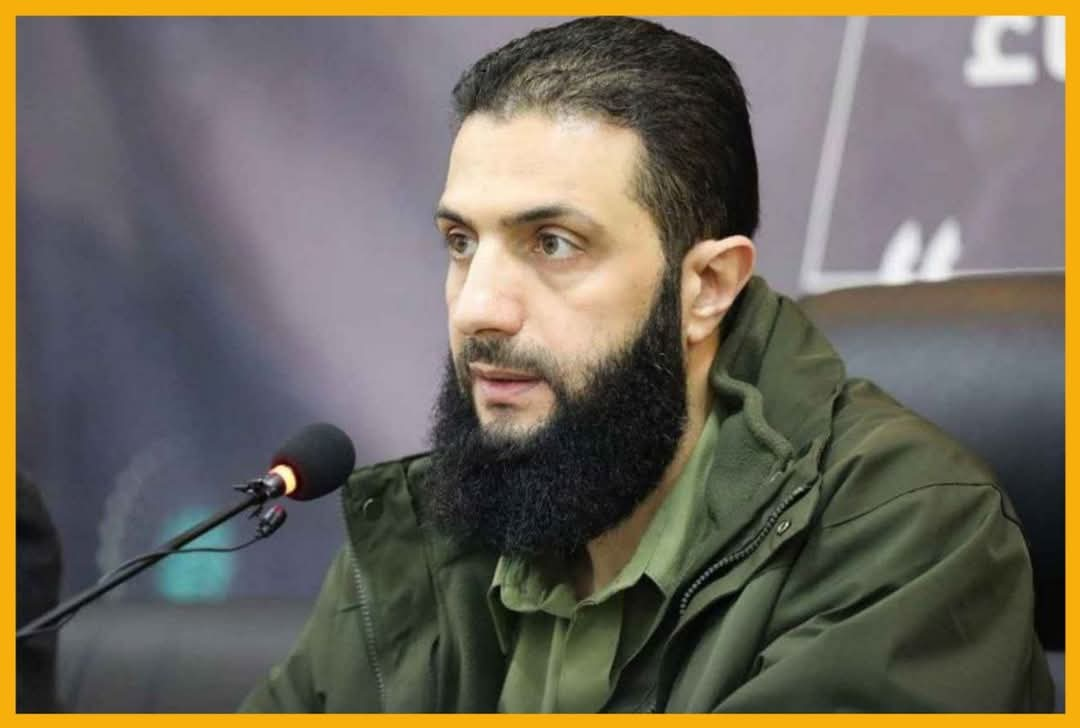
From a fighter in battle fatigues to a statesman in a Western suit and a trimmed beard, Sharaa’s transformation reflects the changes in the country since the fall of the Assad regime.
Since the beginning of the 11-day lightning offensive against the Assad regime, Sharaa has given several interviews and statements from CNN to Saudi state-owned Al Arabiya TV, reflecting a fair degree of moderation in his worldview.
He has pledged to ease sectarian tensions and rebuild the country along the margins of justice and equality. The HTS leader also sent a message to the Western camp saying that “your interests are understood in the new Syria.”
He suggested working with Russia, an ally of the Assad regime, and sent a conciliatory message to Iran, in which he offered to develop a positive relationship even though Tehran fiercely backed Bashar al Assad in the past.
“This new triumph, my brothers, marks a new chapter in the history of the region, a history fraught with dangers (that left) Syria as a playground for Iranian ambitions, spreading sectarianism, stirring corruption,” he said, during one of his first speeches after the overthrow of the Assad regime in Damascus’s Umayyad Mosque, one of the most decorated and oldest Muslim religious structures.
In his latest interview, Sharaa suggested that elections and drafting a new constitution replacing the current Baathist charter will take several years due to the fact that the civil war has led to a large displacement and a lot of disruption in many public services.
A moderate leader?
The Biden administration has also signalled that depending on Sharaa’s path, Washington might consider removing the HTS from the US terror list.
“We have taken note of statements by the leaders of these rebel groups in recent days, and they’re saying the right things now, but as they take on greater responsibility, we will assess not just their word, but their actions,” Biden said on Dec. 8.
In a recent interview, Sharaa urged the Western leadership to lift sanctions because they were “issued based on the crimes” of the Assad regime, which is gone after the opposition victory. As a result, “these sanctions should be removed automatically”, he said.
Not only the US but also regional powerhouses like Türkiye, which has backed the opposition’s democratic aspirations against the Assad regime, also closely watching Sharaa and the new Syrian administration’s ongoing policies.
With an overwhelming majority of Syrians having lost so many loved ones in the brutal war, they are now hoping for a long-lasting peace and a life with dignity and honour.
“I have an advice for him (Sharaa/Jolani), I hope he is smart enough to know it by himself: don’t even try to be the new Assad. The Syrians who did a revolution against Assad, can do it again easily against you as well,” says Omar Alhariri, a Daraa-based Syrian journalist.
“We are looking for the future, being a good part of it. We are waiting for justice,” Alhariri tells TRT World, adding that Sharaa should lead a process in which “Syrians themselves should choose their leaders” in a democratic process.
Sharaa has recently shown his openness to a democratic order, saying the HTS and its armed allies intend to form a “council chosen by the people” and a state operating through institutions.
In March, however, he faced large protests in his previous stronghold Idlib, where protesters accused him of corruption and suppression. It remains to be seen whether his moderate rhetoric will match his future actions.
What is his background?
Born in Saudi Arabia to Syrian parents who are from the Israel-occupied Golan Heights, Sharaa grew up hearing the stories of his family’s displacement.
During the infamous Arab-Israeli War of 1967, Israel occupied the Golan Heights, rendering its inhabitants, including Sharaa’s family, homeless.
Assad’s ouster under the leadership of Sharaa is, in a way, life coming full circle. His father Hussein al-Sharaa was a pan-Arab nationalist, who was imprisoned in the 1970s by Bashar al Assad’s father Hafez al Assad. After his release, Sharaa’s father sought asylum in Saudi Arabia where he worked as an oil engineer.
In 1989, when he was seven-years-old, the Sharaa family returned to Syria’s Damascus. The young Sharaa pursued journalism, studying media.
In the 2000s, the Second Intifada left indelible marks on Sharaa’s life. While his father had cultivated strong ties with the Palestinian armed groups affiliated to the Palestine Liberation Organization (PLO), the young Sharaa established contacts with radical groups like Al Qaeda.
“I started thinking about how I could fulfil my duties, defending a people who are oppressed by occupiers and invaders,” he said during an interview with Frontline in 2021, referring to the Palestinian resistance against Israel.
In the preceding months of the US invasion of Iraq in 2003, he joined the Al Qaeda ranks, fighting against the American occupation.
By the mid-2000s, he was imprisoned by US authorities in Iraq and subjected to difficult conditions in America’s notorious dark sites for at least five years. On his release in 2011, Sharaa stepped into a different world.
The Arab Uprisings were spreading across the Middle East, reaching Syria too. Sharaa quickly joined hands with the anti-regime forces, launching another battle against the Bashar al Assad’s rule in Syria.
Toward being a top operative
After his move to Syria, Sharaa formed Jabhat al Nusra, the Syrian wing of Al Qaeda. In 2013, when Daesh wanted to annex Syria and merge it with the parts it had captured in Iraq, Sharaa rebelled, triggering a fight between the two groups.
While Daesh lost control across both Syria and Iraq thanks to an American-led coalition interference, Sharaa’s Nusra Front survived, partly due to its anti-Daesh stance.
In 2016, Sharaa rebranded his group Jabhat Fateh al-Sham (Front for the Conquest of Syria), indicating that the new structure has its own agenda, straining its ties with Al Qaeda. The next year, he once again changed the group’s name to its current format, publicly saying that the HTS has no connections with al Qaeda.
In the last seven years, Sharaa’s HTS has focused on Syria, increasing its hold over the Idlib province, which was the last opposition stronghold in the country prior to November 27, when the 11-day offensive against the Assad regime began.
 Dr Khairi Janbek