Rehabilitating Iran?

By Dr Khairi Janbek

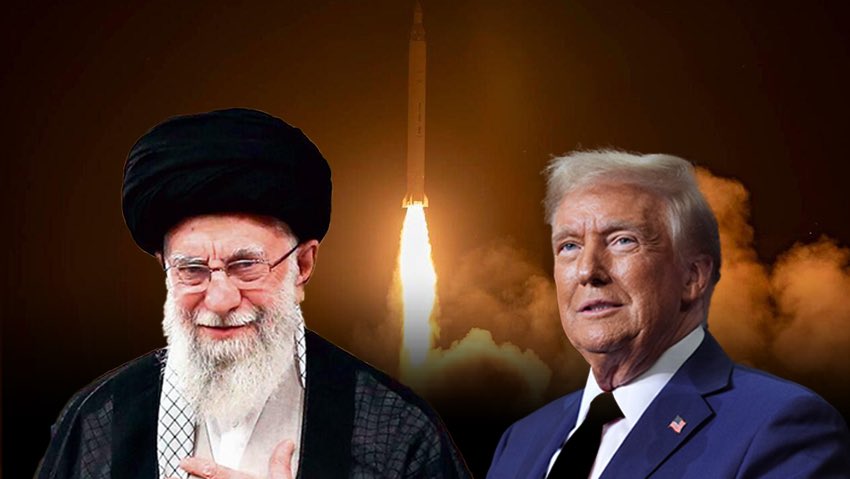
All eyes now are on the new game in the Middle East: The US-Iran negotiations. One would say the aim here is far more advanced than the Iranian nuclear programme when the agreement was torn up by US President Donald Trump himself who was more concerned with details which would eliminate all threats against Israel, and would that in all liklihood, transform the whole region.

It seems that in this early intense stage, the ambiance is for reaching an amicable agreement through the recognition that no matter of the outcome, there will be nothing divisive. Trump will continue creating crisis just for the sake of showing that he can control those crises, and act in the manner of the old Arabic adage, for neither the wolf to die nor the sheep to parish. While for the Iranians, they have everything to gain from a positive outcome to those negotiations.

Of course, the Iranian nuclear programme is an important component of these negotiations, and most often than not, at times Iran and at times its enemies, exaggerate the potential of the country to making nuclear weapons for political purposes.

Yet the fact remains that despite the possibility of Iran being still far from creating weapon-grade enrichment programme, if carried on unchecked, it is inevitable that at one point in the future it will have nuclear weapons. Consequently the fact remains, the onus is on Iran to prove credibly that its nuclear programme is for peaceful purposes, and accept periodically, the checks of the international nuclear inspectors.

The other dimension is the relationship of Iran with its proxies in the region, which falls under the category of threats to Israel. Well, and under the circumstances, Iran has to decide the reasons for its continued alliances with its proxies – whether such alliances served their purpose, or have become a burden than an asset – or if it can maintain these alliances with definte no threat commitment Israel but with political clout in Arab world affairs, which incidentally may not seem such a bad idea for Trump.

After all eliminating the threat against Israel is the primary concern, while at the same time his rich Arab allies buy their protection from him, a protection which Iran cannot dare to test.

But what is in it for Iran to reach an accord with the United States? One would say plenty. For a start it’s reintegration back into the region. After all it kept claiming it’s nuclear programme, is in reality, a peaceful programme and Tehran never had the intention of enriching weapons grade uranium.

Well, and with an accord it can now easily prove, and then can start dealing with the issue of not being a threat to Israel by either dissociating itself from these proxies which have become costly to its image and/or work in their transformation to political, unarmed forces and parts of the political structures wherever they exist in the Arab region.

Essentially if the sanctions against Iran are lifted and its assets are no longer frozen, Iran will be able to assume a very strong position in the Middle East region based on its economic strength and its enormous trade potential. In fact, Trump knows that any military action he takes against the Iranian nuclear installations, and any possible response will not have a decisive result. Therefore, the most likely decisive result will be, a new Iran, big in the region as well as moreover, that will owe him a favour.

In the meantime , we are still at the very early stage to even try to guess, but we can safely assume, that no matter how those negotiations proceed, nothing tangible is likely to happen before the visit of President Trump to the Gulf region in May.

Dr Khairi Janbek is a Jordanian analyst based in Paris, France
Continue reading
Don’t be Distracted by Trump’s Bizarre Plan, Focus…

By James J. Zogby

My initial response to President Donald Trump’s proposals for Gaza was to dismiss them as bizarre, detached from reality, dangerously provocative, illegal, and callously insensitive to Palestinian humanity.

His proposals are, in fact, all of the above. But because we know that this president is not a stupid man, it would be wise to assume that there may be a “method to his madness.” Not unlike Trump’s “shock and awe” Executive Order blitz that had his opponents and the media scrambling to understand his intentions, I believe that the same logic may be at work with his Gaza remarks. The logic has two essential components. The first is to disorient and demoralize his opponents. The second is to distract them—like a carnival hustler’s shell game—so we take our eyes off the real issues in front of us and focus instead on the illusion being created.

With this in mind, I do not believe for a minute that Trump intends to send US troops to take over Gaza to forcibly expel 1.5 million Palestinians. Nor will he be able to coerce Jordan and Egypt to receive and permanently resettle these expelled Palestinians, nor entice Saudi Arabia to pay to build Palestinians a “big new beautiful place.”

All these ideas are so far-fetched and dangerous that it is inconceivable that this president, who says he wants to keep America out of war and bring peace to the Middle East, will try to do any or all of them.

I may be attacked by some for trying to give President Trump the benefit of the doubt. To be clear, that is precisely what I am not doing. He may want to turn the page with the distractions of a bizarre plan for Gaza. But instead of taking the bait, we should continue to focus on what’s real. What I am saying is that instead of spending endless hours attempting to parse out his words or critique his plan or prepare for its implementation (which is exactly what he wants us to do), we should avoid the distraction and focus on the urgency of matters in front of us. The fragile ceasefire in Gaza must be maintained and the parties must move into its second and third phases. That means continuing to press for Israel’s withdrawal from Gaza and plans to begin reconstruction. It means directing our attention and action to stopping Israel’s escalation of oppressive violence on the West Bank. And it means maintaining focus on the need to hold Israel and the US culpable for the war crimes committed during the past 15 months.

Neither President Trump nor Israel’s Prime Minister Benjamin Netanyahu want us to act on any of these pressing matters. They want to further demoralise Palestinians while causing turmoil in Arab countries. They want the clock to run down on Phase One of the ceasefire plan. This would allow Netanyahu to resume his war to achieve what he calls “total victory” in Gaza. It would also ensure that he maintains his governing coalition and remains in office. 

In other words, instead of addressing real problems crying for our attention, President Trump wants us to fall for his game by debating an illusory distraction while the Israelis pursue their deadly game right under our noses.  

James J. Zogby is a columnist in The Jordan Times

Continue reading
Trump, Delusion Man and Gaza

By Ahmet Yusuf Ozdemir

US President Donald Trump has made an astonishing and deeply troubling proposal: the United States should take control of Palestine’s Gaza and transform it into a ‘Riviera of the Middle East’. He even claimed, “Everybody I’ve spoken to loves the idea of the US owning that piece of land.” The question is: who exactly is this “everybody”?

The answer seems clear when you consider that Trump made this announcement standing beside none other than Israeli Prime Minister Benjamin Netanyahu, the architect of the ongoing devastation in Gaza.

To further amplify the absurdity, Marco Rubio, Trump’s Secretary of State, took to social media to gleefully tweet: “Make Gaza Beautiful Again.” This is a vision that sees Gaza not as a place of human struggle, resilience, and history, but as an empty plot of land—waiting to be “beautified” by foreign intervention, with little regard for the millions of lives it holds.

Gaza has been on the news headlines again after October 7, 2023. Israel, Egypt, and the Mediterranean Sea surround it. Movement into and out of it is heavily controlled, as Israel has enforced a nearly complete land, sea, and air blockade of the area since 2007.

This small pocket of land has attracted the world’s attention every one or two years for the last one and a half decades but is also sometimes forgotten. If you are someone who is reading about Gaza for the first time in your life with this article, you may think the author is talking of a deserted island, uninhabitable place, or “a land without a people.”

In fact, Gaza is 365 square kilometres of land, and it inhabits 2,351,000 people, which makes it one of the densest areas in the world, with 6441 people per square km. One should also avoid the statisticalisation trap where people who are living in Gaza are human beings with stories and memories. They are faces rather than mere numbers. However, it becomes clear that political language in the United States with the new Donald Trump administration will be based on the dehumanisation of Gaza.

The implications of his words at the press conference on February 5, are staggering. Trump’s proposal is a glaring reminder that in the eyes of many world leaders, the people of Gaza—Palestinians—are reduced to little more than background noise in a geopolitical game.

This isn’t just about land or politics; it’s about the systematic erasure of a people, their history, and their struggle for self-determination. To Trump, Gaza isn’t a place of suffering and resistance—it’s an opportunity for rebranding. It’s a strip of land to be “fixed,” a place to be renovated into a “tourist destination,” regardless of who lives there or the decades of hardship they’ve endured under a brutal occupation and blockade.

Colonialism rebranded

What Trump’s rhetoric reveals is a deeply troubling mindset—a belief that Palestinians in Gaza have no voice, no agency, and no right to self-determination or votes.

Their homes, their land, their very existence, are reduced to a resource for someone else to exploit, more valuable than the people living on it. This may come as a surprise to some observers, but this is a modern-day manifestation of colonialism, echoing the Manifest Destiny doctrine in the United States—a belief that one nation has a divine right to control another’s land, regardless of the people who have lived there for generations. It’s the kind of thinking that has long fuelled the oppression of indigenous peoples, and it is alive and well in Trump’s vision for Gaza.

The legal context around this proposal only deepens its gravity. The International Criminal Court (ICC) has issued arrest warrants for Israeli officials, including Netanyahu and former Defence Minister Yoav Gallant, for crimes against humanity and war crimes. The International Court of Justice (ICJ) has condemned Israel’s actions in Gaza as genocide.

And yet, Trump’s words seem to offer a dangerous legitimisation of the very actions that have brought Gaza to the brink of collapse. Netanyahu’s rhetoric only adds fuel to the fire. In a speech soon after October 7 where he infamously referred to Palestinians as “animals” and invoked the biblical story of the Amalekites, justifying violence with religious fervour. “You must remember what Amalek has done to you,” he said.

This was not an ordinary reference, but put in the context of war, it could be interpreted as “genocidal intent.” Netanyahu was referring to the following passage; “‘I will punish the Amalekites for what they did to Israel when they waylaid them as they came up from Egypt. Now go, attack the Amalekites and totally destroy all that belongs to them. Do not spare them; put to death men and women, children and infants, cattle and sheep, camels and donkeys.’”

This is not just inflammatory speech—it’s the rhetoric of destruction, one that seeks to dehumanise and erase an entire population.

Trump’s chilling comments about the people of Gaza add to this. When asked whether Palestinians would ever be able to return to their homes if Gaza were to fall under US control, Trump responded bluntly: “I don’t think people should be going back to Gaza. I think that Gaza has been very unlucky for them. They’ve lived like hell…the only reason they want to go back is because they have no alternative.”

Notice how he frames it: Gaza isn’t a homeland—it’s a prison. Palestinians, in his view, are not people with rights, dreams, or a history—they are mere sufferers, trapped in a place they should leave behind. The use of “they” is telling: Trump doesn’t even use the word “Palestinian” when he talks about Gaza. It’s as though the very identity of the people who live there has been erased.

Resilience

But despite the relentless violence and oppression, the spirit of the people of Gaza remains unbroken. After the ceasefire between Palestinian resistance forces and Israel, which came after weeks of unimaginable destruction, Gaza’s resilience was on full display. Thousands of Palestinians returned to their homes in the northern part of Gaza, even though Israel has tried to make it uninhabitable.

This wasn’t just a physical return—it was a powerful statement of defiance, a refusal to be erased. During the release of Israeli hostages, Palestinians expressed solidarity with the resistance in a show of strength: smiling, cheering, even taking photos with fighters from the Qassam Brigades. This is a people who refuse to submit to occupation. Their will is unshaken.

So, while Trump’s words might make headlines, they also expose the lengths to which certain powers will go to suppress Palestinian resistance, to break their spirit, and to erase their struggle for justice. If this vision is allowed to continue, the Middle East could be facing a future marked by further instability, deepened injustice, and a growing humanitarian crisis.

But as Gaza has shown time and time again, the Palestinian struggle will not be easily silenced. No matter the attempts to erase them from the map, the people of Gaza will remain, with their history, their identity, and their fight for freedom.

TRT World


Ahmet Yusuf Ozdemir

Ahmet Yusuf Ozdemir

Ahmet Yusuf Ozdemir is an Assistant Professor of Political Science and International Relations Department at Ibn Haldun University.

Continue reading