Israel’s Mideast Message

By Dr Maisa Al Masri

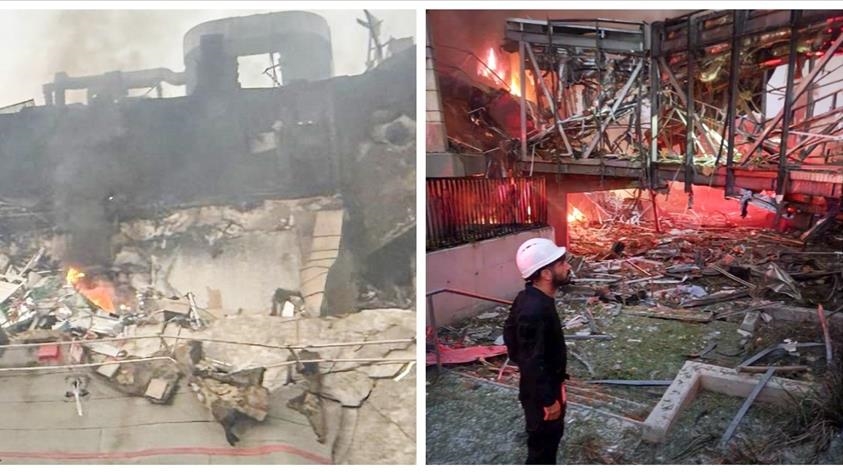
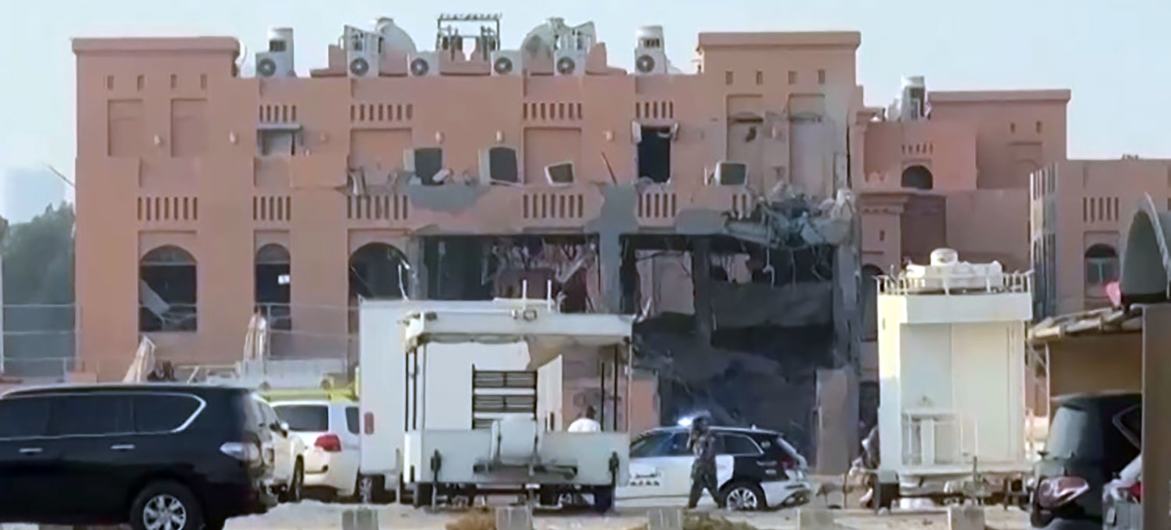
“This is a message to the entire Middle East,” Israeli Knesset Speaker Amir Ohana said in response to the Israeli airstrike that targeted Hamas leaders in the heart of the Qatari capital, Doha.

However, this statement is not merely a comment on the military operation strike into a declared strategic message, telling the entire region, and primarily the Gulf, that Israel, in partnership with Washington, has become the master of the decision-making process in the region.

Ohana’s statement is an explicit and direct threat that leaves no room for interpretation,  reflecting the new deterrence doctrine adopted by Tel Aviv: No red lines, no geographical immunities, and no Western allies outside the confines of Israeli dictates. Simply put, anyone who disagrees with us becomes a legitimate target, even if they are in the heart of a friendly capital that hosts the largest American military base.

This makes for a dangerous conclusion: Israel no longer views the Gulf states as partners in stability, but rather as “open arenas for fiery messages.” Washington is blessing the silence, participating in complicity, and mocking the Arabs.

Naked dominance

And don’t forget the Israeli crime in the heart of the Gulf marks the beginning of a new era of naked dominance. It’s not a traditional security operation, but a pivotal turning point in the rules of regional engagement, in which Qatar has been embarrassed both on the Arab level and internationally.

Israel has now publicly placed itself in a circle (no longer concealing its intentions) – through bombing and military strikes – that it no longer sees a distinction between political geography and the theater of operations. More dangerously, the heart of the Gulf today has become openly subject to Tel Aviv’s fire. And who can challenge it?

The strike wasn’t an intelligence leak or a silent targeting, but a direct airstrike in an area teeming with embassies, schools, and residential buildings, in a country that is a major ally of Washington and a pillar of American security in the Middle East.

Thus the message has become clear to everyone: No one is above attack… no state, no sovereignty, no partnership.

The US administration, led by Donald Trump, evaded with a series of conflicting statements about its prior knowledge of the operation. But whether it knew and blessed it, knew and remained silent, knew too late, or did not know at all, the outcome is the same: The American cover was removed, Gulf confidence eroded, and billions perished. The statements of the US embassy in Doha did not go beyond expressions of caution to American citizens, while White House statements swayed between “regret over the location” to “understanding the goal of eliminating terrorism.”

I believe the opposite message was conveyed to the Gulf capitals: Your security is not a priority, and your sovereignty does not equate to a clear position from Washington. The question that now arises however is: Why Qatar? Why now? Why was the strike carried out in Qatar and not in Turkey, or Iran for example? This is despite the fact that the Hamas leaders that were targeted had just returned from Istanbul, suggesting Tel Aviv chose the location not arbitrarily but with deep political awareness. Tel Aviv did not pull the trigger in Istanbul, even though the targeted leaders passed through it only hours earlier.

Turkey, with all its military, political, and international complexity, is not a testing ground for Israeli madness. There are red lines that even Tel Aviv dares not cross… and Turkey is one of them. The potential Turkish military response, the internal Turkish explosion during a highly sensitive election season, and the delicate balance of power within NATO rendered Turkish territory “operationally closed” even to the most violent wings of Israeli decision-making. But when the targeted figures left Istanbul for Doha, everything changed.

Qatar, like other threatened Arab states, in the Israeli security and intelligence mindset, is merely an intermediate gray area, neither neutral nor classified as an “enemy,” potentially a shocking target at a low cost. This is something all Arab decision-makers should be aware of.

From Tel Aviv’s perspective, Qatar is balancing contradictory roles, managing mediation, funding aid, and hosting parties that anger Israel without possessing a genuine deterrent umbrella. There are no international calculations that could prevent a surgical strike carried out within hours. Merely hosting an American base does not make Doha “immune,” but may even further tempt Tel Aviv, proving that decision-making in the region is no longer solely in Washington’s hands but in Tel Aviv as well.

In short, Israel needed a platform to send the biggest message since the Gaza war… so it chose the weakest link, amid the silence of its strongest ally.

Here, we can pause a moment at the Knesset member’s statement that the operation was “a message to the Middle East.” This is not a slip of the tongue, but a strategic doctrine upon which future decisions are based. Israel is telling all countries in the region that whoever harbors Hamas, or even engages in dialogue with it, will be next.

If the Arab states fail to take a firm political stand, the Doha precedent will be repeated elsewhere. It may not be Hamas’s mediation that stands accuse but rather the concepts of neutrality, balance, and even dialogue with parties Tel Aviv disapproves of and which then could become sufficient justification for a strike. It’s a policy of punishment.

This scene is posing existential questions for Arab capitals. If Qatar, Washington’s most important ally, is being bombed over the heads of its own people, after Syria, Lebanon, and Gaza… should we wait for Iraq’s turn? Riyadh? Abu Dhabi? Kuwait? And others? Does the American umbrella truly protect us, or is it used only when our interests intersect with Israel’s?

And what is the point of hosting American bases if they do not prevent airspace violations? Or provide protection?

What happened in Doha is pushing the region to crossroads: Either continuing its position of dependency and timid mediation, or repositioning strategically and developing independent air defenses, which is logistically difficult, or seeking alternative alliances (Ankara, Beijing, Moscow, Tehran?), and establishing red lines that Tel Aviv will not cross.

Qatar now faces difficult choices: Will it withdraw from the Hamas mediation? Will it demand real security guarantees? Will it go further, toward symbolic deterrence or unconventional partnerships? Or will it pay the price of protection once again?

Beware: A war of wills is beginning now. The Israeli airstrike in Doha was not just a blow to Hamas, but also a slap in the face to the sovereignty of the Gulf and the region, an undermining of the prestige of international law and its signed, ratified, and binding agreements, and an insult to the concept of the alleged strategic partnership with America.

This is the beginning of a new era, one in which Israel and Washington declare that the security of the region is no longer an Arab decision. The question now is: Will the Arabs as a whole wake up before “Ohana’s message” reaches other capitals? Perhaps.

The author is a political writer based in Amman Jordan and contributed this article to the Al Rai Alyoum Arabic website
Continue reading
Middle East End Game!

By Dr Khairi Janbek

For the last four decades, each time a tragic event or another took place in the Middle East, the slogan that gets thrown onto the arena is that of a “new Middle East”. No one is certainly not against a new Middle East per se, but against the one in which someone acts stupidly and then against the stupid acts of someone else to stop the first one from acting stupidly.

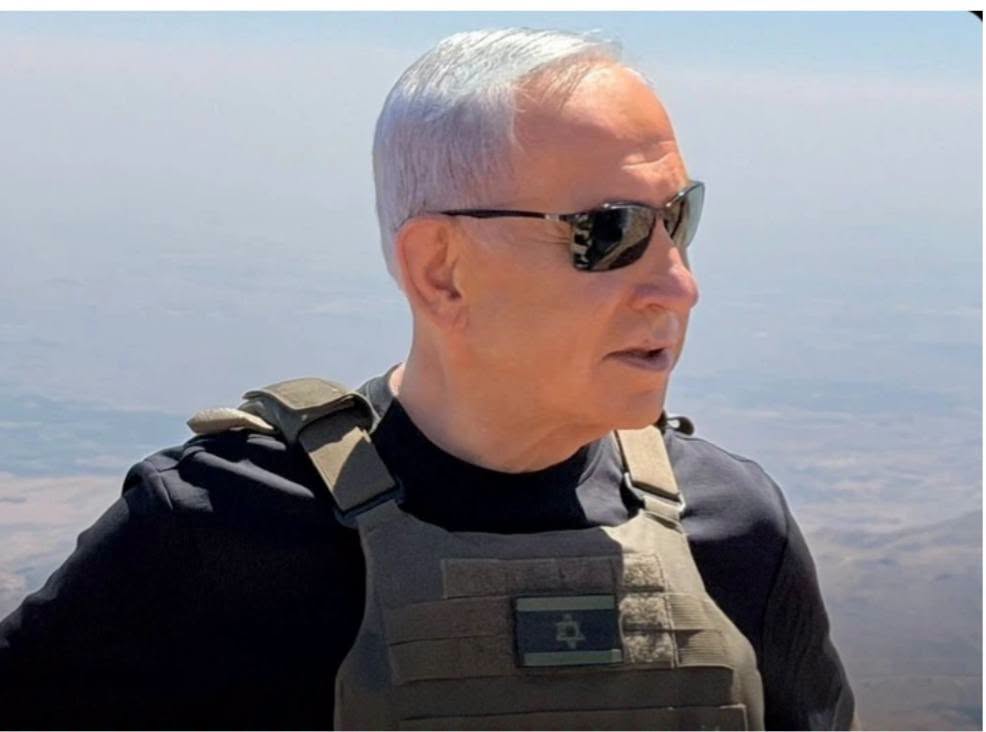
Such a series of stupid events makes one think that the notion of the Middle East is supposed to be worse for the peoples of the region except most probably, Israel. Into the fray, is the idea of Israeli Prime Minister Benjamin Netanyahu who wants to change the face of the region, giving the impression this region is the face and Netanyahu is the make-up artist whom to make this “face beautiful” for Israel and probably with those grudging consent of those around it.

Now, considering what has been achieved on the ground as far as Israel is concerned in relation to Netanyahu’s end game may well be too early to tell, but at least one can say that Israel has gained a respite with its seeming regional  supremacy.

The start was with crippling the threat capability of Hezbullah and although it has not been destroyed, the responsibility for dealing with this Iranian proxy is now left to the new Lebanese government, which means that the latter will have to bear the new/old responsibility.

Then Syria came along. After the demise of the Assad regime, all Syrian military capabilities became fair game for Israeli bombardement, but in fairness, they were already so during the past Assad regime. Now, however, Israel has gone further, occupying the buffer zone between the two states while expanding its security zone deep inside Syria. Here, the project being pursued is a push for a federal structure to make the country incapable of becoming a future threat to Israel.

As for the 12-day campaign of bombardment and counter-bombardment by Israel and Iran with US cameo appearance, it is hard to reach any conclusions because of the great damage on both sides that is not really known as it verges on exaggerations, either for seeking international sympathy or as a show of awkward display of power.

Here, the end game was for Iran to be stopped from backing its proxies in Yemen, Iraq, and Lebanon and to eliminate its nuclear capability, if indeed it has reached such a level. Here, again, it is very hard to say to what extent the Iranian nuclear program has been set back, and to what extent Iran will go on the diplomatic path to stop its military support for its regional proxies.

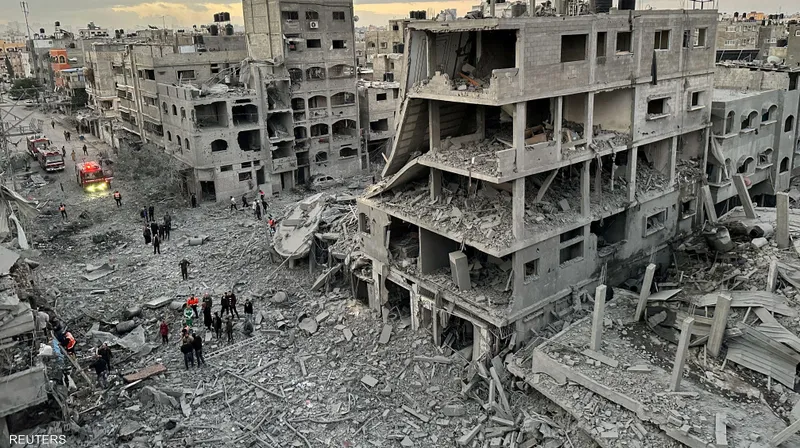
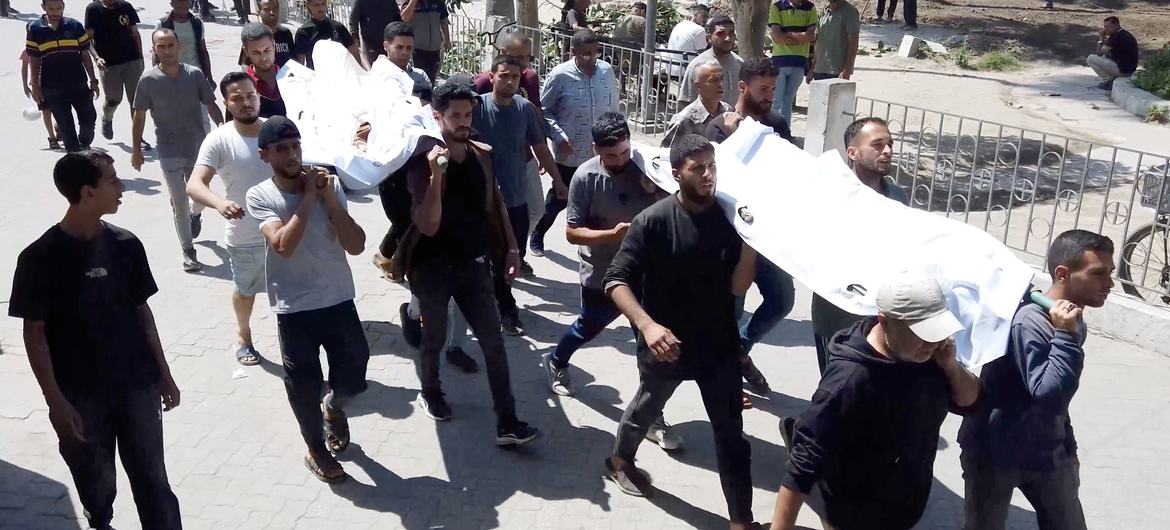
Inevitably, we go back in circles, to the bleeding wound of Gaza, bleeding for the Palestinians, Arabs and Israelis. End game, ideal scenario and possible solution are all lost between the Israeli genocide policy, Arab impotence and naïveté , EU flip-flopping in accordance with the change of wind, and Trumpist absurd proposals and change of mind.

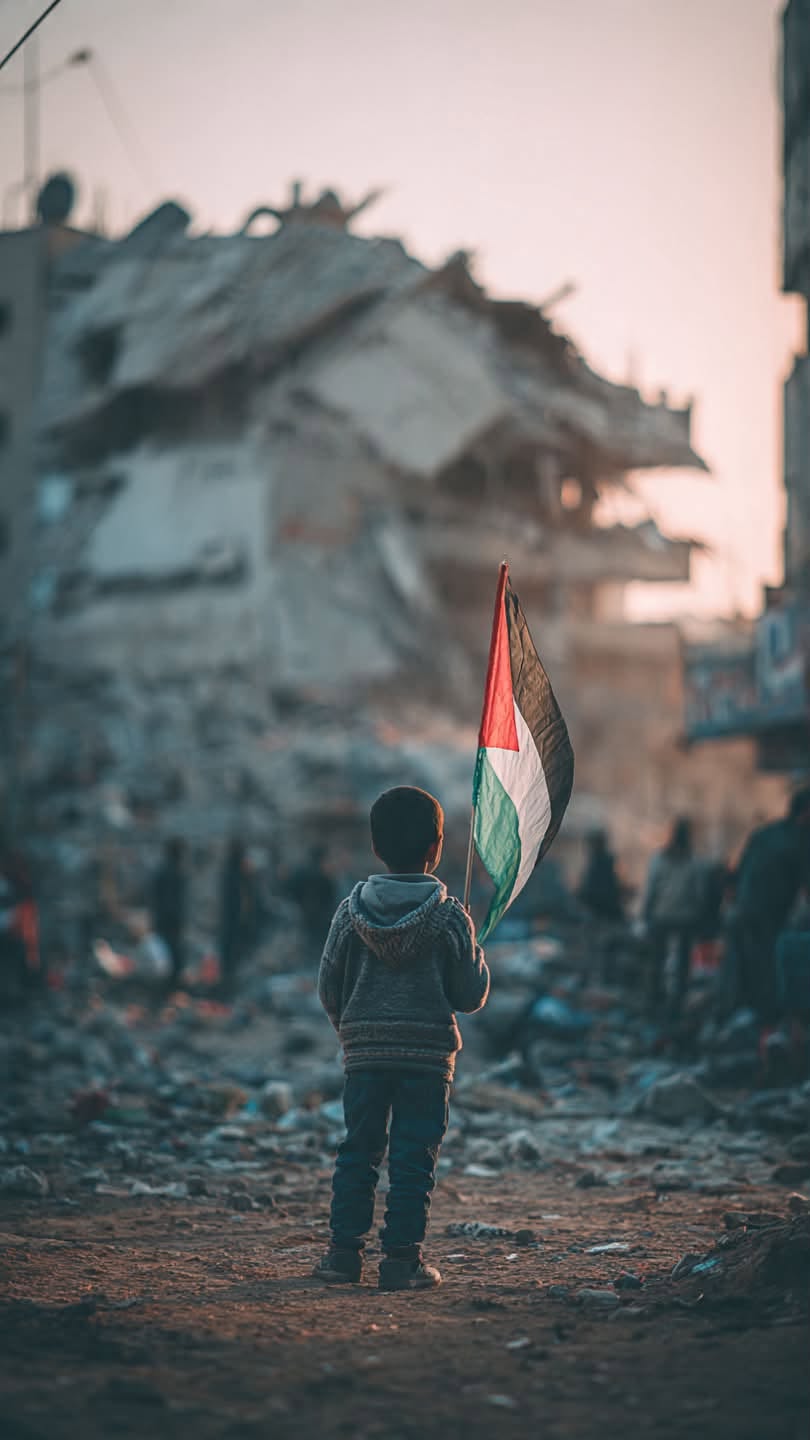
The issue here is far beyond Hamas, it’s Gaza and its people. As things stand the strip is divided into three regions under starvation. A massive refugee camp for people on their own land which for all intents and purposes, will no longer be their land. All in all, Israel is, with the consent of all, will be the supreme power in the region. 

Dr Janbek is a Jordanian writer based in Paris, France.

Continue reading
Changing The Middle East Face Through War

Dr Marwan Asmar

Israeli Prime Minister Benjamin Netanyahu finally got what he wanted: ‘A war with Iran.” But this war – now in its fifth day, is already proving very costly for Israel because of the Iranian military firepower meted out on Jewish cities, towns and military installations.

Such a war that begun Friday, 13 June, 2025, will be remembered as one of the greatest events in the calendar of the Middle East. The start of the reaping of the Muslim pride, for up until it was always US-backed Israeli ‘superman superiority’ – versus Islamic weakness and meekness.

Netanyahu may have made a devastating calculation by attempting to go after the Iranian vast nuclear infrastructure while in reality creating mayhem in Iranian cities, people and assassinating 10 of its top military leaders in the early hours of Friday morning.

This was all to change on the evening of that day as Iranian long-range missiles began to hurl down on central Israel and more precisely the Greater Tel Aviv area that includes other cities, towns and settlements with a population of 4 million people.

The start of the strikes on Israel stands today as unprecedented, a first-time development since the creation of the Zionist entity in 1948 and struck a series of bullet sounds among the Israeli population who has been huddling up-and-down the shelters since the conflict begun and best summarized by the US Ambassador to Israel Mike Huckabee who said one night after the bombs that:

“It was a tough night in Israel,” referring to the fact that he had to go down to the bomb shelter five times because of the incoming Iranian missiles that would not let up.

Shock, mayhem, hysteria quickly consumed Israelis as they started seeing first-hand, the destroyed buildings and quashed cars in the middle of Tel Aviv and its surrounding areas like Bat Yam, Ramat Gan, Rehovot, Petah Tikva and Herzliya.

Very quickly as well, missiles, and indiscriminately so, began to fall in these places, long seen as the pride of joy of Israeli technology, military industrialization and top business. These were crumbling in front of their eyes as reported by the Israeli newspapers and media channels.

Shocking was the fact, the incoming missiles, which made Israeli defenses like the Iron Dome and the David Sling look pitiful, were striking buildings and high-scrappers including the prestigious Weizmann Institute of Science with reporters of three its top flights struck and is now in fear of complete collapse.

Despite this, Netanyahu says he is sure of a complete victory, adding that Israel is on the verge of completely changing the face of the Middle East, including his claims of bombing Iranian military facilities, but in reality striking at civilian infrastructure and people.

However, for the first time Gazans and Palestinians are jubilating at the sight of what seems to be the non-stop Iranian missiles falling on Israeli areas where sirens go off and on in all middle of the night and day whilst in glee at the ruined and destroyed buildings. “Let them see how its like to be hit by a missile,” is a frequent comment voiced not only by Palestinians but also by many others in the world.

It is true the face of the Middle East is, and for the first time, is truly changing the face of the Middle East, but not according to the wishes of Netanyahu but to the people of the area of Gazans, Palestinians Arabs and Persians where they have watched the Israeli army bomb the enclave over the past 21 months or so.

This is indeed a historic moment led by Iran and soon to be joined by members of the Muslim world including Turkey, Pakistan, Malaysia and Indonesia. The unexpected war in the Middle East, as brought on by Netanyahu and his extremist and racist government, is upsetting the plans of the Trump plan for the Middle East who is portraying himself as a so-called “man of peace” – a fake image in the light of the fact that the US has been the top military supplier for Israel to carry out its Gaza genocide.

The conflict with Iran – that is not likely to end any time soon because of the arsenal that waits in the ready and to be unleashed – has effectively put an end to the idea of transferring Palestinians from Gaza to other lands. They are likely to stay firmly on their places despite the mass destruction of the enclave.

However, there is a clear slippery-slope to this war that is still in the initial stages with outside powers ready to take sides developing into a real possibility of World War III, if cool hands don’t take the lead and let real and effectively diplomacy take the reign of power to stop what was seen in the 1960s, 1970s and even 1980s the concept of Mutual Assured Destruction.  

The world today is on a precipice….


Continue reading
Trump Slams Door on Netanyahu

Israeli Army Radio has reported that personalities close to US President Donald Trump informed the Israeli Strategic Affairs Minister, Ron Dermer, that the US president had decided to cut off contact with Prime Minister Benjamin Netanyahu.

The Army Radio explained that these acquaintances close to Trump informed Dermer that Netanyahu was manipulating the US president, stressing that what Trump hates most is being perceived as being manipulated.

The radio quoted an Israeli official as saying that Minister Dermer’s conversation with senior Republican officials, did not work because of his displayed arrogance.

This came hours after a report in the Israel Hayom newspaper asserting that the US president is “disappointed” with Netanyahu and intends to take “steps” in the Middle East “without waiting for him.”

Since the start of his new presidential term on January 20, 2025, Trump has offered diverse and unlimited support to the Netanyahu government, which has been waging a genocidal war against the Palestinians in the Gaza Strip since October 7, 2023.

However, the Israel Hayom daily quoted an unnamed sources as saying that “there is a decline in the personal relations and mutual disappointment between Netanyahu and Trump.”

The newspaper added that two senior sources close to Trump said, in closed conversations in recent days, that he has decided not to wait for Israel any longer and is moving forward with steps in the Middle East without “waiting for Netanyahu.”

The sources did not elaborate on the nature of the steps Trump intends to take unilaterally, but there is a complaint in Tel Aviv that Trump sometimes acts without coordination with Israel.

The most recent example is the ceasefire agreement reached by the United States and the Yemeni Houthi group, which does not include Israel and which Israel was unaware of before its announcement according to Al Jazeera.

Continue reading
What Does Trump Want to do About Gaza?

US President Donald Trump said Wednesday that there will likely be an announcement concerning the situation in the besieged Gaza Strip within the next 24 hours.

“We’re going to see what’s happening. A lot of talk going on about Gaza right now. You know that, right? So you’ll be knowing probably in the next 24 hours,” Trump said, one day after teasing a “very big announcement.”

Trump declined to specify what the announcement would concern when asked Tuesday, but said it would be “as big as it gets.”

He maintained, however, that it would be “very positive,” and could happen as soon as Thursday, the same time frame as the Gaza announcement he previewed.

It is not clear if Trump was addressing the same matter when he vaguely referred to the Gaza announcement, but his special envoy for the Middle East, Steve Witkoff, is reportedly slated to brief members of the UN Security Council on a US and Israeli proposal to facilitate aid deliveries in Gaza.

Earlier reports stated Israel’s Security Cabinet recently approved an aid delivery plan for Palestinians in the enclave via private US security contractors based on handing over aid boxes to individuals.

The UN and all aid groups working in Gaza, however, have rejected the plan, arguing it violates international humanitarian principles.

UN Secretary-General Antonio Guterres last month opposed the plan.

The Trump administration is reportedly seeking support from other countries while urging the UN to cooperate according to Anadolu.

“To the best of our knowledge, this is an unofficial briefing done in the US mission,” Greece’s UN mission told Anadolu, as it holds the Council presidency for May.

The closed-door meeting comes days before Trump’s Middle East tour, which includes a summit with Gulf leaders on Iran and Gaza.

Continue reading