Israel’s Mideast Message

By Dr Maisa Al Masri

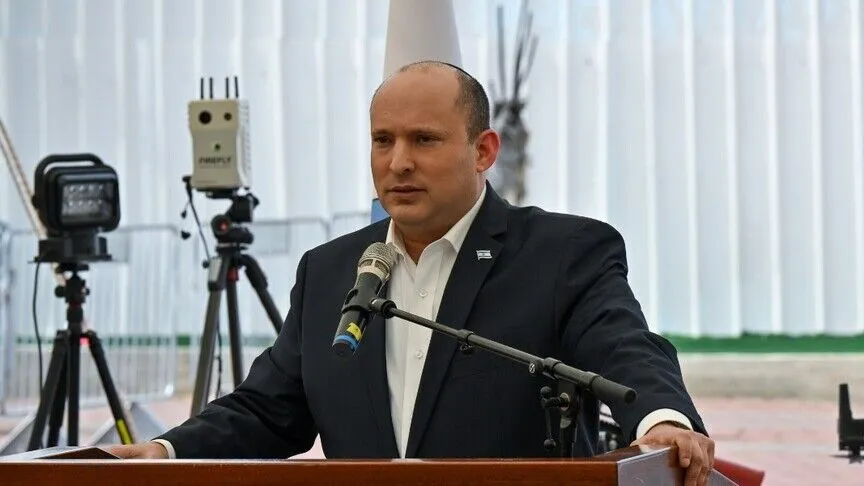
“This is a message to the entire Middle East,” Israeli Knesset Speaker Amir Ohana said in response to the Israeli airstrike that targeted Hamas leaders in the heart of the Qatari capital, Doha.

However, this statement is not merely a comment on the military operation strike into a declared strategic message, telling the entire region, and primarily the Gulf, that Israel, in partnership with Washington, has become the master of the decision-making process in the region.

Ohana’s statement is an explicit and direct threat that leaves no room for interpretation,  reflecting the new deterrence doctrine adopted by Tel Aviv: No red lines, no geographical immunities, and no Western allies outside the confines of Israeli dictates. Simply put, anyone who disagrees with us becomes a legitimate target, even if they are in the heart of a friendly capital that hosts the largest American military base.

This makes for a dangerous conclusion: Israel no longer views the Gulf states as partners in stability, but rather as “open arenas for fiery messages.” Washington is blessing the silence, participating in complicity, and mocking the Arabs.

Naked dominance

And don’t forget the Israeli crime in the heart of the Gulf marks the beginning of a new era of naked dominance. It’s not a traditional security operation, but a pivotal turning point in the rules of regional engagement, in which Qatar has been embarrassed both on the Arab level and internationally.

Israel has now publicly placed itself in a circle (no longer concealing its intentions) – through bombing and military strikes – that it no longer sees a distinction between political geography and the theater of operations. More dangerously, the heart of the Gulf today has become openly subject to Tel Aviv’s fire. And who can challenge it?

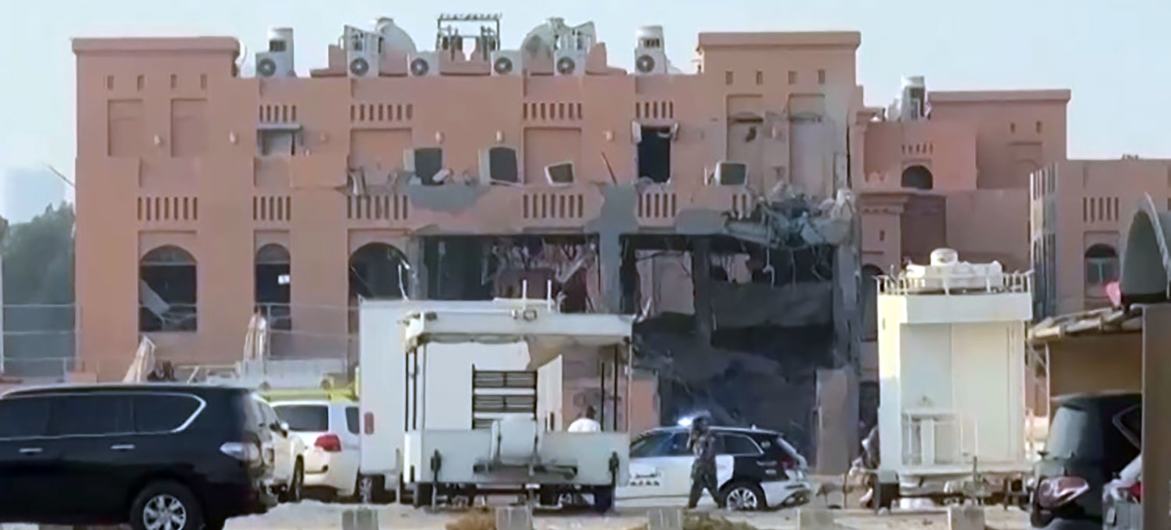
The strike wasn’t an intelligence leak or a silent targeting, but a direct airstrike in an area teeming with embassies, schools, and residential buildings, in a country that is a major ally of Washington and a pillar of American security in the Middle East.

Thus the message has become clear to everyone: No one is above attack… no state, no sovereignty, no partnership.

The US administration, led by Donald Trump, evaded with a series of conflicting statements about its prior knowledge of the operation. But whether it knew and blessed it, knew and remained silent, knew too late, or did not know at all, the outcome is the same: The American cover was removed, Gulf confidence eroded, and billions perished. The statements of the US embassy in Doha did not go beyond expressions of caution to American citizens, while White House statements swayed between “regret over the location” to “understanding the goal of eliminating terrorism.”

I believe the opposite message was conveyed to the Gulf capitals: Your security is not a priority, and your sovereignty does not equate to a clear position from Washington. The question that now arises however is: Why Qatar? Why now? Why was the strike carried out in Qatar and not in Turkey, or Iran for example? This is despite the fact that the Hamas leaders that were targeted had just returned from Istanbul, suggesting Tel Aviv chose the location not arbitrarily but with deep political awareness. Tel Aviv did not pull the trigger in Istanbul, even though the targeted leaders passed through it only hours earlier.

Turkey, with all its military, political, and international complexity, is not a testing ground for Israeli madness. There are red lines that even Tel Aviv dares not cross… and Turkey is one of them. The potential Turkish military response, the internal Turkish explosion during a highly sensitive election season, and the delicate balance of power within NATO rendered Turkish territory “operationally closed” even to the most violent wings of Israeli decision-making. But when the targeted figures left Istanbul for Doha, everything changed.

Qatar, like other threatened Arab states, in the Israeli security and intelligence mindset, is merely an intermediate gray area, neither neutral nor classified as an “enemy,” potentially a shocking target at a low cost. This is something all Arab decision-makers should be aware of.

From Tel Aviv’s perspective, Qatar is balancing contradictory roles, managing mediation, funding aid, and hosting parties that anger Israel without possessing a genuine deterrent umbrella. There are no international calculations that could prevent a surgical strike carried out within hours. Merely hosting an American base does not make Doha “immune,” but may even further tempt Tel Aviv, proving that decision-making in the region is no longer solely in Washington’s hands but in Tel Aviv as well.

In short, Israel needed a platform to send the biggest message since the Gaza war… so it chose the weakest link, amid the silence of its strongest ally.

Here, we can pause a moment at the Knesset member’s statement that the operation was “a message to the Middle East.” This is not a slip of the tongue, but a strategic doctrine upon which future decisions are based. Israel is telling all countries in the region that whoever harbors Hamas, or even engages in dialogue with it, will be next.

If the Arab states fail to take a firm political stand, the Doha precedent will be repeated elsewhere. It may not be Hamas’s mediation that stands accuse but rather the concepts of neutrality, balance, and even dialogue with parties Tel Aviv disapproves of and which then could become sufficient justification for a strike. It’s a policy of punishment.

This scene is posing existential questions for Arab capitals. If Qatar, Washington’s most important ally, is being bombed over the heads of its own people, after Syria, Lebanon, and Gaza… should we wait for Iraq’s turn? Riyadh? Abu Dhabi? Kuwait? And others? Does the American umbrella truly protect us, or is it used only when our interests intersect with Israel’s?

And what is the point of hosting American bases if they do not prevent airspace violations? Or provide protection?

What happened in Doha is pushing the region to crossroads: Either continuing its position of dependency and timid mediation, or repositioning strategically and developing independent air defenses, which is logistically difficult, or seeking alternative alliances (Ankara, Beijing, Moscow, Tehran?), and establishing red lines that Tel Aviv will not cross.

Qatar now faces difficult choices: Will it withdraw from the Hamas mediation? Will it demand real security guarantees? Will it go further, toward symbolic deterrence or unconventional partnerships? Or will it pay the price of protection once again?

Beware: A war of wills is beginning now. The Israeli airstrike in Doha was not just a blow to Hamas, but also a slap in the face to the sovereignty of the Gulf and the region, an undermining of the prestige of international law and its signed, ratified, and binding agreements, and an insult to the concept of the alleged strategic partnership with America.

This is the beginning of a new era, one in which Israel and Washington declare that the security of the region is no longer an Arab decision. The question now is: Will the Arabs as a whole wake up before “Ohana’s message” reaches other capitals? Perhaps.

The author is a political writer based in Amman Jordan and contributed this article to the Al Rai Alyoum Arabic website

CrossFireArabia

CrossFireArabia
Dr. Marwan Asmar holds a PhD from Leeds University and is a freelance writer specializing on the Middle East. He has worked as a journalist since the early 1990s in Jordan and the Gulf countries, and been widely published, including at Albawaba, Gulf News, Al Ghad, World Press Review and others.

Related Posts

Trump, Netanyahu Rift Hits Rock Bottom: View From Amman

By Saleem Ayoub Quna

The Epic Fury Operation launched by the US against Iran in February 2026, will go down in modern history as the first open military conflict, where a superpower like the United States, has willingly and openly played the role of a war-proxy, on behalf of its smaller ally, Israel.

The difference of attitude between the two close allies, US and Israel, in relation to what they perceived as Iran’s threat, imminent or potential, was a key factor behind the gradual crumbling of the American-Israeli coordinated military and intelligence efforts, to bring down the regime in Tehran.


Israel under Benjamin Netanyahu’s extreme right-wing government, kept saying Iran posed an imminent existential threat to Israel, and therefore it must be brought down by force. While the US position was constrained by its previous international commitments on the issue of Iran’s nuclear ambitions, as stipulated in the 2015 Joint Comprehensive Plan of Action (JCPOA), signed between Iran and the P5+1 powers, during the administration of President Obama.


Since that moment Netanyahu kept vigorously urging, more likely lecturing the US and the West, on the dangers of the JCOPA agreement. When Donald Trump was elected President in 2017, things took an important and completely different turn. In the following year, he took the United States out of that internationally-backed deal as he had promised to do during his election campaign. He also kept his promises of moving the US Embassy to Occupied Jerusalem and recognize the occupied Syrian Golan Heights as part of Israel.


These symbolic and important gestures, whetted Netanyahu’s appetite for more American concessions to Israeli demands.


Netanyahu’s golden opportunity came when Trump was re-elected to his second term in 2023, the same year when Hamas launched its massive assault on the Israeli settlements in the so-called “Gaza enevlope”. Other militias connected and supported by Iran, including the Houthis in north Yemen, Hezbollah in south Lebanon, Syria under the previous regime and Shia factions in Iraq coordinated their efforts to stand by Hamas during that long and unprecedented confrontation with Israel.

For its part, Iran did not shy from making it clear that it helped create this “chain” of resistance factions to encircle Israel from three directions.

The second turning magical point in the US position on the issue of direct military intervention against Iran came about when Israel succeeded in serving Hezbollah, the severest military blow ever, in the pagers’ operation and the subsequent assassination of Hezbollah’s top leaders, including its charismatic Secretary-General Hassan Nasrallah on Sept 27, 2024.


Trump was very impressed with all of that Israeli action and Netanyahu gave himself the full credit for this unexpected success.


Accordingly, Netanyahu’s plan to Trump was simple. Based on the Israeli accumulated intelligence and expertise on the Iranian internal scene and emulating its operation against Hezbollah leaders in Lebanon, accompanied by massive American air strikes would provide both allies with the best chance to finish the Ayatollahs in Tehran once and for all!


But as events unfolded, all of Netanyahu’s plans, personally and strongly endorsed by Trump and his military aides, suddenly started crumbling, one after the other. His relations with Trump slipped into stages of deterioration by the day and week as the closure of the Hormuz Strait by Iran, started hurting the world economy led by the US.


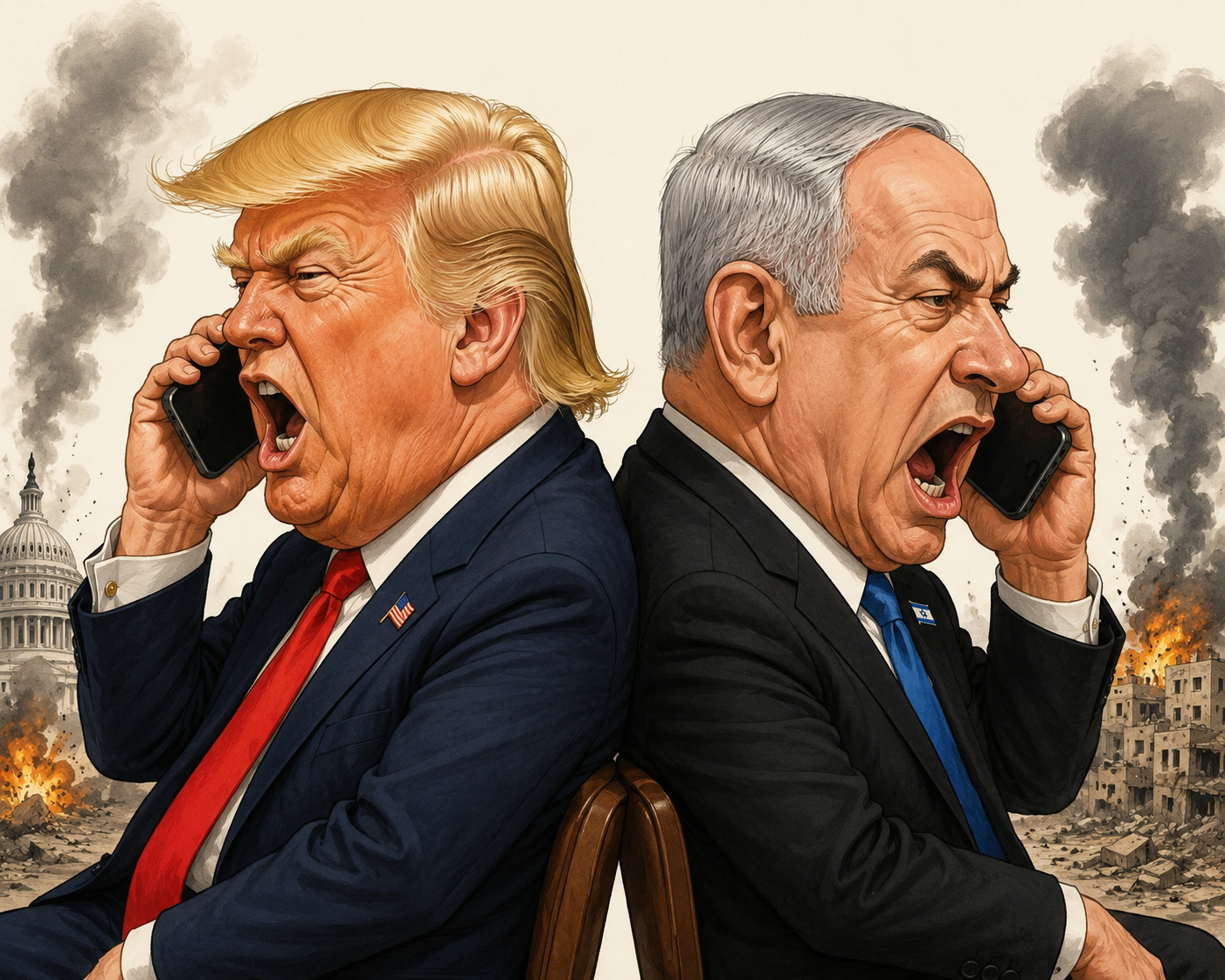
Here new red lights went on and the phone calls between the two men became more intense and vulgar. Then Trump decided to pass on the torch to his deputy, JD Vance, who seemed comfortable to tell Netanyahu what Trump avoided to do!


Conclusion: It is tricky to switch roles of allies in wars. A smaller entity can always stay safe as long as its leaders know the limits of their power and leverage. When people like Netanyahu think they have more power and clout than they actually have, versus their stronger ally, then irritation starts to brew, especially in the case of Trump who likes to show he is always in the driving seat. It also means that the leadership on the side of stronger partner has some problems of its own!


Whether it is a wrangle, rift, collision, divorce or worse between Trump and Netanyahu, we will not know for certain, until the negotiators in Switzerland close their files and head back home!

Continue reading
Will The US-Iran Deal Last?

By Ali Bakir

On June 15, Pakistan’s Prime Minister Shehbaz Sharif announced via the US social media platform X that a peace deal between the US and Iran had been reached, following over two months of mediation by his country. Sharif expressed gratitude to Qatar, Saudi Arabia, and Türkiye for their significant contributions, stating that the official signing ceremony would take place on June 19 in Switzerland. Following this announcement, a memorandum of understanding was signed electronically by US President Donald Trump and Vice President JD Vance on the US side, and by Iranian Parliament Speaker Mohammad Bagher Ghalibaf on the Iranian side.

The reported agreement is characterized as a framework peace deal aimed at ending the 2026 Israel/US-Iran war and transitioning the current ceasefire into a broader diplomatic process. Although the text of the agreement has not yet been published, key reported elements include immediate cessation of military operations, reopening of the Strait of Hormuz to international shipping, and a 60-day negotiation period to address unresolved issues, particularly Iran’s nuclear program, alongside discussions on sanctions relief and access to frozen Iranian assets during follow-up negotiations.

This agreement follows two significant developments. First, Israel conducted military strikes on Iranian targets in western and central Iran around a week ago, marking the first such actions since April. Explosions were reported in Tehran, Tabriz, Isfahan, and other cities in response to Iranian missile launches that were highly performative. Second, Trump warned that Iran would “pay the price” for what he described as slow progress in negotiations to end the conflict, indicating that the US could resume strikes against Iranian infrastructure.

5 bullet points on the agreement

Although the agreement does not necessarily mean that the root causes that prompted the war have fully disappeared, a few observations are worth mentioning and analyzing.

First, a lot of narrative spinning is occurring publicly at the moment. While the main parties are trying to sell the agreement as a victory, there are factions within the broader regional camps (such as hardliners in both Iran and Israel) that oppose it. Critics in Iran have labeled the agreement a “humiliating capitulation,” arguing that it involves unjustified concessions. Hardline opponents have publicly criticized the negotiating team, with Iranian MP Mahmoud Nabavian stating that the latest draft is “more damaging” than previous versions. Similarly, Israeli officials emphasized that Israel was not directly involved in negotiating the US–Iran deal and does not necessarily consider itself bound by its provisions. Israeli Defense Minister Israel Katz declared that Israel would not withdraw from territory seized in Lebanon and would continue to act against threats from Hezbollah and Iran if necessary.

Second, the timing of the agreement suggests that Iran was running out of options. As the Islamic Revolutionary Guard Corps (IRGC) focused on messaging and performative measures, the gap between their narrative and reality widened, with Iran’s ability to endure further pressure significantly diminishing. Trump’s counter-blockade against Iran’s restriction of the Strait of Hormuz imposed significant economic costs on Iran, leading to the decision to sign the agreement. It is estimated that the blockade could have cost Iran over $24 billion in just two months — almost equal to Iran’s reported total reserves of foreign currency — leaving the regime with little choice but to agree to the terms or face economic collapse.

Third, despite the negative reactions from hardliners in both Iran and Israel, the agreement highlights Trump’s genuine interest in reaching a resolution with Iran, especially following last year’s swift 12-day war between Israel and Iran. However, radical elements in both Iran and Israel seem intent on using procrastination, escalation, or military actions to sabotage meaningful attempts to achieve peace. Given that there is reportedly a 60-day negotiation period following the signing of the agreement, it is likely that these factions will continue to work against a comprehensive resolution.

Fourth, while Pakistan played a significant role in the mediation process, Qatar’s involvement was also crucial, as acknowledged by American, Pakistani, Saudi, and Turkish officials. Notably, neither the Qatari Foreign Ministry spokesman nor the ministry itself reported any independent measures taken by Qatar, apart from endorsing Pakistan’s mediation efforts. In fact, a Qatari spokesman denied any independent role in the mediation at this stage. Qatar’s involvement appears to have been executed at the request of the United States and had several dimensions.

Primarily, Qatar facilitated technical issues between the US and Iran, such as enabling the transfer of Iranian funds without direct US involvement, thereby avoiding the perception of it being a US initiative or taxpayer-funded. Additionally, Qatar played a role in establishing a communication channel between the United Arab Emirates and Iran, which emerged later in the mediation process. Finally, Qatar aligned itself with Saudi Arabia’s position, providing support for the Pakistani initiative.

Changing actors

Fifth, two awkward positions regarding the agreement can be highlighted. Firstly, the Europeans have been largely inactive in resolving the crisis yet somehow managed to host the official signing ceremony between the Americans and Iranians. Instead of crediting Pakistan, Switzerland offered to host the ceremony, which can be seen as an act of opportunism. Secondly, Oman, historically a favored mediator between the US and Iran, has been notably absent from this current arrangement. Oman’s position during this war was not popular in the Gulf Cooperation Council and beyond. According to a senior US administration official, Oman was removed from its mediation role in negotiations with Iran after the US concluded that Muscat had acted “very duplicitously” during the talks.

Finally, we must approach the prospects of the agreement with caution. It is essential to recognize that this is not a comprehensive peace agreement but rather a transitional framework. The future of the agreement will largely depend on the outcomes of negotiations in the next 60 days. Given that several factions within Iran and Israel are opposed to the agreement, we should not dismiss the possibility of sabotage, particularly from Israel.

Ali Bakir is an assistant professor of international affairs, security, and defense at Qatar University and senior nonresident fellow at the Middle East Council on Global Affairs. Anadolu

Continue reading

You Missed

‘We Must Resist The Israelisation of Our Societies – Francesca Albanese

‘We Must Resist The Israelisation of Our Societies – Francesca Albanese

Kier Starmer Quits The Labour Party Leadership

Kier Starmer Quits The Labour Party Leadership

Israel Killed Raghad on The Way to School

Israel Killed Raghad on The Way to School

Trump, Netanyahu Rift Hits Rock Bottom: View From Amman

Trump, Netanyahu Rift Hits Rock Bottom: View From Amman

Youngest Palestinian Doctor Gets Guinness

Youngest Palestinian Doctor Gets Guinness

Palestine: 70 Killed Since The Start of 2026

Palestine: 70 Killed Since The Start of 2026