Can Israel Create A Lebanese Buffer Zone?

By Imad Rizk

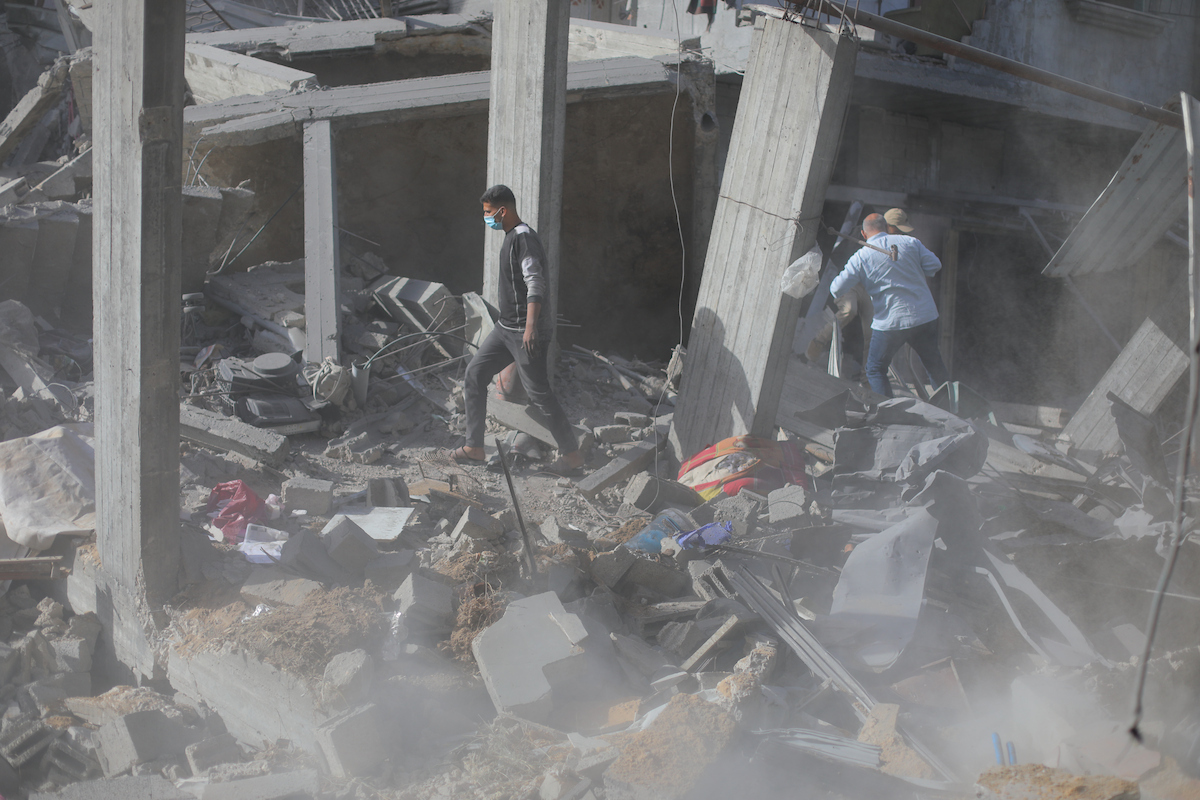
Since last Wednesday, the Israeli army has continued targeting the network of roads and bridges that link Lebanon to its south. In addition to pressuring the Lebanese government to make concessions in Lebanon and possibly beyond, the Israeli army claimed that targeting the Qasmiyeh bridge and other bridges is intended to prevent the transfer of military supplies to southern Lebanon. However, military experts questioned this justification, noting that Israeli aircraft maintain intense air dominance over the routes leading to the south, which undermines the credibility of this claim. Sources believe that targeting infrastructure, especially bridges and roads, aims to isolate the southern region in preparation for occupying it and turning it into a “buffer zone”.

After the 1982 invasion, Israel maintained a buffer zone in southern Lebanon for 15 years. It was meant to prevent attacks but instead created local resistance and required constant military presence, ending with a unilateral Israeli withdrawal in 2000.

Buffer zones as a military solution in the region were tested between 1985 and 2000. In the 2006 Lebanon War, Israel avoided re-occupying Lebanon, relying instead on air power and UN peacekeepers (United Nations Interim Force in Lebanon). Now, in 2026, Israel is returning to buffer zone thinking. Current discussions of a 10-15 km buffer zone show that Israel is returning to a doctrine it once abandoned as distancing itself from its enemy is more important than before.

Meanwhile, air raids continue to target the Lebanese capital, Beirut, and its southern suburbs. Residential areas and neighborhoods near Beirut and in the coastal city of Sidon are also being targeted under the pretext of assassinating figures and cadres linked to Iran’s Revolutionary Guard.

On the southern front, the Israeli army has been facing major difficulties in advancing and consolidating its positions since March 2. Hezbollah in Lebanon targeted Israeli troops at dozens of locations.

Ground combat tactics against the Israeli ground maneuver

Hezbollah carried out strikes against concentrations of soldiers and vehicles in different border villages. These attacks were carried out using rockets and artillery shells.

Operations extended beyond the border line, where Hezbollah support units targeted military positions and fixed barracks, as well as newly established sites in Jabal al-Bat and Nimer al-Jamal. Strikes also repeatedly hit the Avivim barracks, as well as Ramot Naftali, Branit, Hounin, Nahal Gershom base, and the Meron Air Surveillance Base.

Both Hezbollah and the Israeli army also carried out psychological and media operations associated with the ground maneuver, including threats, intimidation, low-altitude aircraft flights, and air raids conducted at night or at dawn. Settlers were also used in messaging to suggest that failure to negotiate would expose Lebanon to destruction similar to Gaza, or to incite Lebanese public opinion against a particular sectarian group and the environment that supports confrontation with Israel.

Overall assessment

In summary, the ongoing confrontation since March 2 reveals a gap between Israeli rhetoric and action. Despite statements about deploying three full military divisions, these forces rely heavily on air strikes to flush out Hezbollah fighters positioned inside villages and in the surrounding wooded terrain.

Hezbollah initially responded by targeting troop concentrations with rockets from outside the area south of the Litani River in the early days, and also struck D-9 bulldozers from areas far from the front line, while its special units advanced and seized forward positions. There was also discussion of advances along the Khiam-Marjayoun axis, with the understanding that the advance aimed to encircle the city of Nabatieh in the south and push through the Sahmar axis toward an unspecified town to reach Lake Qaraoun, similar to what Israel did on the Syrian front when it took control of the Yarmouk basin.

A notable development was the use of explosive drones similar to tactics used in Ukraine. On Friday, armed drones were used to strike a rear-area position on the Israeli side. This was considered the second major tactical surprise to enter the battlefield after the previous confrontation in 2024 during the “66-day battle.”

Israeli attacks on Iran and the entry of Iranian missiles targeting Israeli troop concentrations and fortifications around the town of Khiam suggest that the linkage of fronts — from southern Lebanon to Iraq and Iran — indicates that the Khatam al-Anbiya headquarters in Iran is directing a confrontation against Israeli destabilization and US military presence across a theater stretching from the eastern Mediterranean to the Gulf.

The author is the director of the Institute for Strategic and Communication Studies in Lebanon (Isticharia-ISCS). Anadolu

CrossFireArabia

CrossFireArabia

Dr. Marwan Asmar holds a PhD from Leeds University and is a freelance writer specializing on the Middle East. He has worked as a journalist since the early 1990s in Jordan and the Gulf countries, and been widely published, including at Albawaba, Gulf News, Al Ghad, World Press Review and others.

Related Posts

US-Iran: Who Will Blink First!

One would say that our main inheritance from the Covid period is the term, new normal, which has been since used, conveniently, in any circumstance we found baffling to our senses.

So one wonders if the stand in Hormuz will not be our current new normal, which will mean putting up with the economic consequences of the blockage and trying at the same time to find different routes for trade. Here, one is talking economics and trade simply because the loss of life and destruction doesn’t more matter in comparison to budgets and the flow of goods.

In fact each time anyone finds an intelligent reason for this ongoing conflict, the rediculous actions of the protagonists proves the impossibility of saying an informed or otherwise opinion. For all intents and purposes, all what can be reasonably said, is that for now, the war is supposed to be inconclusive despite the threats flying around, because essentially no one wants a regime change in Iran because no one can predict the consequences.

Therefore, back to economics again, the strategy seems, who will blink first and accept the conditions of the other to return to Islamabad. Iran with its enormous financial and economic problems which fears a new uprising in the streets once the stalemate with the US becomes the norm, or the USA with the mid term elections looming, rising inflation and higher energy prices, as well as volatility in stocks and shares prices in Wall Street.

When it comes to the situation in Lebanon, clearly the link with Iran is in fact Hizbullah; which is by its own admission the Party of Veliyati -Fatih in Lebanon, under the current circumstances, with the Israeli invasion of the south of Lebanon, for the first time in the history of Lebanon, not a sect, religious community, or power group, but in fact the official state representatives are talking about direct negotiations with Israel for peace, and in fact negotiating directly with each other in Washington.

For the Lebanese state, the situation now is legitimacy over the whole geography of the country, and limiting the possession of arms only in the hands of the Lebanese army and security. However, here also we face the scenario of whether the egg comes first, which is for Hizbullah Israeli withdrawal first, or the chicken, for the Lebanese government to negotiate the withdrawal of Israel.

Leaving the devil out of the details, would it mean ultimately, that a diplomatic agreement between Lebanon and Israel makes Hizbullah the enemy of both Israel and the Lebanese state together?, and what would the Lebanese state do as a next step, if Hizbullah decides to keep its weapons?

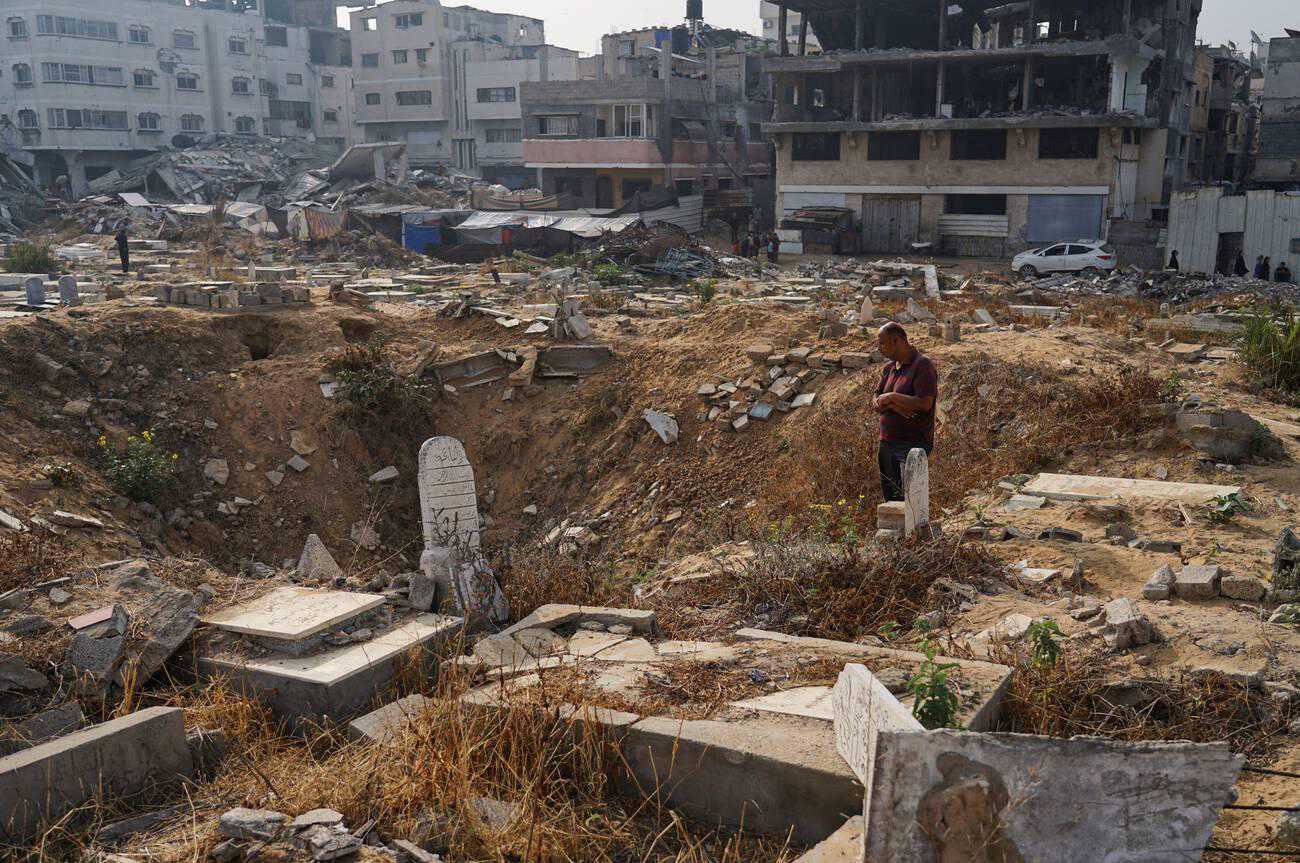
Then of course, there is the festering wound of Gaza and the West Bank which hardly warrant any news considering the scale of what is going on in the Gulf and in Lebanon. For Gaza, the vision fluctuates between lost peace, Israeli occupation withdrawn yellow lines, and Hamas with its show of force, amidst refugees, squalor, destruction and whether aid can go in or not, while on the other hand AI generated images of its rise beach resorts which no one is likely, from now on, be able to think about even if they can afford and realize them.

Future? What can one say save for bleak.

As for the West Bank, one has to apologise for saying that the Arabs, before anyone else, are reconciled with idea that the PNA is no longer there, apart from of course, moneymaking, here and there, and that what is termed as Palestinian territory will become a Bantustan in the sea of expanded Israel. Thus where do we go from here, well, there are people with paid salaries to think about!

Janbek is a Jordanian columnist based in Paris


Continue reading
Trump: Tunes, Ceasefire and Hormuz

Saleem Ayoub Quna

The latest ceasefire by Trump reminded me of an aspiring young violinist, who every time she started playing her own written piece, the tunes of her instrument would go havoc!

Last move, the declaration of a ceasefire with no deadline, by President Donald Trump on the Hormuz virtual chessboard with Iran, did not lack the usual element of surprise. Still, it was a relief for some, annoying for others and revealing for a third group!

While at it in the White House, the Pakistani host intermediaries in the other side of the hemisphere, were stood up for the arrival of the negotiation teams, who seemingly were hindered by other conflicting schedules, while pilots of the jet fighters, in the air bases and on board destroyers, and the launchers of missiles, drones and anti–missile batteries, were all getting itchy over the delay of orders from their commanders, which left TV anchors and other commentators, boringly speculating and redundant!

After the two rounds of exchanging intensive missile and rocket attacks, between Iran and the US-Israeli axis, in less than a year, using the open skies over the Middle East from the Mediterranean to the Gulf area, as a last resort to make each party’s views clearer to the other, President Trump, the man who happens to hold most of the important cards in his hands, seems today, to have come to the conclusion, that neither his message, nor his tools, or even his sheer luck have helped making his message loud and clear enough to his opponents and to the rest of world!

Luck in this context can be associated with the totality of internal, regional and world unanticipated reactions to this complicated conflict, in terms of rising oil and gas prices for the average consumer, whether in Europe, North America or in Eastern Asia. It is highly suspected that these instruments in the hands of Trump, started producing tunes that were not written or desired by Trump himself, and if they did, it was just a kind of dissonance!

It is also very probable that Trump’s tactics as a deal maker, continuously changing his tone and vocabulary, made his listeners lose track of his true original storyline, if there was one! But more seriously, weighing and counting the odds that have befell Trump in the aftermath of the breakout of the war, some of which were

of his own making, and other developments that came out as natural by-products of the original move!

Following is a rundown of those unexpected unpleasant by-products, or side-effects, some of which might turn into chronicle headaches*, of the whole initiative which Trump had closely coordinated with his persistent ally, Netanyahu, the first in June 2025, when the two of them orchestrated the “Midnight Hammer” surprise operation against sensitive Iranian targets, and the second round “Epic Fury” on Feb28 this year, while negotiators were in session:

1. Rise of oil and gas price in world markets

2. Drop of share prices in stock markets

3. Fracture with NATO*

4. Decline in Republican Party ratings ahead of the midterms congressional elections in November

5. Resurgence of Trump’s friendship with Epstein’s scandals.

6. Firing key US generals in the midst of crisis, culminated by ousting Navy Secretary, John Phelan.

7. Emulating Jesus Christ in a replica image!

8. Personal row with Pope Leo who stands as the most respectful living figure in the Western civilization.*

9. Lebanon and Hezbollah’s connection.*

10. The Strait of Hormuz new strategic entanglement*

None of the above problems or symptoms of problems, except for point 5 and 9, existed before Trump made up his mind to go into war against Iran last year. Even back in 2018 during his first term, Trump shocked the world by tearing up the Iran-nuclear deal approved by Obama’s Administration after being endorsed by the rest of the Western powers. No one expected that Trump would go this far in his second term, except the Prime Minister of Israel!

All things considered, the whole world, minus Israel, was shocked by the magnitude of the bombings to finish Iran’s potentials to own its own nuclear knowhow and capabilities. All of which leaves me wondering if this latest ambiguous ceasefire, and the way it was presented and its timing, will prove to be a real turning point in the ongoing strife in the Middle East, or just another boring maneuvering tactic by Trump!

As for the fate of young aspiring violinist, it was said that after she had discovered that her violin was not authentic but a replica, she decided to become a soprano!

Continue reading

You Missed

11 Israel Soldiers Commit Suicide in April

11 Israel Soldiers Commit Suicide in April

Palestinian Pound Lives on!

Palestinian Pound Lives on!

Israeli Settlers Uproot 400 Olive Trees

Israeli Settlers Uproot 400 Olive Trees

Amidst Death, Palestinians Celebrate in Group Wedding!

Amidst Death, Palestinians Celebrate in Group Wedding!

Iranian Missiles Cause ‘Extensive’ Damage to US Bases Than Previously Thought – Report

Iranian Missiles Cause ‘Extensive’ Damage to US Bases Than Previously Thought – Report

Why is Iran’s FM in Oman?

Why is Iran’s FM in Oman?