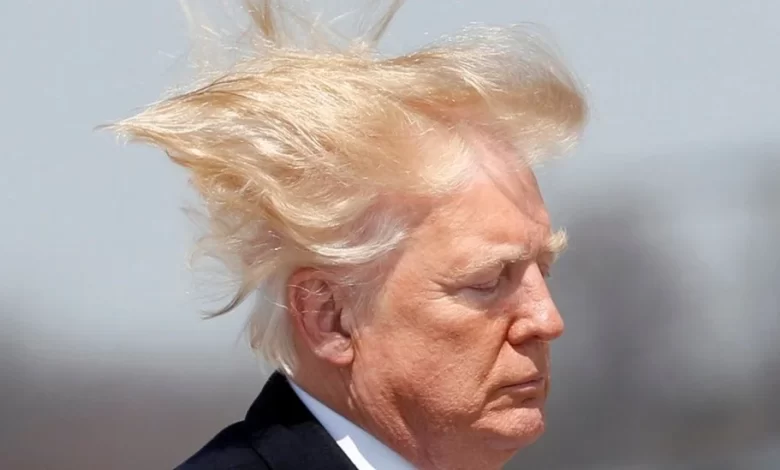
Stranger Than Fiction: Hamas in Trump’s World

By Dr Khairi Janbek

We often use George Orwell’s 1984 novel as a metaphor for similar circumstances which we feel we are living in contemporary times. In fairness, many a time, the novel provides an apt description of these circumstances. But a novel which is forgotten or overlooked, is the trilogy of Isaac Asimov –  the Foundation – written in the early 1960s. Now, if he meant it to be a prophetic prediction of the future, one is likely to say he has come close to describing our epoch and circumstances.

In Asimov’s trilogy, and in a scientific fictitious world, a mathematical genius creates a world based on laws, order, and controlled emotions, in a sense, a world built on rationality. But suddenly, a mutant emerges, gathering a large following and support, and bent on destroying the existing norms, abolishing order, and breaking all laws. The author, calls it the mutant: The mule. Of course, one is talking here science fiction.

However, if we extrapolate from science fiction into real life, US President Donald Trump can be understood only by shedding the veil of absurdity that surrounds him, as, for all intents and purposes purposes, he is here here to break all the existing norms and order to the extent of firing even those whom have elected him.

As he projects his image on the domestic and international scenes, he comes out not as a president of a reality show but rather as a president of a “parallel” reality show. And what does that essentially mean? To the discerning observer it means that Trump is flip flopping between the two realities.

It was always known that president Trump dislikes multilateral and/or rather negotiations with blocs, whilst maintaining a preference for bilateral negotiations. So in carrying out his style of negotiations, he tends to pick the strongest or the wealthiest potential partners in any bloc to negotiate with. After all he is the one whom coined the dictum, if your rich and powerful then you must be right, but if you are rich but poor and weak, well, it’s your fault.

Consequently, this style of presidency, throws his allies and detractors into total confusion, and even close observers are finding it difficult to grapple with the US presidency bent on striking deals than reaching agreements.

He has no qualms about trying to reach a deal with Iran regarding its nuclear project, when in effect he was the one who tore up the nuclear agreement in the first place, but take note, it was an agreement not a deal.

He came out to negotiate directly with Hamas, though what’s the deal he is proposing, is not really known, but he doesn’t seem to have any qualms about breaking taboos and norms here.

So where does this leave his friends and allies? No man’s land really, in which you just go half way with him.

Dr Janbek is Jordanian writer based in Paris, France.
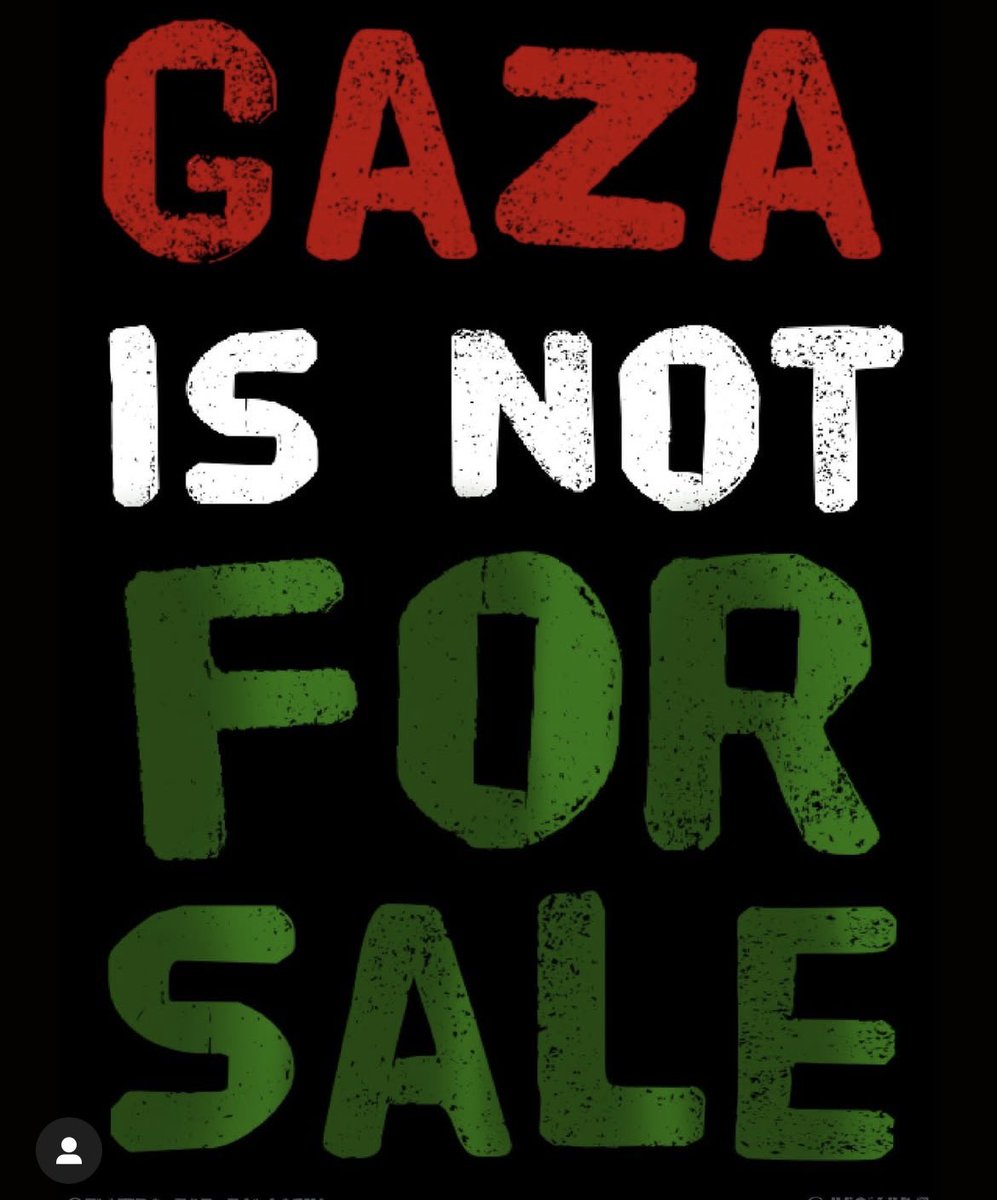
Continue reading
Trump, Theater of The Absurd and Gaza

By Dr Khairi Janbek

Evidently US President Donald Trump has raised the stakes very high in his proposed plan to solve the intractable Middle Eastern problem: The Palestinian issue and consequently reaching a wider normalization between the Arab states and Israel.

Of course not only the Arab world but also the rest of the world is learning how to cope with a new American presidency, more accustomed to making deals than in reaching agreements. Consequently the method used concerning the Arab states is that of threats to their national security and integrity with the existential being to their Palestinian brethren.

In scenes reminiscent of a play from the theatre of the absurd, we saw Mr Benjamin Netanyahu’s face light up like a child each time Mr Trump opened his mouth promising him presents which he always sought, although in this case those presents are not the property of Mr Trump and are not his to either have or give away.

Now, one has no wish to go to the distant American history, because the last time American manifest destiny was mentioned, native Americans paid the price with a big genocide and other nations were reduced to mere colonial status by the USA.

However, Trump never mentioned the term explicitly, but whether he realises it or not, the ethnic cleansing he is proposing to solve the problem of the Palestinians to the advantage of Israel is no different to the ethnic cleansing of native Americans. The times are different but the idea is the same.

On the other hand, the acid test for the Palestinian question is in how the world is going to react to these Trump advocated policies. One doesn’t think Russia with its war in Ukraine, at least for the near future, will have much say regarding the Palestinian issue or any other to that effect, while the Chinese, the question of trade war is far more important to them as a system, which puts trade and commerce above politics.

And the EU with the apparent cracks in its unity, it is still unclear what it will do; of course besides amiable legalistic positive rhetoric, will it continue to be the financier of the new American foreign policy, or become the backdoor for US handouts to nations which the United States has claimed will not support?

Ultimately, with the US and Israeli threats of forcible transfer of the Palestinians, it is the Arab states that are in the front line, the close allies of the USA and some of whom peace signatories with Israel.

Of course in the next day or two, the King of Jordan will meet President Trump in Washington, and it is rumored president Sisi will join them, also towards the end of the month, an emergency Arab summit will likely be held in Cairo.

One cannot predict the outcome, but judging from old references, everyone will try to escape responsibility with the Palestinian people keep paying the price.

Dr Khairi Janbek is a Jordanian commentator based in Paris

Continue reading
A World Without America?

By Dr Khairi Janbek

Away from the condom politics which seems to be just an obsession of a Washington administration suffering from erectile dysfunction, on thought it would be intriguing to imagine a world without America, which means deep cultural, economic as well as political implications. It’s a thought experiment which forces one to imagine how the world would look like without the specific influence, history and power dynamics that the USA has shaped.

On the geopolitical and global power level, other nations would have to step in into the void, vying for influence. Europe, China, Russia and India would probably play a central role on global politics, in addition, the Security Council of the UN will start looking very different, Europe would become the dominant force strengthening its collective military and political capabilities.

In terms of culture and society, American has played a central role in shaping global pop culture, Hollywood, music, fashion and hi-tech, indeed other nations would have come in, in Asia South Korea, Japan and India would take a central role in shaping global culture, with Europe asserting itself in the arts and literature.

In technology and innovation, the US has produced Silicon Valley and leading corporations in software, hardware and AI, however without, China and Europe would fill the hitech leadership role which probably would accelerate their breakthroughs.

As for the economy, without America, the world economy would be real different, the US dollar would not be the world reserve currency, with the Euro and the Yuan, being the global standard. Trade dynamics would be rearranged and institutions like the World Bank and the IMF would have other substitutes.

Regarding military and defense, American power is unmatched , without it global security dynamics would shift drastically, NATO might not exist, while regions powers like Russia, China and India, would become more aggressive in asserting their influence.

In terms of the environment and social movements, the US has been at the forefront of global debates on climate change, social Justice and human rights; taking note of course, with mixed results, but without it, certainly others would take the lead, for a start, Europe has been a leader in pushing for climate action , and in social action, countries like Brazil, South Africa, would fill in the gap with most probably leading to different outcomes. But , the USA has been a major donor for global and humanitarian aid, and their contribution would have to be substituted by other coalitions, which one assumes would be limited only to crisis.

Essentially, a world system without America, the international system would be less centered around one dominant great power, as power would be more diffuse with multiple centers of influence and more regional power struggles, but at the end of the day, the purpose for the use of condoms would be much clearer.

Dr Janbek is an opinion writer based in Paris

Continue reading
Trump’s ‘Business-like’ Solution to Gaza

By Dr Khairi Janbek

If you remember in the films, when the big mafiosi harms a friend or an ally, says, usually I had nothing against him, I even liked him, but this is pure business.

One is using this adage, because it simply reminds me of what president Trump said about the Jordanian monarch and the Egyptian president. He expressed his affection towards both, and said he got on well with them and liked them, but wants them to take refugees from Gaza and settle them in their own territories.

Now, doesn’t Mr Trump know that this move presents an existential threat to all? Or is he indifferent to their concerns, the fact being that, it’s nothing personal, just a businesslike solution to the Gazan Palestinians, whom in fact do not wish to leave their land as things stand now.

Unfortunately, this proposal stems from a very long history of the notion that, Israel is a very small country, and the Arab world is vast, and since the Palestinians are Arabs then they can be absorbed in other Arab countries!

Of course, this notion does not take into consideration that the Palestinians do not wish to leave their lands and seek justice in their own homeland, but then again there is an Arab contribution to this dimension which emerged in the so-called post-Arab-Israeli peace process, albeit in all probability unintentionally.

The fundamental idea of land for peace, which implicitly and explicitly meant land and state for the Palestinian people; which is incidentally a political notion, is that the Palestinian problem becomes a humanitarian issue that of refugees demanding the right of return.

In essence a people without land, or unspecified area of land doesn’t not constitute a nation. One is not going to bore everyone with justice and injustice, rather wishes to say why is it assumed by Mr Trump that the Palestinians should not have a say in their independent destiny? Why doesn’t he address them directly, after all the US is one of the guarantors of the Oslo accords, which incidentally gave legitimacy to the PNA.

Having said all that, where do we go from here, and for whom is Gaza supposed to be built for? If it is supposed to be built for the Gazans would that mean the Gazan status in Jordan and Egypt is a temporary proposal, in other words until Gaza is rebuilt? And who will rebuild Gaza?

These are very important details which cannot be swept aside without discussions involving the Egyptians, Jordanians and the PNA. But can Mr Trump’s idea really be worth considering and entertaining in terms of practicalities or is it on top-of-the-head remark?

The writer is a Jordanian columnist based in Paris

Continue reading
Winners, Losers in Ceasefire Gaza

Dr Khairi Janbek

The idea of peace in Gaza is a deeply complex and sensitive issue that involves multiple layers of history, politics, and human rights concerns. When asking who is the winner in such a situation, it is important to note that in conflicts like this, there is often no clear cut winner. Both sides have experienced significant losses, and the true victory is ideally peace and justice for all involved.

Therfore, writing about peace in Gaza and identifying a winner is a delicate and complex issue, given the long history of the conflict, the many political, religious, and social factors involved , anf the human toll. Rather than framing it in terms of winner, it might be more constructive to focus on how peace could be achieved and what that would mean for the people of Gaza, Israel, and the broader region.

To move forward, in any conflict the idea of a winner is flawed. For those caught in the crossfire, both Palestinians and Israeli have face immeasurable losses, so instead of asking who emerged victorious, we must ask how can both, Israelis and Palestinians, live side by side in dignity and security? Essentially, a lasting peace would not mean the obliteration of one side or the domination of another. It would require mutual recognition of each other’s rights, history and humanity. It would mean ending the cycle of violence that harms innocent civilians and leaves communities devastated, while opening the door for political and economic solutions that allow both peoples to thrive.

Heavy hand

For Israel, security is a non-negotiable priority. The persistent threat of violence from militant groups in Gaza has been a constant concern. On the other hand, Palestinians in Gaza must also be able to live without the heavy hand of occupation and blocade, ensuring their freedom. In this context, the international community must ensure that the rights of both Palestinians and Israelis are upheld, with a focus on dignity of the individuals; whether it is the right to live without fear of violence, or the right to self- determination and sovereignty.

Indeed the people of Gaza have long suffered under economic hardship, with hardly any access to basic services like healthcare, education, and employment opportunities, consequently any peace agreement must include a comprehensive plan for rebuilding Gaza, improving living standards, and opening up pathways to regional cooperation and trade. Achieving peace will require honest peacemakers on both sides, committed to negotiation and diaogue over violence. This clearly will involve the international community playing a much more active rôle in mediating talks, promoting trust-building measures, and holding all parties accountable.

The true winners in a new beginning would be the people; both Palestinians and Israelis, whom have suffered for too long. Peace would allow for the children of Gaza to grow up without fear of bombings, and for Israeli families to live in security without constant worry of attacks. Therefore, victory would be a shared one, a victory of humanity over hate, of hope over despair, and of a future where both Palestinians and Israelis can claim their right to live in peace, security, and mutual respect.

Dr Khairi Janbek is a Jordanian analyst based in Paris

Continue reading