Can Joseph Aoun Get Lebanon Out of its Rut?

By Dr Khairi Janbek

We have grown accustomed to Lebanon being in the headlines as a result of blood and destruction, but no longer. Whether due to the weakening of Iran, determination of the international community and/or both, all this appears to be changing.

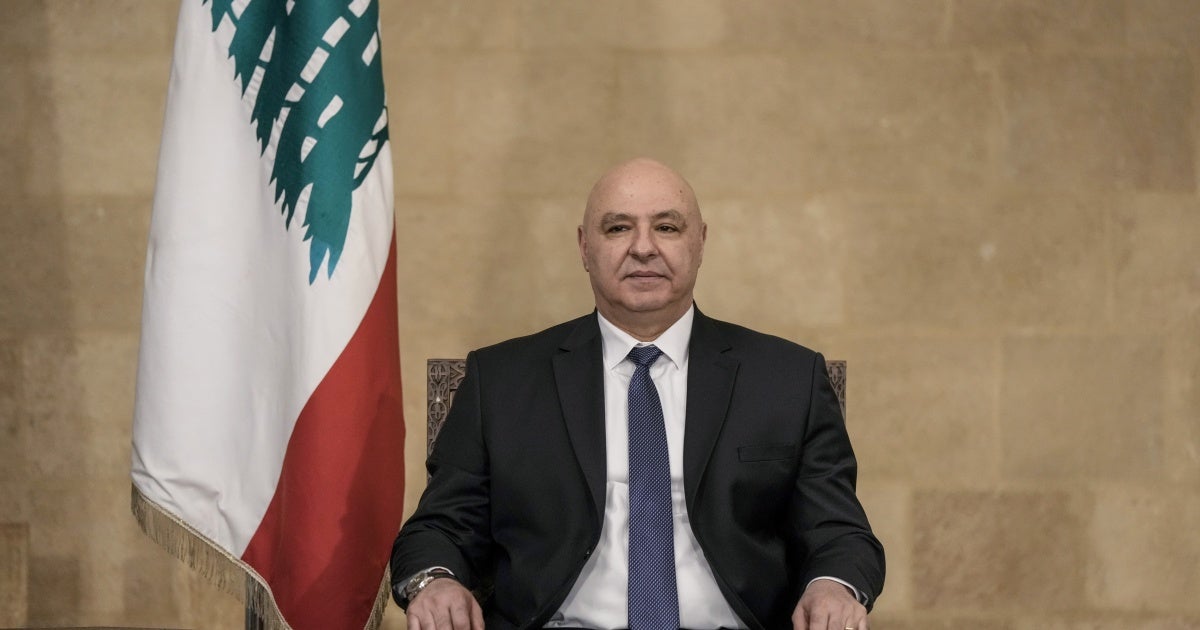
Lebanon has now officially elected a new president, ending a long period of political crisis that has long left the country without a head of state since the term of former president Michel Aoun expired in late October 2022. After protracted negotiations and intense political maneuvering, not to mention Arab and international pressure, general Aoun, with a tough military reputation who has lead the army since 2017, has become the latest leader of the country.

General Aoun takes office amidst a period of significant economic and social challenges for Lebanon, as the country is grappling with an acute and ongoing financial crisis, soaring rates of unemployment, and the collapse of its currency, in addition to the refugee crisis and deteriorating infrastructure that has left Lebanon hanging by a thread.

In fact to top it all, the powerful sectarian political groups which hindered the election of a president for the past 26 months and more will not likely disappear with the election of general Aoun despite the seemingly robust character of the new leader.

The new 14th Lebanese president in his first address to parliament, vowed to work with all political factions to implement reforms and tackle the pressing economic issues that has long log-jammed the country. His speech was one that had determination and a sense of purpose and appeal with a rallying-cry for all of the fractious political groups of Lebanon.

Having said that, and despite the election in the Lebanese Parliament, the country’s future still remains uncertain with challenges. The new president will need to navigate carefully the deeply entrenched political system which often leads to gridlock and an inability to implement meaningful change.

Additionally, the country’s economy remains in freefall, with millions of Lebanese struggling to afford basic goods and services. Therefore, it is clear the road ahead will be a challenging one to say the least. Logically for many, the focus has already turned to whether the new president can live up to the promise of healing the nation and lead it towards a more stable system.

From the Arab and international perspectives, the messages of support from both seem to be encouraging, but this support will need to be translated into monetary terms for re-building the country. It is said there is the promise of $10 billion earmarked for this effort but frozen on the condition that Lebanon elects a president based.

Now this hurdle has been overcome and passed. At the end of the day as well, General Aoun is seen as the consensus candidate for the Arab countries as well as the international community. In this sense, the release of the re-building funds may look optimistic but there is still the snag of the question of Hezbollah and Israel’s future belligerent intentions towards the country, issues that are still to be ironed out.

The new Lebanese administration needs guarantees from Hezbollah in as much as it needs guarantees from the new Lebanese administration, and the Arab and international community eagerly awaits the results of this dimension because, putting it bluntly, no one wishes to see their investments blown up in another war nor their money burnt in smoke.

All that one can say under the circumstances, is that General Aoun, and he is the fourth president to be chosen from the military establishment, can negotiate with Hezbollah to surrender their heavy weapons to the Lebanese Army while keeping their light weapons; at least for the time being, and stay away from the Litani River as demanded by Israel.

But this will need considerable political dexterity and acumen.

Dr Khairi Janbek is a Jordanian analyst based in Paris
Continue reading
Carter: A Mideast Idealist

Dr Khairi Janbek

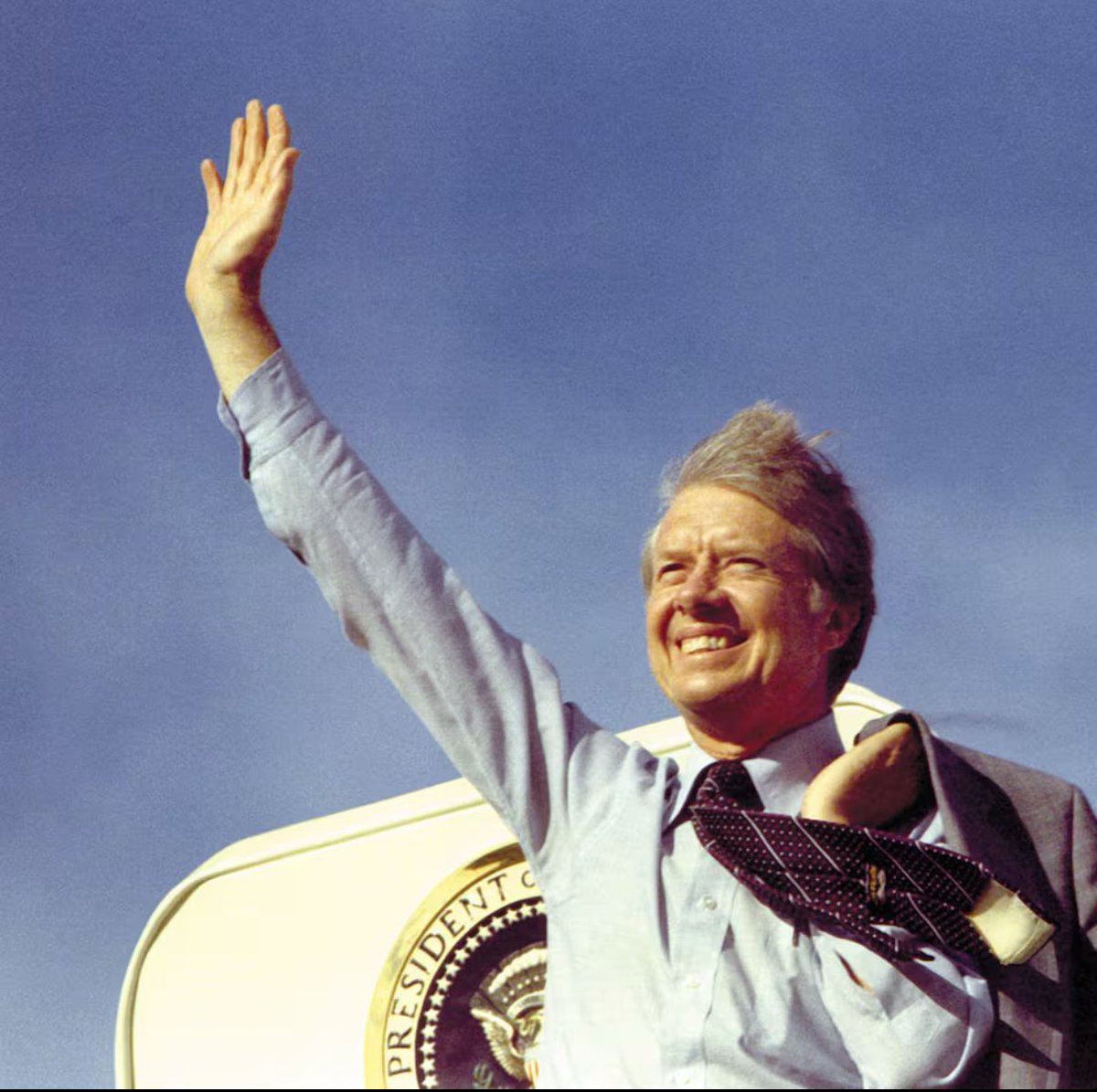
The legacy of the late President Jimmy Carter in the Middle East can at best be described as mixed, notable achievements and setbacks.

The Camp David Accords remain his greatest foreign policy achievement in the region, with Egypt and Israel continuing to honor the peace treaty till this day. However, the 1978 Iranian Revolution, the fall of the Shah, the US embassy hostage crisis and the rise of the Islamic Republic of Iran, underscored the limits of his idealistic foreign policy approach.

While Carter’s emphasis on human rights was a notable shift from the more pragmatic or rather, realpolitik approach of his predecessors, it often clashed with the realities of the US strategic interests in the region. His inability to stop or reverse the Iranian Revolution, combined with his perceived weakness in handling the hostage crisis, significantly damaged his standing both domestically and internationally.

Despite these challenges, Carter’ presidency laid the groundwork for future US policies in the Middle East in terms of emphasis on peace, diplomacy and the need for strategic engagement. In fact, he articulated in January 1980 the Carter Doctrine, which stated that the US will use military force if necessary to defend its interests in the Arabian Gulf against Soviet aggression, which marked a significant shift in US foreign policy asserting a more active and interventionist role in the region.

When it comes to the question of human rights, despite concerns for abuses in countries like Saudi Arabia and Iraq, Carter found it necessary to balance human rights with strategic and economic interests, and he did receive criticism internationally and nationally for tolerating autocratic regimes, not to mention of course in this context, his support for the Shah of Iran despite his repressive policies and human rights abuses.

Still, in the final analysis, with successes and failures, Carter’s approach to the Middle East was foundational in shaping US policy for the years that followed, particularly in the realms of contradictory policies of human rights, and the balance of power in the Gulf region.

Dr Khairi Janbek is a Jordanian commentator currently based in Paris.

Continue reading
Syria: A Hot Political Potato

By Dr Khairi Janbek

All eyes are on Syria, simply because the only thing known about how the new Syria will look like is frankly, the unknown. What is prevailing in the new predictions and analysis is at best, and at worst blunt fears.

Of course, this is understandable considering the composition of the groups which are now trying to run the country. What is vey disconcerting however, is how the international media presented the war prior to the fall of Damascus in no more than a side show, giving the impression that, as big Syrian cities fell one after the other in the hands of the rebels, that an agreement was likely to be struck which will solve the concept peaceably. Well, such an agreement was not struck, and the victorious rebellion became the hot potato in the hands of all.

Now, how will the new regime look like in Syria? Frankly your guess is as good as mine. Will they act momentarily in a pluralistic manner, then adopt political Islam as regime ideology? Again, only time will tell, but also that would depend primarily, on the prevailing regional and international actors and players.

For a start, the rapprochement between Russia and Turkey will not greatly depend on the shape of the new regime, so long of course, as the new regime in Damascus continues to protect the Russian interests in warm water bases, and be a wall against Kurdish armed groups threatening Turkish interests.

Then of course there is Israel, which after it destroyed Syrian military capabilities, has no fear of war with Damascus, but does fear the potential presence of a regime adopting political Islamist trappings on its borders, which it will use as an excuse use to expand and probably annex Syrian, and maybe Lebanese territories before the dust settles down.

However, when it comes to the Arab neighbors of Syria, Jordan and Iraq, it’s only natural they would feel concerned but for different reasons. For Jordan, the recent history of Iraqi political instability and the associated acts of terrorism are still fresh in the mind of everyone in the Kingdom, so in no uncertain terms, Jordan would wish to see on its border, a regime adopting political Islam, lest it suffers once more from terror acts that are likely to push for military action and in which it doesn’t wish to be involved in.

As for Iraq, the sectarian troubles are still fresh in the minds of everyone. Certainly the Iraqi government doesn’t wish to see a regime on its borders which has the potential of igniting an unwanted sectarian civil war. As for the rest of the Arab countries, the question remains theoretical – plainly speaking being against political Islam .

As for Syria itself, it’s rather banal to repeat the obvious which is, that it is pluralistic country. But, how can you mange such a country, if indeed this is the intention intention and not shoving it up everyone’s throat ideology by blood and fire.

For a start every community, ethnic and religious, has to feel secure, and secondly they need to know that they have a stake in the future of the country, and that can only happen by establishing a truly functioning parliament freely elected by all of its constituents, then adopt a prime ministerial system of government accountable to the people with a titular president of the republic. No political party should be prohibited to field parliamentary candidates except those associated with armed groups.

At the end of the day, the only thing which will turn the current victorious rebels into extremist islamists is the specter of internal civil conflict which everyone is trying to avoid.

Dr Khairi Janbek is a Jordanian commentator currently based in Paris.

Continue reading
Syria: 10 Days That Shook The World

Dr Khairi Janbek

Without much ado, the western media is currently preoccupied with this question: Are the Syrian rebels Jihadis? This is while the Arab media appears to be in a state of euphoria about the Syrian rebels seen as liberators. The issue however is about two perspectives, the first being cautious about the next phase for the country, and this is for understandable reasons, while the second reflects optimism for the next stage and also for understandable reasons.

Now, the fear of dividing Syria on ethnic and sectarian grounds has its blueprint in the colonial history of Syria and certainly not a product of today and/or creative chaos utterances.

Looking back

In fact, on 1 July, 1922, the French colonial authorities divided Syria into federal statelets: statelet of Damascus, statelet of Aleppo, statelet of the Alawites, and the statelet of the Druze. Of course, the idea was that the country would be easier to rule and a regional and a sectarian balance would guarantee political stability. Of course, the Kurds were outside this formula as they were struggling to create an independent state of their own.

But what about Syria now, to paraphrase John Reed, after the 10 days that shook the world. Indeed, the two regional police stations in the region, Turkey and Israel seems to be gaining major influence in the current affairs, while the third police station, Iran, has lost out in this formula.

Rivalry

For all intents and purposes, no one is naive enough to think that the march towards Damascus could have occurred without Turkish support, and the Israeli foreign minister has confirmed that talks were held between his government and the Druze as well as the Kurds of Syria, whom he described as having good relations with them.

But what about the Russians? One would venture to say that they are like to stay in Syria as most probably, paying guests of the new Syrian government, renting their military installations from them.

Undoubtedly, no matter how much we can be optimistic about the future of all-inclusive democratic Syria, we will always reluctantly fall back on our cognitive dissonance regarding the case of Iraq, and make the mistake of comparison with the post-Saddam era of terrorism, sectarianism an ethnic strife.

This is simply because, we forget that in Iraq there was superpower which brought down the regime and destroyed all the functioning institutions of the country favoring when religious Islamic sect over another, and supporting one ethnicity against others. While in Syria, its the Syrians themselves brought down the Ba’ath regime.

On the face of it, the rebels don’t seem to want to be the new masters of Syria and they are working very hard to protect and preserve the functioning institutions of the country, and claim their adherence to pluralism and for an all inclusive new regime.

But two important questions remain outstanding, and only time will tell how these will unfold: To what extent will there be Turkish and Israeli influence on the emerging regime, and more importantly, what would be the share of those two police stations of the country?

In other words, how will Turkey perceive the future of the Kurds in Syria, and where does Israel see its border posts with the “new” Syria?

In all likelihood, the rebels will keep their word of wanting a stable pluralist Syria, but let us not forget also, that a future spark of ethnic, regional or sectarian conflict, will very likely turn all into extremists in the country.

Dr Khairi Janbek is Jordanian commentator based in Paris.

Continue reading
Netanyahu: Ideologue, Pragmatist or a Proxy?

Dr Khairi Janbek

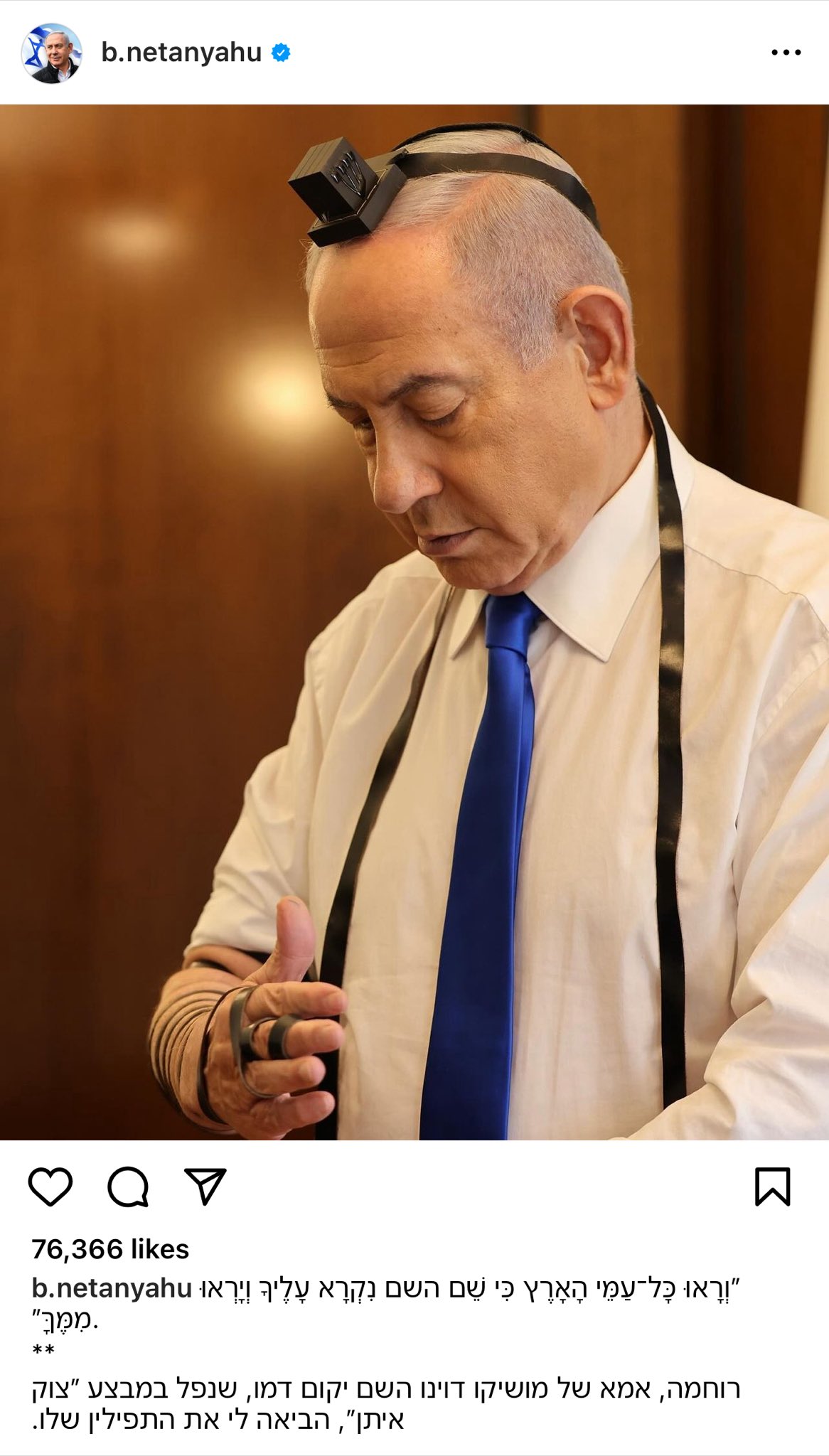
PARIS – When talking about the Israeli prime minister Netanyahu, we must not miss the point that in effect he is a politician, thus, he is both an ideologue and a pragmatist. He is an ideologue when he feels he can go all the way with brinkmanship and get away with it, and he is a pragmatist, when realizes that he should stop and talk. However, by and large that usually depends on the position of the USA primarily, and on the regional situation in the second degree.

He was a pragmatist, when he originally gave his implicit support to Hamas as a guardian of peace in Gaza, and the guarantor of border security with Israel, and he was an ideologue when he demanded that the PNA accepts that Israel is a Jewish state, and accept moreover, that any form of a Palestinian state ought to be demilitarized and just a guardian of the border with Israel.

https://twitter.com/LegitTargets/status/1847287962024747060

He was an ideologue when avenging the 7 October events and a pragmatist in letting the hostage crisis drag on. He chose to head a government in which he can present himself as the only one whom the world can talk to when compared to his extremist colleagues, through his masque of pragmatism, rather than go into a government with partners whom will make him look as the only ideologue among pragmatists.

Again, this Netanyahu dualism, be that the ideologue who has the freedom to do as he sees fit, or the pragmatist who gets to know his boundaries one cannot say is clear, at least for the moment. For all intents and purposes, the red apple of the so-called Abrahamic Accord, Saudi Arabia, remains illusive, as the Saudis have indicted in no uncertain terms, that any prospects of normalization are conditional on at least, reviving the two-state solution. But at the same time, Netanyahu still has working relationships with the UAE and Bahrain in the Gulf as well as Qatar.

As for the older cold peace partners, Jordan and Egypt, Netanyahu is content that at least the situation is stable as it could be.

Now, will Netanyahu be able to pull a rabbit out of the hat when it comes to Trump, or does he really feel that he can take Trump for granted? The current thought in the Middle East fluctuates between those two guesses. But in reality with a paradigm shift, perhaps we can see things clearer. For a start, we are currently living in the age of separation of economics and business from the world of politics, also the separation of interests from principled positions. This age is not created by either Netanyahu or Trump but it certainly suits their relationship fine.

One thing for certain, Netanyahu can rely on Trump’s support as an intransigent ideologue, for Israel is undoubtedly the advanced military post of the USA, but also as a pragmatist, he has to understand to what extent he can be a tool of US foreign interests especially that Trump is very much fond of the concept of proxies and does not like infringements on his business deals.

Dr Khairi Janbek is a Jordanian historian based in Paris and the above opinion is written exclusively for crossfirearabia.com. 

Continue reading