‘My Way Out of Insanity’

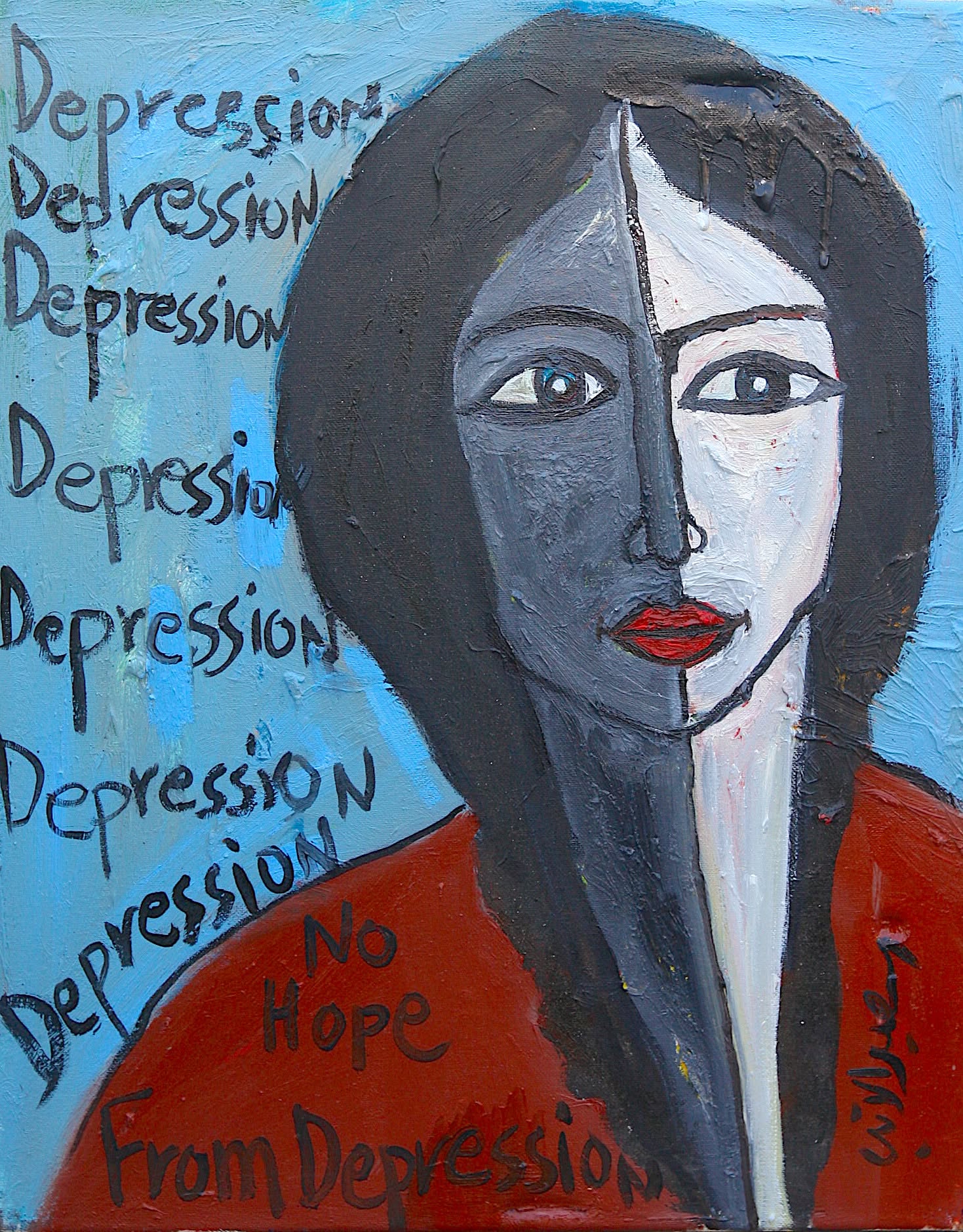
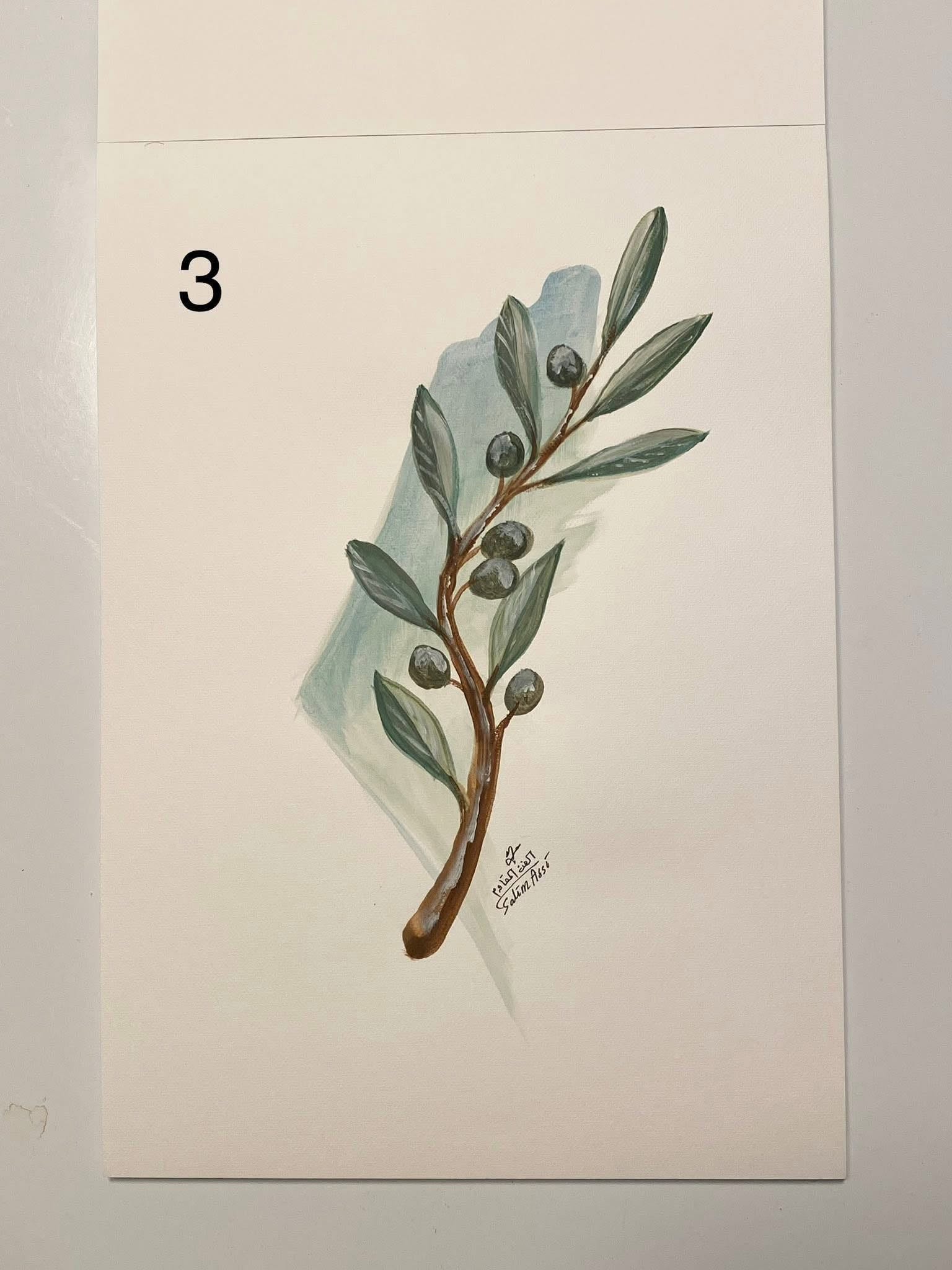
This is a painting on the Art of Depression from abstract painter Said Elatab. He says:

This painting exists within the nihilism abstract. My depression is eating my brain; any hope to reverse it is to make art serve as the best medication for mental illness. So why not be an artist. He adds: “From depression and nihilism I make beautiful art for it is my language in a world that has no answers.”

Continue reading
The Child, Tree and The Dark

By Ibrahim Isam

The tree had been there long before she arrived, perhaps waiting for her through a time she could never know. Its ancient trunk carried the scars of seasons upon its skin, as though the years had not simply passed through it, but had written themselves there, layer upon layer. When the little girl placed her hand against its roughness, it felt as though a hand from the future had touched an old memory—or as though childhood itself had come to rest a hand upon the shoulder of time and whisper: Do not be afraid. There is still room for Spring.

She looked at me without asking for anything. There was no answer in her eyes, but that simple question grown-ups have never learned how to answer: Why can the world not be a safe place for every child?

And yet, her gaze was not sad.

There was something beyond sorrow in it; something like the first faith, before a human being learns that tomorrow is something to fear. She looked as though the light approaching was not a promise of some distant future, but something her soul had known since birth.

The wind moved gently through her hair, while the trees around her received the last light of day. In her eyes, that light was reflected as though it had finally found a place worthy of holding it. And for a moment, I felt that light does not always come from the sky. Sometimes it is born in the eyes of a child, and from there finds its way into the darkness of the world.

Perhaps this is why I love children.

They have not yet learned how to justify cruelty, how to turn suffering into a truth, or how to persuade themselves that ruin is inevitable. A child is not born carrying the history of hatred. They arrive with empty hands, a heart that has not yet learned how to hate, and eyes still capable of seeing the world before we teach them how to look at it.

Her hand remained upon the tree, and I wondered if there was a secret between them that I could not understand.

She was at the beginning of the journey; the tree, somewhere near its end. She had not yet known the seasons, while the tree had known enough of them to fall silent. And still, they seemed strangely alike: both standing quietly before time, both knowing, in their own way, that life does not need much to begin again. Sometimes it needs only a little light, a small hand, and a gaze that still believes tomorrow is possible.

Perhaps the tree was not protecting the child from anything.

Perhaps the child was giving the tree another reason to remain.

In that moment, I did not see a photograph of a child beside an old tree. I saw two ages standing beside one another: one that had already passed, and one that had not yet begun. Between them was that quiet light which announces nothing, yet changes everything.

And in her eyes I saw what I have been searching for all this time—not hope itself, but the innocence that makes hope possible.

Perhaps one day this child will grow older, and her heart will become burdened with things no heart should have to carry. Perhaps she will discover that the world is not the way it seemed in her first gaze.

But I hope that, when that day comes, somewhere within her eyes, that first light will still remain. I hope she will remember that once, beside an old tree, the world was—if only for a moment—beautiful enough to believe in.

Perhaps the world does not need a great miracle to be saved.

Perhaps it only needs us to leave childhood its childhood.

And to stop, even for a little while, extinguishing the light that children bring with them.

Continue reading
Palestinian Dr Held Over Social Media Posts Suffers Heart Attack in Israeli Detention

CROSSFIREARABIA — Palestinian gynecologist Dr Dima Amin, a well-known physician from Ramallah, remains in Israeli detention after being arrested over social-media posts, despite suffering a serious cardiac episode while in custody that required emergency heart catheterization.

An Israeli military court extended the 55-year-old doctor’s detention for another five days on Sunday, 23 August, according to Palestinian media reports. The case has prompted growing concern over both her treatment in custody and Israel’s increasing use of social-media activity as grounds for arresting Palestinians according to the Palestine Information Center.

Dr Amin was seized in the early hours of 18 August after Israeli forces raided her home in the Al-Tireh neighbourhood of Ramallah.

WAFA, the official Palestinian news agency, reported that Israeli troops entered the house and searched and disturbed its contents before taking her away. A WAFA report outlines that Dr Amin is an obstetrician and gynecologist who has practiced in Ramallah for decades.

Her husband, Dr Haider Abu Ghosh, told Palestinian media that the raid took place at approximately 2:15 a.m. and that soldiers forced their way through the main entrances to the building before arresting his wife. Palestinian reports said she also works with the Dunya Women’s Cancer Center and maintains a private medical practice in Ramallah.

For approximately a day and a half following the arrest, her family and lawyer reportedly did not know where she was being held.

Then came news that her health had deteriorated dramatically.

According to the Palestinian Information Center, Dr Amin said she was subjected to mistreatment after her arrest and that her hands were bound extremely tightly. Her requests for the restraints to be loosened because of her condition were allegedly refused.

Her health subsequently deteriorated and she suffered what was described as an acute cardiac episode. She was transferred to Hadassah Hospital in Jerusalem, where doctors performed a cardiac catheterization.

Despite the seriousness of the episode and the invasive cardiac procedure, Palestinian reporting says Israeli authorities returned her to detention shortly afterwards rather than releasing her for recovery and medical monitoring.

The allegations of harsh treatment are particularly troubling given that Dr Amin had just suffered a potentially life-threatening medical emergency. Palestinian reports describe severe restraint and mistreatment during her detention. At the time of publication, however, CrossfireArabia could not independently verify Palestinian social-media claims that she was beaten, and available Palestinian news reports examined for this article do not provide sufficient detail to state that allegation as established fact.

Detained Over Facebook Posts

The case is not based on allegations that Dr Amin carried a weapon or participated in an armed attack.

Palestinian reports say the investigation centres on material she posted or shared on social media, particularly Facebook. Israeli authorities reportedly accuse her of offences relating to “incitement”, supporting a hostile organisation and harming security.

The Palestinian Information Center reported that the military court nevertheless ordered her detention extended by another five days while the investigation continues.

The case consequently raises a much broader question: How far can Israel go in imprisoning Palestinians for political expression online?

Palestinian activists and rights organisations have repeatedly accused Israeli authorities of monitoring Palestinian social-media accounts and interpreting posts, photographs, comments and expressions of political sympathy as grounds for arrest and interrogation.

In Dr Amin’s case, the consequences have gone far beyond questioning over Facebook posts. Within hours of being taken from her home, a 55-year-old doctor found herself in Israeli custody suffering a cardiac crisis serious enough to require a catheterization — and was then returned to detention.

Palestinian Medical Groups Condemn Arrest

The Palestinian NGO Network condemned Dr Amin’s arrest, portraying it as part of a wider pattern of Israeli action against Palestinian medical and humanitarian personnel.

Its health sector said Dr Amin’s arrest should be viewed in the context of pressure on Palestinian civil society and healthcare workers and called for immediate action to secure the release of detained medical personnel according to Raya.

The network noted that other Palestinian doctors and health workers have also been detained, and said hundreds of medical personnel — particularly from Gaza — remain in Israeli custody.

Local Palestinian media carried similar concerns from medical and civil-society figures, who stressed that Dr Amin’s professional career has centred on medicine, women’s health and humanitarian work.

For now, however, Dr Dima Amin remains behind bars.

She was taken from her Ramallah home in the middle of the night, held for many hours without her family knowing her whereabouts, subjected according to her account to harsh restraints and mistreatment, suffered a serious heart problem requiring hospitalisation and cardiac catheterization — and was then returned to Israeli custody.

And the case against her, according to the Palestinian reports, centres not on an act of violence but on what she expressed on social media.

Continue reading
Israel Violated The Ceasefire 4379 Times in 315 Days

CROSSFIREARABIA – Israel has violated the ceasefire 4379 times according to the Government Media Office in Gaza City. It has been 315 days since the Gaza ceasefire was signed on 10 October, 2025. The Office stated since that time Israeli military strikes on the Strip killed 1,286 people and injured 4,257 while 180 arrests were made by the Israeli occupation since that time.

Continue reading
Gaza’s Kites Return — and Israel Katz Threatens Revenge

CROSSFIREARABIA — A handful of balloons and homemade kites drifting out of the Gaza Strip have managed to provoke an extraordinary response from Israel’s defence establishment, with Defence Minister Israel Katz threatening assassinations, forced evacuations and military strikes if the launches continue.

The objects at the centre of the latest confrontation are remarkably primitive.

Israeli media reported that several kites crossed from Gaza into Israeli communities surrounding the Strip in recent days. At least five have reportedly been detected, including one found in Kibbutz Kfar Aza over the weekend.

Significantly, the kites discovered so far were reported not to have been carrying explosives or incendiary material. Israeli reports said they did not pose a danger to residents according to the Jerusalem Post.

That has not stopped Katz from treating them as a major security threat. He announced Sunday he had instructed the army to respond “immediately and forcefully” to balloons, kites or drones crossing from Gaza.

Katz said Israel would regard every such launch as an act of war and made clear that, as far as the Israeli military response was concerned, there would be little distinction between a balloon, a kite and an unmanned aircraft.

“A balloon is treated like a kite, and a kite is treated like a drone, with or without explosives,” Katz said, according to Israeli media, the Israeli daily reported.  

He went considerably further.

Katz threatened action against those Israel believes are responsible for launching the objects, including assassinations. He also raised the possibility of ordering Palestinians to evacuate residential neighbourhoods and of attacking areas Israel claims are being used as launching sites Anadolu Ajansı reported him as saying.

The threat potentially turns an object made from little more than plastic, sticks and string into justification for a much broader military response.

Gaza Disputes the Israeli Account

But there is another side to the story.

Gaza’s Government Media Office, Sunday, rejected the Israeli portrayal of the kites and balloons as organized hostile operations.

Ismail Al-Thawabta, director-general of the office, told the Palestinian Sanad News Agency that the Israeli allegations were unfounded and accused Katz of using them to prepare public opinion for another escalation against Gaza.

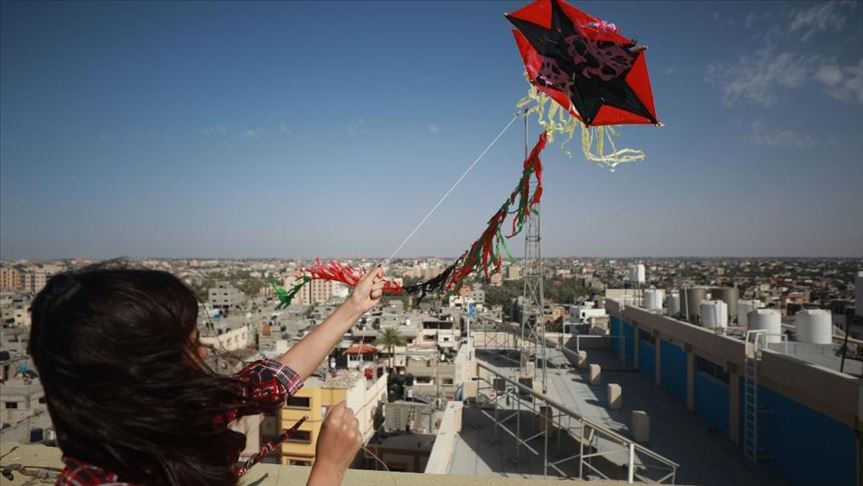
According to Al-Thawabta, what Israel is describing as acts of war are, in some cases, simply homemade kites constructed by Gaza’s children from nylon bags and pieces of wood.

Children fly them as one of the few forms of recreation still available amid the devastation and shortages inside Gaza, he said.

The Government Media Office argued that the crude kites largely follow the direction of the wind and cannot be precisely controlled over long distances as another local news agency pointed out.

That distinction is crucial.

Israel is alleging that objects are deliberately being dispatched across the boundary. Gaza officials are saying that children’s kites can simply be caught by the wind and carried beyond the Strip.

Neither claim should automatically be accepted without independent evidence establishing who launched each object and with what intention.

What is established from Israeli reporting, however, is that the kites discovered in recent days were not carrying explosives or incendiary devices as per the Shorouk Arabic website.

An Echo of 2018

The sight of kites crossing the Gaza boundary nevertheless carries powerful memories for Israelis.

During the Great March of Return protests beginning in 2018, Palestinians developed incendiary kites and balloons into an improvised form of protest and resistance. Some carried burning material across the boundary, starting fires in agricultural fields and nature reserves in southern Israel.

The devices were technologically simple but became a surprisingly persistent problem for the Israeli military.

Today’s situation is different in one important respect: The objects reported in the latest incidents have not been found carrying the incendiary or explosive payloads associated with some of the 2018 launches.

Yet the political and military reaction has been immediate.

Katz has effectively established a doctrine under which the distinction between a kite and a drone can disappear once either crosses from Gaza.

A Kite Becomes an “Act of War”

There is a striking imbalance in the language surrounding the episode.

Gaza remains devastated by years of warfare, displacement and destruction. Children there improvise toys from whatever materials can still be found.

Against that background, an object consisting of nylon, wood and string can cross the boundary on the wind and suddenly enter an entirely different world of military terminology: drone, launch site, operator, assassination, evacuation and act of war.

The Gaza Government Media Office says that is precisely the danger.

It argues that depicting children’s homemade kites as a significant military threat could provide Israel with a new justification for attacking civilians and residential areas according to Alray⁠.

Israel, by contrast, says it cannot afford to wait for a kite or balloon to prove dangerous before responding. Katz’s position is that anything deliberately launched from Gaza toward Israeli communities must be treated as a hostile act.

That leaves one central question hanging over the latest confrontation:

Are these deliberate launches from Gaza, as Israel alleges, or are at least some simply children’s kites escaping into the wind, as Gaza officials maintain?

For the moment, publicly available evidence does not settle that question. What it does show is how little is now required to threaten another escalation around Gaza. No missile. No rocket. Not even an explosive.

Just a kite crossing the sky — followed by a defence minister promising assassinations, evacuations and force.

This article is based on information from AI and is reproduced in Crossfirearabia.com

Continue reading