Duwairi: Israel Not in Position For ‘Ground War’

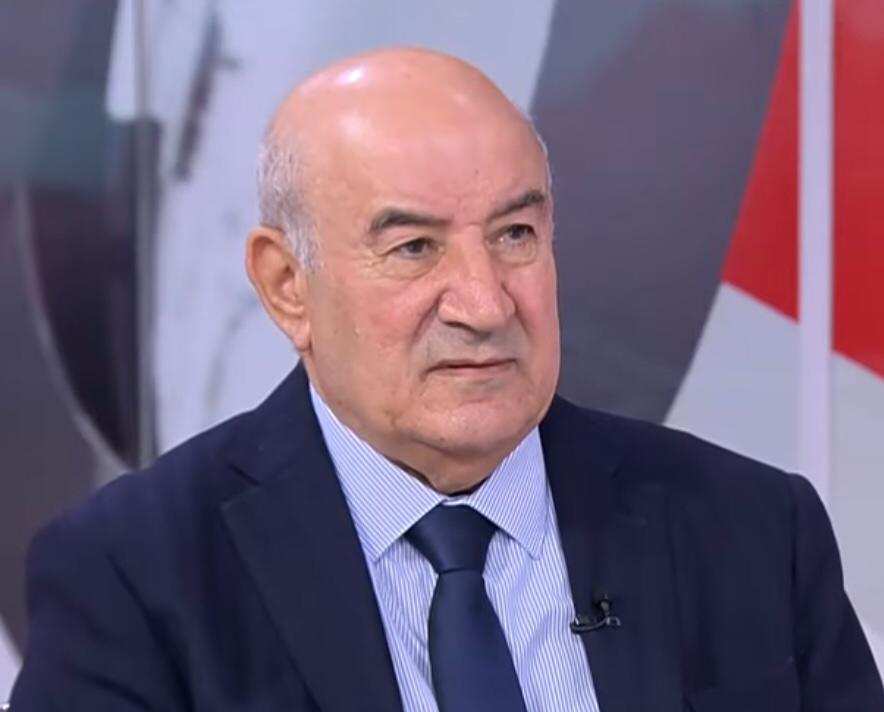
Military expert Major-General Fayez Al-Duwairi said the Lebanese Hezbollah’s bombing of the Mossad headquarters in Tel Aviv is a qualitative but a disciplined shift so that things do not develop into a large-scale ground battle both sides are trying to avoid so far.

Earlier Wednesday, Hezbollah announced targeting the Mossad headquarters in the suburbs of Tel Aviv with a “Qader I” ballistic missile, in a precedent move since the beginning of the Israeli war on the Gaza Strip about a year ago.

The party stated it targeted Mossad headquarters because it “is responsible for assassinating leaders and blowing up communication devices.”

According to Al-Duwairi, the party did not target Tel Aviv directly but rather targeted a military headquarters responsible for blowing up the pagers, which means it is an operation similar to the assassinations carried out by Israel in the Beirut suburb.

Therefore, he believes that the targetting does not mean bringing Tel Aviv into the unfolding battle, saying current Israel’s operations in Lebanon do not aim to destroy the suburb randomly. He added this reflects the keenness of both parties not to escalate in a way that leads to an open ground war, even if the comprehensive war is already underway.

No ground war yet

He explained the ground operation is the missing part of the comprehensive war between the two sides, suggesting Israel will continue to maintain this situation for another period in the hope of breaking Hezbollah’s will and subjecting it to its dictates.

He said Israel is using the Gaza Strip approach in Lebanon, but warned that the military solution will not be achieved and that Hezbollah will not retreat beyond the Litani River as Israel wants.

Al-Duwairi described Hezbollah’s operations as a war of pressure on the Israeli economy and society and not a war of attrition, noting the latter is based on targeting the civilian and military dimensions and that will only be completed through a ground confrontation.

He expected that a ground war would only break out if Netanyahu felt that the current pressure would not force Hezbollah to retreat. However, he pointed out that Israel previously remained in the Litani area for 20 years and was forced to leave due to the Lebanese resistance.

Hezbollah must rely on itself

He said the situation in southern Lebanon is completely different from Gaza, noting that Hezbollah will not deploy its forces on every square meter but will rely on the combat contracts that will grant it the desired victory in the end, because a ground confrontation means great losses for the occupation army.

Regarding Hezbollah’s strengths in a ground war, Al-Duwairi said they are represented in its ability to manage the battle and activate the unity of the arenas in Yemen and Iraq in an effective manner and not symbolically as is the case now according to Al Jazeera.

Continue reading
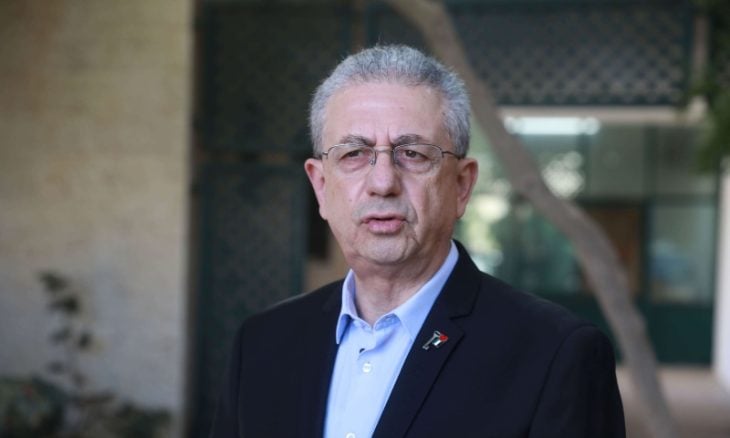
Israel: Lies, Lies and More Lies

Kamal Mirza

Lies, lies, and more lies: This was the enemy’s policy since the first day of the systematic Zionist-American war of extermination and displacement that followed the launch of the Al-Aqsa Flood battle at the hands of the heroes of the Palestinian resistance.

The problem now is that Israel is trying to exploit the three successive security breaches it was able to achieve – pager and walkie-talkie – bombings and the assassination of the Radwan leaders, to lend credibility to the lies it promoted since it decided to transfer the weight of military operations to the northern front.

Among these lies are Israel broadcasts, and which the media unfortunately picks up on as they are and republished and circulated among its people, and its claims it has succeeded in bombing thousands of missile launch pads in southern Lebanon through the intensive raids its warplanes made in the past 48 hours.

Such news, despite its brevity, and a large number, aim to create the following:

First, create the impression the Zionist entity has full knowledge of all of the sites, fortifications and fortifications of Hezbollah in southern Lebanon. But how could it not know when it penetrated the party’s communications system, read them as an open book, and was capable of targeting and eliminating them at a blink of an eye!

Second, spread a spirit of defeat, despair and hopelessness among the people that Hezbollah is losing its capabilities, components and potential at a rapid pace, and the issue will not take more than a “sip of coffee” before the party collapses and finds itself defeated and unable to harm even a mosquito’s wing.

Third, and most importantly – the result of the two previous points – and that is blackmailing Hezbollah into abandoning its wisdom, prudence and balance in managing the battle, and make a hasty reaction matching the Zionist attacks to prove to its supporters and masses it is still fine, and maintain its strength and resolve, and then be dragged into an open confrontation by further shuffling the cards, and involving everyone in a regional war.

This is the basis of what Benjamin Netanyahu and his war gang aspire to and wish for to get out of their predicament, and evade their inability to achieve any of the war goals, whether the declared goals or undeclared ones with the first including returning the prisoners in Gaza, eliminate the capabilities of the resistance and returning the settlers in the Gaza envelope and the north to their settlements.

Their hidden goals include reoccupying Gaza, West Bank and annexing them, displacing the Palestinians (1948 Palestinians included), and create a pretext and favorable circumstances to target and destroy the Iranian nuclear facilities before it is able to manufacture its first nuclear bomb.

However, Israel’s insistence on beating the drums of war, and forcing it down the throat of Hezbollah and everyone else, through media propaganda and bullying all suggests the despair of someone who feels the noose tightening around his neck and/or about to drown!

Of course, the wise tactic for Hezbollah is to maintain the pace and rhythm for the confrontation, and to escalate within the limits it wants, while preserving the theme of attrition, long breath, concentration of effort, and careful selection of targets it has followed and established since day 1 and not to allow the enemy to lure it in and impose on its own pace and rhythm for the confrontation!

The paradox here, is there are those who still insist on believing the Israel entity just because they want to, despite knowing it is a liar, deceiver and a charlatan. Among its lies is its insistence on concealing its real human and material losses and denying them.

And these people insist on doubting Hezbollah and the resistance factions, even though they have proved their honesty every time, whether in their admission of losses and setbacks, in the information and circumstances they provide about the course of events, or in the promises and commitments to themselves as spelt out by Mr Hassan Nasrallah that the northern warfront will not stop unless an agreement is reached in Gaza acceptable to the Palestinian resistance.

What is also surprising for those “Zionist lovers”, or those imbibed with the entity in their hearts, and/or who have been filled with terror from it.. is their insistence on ignoring and overlooking three basic facts:

First, if the support front Hezbollah opened and managed did not truly harm the Zionist enemy, drain it, prevent it from achieving its goals, and a decisive factor in deterring and defeating it.. Israel would not have been concerned with all this escalation in Lebanon while it is drowning and stuck on the Gaza and West Bank fronts.

Second, if Hezbollah wanted to twist and turn, broker and scheme at the expense of the rest of the resistance factions and the unity of arenas, the party could have in the last 11 months been in a negotiating position to obtain enormous temptations and gains the Arab countries of collusion and the party haters would never have dreamt of!

Third, Israel abandoned its farcical utterings at the beginning of the war that it would return Lebanon to the Stone Age, and eliminate Hezbollah’s capabilities and force it to retreat beyond the Litani River. Israel’s now declared goal in the north has been limited to return its residents only to “point zero” as was the case before the war.

In this goal there is an implicit bribe for Hezbollah: “Just give us this modest goal and we will stop the war and the targeting on our part.” This is once again an indication of the extent of Israel’s predicament and crisis, despite its apparent arrogance, bullying and its endless stream of lies!

This is a translated piece from Arabic by Kamal Mirza printed in the Jordan24 website.

Continue reading
War Heats up as Hezbollah Trade Attacks With Israel

Hezbollah announced, Sunday morning, it  bombed an Israeli military industries complex in northern Haifa with dozens of rockets in an initial response to the pager and wireless explosions.

A party statement indicated it bombed “the military industries complexes of the Rafael Company, which specializes in electronic means and equipment, and is located in the Zevulun area north of Haifa, with dozens of Fadi 1, Fadi 2, and Katyusha rockets.”

Hezbollah rockets

Hezbollah had earlier announced at dawn, Sunday, it targeted the Ramat David base and airport for the second time with dozens of rockets.

In a statement it stated it “announces, for the second time in two hours, it targeted the Ramat David base and airport with dozens of Fadi 1 and Fadi 2 rockets, in response to the repeated Israeli attacks that targeted various Lebanese regions and led to the deaths of many civilian martyrs.”

In contrast, the Israeli army announced in the past hours, Hezbollah launched about 115 “air threats” towards northern Israel, adding firefighting teams were working to extinguish the fires that broke out as a result.

The Israeli Broadcasting Authority reported that about 120 rockets were fired from Lebanon on Saturday night.

The Israeli Channel 13 reported Hezbollah focused on security and economic sites and facilities, and there was damage, especially in the Haifa and Kiryot areas, for the first time since August 2006.

Israel Today reported the army estimates that Hezbollah will continue to fire rockets in the coming days without expanding the scope of the targeting.

Injuries and fires

The Israeli Ambulance Service, Magen David Adom reported four people were injured by shrapnel from rockets fired by Hezbollah at the city of Haifa.

Meanwhile, three Israelis were injured near the city of Kiryot, and a number of people were injured as a result of several rockets falling in the occupied southern Golan Heights, according to the Israeli Walla website.

The Maariv newspaper quoted the Israeli ambulance as saying that there was one injury in the Lower Galilee as a result of Hezbollah rockets, while it reported that there were no injuries as a result of the shelling of the areas of Yokneam, Afula, and the Ramat David base.

On the other hand, the Israeli Broadcasting Authority said that some residents of the Kiryat Tiv’on settlement said that the shelters they tried to hide in were closed.

Israel Hayom reported firefighting teams were working to put out a fire that broke out near Migdal HaEmek, most likely caused by interceptor missile fragments. The Marj Bin Amer Regional Council also said that a missile fell and caused a fire in the area between Kfar Rauch and Yokneam.

Lebanon bombing

On the other hand, Channel 12 reported that Israeli warplanes have launched raids on sites in the Majdal Zun area in Lebanon.

The Israeli army said that the strikes will continue and increase in intensity against Hezbollah.

Al Jazeera’s correspondent reported that Israeli raids targeted the vicinity of the town of Yatar and the area of ​​the Nabaa al-Tasa stream in southern Lebanon.

The Israeli raids also targeted the towns of Aitaroun, Taybeh, Zebqin, the town of Khiam, and the vicinity of the town of Zrarieh in southern Lebanon.

Continue reading
Israel Will Not Start a Ground War Into Lebanon – Expert

The Israeli army is carrying out a series of military operations in south Lebanon to avoid entering into a ground battle with Hezbollah, Mamoun Abu Nawar, ex-Major-General and military expert, said.

It therefore struck the strategic weight of the party leadership to change within the inside to try to achieve complete paralysis in its elite forces affiliated to Al Radwan brigade whilst isolating its leadership from ground operations control centers that manage the war, he added.

The Israelis leaders resorted to these operations after the United States refused to approve their ground invasion of Lebanon and expand the scope of the war and enter into a comprehensive regional war Abu Nawar told Jordan 24.

Israel will not dare to wage a ground war because it would be the main loser and will therefore be satisfied with missile strikes from the air, he pointed out.

Although the situation is “uncomfortable” the war will not expand and remain under control and Israel will not go to a war that will burn everyone, but it is stricking Hezbollah’s so-called strategic center of gravity – the Radwan to avoid a ground war – as it knows it will not win and will get involved in new losing battles in light of Hezbollah’s ability to strike the infrastructure inside Israel, Abu Nawar concluded.

Continue reading
‘God Will Avenge Us’ – Lebanese React to Israel’s Cyber Terror Attacks

By Sama Abu Sharar

Editor’s note: This article was written before the second wave of explosions that hit Lebanon last Wednesday, also killing a number of Lebanese civilians and wounding hundreds.

BEIRUT – Beautiful Lebanon woke up sad this morning following the massive Israeli cyberattack that hit the whole country last Tuesday afternoon. The streets are gloomy and traffic is less heavy than it usually is on a busy weekday, as people are still in utter shock, trying to process the events of 17 September. 

All public and private schools and universities are closed today and a general strike was called by the General Workers Union in memory of the victims who were killed and the thousands who were injured.

‘Shock and Astonishment’

Joanna Nasserdine, the Beirut correspondent for the Jordanian Roya TV who covered the events of Tuesday, told the Palestine Chronicle that she was as puzzled as the rest of the population when news of the attack started coming in as there were numerous questions and unclarity.

“Today, I can say that I am in a state of shock and astonishment over what happened yesterday because it is a crime that was committed against Lebanon, which did not differentiate between a civilian or a child or a military man, it is a disaster for the whole country,” Nasreddine said. 

She told the Palestine Chronicle that what touched her most as a Lebanese citizen and as a reporter were the horrific scenes in front of the different hospitals in the capital Beirut.

“The scenes of victims, injured, with blood everywhere was a stark reminder of the explosion of the Beirut port in 2020, along with all the feelings of fear, anxiety, and panic that reigned yesterday,” the Lebanese reporter added.

According to Nasreddine, the criminal Israeli cyberattack is unprecedented in the long Arab-Israeli conflict and is extremely dangerous since it was able, in one minute, to harm at least 4,000 people, 300 of whom are in critical condition, and kill at least 12, including two children.

“How can an entity be so criminal to attempt to take the lives of thousands in one minute,” she questioned, expressing the fear of all Lebanese of what is to come next, given how vulnerable the country is at the moment. 

Indeed this is what people feel: Vulnerable and exposed. 

One of the incidents that took place in Tuesday’s attack involved a young man who was passing by a building in Mrijeh, in the southern district of Beirut.

The young man was seen by the neighbors bleeding. They all thought that he had been shot by stray bullets in the air so they grabbed him and tried to hide in one of the buildings. 

When it was clear there was no shooting in the area, they asked the man if it was his phone or the battery trying to pinpoint the source of bleeding, until the man realized that the pager on his waist had exploded, according to a friend who preferred not to be named.

“People were everywhere, their clothes stained with blood, the smell of blood reminded me of what happened after the Beirut port explosion, I could not bear it, I left in a hurry,” a businessman, who preferred not to be named, told the Palestine Chronicle, recounting his experience while passing by one of the hospitals yesterday.

Following the ‘pagers’ attack, messages heavily circulated on WhatsApp groups requesting from people in their homes to disconnect their wi-fi from their home inverters since many of the inverters work on lithium, which apparently detonated the pagers in the cyberattack. 

The majority of people in Lebanon depend on inverters for electricity, which feed on generators or the solar system due to electricity shortages or lack of electricity altogether. A state of panic reigned amongst the majority of Lebanese in fear that the inverters might be hit as well.

An expert on technology told Sawt el Chaab (La Voix du Peuple), a local radio station, in answer to people’s fears regarding their inverters and mobile phones, that “batteries in mobile phones have  higher protection,” admitting nonetheless that the gap between Lebanon and Israel is immense in regard to technology. 

‘A Child Just Died’

The scene by the American University Hospital (AUH) and other hospitals in Lebanon was indeed a stark reminder of the Beirut port explosion in 2020. Hospitals were flooded with the injured and relatives and friends outside of the medical facilities were packed trying to get any news about their loved ones.

A day after the Israeli attack, people still gathered around hospitals, waiting for any piece of news on their loved ones. The only topic of conversation is the attack of yesterday and the state of the patients inside. The streets by the hospitals are dotted with doctors and nurses running in and out of the hospital.

“A child just died,” one man said while on the phone coming out of AUH.

A group of young men in front of the hospital were discussing the insanity of these devices being detonated all at the same time.

I approached two women sitting on a bench by the AUH and asked them if they were waiting for someone.

“My nephew is inside,” she said. “How is he?”, I asked. “He’s ok, thank God,” she answered, “God will avenge us,” she added.

At the nearby Clémenceau Medical Center (CMC), and Makassed General Hospital further away, although less crowded, the scene is similar to military presence around the medical facilities. 

“The situation is bad, the hospital is full, they are even opening the outpatient departments due to the flooding of patients, it’s very bad,” a registered nurse at one of Beirut’s hospitals who spoke to the Palestine Chronicle on condition of anonymity. 

She explained that most injuries are in the fingers, face and hip. 

“It depends where the pager was, most people held the pager when it beeped to check if there was a message and it exploded in their hand so some endured injuries in the face and in the fingers. Others the pager was on their waist,” the registered nurse added.

The Palestinian hospitals, especially in the south of Lebanon, namely Al Hamshari Hospital in Saida, received numerous injury cases due to the over-flooding of the Lebanese hospitals. 

Also, Palestinian hospitals throughout Lebanon mobilized their staff and volunteers throughout the country to receive the wounded and “provide (the victims) with all support and assistance,” according to the Palestinian Ambassador to Lebanon, Ashraf Dabour.

The Palestinian Liberation Organization (PLO), along with all Palestinian groups in Lebanon, condemned the criminal attack and expressed their utmost “support and solidarity with the Lebanese people in the face of the Zionist attack.”

Lebanese political analyst Hussein Ayoub and editor in chief of the Arabic website ‘180 Post, told the Palestine Chronicle that Tuesday’s events are unprecedented due to the unconventional method that was used and the extremely high number of casualties, which he says is expected to rise. 

“It was a sudden and unexpected terrorist attack and a huge security breach,” he said, adding that he’s been asking himself since the attack yesterday what if this attack happened during the war and why didn’t the Israelis leave it till the war breaks.

According to Ayoub, the answer to this question could surface in the coming hours, because had Israel done this during a war the consequences would have been unimaginable. 

The political analyst admitted that “at one point in a battle you have to admit that your enemy did hit you but that this strike does not determine the outcome of the battle.”   

Ayoub says that Hezbollah must reconsider all its approaches, military formations and the subject of communications during the war.

“I believe that the matter requires a different kind of discussion, first, regarding seizing the national unity in the country, since everyone is in solidarity right now regardless of whether they are with the Resistance or not,” he stressed. 

“Secondly, in light of the Israeli superiority in war of technology, Hezbollah must return to the traditional and primitive means of previous guerrilla work,” the political analyst added. 

Ayoub believes that this is extremely necessary because we must understand that “the world’s capabilities are mobilized in service of Israel, including weapons, technology and AI, and all these are not in our service, on the contrary, they are fighting us.”

This article is reproduced from the Palestine Chronicle.

Continue reading