War-torn Gaza: Either Walking or The Cart!

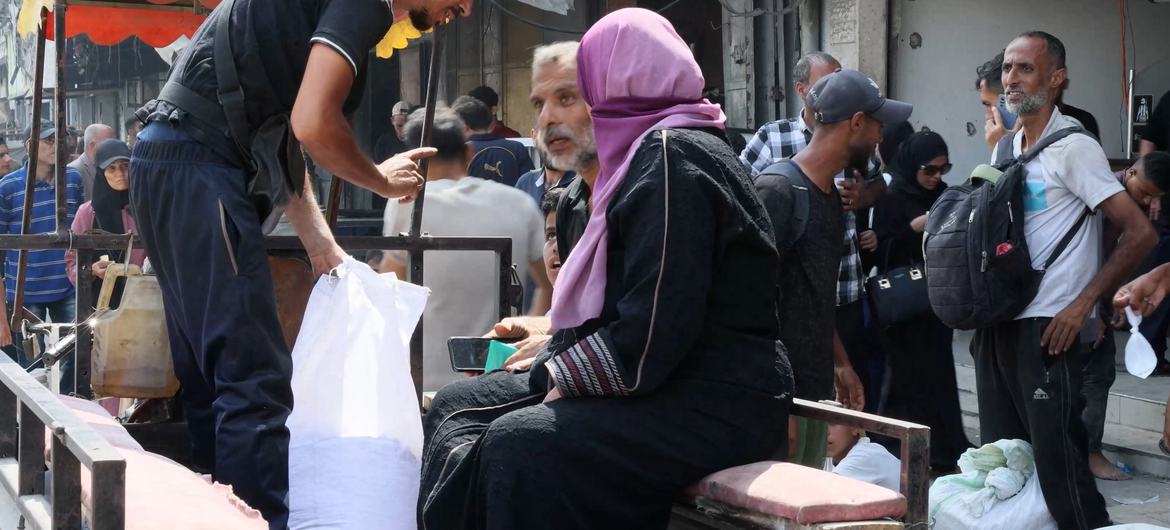
Mohammed Saad sits with others inside a homemade cart pulled by a car carrying several passengers, waiting to travel to Gaza City in one of the “uncomfortable and extremely expensive” means of transportation used to get around the Strip.

Moving around Gaza has become ever more difficult amid the ongoing 21-month-long war.

Mr. Saad, who was displaced from the town of Beit Lahia in the northern Gaza Strip, was waiting for the vehicle pulling the cart he was sitting in to move.

“Transportation is very difficult and unsafe,” he told UN News. “The roads are exhausting. We pray to God to grant us patience and to return home.”

This was on Rashid Street, west of the city, which connects the north and south of the Strip. It is crowded with carts, cars and three-wheeled motorcycles that have also been converted into means of transportation.

The area is interspersed with tents of displaced people, all surrounded by the rubble of buildings destroyed by war on both sides of the road.

War and evacuation orders have left many in Gaza scrambling for transportation to safety.

UN News

War and evacuation orders have left many in Gaza scrambling for transportation to safety.

A luxury not for everyone

“People can barely find enough to eat, so how will they pay for transportation?” Umm Haytham Al-Kulak asked while waiting in a passenger compartment attached behind a motorcycle,

“We walk mostly; we can’t take public transportation,” she said.

“May God help the drivers. Fuel prices are high, and all the people are exhausted and overwhelmed.”

In Gaza, many people have no choice but to use risky ways to get around during the ongoing war.

UN News

In Gaza, many people have no choice but to use risky ways to get around during the ongoing war.

Sky high fuel costs

Drivers are paying skyrocketing prices for fuel, which is a heavy burden, Abdel Karim Abu Asi said as he waited for his car to be fully loaded with passengers.

“The price of a litre of diesel has reached 100 shekels [around $27],” he said. “What should we do? We’re trying to use locally produced fuel, but it causes significant damage to cars and a lot of problems.”

This isn’t the only problem facing drivers. Mr. Abu Asi said the prices of spare parts are very high. A part that used to cost around 100 shekels now sells for around 2,000 shekels, or around $560.

“We also suffer from the destruction of the streets, and no matter how hard the municipalities try to repair them, the problem is not solved because they require a large number of bulldozers to clear them,” he said.

“People must be helped with transportation costs and many other aspects.”

Fuel vendors sell their products at sharply inflated prices, with a litre of fuel reaching around 100 shekels.

UN News

Fuel vendors sell their products at sharply inflated prices, with a litre of fuel reaching around 100 shekels.

Only option

Despite all the challenges, people there continue to go about their daily lives, even if it takes all day to get from one place to another. That’s what happened to Hussein Al-Hamarneh, who was waiting in a car to travel to the southern Gaza Strip.

Mr. Al-Hamarneh believes that most of these means of transportation are “uncomfortable, such as tuk-tuks [three-wheeled motorcycles] and carts pulled by cars, which are primarily designed to transport goods or animals, not people”.

“This is the only option for those who do not own cars,” he said.

Tayseer Abu Asr, who arranges for passengers to board a cart pulled by a car, stood on the section of the road.

“We’re trying to help people get around,” he said. “These carts have become our only means of transportation after the destruction of buses and taxis.”

On top of these challenges during the ongoing war, the Gaza Strip is facing a fuel crisis.

UN agencies warned earlier this week that the fuel shortage in Gaza has reached critical levels. They said if supplies run out, it will place an unbearable new burden on the population.

UN News

Continue reading
Starvation Centers, Death Traps

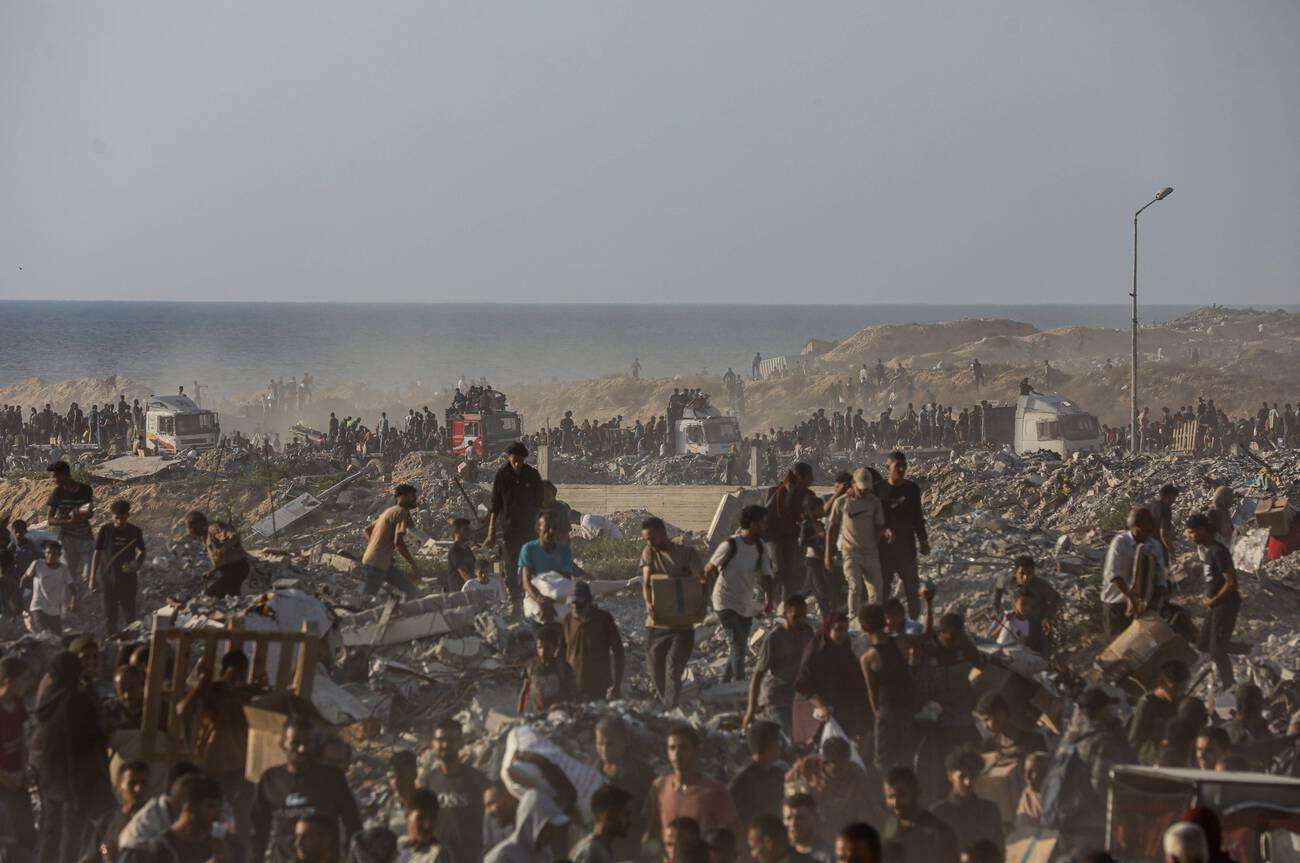
The deaths of 21 Palestinian civilians by suffocation, crowd crush, and live fire from US security forces operating in coordination with the Israeli army at an aid distribution centre in Rafah expose the Gaza Humanitarian Foundation (GHF) as an active instrument of the systematic mass killing and starvation policies imposed on Gaza.

These centres are no longer relief sites but death traps, deliberately used to lure starving crowds in scenes marked by humiliation and genocide, which constitutes a grave violation of international law and requires the immediate suspension of GHF’s operations, an urgent investigation, and full criminal accountability.

Documentation by Euro-Med Monitor’s field team revealed that the attack on Wednesday, 16 July 2025, occurred in two phases. The first happened around 4:00 a.m., when Israeli forces opened fire on thousands of civilians gathered on al-Tina Street, north of Rafah, as food aid trucks were being unloaded, resulting in multiple deaths and injuries. Despite the gunfire and casualties, thousands remained. They had no choice but to wait or starve, especially after a GHF worker told them distribution would begin at 6:00 a.m.

    Those who fell to the ground could not get up and were trampled. I saw women and children among the victims, and we only managed to escape by stepping over the dead bodies lying there   

Abdul Rahman B., one of the survivors

The second phase happened at 6:20 a.m., when crowds surged toward the outer gate of the distribution centre amid severe overcrowding and the closure of the inner gate. This led to a deadly crowd crush, with no safety measures or immediate intervention to prevent or contain the disaster.

Instead of organising the crowds and ensuring their safety, US special forces used pepper spray and fired sound bombs and tear gas at civilians trapped between the outer and inner gates, triggering panic and chaos. Thousands tried to escape, while some attempted to jump into the distribution centre to avoid overcrowding and certain death, only to be met with live fire as well.

The open fire and the resulting violent crowd crush caused the deaths of at least 21 Palestinians, including seven killed by live ammunition and 15 from tear gas inhalation and the crush, according to the Ministry of Health in Gaza.

A review by Euro-Med Monitor of several casualties found no signs of bullet wounds, supporting the conclusion that most victims died from suffocation or being trampled in a closed, overcrowded space with no protective measures in place.

Abdul Rahman B., one of the survivors, told Euro-Med Monitor’s team: “At around 6:15 a.m., a quadcopter arrived and announced that the distribution centre had been opened and required that we head to the gates.”

“People rushed frantically toward the entrances, and when we reached the front gate, we found the inner gate closed and a heavy presence of US forces accompanied by employees speaking Arabic,” said Abdul Rahman. “They asked us to step back 50 metres and enter in groups of no more than 100, but the crowding was so intense that stepping back was impossible.”

He continued: “Minutes later, they began firing sound bombs, followed by tear gas and pepper spray. People were disoriented and suffocating. Some tried to climb the fences to escape, but snipers shot them. Those who fell to the ground could not get up and were trampled. I saw women and children among the victims, and we only managed to escape by stepping over the dead bodies lying there.”

This incident demonstrates that aid distribution centres were deliberately placed in dangerous locations, designed with narrow paths enclosed by barbed-wire fences that can be easily sealed. These routes cannot accommodate the vast numbers of people in need and are fully controlled by the Israeli army, making them resemble elaborate traps for killing and humiliation rather than corridors for humanitarian aid.

GHF, established by Israel to manage its starvation policy, issued a brief statement claiming to have opened an investigation into the incident. This follows a familiar propaganda pattern: whenever starving civilians are killed, an internal investigation is announced, its results are never released, no one is held accountable, and the same crime is repeated without consequence.

An investigation by an organisation established within a framework designed to perpetuate starvation can hardly be considered credible. Given its direct role in managing starvation, GHF must be immediately dismantled and its mandate withdrawn. It operates under the guise of humanitarian work, failing as a neutral intermediary for aid delivery.

GHF functions as a field instrument of blockade, starvation, and killing by operating distribution centres designed to humiliate civilians and gather them in tightly controlled locations under the pretext of “organising” crowds. Rather than protecting those in need, it facilitates the implementation of engineered starvation and creates a closed environment where civilians are killed in the name of humanitarian aid.

Even when a threat is alleged, international law requires security forces to apply force in a proportionate and graduated manner, using lethal force only as a last resort and in response to an imminent and real threat to life. This standard was not met in the documented cases, making the killings a grave and flagrant violation of international law.

The deliberate targeting of Palestinian civilians as they seek food, along with the use of starvation as a weapon, is a clear violation of international humanitarian and criminal law. These acts constitute war crimes under the Rome Statute, including wilful killing, targeting civilians, and using starvation as a method of warfare, all of which are strictly prohibited in armed conflicts.

The widespread and systematic nature of these violations against the civilian population fulfils the elements of crimes against humanity, particularly killing, persecution, and inhumane acts causing severe suffering or serious physical or mental harm, when committed as part of a systematic attack targeting civilians.

Placing these crimes in their broader context, including the systematic destruction of means of survival, the denial of aid access, and the imposition of deadly living conditions on the civilian population, along with public incitement by Israeli political and military figures, reveals a clear and deliberate intent to destroy the Palestinian population in the Gaza Strip. According to Article II of the Genocide Convention, these acts constitute genocide, specifically through the intentional killing of members of the group and the imposition of living conditions calculated to bring about its physical destruction, in whole or in part.

The international community and complicit governments bear responsibility for the continued crimes against starving civilians at GHF-run aid distribution centres in the Gaza Strip. An immediate halt to GHF operations is essential, along with the launch of an independent international investigation leading to the prosecution of its officials before international and national courts for their involvement in systematic mass killings at distribution sites imposed by the Israeli army as a replacement for the UN mechanism that had operated in the enclave for nearly a year and a half.

International and national judicial bodies must move to hold US President Donald Trump criminally accountable for his complicity in the genocide in the Gaza Strip. This includes his adoption and direct support of the Israeli aid distribution mechanism, imposed by force and transformed into arenas of mass slaughter against starving civilians, as well as his administration’s full-scale provision of military, financial, political, and diplomatic backing that enabled Israel to commit and expand the crime for over 21 months.

The United States, through this organisation and other instruments, continues to provide political, logistical, financial, and military cover for Israel’s crimes, rendering current and former American officials, foremost among them President Donald Trump, subject to international criminal accountability.

Euro-Med Monitor calls for holding all state leaders involved in the genocide committed in the Gaza Strip accountable, whether through direct or indirect participation, by providing political, military, or financial support, or by facilitating its commission in any form. Such acts constitute criminal complicity under Article 25 of the Rome Statute. It holds states that failed to take serious measures to prevent or stop the crime legally responsible under their international obligations, particularly under the Genocide Convention.

A comprehensive and independent international investigation must be launched into the role of the Gaza Humanitarian Foundation in facilitating and executing serious crimes committed against Palestinian civilians. These investigations should address the individual responsibility of the organisation’s founders, directors, logistics coordinators, team leaders, and any other staff members, whether through planning, facilitating, directly contributing, or knowingly failing to prevent the commission of crimes.

We urge all states with territorial or universal jurisdiction to open immediate criminal investigations against all individuals affiliated with the GHF and its contracted private security firms, in order to hold them accountable for their role in crimes committed against Palestinians in the Gaza Strip, particularly including wilful killings, starvation, and cruel or degrading treatment.

All states, both individually and collectively, must fulfil their legal responsibilities by taking urgent action to stop the genocide in the Gaza Strip, through implementing effective measures to protect Palestinian civilians; ensuring Israel’s compliance with international law and the decisions of the International Court of Justice; preventing the implementation of the US-Israeli forced displacement plan; and holding Israel and its more powerful allies accountable for all crimes against the Palestinians in the Strip. The International Criminal Court must implement the arrest warrants for the Israeli Prime Minister and Minister of Defence at the earliest opportunity, in accordance with the principle that there is no immunity for international crimes.

The international community must also impose economic, diplomatic, and military sanctions on Israel for its systematic and grave violations of international law. These sanctions should include an arms embargo; an end to all political, financial, and military support; freezing the assets of officials involved in crimes against Palestinians; imposing travel ban on these officials; suspending the operations of Israeli military and security industries companies in international markets; banning involved companies’ access to banking services; and suspending trade privileges and bilateral agreements that provide Israel with economic benefits that enable its continued crimes.

Continue reading
UN: Gaza Aid is ‘Drop in The Bucket’

The UN humanitarian affairs chief has welcomed Israel’s decision to allow limited aid to cross into Gaza after 11 weeks of complete blockade – but significantly more is needed “starting tomorrow morning”.

Tom Fletcher said in a statement on Monday that nine UN trucks were cleared to enter the southern Kerem Shalom crossing earlier in the day.

“But it is a drop in the ocean of what is urgently needed…We have been reassured that our work will be facilitated through existing, proven mechanisms. I am grateful for that reassurance, and Israel’s agreement to humanitarian notification measures that reduce the immense security threats of the operation.”

Alarm over Israeli bombardment: UN chief

The UN Secretary-General on Monday expressed his alarm over the intensifying air strikes and ground operations in Gaza “which have resulted in the killing of hundreds of Palestinian civilians in recent days, including many women and children, and, of course, large-scale evacuation orders.”

António Guterres reiterated his call for the rapid, safe, and unimpeded delivery of humanitarian assistance at scale directly to civilians, in order to avert famine, alleviate widespread suffering, and prevent further loss of life.

Briefing reporters on Monday, UN Spokesperson Stéphane Dujarric said Mr. Guterres “welcomes the ongoing efforts by the mediators to reach a deal in Gaza. He has repeatedly warned that the continued violence and the destruction will only compound civilian suffering and heighten the risk of a broader regional conflict.”

He added that the Secretary-General “firmly rejects any forced displacement of the Palestinian population.”

Minimise risk of aid theft

Relief chief Fletcher said in his statement that he was determined to ensure UN aid reaches those in greatest need and make sure that any risk of theft by Hamas or other militants battling Israeli forces in the Strip amid a new offensive, would be minimised.

He said the UN aid coordination office, OCHA, had realistic expectations: “Given ongoing bombardment and acute hunger levels, the risks of looting and insecurity are significant.”

UN aid workers are committed to doing their jobs, “even against these odds,” he said, thanking humanitarian colleagues for their courage and determination.

Practical plan

“The limited quantities of aid now being allowed into Gaza are of course no substitute for unimpeded access to civilians in such dire need,” Mr. Fletcher continued.

The UN has a clear, principled and practical plan to save lives at scaleas I set out last week.”

He called on Israeli authorities to:

  • Open at least two crossings into Gaza, in the north and south
  • Simplify and expedite procedures together with removing quotas limiting aid
  • Lift access impediments and cease military operations when and where aid is being delivered
  • Allow UN teams to cover the whole range of needs – food, water, hygiene, shelter, health, fuel and gas for cooking

Ready to respond

Mr. Fletcher said to reduce looting, there must be a regular flow of aid, and humanitarians must be permitted to use multiple routes.

“We are ready and determined to scale up our life-saving operation Gaza and respond to the needs of people, wherever they are,” he stressed – calling again for the protection of civilians, a resumption of the ceasefire and the immediate and unconditional release of all hostages.

He concluded saying the operation would be tough – “but the humanitarian community will take any opening we have.”

UN News

Continue reading
1 in 5 in Gaza Face Starvation

Gazans remain at “critical risk of famine”, UN-backed food security experts warned on Monday, a full 19 months since war began with Israel and 70 days since deliveries stopped of all aid and commercial supplies.

“Goods indispensable for people’s survival are either depleted or expected to run out in the coming weeks…The entire population is facing high levels of acute food insecurity,” said the Integrated Food Security Phase Classification (IPC) platform.

In its latest update, the IPC estimated that one in five people in Gaza – 500,000 – faces starvation.

Prices have soared for basics such as a 25 kilogram sack of wheat flour, which now costs between $235 and $520, representing a 3,000 per cent price spike since February.

“In a scenario of a protracted and large-scale military operation and continuation of the humanitarian and commercial blockade, there would be a critical lack of access to supplies and services that are essential to survival,” the IPC said.

Guterres voices alarm

UN Secretary-General António Guterres said he was alarmed by the findings, especially that most children are now facing extreme hunger.

The World Food Programme (WFP) and children’s agency, UNICEFwarned that hunger and malnutrition have intensified sharply since all aid was blocked from entering on 2 March.

WFP chief Cindy McCain said families are starving while the food they need is sitting at the border. “It’s imperative that the international community acts urgently to get aid flowing into Gaza again,” she said. “If we wait until after a famine is confirmed, it will already be too late for many people.”

Aid partners on the ground in Gaza report that the number of hot meals served by those community kitchens that are still operating is declining very quickly. Today, about 260,000 meals have been prepared and delivered across the Gaza Strip. 

That marks a decrease compared to 840,000 meals last Wednesday – a 70 per cent reduction of 580,000 daily meals in just five days.

New strikes on UN shelters

The development comes amid continuing reports of Israeli bombardment across Gaza on Monday. 

On Saturday, another school run by the UN agency for Palestine refugees, UNRWA was hit, this time in Gaza City at around 6.30pm, reportedly killing two people and injuring an unknown number.

All 2.1 million people in Gaza are expected to suffer high levels of acute food insecurity between now and September.

© IPC

A day earlier, four more people were reportedly killed when another UNRWA facility was bombed in Jabalia camp, north Gaza. The agency’s office was “completely destroyed” and three surrounding buildings sustained severe damage, including a distribution centre. There were no supplies in the distribution centre when it was hit, owing to the continuing Israeli blockade, UNRWA said, noting that it ran out of food for Gaza “more than two weeks ago”. 

Echoing the wider aid community’s rejection of the Israeli plan to manage deliveries of food and non-food items across Gaza’s governorates, the IPC deemed it “highly insufficient to meet the population’s essential needs for food, water, shelter and medicine”.

IPC’s assessments help aid agencies decide where needs are greatest around the world. Food insecurity is measured on a scale of one to five, with IPC1 indicating no hunger and IPC5 denoting famine conditions.

According to the latest data, 15 per cent of people in the governorates of Rafah, North Gaza and Gaza are classified as IPC5. Most of the remainder are little better off.

Israel plan scepticism

Amid this disastrous and deteriorating situation, Israel’s proposed distribution plan will likely create “significant access barriers [to aid] for large segments of the population”, the IPC said.

And pointing to Israel’s recently announced large-scale military operation across the Gaza Strip and persistent obstacles impeding the work of aid agencies, it warned that there was “a high risk that ‘Famine (IPC Phase 5)’ will occur” between now and 30 September.

With hunger everywhere, a high number of households have reported having to resort to “extreme coping strategies” such as collecting rubbish to sell for food. But one in four of this number say that “no valuable garbage remains”, while social order “is breaking down” the IPC reported.

UN News

Continue reading
Dancing Over Their Graves

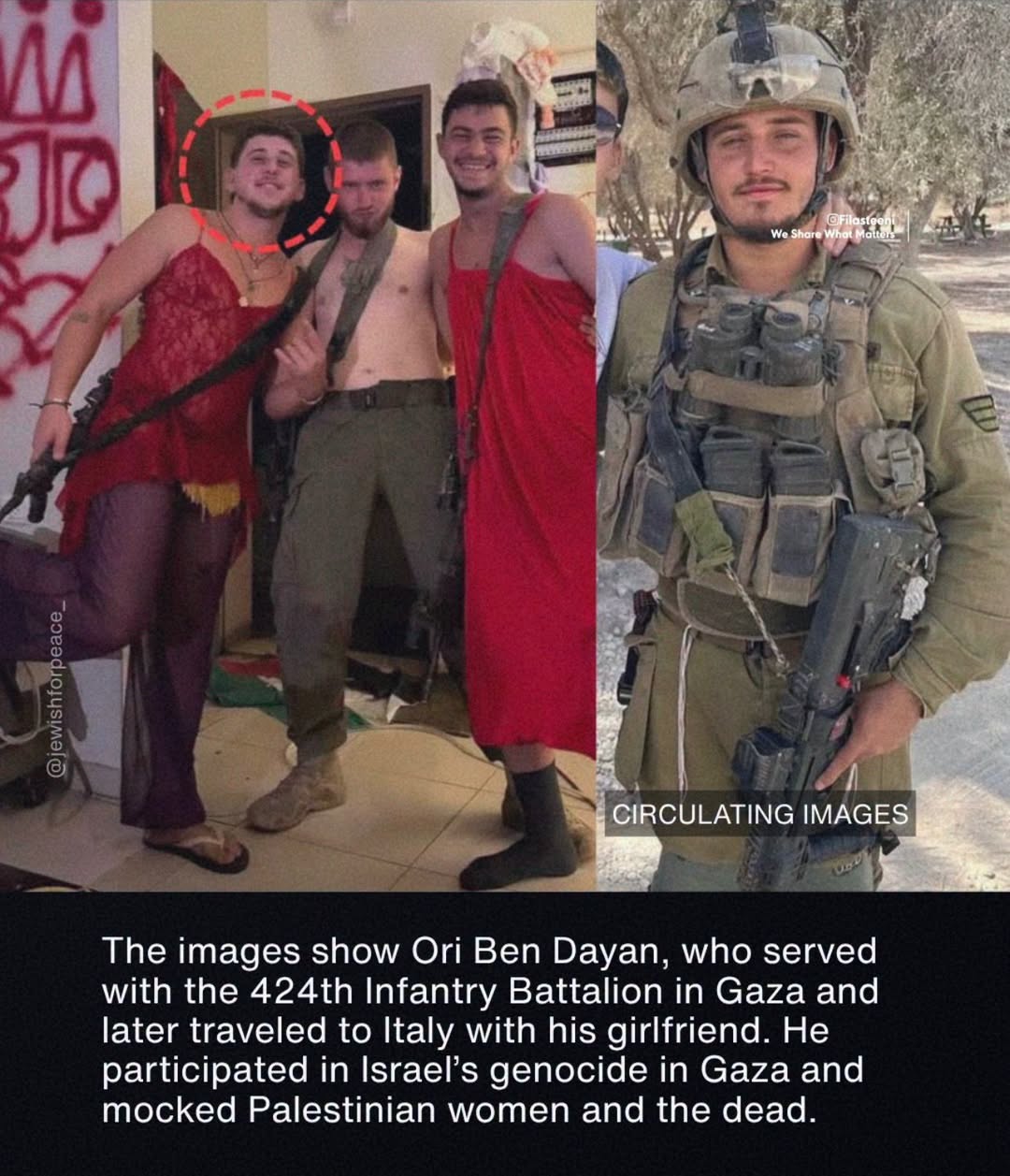
(Crossfirearabia.com) – An Israeli soldier rampages a typical Palestinian house in Gaza and proceeds to take a selfie of himself in different positions while wearing the undergarments of women since made into internal refugees whilst laughing about the fact.

This Israel war on Gaza has become a playground for Israeli soldiers. Thousands of selfies, maybe hundreds of thousands were made by Israeli soldiers going into the leftover of Palestinian houses which they destroyed and wrecked havoc to the belongings of long-chased-away Palestinians.

They would occupy these houses and/or their remains and make themselves comfortable were many of them would then enter the bedrooms and take selfies of themselves whilst trying on the bras, underwear, negligees of women forced to flee their homes under Israeli bombardment from the air and through tanks.

It has been a heartache and deep sorrow for many Palestinians who have been killed on a mass skill and/or who found themselves in makeshift tents as refugees.

Many a time during this war/genocide, the Palestinian resistance would booby-trap these houses and would explode in the faces of these soldiers.

Continue reading