Hormuz Strait in The Checkered Ceasefire

Re-opening the Strait of Hormuz would bring vital relief for many economies, but developing countries will continue to grapple with increased food and fuel costs, according to a new UN report released on Tuesday.

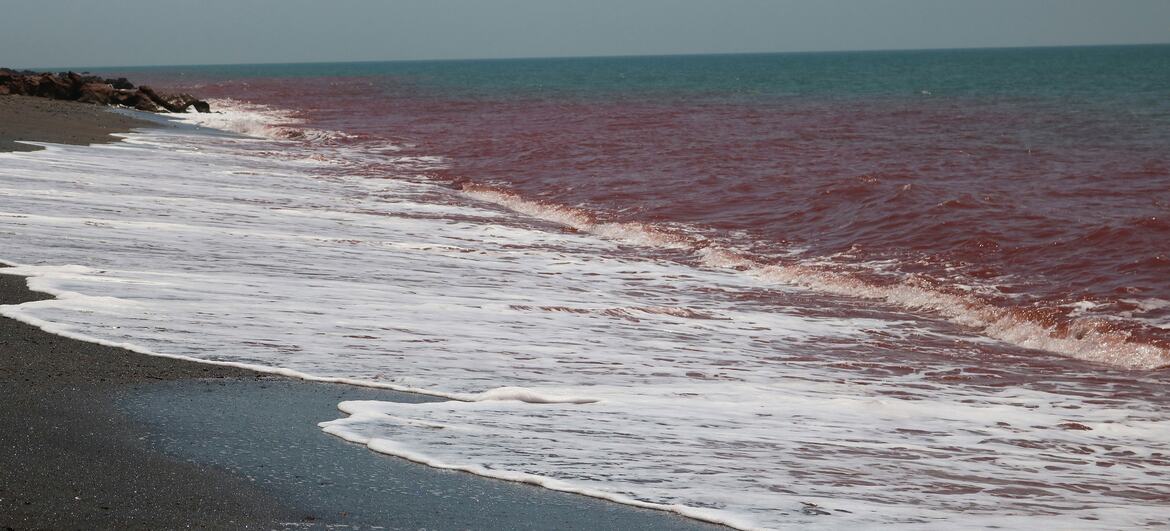
Following the shaky ceasefire in the US and Israeli war with Iran, commercial shipping through the strait quickly began to rebound in mid-June, but has slowed in recent days as Washington and Tehran have exchanged strikes in the region.

Iran has reportedly rejected an effort by France and Oman to remove mines from the strait and safeguard international trade as well as a suggestion by the UN’s International Maritime Organization (IMO) to open a new shipping lane off the coast of Oman.

While the report from the UN Trade and Development agency (UNCTAD) expects oil shipments to recover, it warns that freight contracts, supply chains and food systems would take longer to adjust and that high food costs could contribute to acute malnutrition in developing countries.

Vulnerable economies bear the brunt

Higher energy prices fuel higher transport costs, agricultural costs and inflation, which increases food prices long after the initial shock, UNCTAD noted.

Small island countries like Cabo Verde and Micronesia depend heavily on food and oil imports, which creates a “dual exposure” to shocks, making them especially vulnerable to price increases, UNCTAD said.

The agency estimated that 61 vulnerable economies are exposed to both oil and cereal import shocks.

Developing countries and small island States also tend to have tighter public finances and therefore less ability to absorb shocks, according to UNCTAD.

If these countries face difficulties mobilising resources, a heavy debt servicing burden, a drop in remittances or a decline in international aid, trade shocks could affect small nations even more.

Impact on food security

Beyond economic impacts, UNCTAD warned that although it is necessary to fully re-open the strait, food production risks remain.

Even short periods of unaffordable food in import-dependent countries can have lasting consequences for child wasting, meaning that a child has a low weight-for-height.

As real food prices increase by five per cent, the risk of child wasting increases by 15 per cent for poor children and 26 per cent for children of rural, landless poor households.

The report called for greater international support to help countries manage higher import costs, cushion food and fuel price shocks and strengthen their ability to cope with future trade disruptions.

“These shocks will be felt for many months, with developing countries bearing the heaviest impacts. I call on all parties to honour the ceasefire and redouble efforts,” UN Secretary-General António Guterres said. UN News
Continue reading
Profiling a Palestinian Prisoner: Starvation, Medical Neglect, Brain Hemorrhage

Palestinian journalist Mujahid Bani Mufleh is still undergoing intensive treatment six months after his release from Israeli prison, where he says he lost nearly 20 kilograms due to starvation and medical neglect before suffering a severe brain hemorrhage days after being freed.

Bani Mufleh is currently being treated at Ibn Sina Specialized Hospital in Jenin in the northern occupied West Bank. After falling into a coma, he underwent multiple surgeries, including a procedure in which part of his skull was removed. He now requires assistance with movement, swallowing and speech.

The journalist said prison conditions, including starvation and lack of medical care, severely worsened his health, particularly as he suffers from diabetes.

Speaking to Anadolu from his hospital bed, he recalled how his condition deteriorated during detention.

“I entered prison weighing 72 kilograms, and when I came out, my weight was in the early 50s,” he said.

“I lost a large part of it because of hunger. We slept hungry, and the food they gave us was not enough,” he added.

He said his condition worsened further due to lack of access to diabetes treatment.

“Since the beginning of my detention, I did not receive the proper medication, I did not undergo any medical test, and I did not know my blood sugar level. The food was very little,” he said.

Diabetes is a chronic disease in which the body either does not produce enough insulin or cannot use it effectively, leading to elevated blood glucose levels that can damage organs over time if untreated.

Israel arrested Bani Mufleh in the town of Beita, south of Nablus, in June 2025 and released him in January 2026, according to the Palestinian Prisoner’s Society.

Released into collapse

Bani Mufleh said his release came unexpectedly after his detention had been extended. He said prison authorities informed him he would be transferred, and he was not given a chance to say goodbye to other detainees.

“I was surprised that they released me. I did not even know I was going to get out,” he said.

“They took me out at midnight, and four hours later I found myself in the open, in the bitter cold of the Negev desert. I was shaking badly,” he added.

He said his health deteriorated rapidly after release. Medical tests later showed high blood sugar and blood pressure levels.

“I was doing an interview with a fellow journalist, speaking about what I had lived through in prison, and it seems that recalling those details was more than my body could bear, so I lost consciousness,” he said.

He was taken to a hospital in Nablus, where doctors diagnosed a severe brain hemorrhage. He later fell into a coma and underwent successive surgeries.

Life after detention

After regaining consciousness, Bani Mufleh said his life had changed completely and he is now unable to perform basic daily tasks.

“I was a person full of life. I worked for long hours. Today, I am almost unable to do the simplest tasks,” he said.

“I need others to help me move and get around. I lost the ability to speak and swallow, and I am still going through a long treatment journey,” he added.

He said his condition has also affected his relationship with his three children.

“I used to spend a lot of time at home beside them, teaching them and providing everything they needed. Today, I can no longer do that,” he said.

“I miss their laughter, and I hope to return to the father I used to be,” he added.

‘A photo that shows the truth’

Bani Mufleh said a Facebook post showing his post-surgery condition was intended to document his experience after detention.

The image shows part of his skull removed following brain surgery, with visible signs of severe weight loss.

“I wanted to show people the truth,” he said.

“Many friends objected to publishing the photo because they said it was not beautiful, but I have nothing to fear. Here I am today, and this is my condition,” he added.

He said he continues to think about his life before imprisonment, including his work in journalism and farming.

“I miss the old Mujahid,” he said, adding that he had cultivated land with dozens of trees before his arrest.

“My wife and children are always around me, and they hope I will return to the way I was,” he said.

Thousands of cases

The Palestinian Prisoner’s Society said last week that Israeli prisons have become a tool of “slow and direct killing” against Palestinian detainees.

It said Bani Mufleh’s case reflects wider conditions faced by thousands of Palestinians, including starvation, medical neglect and other violations in custody.

The group said more than 245 Palestinian journalists have been detained by Israel since the start of the war in Gaza in October 2023.

It added that Israeli forces have carried out near-daily raids across the occupied West Bank since October 2023, resulting in widespread arrests and searches.

According to Palestinian figures, Israel has arrested about 23,000 Palestinians from the West Bank since Oct. 7, 2023, including women, children and former prisoners.

Continue reading
A Relationship Turned Sour…

Former Israeli Justice Minister Daniel Friedmann said Saturday that Israeli Prime Minister Benjamin Netanyahu’s political weakness had enabled US President Donald Trump to lead both Netanyahu and Israel through an “unprecedented journey of humiliation.”

Writing in the Israeli newspaper Maariv, Friedmann assessed the consequences of the war in the Gaza Strip and its impact on Israel’s international standing and global image.

Fallout from Gaza war, global perception shift

Friedmann said the images seen by millions worldwide are “a devastated Gaza Strip, dead and wounded children, and people wandering among the rubble, living in tents under the scorching sun or heavy rain.”

“There are those in Israel who believe all this serves Israel’s interests and has strengthened its deterrence,” he wrote. “But that is only a partial truth. The limited deterrence achieved must be weighed against the price reflected in the transformation of global consciousness, including shifts in the Arab world, most of which are contrary to Israel’s interests.”

He said that in the immediate aftermath of the Oct. 7, 2023 events, global public opinion largely turned against the Palestinian group Hamas.

“But as the war continued and time passed, the destruction in Gaza pushed discussion of Hamas’ attack aside, and people around the world, including our friends and allies, increasingly turned against Israel,” he added.

Criticism of violence in occupied West Bank

Friedmann argued that the shift in global opinion had led to what he described as a decline in Israel’s international standing and growing public support for the Palestinian position.

He also warned about what he called “Jewish terrorism” in the occupied West Bank and criticized what he described as unequal treatment of Jewish and Arab attackers, alongside statements from government ministers and coalition lawmakers.

“All this rhetoric constitutes an attack on Israel’s security, undermines its standing, strengthens its enemies and increases the risk of sanctions against it,” he wrote.

Claims of US influence over Israeli decision-making

Turning to relations with Washington, Friedmann said Netanyahu’s political weakness had allowed Trump to guide both him and Israel through “an unprecedented journey of humiliation.”

He recalled that in September 2025, Israel carried out “a failed attempt” to assassinate senior Hamas officials who had traveled to Qatar for negotiations on a US-backed ceasefire and prisoner exchange proposal for Gaza.

According to Friedmann, Trump subsequently “demanded that Netanyahu apologize to the Qatari leader and pledge that Israel would not carry out attacks on Qatari territory.”

He said Netanyahu’s apology was delivered in a phone call from the White House and later reported globally.

Iran framework agreement and regional constraints

Friedmann also criticized a US framework agreement with Iran, saying it imposed limits on Israel’s actions, “or more precisely, its inaction,” against Hezbollah while disregarding Israel’s position.

He argued that Trump was eager to end the conflict and reopen the Strait of Hormuz to restore global energy flows. “To achieve that, he was prepared to pay not only with American dollars, but also with Israel’s interests,” he wrote.

“In this way, we became a tradable commodity in an international struggle over which we have no influence.” He added: “Since World War II, there has not been such an attempt to trade Jews and make deals at their expense.”

Netanyahu accused of prioritizing political survival

Despite his criticism, Friedmann said, “We owe Trump a great deal,” while also accusing Netanyahu of prioritizing personal political survival over state interests.

He argued that Netanyahu had prolonged the war in Gaza, allowing him to remain in office despite what Friedmann described as a major political failure.

Friedmann said there was an “advantage” to Trump influencing Israeli policy under current circumstances, adding: “We owe him for stopping the endless war in Gaza and bringing the hostages back.”

“There are also doubts about the logic of conducting the war in Lebanon. Perhaps it is better that he stops us there as well.”

Israel at crossroads between competing political visions

However, he warned that external influence over Israeli decision-making came at a heavy cost. “The price is the loss of the independence for which generations of young Israelis sacrificed their lives,” he said.

Friedmann concluded that Israel stood at a crossroads between competing political visions, contrasting Netanyahu’s coalition with that of former Prime Minister Yitzhak Rabin.

“This is not merely a question of image, but above all a question of essence: what kind of state do we want to be, and why was it established?”

Netanyahu’s governing coalition includes National Security Minister Itamar Ben-Gvir and Finance Minister Bezalel Smotrich, both of whom have advocated stricter security measures in the occupied West Bank and expanded settlement construction.

Both ministers have also called for greater Israeli control over the occupied West Bank, while Smotrich has repeatedly called for reoccupying the Gaza Strip and rebuilding settlements there. Anadolu

Continue reading
Protecting The Wheat Harvest From Israeli Settlers

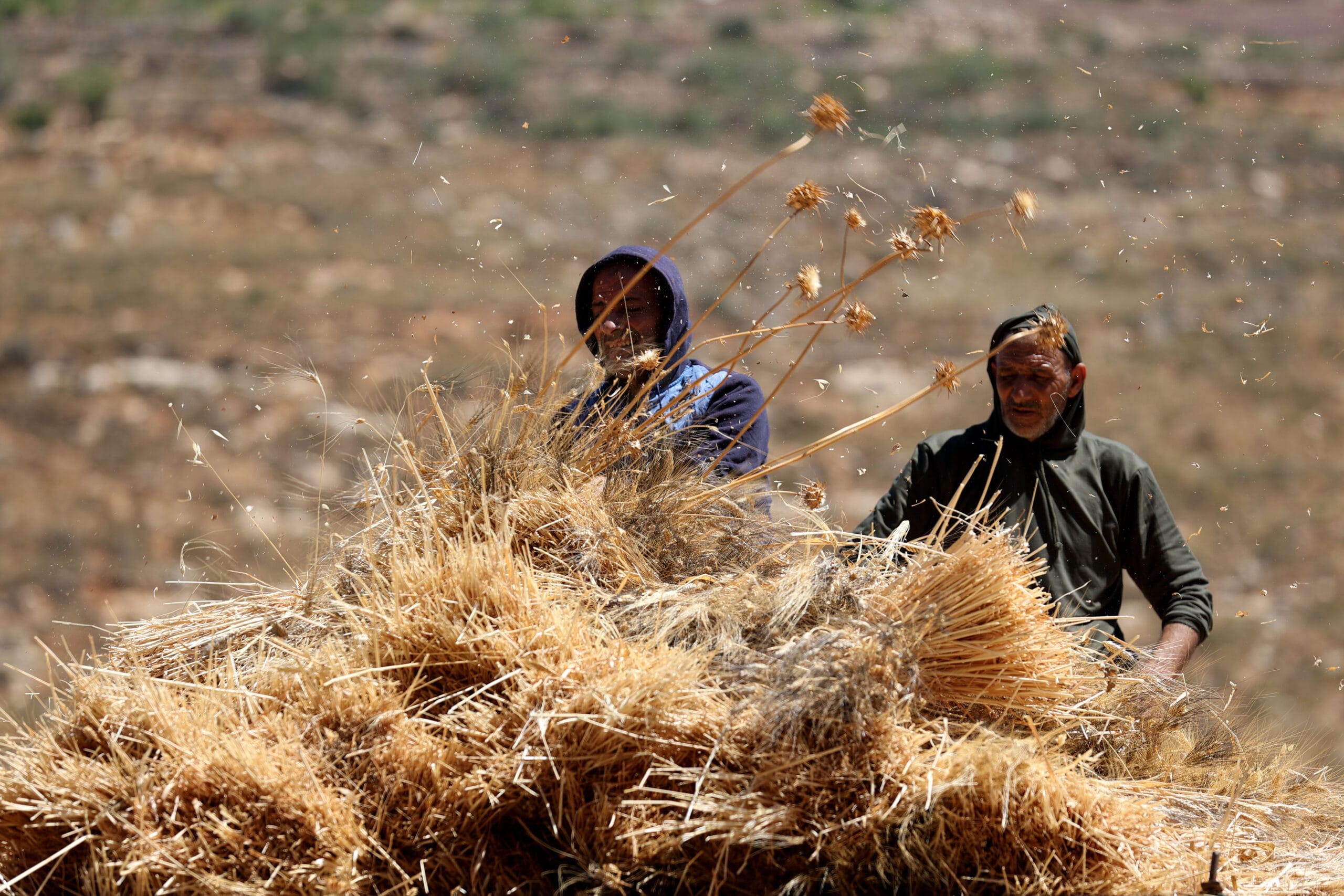
SINJIL, OCCUPIED WEST BANK – In the eastern plain of Sinjil, north Ramallah in the occupied West Bank, dozens of Palestinians are working quickly among the yellow wheat stalks, harvesting their crop this year.

This year’s harvest season is anything but ordinary; it’s a race against time, as farmers fear Israeli settlers will seize their crops by burning or destroying them. This comes amidst a surge in settler attacks on Palestinian farmers and their land.

Residents say they were forced to harvest their wheat and transport it quickly from the fields to the town after repeated attacks by settlers who attempted to burn the crops

and prevent landowners from accessing their land.

The town of Sinjil and its surrounding lands are subjected to frequent attacks by settlers seeking to seize as much land as possible. According to the Sinjil Municipality data, the town has lost approximately 8,000 dunams (a dunam is equal to 1,000 square meters) of its 16,000 dunams.

The town is surrounded by settlement outposts and a barbed wire wall that isolates it from its surroundings. All but one of its entrances are closed, allowing residents to move freely.

Our presence protects our land

Ayed Ghafri, an activist against settlement expansion, said that farmers are working under exceptional circumstances in the eastern plain of Sinjil, a vital area upon which residents depend for cultivating wheat and seasonal crops.

Ghafri told Anadolu Agency: “We are here today in the eastern plain of Sinjil, a vital and strategic area for farmers. We rely on this land for cultivating wheat and seasonal crops.”

He added: “But Palestinian farmers are constantly under threat. Some crops have been vandalized and destroyed, and there have been attempts to burn the wheat more than once.”

He continued: “Recently, farmers tried to work their land, but settlers attacked them and prevented them from doing so.”

He added: “Therefore, we are here today to support the farmers and save the wheat crop, because we believe that leaving it in the ground means it will be subjected to further attacks and the destruction of a large portion of it.”

“Being on the land is the only way to preserve it, and that’s why we are committed to maintaining a continuous presence to affirm its Palestinian identity and protect it,” Ghafri emphasized.

Farmers: “Resilience at an Extra Cost”


Farmers in the area cultivate hundreds of dunams of wheat, but this year’s harvest is taking place amidst growing fears of settler attacks.

Farmer Ashraf Alwan said that about 300 dunams are planted with wheat in the area.

He added: “We came last week to harvest the wheat, but settlers, under the protection of the occupation forces, attacked us and forced us to leave. If it weren’t for the support of the townspeople, we wouldn’t have been able to complete the work.”

He continued: “Today we returned to finish the harvest, but we had to completely change our methods. Under normal circumstances, we would have gathered and threshed the wheat in the field.”

He further explained: “But now we are forced to bring tractors and trucks to transport it to the town center for fear that the settlers will burn or steal it.”

Alwan pointed out that these measures have significantly increased costs for farmers, adding: “The harvest barely covers a small portion of the costs of plowing, planting, harvesting, and threshing, but we are here because it’s no longer a matter of profit and loss, but rather a matter of resilience and holding onto our land.”

He emphasized that “the farmers will not abandon their land despite the attacks, and they will continue to work it and remain on it.”

Farmer Mustafa Shabaneh said that he came with a number of residents to move the wheat from the fields for fear it would be stolen or burned.

He added: “I own seven dunams planted with wheat, and the settlers have tried to burn the crop more than once. On one occasion, they set fire to the area, but the young men of the town intervened and managed to drive them away.”

He continued: “We kept watch over the area, fearing the settlers would reach the crop, but they returned at night with a bulldozer and cleared a path to the farmland. Therefore, we decided to move the wheat from here as quickly as possible to prevent it from being stolen or destroyed.”

In a neighboring field, farmer Ali Bashir anxiously oversaw the harvest.

“Farmers can no longer work normally in this area,” he said. “Even shepherds are afraid to reach their grazing lands because of settler attacks.”

“If settlers come, they might attack you, steal your sheep, or prevent you from accessing your land. People here fear for their crops because there are precedents of crops being burned and farmers being targeted.”

Bashir continued: “We’re supposed to thresh the wheat here in the field, but we transport it hastily because of the fear. This process costs us extra for transportation, harvesting, and threshing, but we have to do it to preserve the harvest.”

He concluded: “What’s happening isn’t just targeting the wheat crop; it’s an attempt to force Palestinians to leave their land so it can be seized. That’s why farmers are clinging to their land and working it despite all the difficulties.”

Accusations of “Ethnic Cleansing”

On June 10, Amnesty International accused Israel of leading and sponsoring a campaign of ethnic cleansing against Palestinians in the West Bank, asserting that arming thousands of settlers has contributed to the escalation of these attacks.

The organization stated that “the Israeli government is implementing the religious-nationalist agenda of the settlement movement and has accelerated the pace of settlement expansion and land confiscation.”

Israel has increased its financial and logistical support for the settlements and supplied the settlers with weapons.

Scattered areas of the West Bank have witnessed a marked escalation in settler attacks, coinciding with the ongoing Israeli military operations that began on October 7, 2023.

Since that date, the Israeli escalation in the West Bank, including East Jerusalem, has resulted in the deaths of more than 1,170 Palestinians and injuries to approximately 12,666 others, in addition to the arrest of around 23,000 people and the displacement of approximately 33,000.

This article was written in Arabic by Qais and Darwesh Omar for Anadolu

Continue reading