Lebanon: ‘Were Are We Going to Go?’ 1 Million Displaced Families Ask

 Families fleeing violence in Lebanon are struggling to find safety in shelters across the country with at least one million people – a fifth of the population – now displaced with half leaving their homes in the past four days, Save the Children said.

Numbers are expected to swell following new relocation orders issued by Israeli forces on Tuesday, demanding residents in more than two dozen villages in the south of Lebanon to relocate north of the Awali River, approximately 50 km into the country.

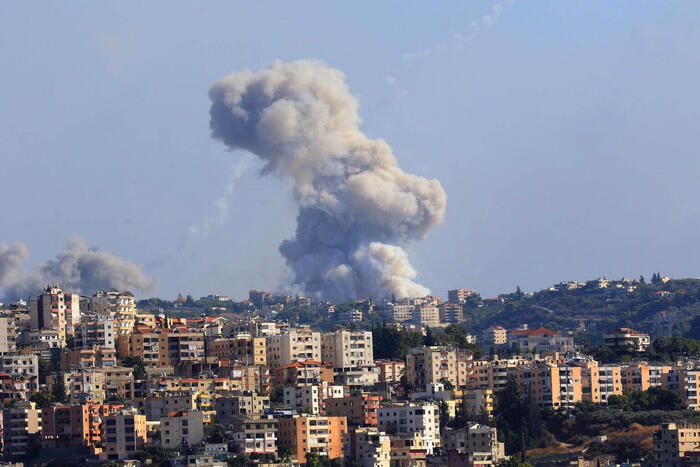
The beginning of ground military operations has been widely reported by media as well as air attacks across Lebanon, including strikes on Ein El Helwe, the largest refugee camp in Lebanon, that reportedly killed seven people, including four children.

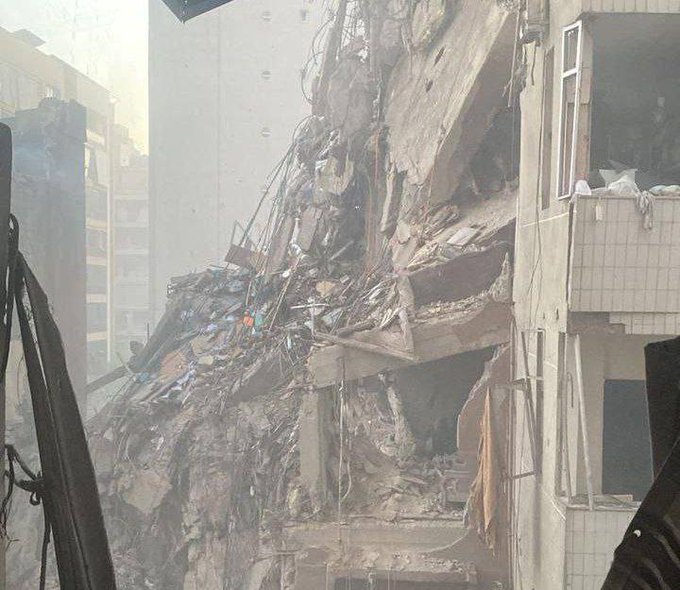
The speed of the crisis is placing immense pressure on hospitals, with over 37 Primary Health Care Centres forced to close due to safety concerns, while airstrikes have severely damaged 25 water facilities, leaving 300,000 people without access to clean water.

Over 154,000 displaced people are currently taking refuge in 851 active shelters, including public schools, with 70% of them already at full capacity, and only some equipped with proper showers, sanitation facilities, hot water and heating. Others are staying with host families, often in overcrowded conditions.

Since 23 September, Save the Children has distributed relief items to over 27,000 individuals, including 11,000 children, across 70 shelters, such as blankets, mattresses, hygiene kits, and bottled water. Distributions are ongoing in the North, Bekaa, West Bekaa, Rashaya, Mount Lebanon, Saida, Sour, and Beirut.

The rate of displacement is unprecedented. During the 2016 Lebanon-Israel conflict, a similar number of people were forcibly displaced – over 970,000 – over the course of one month.

According to media reports, about 60,000 Israelis have been displaced from their homes in northern Israel.

Almost 2,000 people have been killed by Israeli airstrikes in Lebanon, including 104 children, and over 8,000 have been injured, according to Lebanon’s Ministry of Health.

Ahmad*, 37, a father of daughters aged two years and seven months, spent a day on the road seeking safety and is now staying at a shelter in Mount Lebanon. He said:

“My wife and I are terrified about what might happen next. We’re scared for our daughters. What if something happens to them? And if something happens to us, what will become of them? Our 7-month-old cries constantly because she senses our fear; she can tell her mother is frightened, and now we’re passing that fear on to her and her two-year-old sister.”

“We need diapers and baby food, proper clothes, and basic necessities. We couldn’t bring anything with us, we barely managed to grab our children and ran for our lives.”

Abir* is a 35 -year-old mother of three children, aged 10, eight and five. Her family fled their village in the south after it was bombed and is now staying in a shelter supported by Save the Children in Mount Lebanon. She said:

“It breaks our hearts to have left our home, but we had to put our feelings aside for the sake of our children. Our village, which had never been targeted before, was bombed, and our children were already terrified by the sonic booms and fake raids.

I barely managed to pull myself together. We had prepared a bag, knowing for almost a year that we needed to be ready, but nothing could have prepared us for the carnage that erupted on 23 September. It took us a full day to travel from South Lebanon to Mount Lebanon, an exhausting journey with no final destination. At first, we had no idea where we were heading; all my husband knew was that we had to escape as quickly as possible. I worry about how my children will cope with all of this. I know the scars this experience will leave on them, and it weighs heavily on my heart.”

Jennifer Moorehead, Save the Children’s Country Director in Lebanon said:

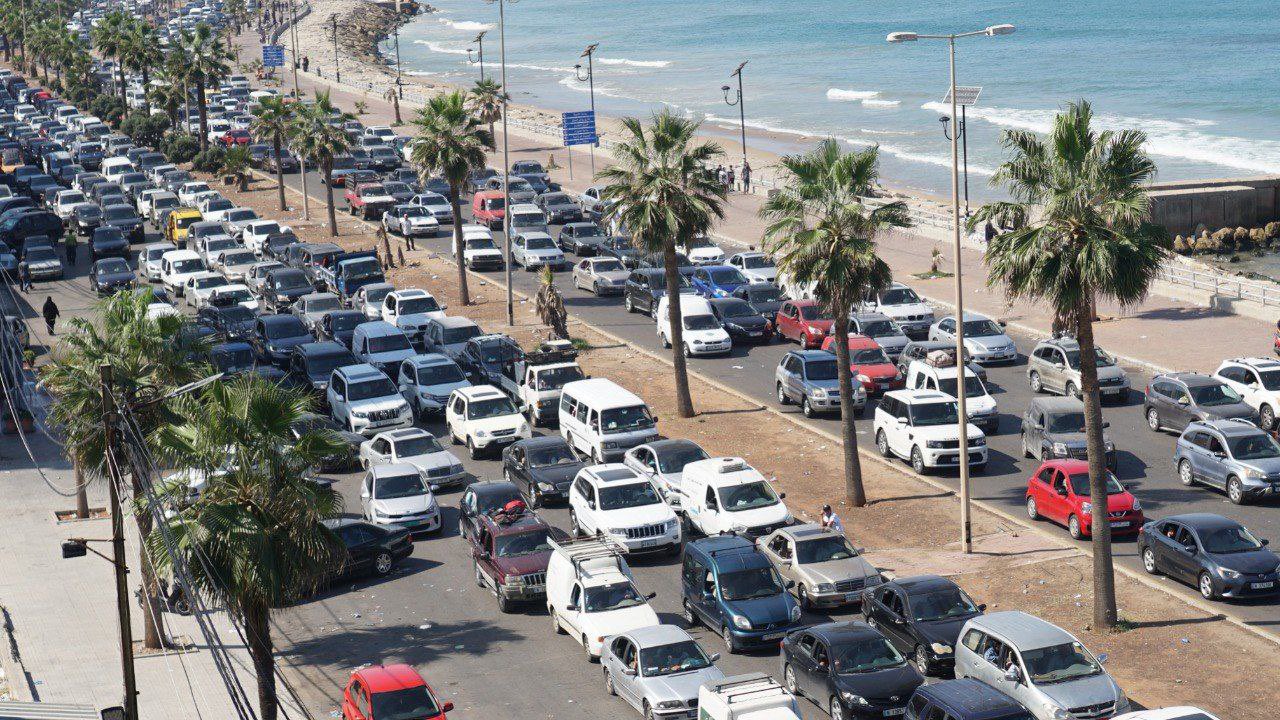
“Children all over the country are affected by this escalating violence, their lives turned upside down almost overnight as they lose their home and sense of safety. There are families in shelters, but also so many still in their cars or in the streets of Beirut, looking for some place to go. The sense of terror is palpable. Our teams are saying that more than anything, families are paralysed by the fear of the unknown.

Children will be disproportionately affected by this armed conflict. As in all recent armed conflicts, children will number too many among casualties.

Schools are closed, shelters and hospitals in Lebanon are under growing pressure, and we are doing our best to support displaced families, but with the launch of ground military operations in southern Lebanon, we are now inevitably going to see even more large-scale forced displacement and destruction.

Children’s lives in Lebanon and in the whole region are hanging in the balance. We call for an immediate ceasefire to prevent further suffering, ensure safe humanitarian access, and stop the conflict from escalating further across the region.”

Save the Children has been working in Lebanon since 1953. Since October 2023, we’ve been scaling up our response in Lebanon, supporting displaced Lebanese, Syrian and Palestinian children and families, and now have escalated an emergency response throughout the country in 70 shelters. Since October 2023, we’ve supported 71,000 people, including 31,000 children, with cash, blankets, mattresses and pillows, food parcels, water bottles and kits containing essential hygiene items.

Reliefweb

Continue reading
‘Fleeing My Home Under Airstrikes and Fire’

Maryam Srour, a field communications manager for Médecins Sans Frontières (MSF) from Beirut, Lebanon, reported from a car as she fled, describing scenes of chaos in the southern suburbs of Beirut.

On Friday 27/09/2024, we heard and felt a huge series of blasts while we were in meetings at the office.

We wrapped up work and got stuck in heavy traffic. I had just relocated to a safer place since the bombing around Beirut and across the country intensified on Monday. When I reached my new home around 10 p.m., my relatives had already joined us – leaving their homes, thinking it would be safer where we were.

From my balcony, I saw dozens and dozens of people walking in the streets carrying what they could, plastic bags, backpacks, or nothing. People in the southern suburbs around ours had received evacuation orders from the Israeli armed forces. We saw people fleeing on foot, some walking with sticks, young and elderly. Some people were in cars. We were not in the neighborhood that was targeted but we heard drones and planes. We felt them close by.

Suddenly, there was darkness all around and bombing started everywhere. There was heavy smoke and people in the streets were coughing. I was with my mum, brother and sister, and trying to figure out what to do next. Are the roads safe? Where do we go?

I had just left my house in *Dahieh—* the southern suburb of Beirut—a few days ago because of the heavy bombardments and moved to this one. We thought we would be safer here. Now we had to leave again. I grabbed a bag of essential items I had at hand. We were told that it’s better to bring mattresses, so we stuffed two in our car and took a pack of water bottles. I didn’t know what to do. There were fires everywhere following the airstrikes, and I heard a huge blast. We heard, felt and saw the strikes. Our building was shaking. There was a huge blast in a place with no advance warning for evacuation.

Surrounded by fire and smoke, I was repeating to myself, “all we need is a plan and to take action, a plan and take action; do not wait here.” We just left the place as fast as we could. I don’t know what happened to my own house, or the new house. We kept calling around and drove for a couple of hours before we figured out where to go. Around 5 a.m, we found a place on the other side of the mountains.

We were very lucky that we left when we did because the fires after the airstrikes were still raging where we had been. We just needed a place to rest a little, to see where to go next, and we still haven’t slept.

Some people are still in cars. Now we’re watching the news and shocking footage of what is happening. I know that my colleagues, MSF teams, are in the field, supplying water by trucks to shelters and schools in Beirut and Mount Lebanon, where displaced families are staying. Some people are lying down on the sidewalks. MSF managed to provide 86,000 liters of water in 24 hours, and is also distributing kits containing basic hygiene and relief items, as well as mattresses to the displaced people.

Our mental health teams are on the streets providing psychological first aid to people who are traumatized and to people seeking refuge in schools. I am used to being a humanitarian worker, but now I am also a person displaced by air strikes in my own country. We are in a safe place, for now.

Reliefweb

Continue reading
With Open Arms: Displaced Lebanese Flock to The Camps

By Samaa Abu Sharar

Over a million Lebanese have fled their homes in the south of Lebanon, the Bekaa Valley and the southern district of Beirut due to the unprecedented and indiscriminate Israeli raids on their cities. 

In the blink of an eye, over a million people lost literally everything and became displaced on the streets of the tiny capital and other Lebanese cities they believe are safer. Luckier ones were able to secure a corner in schools or other public places that were opened by the Lebanese government to temporarily host the displaced people. 

Along with the Lebanese, many Syrians and Palestinians were also displaced. Many of those resorted to the Palestinian camps to take refuge in the already cramped camps. This included refugee camps in Tyre in the south like Rashidieh.

A ‘Safe Place’

Photographer Rania Saadallah is a resident of the camp. She spoke to the Palestine Chronicle about the exodus of many families to the camp, particularly Lebanese and Palestinians with families in Rashidieh.  

According to Saadallah, most of those who arrived in Rashidieh came for two reasons; one, to remain close to their villages and towns in the south and two, because they lacked the financial means to go elsewhere.

“I know a family from Bazouriye; they are 14 individuals who came and stayed with their relatives, a family of seven, because they don’t have the means to rent a place inside the camp,” she said.

The Palestinian photographer told us that there are Palestinians who live in Lebanese villages in the south who also sought refuge in the camp as they did in the war of 2006.

“They consider the camp a safe place and it is close to their villages, but most importantly there is this familiarity between people of the villages and refugees in the camps,” she explained.

This familiarity and closeness that bond both people is undeniable and the latest events are proof of that.

Palestinian refugees across Lebanon rushed to help displaced Lebanese from the very start of Israel’s war on Lebanon.

Fraternity

The youth of Ain Al-Hilweh camp were amongst the first to rush to the streets to welcome the displaced Lebanese distributing water and snacks to those stranded in their cars.

According to Walid el-Ahmad, coordinator of the ‘Hand to Hand’ initiative, the unprecedented wave of displacement caught everyone by surprise because it was much bigger than anything that was anticipated by the Lebanese government, the United Nations Relief and Works Agency (UNRWA) or the Palestine Liberation Organization (PLO). 

El-Ahmad told the Palestine Chronicle that some people arrived at the Mar Elias camp in Beirut to stay with relatives and acquaintances but there were limited numbers because the camp is extremely small.

“We reactivated the emergency committee we created at the beginning of the genocide on Gaza, which is under the supervision of the Popular Committee of the camp,” he explained.

Enthusiasm to extend a helping hand to the displaced people was very visible.

“Despite their dire situation, refugees donated everything they had from money to food to mattresses, blankets, anything they could, they gave without hesitation,” he added.

El-Ahmad and many other activists in the camps confirm that help mostly came from individuals, small initiatives, or local organizations.

In many cases, the work of all those combined extended to schools surrounding the camps in the absence of the Lebanese government at the start of the displacement wave.

“We are entrusted with Palestine and its people until they return to their homeland,” a Lebanese man told el-Ahmad, who also supervises a clinic in the Mar Elias camp after he refused to take money from him for treating his son.

These sentiments of fraternity between Palestinians and Lebanese run very deep considering the common history and many sacrifices they both made for the Palestinian cause.

Contingency Plan 

Nazira Mohammed al-Haj, a social activist who lives in the Naher El-Bared camp in the north of Lebanon, confirms these sentiments of solidarity. 

“I have a friend, she has three furnished apartments in the camp. She offered two of them to displaced Lebanese families and provided them as well with groceries,” al-Haj said.

The activist emphasized that this is not a unique case as the majority of refugees in the camp rushed to offer anything they could afford. 

As part of a contingency plan, UNRWA has opened several schools across the country for displaced people and already said that it will open others if there is a need for that. Two of those are in Naher El-Bared camp.

The UN agency has announced that although it gives priority to Palestinian refugees, it also welcomes displaced people of other nationalities depending on the “availability of resources.” 

However, al-Haj told the Palestine Chronicle that the majority of people who arrived at Naher el Bared are staying with refugees in the camp. 

“Some people gave their furnished apartments free of charge to displaced Lebanese,” she explained.

“Even generator owners and satellite and internet providers in the camp offered their services free of charge, in addition to those who donated clothes, mattresses and food items,” the activist explained. 

Al-Haj attributes this overflow of solidarity with the displaced Lebanese to the fact that refugees in Naher el Bared went through a similar displacement in 2007 when clashes broke out between the Lebanese army and the Fateh El-Islam group.

Same Destiny

In the neighboring Beddawi camp, the scene is not different. Refugees of the camp along with Palestinian organizations constituted the rock for the displaced Lebanese.

Social activist Dalal Sharour spoke to the Palestine Chronicle about an initiative that was launched by the Palestinian Cultural Club in the camp through which they established a ‘station’ for all displaced Palestinians and Lebanese. 

The station provided people with places to stay, received donations and offered basic aid.

“The youth in Beddawi camp are very active. They drove in a big pick-up truck roaming the camp’s streets collecting donations, which were largely received through WhatsApp groups,” Sharour said.

The Palestinian activist told the Palestine Chronicle that the Popular Committee in the camp along with many organizations created an emergency unit to collect data on the number of displaced people and their needs.

“The emergency unit will have representatives from each organization so as to coordinate efforts and not duplicate the services extended,” Sharour explained.

There are still no official numbers on how many displaced Palestinians and Lebanese headed to Tripoli in the north of Lebanon where the two camps are located. What we know is that people from the south, Bekaa and Beirut headed to Tripoli because at the moment it is considered safer than other areas.

Researcher and consultant in refugee studies Jaber Suleiman told the Palestine Chronicle that the overwhelming solidarity that the Palestinian refugees have shown towards the displaced Lebanese is expected and not strange to Palestinian refugees.

“In the face of the second phase of genocide, which started in Gaza and is continuing in Lebanon, there is a state of national Lebanese solidarity and the Palestinians are part it,” he said. 

“Palestinians more than others feel the suffering of displacement and leaving one’s homes. These generations in the camps are the generations of the first, second and third Nakba, and they feel more than others with the Lebanese displaced from their villages,” the Palestinian researcher said.

Suleiman also attributes the support and solidarity to the deep gratitude Palestinians in Lebanon feel towards the Lebanese for the sacrifices they are enduring in support of Gaza and the Palestinian cause.

“If they could, they would place them in their eyes and hearts as a sign of gratitude for all they are doing,” he said.

According to Suleiman, this is not the first time that Palestinians have welcomed displaced Lebanese into their camps, since in 2006 many took refuge in Ayn el-Helweh camp despite the hardships these refugees face in a country that deprives them of many of their basic rights. 

“They share the same destiny and they shed the same blood on the same soil against a common Zionist enemy, thus it’s no surprise to see this solidarity,” Suleiman concluded.

 This article is reproduced from the Palestine Chronicle.

Continue reading
Missiles, Sirens and Underground Shelters

CROSSFIREARABIA – Despite their heinous war on Lebanon, Israelis today are gripped with fear and psychological problems in a cyclone of fear dominated by incoming missiles, drones and blasting sirens all over northern and central Israel.

The Israeli psyche is particularly acute these days because of the insistence of Prime Minister’s Netanyahu extension of the Gaza war to Lebanon.

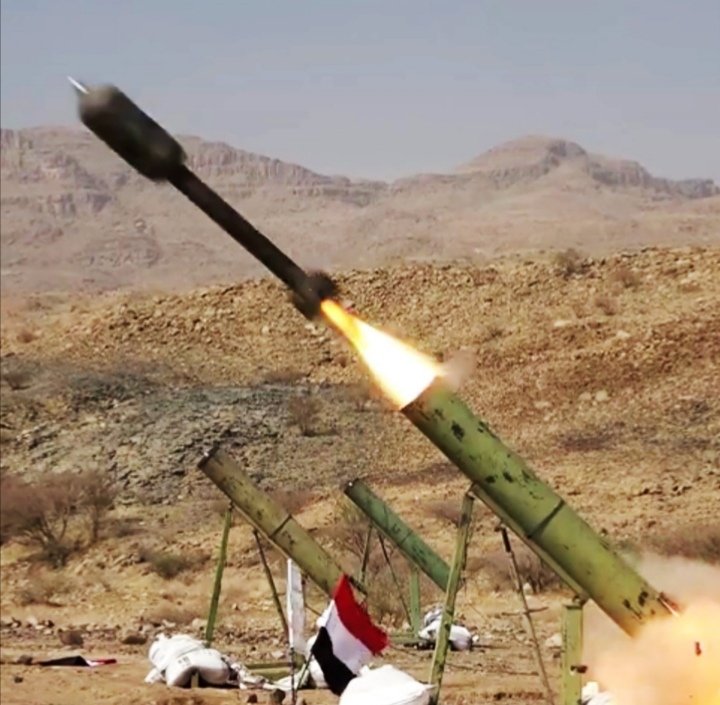
Saturday was particularly eerie for the Israelis because of the never-ending sirens that started in Tel Aviv in the afternoon warning of an incoming ballistic missile all the way from Yemen.

Although the Israeli media told us the missile – appropriately named Palestine 2 – was shot down by Israel’s Iron dome, no doubt bringing down with it lots of shrapnel, it created much panic among ordinary Israelis.

The social media video clips showed it all. People dropped whatever they were doing and hurried down to the underground shelters with the blasting sirens ready to give anyone a heart attack.  

The video clips showed a city in different positions. First of all, it was empty, hardly any traffic on the roads, you can say a ghost town, just tall buildings with risk noise in the background.

Then there is a video clip of people on road pavements amidst cars, hurrying, running and then steadying their pace to beat the others to get to the underground shelters. But there is a sense of anxiousness to get to the door of the shelter whether they have to go steadily down.

On this occasion, there was no news of injuries, but on previous rocket attack sirens in the city, there were reports of injuries, people trampled upon to reach the shelters in what appeared as tight doors.

And then there was the Ben Gurion Airport on the outskirts of the city. People were taking no chances this time. Just the previous day sirens blasted all over the city warning of a missile attack from the Houthis of Yemen, all 2000-kilometers away.

Just like this one, the previous missile struck just six kilometers from the Ben Gurion Airport. In the latest video-clip, people were seen running towards the end of the wide corridor at the sound of “horrible” noise with a man on the loudspeaker in Hebrew, no doubt telling people to hurry down to the shelters.

For Israelis, this war, although on the periphery of their lives, has become an absolute nightmare!

Outside, there was more noise coming from the beach filled with swimmers and sunbathers. At the sound of the sirens they dropped everything and began scurrying to the nearest shelter.

Meanwhile, there was another video clip of the plane carrying Prime Minister Benjamin Netanyahu after making his speech to the almost-empty UN General Assembly, because of the mass walkout.

Just as he entered Israeli airspace an F-35 phantom appeared to escort the plane to the airport. This was due to two reasons, the killing of Hezbollah’s Secretary-General Hassan Nasrallah, the previous day and which he ordered and the fact that incoming missiles and drones were coming in from Lebanon in a deadly war he insists on continuing.    

Continue reading