21 People Killed as Israel Bombs Mosque in Deir Al Balah

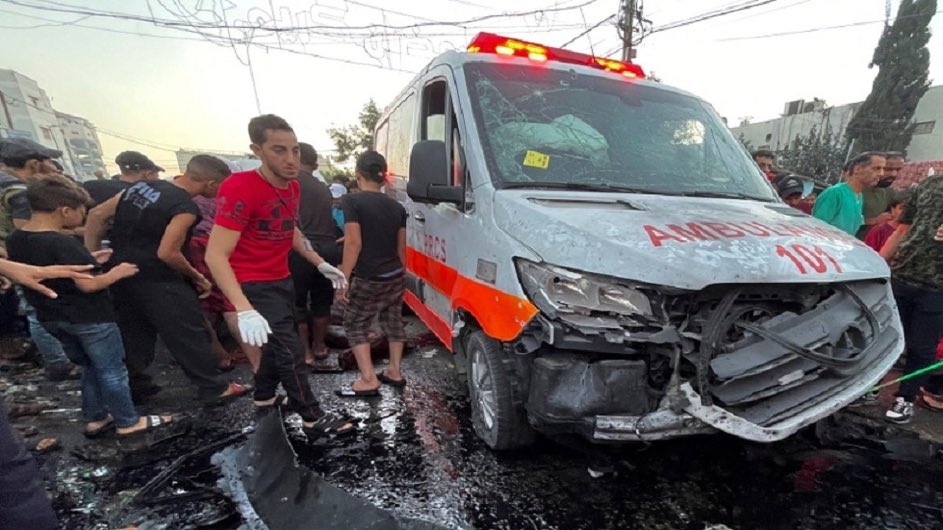
More than 21 people were killed in a military Israeli airstrike targeting a mosque-turned-shelter for displaced Palestinians in Deir Al-Balah, central Gaza Strip, early Sunday morning.

The news is trending on the social media with images and videoclips of the state of the devastation and which is seen as another massacre, another bloodbath.

Local sources reported that it took paramedics and civil defense crews close to three hours to remove the bodies because of the sheer level of damage and the scale of devastation that was caused, with many saying there are still bodies underground.

The targeted mosque is located across the street from Al-Aqsa Martyrs Hospital and was hit by the Israeli military at about 2am local time when many were fast asleep.

Israeli warplanes dropped bombs and severely damaged the facility and the properties in the surrounding area, including many department stores on the main road.

Continue reading
Macron Calls on States to Stop Weapons Supply to Israel

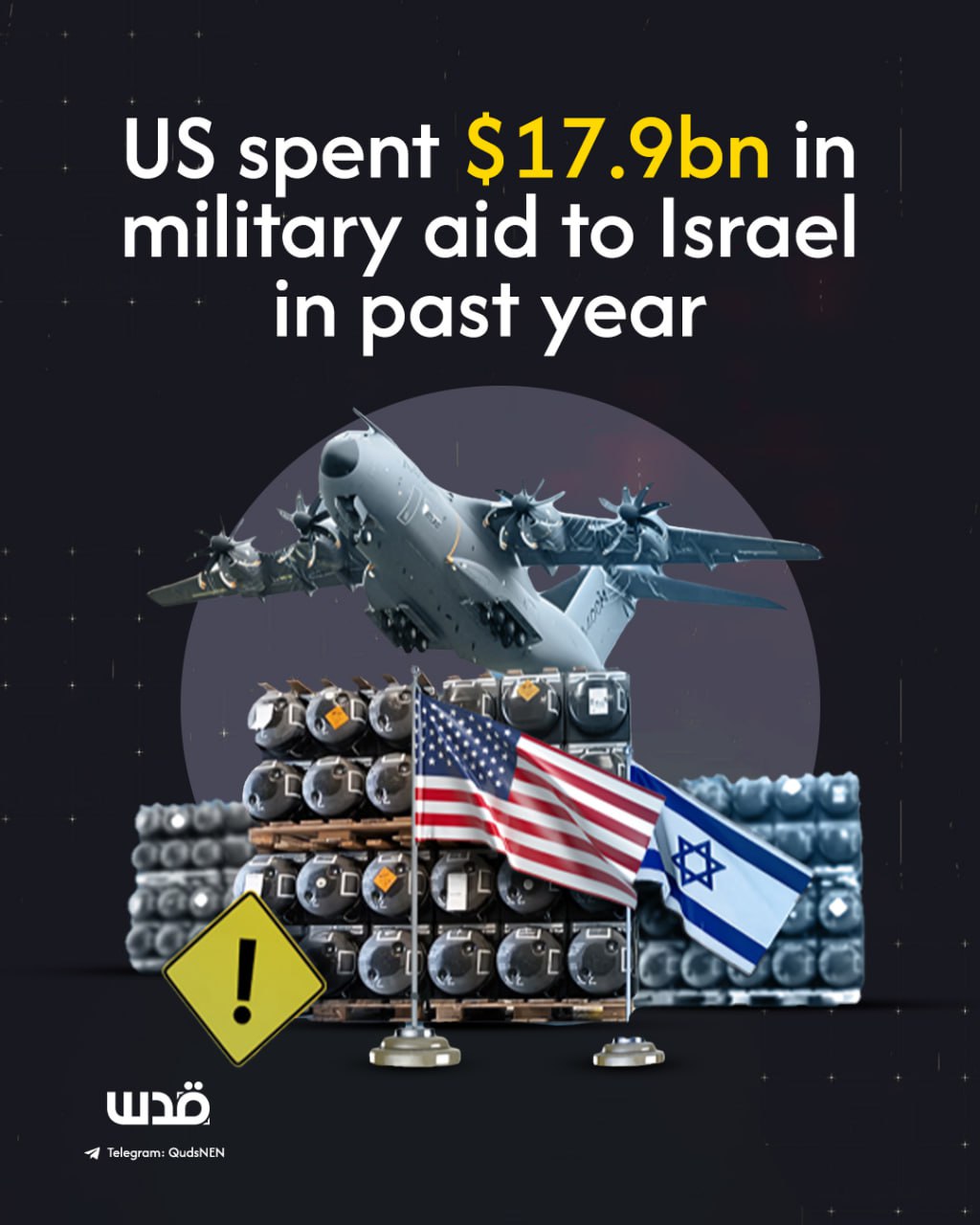
French President Emmanuel Macron urged countries to stop providing weapons to Israel for its ongoing genocide war in the Gaza Strip and expressed concern that Lebanon should not be allowed to “become a new Gaza.”

“The priority is that we return to a political solution, that we stop delivering weapons to carry out fighting in Gaza,” Macron said in an interview with France Inter, a public radio station aired Saturday.

Macron added, “France is not delivering any” weapons to Israel.

He stated: “I think we are not being heard.”


“I think it is a mistake, including for the security of Israel,” he said, adding that the war was leading to “hatred”.

Macron’s call comes amid mounting public scrutiny of the high death toll in Gaza and Israel’s widening aggression in Lebanon.

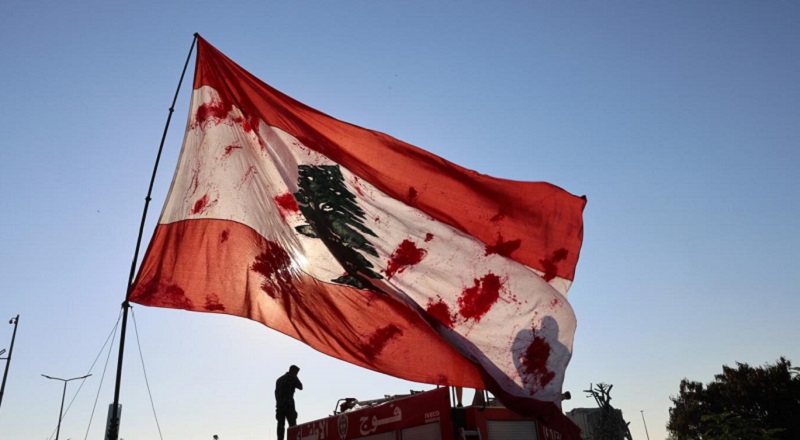
Macron said Lebanon should not be allowed to “become a new Gaza,” referring to Israel’s ground and air offensive in the country. “The Lebanese people cannot, in turn, be sacrificed,” he added.

According to the Stockholm International Peace Research Institute, while France did not export any major arms to Israel in recent years, it has supplied components for arms.

At a summit for French-speaking leaders in Paris, Saturday, according to the Washington Post, Macron said, “If we call for a cease-fire, consistency is to not provide weapons of war. And I think that those who provide them cannot every day call for a cease-fire alongside us and continue to supply them.”

Last month, Britain suspended some arms exports to Israel over concerns about potential violations of international humanitarian law, joining several other nations that have taken similar actions in the wake of the war in Gaza.

Speaking in Paris, Saturday, Macron said that while both the US and France had called for a ceasefire in Lebanon, he added: “I regret that Prime Minister Netanyahu has made another choice, has taken this responsibility, in particular, for ground operations on Lebanese soil.”

Netanyahu, in a video statement Saturday after Macron’s remarks, criticized the French president and other leaders who “call for an arms embargo on Israel.”

“Israel will win with or without their support, but their shame will continue long after the war is won,” he said.

In response to Netanyahu, Macron’s office said France remains a “steadfast friend of Israel,” describing Netanyahu’s reaction as “excessive and detached from the friendship between France and Israel,” according to Le Monde as reported in the Quds News Network.

Continue reading
Quarter of Jews Want to Leave Israel After Gaza  

A poll revealed, Saturday, about a quarter of Israelis have been thinking about leaving the country and settling abroad in the past year, due to the “current political and security situation,” the Jewish media reported.

The latest poll by the Israeli official Kan channel, showed 23 percent of Israeli respondants “thought about leaving the country in the past year, starting from October 2023 till October 2024), due to the current political and security situation.”

However the poll also showed that 67 percent of Israelis said they “did not think about leaving the country,” but the rest refused to answer the question.

Revealing is the fact that 14 percent of those who support the government coalition of Prime Minister Benjamin Netanyahu have thought about leaving, compared to 36 percent of the opposition parties’ supporters.

Thus the poll showed “secularists are more inclined to leave, compared to Haredi (religious) Jews.”

The Kan channel’s survey showed however, that negative migration – that is Israelis leaving the country – was evident even before 7 October with the numbers of people exiting exceeding the number of new immigrants coming to Israel.

Kan stated this trend of negative migration seems to be continuing for 2024 which could worsen.

Last September, official Israeli data by the Central Bureau of Statistics showed a significant increase in this phenomenon  with more than 40,000 leaving in the first seven months of 2024.

In 2023, about 55,300 citizens immigrated from Israel, compared to 38,000 who immigrated in 2022, according to the same source as reported by the Anadolu news agency.

Continue reading
Don’t Forget The West Bank Slaughter!

By Imran Khalid

Amid the ongoing violence and devastation in Gaza, much of the world has turned a blind eye to the equally volatile but less overt conflict simmering in the West Bank. While not as brutally visible as Gaza’s plight, the situation in the West Bank is equally dangerous, threatening to ignite unrest that could destabilize the Palestinian Authority and fuel ethnic cleansing.

Israel has steadily expanded settlements, demolished homes, and seized large swaths of land, targeting civilians in the process. Yet, global attention remains fixated on Gaza and Israel’s escalating war with Hezbollah in Lebanon. It is as if the world has forgotten that just a year ago, many feared the West Bank, not Gaza, would become the primary battleground between Israelis and Palestinians. Over the past two decades, the nature of the Israeli-Palestinian conflict has diverged significantly between Gaza and the West Bank. After Israel’s 2005 unilateral disengagement from Gaza, the region was left without Jewish settlers, creating a different kind of friction compared to the West Bank. [1]


Settlements are expanding day by day

On March 22, Israel’s Finance Minister Bezalel Smotrich announced the largest West Bank land seizure since 1993, setting a new course for Israeli settlement policy [2]. The move by Smotrich to declare 800 hectares in the Jordan Valley as state land paves the way for further development of settlements in this area sharing some 50 kilometers with Jordan.

For the Palestinians, who distrust such moves, seeing them as serious threats to the creation of an independent Palestinian state — this feels like a knife in their back. It is the latest land grab that Palestinians see as a last step before creating an independent and contiguous state. Settlement expansion — which set a record last year, according to Israeli monitoring group Peace Now — has cast doubts over the feasibility of a two-state solution. The largest threat to the long term stability of the land is that, with each designation of land as state property, the probability of having peace shrinks. The ongoing expansion of settlements, land confiscation, and rising settler violence — often carried out with impunity — only compound the difficulties. In some cases, this is further exacerbated by the incident in which the Israeli army is providing either direct or tacit support.

The Palestinian Authority’s Ministry of Health has stated that 716 Palestinians have died in the West Bank from Israeli military and settler violence since Oct. 7, including 160 children. Today, more than 5,750 have been wounded and over 10,000 detained in siege [3]. Nearly all arrests take place without going through a proper legal process, with the detainees imprisoned under Israel’s “administrative arrest” system – a method that bypasses international standards and in many cases denies those held the right to see either an attorney or even forthright details of the charges against them.

The two-state solution is being destroyed by Israel

The Israeli government is being accused more and more of implementing an annexation plan in the West Bank. The ramifications of this should alarm all nations that have historically supported a two-state solution, as verbal assurances and well wishes do little to mitigate the reality that Israeli security forces now operate at will in Area A — sovereign Palestinian Authority territory under the Oslo Accords [4].

Adding to this escalating tension are the inflammatory statements from Israeli officials. Israeli Foreign Minister Israel Katz over the weekend compared the military operations in Jenin and Tulkarm to those in Gaza, saying that we are at “war in every sense.” [5] His proposal of a similar evacuation process along the frontier where Palestinian civilians could be temporarily moved will only serve to add further fuel to the fire in an already volatile region.

Despite domestic political turmoil, Israeli Prime Minister Benjamin Netanyahu has artfully dodged blame as violence in Gaza and the West Bank rumbles on. He has practically dismissed calls for a two-state solution and openly defied the International Court of Justice. Netanyahu refuses to yield, a position that has crippled the fragile peacekeeping efforts in Gaza and aggravated fears of renewed violence in the West Bank. Netanyahu has now many excuses that could provide convenient cover for changes aimed at further entrenching Israeli control over the region.

The fate of the major part of the West Bank is crucial; without it, any prospective two-state solution will be dashed. Within Netanyahu’s ruling coalition are elements who seem intent on this very outcome, exerting considerable influence over the prime minister. In this context, Israeli Foreign Minister Israel Katz’s inflammatory rhetoric about the West Bank is more than just careless language — it may be a deliberate signal of the government’s intentions. As Netanyahu’s administration edges closer to what appears to be a calculated annexation strategy, the international community should question whether this is not only a consequence of policy but its very purpose.

[1] https://www.ndtv.com/world-news/israel-palestine-gaza-hamas-explained-israels-2005-gaza-disengagement-plan-and-full-siege-order-4466132

[2] https://www.aljazeera.com/news/2024/3/22/israel-seizes-800-hectares-of-palestinian-land-in-occupied-west-bank

[3] https://www.unocha.org/publications/report/occupied-palestinian-territory/humanitarian-situation-update-204-west-bank

[4] https://www.france24.com/en/middle-east/20240326-israel-s-largest-land-seizure-since-oslo-accords-deals-fresh-blow-to-palestinian-statehood

[5] https://www.timesofisrael.com/katz-slams-borrell-for-saying-he-called-for-displacement-of-west-bank-palestinians/

This opinion is reprinted from the Anadolu news agency.

Continue reading